
Posted on 06/16/2026 10:55:39 PM PDT by fidelis
Jesus said to his disciples: “Take care not to perform righteous deeds in order that people may see them; otherwise, you will have no recompense from your heavenly Father.” Matthew 6:1
Authenticity draws others in. A person who lives with genuine humility and virtue naturally inspires trust. In contrast, hypocrisy—an outward display of righteousness without interior virtue, done for human approval rather than for God—breeds distrust and repels others. In today’s Gospel, Jesus calls His disciples not to seek human recognition, but the quiet approval of the Father. True holiness is not performed for others to see but lived in the hidden presence of God, who sees and rewards what is done in secret.
In His Sermon on the Mount, Jesus highlights three essential religious practices—almsgiving, prayer, and fasting—to contrast authentic righteousness with hypocrisy. The “hypocrites” He addresses—the scribes, Pharisees, and other religious leaders—had transformed these sacred acts into performances, prioritizing human recognition over devotion to God.
When the hypocrites gave alms, they would “blow a trumpet” before them, symbolically announcing their generosity. While it is unlikely that the Pharisees literally sounded a trumpet when giving alms, Jesus uses this metaphor to expose their interior disposition—one focused on self-glorification rather than genuine charity. Just as a herald’s trumpet blast announces an important decree, these leaders ensured their charitable acts drew maximum attention.
In contrast, Jesus teaches the proper way to give alms: “But when you give alms, do not let your left hand know what your right is doing, so that your almsgiving may be secret. And your Father who sees in secret will repay you” (Matthew 6:3–4). Jesus employs exaggerated language to drive home His point. The phrase “do not let your left hand know what your right is doing” is a striking metaphor for absolute humility in charity. Almsgiving should be done with such purity of heart that it seeks neither public recognition nor bolsters personal pride, but is done solely for the glory of God.
Similarly, when the hypocrites prayed, they loved to position themselves “in the synagogues and on street corners so that others may see them.” Their concern was not communion with God but public recognition. Such a display is more an act of self-exhibition than true prayer. In contrast, Jesus teaches that authentic prayer takes place in “your inner room” where one prays to the Father in secret. This metaphor underscores the true purpose of prayer: not to be seen by others but to enter into genuine, intimate communion with God (cf. Matthew 6:5–6).
Finally, Jesus points out that when hypocrites fast, they deliberately “look gloomy” and “neglect their appearance” to ensure that others take notice. Their fasting is not a sacrifice to God but a display for human admiration. In contrast, true fasting should be hidden, undertaken in a spirit of self-denial—not to impress others, but to curb disordered appetites and offer a humble sacrifice to the Father.
Reflect today on the authenticity of your spiritual practices. Are you content with God alone seeing your good deeds? While we ought not hide our devotion out of fear or embarrassment, we must ensure our motives remain pure—seeking only God’s glory and others’ good. Strive to be humble, authentic, and sincere in all you do, and your Father will see your goodness and bless you with His eternal rewards.
Most glorious Lord, You alone are worthy of all glory, honor, and praise. I am but Your humble servant, blessed to share in Your life and mission. Purify my intentions and grant me the grace to act always with sincerity and pure devotion. Jesus, I trust in You.
Please keep in mind that this is a Catholic Caucus/Devotional thread for the purpose of prayerful reflection on the Sacred Scriptures and is closed to debate of any kind. Per FR policy on Religion Caucus threads, off-topic, argumentative, and abusive comments are not allowed and will be submitted to the Mods for deletion. Thanks, and God bless you.
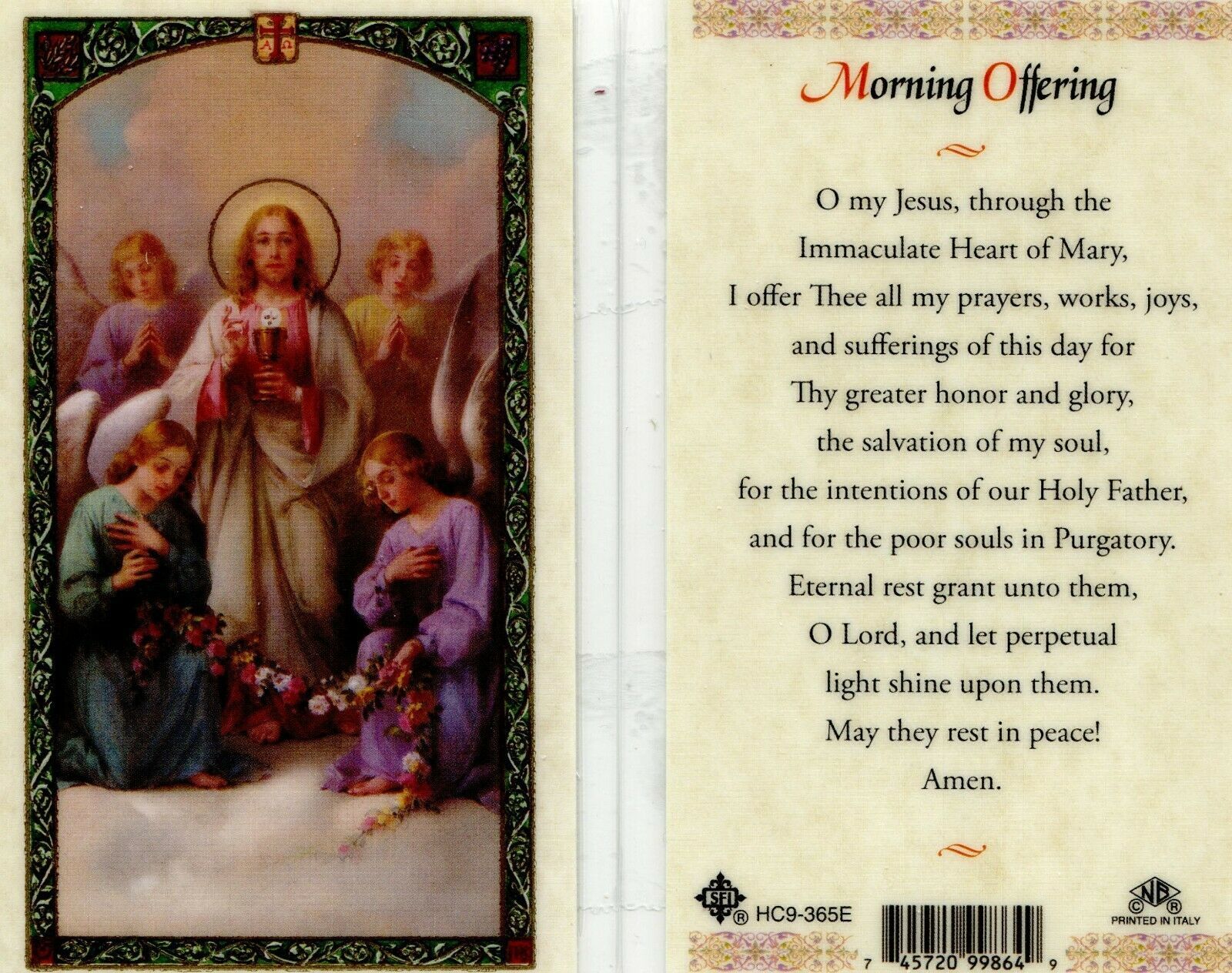
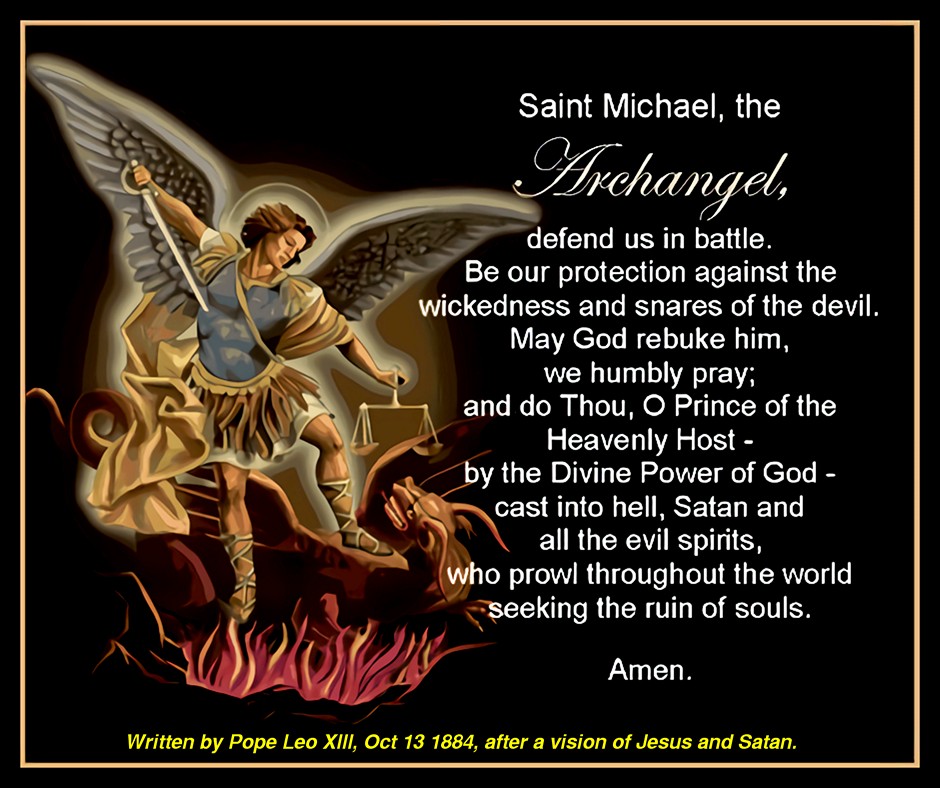
The Month of June is Dedicated to the Sacred Heart of Jesus

“Come to me, all who labor and are heavy laden, and I will give you rest. Take my yoke upon you, and learn from me; for I am gentle and lowly in heart, and you will find rest for your souls. For my yoke is easy, and my burden is light.” (Matthew 11:28-30)

Pope Leo XIV’s prayer intention for the month of May, 2026:
For the values of sports
Let us pray that sports be an instrument of peace, encounter, and dialogue among cultures and nations, and that they promote values such as respect, solidarity, and personal growth.

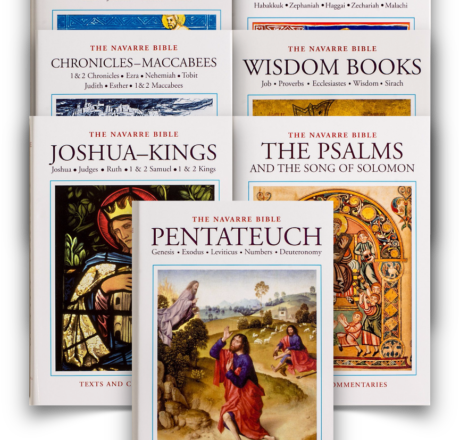
Today’s First Reading
From: 2 Kings 2:1, 6-14
Elijah is taken up into the sky
---------------------------------
[1] Now when the Lord was about to take Elijah up to heaven by a whirlwind, Elijah and Elisha were on their way from Gilgal. [6] Then Elijah said to him, “Tarry here, I pray you; for the Lord has sent me to the Jordan.” But he said, “As the Lord lives, and as you yourself live, I will not leave you.” So the two of them went on. [7] Fifty men of the sons of the prophets also went, and stood at some distance from them, as they both were standing by the Jordan. [8] Then Elijah took his mantle, and rolled it up, and struck the water, and the water was parted to the one side and to the other, till the two of them could go over on dry ground.
[9] When they had crossed, Elijah said to Elisha, “Ask what I shall do for you, before I am taken from you.” And Elisha said, “I pray you, let me inherit a double share of your spirit.” [10] And he said, “You have asked for a hard thing; yet, if you see me as I am being taken from you, it shall be so for you; but if you do not see me, it shall not be so.” [11] And as they still went on and talked, behold, a chariot of fire and horses of fire separated the two of them. And Elijah went up by a whirlwind into heaven. [12[ And Elisha saw it and he cried, “My father, my father! the chariots of Israel and its horsemen!” And he saw him no more. Then he took hold of his own clothes and rent them in two pieces.
Elisha, Elijah’s successor
----------------------------
[13] And he took up the mantle of Elijah that had fallen from him, and went back and stood on the bank of the Jordan. [14] Then he took the mantle of Elijah that had fallen from him, and struck the water, saying, “Where is the Lord, the God of Elijah?” And when he had struck the water, the water was parted to one side and to the other; and Elisha went over.
*****************************************************************
Commentary:
1-13:25. Having concluded the section dealing with kings in the time of Elijah (cf. 1 Kings 17:1-2 Kings 1:18), the biblical narrative now focuses on Elisha. First it tells how he succeeded Elijah (chap. 2) and then it goes on to cover his wonderworking and prophetical activity, up to his death (chap. 13). The account of his death, which occurred at the beginning of the eighth century BC, brings to a close a period of the history of Israel spanning the careers of two great prophets, Elijah and Elisha.
Elisha’s activity is different from Elijah’s in many ways: firstly, Elisha’s miracles are designed to resolve difficulties of his contemporaries, whereas Elijah’s were performed to demonstrate the sovereignty of the one God; secondly, Elisha is much more involved than his predecessor in political affairs and is much closer to the kings, too; finally, Elisha has more contact with the groups of prophets than Elijah had. Elisha is, then, a prophet much closer to the people, showing them the love God has for them.
1-25. Elisha becomes the heir of his master’s spirit when he sees Elijah being taken up to heaven (vv. 9-12). The signs which Elisha goes on to work win him recognition as Elijah’s successor – first, from the other prophets, once they are convinced that Elijah is indeed no longer in this world (vv. 13-18), and then from all the people, who witness extraordinary prodigies worked by Elisha (vv. 19-25).
1-12. This passage deals with one of the most mysterious, and also the most popular, episodes in the Old Testament – Elijah being taken up to heaven by a whirlwind. God wants to show the special destiny reserved for Elijah on account of his fidelity, a destiny similar to Enoch’s for having walked with God (cf. Gen 5:21-24).
In recounting this ancient tradition about Elijah, the sacred writer highlights aspects of Elijah’s connexion with groups of prophets and particularly with Elisha, whom he had already designated as his successor (cf. 1 Kings 19:19-21).
Elisha’s request for a double share of Elijah’s spirit is reminiscent of the double portion of the paternal estate due to the first-born in Israel (cf. Deut 21:17). The condition that Elijah lays down shows that divine gifts can be passed on only to those able to receive them (cf. vv. 10-12).
The function of the chariot and horses of fire is to separate the two prophets when Elijah is being swept up. The book of Sirach (Ecclesiasticus), in its time, will interpret them as a sign that God has brought him up into heaven (cf. Sir 48:8-9). Chariots of fire are also a symbol of God’s presence and of his glory, as in Psalm 68:17, for example. The fact that Elijah had not died is the reason why he is assigned a role in the future, at the messianic restoration of the twelve tries (cf. Sir 48:10) and before the coming of the “day of the Lord” (Mal 4:5). The figure of Elijah is also to be found in the New Testament where he is identified with John the Baptist, Christ’s precursor (cf. Mt 11:14, 17:10-12), in the sense that the Baptist is inspired by the same spirit as inspired Elijah.
The last wonder worked by Elijah, over the waters of the Jordan (cf. v. 8), again likens him to Moses (cf. Ex 14:16-21 and notes on 1 Kings 19:1-18). Even the place where Elijah is taken up into heaven is not far from where Moses died (cf. Deut 34:4-6) before the people entered the promised land. These similarities between Moses and Elijah suggest certain parallels: Moses represents the Law which God gave Israel through his mediation; Elijah represents the prophetical spirit which God manifested through the prophet’s life and through his being taken up into heaven. So, it is not surprising that when our Lord chose to reveal his glory to the disciples by his transformation on Mount Tabor, he should have chosen to appear alongside Moses and Elijah, because the Law and the Prophets find their fulfilment in Christ (cf. Mt 17:3 and par.).
13-18. The mantle symbolizes the authority of its owner and, in this case, the fact that he possesses the prophetical spirit (cf. 1 Kings 19:19-21). Elisha uses it to repeat the prodigy previously worked by Elijah; but now he does so to cross towards the land of Israel, as the people once did on the orders of Joshua (cf. Josh 3:14-17).
On witnessing the prodigy worked by Elisha, the prophets acknowledge him as Elijah’s true heir (v. 15); but they want to make sure that it was not to some other place on earth that Elijah was taken, as popular thinking had it (cf. 1 Kings 18:12).
From: Matthew 6:1-6, 16-18
An Upright Intention in Almsgiving, Prayer and Fasting
------------------------------------------------------
(Jesus said to His disciples,) [1] "Beware of practising your piety before men in order to be seen by them; for then you will have no reward from your Father who is in Heaven.
[2] "Thus, when you give alms, sound no trumpet before you, as the hypocrites do in the synagogues and in the streets, that they may be praised by men. Truly, I say to you, they have their reward. [3] But when you give alms, do not let your left hand know what your right hand is doing, [4] so that your alms may be in secret; and your Father who sees in secret will reward you.
[5] "And when you pray, you must not be like the hypocrites; for they love to stand and pray in the synagogues and at the street corners, that they may be seen by men. Truly, I say to you, they have their reward. [6] But when you pray, go into your room and shut the door and pray to your Father who is in secret; and your Father who sees in secret will reward you.
[16] "And when you fast, do not look dismal, like the hypocrites, for they disfigure their faces that their fasting may be seen by men. Truly, I say to you, they have their reward. [17] But when you fast, anoint your head and wash your face, [18] that your fasting may not be seen by men but by your Father who is in secret; and your Father who sees in secret will reward you."
***********************************************************************
Commentary:
1-18. "Piety", here, means good works (cf. note on Matthew 5:6). Our Lord is indicating the kind of spirit in which we should do acts of personal piety. Almsgiving, fasting and prayer were the basic forms taken by personal piety among the chosen people--which is why Jesus refers to these three subjects. With complete authority He teaches that true piety must be practised with an upright intention, in the presence of God and without any ostentation. Piety practised in this way implies exercising our faith in God who sees us--and also in the safe knowledge that He will reward those who are sincerely devout.
16-18. Starting from the traditional practice of fasting, our Lord tells us the spirit in which we should exercise mortification of our senses: we should do so without ostentation, avoiding praise, discreetly; that way Jesus' words will not apply to us: "they have their reward"; it would have been a very bad deal. "The world admires only spectacular sacrifice, because it does not realize the value of sacrifice that is hidden and silent" (St J. Escriva, "The Way", 185).
Disclaimer: Opinions posted on Free Republic are those of the individual posters and do not necessarily represent the opinion of Free Republic or its management. All materials posted herein are protected by copyright law and the exemption for fair use of copyrighted works.


