
Posted on 06/15/2026 10:13:26 PM PDT by fidelis
Jesus said to his disciples: “You have heard that it was said, You shall love your neighbor and hate your enemy. But I say to you, love your enemies and pray for those who persecute you, that you may be children of your heavenly Father… So be perfect, just as your heavenly Father is perfect.” Matthew 5:43–45, 48
The Law of Moses, contained in the first five books of the Old Testament, taught the importance of loving one’s neighbor: “You shall love your neighbor as yourself. I am the LORD” (Leviticus 19:18). “Neighbor” in this context primarily referred to fellow Israelites, reinforcing the bonds of charity and unity among God’s chosen people. However, the Law also commanded kindness toward foreigners: “When a stranger resides with you in your land, you shall not oppress him. He shall be to you as the native among you, and you shall love him as yourself” (Leviticus 19:33–34). God’s command to love was never meant to be limited to Israel alone.
As centuries passed, some teachers of the Law began to distort its meaning. Jesus identifies one such misinterpretation in today’s Gospel: “You have heard that it was said, ‘You shall love your neighbor and hate your enemy.’” While the command to love one’s neighbor was indeed found in the Torah, the phrase “hate your enemy” was not. Rather, it was a human distortion that had taken root in certain circles. Some Jewish sects, like the Essenes, promoted separation from outsiders, even calling them “sons of darkness” (1QS 1:10). While the Pharisees weren’t as extreme, they often limited love to their own religious and ethnic communities.
Jesus corrects this error by revealing the fullness of divine love: “But I say to you, love your enemies and pray for those who persecute you.” Perfect charity is a high calling. It is not selective but reflects the boundless love of God, who “makes his sun rise on the bad and the good, and causes rain to fall on the just and the unjust” (Matthew 5:45). Christ calls His followers to move beyond natural human affection to a supernatural charity that embraces even those who persecute us. This love is not merely a feeling but an act of the will, a participation in the very perfection of God: “So be perfect, just as your heavenly Father is perfect.”
It’s important, however, to distinguish between the charity that we offer everyone unconditionally and the bonds of unity forged by love that is reciprocal. When charity is offered to those who persecute us, it might feel uncomfortable at first. This form of love, though painful and challenging, has great transformative power. It extends an invitation to the persecutor to turn away from cruelty, repent, and offer love in return.
Love of neighbor takes on a deeper dimension when our neighbor also loves God and reciprocates that love to us. This mutual love is not only naturally consoling but also supernaturally unifying, strengthening both individuals as they grow in holiness together.
Reflect today on those whom you love. Begin by savoring the consolation and strength you receive from relationships that are mutually reflective of God’s perfect love. Then turn to those who are difficult to love. Resolve to love them and pray for them. Ask God to purify your heart of any hurt or resentment, and strive to reflect the Father’s love. Let His compassion flow through you, like the rain that falls on both the just and the unjust, making you a true child of your Father in Heaven.
God of all perfection, Your love knows no bounds; it is freely offered to all, both the good and the bad alike. Those who receive and reciprocate Your divine love are drawn into communion with You, sharing in Your very life, while those who reject it remain trapped in the darkness of sin. Please free me from all bitterness and resentment, purify my heart, and teach me to love as You love, so that I may truly be Your beloved child. Jesus, I trust in You.
Please keep in mind that this is a Catholic Caucus/Devotional thread for the purpose of prayerful reflection on the Sacred Scriptures and is closed to debate of any kind. Per FR policy on Religion Caucus threads, off-topic, argumentative, and abusive comments are not allowed and will be submitted to the Mods for deletion. Thanks, and God bless you.
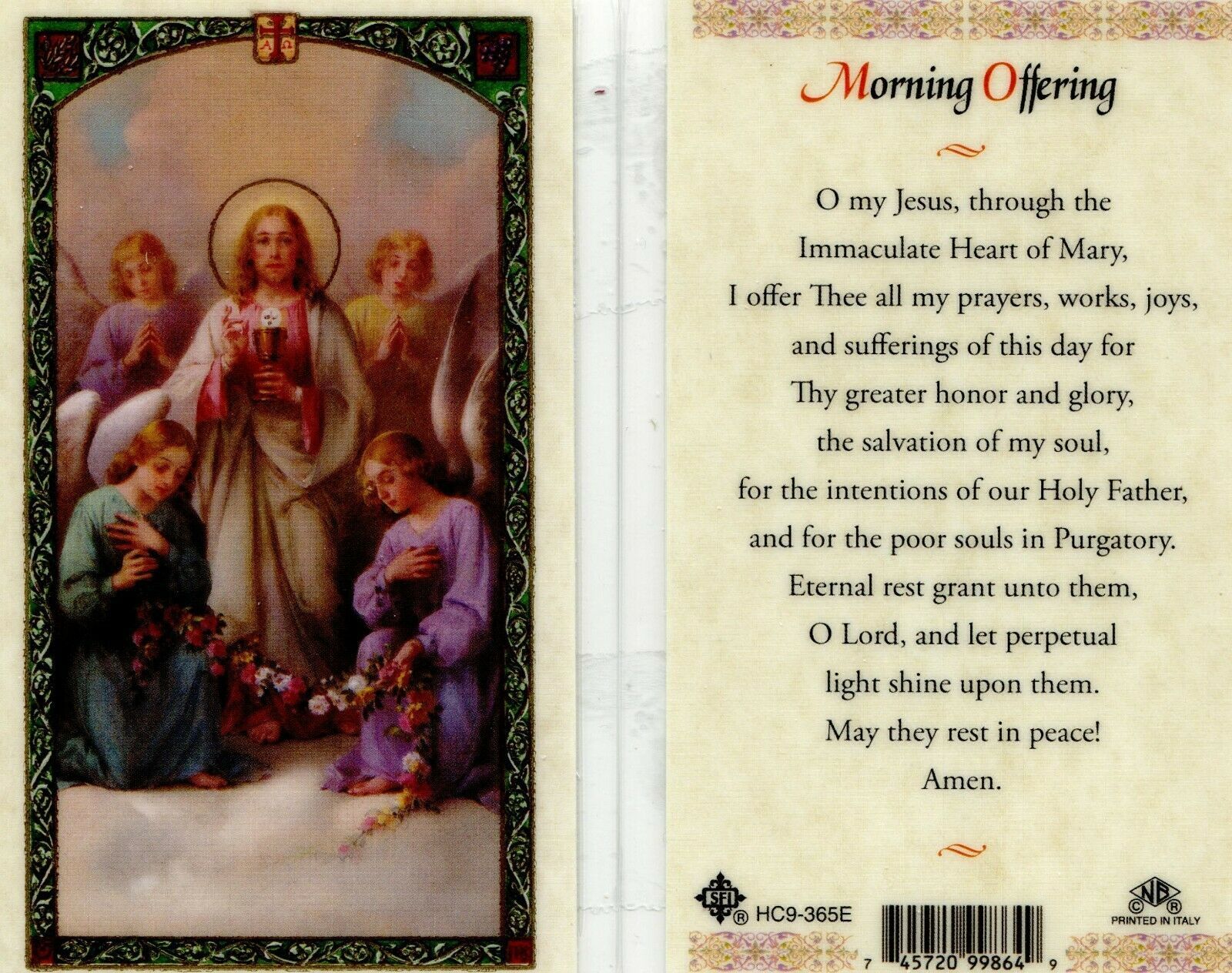

The Month of June is Dedicated to the Sacred Heart of Jesus

“Come to me, all who labor and are heavy laden, and I will give you rest. Take my yoke upon you, and learn from me; for I am gentle and lowly in heart, and you will find rest for your souls. For my yoke is easy, and my burden is light.” (Matthew 11:28-30)

Pope Leo XIV’s prayer intention for the month of May, 2026:
For the values of sports
Let us pray that sports be an instrument of peace, encounter, and dialogue among cultures and nations, and that they promote values such as respect, solidarity, and personal growth.
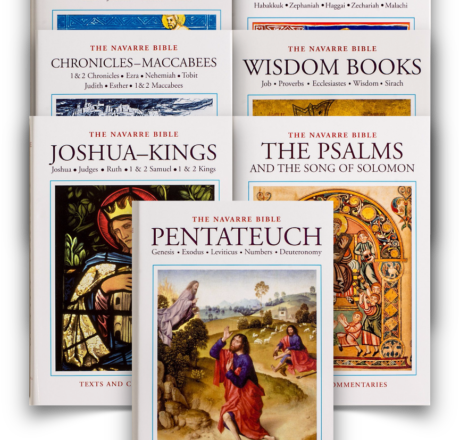
Today’s First Reading
From: 1 Kings 21:17-29
Naboth’s Vineyard, a further intervention by Elijah (Continuation)
--------------------------------------------------------------------------------
[17] Then the word of the Lord came to Elijah the Tishbite, saying, [18] “Arise, go down to meet Ahab king of Israel, who is in Samaria; behold, he is in the vine- yard of Naboth, where he has gone to take possession. [19] And you shall say to him, ‘Thus says the Lord, “Have you killed, and also taken possession?”’ And you shall say to him, ‘Thus says the Lord: “In the place where dogs licked up the blood of Naboth shall dogs lick your own blood.””
[20] Ahab said to Elijah, “Have you found me, O my enemy?” He answered, “I have found you, because you have sold yourself to do what is evil in the sight of the Lord. [21] Behold, I will bring evil upon you; I will utterly sweep you away, and will cut off from Ahab every male, bond or free, in Israel; [22] and I will make your house like the house of Jeroboam the son of Nebat, and like the house of Baasha the son of Ahijah, for the anger to which you have provoked me, and because you have made Israel to sin. [23] And of Jezebel the Lord also said, ‘The dogs shall eat Jezebel within the bounds of Jezreel.’ [24] Any on belonging to Ahab who dies in the city the dogs shall eat; and any one of his who dies in the open country the birds of the air shall eat.”
[25] (There was none who sold himself to do what was evil in the sight of the Lord like Ahab, whom Jezebel his wife incited. [26] He did very abominably in going after idols, as the Amorites had done, whom the Lord cast out before the people of Israel.)
[27] And when Ahab heard those words, he rent his clothes, and put sackcloth upon his flesh, and fasted and lay in sackcloth, and went about dejectedly. [28] And the word of the Lord came to Elijah the Tishbite, saying, [29] “Have you seen how Ahab has humbled himself before me? Because he has humbled himself before me, I will not bring the evil in his days; but in his son’s days I will bring the evil upon his house.”
**********************************************************************
Commentary:
21:17-24. Having defended belief in the true God against idolaters, Elijah now defends human rights in the name of God himself. He acts very much in the same style as Nathan did towards David when the latter had someone murdered to disguise his affair with Bathsheba (cf. 2 Sam 12). Because Ahab allowed injustice to be done, he is judged to have been as guilty as Jezebel. The first punishment that the prophet announces is in line with the law of vengeance (v. 19; Ex 21:23-25), and we see it applied in 22:38. But then he changes his focus and announces that Ahab’s whole dynasty is going to pay for his transgression (vv. 21-22). Jezebel, being a foreigner and evil in the extreme, dies a horrible death (in 2 Kings 9:30-37).
21:25-28. Despite his reprehensible conduct (summed up here in an aside; vv. 25-26), Ahab gives evidence of his repentance and is rewarded for it: his son will be allowed to succeed him (v. 28).
The figure of Ahab, a sad and humbled king, contrasts with that of Naboth, only a vassal, yet a happy man. That is how St Ambrose of Milan sees them in his book commenting on the passage – on Naboth. The same saint says elsewhere, “Naboth was happy, even when he was [being] stoned by the rich man, for although he was poor and weak in comparison to the powerful king, he was made rich in loyal feeling and piety by not accepting the king’s money in exchange for the vineyard that belonged to his family; and because he defended the rights of his people at the cost of his own life, his actions were irreproachable. Ahab, on the other hand, was a sinner – even in his own estimation – because he had sentenced a poor man to death in order to take control of the vineyard” (“De officiis,” 2, 5, 17). In Naboth, too, we can see a figure of Christ, who was crucified after false witness was laid against him, yet he was the Son of God, the Lord of the vineyard, that is, Israel (cf. Mt 21:23).
From: Matthew 5:43-48
Jesus and His Teaching, the Fulfillment of the Law (Continuation)
-----------------------------------------------------------------
(Jesus said to His disciples,) [43] "You have heard that it was said, `You shall love your neighbor and hate your enemy.' [44] But I say to you, Love your enemies and pray for those who persecute you. [45] So that you may be sons of your Father who is in Heaven; for He makes His sun rise on the evil and on the good, and sends rain on the just and on the unjust. [46] For if you love those who love you, what reward have you? Do not even the tax collectors do the same? [47] And if you salute only your brethren, what more are you doing than others? Do not even the Gentiles do the same? [48] You, therefore, must be perfect, as your Heavenly Father is perfect."
***********************************************************************
Commentary:
43. The first part of this verse--"You shall love your neighbor"--is to be found in Leviticus 19:18. The second part--"hate your enemy"—is not to be found in the Law of Moses. However, Jesus' words refer to a widespread rabbinical interpretation which understood "neighbors" as meaning "Israelites". Our Lord corrects this misinterpretation of the Law: for Him everyone is our neighbor (cf. the parable of the Good Samaritan in Luke 10:25-37).
43-47. This passage sums up the teaching which precedes it. Our Lord goes so far as to say that a Christian has no personal enemies. His only enemy is evil as such--sin--but not the sinner. Jesus Himself puts this into practice with those who crucified Him, and He continues to act in the same way towards sinners who rebel against Him and despise Him. Consequently, the saints have always followed His example--like St. Stephen, the first martyr, who prayed for those who were putting him to death. This is the apex of Christian perfection--to love, and pray for, even those who persecute us and calumniate us. It is the distinguishing mark of the children of God.
46. "Tax collectors": the Roman empire had no officials of its own for the collection of taxes: in each country it used local people for this purpose. These were free to engage agents (hence we find reference to "chief tax collectors": cf. Luke 19:2). The global amount of tax for each region was specified by the Roman authorities; the tax collectors levied more than this amount, keeping the surplus for themselves: this led them to act rather arbitrarily, which was why the people hated them. In the case of the Jews, insult was added to injury by the fact that the chosen people were being exploited by Gentiles.
48. Verse 48 is, in a sense, a summary of the teaching in this entire chapter, including the Beatitudes. Strictly speaking, it is quite impossible for a created being to be as perfect as God. What our Lord means here is that God's own perfection should be the model which every faithful Christian tries to follow, even though he realizes that there is an infinite distance between himself and his Creator. However, this does not reduce the force of this commandment; it sheds more light on it. It is a difficult commandment to live up to, but along with this we must take account of the enormous help grace gives us to go so far as to tend towards divine perfection. Certainly, perfection which we should imitate does not refer to the power and wisdom of God, which are totally beyond our scope; here the context seems to refer primarily to love and mercy. Along the same lines, St. Luke quotes these words of our Lord: "Be merciful, even as your Father is merciful" (Luke 6:36; cf. note on Luke 6:20-49).
Clearly, the "universal call to holiness" is not a recommendation but a commandment of Jesus Christ.
"Your duty is to sanctify yourself. Yes, even you. Who thinks that this task is only for priests and religious? To everyone, without exception, our Lord said: `Be ye perfect, as My Heavenly Father is perfect'" (St J. Escriva, "The Way", 291). This teaching is sanctioned by chapter 5 of Vatican II's Constitution "Lumen Gentium", where it says (40): "The Lord Jesus, divine teacher and model of all perfection, preached holiness of life (of which He is the author and maker) to each and every one of His disciples without distinction: `You, therefore, must be perfect, as your Heavenly Father is perfect' [...]. It is therefore quite clear that all Christians in any state or walk of life are called to the fullness of Christian life and to the perfection of love, and by this holiness a more human manner of life is fostered also in earthly society."
Christ is King.
Disclaimer: Opinions posted on Free Republic are those of the individual posters and do not necessarily represent the opinion of Free Republic or its management. All materials posted herein are protected by copyright law and the exemption for fair use of copyrighted works.


