
Posted on 06/14/2026 10:51:44 PM PDT by fidelis
Jesus said to his disciples: “You have heard that it was said, ‘An eye for an eye and a tooth for a tooth.’ But I say to you, offer no resistance to one who is evil… Should anyone press you into service for one mile, go with him for two miles.” Matthew 5:38–39, 41
The phrase “An eye for an eye and a tooth for a tooth” refers to the Mosaic Law of Retaliation (cf. Exodus 21:23–25). When Moses instituted this law, vengeance often escalated in response to an injury, leading to cycles of increasing violence. The law served as a form of natural justice, ensuring that retribution was proportional to the offense, preventing conflicts from spiraling out of control.
Though the purpose of the Law of Retaliation was to curb excessive vengeance and restore order, Jesus revealed that true reconciliation is achieved only through radical mercy. He taught that unlimited mercy is a far greater remedy for discord, breaking the cycle of retaliation at its root. Before His coming and the outpouring of the Holy Spirit, humanity lacked the grace necessary to live out this higher calling. However, in Christ, His followers were empowered by divine grace to overcome cycles of vengeance—not with retribution, but with mercy.
To illustrate this higher form of reconciliation, Jesus references a Roman law that allowed soldiers to compel Jews to carry their military equipment for one Roman mile—approximately 4,855 feet, slightly shorter than the modern mile. This law was a source of humiliation for Jews, who were often forced to drop what they were doing to serve their oppressors. They had little recourse against this injustice, making it a painful reminder of their subjugation.
Jesus does not justify this injustice; rather, He transforms it by calling His followers to freely exceed the demands of the law. Instead of begrudgingly fulfilling the imposed burden, they were to willingly double it—going two miles instead of one. This radical response would have astonished the Roman soldiers, turning an act of forced servitude into an unexpected display of generosity.
The wisdom in this command lies in the freedom it offers. Carrying another’s burden was not inherently evil; the pain came not from the injustice but from the humiliation. By embracing the burden voluntarily—walking the second mile willingly—Jesus’ followers would rise above the sting of pride and resentment. Instead of being victims, they became witnesses to God’s unmerited mercy, showing that true strength lies not in retaliation, but in generosity.
The principle behind this elevated teaching on justice has countless applications in our lives. Whenever we experience injustice or unfair treatment, we face a choice: We can insist on strict natural justice, or we can choose supernatural charity. Those who cling to mere justice often find themselves trapped in cycles of outrage, condemnation, and resentment. But those who choose to lavish unmerited charity upon others—freely forgiving offenses and going beyond what is required—discover a profound interior freedom.
Reflect today on the ways you have been wronged. At times, the pain of injustice is real and the offense against us undeniable. Yet the true question is not whether we have been mistreated, but how we will respond. Jesus calls us to rise above our wounded pride and respond with acts of kindness and unmerited generosity. By embracing this higher way, we break free from the bondage of resentment and enter into the freedom of divine Wisdom.
Most generous God, Your mercy far surpasses the strict justice I often seek. Grant me the Gift of Wisdom, so that I may grasp the infinite value of mercy and extend it freely in the face of every injustice I endure. Help me to trust not in my own sense of fairness, but in Your divine will, which brings true justice through love. Jesus, I trust in You.
Please keep in mind that this is a Catholic Caucus/Devotional thread for the purpose of prayerful reflection on the Sacred Scriptures and is closed to debate of any kind. Per FR policy on Religion Caucus threads, off-topic, argumentative, and abusive comments are not allowed and will be submitted to the Mods for deletion. Thanks, and God bless you.
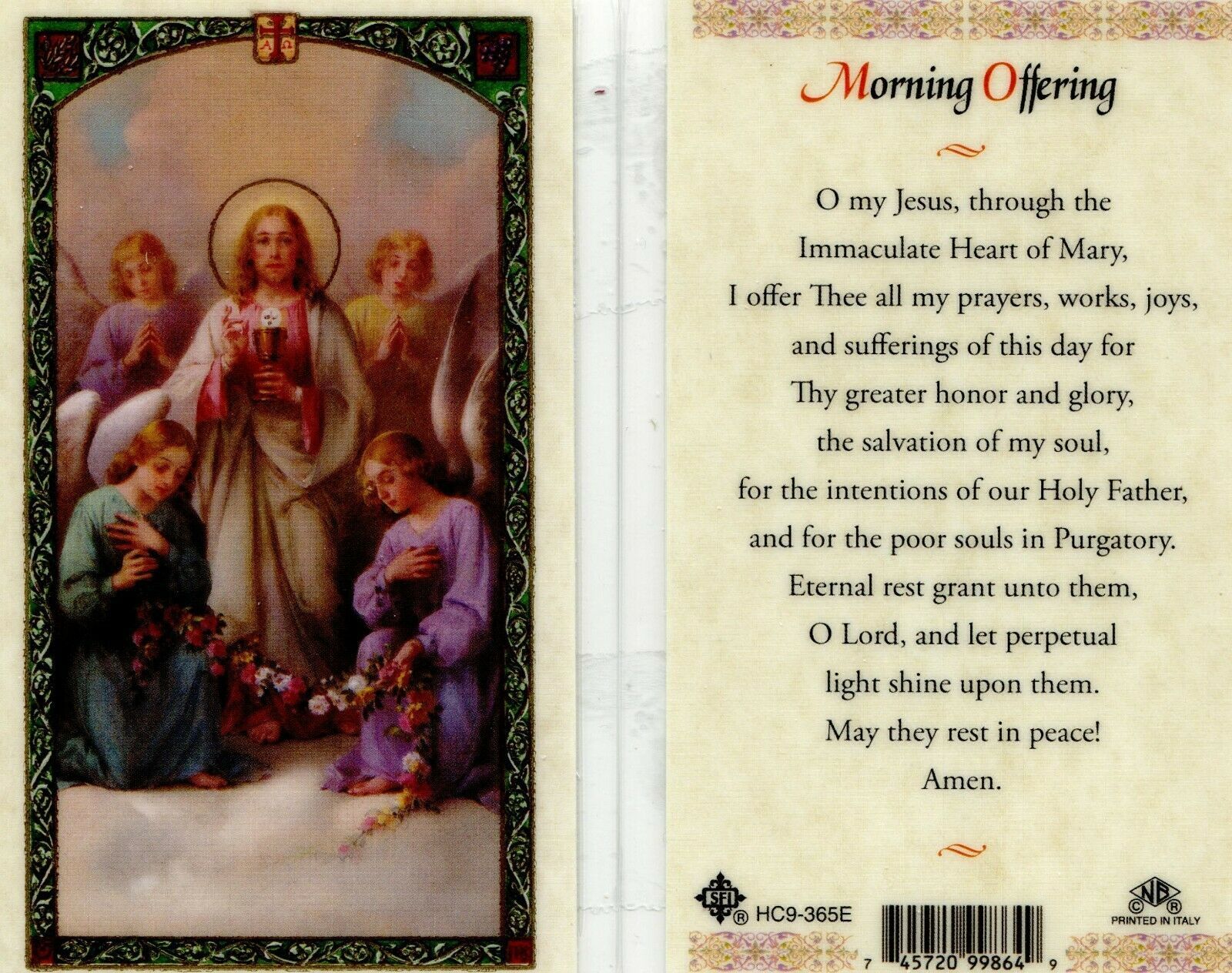

The Month of June is Dedicated to the Sacred Heart of Jesus

“Come to me, all who labor and are heavy laden, and I will give you rest. Take my yoke upon you, and learn from me; for I am gentle and lowly in heart, and you will find rest for your souls. For my yoke is easy, and my burden is light.” (Matthew 11:28-30)

Pope Leo XIV’s prayer intention for the month of May, 2026:
For the values of sports
Let us pray that sports be an instrument of peace, encounter, and dialogue among cultures and nations, and that they promote values such as respect, solidarity, and personal growth.

Today’s First Reading
From: 1 Kings 21:1-16
Naboth’s Vineyard, a further intervention by Elijah
-------------------------------------------------------------
[1] Now Naboth the Jezreelite had a vineyard in Jezreel, beside the palace of Ahab king of Samaria. [2] And after this Ahab said to Naboth, “Give me your vineyard, that I may have it for a vegetable garden, because it is near my house; and I will give you a better vineyard for it; or, if it seems good to you, I will give you its value in money.” [3] But Naboth said to Ahab, “The Lord forbid that I should give you the inheritance of my fathers.” [4] And Ahab went into his house vexed and sullen because of what Naboth the Jezreelite had said to him; for he had said, “I will not give you the inheritance of my fathers.” And he lay down on his bed, and turned away his face, and would eat no food.
[5] But Jezebel his wife came to him and said to him, “Why is your spirit so vexed that you eat no food?” [6] And he said to her “Because I spoke to Naboth the Jezreelite, and said to him, ‘Give me your vineyard for money; or else, if it pleases you, I will give you another vineyard for it’; and he answered, ‘I will not give you my vineyard.’” [7] And Jezebel his wife said to him, “Do you now govern Israel? Arise, and eat bread, and let your heart be cheerful; I will give you the vineyard of Naboth the Jezreelite.”
[8] So she wrote letters in Ahab’s name and sealed them with his seal, and she sent the letters to the elders and the nobles who dwelt with Naboth in his city. [9] And she wrote in the letters, “Proclaim a fast, and set Naboth on high among the people; [10] and set two base fellows opposite him, and let them bring a charge against him, saying, ‘You have cursed God and the king.’ Then take him out, and stone him to death.” [11] And the men of his city, the elders and the nobles who dwelt in his city, did as Jezebel had sent word to them. As it was written in the letters which she had sent to them, [12] they proclaimed a fast, and set Naboth on high among the people. [14] And the two base fellows came in and sat opposite him; and the base fellows brought a charge against Naboth, in the presence of the people, saying, “Naboth cursed God and the king.” So they took him outside the city, and stoned him to death with stones. [14] Then they sent to Jezebel, saying, “Naboth has been stoned; he is dead.”
[15] As soon as Jezebel heard that Naboth had been stoned and was dead, Jezebel said to Ahab, “Arise, take possession of the vineyard of Naboth the Jezreelite, which he refused to give you for money; for Naboth is not alive, but dead.” [16] And as soon as Ahab heard that Naboth was dead, Ahab arose to go down to the vineyard of Naboth the Jezreelite, to take possession of it.
********************************************************
Commentary:
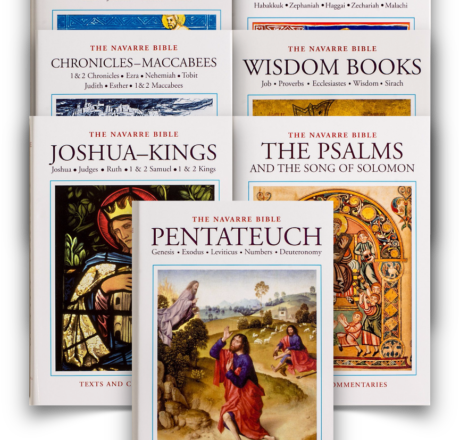
21:1-28. This chapter really could have been put before the previous one, since it still deals with Elijah’s activity (and that is where the Septuagint does put it). However, the order used by the Hebrew text fits the succession of events in Ahab’s life. Jezreel would have been the second residence of Ahab, as already mentioned in 18:45.
One feature of the prophets was their condemnation of the abuse of the weak (cf. Is 5:8-24; Amos 2:6-16; etc.), just as it is part of the Church’s prophetic mission to stand up for human rights: “Respect for the human entails respect for the rights that flow from his dignity as a creature. These rights are prior to society and must be recognized by it. They are the basis of the moral legitimacy of every authority: by flouting them, or refusing to recognize them in its positive legislation, a society undermines its own moral legitimacy. If it does not respect them, authority can rely only on force or violence to obtain obedience from its subjects. It is the Church’s role to remind men of good will of these rights, and to distinguish them from unwarranted or false claims” (Catechism of the Catholic Church, 1930).
21:1-4. Naboth’s refusal to accept the king’s reasonable request is explained by an Israelite’s attachment to property inherited from his forebears: according to the Law (cf. Lev 25;23; Num 36;7), that type of inheritance was not to be disposed of. Also, ancestors were normally buried on family property (cf. 1 Sam 25:1).
21:5-16. A public fast was proclaimed when some misfortune occurred or threatened, because it was presumed that some sin committed by the people was responsible for the calamity (cf. 1 Sam 7:6). In such cases the transgressor had to be found (cf. 1 Sam 14:24-45). Jezebel is at pains to ensure that she disposes of Naboth by due process of law: the crime he is accused of must carry the death penalty (cf. Ex 22:27-28), there must be two witnesses (cf. Deut 17:6), and execution must be by stoning (cf. Lev 24:14-16). Ahab does not seem to mind how Naboth is disposed of. Once again he is guided by self-interest and ignores the demands of justice.
“Base fellows”: literally, “sons of Belial”, the sense here being evildoers or “sons of iniquity” (cf. 1 Sam 10:27). Later, the name “Belial” will be used for the prince of demons, Satan (cf. 2 Cor 6:15).
From: Matthew 5:38-42
Jesus and His Teaching, the Fulfillment of the Law (Continuation)
-----------------------------------------------------------------
(Jesus said to His disciples,) [38] "You have heard that it was said, `An eye for an eye and a tooth for a tooth.' [39] But I say to you, do not resist one who is evil. But if any one strikes you on the right cheek, turn to him the other also; [40] and if any one would sue you and take your coat, let him have your cloak as well; [41] and if any one forces you to go one mile, go with him two miles. [42] Give to him who begs from you, and do not refuse him who would borrow from you."
***********************************************************************
Commentary:
38-42. Among the Semites, from whom the Israelites stemmed, the law of vengeance ruled. It led to interminable strife, and countless crimes. In the early centuries of the chosen people, the law of retaliation was recognized as an ethical advance, socially and legally: no punishment could exceed the crime, and any punitive retaliation was outlawed. In this way, the honor of the clans and families was satisfied, and endless feuds avoided.
As far as New Testament morality is concerned, Jesus establishes a definitive advance: a sense of forgiveness and absence of pride play an essential role. Every legal framework for combating evil in the world, every reasonable defense of personal rights, should be based on this morality. The three last verses refer to mutual charity among the children of the Kingdom, a charity which presupposes and deeply imbues justice.
Disclaimer: Opinions posted on Free Republic are those of the individual posters and do not necessarily represent the opinion of Free Republic or its management. All materials posted herein are protected by copyright law and the exemption for fair use of copyrighted works.


