
Posted on 06/13/2026 10:16:36 PM PDT by fidelis
Eleventh Sunday in Ordinary Time
At the sight of the crowds, his heart was moved with pity for them because they were troubled and abandoned, like sheep without a shepherd. Matthew 9:36
As Jesus went “to all the towns and villages, teaching in their synagogues, proclaiming the gospel of the kingdom, and curing every disease and illness” (Matthew 9:35), He was moved with deep compassion for the crowds. The Greek verb splagchnizomai is often translated as “moved with pity” or “moved with compassion.” It appears twelve times in the Gospels—eight times describing Jesus’ own compassion and four times illustrating divine mercy in parables or related contexts (the Good Samaritan, the Prodigal Son, the Unforgiving Servant, and the plea of a father for his demon-possessed son). This verb conveys not just an emotional response but a profound stirring of His entire being, compelling Him to act with divine mercy—engaging His mind, will, body, and emotions.
Understanding this verb is essential because it unveils the very heart of Christ’s mission, where His divine mercy is fully manifest in His humanity. Though His mercy originates in His divinity, He fully lived and expressed it in His human nature, allowing it to consume Him entirely and drive Him to shepherd His people.
Jesus’ all-consuming compassion should profoundly console us. God does not love us out of mere divine obligation; His love is deeply personal, intimate, and relentless. He is not distant or impersonal, aloof in His perfection. In Christ, God’s mercy is made visible—His human heart is stirred to action, doing everything He can to draw us closer to Himself. This is why His compassion is such a source of reassurance: He is not a distant or angry God, standing far off to condemn. Rather, He is the God who, in Christ, allows Himself to be consumed with mercy, driven by compassion, and moved to act for the salvation of each one of us.
That same profound mercy continues to flow from the Sacred Heart today. In Heaven, Christ’s human heart remains inseparably united to His divinity, pouring forth the love of the Father and the Holy Spirit upon the world. His compassion is made present to us through His Church, especially in the Sacraments and in the lives of saintly men and women. This same compassion must become the driving force behind all we do for the Kingdom. We are called to be His living instruments of mercy, reflecting His Sacred Heart in our actions, words, and love for others—so that each of us might be reassured of God’s unfailing love.
We see in today’s Gospel that Jesus’ compassion moved Him to send out twelve of His disciples as His Apostles, entrusting them with His divine authority to proclaim the Kingdom of God, cure the sick, raise the dead, cleanse lepers, and drive out demons. They were to be His chosen instruments of mercy, reaching out to the lost sheep of the house of Israel—those in dire need of God’s truth and healing grace.
Reflect today on Jesus’ divine compassion from two perspectives. First, gaze at His overflowing love for you. There is no way to overestimate that love. Second, allow that love to transform you so that His mercy flows through you into the lives of others. Do not hold back the love of God—let it pour forth freely and abundantly. Let His divine compassion move your entire being so that you become a true instrument of His mercy, drawing souls to Him through the power of love and all-consuming compassion.
Most loving Lord, when You gazed upon the people of Israel’s troubles and abandonment, Your Sacred Heart was stirred with deep compassion. Pour forth that same compassion upon me, O Lord, and make me an instrument of Your mercy in the lives of others. Jesus, I trust in You.
Please keep in mind that this is a Catholic Caucus/Devotional thread for the purpose of prayerful reflection on the Sacred Scriptures and is closed to debate of any kind. Per FR policy on Religion Caucus threads, off-topic, argumentative, and abusive comments are not allowed and will be submitted to the Mods for deletion. Thanks, and God bless you.
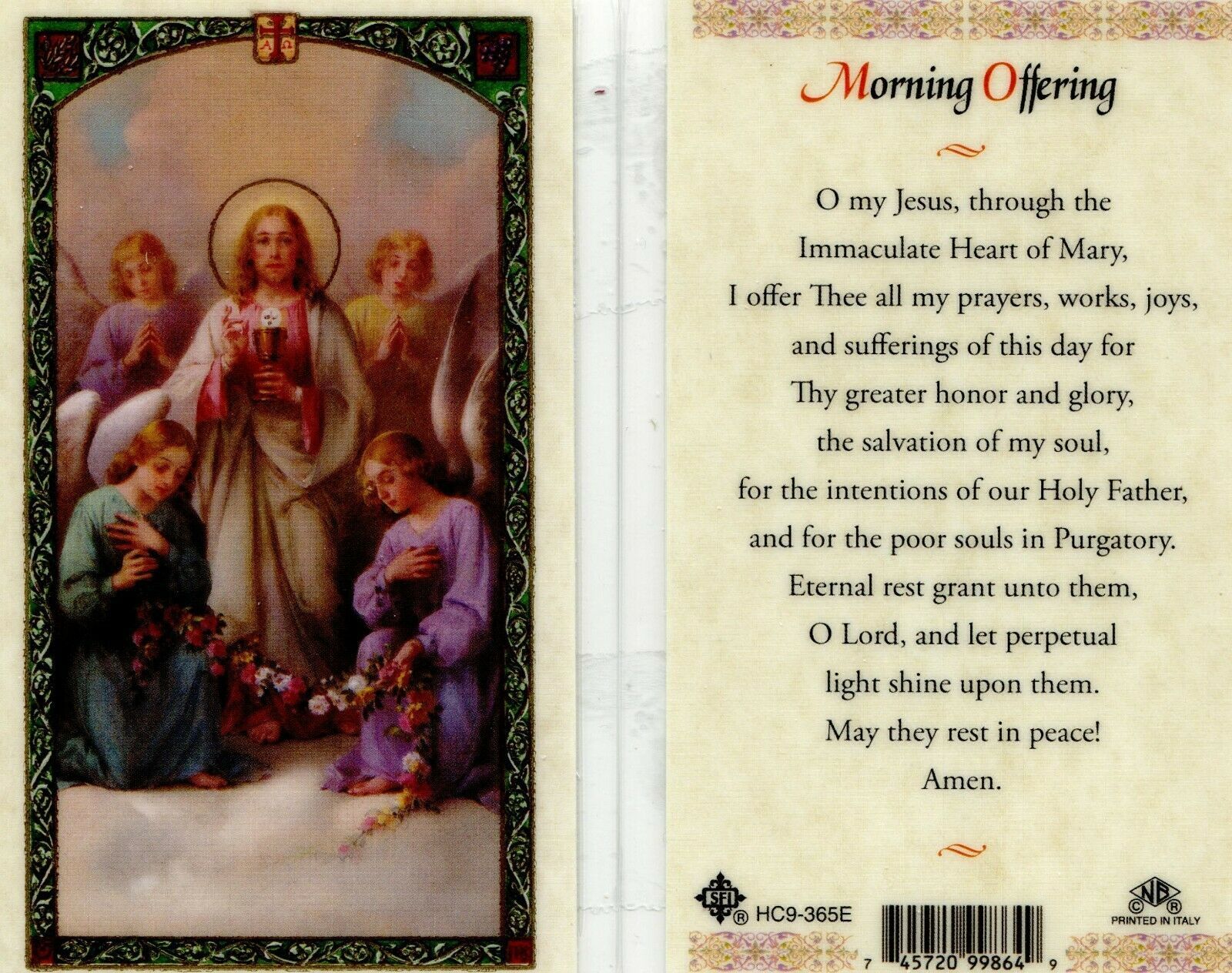
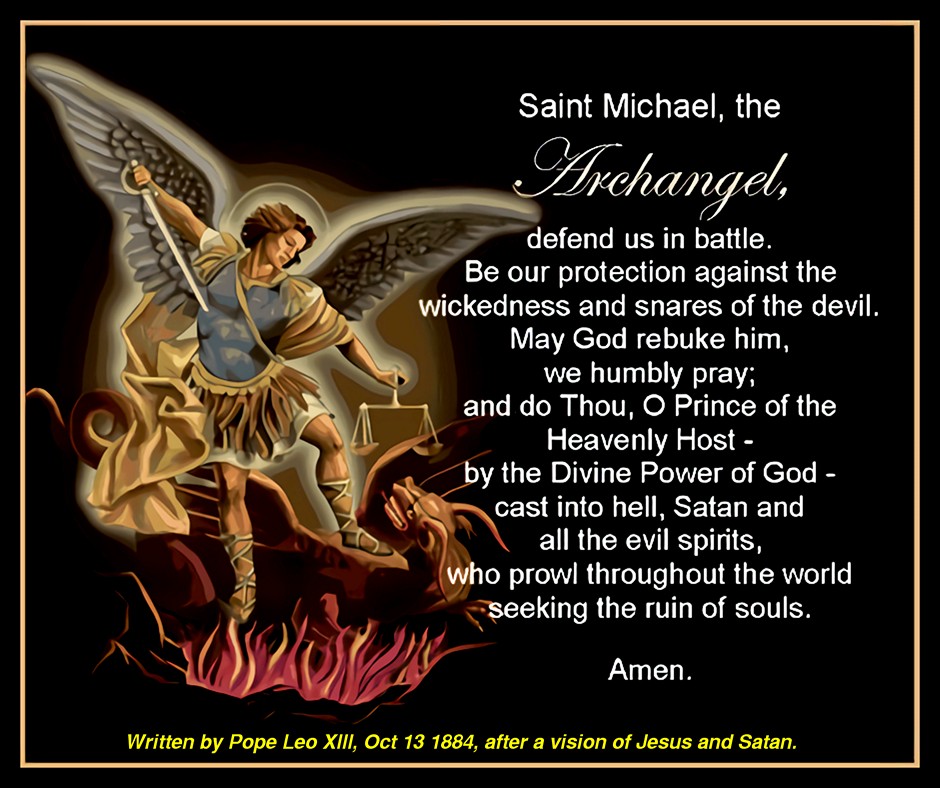
The Month of June is Dedicated to the Sacred Heart of Jesus

“Come to me, all who labor and are heavy laden, and I will give you rest. Take my yoke upon you, and learn from me; for I am gentle and lowly in heart, and you will find rest for your souls. For my yoke is easy, and my burden is light.” (Matthew 11:28-30)

Pope Leo XIV’s prayer intention for the month of May, 2026:
For the values of sports
Let us pray that sports be an instrument of peace, encounter, and dialogue among cultures and nations, and that they promote values such as respect, solidarity, and personal growth.

Today’s First Reading:
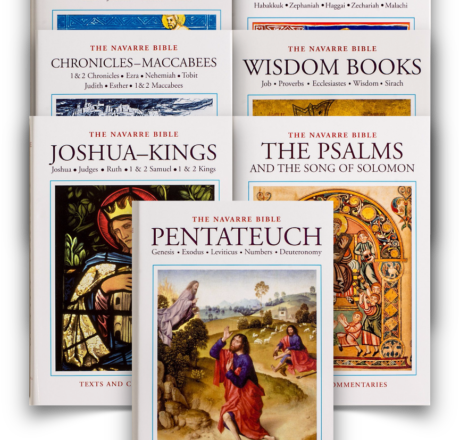
From: Exodus 19:2-6a
The Israelites Arrive in Sinai (Continuation)
---------------------------------------------
[2] And when they set out from Rephidim and came into the wilderness of Sinai, they encamped in the wilderness; and there Israel encamped before the mountain.
God Promises a Covenant
-----------------------
[3] And Moses went up to God, and the LORD called to him out of the mountain, saying, "Thus you shall, say to the house of Jacob, and tell the people of Israel: [4] You have seen what I did to the Egyptians, and how I bore you on eagles' wings and brought you to myself. [5] Now therefore, if you will obey my voice and keep my covenant, you shall be my own possession among all peoples; for all the earth is mine, [6] and you shall be to me a kingdom of priests and a holy nation."
***********************************************************************
Commentary:
19:1-24:18. These chapters deal with the central events of the book of Exodus--the encounter with the Lord, and the Covenant established between God and his people. They provide an excellent summary of the theological message of the Old Testament. On the one hand, there is God's revelation that in his plan for the salvation of men he has chosen a people from among all others and established a special relationship with it--the Covenant: "After the patriarchs, God formed Israel as his people by freeing them from slavery in Egypt. He established with them the covenant of Mount Sinai and, through Moses, gave them his law so that they would recognize him and serve him as the one living and true God, the provident Father and just judge, and so that they would look for the promised Savior" ("Catechism of the Catholic Church", 62). On the other hand, the events of Sinai clearly show Israel's destiny as the chosen people: "By this election, Israel is to be the sign of the future gathering of all nations" ("ibid.", 762). Thus, Israel is a figure of the new people of God, the Church.
This entire section has a degree of literary unity which binds together narratives and laws, all with much solemnity, because the sacred writer wants to emphasize that in the theophany at Sinai God offered Israel the Covenant and the Law. We could say the section breaks down as follows: a) prologue (chap. 1.9); b) legislative part, which includes the Ten Commandments (20:1-21) and the document of the Covenant (20:22-23:19); c) exhortatory appendix (23:20-33); d) the rite of the Covenant (24:1-18).
19:1-25. This chapter is written as part of a magnificent liturgy in which the events of Sinai are re-enacted for the reader. The sacred author, then, does not seek to provide an exact, scholarly report on what happened there; what he is providing, rather, is a theological interpretation of the real contact which took place between God and his people.
As in other important sections of this book, it draws on the great traditions of Israel but combines them so skillfully that they have become inseparable; only now and then can one identify traces of particular traditions. The text as it now stands is all of a piece. In this chapter there is a prologue (v. 9), summing up what follows, and the theophany proper (vv. 10-25).
19:3-9. This passage summarizes the meaning of the Covenant that is going to be established. So, it contains the idea of "election", though it does not use the term, and the idea of "demands" being made by God. Furthermore, we can see here the new status of the people (it is God's own property) and the basis of its hope (in the sense that Israel attains its dignity as a people to the extent that it is faithful to the divine will).
All the basic teachings are contained herein: a) The basis of the Covenant is Israel's deliverance from bondage (this has already happened: v. 4): the people are the object of God's preferential love; God made them a people by bringing about that deliverance. b) If they keep the Covenant, they will become a very special kind of people. This offer will take effect the moment they take on their commitments, but Israel will develop towards its full maturity only to the extent that it listens to/obeys the will of God. c) What God is offering the people is specified in three complementary expressions--"My own possession", "holy nation", "kingdom of priests".
The first of these expressions means private property, personally acquired and carefully conserved. Of all the nations of the earth Israel is to be "God's property" because he has chosen it and he protects it with special care. This new status is something which will be stressed frequently (cf. Deut 7:6; 26:17-19; Ps 135:4; Mal 3:17).
By being God's possession Israel shares in his holiness, it is a "holy nation", that is, a people separated out from among the nations so as to keep a close relationship with God; in other passages we are told more—that this is the relationship of "a son of God" (cf. 4:22; Deut 14:1). This new way of being means that there is a moral demand on the members of the people to show by their lives what they are by God's election: "You shall be holy; for I the Lord your God am holy" (Lev 19:2).
And the expression "kingdom of priests" does not mean that they will be ruled by priests, or that the entire people will exercise the role of priest (which is in fact reserved to the tribe of Levi); rather, it reflects the fact that God gives Israel the privilege of being the only nation in his service. Israel alone has been chosen to be a "kingdom for the Lord", that is, to be the sphere where he dwells and is recognized as the only Sovereign. Israel's acknowledgment of God is shown by the service the entire people renders to the Lord.
This section (vv. 7-8) ends with Moses' proposal of God's plans to the people and their acceptance of these plans by the elders and by all the people: "All that the Lord has spoken we will do" (v. 8). The same wording will be used twice again in the ceremony to ratify the Covenant (cf. 24:3, 7).
In the New Testament (1 Pet 2:5; Rev 1:6; 5:9-10) what happened here will be picked up again with the very same words, applying it to the new situation of the Christian in the Church, the new people of God and the true Israel (cf. Gal 3:29): every Christian shares in Christ's priesthood through his incorporation into Christ and is "called to serve God by his activity in the world, because of the common priesthood of the faithful, which makes him share in some way in the priesthood of Christ. This priesthood—though essentially distinct from the ministerial priesthood--gives him the capacity to take part in the worship of the Church and to help other men in their journey to God, with the witness of his word and his example, through his prayer and work of atonement: (St J. Escriva, "Christ Is Passing By", 120).
From: Romans 5:6-11
Reconciliation Through Christ's Sacrifice, the Basis of our Hope
----------------------------------------------------------------
[6] While we were yet helpless, at the right time Christ died for the ungodly. [7] Why, one will hardly die for a righteous man—though perhaps for a good man one will dare even to die. [8] But God shows His love for us in that while we were yet sinners Christ died for us.
[9] Since, therefore, we are now justified by His blood, much more shall we be saved by Him from the wrath of God. [10] For, if while we were enemies we were reconciled to God by the death of His Son, much more, now that we are reconciled, shall we be saved by His life. [11] Not only so, but we also rejoice in God through our Lord Jesus Christ, through whom we have now received our reconciliation.
***********************************************************************
Commentary:
6-11. The friendship which reigned in Paradise between God and man was followed by the enmity created by Adam's sin. By promising a future redeemer, God once more offered mankind His friendship. The scale of God's love for us can be seen in the "reconciliation" which the Apostle speaks about, which took place on the Cross, when Christ did away with this enmity, making our peace with God and reconciling us to Him (cf. Ephesians 2:15-16).
The petition in the Our Father, "Forgive us our trespasses as we forgive those that trespass against us", is an invitation to imitate the way God treats us, because by loving our enemies "there shines forth in us some likeness to God our Father, who, by the death of His Son, ransomed from everlasting perdition and reconciled to Himself the human race, which before was most unfriendly and hostile to Him" ("St. Pius V Catechism", IV, 14, 19).
The Need for Good Shepherds
---------------------------
[36] When He saw the crowds, He had compassion for them, because they were harassed and helpless, like sheep without a shepherd. [37] Then He said to His disciples, "The harvest is plentiful, but the laborers are few; [38] pray therefore the Lord of harvest to send out laborers into His harvest."
The Calling and First Mission of the Apostles
---------------------------------------------
[1] And He called to Him His twelve disciples and gave them authority over unclean spirits, to cast them out, and to heal every disease and every infirmity. [2] The names of the twelve apostles are these: first, Simon, who is called Peter, and Andrew, his brother; James the son of Zebedee, and John his brother; [3] Philip and Bartholomew; Thomas and Matthew the tax collector; James the son of Alphaeus, and Thaddaeus; [4] Simon the Cananaean, and Judas Iscariot, who betrayed Him.
[5] These twelve Jesus sent out, charging them, "Go nowhere among the Gentiles, and enter no town of the Samaritans, [6] but go rather to the lost sheep of the house of Israel. [7] And preach as you go, saying, `The Kingdom of Heaven is at hand.' [8] Heal the sick, raise the dead, cleanse lepers, cast out demons. You received without pay, give without pay."
***********************************************************************
Commentary:
36. "He had compassion for them": the Greek verb is very expressive; it means "He was deeply moved". Jesus was moved when He saw the people, because their pastors, instead of guiding them and tending them, led them astray, behaving more like wolves than genuine shepherds of their flock. Jesus sees the prophecy of Ezekiel 34 as now being fulfilled; in that passage God, through the prophet, upbraids the false shepherds of Israel and promises to send them the Messiah to be their new leader.
"If we were consistent with our faith when we looked around us and contemplated the world and its history, we would be unable to avoid feeling in our own hearts the same sentiments that filled the heart of our Lord" (St J. Escriva, "Christ Is Passing By", 133). Reflection on the spiritual needs of the world should lead us to be tirelessly apostolic.
37-38. After contemplating the crowds neglected by their shepherds, Jesus uses the image of the harvest to show us that that same crowd is ready to receive the effects of Redemption: "I tell you, lift up your eyes, and see now the fields are already white for harvest" (John 4:35). The field of the Jewish people cultivated by the prophets—most recently by John the Baptist--is full of ripe wheat. In farm work, the harvest is lost if the farmer does not reap at the right time; down the centuries the Church feels a similar need to be out harvesting because there is a big harvest ready to be won.
However, as in the time of Jesus, there is a shortage of laborers. Our Lord tells us how to deal with this: we should pray to God, the Lord of harvest, to send the necessary laborers. If a Christian prays hard, it is difficult to imagine his not feeling urged to play his part in this apostolate. In obeying this commandment to pray for laborers, we should pray especially for there to be no lack of shepherds, who will be able to equip others with the necessary means of sanctification needed to back up the apostolate.
In this connection Pope Paul VI reminds us: "the responsibility for spreading the Gospel that saves belongs to everyone--to all who have received it! The missionary duty concerns the whole body of the Church; in different ways and to different degrees, it is true, but we must all of us be united in carrying out this duty. Now let the conscience of every believer ask himself: Have I carried out my missionary duty? Prayer for the Missions is the first way of fulfilling this duty" ("Angelus Address", 23 October 1977).
1-4. Jesus calls His twelve Apostles after recommending to them to pray to the Lord to send laborers into His harvest (cf. Matthew 9:38). Christians' apostolic action should always, then, be preceded and accompanied by a life of constant prayer: apostolate is a divine affair, not a merely human one. Our Lord starts His Church by calling twelve men to be, as it were, twelve patriarchs of the new people of God, the Church. This new people is established not by physical but by spiritual generation. The names of those Apostles are specifically mentioned here. They were not scholarly, powerful or important people: they were average, ordinary people who responded faithfully to the grace of their calling--all of them, that is, except Judas Iscariot. Even before His death and resurrection Jesus confers on them the power to cast out unclean spirits and cure illnesses--as an earnest of and as training for the saving mission which He will entrust to them.
The Church reveres these first Christians in a very special way and is proud to carry on their supernatural mission, and to be faithful to the witness they bore to the teaching of Christ. The true Church is absent unless there is uninterrupted apostolic succession and identification with the spirit which the Apostles made their own.
"Apostle": this word means "sent"; Jesus sent them out to preach His Kingdom and pass on His teaching.
The Second Vatican Council, in line with Vatican I, "confesses" and "declares" that the Church has a hierarchical structure: "The Lord Jesus, having prayed at length to the Father, called to Himself those whom He willed and appointed twelve to be with Him, whom He might send to preach the Kingdom of God (cf. Mark 3:13-19: Matthew 10:1-10). These Apostles (cf. Luke 6:13) He constituted in the form of a college or permanent assembly, at the head of which He placed Peter, chosen from among them (cf. John 21:15-17). He sent them first of all to the children of Israel and then to all peoples (cf. Romans 1:16), so that, sharing in His power, they might make all peoples His disciples and sanctify and govern them (cf. Matthew 28:16-20; Mark 16:15; Luke 24:45-48; John 20:21-23) and thus spread the Church and, administering it under the guidance of the Lord, shepherd it all days until the end of the world (cf. Matthew 28:28)" ("Lumen Gentium", 19).
1. In this chapter St. Matthew describes how Jesus, with a view to the spreading of the Kingdom of God which He inaugurates, decides to establish a Church, which He does by giving special powers and training to these twelve men who are its seed.
5-15. After revealing His intention to found the Church by choosing the Twelve (verses 1-4), in the present passage He shows that He intends to start training these first Apostles. In other words, from early on in His public ministry He began to lay the foundations of His Church.
Everyone needs doctrinal and apostolic training to follow his Christian calling. The Church has a duty to teach, and the faithful have a parallel duty to make that teaching their own. Therefore, every Christian should avail of the facilities for training which the Church offers him--which will vary according to each person's circumstances.
5-6. In His plan of salvation God gave certain promises (to Abraham and the patriarchs), a Covenant and a Law (the Law of Moses), and sent the prophets. The Messiah would be born into this chosen people, which explains why the Messiah and the Kingdom of God were to be preached to the house of Israel before being preached to the Gentiles. Therefore, in their early apprenticeship, Jesus restricts the Apostles' area of activity to the Jews, without this taking from the world-wide scope of the Church's mission. As we will see, much later on He charges them to "go and make disciples of all nations" (Matthew 28:19); "Go into all the world and preach the Gospel to the whole creation" (Mark 16:15). The Apostles also, in the early days of the spread of the Church, usually sought out the Jewish community in any new city they entered, and preached first to them (cf. Acts 13:46).
7-8. Previously, the prophets, when speaking of the messianic times, had used imagery suited to the people's spiritual immaturity. Now, Jesus, in sending His Apostles to proclaim that the promised Kingdom of God is imminent, lays stress on its spiritual dimension. The powers mentioned in verse 8 are the very sign of the Kingdom of God or the reign of the Messiah proclaimed by the prophets. At first (chapters 8 and 9) it is Jesus who exercises these messianic powers; now He gives them to His disciples as proof that His mission is divine (Isaiah 35:5-6; 40:9; 52:7; 61:1).
Disclaimer: Opinions posted on Free Republic are those of the individual posters and do not necessarily represent the opinion of Free Republic or its management. All materials posted herein are protected by copyright law and the exemption for fair use of copyrighted works.


