
Posted on 06/11/2026 9:59:24 PM PDT by fidelis
Solemnity of the Most Sacred Heart of Jesus
“Come to me, all you who labor and are burdened, and I will give you rest. Take my yoke upon you and learn from me, for I am meek and humble of heart; and you will find rest for yourselves…” Matthew 11:28–29
The words gentle and power do not often appear side by side. Yet when we contemplate the Sacred Heart of Jesus, these two seemingly opposite qualities unite perfectly within the divine mystery of Christ’s love.
In Year B of the liturgical cycle, we read from John’s Gospel the scene in which a soldier pierces our Lord’s Sacred Heart with a lance—“and immediately blood and water flowed out” (John 19:34). Today, in Year A, we hear a different but complementary revelation. In Matthew’s Gospel, Jesus opens His Heart to us not by the soldier’s lance but by His own words: “Come to me…” Spiritually speaking, we are invited to enter into His Heart—the same Heart that will be pierced for us, from which mercy will flow like a river of grace.
These tender, gentle, and powerful words are far more than a compassionate summons to draw near. They are a divine invitation to union—to rest in Him, to dwell in Him, and most profoundly, to live within His Sacred Heart. This Heart is not only a place of refuge, but a furnace of transforming love and strength.
To enter the Sacred Heart of Jesus is to enter the very center of God’s love—a love that is meek and humble, yet also all-powerful and eternal. In this Heart, we do not find a throne of earthly power, but the throne of divine mercy. We find not a king who rules with coercion, but the King of kings who governs through self-sacrifice and compassion. The One who holds the universe in existence invites us into rest, not by removing our burdens, but by sharing them and sanctifying them through His love.
When Jesus says, “Take my yoke upon you,” He does not mean we will escape from life’s labors but that those labors will be transformed by, with, and in Him. The yoke binds us to Him. He does not place it on us from without; rather, He invites us to share in His own yoke—to labor with Him, walk with Him, and suffer with Him. In so doing, we discover that His way is one of deep interior rest and peace. Why? Because His yoke is forged in love. His burden is light because it is borne together with grace.
The Sacred Heart is more than an object of admiration and devotion; it is a dwelling place for all who seek refuge, strength, and divine union. To rest in the Sacred Heart is to surrender our illusions of self-sufficiency, to cast our anxieties upon Him, and to entrust ourselves entirely to His providential will. It is to let go of striving alone and to begin walking in step with the One who is Himself the Way, the Truth, and the Life.
When we live in the Sacred Heart of Jesus, we live in union with Him, and He begins to act in and through us. Most importantly, we are drawn into His own prayer to the Father—the prayer He offered just before extending His invitation: “I give praise to you, Father, Lord of heaven and earth…” and “All things have been handed over to me by my Father” (Matthew 11:25, 27).
Reflect today on the invitation Jesus offers you. What burdens do you carry that He wants to bear with you? What anxieties must be surrendered into the furnace of His love? What would it mean for you to live in His Heart, and allow Him to live in yours? Come to Him, do not hesitate, and your burdens will be transformed by grace.
Most Sacred Heart of Jesus, I trust in You, love You, and adore You. Transform my understanding of today’s solemnity into something far greater than mere devotion—make it a way of life. I say “Yes” to Your invitation, dear Lord, and I come to You without hesitation. Enfold me in Your merciful Heart and teach me to live in union with You each day. Jesus, I trust in You.
Please keep in mind that this is a Catholic Caucus/Devotional thread for the purpose of prayerful reflection on the Sacred Scriptures and is closed to debate of any kind. Per FR policy on Religion Caucus threads, off-topic, argumentative, and abusive comments are not allowed and will be submitted to the Mods for deletion. Thanks, and God bless you.
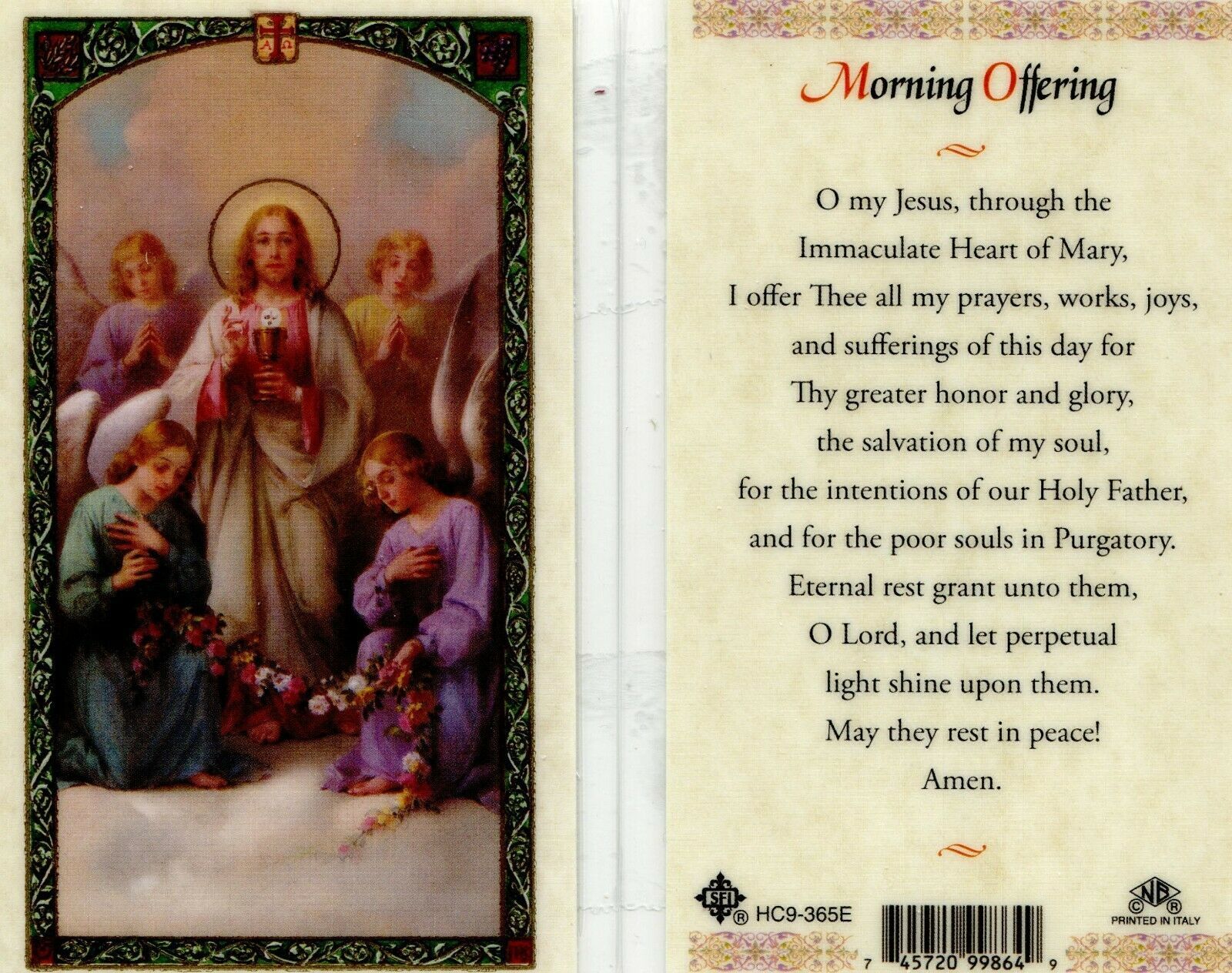
The Month of June is Dedicated to the Sacred Heart of Jesus

“Come to me, all who labor and are heavy laden, and I will give you rest. Take my yoke upon you, and learn from me; for I am gentle and lowly in heart, and you will find rest for your souls. For my yoke is easy, and my burden is light.” (Matthew 11:28-30)

Pope Leo XIV’s prayer intention for the month of May, 2026:
For the values of sports
Let us pray that sports be an instrument of peace, encounter, and dialogue among cultures and nations, and that they promote values such as respect, solidarity, and personal growth.

Today’s First Reading
From: Deuteronomy 7:6-11
------------------------------
[6] "For you are a people holy to the LORD your God; the LORD your God has chosen you to be a people for his own possession, out of all the peoples that are on the face of the earth.
God's Election of Israel
------------------------
[7] "It was not because you were more in number than any other people that the LORD set his love upon you and chose you, for you were the fewest of all peoples; [8] but it is because the LORD loves you, and is keeping the oath which he swore to your fathers, that the LORD has brought you out with a mighty hand, and redeemed you from the house of bondage, from the hand of Pharaoh king of Egypt. [9] Know therefore that the LORD your God is God, the faithful God who keeps covenant and steadfast love with those who love him and keep his commandments, to a thousand generations, and requites to their face those who hate him, by destroying them; he will not be slack with him who hates him, he will requite him to his face. ''You shall therefore be careful to do the commandment, and the statutes, and the ordinances, which I command you this day."
***********************************************************************
Commentary:
7:6-16. It is fair to say that Deuteronomy 7:6-7 is the classic passage in Old Testament revelation on God's special election of Israel. That election, and the love which it evidences, are themes basic to this book; it keeps on stressing them (cf., e.g., 4:20, 34; 9:5). God makes his choice first—quite independently of the qualities or merits of the people or of individuals. The only reason for his choice is pure love and (in the case of the Israelites) the promises he made to their ancestors (cf. the note on Ex 1:8-14). Consciousness of this election, awareness that Israel is God's special possession, runs right through Holy Scripture. The New Testament upholds this privilege that belongs to Israel: John 1:11 ("He came to his own home") must be interpreted in the first instance as meaning that the Word comes specially to his people Israel; in the second instance he comes to all mankind. Romans 9:4-5 carries the same message: "They are Israelites, and to them belong the sonship, the glory, the covenants, the giving of the law, the worship, and the promise, and of their race, according to the flesh, is the Christ [...]."
Verses 7-8 give the theological explanation of this election: God's pure love, his predilection, is totally unmerited by Israel; this means that God is sovereignly free to choose whomever he wishes for the mission he has in mind; and no one has any right to be chosen specially by God.
What happens in the collectivity of the people of Israel also applies when God singles out individuals for special assignments. In the New Testament, it says apropos of the apostles, that "he called to him those whom he desired" (Mt 3:13); and the case of St Paul is particularly apposite: Jesus called hin though he "had blasphemed and persecuted and insulted him [Christ]" (1 Tim 1:13).
"Vocation comes first," [St] BI. Josemaria Escriva reminds us. "God loves us before we even know how to go toward him, and he places in us the love with which we can respond to his call. God's fatherly goodness comes out to meet us. Our Lord is not only just. He is much more: he is merciful. He does not wait for us to go to him. He takes the initiative, with the unmistakable signs of paternal affection" ("Christ Is Passing By", 33).
7:10. This verse touches on something very important as regards human behavior: God rewards those who do good and punishes those who do evil. Everyday experience does not always seem to bear this out: evil people enjoy success whereas good people are mistreated and despised. Men have always asked themselves how God's justice can be compatible with these facts.
The prophet Jeremiah will ask the Lord: "Why does the way of the wicked prosper? Why do all who are treacherous thrive?" (Jer 12:1). Many psalms echo the same idea (cf Ps 37; 38; 29; 49; 73; 92). But the place where the matter is dealt with most dramatically is the book of Job. The Wisdom books of the Old Testament do a lot to provide an answer to this question, but it will not be until the fullness of Revelations in the New Testament that it is fully solved. Throughout the New Testament reward or punishment is not depicted as a mathematical calculation, to produce instant recompense in this life; rather, the way a person behaves in this life decides his or her fate in the next life. If the wicked are successful in this life, that is something very short-lived; whereas the joy of the righteous will reach its fullness in eternal beatitude. Prior to that, the righteous often suffer contradiction, pain and sorrow: it purifies their lives and gives an increase of divine grace.
From: 1 John 4:7-10
God is Love. Brotherly Love, the Mark of Christians
---------------------------------------------------
[7] Beloved, let us love one another, for love is of God, and he who loves is born of God and knows God. [8] He who does not love does not know God; for God is love. [9] In this the love of God was made manifest among us, that God sent his only Son into the world, so that we might live through him. [10] In this is love, not that we loved God but that he loved us and sent his Son to be the expiation for our sins.
***********************************************************************
Commentary:
7-21. St John now expands on the second aspect of the divine commandment (cf. 1 Jn 3:23)—brotherly love. The argument is along these lines: God is love and it was he who loved us to begin with (vv. 7-10); brotherly love is the response which God's love calls for (vv. 11 16); when our love is perfect, we feel no fear (vv. 17-18); brotherly love is an expression of love of God (vv. 19-21).
This is not tiresome repetition of the ideas already discussed (2:7-11; 3:11-18): contrary to the false teaching which is beginning to be spread, charity is the sure mark, the way to recognize the genuine disciple.
St Jerome hands down a tradition concerning the last years of St John's life: when he was already a very old man, he used always say the same thing to the faithful: "My children, love one another!" On one occasion, he was asked why he insisted on this: "to which he replied with these words worthy of John: 'Because it is the Lord's commandment, and if you keep just this commandment, it will suffice"' ("Comm. in Gal.", III, 6, 10).
7. The divine attributes, God's perfections, which he has to the highest degree, are the cause of our virtues: for example, because God is holy, we have been given a capacity to be holy. Similarly, because God is love, we can love. True love, true charity, comes from God.
8. "God is love": without being strictly speaking a definition (in 1:5 he says "God is light"), this statement reveals to us one of the most consoling attributes of God: "Even if nothing more were to be said in praise of love in all the pages of this epistle", St Augustine explains, "even if nothing more were to be said in all the pages of Sacred Scripture, and all we heard from the mouth of the Holy Spirit were that 'God is love', there would be nothing else we would need to look for" ("In Epist. Ioann. Ad Parthos", 7, 5).
God's love for men was revealed in Creation and in the preternatural and supernatural gifts he gave man prior to sin; after man's sin, God's love is to be seen, above all, in forgiveness and redemption (as St John goes on to say: v. 9), for the work of salvation is the product of God's mercy: "It is precisely because sin exists in the world, which 'God so loved . . . that he gave his only Son' (Jn 3:16), that God, who 'is love' (1 Jn 4:8), "cannot reveal himself other than as mercy". This corresponds not only to the most profound truth of that love which God is, but also to the whole interior truth of man and of the world which is man's temporary homeland" (St Pope John Paul II, "Dives In Misericordia", 13).
9. God has revealed his love to men by sending his own Son; that is, it is not only Christ's teachings which speak to us of God's love, but, above all, his presence among us: Christ himself is the fullness of revelation of God (cf. Jn 1:18; Heb 1:1) and of his love for men. "The source of all grace is God's love for us, and he has revealed this not just in words but also in deeds. It was divine love which led the second Person of the most holy Trinity, the Word, the Son of God the Father, to take on our flesh, our human condition, everything except sin. And the Word, the Word of God, is the Word from which Love proceeds (cf. "Summa Theologiae", I, q. 43, a. 5, quoting St Augustine, "De Trinitate", IX, 10).
"Love is revealed to us in the incarnation, the redemptive journey which Jesus Christ made on our earth, culminating in the supreme sacrifice of the cross. And on the cross it showed itself through a new sign: 'One of the soldiers pierced his side with a spear, and at once there came out blood and water' (Jn 19:34). This water and blood of Jesus speaks to us of a self-sacrifice brought to the last extreme: 'It is finished' (Jn 19:30)--everything is achieved, for the sake of love" (St J. Escriva, "Christ Is Passing By", 162).
"Among us": it is difficult to convey in English everything the Greek contains. The Greek expression means that the love of God was shown to those who witnessed our Lord's life (the Apostles) and to all other Christians, whose participate in this apostolic witness (cf. note on 1 Jn 1:1-3; this idea is repeated in vv. 14 and 16). But it also means "within us", inside us, in our hearts, insofar as we partake of God's own life by means of sanctifying grace: every Christian is a witness to the fact that Christ has come so that men "may have life, and have it abundantly" (Jn 10:10).
10. Given that love is an attribute of God (v. 8), men have a capacity to love insofar as they share in God's qualities. So, the initiative always lies with God.
When explaining in what love consists. St John points to its highest form of expression: "he sent (his Son) to be the expiation of our sins" (cf. 2:2). Similar turns of phrase occur throughout the letter: the Son of God manifested himself "to destroy the works of the devil" (3:8); "he laid down his life for us" (3:16). All these statements show that: 1) Christ's death is a SACRIFICE in the strict sense of the word, the most sublime act of recognition of God's sovereignty; 2) it is an atoning sacrifice, because it obtains God's pardon for the sins of men; 3) it is the supreme act of God's love, so much so that St John actually says, "in this is love."
What is amazing, St Alphonsus teaches, "is that he could have saved us without suffering or dying and yet he chose a life of toil and humiliation, and a bitter and ignominious death, even death on a cross, something reserved for the very worst offenders. And why was it that, when he could have redeemed us without suffering, he chose to embrace death on the Cross? To show us how much he loved us" ("The Love of Jesus Christ", chap. 1).
From: Matthew 11:25-30
Jesus Thanks His Father
-----------------------
[25] At that time Jesus declared, "I thank Thee, Father, Lord of Heaven and earth, that Thou hast hidden these things from the wise and understanding and revealed them to babes; [26] yea, Father, for such was Thy gracious will. [27] All things have been delivered to Me by My Father; and no one knows the Son except the Father, and no one knows the Father except the Son and any one to whom the Son chooses to reveal Him. [28] Come to Me, all who labor and are heavy laden, and I will give you rest. [29] Take My yoke upon you, and learn from Me; for I am gentle and lowly in heart, and you will find rest for your souls. [30] For My yoke is easy, and My burden is light."
***********************************************************************
Commentary:
25-26. The wise and understanding of this world, that is, those who rely on their own judgment, cannot accept the revelation which Christ has brought us. Supernatural outlook is always connected with humility. A humble person, who gives himself little importance, sees; a person who is full of self-esteem fails to perceive supernatural things.
27. Here Jesus formally reveals His divinity. Our knowledge of a person shows our intimacy with Him, according to the principle given by St. Paul: "For what person knows a man's thoughts except the spirit of the man which is in him?" (1 Corinthians 2:11). The Son knows the Father by the same knowledge as that by which the Father knows the Son. This identity of knowledge implies oneness of nature; that is to say, Jesus is God just as the Father is God.
28-30. Our Lord calls everyone to come to Him. We all find things difficult in one way or another. The history of souls bears out the truth of these words of Jesus. Only the Gospel can fully satisfy the thirst for truth and justice which sincere people feel. Only our Lord, our Master--and those to whom He passes on His power--can soothe the sinner by telling him, "Your sins are forgiven" (Matthew 9:2). In this connection Pope Paul VI teaches: "Jesus says now and always, `Come to Me, all who labor and are heavy laden, and I will give you rest.' His attitude towards us is one of invitation, knowledge and compassion; indeed, it is one of offering, promise, friendship, goodness, remedy of our ailments; He is our comforter; indeed, our nourishment, our bread, giving us energy and life" ("Homily on Corpus Christi", 13 June 1974).
"Come to Me": the Master is addressing the crowds who are following Him, "harassed and helpless, like sheep without a shepherd" (Matthew 9:36). The Pharisees weighed them down with an endless series of petty regulations (cf. Acts 15:10), yet they brought no peace to their souls. Jesus tells these people, and us, about the kind of burden He imposes: "Any other burden oppresses and crushes you, but Christ's actually takes weight off you. Any other burden weighs down, but Christ's gives you wings. If you take a bird's wings away, you might seem to be taking weight off it, but the more weight you take off, the more you tie it down to the earth. There it is on the ground, and you wanted to relieve it of a weight; give it back the weight of its wings and you will see how it flies" (St. Augustine, "Sermon" 126).
"All you who go about tormented, afflicted and burdened with the burden of your cares and desires, go forth from them, come to Me and I will refresh you and you shall find for your souls the rest which your desires take from you" (St. John of the Cross, "Ascent of Mount Carmel", Book 1, Chapter 7, 4).
Disclaimer: Opinions posted on Free Republic are those of the individual posters and do not necessarily represent the opinion of Free Republic or its management. All materials posted herein are protected by copyright law and the exemption for fair use of copyrighted works.


