
Posted on 06/10/2026 9:59:25 PM PDT by fidelis
Memorial of Saint Barnabas, Apostle
Jesus said to his disciples: “I tell you, unless your righteousness surpasses that of the scribes and Pharisees, you will not enter into the Kingdom of heaven.” Matthew 5:20
This statement would have been shocking to Jesus’ audience. At that time, the scribes and Pharisees were well-known for their meticulous observance of the Law of Moses, attending scrupulously to even the smallest details. They prided themselves on their strict adherence and often made their “righteousness” highly visible, earning them great respect among the people as models of holiness and fidelity to the covenant. However, their fidelity was often purely external, lacking the interior disposition of love and worship of God, which is the heart of the covenant. For this reason, Jesus spoke bluntly to the people, even in the presence of the scribes and Pharisees, declaring that their level of righteousness was insufficient to enter the Kingdom of Heaven.
Imagine the humiliation felt by these religious leaders. Jesus’ words would have stung deeply, confronting them with the inadequacy of their righteousness. Such a confrontation can lead to one of two responses: Either the sting of humiliation fosters the virtue of humility, repentance, and conversion, or it magnifies pride, leading to anger and rejection. While some of the scribes and Pharisees might have chosen the path of humility and repentance, the majority likely did not.
Jesus followed up this statement with a teaching on anger and how it can move from an interior disposition to severe hatred. While that teaching is important, it is also useful to pause and place ourselves in the shoes of the scribes and Pharisees, pondering how we would have reacted if we were them. Many of them had spent their whole lives studying the Law, following it, and teaching others to do the same. When Jesus came along, He essentially told them that much of what they had been doing was worthless and fruitless because they were not following the will of God. Place yourself in their shoes.
Consider your ability—or inability—to endure the humiliation that those religious leaders felt. Imagine that you had put great time and effort into cultivating a particular moral and spiritual attitude and approach to your faith, only for Jesus to reveal that you have not been listening to God at all, but have gone astray from His will. Hearing such a holy rebuke would be painful and humiliating, requiring profound humility to accept. Imagine further that you listened to all that Jesus said to you. You felt the sting of wounded pride and self-righteousness, but you humbled yourself, repented, and began to change. When that happens, external humiliation produces internal humility and bears an abundance of good fruit. When it doesn’t happen, we reject the truth and become even more obstinate in our ways, allowing pride to harden our hearts further.
In truth, none of us is righteous enough to attain the Kingdom of Heaven by our own efforts. We all fall short of fulfilling God’s will and cooperating with His grace. The real question is not whether we need ongoing change, but whether we are willing to receive Jesus’ loving rebuke and change our ways.
Reflect today on the many humbling truths God desires to reveal to you. Each humiliation, though painful, is a step on the path to true righteousness and holiness, drawing us closer to the Beatific Vision in Heaven. Only in Heaven will we be fully purified of every sin. Until that day, we must embrace every humiliation God allows, recognizing these painful truths as gifts that correct us, purify us, and set us firmly on the path to true righteousness.
Lord of all Truth, there are many truths I need to hear, even when they are difficult. Please humble me by speaking directly to my soul and revealing my sin. As You do, grant me the grace to listen with an open heart and respond generously to Your call. Jesus, I trust in You.
Please keep in mind that this is a Catholic Caucus/Devotional thread for the purpose of prayerful reflection on the Sacred Scriptures and is closed to debate of any kind. Per FR policy on Religion Caucus threads, off-topic, argumentative, and abusive comments are not allowed and will be submitted to the Mods for deletion. Thanks, and God bless you.
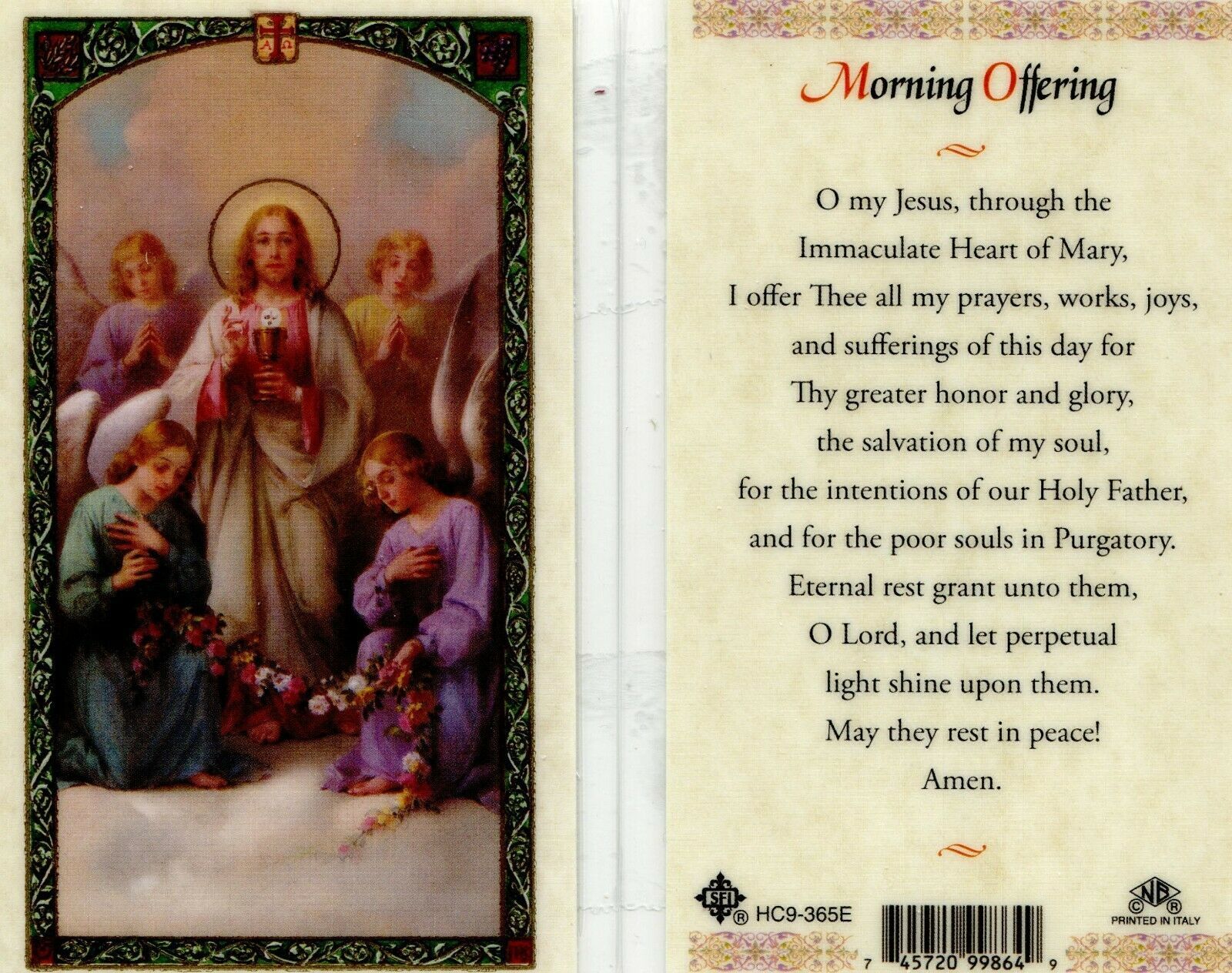
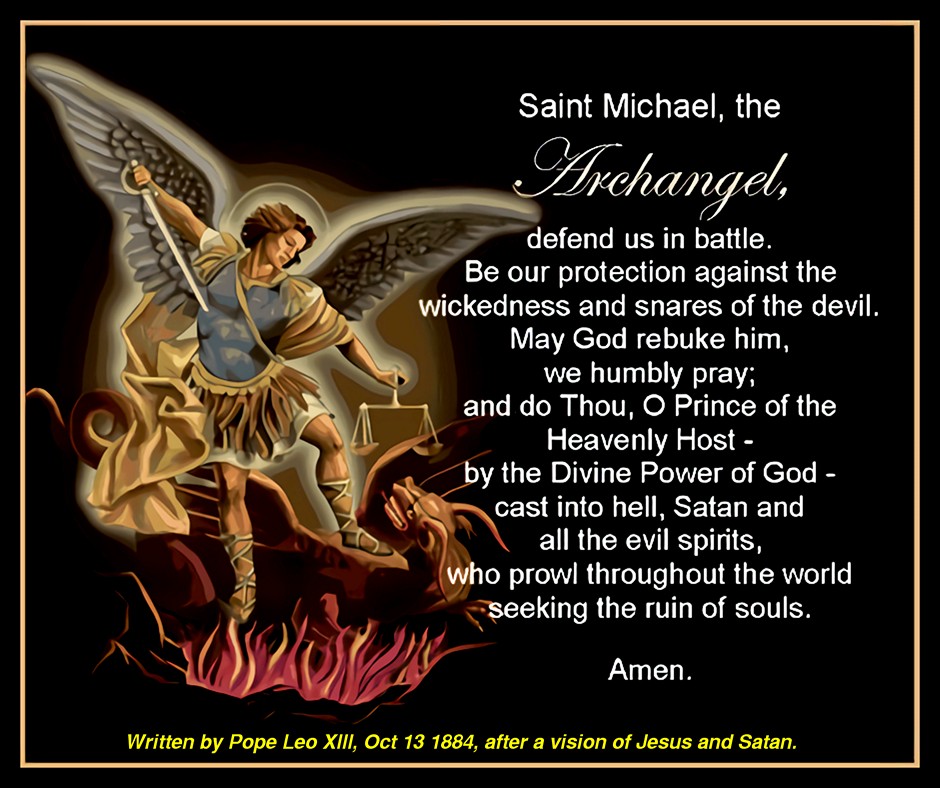
The Month of June is Dedicated to the Sacred Heart of Jesus

“Come to me, all who labor and are heavy laden, and I will give you rest. Take my yoke upon you, and learn from me; for I am gentle and lowly in heart, and you will find rest for your souls. For my yoke is easy, and my burden is light.” (Matthew 11:28-30)

Pope Leo XIV’s prayer intention for the month of May, 2026:
For the values of sports
Let us pray that sports be an instrument of peace, encounter, and dialogue among cultures and nations, and that they promote values such as respect, solidarity, and personal growth.

Today’s First Reading
From: Acts 11:21b-26; 13:1-3
The Beginning of the Church in Antioch (Continuation)
--------------------------------------
[21b] A great number that believed turned to the Lord. [22] News of this came to the ears of the Church in Jerusalem, and they sent Barnabas to Antioch. [23] When he came and saw the grace of God, he was glad; and he exhorted them all to remain faithful to the Lord with steadfast purpose; [24] for he was a good man, full of the Holy Spirit and of faith. And a large company was added to the Lord. [25] So Barnabas went to Tarsus to look for Saul; [26] and when he had found him, he brought him to Antioch. For a whole year they met with the Church, and taught a large company of people and in Antioch the disciples were for the first time called Christians.
The Mission of Barnabas and Paul
--------------------------------
[1] Now in the Church at Antioch there were prophets and teachers, Barnabas, Symeon who was called Niger, Lucius of Cyrene, Manaen, a member of the court of Herod the Tetrarch, and Saul. [2] While they were worshipping the Lord and fasting, the Holy Spirit said, "Set apart for Me Barnabas and Saul for the work to which I have called them." [3] Then after fasting and praying they laid their hands on them and sent them off.
***********************************************************************
Commentary:
19-30. This account links up with Acts 8:1-4, which describes the flight of Christians from Jerusalem due to the first persecution following on the martyrdom of St. Stephen. We are now told about the spread of the Gospel to Antioch on the Orontes, the capital of the Roman province of Syria. Antioch was the first major city of the ancient world where the word of Jesus Christ was preached. It was the third city of the empire, after Rome and Alexandria, with a population of about half a million and a sizeable Jewish colony, and was a very important cultural, economic and religious center.
In Antioch the Gospel is proclaimed not only to Jews and proselytes. These Hellenist Jews from Jerusalem preached the Gospel to all and sundry as part of their ordinary everyday activity. St. Luke does not give us any names: the preachers are ordinary Christians. "Notice", says Chrysostom, "that it is grace which does everything. And also reflect on the fact that this work is begun by unknown workers and only when it begins to prosper do the Apostles send Barnabas" ("Hom. On Acts", 25).
The Christian mission at Antioch played a key part in the spread of Christianity. Evangelization of non-Jews becomes the norm; it is not just something which happens in a few isolated cases. Nor is it limited to "God-fearers"; it extends to all the Gentiles. The center of gravity of the Christian Church begins to move from Jerusalem to Antioch, which will become the springboard for the evangelization of the pagan world.
22-26. The community at Jerusalem, where the Apostles were based, felt responsible for everything that happened in the Christian mission-field. This was why they sent Barnabas to oversee developments in Antioch. Barnabas was a man whom the Apostles trusted, noted for his virtue (he was mentioned in Acts 4:36).
No doubt it was because of all the work opening before the preacher of the Gospel that Barnabas sought out Paul, who had returned to Tarsus after his conversion and his visit to Jerusalem (9:30). Barnabas probably knew that the future Apostle was the very man he needed to join him in the work of evangelization about to be undertaken by the Antiochene Church. Barnabas' sense of responsibility and his zeal to find laborers for the Lord's harvest (cf. Matthew 9:38) lead to the first of the great missionary journeys, in which Paul's vocation find full scope.
26. We do not exactly know who first began to describe the disciples as "Christians". In any event the fact that they were given a name shows that everyone recognized them as an identifiable group. The name also suggests that the term "Christos"--Messiah, Anointed--is no longer regarded simply as a messianic title but also as a proper name.
Some Fathers of the Church see this name as further indication that people do not become disciples of the Lord through human causes. "Although the holy Apostles were our teachers and have given us the Gospel of the Savior, it is not from them that we have taken our name: we are "Christians" through Christ and it is for Him that we are called in this way" (St. Athanasius, "Oratio I Contra Arianos", 2).
1. From this point onwards Luke's account centers on the Church of Antioch. This was a flourishing community, with members drawn from all sectors of society. In some respects its organization structure was like that of the Jerusalem Church; in others, not. It clearly had ordained ministers who were responsible for its government, who preached and administered the Sacraments; along these we find prophets (cf. 11:28) and teachers, specially trained members of the community.
In the early Church "teachers" were disciples well versed in Sacred Scripture who were given charge of catechesis. They instructed the catechumens and other Christians in the basic teaching of the Gospel as passed on by the Apostles, and some of them had a capacity for acquiring and communicating to others an extensive and profound knowledge of the faith.
Teachers do not necessarily have to be priests or preachers. Preaching was usually reserved to ordained ministers; teachers had an important position in the Church: they were responsible for on-going doctrinal and moral education and were expected faithfully to hand on the same teaching as they themselves had received. A virtuous life and due learning would have protected them against any temptation to invent new teachings or go in for mere speculation not based on the Gospel (cf. 1 Timothy 4:7; 6:20; Titus 2:1).
The "Letter to Diognetus" describes the ideal Christian teacher: "I do not speak of passing things nor do I go in search of new things, but, like the disciple of the Apostles that I am, I become a teacher of peoples. I do nothing but hand on what was given me by those who made themselves worthy disciples of the truth" (XI, 1).
2-3. "Worship" of the Lord includes prayer, but it refers primarily to the celebration of the Blessed Eucharist, which is at the center of all Christian ritual. This text indirectly establishes a parallel between the Mass and the sacrificial rite of the Mosaic Law. The Eucharist provides a Christian with the nourishment he needs, and its celebration "causes the Church of God to be built up and grow in stature" (Vatican II, "Unitatis Redintegratio", 15). Significantly, the Eucharist is associated with the start of this new stage in the expansion of the Church.
Paul and Barnabas receive a missionary task directly from the Holy Spirit, and by an external sign--the laying on of hands--the Antiochene community prays to God to go with them and bless them. In His promotion of the spread of the Church the Holy Spirit does not act at a distance, so to speak. Every step in the progress of the Church in the world is rightly attributed to the initiative of the Paraclete. It is as if God were repeatedly ratifying His salvific plans to make it perfectly plain that He is ever-faithful to His promises. "The mission of the Church is carried out by means of that activity through which, in obedience to Christ's command and moved by the grace and love of the Holy Spirit, the Church makes itself fully present to all men and people" (Vatican II, "Ad Gentes", 5).
The dispatch of Paul and Barnabas is inspired by the Holy Spirit, but it is also an ecclesial act: the Church gives them this charge, specifying God's plans and activating the personal vocation of the two envoys.
The Lord, "who had set me apart before I was born and had called me by his grace [sent me] in order that I might preach Him among the Gentiles" (Galatians 1:15-16), now arranges, through the Church, for this mission to begin.
Fasting and prayer are the best preparation for the spiritual enterprise on which Paul and Barnabas are about to embark. "First, prayer; then, atonement; in the third place, very much 'in the third place', action" (St J. Escriva, "The Way", 82). They know very well that their mission is not man-made and that it will produce results only with God's help. The prayer and penance which accompany apostolate are not just aimed at obtaining graces from God for others: the purpose of this prayer and fasting is to purify hearts and lips, so that the Lord will be at their side and ensure that none of their words "fall to the ground" (1 Samuel 3:19).
From: Matthew 5:20-26
Jesus and His Teaching, the Fulfillment of the Law (Continuation)
-----------------------------------------------------------------
(Jesus said to His disciples,) [20] "For I tell you, unless your righteousness exceeds that of the scribes and Pharisees, you will never enter the Kingdom of Heaven.
[21] "You have heard that it was said to the men of old, `You shall not kill; and whoever kills shall be liable to judgment.' [22] But I say to you that every one who is angry with his brother shall be liable to judgment; whoever insults his brother shall be liable to the council, and whoever says, `You fool!' shall be liable to the hell of fire. [23] So if you are offering your gift at the altar, and there remember that your brother has something against you, [24] leave your gift there before the altar and go; first to be reconciled to your brother, and then come and offer your gift. [25] Make friends quickly with your accuser, while you are going with him to court, lest your accuser hand you over to the judge, and the judge to the guard, and you be put in prison; [26] truly, I say to you, you will never get out till you have paid the last penny.
***********************************************************************
Commentary:
20. "Righteousness": see the note on Matthew 5:6 (see below). This verse clarifies the meaning of the preceding verses. The scribes and Pharisees had distorted the spirit of the Law, putting the whole emphasis on its external, ritual observance. For them exact and hyper-detailed but external fulfillment of the precepts of the Law was a guarantee of a person's salvation: "If I fulfill this I am righteous, I am holy and God is duty bound to save me." For someone with this approach to sanctification it is really not God who saves: man saves himself through external works of the Law. That this approach is quite mistaken is obvious from what Christ says here; in effect what He is saying is: to enter the Kingdom of God the notion of righteousness or salvation developed by the scribes and Pharisees must be rejected. In other words, justification or sanctification is a grace from God; man's role is one of cooperating with that grace by being faithful to it. Elsewhere Jesus gives the same teaching in an even clearer way (cf. Luke 18:9-14, the parable of the Pharisee and the tax collector). It was also the origin of one of St. Paul's great battles with the "Judaizers" (see Galatians 3 and Romans 2-5).
21. Verses 21-26 gives us a concrete example of the way that Jesus Christ brought the Law of Moses to its fulfillment, by explaining the deeper meaning of the commandments of that Law.
22. By speaking in the first person ("but I say to you") Jesus shows that His authority is above that of Moses and the prophets; that is to say, He has divine authority. No mere man could claim such authority.
"Insults": practically all translations of this passage transcribe the original Aramaic word, "raca" (cf. RSV note below). It is not an easy word to translate. It means "foolish, stupid, crazy". The Jews used it to indicate utter contempt; often, instead of verbal abuse they would show their feelings by spitting on the ground.
"Fool" translates an ever-stronger term of abuse than "raca"—implying that a person has lost all moral and religious sense, to the point of apostasy.
In this passage our Lord points to three faults which we commit against charity, moving from internal irritation to showing total contempt. St. Augustine comments that three degrees of faults and punishments are to be noted. The first is the fault of feeling angry; to this corresponds the punishment of "judgment". The second is that of passing an insulting remark, which merits the punishment of "the council". The third arises when anger quite blinds us: this is punished by "the hell of fire" (cf. "De Serm. Dom. in Monte", II, 9).
"The hell of fire": literally, "Gehenna of fire", meaning, in the Jewish language of the time, eternal punishment.
This shows the gravity of external sins against charity--gossip, backbiting, calumny, etc. However, we should remember that these sins stem from the heart; our Lord focuses our attention, first, on internal sins--resentment, hatred, etc.--to make us realize that that is where the root lies and that it is important to nip anger in the bud.
23-24. Here our Lord deals with certain Jewish practices of His time, and in doing so gives us perennial moral teaching of the highest order. Christians, of course, do not follow these Jewish ritual practices; to keep our Lord's commandment we have ways and means given us by Christ Himself. Specifically, in the New and definitive Covenant founded by Christ, being reconciled involves going to the Sacrament of Penance. In this Sacrament the faithful "obtain pardon from God's mercy for the offense committed against Him, and are, at the same time, reconciled with the Church which they have wounded by their sins" ("Lumen Gentium", 11).
In the New Testament, the greatest of all offerings is the Eucharist. Although one has a duty to go to Mass on Sundays and Holy Days of Obligation, an essential condition before receiving Holy Communion is that one be in the state of grace.
It is not our Lord's intention here to give love of neighbor priority over love of God. There is an order of charity: "You shall love the Lord your God with all your heart, with all your soul and with all your strength. This is the great and first commandment" (Matthew 22:37-38). Love of one's neighbor, which is the second commandment in order of importance (cf. Matthew 22:39), derives its meaning from the first. Brotherhood without parenthood is inconceivable. An offense against charity is, above all, an offense against God.
Note on Matthew 5:6 states: 6. The notion of righteousness (or justice) in Holy Scripture is an essentially religious one (cf. notes on Matthew 1:19 and 3:15; Romans 1:17; 1:18-32; 3:21-22 and 24). A righteous person is one who sincerely strives to do the Will of God, which is discovered in the commandments, in one's duties of state in life and through one's life of prayer. Thus, righteousness, in the language of the Bible, is the same as what nowadays is usually called "holiness" (1 John 2:29; 3:7-10; Revelation 22:11; Genesis 15:6; Deuteronomy 9:4).
Disclaimer: Opinions posted on Free Republic are those of the individual posters and do not necessarily represent the opinion of Free Republic or its management. All materials posted herein are protected by copyright law and the exemption for fair use of copyrighted works.

