
Posted on 06/09/2026 9:59:30 PM PDT by fidelis
Jesus said to his disciples: “Do not think that I have come to abolish the law or the prophets. I have come not to abolish but to fulfill. Amen, I say to you, until heaven and earth pass away, not the smallest letter or the smallest part of a letter will pass from the law, until all things have taken place.” Matthew 5:17–18
Sometimes it can be challenging to reconcile the Old Testament with the New Testament. In addition to the Ten Commandments, the Old Testament is filled with countless other commandments. The Pharisees, in their attempt to preserve and interpret the Law of Moses, identified 613 specific commandments. While the Pharisees sought to preserve the Law through detailed commandments, the prophets continually called Israel back to a deeper fidelity to the covenant. Many of the prophets also spoke of the coming of the Messiah and foretold a new spiritual law that would be written on the heart.
In today’s Gospel, Jesus proclaims that He has not come to abolish the Law or the Prophets, but to fulfill them. To “fulfill” means that Jesus brings the Law and the Prophets to completion, perfecting them and elevating them into the New Covenant of grace. This fulfillment achieves the true meaning of the Law, moving beyond external observance to the interior transformation of the heart. Jesus fulfills the moral demands of the Law by addressing not only external actions but also the interior dispositions of the heart. For example, in this same Sermon on the Mount, Jesus transforms the commandment “You shall not kill” into a call to avoid even anger or hatred (cf. Matthew 5:21–22). In doing so, He reveals the fullness of God’s justice, which calls for not only outward obedience but also inward holiness rooted in love.
The sacrificial system of the Old Covenant centered on Temple worship, where animal sacrifices were ritually offered as atonement for sins. Those Old Testament sacrifices find completion in Jesus’ perfect sacrifice on the Cross. He became the new High Priest and offered Himself as the Lamb of God on the Altar of the Cross, a sacrifice that is perpetuated in the Eucharist. Once Christ offered Himself on the Cross, the animal sacrifices and other ceremonial aspects were fulfilled and are no longer required, having given way to the new and perfect worship in the perpetual Eucharistic Sacrifice.
The Law and the Prophets also pointed toward the coming of the Messiah and the establishment of the New Covenant. Jesus, as the Messiah, fulfills these prophecies. In Him, God’s plan to gather all nations into His family is accomplished, fulfilling the promises made to Abraham and proclaimed by the prophets. The symbols, foreshadowing of the Old Testament, such as the Passover lamb, find their ultimate meaning in Christ. Through Him, the promises of salvation are no longer future hopes but present realities.
Reflect today on Jesus as the fulfillment of all that God has revealed from the foundation of the world. Because the Old Testament is fulfilled in Christ, we turn our gaze upon Him as the full revelation of the Father and the only way to salvation. The study of the Old Testament reveals the unfolding of Salvation History, but in the Eucharist, we encounter its fulfillment and completion. Turn to Him in the Sacrifice of the Mass, where every promise made throughout salvation history is fulfilled and made present to you in the most precious gift of Christ Himself. In this perpetual Eucharistic Sacrifice, we are drawn into the mystery of divine love and receive a foretaste of the heavenly banquet, where God’s promises will one day be fully realized.
My Eucharistic Lord, You are the fulfillment of every promise made throughout salvation history. In the Sacrifice of the Mass, the final and perfect atonement for sins, those promises are made present to us today. Draw me deeper into worship, filling my heart with a profound love for You in the Eucharist. Transform me by this New Covenant of grace. Jesus, I trust in You.
Please keep in mind that this is a Catholic Caucus/Devotional thread for the purpose of prayerful reflection on the Sacred Scriptures and is closed to debate of any kind. Per FR policy on Religion Caucus threads, off-topic, argumentative, and abusive comments are not allowed and will be submitted to the Mods for deletion. Thanks, and God bless you.
The Month of June is Dedicated to the Sacred Heart of Jesus

“Come to me, all who labor and are heavy laden, and I will give you rest. Take my yoke upon you, and learn from me; for I am gentle and lowly in heart, and you will find rest for your souls. For my yoke is easy, and my burden is light.” (Matthew 11:28-30)

Pope Leo XIV’s prayer intention for the month of May, 2026:
For the values of sports
Let us pray that sports be an instrument of peace, encounter, and dialogue among cultures and nations, and that they promote values such as respect, solidarity, and personal growth.

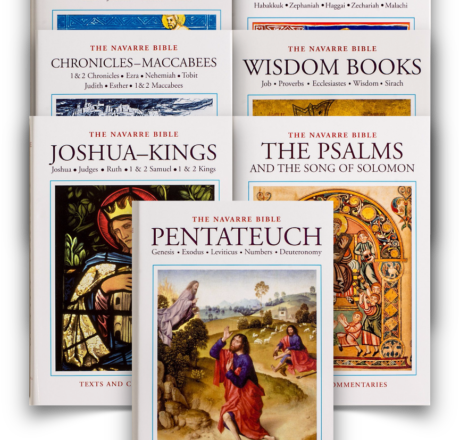
Today’s First Reading
From: 1 Kings 18:20-39
The sacrifice on Mount Carmel
--------------------------------------
[20] So Ahab sent to all the people of Israel, and gathered the prophets together at Mount Carmel. [21] And Elijah came near to all the people, and said, "How long will you go limping with two different opinions? If the LORD is God, follow him; but if Baal, then follow him." And the people did not answer him a word. [22] Then Elijah said to the people, "I, even I only, am left a prophet of the LORD; but Baal's prophets are four hundred and fifty men. [23] Let two bulls be given to us; and let them choose one bull for themselves, and cut it in pieces and lay it on the wood, but put no fire to it; and I will prepare the other bull and lay it on the wood, and put no fire to it. [24] And you call on the name of your god and I will call on the name of the LORD; and the God who answers by fire, he is God." And all the people answered, "It is well spoken."
[25] Then Elijah said to the prophets of Baal, "Choose for yourselves one bull and prepare it first, for you are many; and call on the name of your god, but put no fire to it." [26] And they took the bull which was given them, and they prepared it, and called on the name of Baal from morning until noon, saying, "O Baal, answer us!" But there was no voice, and no one answered. And they limped about the altar which they had made. [27] And at noon Elijah mocked them, saying, "Cry aloud, for he is a god; either he is musing, or he has gone aside, or he is on a journey, or perhaps he is asleep and must be awakened." [28] And they cried aloud, and cut themselves after their custom with swords and lances, until the blood gushed out upon them. [29] And as midday passed, they raved on until the time of the offering of the oblation, but there was no voice; no one answered, no one heeded.
[30] Then Elijah said to all the people, "Come near to me"; and all the people came near to him. And he repaired the altar of the LORD that had been thrown down; [31] Elijah took twelve stones, according to the number of the tribes of the sons of Jacob, to whom the word of the LORD came, saying, "Israel shall be your name"; [32] and with the stones he built an altar in the name of the LORD. And he made a trench about the altar, as great as would contain two measures of seed. [33] And he put the wood in order, and cut the bull in pieces and laid it on the wood. And he said, "Fill four jars with water, and pour it on the burnt offering, and on the wood." [34] And he said, "Do it a second time"; and they did it a second time. And he said, "Do it a third time"; and they did it a third time. [35] And the water ran round about the altar, and filled the trench also with water.
[36] And at the time of the offering of the oblation, Elijah the prophet came near and said, "O LORD, God of Abraham, Isaac, and Israel, let it be known this day that thou art God in Israel, and that I am thy servant, and that I have done all these things at thy word. [37] Answer me, O LORD, answer me, that this people may know that thou, O LORD, art God, and that thou hast turned their hearts back." [38] Then the fire of the LORD fell, and consumed the burnt offering, and the wood, and the stones, and the dust, and licked up the water that was in the trench. [39] And when all the people saw it, they fell on their faces; and they said, "The LORD, he is God; the LORD, he is God."
**************************************************************
Commentary:
18:20-40. "Carmel" is a chain of mountains that starts near the port of Haifa and runs some 30 km. (18.5 miles) south-east. Its height (almost 600 m. or 1800 ft.) and its lush vegetation made it particularly suitable as a place of religious cult (at that time, the local people worshipped Baal). There, the one, true God will make himself manifest in the sacrificial fire. To begin with, the people have nothing to say when Elijah upbraids them, but at the end of the episode (v. 38) they make a profession of faith which echoes in a way the faith of the prophet, who bears witness to the living God. The name of Elijah, "The Lord is my God', foretells the people's cry in response to his prayer on Mount Carmel" ("Catechism of the Catholic Church", 2582).
The fire which consumes the offering is a figure of the Holy Spirit: "While water signifies birth and the fruitfulness of life given in the Holy Spirit, fire symbolizes the transforming energy of the Holy Spirit's actions. The prayer of the prophet Elijah, who 'arose like fire' and whose 'word burned like a torch' (Sir 48:1), brought down fire from heaven on the sacrifice on Mount Carmel (cf. 1 Kings 18:38-39). This event was a 'figure' of the fire of the Holy Spirit, who transforms what he touches. John the Baptist, who goes 'before [the Lord] in the spirit and power of Elijah' (Lk 1:17), proclaims Christ as the one who 'who will baptize you with Holy Spirit and with fire' (Lk 3:16). Jesus will say of the Spirit: 'I came to cast fire upon the earth; and would that it were already kindled!' (Lk 12:49). In the form of tongues 'as of fire', the Holy Spirit rests on the disciples on the morning of Pentecost and fills them with himself (Acts 2:3-4). The spiritual tradition has retained this symbolism of fire as one of the most expressive images of the Holy Spirit's actions (cf. St John of the Cross, "The Living Flame of Love"). 'Do not quench the Spirit' (1 Thess 5:19)" ("Catechism of the Catholic Church", 696).
The similarity between the fire of Elijah's offering and the action of the Holy Spirit in the eucharistic sacrifice was noted by the Fathers. But the typology can be extended further: "The sacrifice on Mount Carmel is a decisive test for the faith of the People of God. The Lord's fire consumes the holocaust, at the time of the evening oblation. The Eastern liturgies repeat Elijah's plea in the Eucharistic epiclesis" ("Catechism of the Catholic Church", 2583).
Elijah's action at the end -- killing the false prophets -- needs to be understood in the light of his zeal for the Lord and of the mentality of the time, for the Mosaic Law prescribed exactly such treatment for prophets of pagan divinities in order to safeguard the religious purity of the people (cf. Deut 13:13-19).
From: Matthew 5:17-19
Jesus and His Teaching, the Fulfillment of the Law
----------------------------------------------------------------
(Jesus said to His disciples,) [17] "Think not that I have come to abolish the law and the prophets; I have come not to abolish them but to fulfill them. [18] For truly I say to you, till Heaven and earth pass away, not an iota, not a dot, will pass from the law until all is accomplished. [19] Whoever then relaxes one of the least of these commandments and teaches men so, shall be called least in the Kingdom of Heaven; but he who does them and teaches them shall be called great in the Kingdom of Heaven."
***********************************************************************
Commentary:
17-19. In this passage Jesus stresses the perennial value of the Old Testament. It is the word of God; because it has a divine authority it deserves total respect. The Old Law enjoined precepts of a moral, legal and liturgical type. Its moral precepts still hold good in the New Testament because they are for the most part specific divine-positive promulgations of the natural law. However, our Lord gives them greater weight and meaning. But the legal and liturgical precepts of the Old Law were laid down by God for a specific stage in salvation history, that is, up to the coming of Christ; Christians are not obliged to observe them (cf. "Summa Theologiae", I-II, q. 108, a. 3 ad 3).
The law promulgated through Moses and explained by the prophets was God's gift to His people, a kind of anticipation of the definitive Law which the Christ or Messiah would lay down. Thus, as the Council of Trent defined, Jesus not only "was given to men as a redeemer in whom they are to trust, but also as a lawgiver whom they are to obey" ("De Iustificatione", can. 21).
Disclaimer: Opinions posted on Free Republic are those of the individual posters and do not necessarily represent the opinion of Free Republic or its management. All materials posted herein are protected by copyright law and the exemption for fair use of copyrighted works.


