
Posted on 06/06/2026 9:31:46 PM PDT by fidelis
The Solemnity of the Most Holy Body and Blood of Christ
Jesus said to the Jewish crowds: “I am the living bread that came down from heaven; whoever eats this bread will live forever; and the bread that I will give is my flesh for the life of the world.” The Jews quarreled among themselves, saying, “How can this man give us his flesh to eat?” John 6:51–52
It must have been shocking to Jesus’ listeners the first time He boldly proclaimed that He would give His flesh as spiritual food. Their reaction makes this clear: “How can this man give us his flesh to eat?” Jesus did not back down or soften what He had just proclaimed. Instead, He began a lengthy and direct discourse, starting with these words:
“Amen, amen, I say to you, unless you eat the flesh of the Son of Man and drink his blood, you do not have life within you. Whoever eats my flesh and drinks my blood has eternal life, and I will raise him on the last day. For my flesh is true food, and my blood is true drink. Whoever eats my flesh and drinks my blood remains in me and I in him.” (John 6:53–56)
What would you have thought had you been among the first hearers? We’re told the people quarreled, indicating division. Some, we later read, murmured among themselves, saying: “This saying is hard; who can accept it?” And tragically, many of Jesus’ disciples left Him and returned to their former way of life (cf. John 6:60–66).
Despite this apparent failure and loss of disciples, Jesus did not retract or revise His teaching. Instead, He turned to the Twelve and asked if they too wished to leave. Peter, with clarity and faith, responded with one of the most profound statements of discipleship in all of Scripture: “Master, to whom shall we go? You have the words of eternal life. We have come to believe and are convinced that you are the Holy One of God” (cf. John 6:67–69).
In many ways, Peter’s words are as important for us today as Jesus’ own words introducing the Eucharist. Why? Because Peter shows us how to respond when we encounter divine mysteries beyond human understanding. The Eucharist is one of the most central of these mysteries. Do you believe in the Eucharist? Do you believe that it is truly the flesh and blood of the Son of God—His Body and Blood, Soul and Divinity? Though many of us have learned this teaching from childhood and accept it on some level, few penetrate the depth of the mystery we behold at every Mass. Saint John Vianney spoke beautifully of the Eucharist, revealing his profound reverence for this Gift: “If we really understood the Mass, we would die for joy.” And: “There is nothing so great as the Eucharist. If God had something more precious, He would have given it to us.” He also said: “How beautiful it is! After the Consecration, the good God is there as He is in Heaven.”
It’s easy to approach the Holy Mass out of routine rather than with the depth of faith possessed by the saints. But that must be our goal. We must believe that we would truly “die of joy” if we understood the Mass.
Reflect today on Jesus’ unwavering clarity: “Amen, amen, I say to you, unless you eat the flesh of the Son of Man and drink his blood, you do not have life within you.” Believe what He says. The Eucharist is not a symbol; it is the greatest Divine Mystery on earth. In the Eucharist, we kneel before God and consume Him—so that we may become what we eat: the Mystical Body of Christ.
Let us close by praying the opening verses of a hymn Saint Thomas Aquinas wrote at the request of Pope Urban IV for the newly instituted Feast of Corpus Christi in 1264—the Pange Lingua, meaning, “Proclaim, O Tongue.”
Down in adoration falling,
Lo! the sacred Host we hail;
Lo! o’er ancient forms departing,
Newer rites of grace prevail;
Faith for all defects supplying,
Where the feeble senses fail.
To the everlasting Father,
And the Son who reigns on high,
With the Holy Ghost proceeding
Forth from each eternally,
Be salvation, honor, blessing,
Might, and endless majesty. Amen.
Please keep in mind that this is a Catholic Caucus/Devotional thread for the purpose of prayerful reflection on the Sacred Scriptures and is closed to debate of any kind. Per FR policy on Religion Caucus threads, off-topic, argumentative, and abusive comments are not allowed and will be submitted to the Mods for deletion. Thanks, and God bless you.
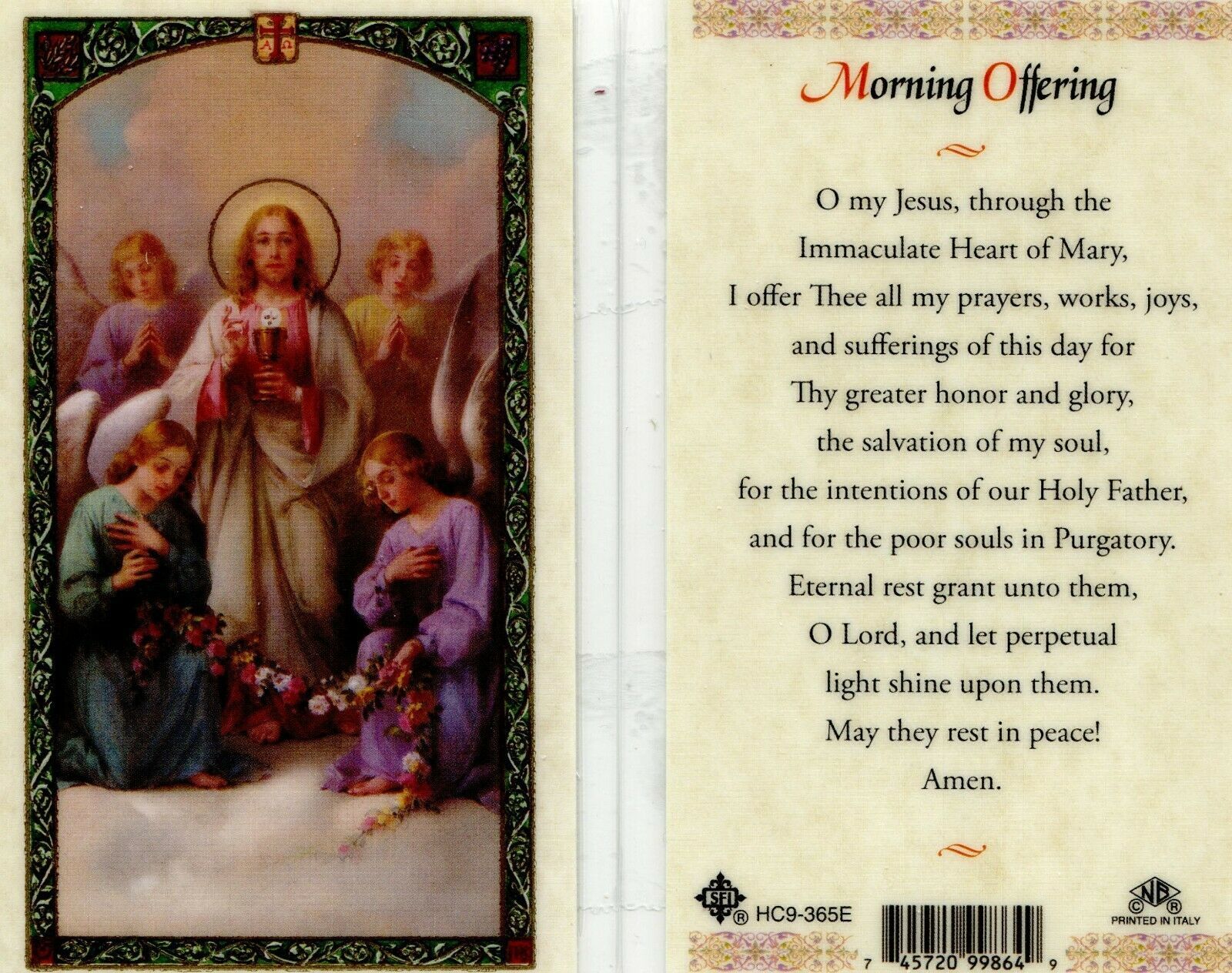
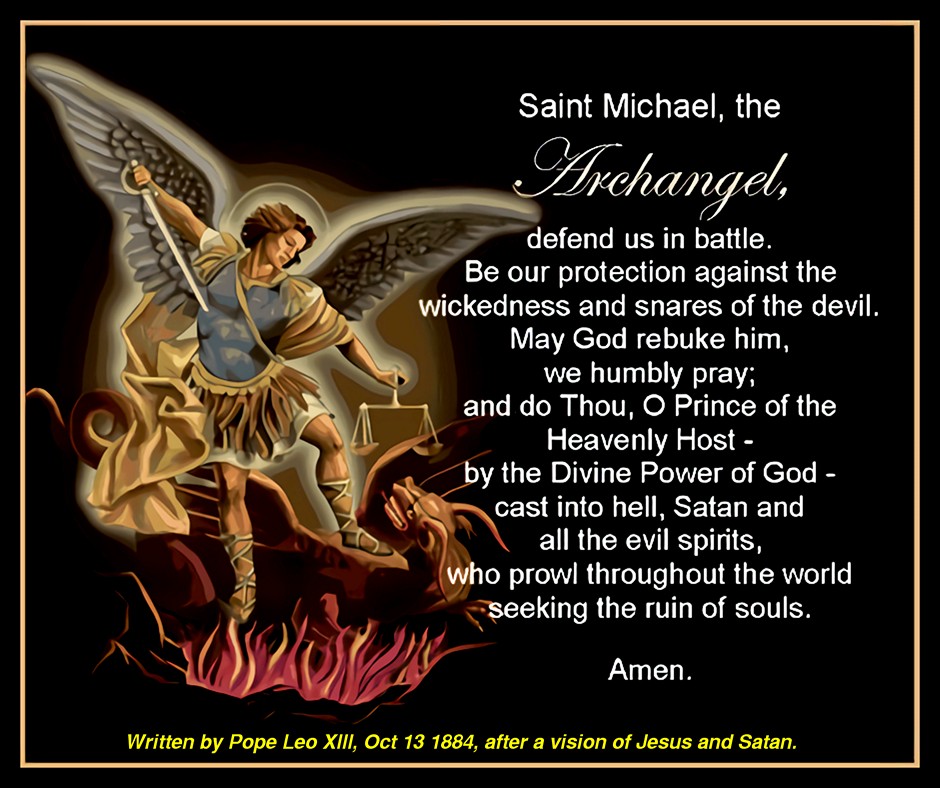
The Month of June is Dedicated to the Sacred Heart of Jesus

“Come to me, all who labor and are heavy laden, and I will give you rest. Take my yoke upon you, and learn from me; for I am gentle and lowly in heart, and you will find rest for your souls. For my yoke is easy, and my burden is light.” (Matthew 11:28-30)

Pope Leo XIV’s prayer intention for the month of May, 2026:
For the values of sports
Let us pray that sports be an instrument of peace, encounter, and dialogue among cultures and nations, and that they promote values such as respect, solidarity, and personal growth.

Today’s First Reading
From: Deuteronomy 8:2-3, 14-16
Israel's Character Forged in the Desert (Continuation)
-----------------------------------------------------------------
[2] "And you shall remember all the way which the LORD your God has led you these forty years in the wilderness, that he might humble you, testing you to know what was in your heart, whether you would keep his commandments, or not. [3] And he humbled you and let you hunger and fed you with manna, which you did not know, nor did your fathers know; that he might make you know that man does not live by bread alone, but that man lives by everything that proceeds out of the mouth of the LORD.
God Not To Be Forgotten in the Time of Plenty (Continuation)
-------------------------------------------------------------------------
[14] "Then your heart be lifted up, and you forget the LORD your God, who brought you out of the land of Egypt, out of the house of bondage, [15] who led you through the great and terrible wilderness, with its fiery serpents and scorpions and thirsty ground where there was no water, who brought you water out of the flinty rock, [16] who fed you in the wilderness with manna which your fathers did not know.
*************************************
Commentary:
8:1-6. The Israelites are reminded about the way they were tested in the wilderness and how God gave them special protection and fatherly care; and they are once again exhorted to fidelity.
"Man does not live by bread alone" (v. 3): Jesus will quote these words when rejecting Satan's first temptation in the desert (cf. Mt 4:4).
8:7-20. This passage is more profound than might appear at first reading, because the sacred writer is using the theme of the Land to show the salvific dimension of God's actions. Israel's "departure from Egypt" marked the beginning of God's salvific action on behalf of his chosen people. The "wilderness", described as "terrible", helped to make that people realize that they needed God and helped them to hope in him. The "promised land", a "good land", particularly when compared with the wilderness, shows God's kindness towards Israel: in it they will find rest, peace and happiness. The only thing they need to guard against is glorying in it, as if they merited this good fortune. If ever they did give in to that temptation, they would be lost. Clearly, this theological-moral lesson should be taken to heart by everyone in his relations with God, whatever his or her circumstances.
The Canaanites went in for coarse and disgusting fertility rites to win the favor of the gods that protected agriculture and livestock. The Israelites must do no such thing. They should show their gratitude to the Lord who sends rain, sun and dew, by offering sober and sensible sacrifices from field and flock. The Deuteronomic Code (chaps- 12-26) in fact deals with agriculture-based festivals such as "Weeks" (Deut 16:9-12), "unleavened bread" (16:3-4), "tithes" (14:22-29), etc. It is through this, and above all, through living up to the moral demands of the Law, that Israel will show its fidelity to Yahweh.
The ease with which men (and nations) forget God once they become rich and prosperous is something readily proved from history. And when that happens the threat contained in Deuteronomy in vv. 19-20 inevitably becomes a reality, for "without a creator there can be no creature. [...] Besides, once God is forgotten the creature is lost sight of as well" (Vatican II, "Gaudiumn Et Spes", 36); hence the need not to put one's heart on material things. "You need to realize," St Gregory of Nyssa urges, "the origin of your life, your mind, your wisdom and, what is more important still, the fact that you know God, your hope in the kingdom of heaven and your expectation of seeing God [...], being a son of God, a co-heir of Christ and (dare I say it) becoming divinized: where do all these things come from; who causes them to happen?" ("De Pauperum Amore", 23).
Christian writers often apply the benefits the Israelites received during the Exodus to the graces of Baptism and the Eucharist (cf, e.g., 1 Cor 1.0:1-11). And the Church's liturgy, after recalling, the pillar of fire, the voice of Moses on Sinai, the manna and the water that flowed from the rock, prays that our Lord should be for us, through his Resurrection, the light of life, the word and bread of life (cf. Liturgy of the Hours, Prayer, Lauds, Tuesday of Week 6, Eastertide).
From: 1 Corinthians 10:16-17
Idolatry and the Eucharist, Incompatible
----------------------------------------
[16] The cup of blessing which we bless, is it not a participation in the blood of Christ? The bread which we break, is it not a participation in the body of Christ? [17] Because there is one bread, we who are many are one body, for we all partake of the one bread.
*******************************************
Commentary:
14-22. After illustrating the general principles by reference to what himself does and the lessons of the history of Israel (cf. note on chaps. 8-10), St Paul returns to the subject of food sacrificed to idols. Christians may not attend the banquets which take place at pagan shrines, for that would amount to idolatry. By eating the meat of animals offered to Yahweh, Jews participated in the sacrifice and worship in his honor; and, by receiving the body and blood of the Lord, Christians unite themselves to Christ; similarly, those who take part in idolatrous banquets are associating themselves not with false gods--which have no existence--but with demons. In the Old Testament it is pointed out that things sacrificed to idols are in fact being offered to demons, who enemies of the worship of God (cf. Deut 32:17; Ps 106:36-38; Bar 4:7).
St Paul's words confirm basic truths of faith connected with the sublime mystery of the Eucharist--its sacrificial character, adverted to here by drawing a parallel between it and pagan sacrifices (cf. v. 21; Council of Trent, "De SS. Missae Sacrificio", chap. 1), and the real presence of Christ, as can be seen by the reference to the body and blood of Christ (v. 16). The Church's faith has always maintained that the holy sacrifice of the Mass is the renewal of the divine sacrifice of Calvary; in every Mass Christ once again offers God the Father His body and blood, as a sacrifice for all men, with the difference that what was offered on the cross in a bloody manner is offered on the altar in an unbloody manner. "In the divine sacrifice that is offered in the Mass, the same Christ who offered himself once in a bloody manner on the altar of the cross is present and is offered in an unbloody manner (cf. Heb 9:27). [...] For it is one and the same victim--He who now makes the offering through the ministry of priests and He who then offered Himself on the cross; the only difference is in the manner of the offering" ("De SS. Missae Sacrificio", chap. 2). "The Eucharist is above all a sacrifice--the sacrifice of Redemption and at the same time the sacrifice of the New Covenant" (St Pope John Paul II, "Letter To All Bishops", 24 February 1980). See also the notes on Mt 26:26-29 and par.
On the real presence of Jesus in the Eucharist, see the note on 1 Cor 11:27-32.
16-17. The principal effect of the Blessed Eucharist is intimate union with Jesus. The very name "communion"--taken from this passage of St Paul (cf. "St Pius V Catechism", II, 4, 4)—points to becoming one with our Lord by receiving his body and blood. "What in fact is the bread? The body of Christ. What do they become who receive Communion? The body of Christ" (St. John Chrysostom, "Hom. on 1 Cor, 24, ad loc.").
St Augustine places these words on Jesus' lips to describe what happens at Holy Communion: "You will not change me into you as happens with bodily food; rather, you will be changed into me" ("Confessions", VII, 10, 16).
Due to this intimate union with Christ, the Eucharist is at one and the same time the sacrament where the entire Church demonstrates and achieves its unity, and where a very special kind of solidarity is developed among Christians. That is why it is called a "symbol of unity" and a "bond of love;" (Council of Trent, "De SS. Eucharistia", chap . 8; cf. "Lumen Gentium", 7; "Unitatis Redintegratio", 2). The Fathers of the Church have seen a symbol of this union in the very materials--bread and wine--used to make the Eucharist. The "St Pius V Catechism" sums up this as follows: "the body of Christ, which is one, consists of many members (cf. Rom 12:4-5; 1 Cor 10:17; 12:12), and of this union nothing is more strikingly illustrative than the elements of bread and wine; for bread is made from many grains and wine is pressed from many clusters of grapes. Thus they signify that we, though many, are most closely bound together by the bond of the divine mystery and made, as it were, one body" (II, 4,18).
"We who are many ...": the literal translation would be "We the many ...". The text derives from a Hebrew expression indicating plurality or even totality as distinct from a single entity or a minority; the RSV catches this idea. The same turn of phrase is found, for example, in Mt 20:28; Mk 10:45; Is 53:11.
From: John 6:51-59
The Discourse on the Bread of Life (Continuation)
-------------------------------------------------
(Jesus said to the Jews,) [51] "I am the living bread which came down from Heaven; if any one eats of this bread, he will live for ever; and the bread which I shall give for the life of the world is My flesh." [52] The Jews disputed among themselves, saying, "How can this Man give us His flesh to eat?" [53] So Jesus said to them, "Truly, truly, I say to you, unless you eat the flesh of the Son of Man and drink His blood, you have no life in you; [54] he who eats My flesh and drinks My blood has eternal life, and I will raise him up on the last day. [55] For My flesh is food indeed, and My blood is drink indeed. [56] He who eats My flesh and drinks My blood abides in Me, and I in him. [57] As the living Father sent Me, and I live because of the Father, so he who eats Me will live because of Me. [58] This is the bread which came from Heaven, not such as the fathers ate and died; he who eats this bread will live for ever." This He said in the synagogue, as He taught in Capernaum.
***********************************************************************
Commentary:
49-51. The manna during the Exodus was a figure of this bread—Christ Himself--which nourishes Christians on their pilgrimage through this world. Communion is the wonderful banquet at which Christ gives Himself to us: "the bread which I shall give for the life of the world is My flesh". These words promise the manifestation of the Eucharist at the Last Supper: "This is My body which is for you" (1 Corinthians11:24). The words "for the life of the world" and "for you" refer to the redemptive value of the sacrifice of Christ on the cross. In some sacrifices of the Old Testament, which were a figure of the sacrifice of Christ, part of the animal offered up was later used for food, signifying participation in the sacred rite (cf. Exodus 11:3-4). So, by receiving Holy Communion, we are sharing in the sacrifice of Christ: which is why the Church sings in the Liturgy of the Hours on the Feast of Corpus Christi: "O sacred feast in which we partake of Christ: His sufferings are remembered, our minds are filled with His grace and we receive a pledge of the glory that is to be ours" ("Magnificat Antiphon", Evening Prayer II).
52. Christ's hearers understand perfectly well that He means exactly what He says; but they cannot believe that what He says could be true; if they had understood Him in a metaphorical, figurative or symbolic sense there would be no reason for them to be surprised and nothing to cause an argument. Later, Jesus reaffirms what He has said—confirming what they have understood Him to say (cf. verses 54-56).
53. Once again Jesus stresses very forcefully that it is necessary to receive Him in the Blessed Eucharist in order to share in divine life and develop the life of grace received in Baptism. No parent is content to bring children into the world: they have to be nourished and looked after to enable them to reach maturity. "We receive Jesus Christ in Holy Communion to nourish our souls and to give us an increase of grace and the gift of eternal life" ("St. Pius X Catechism", 289).
54. Jesus clearly states that His body and blood are a pledge of eternal life and a guarantee of the resurrection of the body. St. Thomas Aquinas gives this explanation: "The Word gives life to our souls, but the Word made flesh nourishes our bodies. In this Sacrament is contained the Word not only in His divinity but also in His humanity; therefore, it is the cause not only of the glorification of our souls but also of that of our bodies" ("Commentary on St. John, in loc.").
Our Lord uses a stronger word than just "eating" (the original verb could be translated as "chewing") which shows that Communion is a real meal. There is no room for saying that He was speaking only symbolically, which would mean that Communion was only a metaphor and not really eating and drinking the Body and Blood of Christ.
"All these invitations, promises and threats sprang from the great desire which (Jesus) had of giving us Himself in the holy Sacrament of the altar. But why should Jesus so ardently desire us to receive Him in Holy Communion? It is because love always sighs for, and tends to a union with, the object beloved. True friends wish to be united in such a manner as to become only one. The love of God for us being immense, He destined us to possess Him not only in Heaven, but also here below, by the most intimate union, under the appearance of bread in the Eucharist. It is true we do not see Him; but He beholds us, and is really present; yes, He is present in order that we may possess Him and He conceals Himself, that we may desire Him, and until we reach our true homeland Jesus Christ wishes in this way to be entirely ours, and to be perfectly united to us" (St. Alphonsus Liguori, "The Love of Our Lord Jesus Christ Reduced to Practice", Chapter 2).
55. In the same way as bodily food is necessary for life on earth, Holy Communion is necessary for maintaining the life of the soul, which is why the Church exhorts us to receive this Sacrament frequently: "Every day, as is desirable, and in the greatest possible numbers, the faithful must take an active part in the sacrifice of the Mass, avail themselves of the pure, holy refreshment of Holy Communion and make a suitable thanksgiving in return for this great gift of Christ the Lord. Here are the words they should keep in mind: `Jesus Christ and the Church desire all Christ's faithful to approach the sacred banquet every day. The basis of this desire is that they should be united to God by the sacrament and draw strength from it to restrain lust, to wash away the slight faults of daily occurrence and to take precautions against the more serious sins to which human frailty is liable' (Decree of the S.C. of the Council, 20 December 1905)" (Pope Paul VI, "Mysterium Fidei").
"The Savior has instituted the most august sacrament of the Eucharist, which truly contains His flesh and His blood, so that he who eats this bread may live forever; whosoever, therefore, makes use of it often with devotion so strengthens the health and the life of his soul, that it is almost impossible for him to be poisoned by any kind of evil affection. We cannot be nourished with this flesh of life, and live with the affections of death..Christians who are damned will be unable to make any reply when the just Judge shows them how much they are to blame for dying spiritually, since it was so easy for them to maintain themselves in life and in health by eating His Body which He had left them for this purpose. Unhappy souls, He will say, why did you die, seeing that you had at your command the fruit and the food of life?" (St. Francis de Sales, "Introduction to the Devout Life", II, 20, 1).
56. The most important effect of the Blessed Eucharist is intimate union with Jesus Christ. The very word "communion" suggests sharing in the life of our Lord and becoming one with Him; if our union with Jesus is promoted by all the sacraments through the grace which they give us, this happens more intensely in the Eucharist, for in it we receive not only grace but the very Author of grace: "Really sharing in the body of the Lord in the breaking of the eucharistic bread, we are taken up into communion with Him and with one another. `Because the bread is one, we, though many, are one body, all of us who partake of the one bread' (1 Corinthians 10:17)" (Vatican II, "Lumen Gentium", 7). Precisely because the Eucharist is the sacrament which best signifies and effects our union with Christ, it is there that the whole Church manifests and effects its unity: Jesus Christ "instituted in His Church the wonderful sacrament of the Eucharist, by which the unity of the Church is both signified and brought about" (Vatican II, "Unitatis Redintegratio", 2).
57. In Christ, the Incarnate Word sent to mankind, "the whole fullness of deity, dwells bodily (Colossians 2:9) through the ineffable union of His human nature and His divine nature in the Person of the Word. By receiving in this sacrament the body and blood of Christ indissolubly united to His divinity, we share in the divine life of the second Person of the Blessed Trinity. We will never be able to appreciate enough the intimacy with God Himself--Father, Son and Holy Spirit—that we are offered in the eucharistic banquet.
"We can therefore do nothing more agreeable to Jesus Christ than to go to Communion with the dispositions suitable to so great an action, since we are then united to Jesus Christ, according to the desire of this all-loving God. I have said with `suitable' and not `worthy' disposition, for who could communicate if it was necessary to be worthy of so great a Savior? No one but a God would be worthy to receive a God. But by this word suitable, or convenient, I mean such a disposition as becomes a miserable creature, who is clothed with the unhappy flesh of Adam. Ordinarily speaking, it is sufficient that we communicate in a state of grace and with an anxious desire of advancing in the love of Jesus Christ" (St. Alphonsus Liguori, "The Love of Our Lord Jesus Christ Reduced to Practice", Chapter 2).
58. For the third time (cf. 6:31-32 and 6:49) Jesus compares the true bread of life, His own body, with the manna God used to feed the Israelites every day during their forty years in the wilderness--thereby, inviting us to nourish our soul frequently with the food of His body.
"Going to Communion every day for so many years! Anybody else would be a saint by now,” you told me, and I... I'm always the same!”
“Son,” I replied, “keep up your daily Communion, and think: what would I be if I had not gone'" (St. J. Escriva, "The Way", 534).
Disclaimer: Opinions posted on Free Republic are those of the individual posters and do not necessarily represent the opinion of Free Republic or its management. All materials posted herein are protected by copyright law and the exemption for fair use of copyrighted works.


