
Posted on 06/02/2026 10:35:13 PM PDT by fidelis
Memorial of Saint Charles Lwanga and Companions, Martyrs
Some Sadducees, who say there is no resurrection, came to Jesus and put this question to him, saying, “Teacher, Moses wrote for us, ‘If someone’s brother dies, leaving a wife but no child, his brother must take the wife and raise up descendants for his brother.’ Now there were seven brothers…” Mark 12:18–20
The Sadducees were a Jewish sect composed mainly of the Temple leaders, including many priests. They held theological and political views that differed significantly from those of the Pharisees. The Sadducees accepted only the Torah (the first five books of the Old Testament) as authoritative, whereas the Pharisees recognized the entire Hebrew Scriptures, including the Prophets, historical books, and Wisdom literature, and upheld a highly developed oral tradition based on centuries of rabbinic interpretation. This led to tension and theological disagreements.
The Sadducees denied the resurrection of the dead, the immortality of the soul, and the existence of angels—all of which were central to Pharisaic belief—because they believed those truths were not found in the Torah. They believed that God’s blessings were given for this life and that when one died, the soul perished with the body.
Despite their theological disputes with the Pharisees, both groups found common ground in opposing Jesus. Today’s Gospel illustrates the Sadducees’ failed attempt to trap Jesus in a legalistic theological dilemma, using the law of Levirate marriage (cf. Deuteronomy 25:5–10) to challenge the doctrine of the resurrection.
The Sadducees took their turn to trap Jesus not only to prove Jesus wrong but also to justify their beliefs before the Pharisees. They pose an extreme hypothetical scenario, in which seven brothers successively marry the same woman, each dying childless and ask: “At the resurrection when they arise, whose wife will she be? For all seven had been married to her” (Mark 12:23). Their intent is not to seek truth, but to mock the very idea of life after death.
Jesus responds, not with complicated legal reasoning, but with divine wisdom that lifts their minds beyond earthly concerns. He begins by rebuking their limited understanding: “You do not know the Scriptures or the power of God” (Mark 12:24). Then, He offers a twofold response (cf. Mark 12:24–27).
First, Jesus addresses the question of marriage after the resurrection: “When they rise from the dead, they neither marry nor are given in marriage, but they are like the angels in heaven.” After the resurrection of the dead, human existence will be radically transformed. Earthly institutions such as marriage—good and holy as they are—belong to this world, not the next. In the life to come, every soul will find its perfect fulfillment in the Beatific Vision.
Reflect today on the central truth Jesus revealed to the Sadducees: The soul is immortal, and those who die in God’s grace will rise again to live eternally in His presence, in perfect communion with all the angels and saints. This truth must always be our focal point in life. Too often, we live as the Sadducees did—as if this life is an end in itself. By turning our eyes toward eternity, we not only better our lives here and now, but we also live in the hope of Heaven, knowing that all we do now must be for the sake of eternal treasure in the life to come.
My eternal Lord, I believe in the promise of Heaven and the coming of the New Heavens and Earth, when all souls will rise and receive their eternal reward or judgment. As I journey through this life, keep my eyes fixed on eternity, and let my hope be firmly rooted in the resurrection to come. Jesus, I trust in You.
Please keep in mind that this is a Catholic Caucus/Devotional thread for the purpose of prayerful reflection on the Sacred Scriptures and is closed to debate of any kind. Per FR policy on Religion Caucus threads, off-topic, argumentative, and abusive comments are not allowed and will be submitted to the Mods for deletion. Thanks, and God bless you.
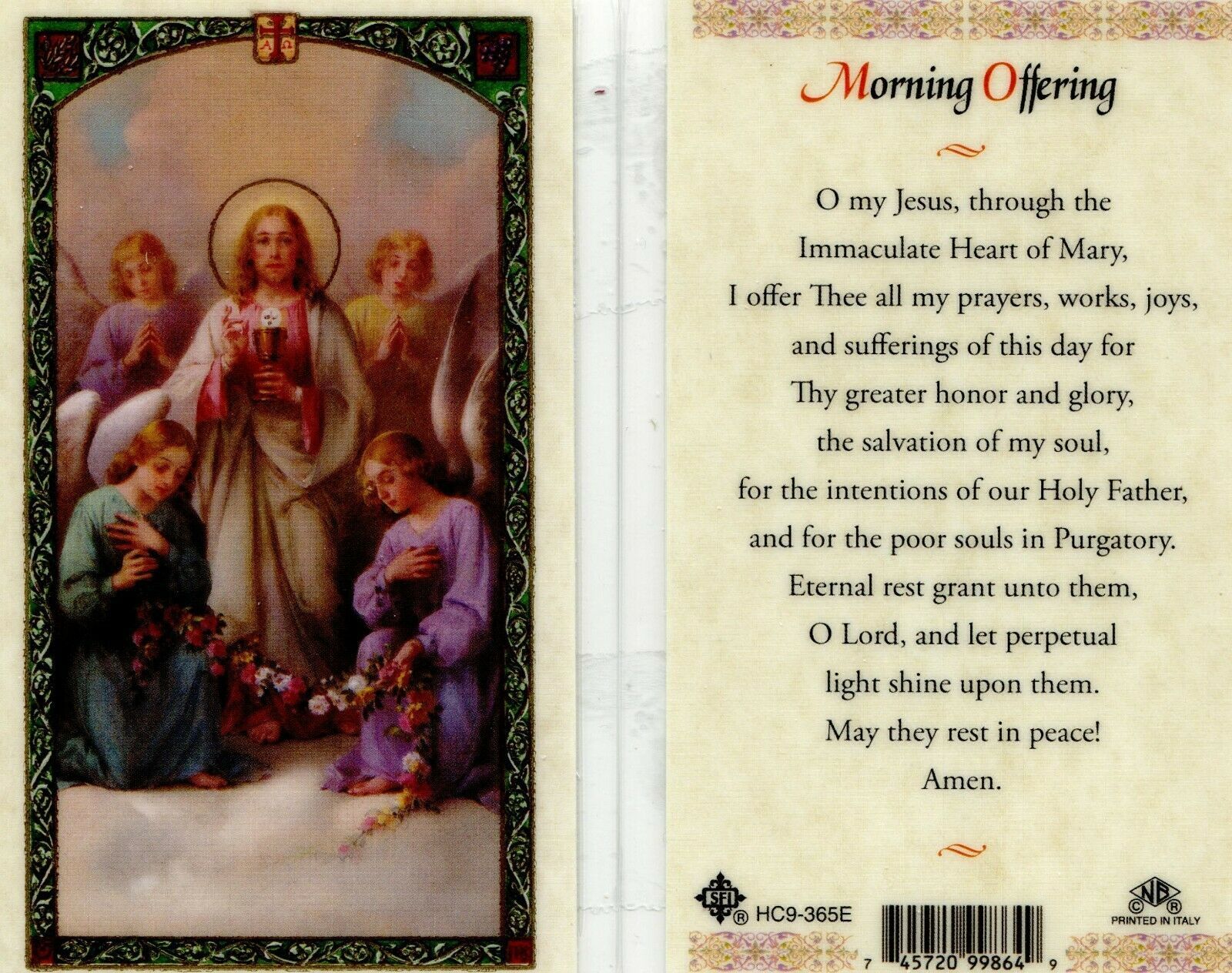
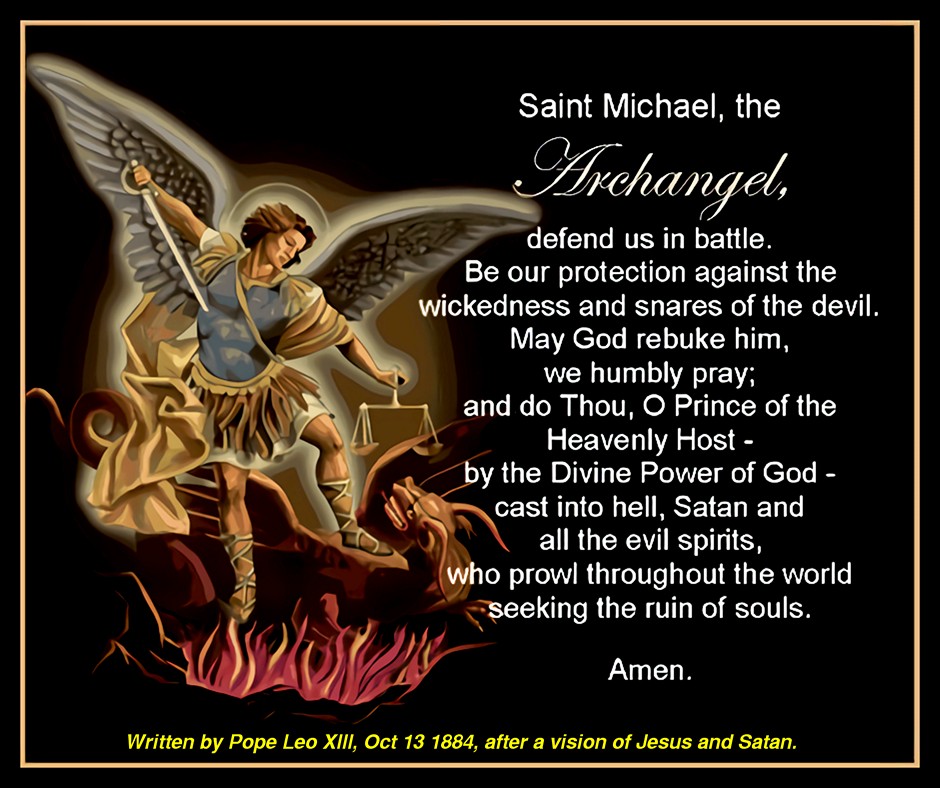
The Month of June is Dedicated to the Sacred Heart of Jesus

“Come to me, all who labor and are heavy laden, and I will give you rest. Take my yoke upon you, and learn from me; for I am gentle and lowly in heart, and you will find rest for your souls. For my yoke is easy, and my burden is light.” (Matthew 11:28-30)

Pope Leo XIV’s prayer intention for the month of May, 2026:
For the values of sports
Let us pray that sports be an instrument of peace, encounter, and dialogue among cultures and nations, and that they promote values such as respect, solidarity, and personal growth.

Today’s First Reading
From: 2 Timothy 1:1-3, 6-12
Greeting
--------
[1] Paul, an apostle of Christ Jesus by the will of God according to the promise of the life which is in Christ Jesus, [2] To Timothy, my beloved child: Grace, mercy, and peace from God the Father and Christ Jesus our Lord. [3] I thank God whom I serve with a clear conscience, as did my fathers, when I remember you constantly in my prayers.
Response to Grace
-----------------
[6] Hence I remind you to rekindle the gift of God that is within you through the laying on of my hands; [7] God did to give us a spirit of timidity but a spirit of power and love and self-control. St Paul, Herald of the Gospel
-----------------------------
[8] Do not be ashamed then of testifying to our Lord, nor of me his prisoner, but take your share of suffering for the gospel in the power of God, [9] who saved us and called us with a holy calling, not in virtue of our works but in virtue of his own purpose and the grace which he gave us in Christ Jesus ages ago, [10] and now has manifested through the appearing of our Savior Christ Jesus, who abolished death and brought life and immortality to light through the gospel. [11] For this gospel I was appointed a preacher and apostle and teacher, [12] and therefore I suffer as I do. But I am not ashamed, for I know whom I have believed, and I am sure that he is able to guard until that Day what has been entrusted to me.
***********************************************************************
Commentary:
1-2. The greeting is like that of 1 Timothy, although now St Paul adds a specific reference to the purpose of his God-given call to the apostolate--"according to the promise of the life which is in Christ Jesus". Christ fulfills all the promises of happiness given to Abraham and the other Old Testament patriarchs. The purpose of the Gospel message is to let men know that they have been called to enjoy a new life in Christ, that is, the divine life whose germ we receive at Baptism. That sacrament initiates the life of grace in the soul, and ultimately that life will blossom into eternal life (cf. 1 Tim 1:16; 6:12; Tit 1:2; 3:9).
On the exact meaning of the expression "in Christ Jesus", see the note on 1 Tim 1:14.
3. "I thank God": this is not a spontaneous expression of gratitude but rather a permanent disposition of Paul's soul.
St Paul makes the point that his attitude of service and worship is the same as that of his ancestors, the righteous of the Old Testament, for although the Gospel is something new it does not involve a break with the earlier revelation; rather it brings that revelation to fulfillment. The Apostle pays tribute to the chosen people, not hiding his satisfaction at being a Jew himself (cf. Rom 9:3; 11:1; Gal 2:15). "The Church of Christ acknowledges", Vatican II states, "that in God's plan of salvation the beginning of her faith and election is to be found in the patriarchs, Moses and the prophets [...]. The Church cannot forget that she received the revelation of the Old Testament by way of that people with whom God in his inexpressible mercy established the ancient covenant [...]. She is mindful, moreover, that the Apostles, the pillars on which the Church stands, were of Jewish descent, as were many of those early disciples who proclaimed the Gospel of Christ to the world" ("Nostra Aetate", 4).
6. "The gift of God" is the priestly character which Timothy received on the day of his ordination. St Paul is using very graphic and precise language: by the sacrament of Order a divine gift is conferred on the priest; it is like an ember which needs to be revived from time to time in order to make it glow and give forth the warmth it contains. St Thomas Aquinas comments that "the grace of God is like a fire which does not flow when it is covered by ashes; the same thing happens when grace is covered over in a person by sluggishness or natural fear" ("Commentary on 2 Tim, ad loc.").
The gifts which God confers on the priest "are not transitory or temporary in him, but stable and permanent, attached as they are to an indelible character, impressed on his soul, by which he is made a priest forever (cf. Ps 109:4), in the likeness of Him in whose priesthood he has been made to share" (Pius XI, "Ad Catholici Sacerdotii", 17).
"The laying on of my hands": see the note on 1 Tim 4:14.
7. The gift of God, received in the sacrament of Order by the laying on of hands, includes sanctifying grace and sacramental grace, and the actual graces needed for performing ministerial functions in a worthy manner. The Council of Trent uses this text (vv. 6-7) when it solemnly defines that Priestly Order is a sacrament instituted by Jesus Christ (cf. "De Sacram. Ordinis", chap. 3).
The minister, then, must be courageous in performing his office: he should preach the truth unambiguously even if it clashes with the surroundings; he should do so with love, and be open to everyone despite their faults; with sobriety and moderation, always seeing the good of souls, not his own advantage. Since the days of the Fathers the Church has urged priests to develop these virtues: "Priests should be compassionate", St Polycarp warns; "they should show mercy to all; they should try to reclaim those who go astray, visit the sick, and care for the poor, the orphan and the widow. They should be concerned always to do what is honorable in the sight of God and men. They should avoid any show of anger, any partiality or trace of greed. They should not be over-ready to believe ill of anyone, not too severe in their censure, being well aware that we all owe the debt of sin" ("Letter to the Philippians", chap. 6).
9-10. There is a theological basis for courageously confronting the difficulties the Gospel brings with it--the fact that we have been called by God, who has revealed himself as our Savior. As elsewhere in these letters (cf. 1 Tim 3:15ff; Tit 3:5-7). St Paul here speaks a succinct hymn in praise of salvation, probably using expressions based on some liturgical hymn or confession of faith.
The salvation which God brings about is viewed in this passage as it applies to Christians (v. 9) and is manifested in the incarnation of Christ (v. 10). Four essential aspects of salvation are identified: 1) God has already accomplished salvation for everyone; 2) it is God, too, who calls all men to avail of it; 3) it is entirely a gift: man cannot merit it (cf. Tit 3:5, Eph 2.8-9), and 4) God's plan is an eternal one (cf. Rom 8:29-30; Eph 1:11).
"The appearing of our Savior Jesus Christ" (v. 10) refers in the first place to his incarnation (cf. Tit 2:11; 3:4) but it includes his entire work of redemption which culminates in his appearing in glory and majesty (cf. 1 Tim 6:14; 2 Tim 4:1, 8). The Redemption has two wonderful effects--victory over death (physical and spiritual) and the abundant and luminous gift of everlasting life. "He is the true Lamb who took away the sins of the world. By dying he destroyed our death; by rising he restored our life" ("Preface of Easter", I).
"Ages ago": literally, "from the times of the ages", a primitive expression meaning the same thing as "eternity".
12. "I know whom I have believed": through the virtue of faith we assent to the truths God has revealed, not on the intrinsic evidence they provide but on the authority of God, who can neither deceive nor be deceived (cf. Vatican I, "Dei Filius", chap. 3). The response of faith is basically a trusting abandonment of oneself into God's hands: "By faith man freely commits his entire life to God, making 'the full submission of his intellect and will to God who reveals', and willingly assenting to the Revelation given by him. Before this faith can be exercised, man must have the grace of God to move and assist him; he must have the interior helps of the Holy Spirit, who moves the heart and converts it to God, who opens the eyes of the mind and 'makes it easy for all to accept and believe the truth"' (Vatican II, "Dei Verbum", 5).
"What has been entrusted to me": some commentators think that this "deposit" is the sum total of the good works and merits the Apostle has built up over his lifetime. However it is more likely that he is referring to the body of doctrine which he strives to guard and to teach to others. It is in that sense that St John Chrysostom interprets it: "What does this 'deposit' mean? Faith, preaching. He himself who has entrusted the deposit to me knows how to keep it intact. I suffer as may be to ensure that this treasure is not snatched away from me. I do not try to escape whatever evils I have to undergo; I am happy as long as the deposit is preserved pure and intact" ("Hom. on 2 Tim, ad loc."). See also the note on 1 Tim 6:20.
"That Day": the day of judgment, when he will be called to give an account to God. It can refer to both the particular judgment and the last judgment.
From: Mark 12:18-27
The Resurrection of the Dead
----------------------------
[18] And Sadducees came to Him (Jesus), who say that there is no resurrection; and they asked Him a question, saying [19] "Teacher, Moses wrote for us that if a man's brother dies and leaves a wife, but leaves no child, the man must take the wife, and raise up children for his brother. [20] There were seven brothers; the first took a wife, and when he died left no children; [21] and the second took her, and died, leaving no children; and the third likewise; [22] and the seven left no children. Last of all the woman also died. [23] In the resurrection whose wife will she be? For the seven had her as wife."
[24] Jesus said to them, "Is not this why you are wrong, that you know neither the Scriptures nor the power of God? [25] For when they rise from the dead, they neither marry nor are given in marriage, but are like angels in Heaven. [26] And as for being raised, have you not read in the book of Moses, in the passage about the bush, how God said to him, `I am the God of Abraham, and the God of Isaac, and the God of Jacob'? [27] He is not God of the dead, but of the living; you are quite wrong."
***********************************************************************
Commentary:
18-27. Before answering the difficulty proposed by the Sadducees, Jesus wants to identify the source of the problem--man's tendency to confine the greatness of God inside a human framework through excessive reliance on reason, not giving due weight to divine Revelation and the power of God. A person can have difficulty with the truths of faith; this is not surprising, for these truths are above human reason. But it is ridiculous to try to find contradictions in the revealed word of God; this only leads away from any solution of difficulty and may make it impossible to find one's way back to God. We need to approach Sacred Scripture, and, in general, the things of God, with the humility which faith demands. In the passage about the burning bush, which Jesus quotes to the Sadducees, God says this to Moses: "Put off your shoes from your feet, for the place on which you stand is holy ground" (Exodus 3:5).
Disclaimer: Opinions posted on Free Republic are those of the individual posters and do not necessarily represent the opinion of Free Republic or its management. All materials posted herein are protected by copyright law and the exemption for fair use of copyrighted works.


