
Catena Aurea by St. Thomas Aguinas
Mark CHAP. 11
11:27–33
27. And they come again to Jerusalem: and as he was walking in the temple, there come to him the chief priests, and the scribes, and the elders,
28. And say unto him, By what authority doest thou these things? and who gave thee this authority to do these things?
29. And Jesus answered and said unto them, I will also ask of you one question, and answer me, and I will tell you by what authority I do these things.
30. The baptism of John, was it from heaven, or of men? answer me.
31. And they reasoned with themselves, saying, If we shall say, From heaven; he will say, Why then did ye not believe him?
32. But if we shall say, Of men; they feared the people: for all men counted John, that he was a prophet indeed.
33. And they answered and said unto Jesus, We cannot tell. And Jesus answering saith unto them, Neither do I tell you by what authority I do these things.
THEOPHYLACT. They were angry with the Lord, for having cast out of the temple those who had made it a place of merchandize, and therefore they come up to Him, to question and tempt Him. Wherefore it is said: And they come again to Jerusalem: and as he was walking in the temple, there come to him the Chief Priests, and the Scribes, and the elders, and say unto him, By what authority doest thou these things? and who gave thee authority to do these things? As if they had said, Who art thou that doest these things? Dost thou make thyself a doctor, and ordain thyself Chief Priest?
BEDE. (ubi sup.) And indeed, when they say, By what authority doest thou these things, they doubt its being the power of God, and wish it to be understood that what He did was the devil’s work. When they add also, Who gave thee this authority, they evidently deny that He is the Son of God, since they believe that He works miracles, not by His own but by another’s power.
THEOPHYLACT. Further, they said this, thinking to bring Him to judgment, so that if He said, by mine own power, they might lay hold upon Him; but if He said, by the power of another, they might make the people leave Him, for they believed Him to be God. But the Lord asks them concerning John, not without a reason, nor in a sophistical way, but because John had borne witness of Him. Wherefore there follows: And Jesus answered and said unto them, I will also ask of you one question, and answer me, and I will tell you by what authority I do these things. The baptism of John, was it from heaven, or of men? answer me.
BEDE. (ubi sup.) The Lord might indeed have confuted the cavils of his tempters by a direct answer, but prudently puts them a question, that they might be condemned either by their silence or their speaking, which is evident from what is added, And they reasoned with themselves, saying, If we shall say, From heaven; he will say, Why then did ye not believe him? As if He had said, He whom you confess to have had his prophecy from heaven bore testimony of Me, and ye have heard from him, by what authority I do these things. It goes on: But if we shall say, Of men; they feared the people. They saw then that whatever they answered, they should fall into a snare; fearing to be stoned, they feared still more the confession of the truth. Wherefore it goes on: And they answered and said unto Jesus, We cannot tell.
PSEUDO-JEROME. They envied the Lamp, and were in the dark, wherefore it is said, I have ordained a lamp for mine anointed; his enemies will I clothe with shame. (Ps. 132:17, 18) There follows: And Jesus answering saith unto them, Neither do I tell you by what authority I do these things.
BEDE. (ubi sup.) As if He had said, I will not tell you what I know, since ye will not confess what ye know. Further, we must observe that knowledge is hidden from those who seek it, principally for two reasons, namely, when he who seeks for it either has not sufficient capacity to understand what he seeks for, or when through contempt for the truth, or some other reason, he is unworthy of having that for which he seeks opened to him.
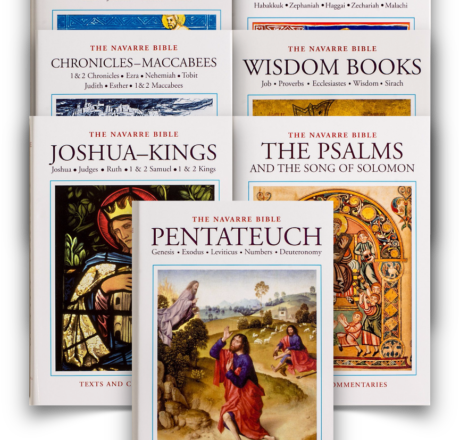
NAVARRE BIBLE COMMENTARY(RSV)
Ad Majorem Dei Gloriam (To the Greater Glory of God)
Today’s First Reading
From: Jude 17, 20-25
It Was Predicted That False Teachers Would Appear
--------------------------------------------------------------------
[17] But you must remember, beloved, the predictions of the apostles of our Lord Jesus Christ; [18] they said to you, "In the last time there will be scoffers, following their own ungodly passions." [19] It is these who set up divisions, worldly people, devoid of the Spirit.
Faith, Hope and Charity
------------------------------
[20] But you, beloved, build yourselves up on your most holy faith; pray in the Holy Spirit; [21] keep yourselves in the love of God; wait for the mercy of our Lord Jesus Christ unto eternal life.
Attitude Towards the Misguided
---------------------------------------
[22] And convince some, who doubt; [23] save some, by snatching them out of the fire; on some have mercy with fear, hating even the garment spotted by the flesh.
Doxology
----------
[24] Now to him who is able to keep you from falling and to present you without blemish before the presence of his glory with rejoicing, [25] to the only God, our Savior through Jesus Christ our Lord, be glory, majesty, dominion, and authority, before all time and now and for ever. Amen.
********************************************************
Commentary:
17-19. In their initial oral teaching, the Apostles who founded the various Christian communities warned of the danger of false teachers within the Church itself (cf. Acts 20:29f; 1 Tim, 4:1-3; 2 Tim 3:1-5). These warnings can be traced back to what Christ himself said: "False Christs and false prophets will arise and show great signs and wonders, so as to lead astray, if possible, even the elect" (Mt 24:24).
The way the writer refers to "the apostles of our Lord Jesus Christ" does not mean that he was not one of them. He could be referring simply to the fact that some of them had already died. The other point about this verse is the importance it gives to Tradition (cf. note on v. 3).
"In the last time" (v. 18): in the Prophets this expression refers to the messianic era (cf., e.g., Is 2:2; Mic 4:1), which brings to an end the long period of waiting for the promised Redeemer and marks the start of the Kingdom of God, which will last forever (cf. Dan 7:14, 27; Lk 1:33). The fullness of time (cf. Gal 4:4) began with the coming of Christ and will reach its zenith with his return in glory for the Last Judgment. In the New Testament perspective, therefore, "the last time" covers the entire period of the Christian era; it is the era of the Church. This earthly phase of the Kingdom of God is characterized, by, among other things, the presence of the "good" and the "bad" side by side (cf. Mt 13:47-48), the cockle sown among the wheat (cf. Mt 13:24ff).
"Worldly people": "psychikoi", literally, "animal" or "natural" men. As in some texts of St Paul (cf. 1 Cor 2:14; 15:44-46), these are the opposite of "spiritual" men, that is, Christians who have the Holy Spirit and are docile to him (cf. Rom 5:5; 8:14). On the other hand, those who are "devoid of the Spirit", who is the source of supernatural life, form judgments and make decisions under the sole guidance of human nature wounded by original sin. Theirs is a merely earthly wisdom (cf. Jas 3:15), a wisdom of the flesh (cf. 1 Cor 3:3).
20-21. The Christian life can be summed up as living the three theological virtues (faith, hope and charity, accompanied by prayer), through the action of each of the three divine Persons--the love of God the Father, the mercy of our Lord Jesus Christ, and fellowship with the Holy Spirit.
The spiritual building is founded on faith, that is, on the truths revealed by God for our salvation and delivered once for all to the Church (cf. v. 3). Therefore it is a "most holy" faith--of divine origin, worthy of the highest respect, and unchangeable. Prayer is essential for penetrating deeper and deeper into the unfathomable riches of the faith. The Christian prays "in the Holy Spirit" because, as St Paul teaches, "you have received the spirit of sonship. When we cry, 'Abba, Father!' ..." (Rom 8:15); and "the Spirit helps us in our weakness; for we do not know how to pray as we ought, but the Spirit himself intercedes for us with sighs too deep for words" (Rom 8:26). To the love of God (the source of divine filiation in the Holy Spirit) the Christian should respond by striving to abide in that love and constantly increase it. Trust in God's help and in his mercy build up our hope of ultimately seeing the Lord face to face.
The Second Vatican Council reminds us that the faithfulness of a Christian's life depends on active communion with Christ: "A life like this calls for a continuous exercise of faith, hope and charity. Only the light of faith and meditation on the Word of God can enable us to find God everywhere and always [...]. Those with such a faith live in the hope of the revelation of the sons of God, keeping in mind the cross and resurrection of the Lord [...]. With the love that comes from God's prompting, they do good to all, especially to their brothers in the faith (cf. Gal 6:10)" ("Apostolicam Actuositatem", 4).
22-23. The Apostle now gives some-practical advice on how to behave towards those who have been affected by false ideas.
The Greek text can be read in various ways. According to some codexes and the Vulgate, it is referring to three categories of people -- waverers; those who have already been harmed by error but can still be recovered; and those who persist in heresy. That is how the RSV translates it. Other codexes, followed by the New Vulgate, first give a counsel valid for dealings with everyone affected by error and then go on to distinguish two groups--those who can still be recovered and those who seem to be beyond help.
Christians should always show kindness to those who break with sound teaching. In this way they will attract many back to the faith; but there will be others with whom they will not succeed; in their case, particularly if their lifestyle is depraved, it will be necessary to be prudent (to hate "even the garment spotted by the flesh"), in order to avoid contagion; but one should still treat them affectionately and pray for them. "It is a characteristic of the perfect", St Augustine teaches, "not to hate anything in sinners other than their sins; and to love those people themselves" ("Contra Adimantum", XVII, 5).
24-25. The letter does not end with the usual greetings but with a solemn doxology or hymn of praise addressed to God the Father through Jesus Christ. It may have come from a liturgical hymn.
"Only God"; this does not exclude the divinity of the Son and the Holy Spirit; it is simply confessing that there is only one God (cf. In 17:3).
God reveals his power particularly in the work of our salvation. We constantly need his grace if we are to avoid sin in this life and one day obtain the glory of heaven. Jesus Christ is the Mediator both of our salvation and of our praise of God. From the beginning the Church has had the custom of addressing liturgical prayer to the Father through Jesus Christ.
Today’s Gospel Reading From: Mark 11:27-33
Jesus' Authority
----------------
[27] And they (Jesus and his disciples) came to Jerusalem. And as he was walking in the temple, the chief priests and the scribes and the elders came to him, [28] and they said to him, "By what authority are you doing these things, or who gave you this authority to do them?" [29] Jesus said to them, "I will ask you a question; answer me, and I will tell you by what authority I do these things. [30] Was the baptism of John from heaven or from men? Answer me." [31] And they argued with one another, "If we say, 'From heaven,' he will say, 'Why then did not you not believe him?' [32] But shall we say, 'From men'?"--they were afraid of the people, for all held that John was a real prophet. [33] So they answered Jesus, "We do not know." And Jesus said to them, "Neither will I tell you by what authority I do these things."
***********************************************************************
Commentary:
27-33. Those who put this question to Jesus are the same people as, some days earlier, sought to destroy him (cf. Mk 11:18). They represent the official Judaism of the period (cf. note on Mt 2:4). Jesus had already given proofs and signs of being the Messiah, in his miracles and preaching; and St. John the Baptist had borne witness about who Jesus was. This is why, before replying, our Lord asks them to recognize the truth proclaimed by the Precursor. But they do not want to accept this truth; nor do they want to reject it publicly, out of fear of the people. Since they are not ready to admit their mistake, any further explanation Jesus might offer would serve no purpose.
This episode has many parallels in everyday life: anyone who seeks to call God to account will be confounded.


The readings on this page are from the Jerusalem Bible, which is used at Mass in most of the English-speaking world. The New American Bible readings, which are used at Mass in the United States, are available in the Universalis apps, programs and downloads.
You can also view this page with the Gospel in Greek and English.