
Posted on 05/26/2026 10:01:07 PM PDT by fidelis
“Behold, we are going up to Jerusalem, and the Son of Man will be handed over to the chief priests and the scribes, and they will condemn him to death and hand him over to the Gentiles who will mock him, spit upon him, scourge him, and put him to death, but after three days he will rise.” Mark 10:33–34
How often do we fail to grasp the suffering of others, consumed instead by our own concerns? This was the struggle of the Twelve as Jesus prepared to endure His Passion. Today’s Gospel presents the third time Jesus clearly told them about His Passion and Death, yet they still didn’t get it.
After Jesus revealed His Passion for the first time, “Peter took him aside and began to rebuke him.” In the presence of the other disciples, Jesus responded, “Get behind me, Satan. You are thinking not as God does, but as human beings do” (cf. Mark 8:31–33). The second time Jesus revealed His Passion they “did not understand the saying, and they were afraid to question him.” Instead, they engaged in a childish conversation, “discussing among themselves on the way who was the greatest” (cf. Mark 9:30–37).
Today’s Gospel, presenting the third time Jesus revealed His Passion, depicts a similar scenario. Jesus is very explicit: In Jerusalem, He “will be handed over to the chief priests and the scribes, and they will condemn him to death and hand him over to the Gentiles who will mock him, spit upon him, scourge him and put him to death, but after three days he will rise.” Once again, despite the seriousness of Jesus’ revelation, James and John immediately ask Jesus, “Grant that in your glory we may sit one at your right and the other at your left” (Mark 10:37). The Apostles were so consumed with their own ambitions that they failed to grasp the gravity of Jesus’ words and were unable to offer Him the charity of empathy.
Fortunately for them—and for us—Jesus had perfect patience. He understood their weaknesses and showed mercy. Humanly speaking, the disciples could have offered Him the charity of human empathy and compassion, walking more firmly with Jesus toward His agony and death, but they were unprepared and unable to do so.
While the Apostles failed to console Jesus, His mother consoled His Sacred Heart. With her Immaculate Heart in perfect union with His, the Blessed Mother modeled perfect empathy as she pondered her Son’s life in her heart and stood faithfully at the foot of the Cross... Her love consoled Him even as the Twelve failed to do so. The Blessed Mother teaches us how to accompany, with love and presence, those who suffer.
We must see ourselves in the Apostles, listening to Jesus share news of His Passion. As we consider their apathy and lack of understanding, we should seek the grace of a loving and empathetic heart by seeing our Lord present in those around us, especially family, who carry heavy burdens...the Apostles initially failed in this mission, they were learning and growing. Empowered by the Holy Spirit, they would later console others by sharing Christ’s love and proclaiming His Passion with courage, especially as they lived it.
Reflect today on Jesus’ interaction with His Apostles. Learn from their shortcomings and be grateful for Jesus’ patience. Pray for the grace of an empathetic heart, for this virtue enables us to console the Heart of Christ by sharing in His Passion with attentiveness and compassion. In doing so, we imitate the perfect love of the Blessed Mother, who teaches us how to truly love.
My patient Lord, though You desire to fully share Your life and Passion with me, I often fail to be attentive and to see You in those around me. Grant me the grace to meet You in Your sufferings, and fill my heart with the charity of human empathy, especially for those I am called to love. May I learn from the weakness of the Apostles and the perfect love of Your Blessed Mother, imitating her unwavering love for You and for all. Jesus, I trust in You.
Please keep in mind that this is a Catholic Caucus/Devotional thread for the purpose of prayerful reflection on the Sacred Scriptures and is closed to debate of any kind. Per FR policy on Religion Caucus threads, off-topic, argumentative, and abusive comments are not allowed and will be submitted to the Mods for deletion. Thanks, and God bless you.
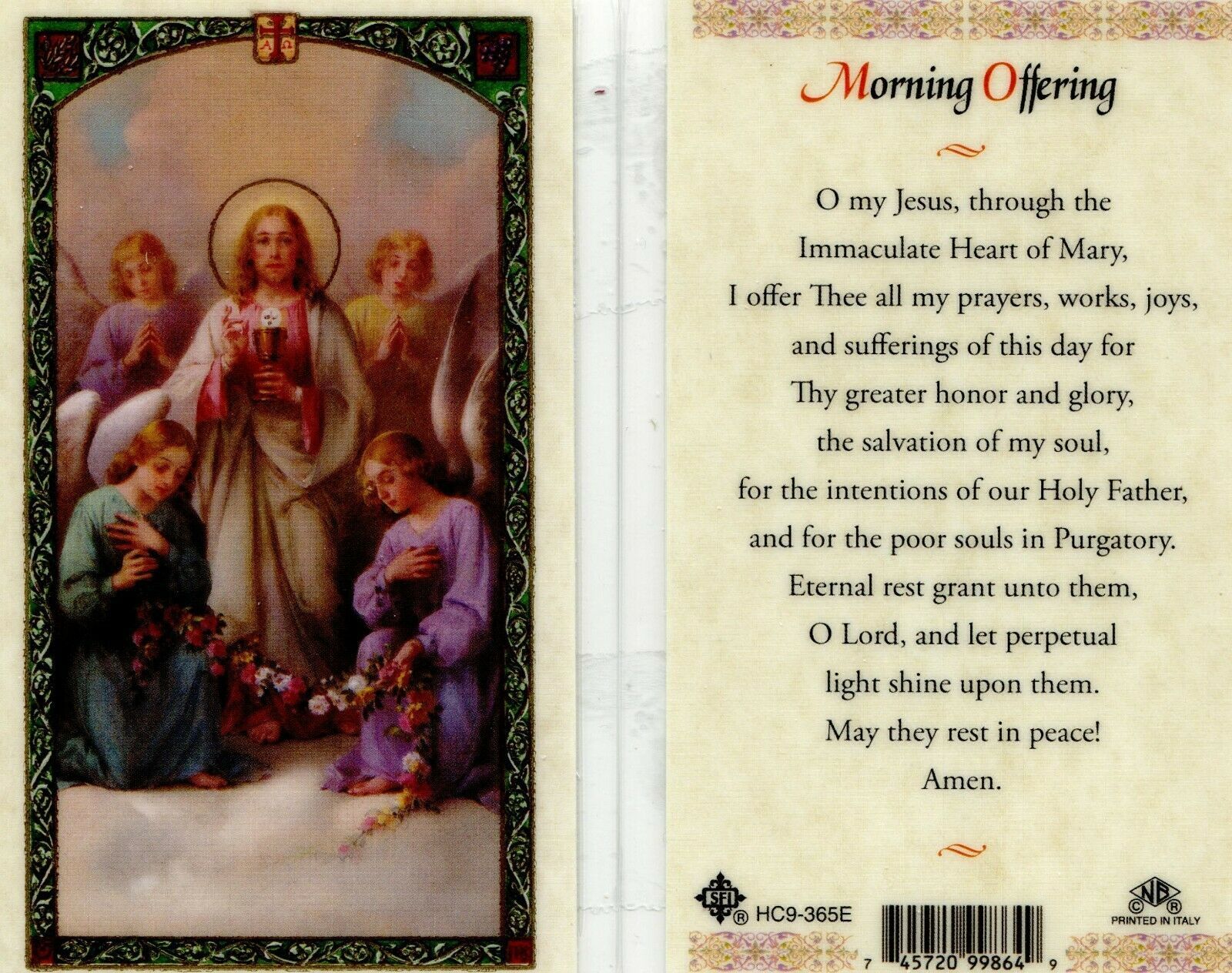
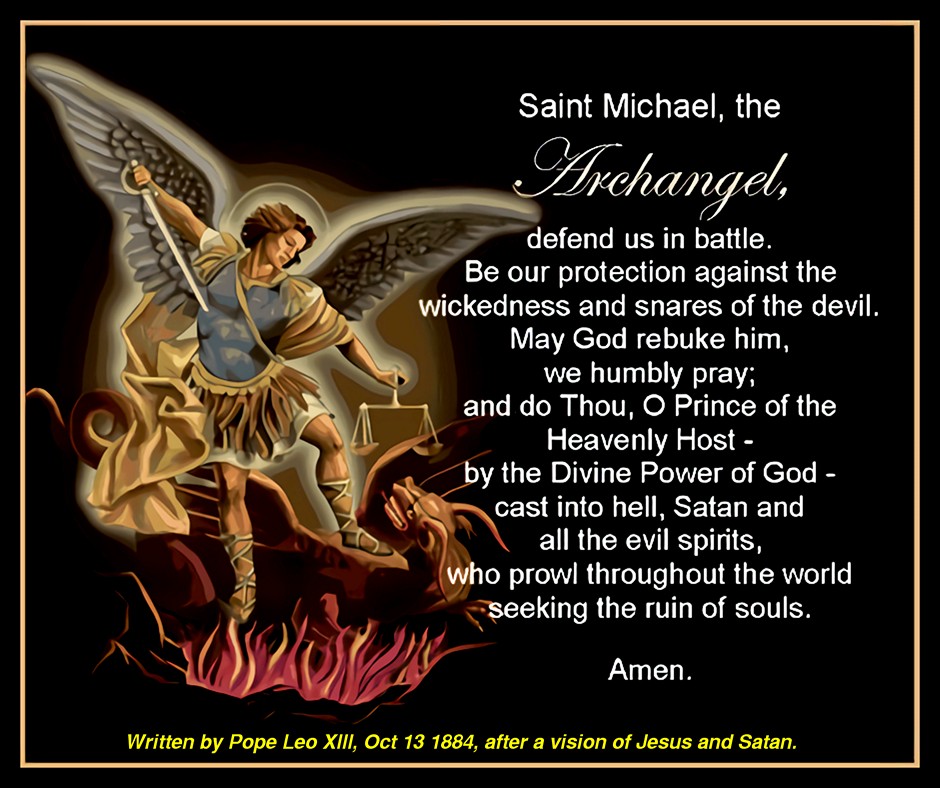
The Month of May is Dedicated to Devotion to Mary, the Mother of God.

“And when Elizabeth heard the greeting of Mary, the babe leaped in her womb; and Elizabeth was filled with the Holy Spirit and she exclaimed with a loud cry, “Blessed are you among women, and blessed is the fruit of your womb! And why is this granted me, that the Mother of my Lord should come to me?” (Luke 1:41-43)

Pope Leo XIV’s prayer intention for the month of May, 2026:
That everyone might have food
Let us pray that everyone, from large producers to small consumers, be committed to avoid wasting food, and to ensure that everyone has access to quality food.

Today’s First Reading
From: 1 Peter 1:18-25
The Blood of Christ Is Our Ransom
---------------------------------
[18] You know that you were ransomed from the futile ways inherited from your fathers, not with perishable things such as silver or gold, [19] but with the precious blood of Christ, like that of a lamb without blemish or spot. [20] He was destined before the foundation of the world but was made manifest at the end of the times for your sake. [21] Through Him you have confidence in God, who raised Him from the dead and gave Him glory, so that your faith and hope are in God.
Brotherly Love
---------------------
[22] Having purified your souls by your obedience to the truth for a sincere love of the brethren, love one another earnestly from the heart. [23] You have been born anew, not of perishable seed but of imperishable, through the living and abiding word of God; [24] for "All flesh is like grass and all its glory like the flower of grass. The grass withers, and the flower falls, [25] but the word of the Lord abides for ever." That word is the good news which was preached to you.
************************************************************************
Commentary:
17-21. The Christian has attained the honor of being a son or daughter of God. The sacred writer summarizes God's plan for man's salvation, which comes about in Christ: from all eternity, it was God's design to save men through Christ; this design was made manifest "at the end of the times", when our Lord offered Himself as an expiation for the sins of men, and then rose from the dead and was glorified. This is a further reason why Christians should grow in their desire for holiness.
"You were ransomed" (verse 18): the image of ransoming used here to explain Redemption is probably taken from sacred manumission (common at the time in Asia Minor and Greece) whereby slaves were set free through a sum of money being deposited in the temple. When exhorting Christians not to return to their former sins, St. Paul also stresses the great size of the ransom (cf. 1 Corinthians 6:20 and note). The amount of the ransom, St. Ambrose points out, "was not reckoned in terms of money but in terms of blood, for Christ died for us; He has set us free with His precious blood, as St. Peter also reminds us in his letter [...]; precious because it is the blood of a spotless Lamb, the blood of the Son of God, who has ransomed us not only from the curse of the Law, but also from that never-ending death which impiety implies" ("Expositio Evangelii Sec. Lucam", 7, 117).
"The blood of Christ, like that of a lamb without blemish or spot" (verse 19): in the sacrifice of Jesus was fulfilled the prophecy of Isaiah about the Messiah's expiatory suffering; and it also finally completed the liberation of the Israelite first-born in Egypt though the blood of the paschal lamb (Exodus 12; cf. Introduction to this letter). So, when in the New Testament the figure of the Lamb is applied to Christ, this is a way of referring to the atoning sacrifice of the Cross and, also, the spotless innocence of the Redeemer (cf. note on John 1:29).
17. "If you invoke as Father": this may be a reference to the saying of the Our Father, which Christians may have recited at the Baptism ceremony from the very beginning. We do know (cf. the "Didache", or "Teaching of the Twelve Apostles", an anonymous text of the apostolic era) that Christians used to pray the Our Father three times a day (cf. 8, 3). Frequent reflection on the fact that God is our Father fills us with peace and joy and stirs us to act as befits children of such a Father, knowing that God sees us and judges our actions. Therefore, divine filiation can never be taken as a kind of safe-conduct which allows us to be casual about our duties: "Worldly souls are very fond of thinking of God's mercy. And so they are encouraged to persist in their follies.
"It is true that God our Lord is infinitely merciful, but He is also infinitely just: and there is a judgment, and He is the Judge" (St. J. Escriva, "The Way", 747).
21. The resurrection of Jesus is the basis of Christian faith and hope and is the main proof of Jesus' divinity and His divine mission (cf., e.g., 1 Corinthians 15 and notes on same). The Apostles were, first and foremost, witnesses of our Lord's resurrection (cf. Acts 1:22; 2:32; etc.), and the proclamation of the Resurrection was the core of apostolic catechesis (cf. the discourses of St. Peter and St. Paul in the Acts of the Apostles).
Jesus Christ rose from the dead by His own power, the power of His divine person (cf. "Creed of the People of God", 12); the "St. Pius V Catechism" points out that "we sometimes, it is true, read in Scripture that He was raised by the Father; but this refers to Him as man, just as those passages, on the other hand, which say that He rose by His own power relate to Him as God" (I, 6, 8).
22-25. Fraternal love is one of the main signs of holiness. Jesus said that this love would be the distinguishing mark of Christians, and the Apostles often repeat this teaching in the instruction they impart (cf., e.g., 1 Cor 13; Jas 2:8; 1 Jn). The new people of God, Vatican II says, "are reborn, not from a corruptible seed, but from an incorruptible one through the word of the living God (cf. 1 Pet 1:23); the law of this people is the new commandment to love as Christ loved us (cf. Jn 13:34)" ("Lumen Gentium", 9).
From: Mark 10:32-45
Third Prophecy of the Passion
-----------------------------
[32] And they (the disciples) were on the road, going up to Jerusalem, and Jesus was walking ahead of them; and they were amazed, and those who followed were afraid. And taking the Twelve again, He began to tell them what was to happen to Him, [33] saying, "Behold, we are going up to Jerusalem; and the Son of Man will be delivered to the chief priests and the scribes, and they will condemn Him to death, and deliver Him to the Gentiles; [34] and they will mock Him, and spit upon Him, and scourge Him, and kill Him; and after three days He will rise."
The Sons of Zebedee Make Their Request
--------------------------------------
[35] And James and John, the sons of Zebedee, came forward to Him, and said to Him, "Teacher, we want You to do for us whatever we ask of You." [36] And He said to them, "What do you want Me to do for you?" [37] And they said to Him, "Grant us to sit, one at your right hand and one at your left, in your glory." [38] But Jesus said to them, "You do not know what you are asking. Are you able to drink the cup that I drink, or to be baptized with the baptism with which I am baptized?" [39] And they said to Him, "We are able." And Jesus said to them, "The cup that I drink you will drink; and with the baptism with which I am baptized, you will be baptized; [40] but to sit at My right hand or at My left is not Mine to grant, but it is for those for whom it has been prepared." [41] And when the ten heard it, they began to be indignant at James and John. [42] And Jesus called them to Him and said to them, "You know that those who are supposed to rule over the Gentiles lord it over them, and their great men exercise authority over them. [43] But it shall not be so among you; but whoever would be great among you must be your servant, [44] and whoever would be first among you must be slave of all. [45] For the Son of Man also came not to be served but to serve, and to give His life as a ransom of many."
***********************************************************************
Commentary:
32. Jesus was making His way to Jerusalem with a burning desire to see fulfilled everything that He had foretold about His passion and death. He had already told His disciples that He would suffer there, which is why they cannot understand His eagerness. By His own example He is teaching us to carry the cross gladly, not to try to avoid it.
35-44. We can admire the Apostles' humility: they do not disguise their earlier weakness and shortcomings from the first Christians. God also has wanted the Holy Gospel to record the earlier weaknesses of those who will become the unshakeable pillars of the Church. The grace of God works wonders in people's souls: so we should never be pessimistic in the face of our own wretchedness: "I can do all things in Him who strengthens me" (Philippians 4:13).
38. When we ask for anything in prayer, we should be ready, always, to accept God's will, even if it does not coincide with our own: "His Majesty knows best what is suitable for us; it is not for us to advise Him what to give us, for He can rightly reply that we know not what we ask" (St. Teresa, "Mansions", II, 8).
43-45. Our Lord's word and example encourage in us a genuine spirit of Christian service. Only the Son of God who came down from Heaven and freely submitted to humiliation (at Bethlehem, Nazareth, Calvary, and in the Sacred Host) can ask a person to make himself last, if he wishes to be first.
The Church, right through history, continues Christ's mission of service to mankind: "Experienced in human affairs, the Church, without attempting to interfere in any way in the politics of States, `seeks but a solitary goal: to carry forward the work of Christ Himself under the lead of the befriending Spirit. And Christ entered this world to give witness to the truth, to rescue and not to sit in judgment, to serve and not to be served' (Vatican II, "Gaudium Et Spes", 3). Sharing the noblest aspirations of men and suffering when she sees them not satisfied, she wishes to help them attain their full flowering, and that is why she offers men what she possesses as her characteristic attribute: a global vision of man and of the human race" (Paul VI, "Populorum Progressio", 13).
Our attitude should be that of our Lord: we should seek to serve God and men with a truly supernatural outlook, not expecting any return; we should serve even those who do not appreciate the service we do them. This undoubtedly does not make sense, judged by human standards. However, the Christian identified with Christ takes "pride" precisely in serving others; by so doing he shares in Christ's mission and thereby attains his true dignity: "This dignity is expressed in readiness to serve, in keeping with the example of Christ, who `came not to be served but to serve.' If, in the light of this attitude of Christ's, `being a king' is truly possible only by `being a servant', then `being a servant' also demands so much spiritual maturity that it must really be described as `being a king.' In order to be able to serve others worthily and effectively we must be able to master ourselves, possess the virtues that make this mastery possible" (John Paul II, "Redemptor Hominis", 21). Cf. note on Matthew 20:27-28.
Disclaimer: Opinions posted on Free Republic are those of the individual posters and do not necessarily represent the opinion of Free Republic or its management. All materials posted herein are protected by copyright law and the exemption for fair use of copyrighted works.


