Catena Aurea by St. Thomas Aguinas
10:28–31
28. Then Peter began to say unto him, Lo, we have left all, and have followed thee.
29. And Jesus answered and said, Verily I say unto you, There is no man that hath left house, or brethren, or sisters, or father, or mother, or wife, or children, or lands, for my sake, and the Gospel’s,
30. But he shall receive an hundredfold now in this time, houses, and brethren, and sisters, and mothers, and children, and lands, with persecutions; and in the world to come eternal life.
31. But many that are first shall be last; and the last first.
GLOSS. (non occ.) Because the youth, on hearing the advice of our Saviour concerning the casting away of his goods, had gone away sorrowful, the disciples of Christ, who had already fulfilled the foregoing precept, began to question Him concerning their reward, thinking that they had done a great thing, since the young man, who had fulfilled the commandments of the law, had not been able to hear it without sadness. Wherefore Peter questions the Lord for himself and the others, in these words, Then Peter began to say unto him, Lo, we have left all, and have followed thee.
THEOPHYLACT. Although Peter had left but few things, still he calls these his all; for even a few things keep us by the bond of affection, so that he shall be beatified who leaves a few things.
BEDE. (ubi sup.) And because it is not sufficient to have left all, he adds that which makes up perfection, and have followed thee. As if he said, We have done what Thou hast commanded. What reward therefore wilt Thou give us?1 But while Peter asks only concerning the disciples, our Lord makes a general answer; wherefore it goes on: Jesus answered and said, Verily I say unto you, There is no one that hath left house, or brethren, or sisters, or father, or mother, or children, or lands. But in saying this, He does not mean that we should leave our fathers, without helping them, or that we should separate ourselves from our wives; but He instructs us to prefer the glory of God to the things of this world.
CHRYSOSTOM. (Hom. in Matt. 64) But it seems to me that by these words He intended covertly to proclaim that there were to be persecutions, as it would come to pass that many fathers would allure their sons to impiety, and many wives their husbands.1 Again He delays not to say, for my name’s sake and the Gospel’s, as Mark says, or for the kingdom of God, as Luke says; the name of Christ is the power of the Gospel, and of His kingdom; for the Gospel is received in the name of Jesus Christ, and the kingdom is made known, and comes by His name.
BEDE. Some, however, taking occasion from this saying, in which it is announced that he shall receive an hundredfold now in this time, teach that Jewish fable of a thousand years after the resurrection of the just, when all that we have left for the Lord’s sake is to be restored with manifold usury, besides which we are to receive the crown of everlasting life. These persons do not perceive, that although the promise in other respects be honourable, yet in the hundred wives, which the other Evangelists mention, its foulness is made manifest: particularly when the Lord testifies that there shall be no marriage in the resurrection, and asserts that those things which are put away from us for His sake are to be received again in this life with persecutions, which, as they affirm, will not take place in their thousand yearss.
PSEUDO-CHRYSOSTOM. (Cat. in Marc. Oxon.) This hundredfold reward therefore must be in participation, not in possession, for the Lord fulfilled this to them not carnally, but spiritually.
THEOPHYLACT. For a wife is busied in a house about her husband’s food and raiment. See also how this is the case with the Apostles; for many women busied themselves about their food and their clothing, and ministered unto them. In like manner the Apostles had many fathers and mothers, that is, persons who loved them; as Peter, for instance, leaving one house, had afterwards the houses of all the disciples. And what is more wonderful, they are to be persecuted and oppressed, for it is with persecutions that the Saints are to possess all things, for which reason there follows, But many that are first shall be last, and the last first. For the Pharisees who were first became the last; but those who left all and followed Christ were last in this world through tribulation and persecutions, but shall be first by the hope which is in God.
BEDE. (ubi sup.) This which is here said, shall receive an hundredfold, may be understood in a higher sense1. For the number a hundred which is reckoned by changing from the left to the right hand, although it has the same appearance in the bending of the fingers as the ten had on the left, nevertheless is increased to a much greater quantity. This means, that all who have despised temporal things for the sake of the kingdom of heaven through undoubting faith, taste the joy of the same kingdom in this life which is full of persecutions, and in the expectation of the heavenly country, which is signified by the right hand, have a share in the happiness of all the elect. But because all do not accomplish a virtuous course of life with the same ardour as they began it, it is presently added, But many that are first shall be last, and the last first; for we daily see many persons who, remaining in a lay habit, are eminent for their meritorious life; but others, who from their youth have been ardent in a spiritual profession, at last wither away in the sloth of ease, and with a lazy folly finish in the flesh, what they had begun in the Spirit.
Catena Aurea Mark 10
Catena Aurea by St. Thomas Aguinas
17:20–23
20. Neither pray I for these alone, but for them also which shall believe on me through their word;
21. That they all may be one; as thou, Father, art in me, and I in thee, that they also may be one in us: that the world may believe that thou hast sent me.
22. And the glory which thou gavest me I have given them; that they may be one, even as we are one:
23. I in them, and thou in me, that they may be made perfect in one: and that the world may know that thou hast sent me, and hast loved them, as thou hast loved me.
AUGUSTINE. (Tr. cix) When our Lord had prayed for His disciples, whom He named also Apostles, He added a prayer for all others who should believe on Him; Neither pray I for these alone, but for all others who shall believe on Me through their word.
CHRYSOSTOM. (Hom. lxxxii) Another ground of consolation to them, that they were to be the cause of the salvation of others.
AUGUSTINE. (Tr. cix) All, i. e. not only those who were then alive, but those who were to be born; not those only who heard the Apostles themselves, but us who were born long after their death. We have all believed in Christ through their word: for they first heard that word from Christ, and then preached it to others, and so it has come down, and will go down to all posterity. We may see that in this prayer there are some disciples whom He does not pray for; for those, i. e. who were neither with Him at the time, nor were about to believe on Him afterwards through the Apostles’ word, but believed already. Was Nathanael with Him then, or Joseph of Arimathea, and many others, who, John says, believed on Him? I do not mention old Simeon, or Anna the prophetess, Zacharias, Elisabeth, or John the Baptist; for it might be answered that it was not necessary to pray for dead persons, such as these who departed with such rich merits. With respect to the former then we must understand that they did not yet believe in Him, as He wished, but that after His resurrection, when the Apostles were taught and strengthened by the Holy Spirit, they attained to a right faith. The case of Paul however still remains, An Apostle not of men, or by men; (Gal. 1:1) and that of the robber, who believed when even the teachers themselves of the faith fell away. We must understand then, their word, to mean the word of faith itself which they preached to the world; it being called their word, because it was preached in the first instance and principally by them; for it was being preached by them, when Paul received it by revelation from Jesus Christ Himself. And in this sense the robber too believed their word. Wherefore in this prayer the Redeemer prays for all whom He redeemed, both present and to come. And then follows the thing itself which He prays for, That they all may be one. He asks that for all, which he asked above for the disciples; that all both we and they may be one.
CHRYSOSTOM. (Hom. lxxxii) And with this prayer for unanimity, He concludes His prayer; and then begins a discourse on the same subject: A new commandment I give unto you, that ye love one another.
HILARY. (vii de Trin) And this unity is recommended by the great example of unity: As Thou, Father, art in Me, and I in Thee, that they also may be one in Us, i. e. that as the Father is in the Son, and the Son in the Father, so, after the likeness of this unity, all may be one in the Father and in the Son.
CHRYSOSTOM. (Hom. lxxxii) This as again does not express perfect likeness, but only likeness as far as it was possible in men; as when He saith, Be ye merciful, even as your Father, which is in heaven, is merciful. (Luke 6:36)
AUGUSTINE. (Tr. cx) We must particularly observe here, that our Lord did not say, that we may be all one, but that they may be all one, as Thou, Father, in Me, and I in Thee, are one, understood. For the Father is so in the Son, that They are one, because They are of one substance; but we can be one in Them, but not with Them; because we and They are not of one substance. They are in us, and we in Them, so as that They are one in Their nature, we one in ours. They are in us, as God is in the temple; we in Them, as the creature is in its Creator. Wherefore He adds, in Us, to shew, that our being made one by charity, is to be attributed to the grace of God, not to ourselves.
AUGUSTINE. (iv. de. Trin. c. ix) Or that in ourselves we cannot be one, severed from each other by diverse pleasures, and lusts, and the pollution of sin, from which we must be cleansed by a Mediator, in order to be one in Him.
HILARY. (viii. de Trin) Heretics endeavouring to get over the words, I and My Father are one, as a proving unity of nature, and to reduce them to mean a unity simply of natural love, and agreement of will, bring forwards these words of our Lord’s as an example of this kind of unity: That they may be all one, as Thou, Father, art in Me, and I in Thee. But though impiety can cheat its own understanding, it cannot alter the meaning1 of the words themselves. For they who are born again of a nature that gives unity in life eternal, they cease to be one in will merely, acquiring the same nature by their regeneration: but the Father and Son alone are properly one, because God, only-begotten of God, can only exist in that nature from which He is derived.
AUGUSTINE. (Tr. cx) But why does He say, That the world may believe that Thou hast sent Me? Will the world believe when we shall all be one in the Father and the Son? Is not this unity that peace eternal, which is the reward of faith, rather than faith itself? For though in this life all of us who hold in the same common faith are one, yet even this unity is not a means to belief, but the consequence of it. What means then, That all may be one, that the world may believe? He prays for the world when He says, Neither pray I for these alone, but for all those who shall believe on Me through their word. Whereby it appears that He does not make this unity the cause of the world believing, but prays that the world may believe, as He prays that they all may be one. The meaning will be clearer if we always put in the word ask; I ask that they all may be one; I ask that they may be one in Us; I ask that the world may believe that Thou hast sent Me.
HILARY. (viii. de Trin) Or, the world will believe that the Son is sent from the Father, for that reason, viz. because all who believe in Him are one in the Father and the Son.
CHRYSOSTOM. (Hom. lxxxii) For there is no scandal so great as division, whereas unity amongst believers is a great argument for believing; as He said at the beginning of His discourse, By this shall all men know that ye are My disciples, if ye have love one to another. For if they quarrel, they will not be looked on as the disciples of a peacemaking Master. And I, He saith, not being a peacemaker, they will not acknowledge Me as sent from God.
AUGUSTINE. (Tr. cx) Then our Saviour, Who, by praying to the Father, shewed Himself to be man, now shews that, being God with the Father, He doth what He prays for: And the glory which Thou gavest Me, I have given them. What glory, but immortality, which human nature was about to receive in Him? For that which was to be by unchangeable predestination, though future, He expresses by the past tense. That glory of immortality, which He says was given Him by the Father, we must understand He gave Himself also. For when the Son is silent of His own cooperation in the Father’s work, He shews His humility: when He is silent of the Father’s cooperation in His work, He shews His equality. In this way here He neither disconnects Himself with the Father’s work, when He says, The glory which Thou gavest Me, nor the Father with His work, when He says, I have given them. But as He was pleased by prayer to the Father to obtain that all might be one, so now He is pleased to effect the same by His own gift; for He continues, That all may be one, even as We are one.
CHRYSOSTOM. (Hom. lxxxii. 2) By glory, He means miracles, and doctrines, and unity; which latter is the greater glory. For all who believed through the Apostles are one. If any separated, it was owing to men’s own carelessness; not but that our Lord anticipates this happening.
HILARY. (viii. de Trin) By this giving and receiving of honour, then, all are one. But I do not yet apprehend in what way this makes all one. Our Lord, however, explains the gradation and order in the consummating of this unity, when He adds, I in them, and Thou in Me; so that inasmuch as He was in the Father by His divine nature, we in Him by His incarnation, and He again in us by the mystery of the sacrament, a perfect union by means of a Mediator was established.
CHRYSOSTOM. (Hom. lxxxii) Elsewhere1 He says of Himself and the Father, We will come and make Our abode with Him; by the mention of two persons, stopping the mouths of the Sabellians. Here by saying that the Father comes to the disciples through Him, He refutes the notion of the Arians.
AUGUSTINE. (Tr. cx. 4) Nor is this said, however, as if to mean that the Father was not in us, or we in the Father. He only means to say, that He is Mediator between God and man. And what He adds, That they may be made perfect in one, shews that the reconciliation made by this Mediator, was carried on even to the enjoyment of everlasting blessedness. So what follows, That the world may know that Thou hast sent Me, must not be taken to mean the same as the words just above, That the world may believe. For as long as we believe what we do not see, we are not yet made perfect, as we shall be when we have merited to see what we believe. So that when He speaks of their being made perfect, we are to understand such a knowledge as shall be by sight, not such as is by faith. These that believe are the world, not a permanent enemy, but changed from an enemy to a friend; as it follows: And hast loved them, as Thou hast loved Me. The Father loves us in the Son, because He elected us in Him. These words do not prove that we are equal to the Only Begotten Son; for this mode of expression, as one thing so another, does not always signify equality. It sometimes only means, because one thing, therefore another. And this is its meaning here: Thou hast loved them, as Thou hast loved Me, i. e. Thou hast loved them, because Thou hast loved Me. There is no reason for God loving His members, but that He loves him. But since He hateth nothing that He hath made, who can adequately express how much He loves the members of His Only Begotten Son, and still more the Only Begotten Himself.
17:24–26
24. Father, I will that they also, whom thou hast given me, be with me where I am; that they may behold my glory, which thou hast given me: for thou lovedst me before the foundation of the world.
25. O righteous Father, the world hath not known thee: but I have known thee, and these have known that thou hast sent me.
26. And I have declared unto them thy name, and will declare it: that the love wherewith thou hast loved me may be in them, and I in them.
CHRYSOSTOM. (Hom. lxxxii. 2) After He has said that many should believe on Him through them, and that they should obtain great glory, He then speaks of the crowns in store for them; Father, I will that they also whom Thou hast given Me, be with Me where I am.
AUGUSTINE. (Tr. cxi. 1) These are they whom He has received from the Father, whom He also chose out of the world; as He saith at the beginning of this prayer, Thou hast given Him power over all flesh, i. e. all mankind, That He should give eternal life to as many as Thou hast given Him. Wherein He shews that He had received power over all men, to deliver whom He would, and to condemn whom He would. Wherefore it is to all His members that He promises this reward, that where He is, they may be also. Nor can that but be done, which the Almighty Son saith that He wishes to the Almighty Father: for the Father and the Son have one will, which, if weakness prevent us from comprehending, piety must believe. Where I am: so far as pertains to the creature, He was made of the seed of David according to the flesh: He might say, Where I am, meaning where He was shortly to be, i. e. heaven. In heaven then, He promises us, we shall be. For thither was the form of a servant raised, which He had taken from the Virgin, and there placed on the right hand of God.
GREGORY. (Moral.) What means then what the Truth saith above, No man hath ascended into heaven, but He that came down from heaven, even the Son of man which is in heaven. (John 3:13) Yet here is no discrepancy, for our Lord being the Head of His members, the reprobates excluded, He is alone with us. And therefore, we making one with Him, whence He came alone in Himself, thither He returns alone in us.
AUGUSTINE. (Tr. cxi) But as respects the form of God, wherein He is equal to the Father, if we understand these words, that they may be with Me where I am, with reference to that, then away with all bodily ideas, and enquire not where the Son, Who is equal to the Father, is: for no one hath discovered where He is not. Wherefore it was not enough for Him to say, I will that they may be where I am, but He adds, with Me. For to be with Him is the great good: even the miserable can be where He is, but only the happy can be with Him. And as in the ease of the visible, though very different be whatever example we take, a blind man will serve for one, as a blind man though He is where the light is, yet is not himself with the light, but is absent from it in its presence, so not only the unbelieving, but the believing, though they cannot be where Christ is not, yet are not themselves with Christ by sight: by faith we cannot doubt but that a believer is with Christ. But here He is speaking of that sight wherein we shall see Him as He is; as He adds, That they may behold My glory, which Thou hast given Me. That they may behold, He says, not, that they may believe. It is the reward of faith which He speaks of, not faith itself.
CHRYSOSTOM. (Hom. lxxxii) He saith not, that they may partake of My glory, but, that they may behold, intimating that the rest there is to see the Son of God. The Father gave Him glory, when He begat Him.
AUGUSTINE. (Tr. cxi. 3) When then we shall have seen the glory which the Father gave the Son, though by this glory we do not understand here, that which He gave to the equal Son when He begat Him, but that which He gave to the Son of man, after His crucifixion; then shall the judgment be, then shall the wicked be taken away, that he see not the glory of the Lord: what glory but that whereby He is God? If then we take their words, That they may be with Me where I am, to be spoken by Him as Son of God, in that case they must have a higher meaning, viz. that we shall be in the Father with Christ. As He immediately adds, That they may see My glory which Thou hast given Me; and then, Which Thou gavest Me before the foundation of the world. For in Him He loved us before the foundation of the world, and then predestined what He should do at the end of the world.
BEDE. That which He calls glory then is the love wherewith He was loved with the Father before the foundation of the world. And in that glory He loved us too before the foundation of the world.
THEOPHYLACT. After then that He had prayed for believers, and promised them so many good things, another prayer follows worthy of His mercy and benignity: O righteous Father, the world hath not known Thee; as if to say, I would wish that all men obtained these good things, which I have asked for the believing. But inasmuch as they have not known Thee, they shall not obtain the glory and crown.
CHRYSOSTOM. (Hom. lxxxii) He says this as if He were troubled at the thought, that they should be unwilling to know One so just and good. And whereas the Jews had said, that they knew God, and He knew Him not: He on the contrary says, But I have known Thee, and these have known that Thou hast sent Me, and I have declared unto them Thy name, and will declare1 it, by giving them perfect knowledge through the Holy Ghost. When they have learned what Thou art, they will know that I am not separate from Thee, but Thine own Son greatly beloved, and joined to Thee. This I have told them, that I might receive them, and that they who believe this aright, shall preserve their faith and love toward Me entire; and I will abide in them: That the love wherewith Thou hast loved Me may be in them, and I in them.
AUGUSTINE. (Tr. cxi. 5) Or thus; What is to know Him, but eternal life, which He gave not to a condemned but to a reconciled world? For this reason the world hath not known Thee; because Thou art just, and hast punished them with this ignorance of Thee, in reward for their misdeeds. And for this reason the reconciled world knows Thee, because Thou art merciful, and hast vouchsafed this knowledge, not in consequence of their merits, but of thy grace. It follows: But I have known Thee. He is God the fountain of grace by nature, man of the Holy Ghost and Virgin by grace ineffable. Then because the grace of God is through Jesus Christ, He says, And they have known Me, i. e. the reconciled world have known Me, by grace, forasmuch as Thou hast sent Me. And I have made known Thy name to them by faith, and will make it known by sight: that the love wherewith Thou hast loved Me may be in them. (2 Tim. 4:7) The Apostle uses a like phrase, I have fought a good fight, by a good fight being the more common form. The love wherewith the Father loveth the Son in us, can only be in us because we are His members, and we are loved in Him when He is loved wholly, i. e. both head and body. And therefore He adds, And I in them; He is in us, as in His temple, we in Him as our Head.
Catena Aurea John 17
My favorite prayer from St. Phillip Neri is, "Watch me, O Lord, this day; for, abandoned to myself, I shall surely betray thee."
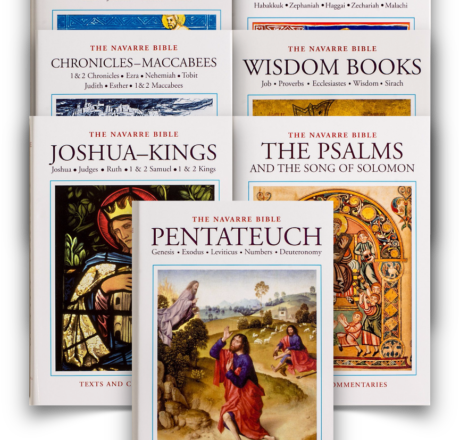
NAVARRE BIBLE COMMENTARY(RSV)
Ad Majorem Dei Gloriam (To the Greater Glory of God)
Today’s First Reading
From: 1 Peter 1:10-16
Praise and Thanksgiving to God (Continuation)
---------------------------------------------
[10] The prophets who prophesied of the grace that was to be yours searched and inquired about this salvation; [11] they inquired what person or time was indicated by the Spirit of Christ within them when predicting the sufferings of Christ and the subsequent glory. [12] It was revealed to them that they were serving not themselves but you, in the things which have now been announced to you by those who preached the good news to you through the Holy Spirit sent from heaven, things into which angels long to look.
Christians Are Called To Be Saints
----------------------------------
[13] Therefore gird up your minds, be sober, set your hope fully upon the grace that is coming to you at the revelation of Jesus Christ. [14] As obedient children, do not be conformed to the passions of your former ignorance, [15] but as he who called you is holy, be holy yourselves in all your conduct; [16] since it is written, "You shall be holy, for I am holy."
***********************************************************************
Commentary:
10-12. These verses of thanksgiving (vv. 3-12) end with a reference to the role of the Holy Spirit in salvation: he acted in the Old Testament through the prophets by announcing salvation, and now, through preachers of the Gospel, he reveals that it has come about.
The passage is a clear acknowledgment of the unity and continuity of the Old and New Testaments: in the Old the sufferings and subsequent glorification of Christ are proclaimed, in such a way that "what the prophets predicted as future events," says St Thomas, "the Apostles preached as something which had come true" ("Commentary on Eph" 2:4). "The economy of the Old Testament was deliberately orientated to prepare for and declare in prophecy the coming of Christ, Redeemer of all men, and of the messianic Kingdom (cf. Lk 24:44; Jn 5:39; 1 Pet 1:10) [...]. God, the inspirer and author of the books of both Testaments, in his wisdom has so brought it about that the New should be hidden in the Old and that the Old should be made manifest in the New. For although Christ founded the New Covenant in his blood (cf. Lk 22:20; 1 Cor 11:25), still the books of the Old Testament, all of them caught up into the Gospel message, attain and show forth their full meaning in the New Testament (cf. Mt 5:17; Lk 24:27; Rom 16:25-26; 2 Cor 3:14-16) and in their turn, shed light on it and explain it" (Vatican II, "Dei Verbum", 15-16).
These verses show the Holy Spirit's role as cause and guide of the evangelizing activity of the Church. In the early days of the spread of Christianity, as described in Acts, the action of the third Person of the Blessed Trinity was palpable.
12. The Greek word translated at the end of this verse as "look" contains the idea of bending over carefully in order to get a better look. This metaphor, then, depicts the angels in heaven contemplating with joy the mystery of salvation. St Francis de Sales, referring to this passage, exclaims: "Now in this complacency we satiate our soul with delights in such a manner that we do not yet cease to desire to be satiated [...]. The fruition of a thing which always contents never lessens, but is renewed and flourishes incessantly; it is ever agreeable, ever desirable. The perpetual contentment of heavenly lovers produces a desire perpetually content" ("Treatise on the Love of God", 5, 3).
1:13-2:10. Having focused their attention on the sublimity of the Christian calling, St Peter exhorts the faithful to a holiness in keeping with it. He provides some reasons why they should strive for holiness--the holiness of God (vv. 13-16) and the price paid for their salvation, the blood of Christ (w. 17-21). He then goes on directly to refer to the importance of love (vv. 22-25); and he encourages them to grow up in their new life (2:1-3) so that as "living stones" they can form part of the spiritual building of the Church, which has Christ as its cornerstone (vv. 4-10).
13-16. Israel was chosen by God from all the peoples of the earth to implement his plan of salvation: he set the people of Israel free from the slavery of Egypt, established a covenant with them and gave them commandments about how to live. These commandments in their highest form tell them to be holy as God is holy (cf. Lev 19:2). However, those events in the life of Israel were only an imperfect foreshadowing of what would happen when Jesus Christ came: Christians constitute the new chosen people; by Baptism they have been set free from sin and have been called to live in a fully holy way, with God himself as their model.
The Second Vatican Council solemnly declared that all are called to holiness (cf., e.g., "Lumen Gentium", 11, 40, 42). Monsignor Escriva, who anticipated the Council's teaching on this and other points, had constantly preached about this universal call to holiness: "Christ bids all without exception to be perfect as his heavenly Father is perfect. For the vast majority of people, holiness means sanctifying their work, sanctifying themselves in it, and sanctifying others through it--thereby finding God as they go about their daily lives [...]. Since the foundation of the Work in 1928, my teaching has been that sanctity is not the reserve of a privileged few; all the ways of the earth, every state in life, every job, every honest occupation, can be divine" (Bernal, "Monsignor Josemaria Escriva de Balaguer", III, 3).
13. "Gird up your minds": a metaphor based on the custom of the Jews, and Middle Easterners in general, of gathering up their rather full garments prior to setting out on a journey, to let them walk with greater ease. In the account of the Exodus we are told that God laid it down that when the Israelites celebrated the Passover they should do so with their loins girt, their sandals on and a staff in their hand (cf. Ex 12:11), because they were about to start on the journey to the promised land. St Peter evokes this image (which our Lord also used: cf. Lk 12:35ff), because Baptism, the new Exodus, marks the start of the Christian pilgrimage to heaven, our lasting home (cf. 1:17; 2:11); and he applies it to sobriety: we need to control our feelings and inclinations if we are to walk with joy along the route which will take us to the glorious coming of the Lord.
"The revelation of Jesus Christ": this is a reference, above all, to his eschatological coming at the end of time. The revelation of Jesus began with his incarnation and will reach its climax at the end of this world. Therefore, the "grace" mentioned should be understood not only as sanctifying grace but also the whole ensemble of benefits the Christian receives at Baptism, which will find their full expression in heaven.
14. "Your former ignorance": the sacred writer contrasts his hearers' present position with their former one. He does not mean that prior to Baptism they were perverse and ignorant, but that the Christian vocation brings such clear knowledge of God and so many aids to practise virtue that their previous position can be viewed as one of concupiscence and ignorance. "The followers of Christ, called by God, not in virtue of their works but by his design and grace, and justified in the Lord Jesus, have been made sons of God in the baptism of faith and partakers of the divine nature, and so are truly sanctified" (Vatican II, "Lumen Gentium", 40).