
Posted on 05/24/2026 11:13:53 PM PDT by fidelis
Memorial of the Blessed Virgin Mary, Mother of the Church
Standing by the cross of Jesus were his mother and his mother’s sister, Mary the wife of Clopas, and Mary of Magdala. When Jesus saw his mother and the disciple there whom he loved, he said to his mother, “Woman, behold, your son.” Then he said to the disciple, “Behold, your mother.” And from that hour the disciple took her into his home. John 19:25–27
Yesterday, we celebrated the great Solemnity of Pentecost, commemorating the outpouring of the Holy Spirit upon the first disciples and the birth of the Church. Just as God “breathed” life into Adam at the creation, so the Holy Spirit, the Breath of God, gives new life to the Church, the Body of Christ. At Pentecost, the Blessed Virgin Mary was present, embodying the Gift of Fortitude in her unwavering trust in God’s plan.
Fortitude, one of the Gifts of the Holy Spirit, strengthens us to persevere in doing good, especially amid trials, suffering, or temptation. It acts as an anchor, holding us steady during life’s storms and uniting us more deeply to the Mystery of the Cross.
When this memorial was instituted in 2018, Cardinal Robert Sarah beautifully reminded us that “the Christian life must be anchored to the Mystery of the Cross, to the oblation of Christ in the Eucharistic Banquet, and to the Mother of the Redeemer and Mother of the Redeemed….” Today, we honor her not only as the Mother of the Redeemer but also as our Mother—the Mother of the Redeemed. What a profound gift it is to share a spiritual mother with the Son of God! Through her maternal care and intercession, she leads us to her Son and strengthens us on our journey of faith.
The Gospel for today’s memorial recalls one of the most sacred images in the Scriptures—the Blessed Virgin Mary standing at the foot of the Cross, gazing with perfect faith, hope, and love at her divine Son. Her fidelity to Him was unwavering. With a motherly empathy, strengthened by the fullness of grace, she felt His pains and endured His suffering until the end.
Though Jesus embodied every virtue and spiritual gift, He allowed Himself to receive strength and consolation from His mother as He hung upon the Cross.
This act of shared love and mutual consolation—Christ receiving strength from His mother as she shared in His suffering—invites us to embrace this same love, allowing our Blessed Mother’s maternal care to unite us more fully to Christ. When Jesus turned to His mother and said, “Woman, behold, your son,” and to John, “Behold, your mother,” He was speaking to each of us, entrusting His mother to us and us to her... God strengthens and consoles us in accord with His divine plan, which includes the grace dispensed through the Sacraments—especially the Eucharist—the charitable intercession of others, the ministry of angels, and the unique motherly mediation of the Mother of God, our mother.
Reflect today on the many ways God sanctifies and strengthens you for your mission. Through the Eucharist, we are united to Christ’s Cross and receive the grace to rise triumphantly with Him. Along this journey, we are strengthened by the Blessed Mother, the Mother of the Church and the Mediatrix of grace. As the Spirit filled the Church at Pentecost, so too does He fill our hearts today, leading us to Mary, whose love and intercession anchor us to her Son and His saving grace.
Mother of the Church and Mother of God, the Holy Spirit filled you with the fullness of grace and perfected every virtue in your humble soul. Your strength to endure the Cross with your Son includes a promise that you will always stand by me, showering your motherly care and mediating the grace of your Son. Please be my mother now and always, and help me to be a faithful disciple of your Son, anchored in His Cross and lifted by His grace. Mother of the Church and Mother of the Redeemed, pray for me. Jesus, I trust in You.
Please keep in mind that this is a Catholic Caucus/Devotional thread for the purpose of prayerful reflection on the Sacred Scriptures and is closed to debate of any kind. Per FR policy on Religion Caucus threads, off-topic, argumentative, and abusive comments are not allowed and will be submitted to the Mods for deletion. Thanks, and God bless you.
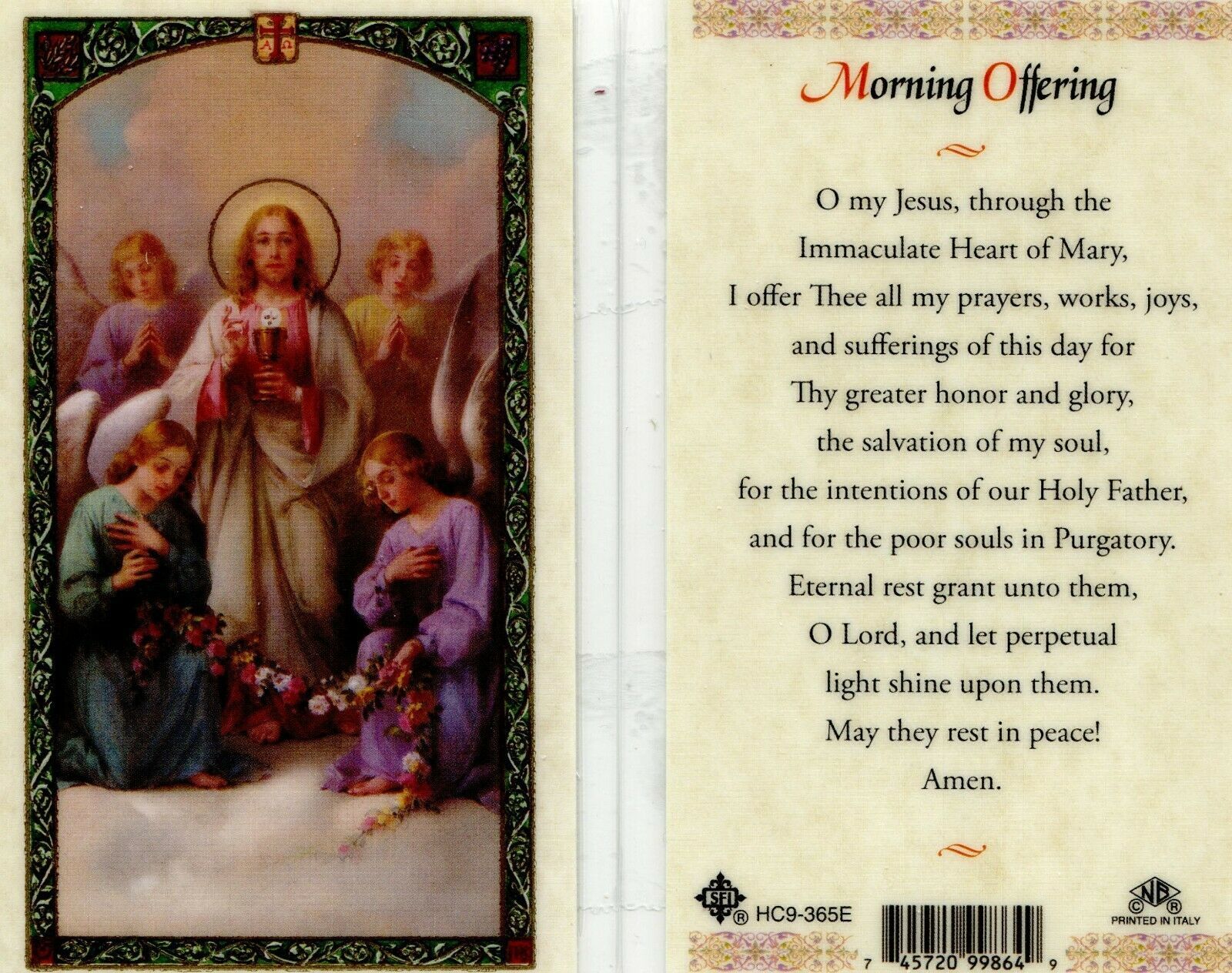
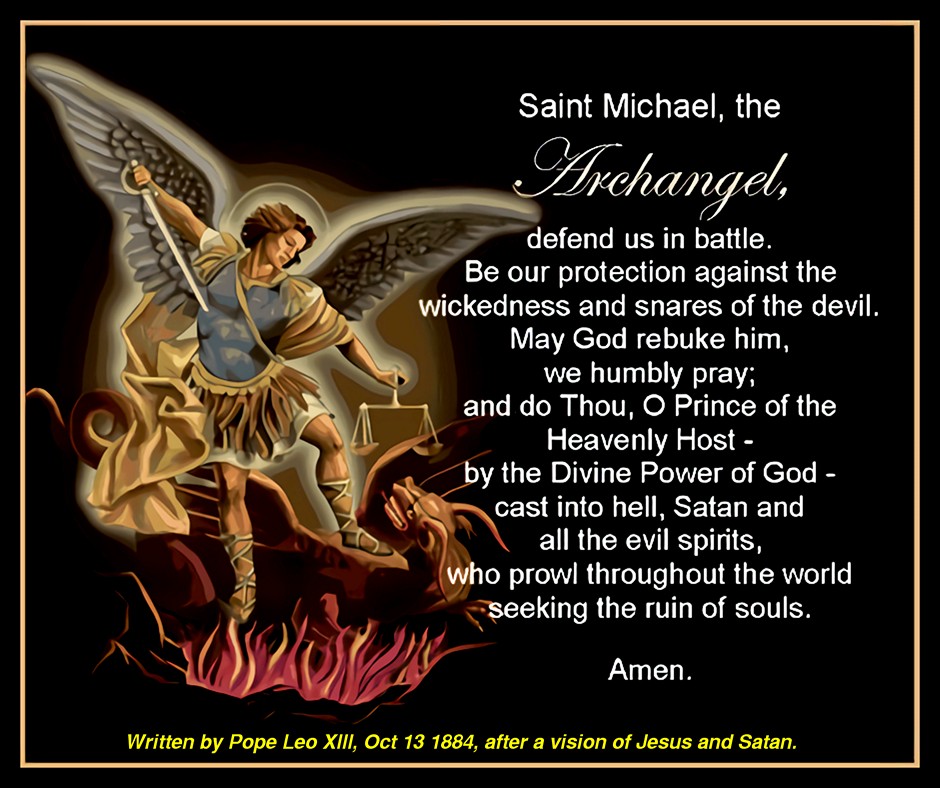
The Month of May is Dedicated to Devotion to Mary, the Mother of God.

“And when Elizabeth heard the greeting of Mary, the babe leaped in her womb; and Elizabeth was filled with the Holy Spirit and she exclaimed with a loud cry, “Blessed are you among women, and blessed is the fruit of your womb! And why is this granted me, that the Mother of my Lord should come to me?” (Luke 1:41-43)

Pope Leo XIV’s prayer intention for the month of May, 2026:
That everyone might have food
Let us pray that everyone, from large producers to small consumers, be committed to avoid wasting food, and to ensure that everyone has access to quality food.

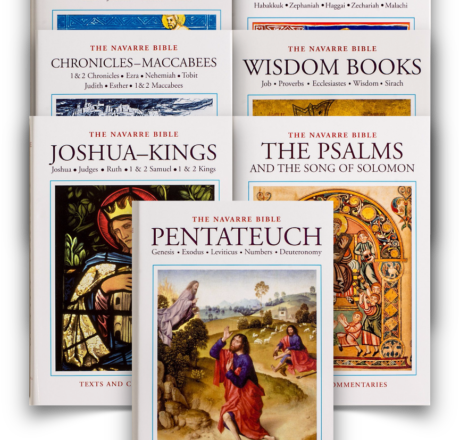
Today’s First Reading
From: Genesis 3:9-15, 20
Temptation and the First Sin (Continuation)
-------------------------------------------------------
[9] But the Lord God called to the man, and said to him, "Where are you?" [10] And he said, "I heard the sound of thee in the garden, and I was afraid, because I was naked; and I hid myself." [11] He said, "Who told you that you were naked? Have you eaten of the tree which I commanded you not to eat?" [12] The man said, "The woman whom thou gavest to be with me, she gave me fruit of the tree, and I ate." [13] Then the Lord God said to the woman, "What is this that you have done?" The woman said, "The serpent beguiled me, and I ate." [14] The Lord said to the serpent, "Because you have done this, cursed are you above all cattle, and above all wild animals; upon your belly you shall go, and dust you shall eat all the days of your life. [15] I will put enmity between you and the woman, and between your seed and her seed; he shall bruise your head, and you shall bruise his heel."
[20] The man called his wife's name Eve, because she was the mother of all living.
***********************************************************************
Commentary:
3:7-13. This passage begins the description of the effects of the original sin. Man and woman have come to know evil, and it shows, initially, in a most direct way--in their own bodies. The inner harmony described in Genesis 2:25 is broken, and concupiscence rears its head. Their friendship with God is also broken, and they flee from his presence, to avoid their nakedness being seen. As if his Creator could not see them! The harmony between man and woman is also fractured: he puts the blame on her, and she puts it on the serpent. But all three share in the responsibility, and therefore all three are going to pay the penalty.
"The harmony in which they found themselves, thanks to original justice, is now destroyed: the control of the soul's spiritual faculties over the body is shattered: the union of man and woman becomes subject to tensions (cf. Gen 3:7-16), their relations henceforth marked by lust and domination. Harmony with creation is broken: visible creation has become alien and hostile to man (cf. Gen 3:17, 19). Because of man, creation is now subject 'to its bondage to decay' (Rom 8:21). Finally, the consequence explicitly foretold for this disobedience will come true: man will 'return to the ground' (Gen 3:19), for out of it he was taken. 'Death makes its entrance into human history' (cf. Roman 5:12)" ("Catechism of the Catholic Church", 400).
3:14-15. The punishment God imposes on the serpent includes confrontation between woman and the serpent, between mankind and evil, with the promise that man will come out on top. That is why this passage is called the "Proto-gospel": it is the first announcement to mankind of the good news of the Redeemer-Messiah. Clearly, a bruise to the head is deadly, whereas a bruise to the heel is curable.
As the Second Vatican Council teaches, "God, who creates and conserves all things by his Word, (cf. In 1:3), provides men with constant evidence of himself in created realities (cf. Rom 1:19-20). And furthermore, wishing to open up the way to heavenly salvation, by promising redemption (cf. Gen 3:15); and he has never ceased to take care of the human race. For he wishes to give eternal life to all those who seek salvation by patience in well-doing (cf. Rom 2:6-7)" ("Dei Verbum", 3).
Victory over the devil will be brought about by a descendant of the woman, the Messiah. The Church has always read these verses as being messianic, referring to Jesus Christ; and it was seen in the woman the mother of the promised Savior; the Virgin Mary is the new Eve. "The earliest documents, as they are read in the Church and are understood in the light of a further and full revelation, bring the figure of a woman, Mother of the Redeemer, into a gradually clearer light. Considered in this light, she is already prophetically foreshadowed in the promise of victory over the serpent which was given to our first parents after their fall into sin (cf. Gen 3:15) [...]. Hence not a few of the early Fathers gladly assert with Irenaeus in their preaching: 'the knot of Eve's disobedience was untied by Mary's obedience: what the virgin Eve bound through her disbelief, Mary loosened by her faith' (St Irenaeus, "Adv. haer." 3, 22, 4) Comparing Mary with Eve, they call her 'Mother of the living' (St Epiphanius, "Adv. haer. Panarium" 78, 18) and frequently claim: 'death through Eve, life through Mary' (St Jerome, "Epistula" 22, 21; etc.)" (Vatican II, "Lumen Gentium", 55-56).
So, woman is going to have a key role in that victory over the devil. In his Latin translation of the Bible, the "Vulgate", St Jerome in fact reads the relevant passage as "she [the woman] shall bruise your head". That woman is the Blessed Virgin, the new Eve and the mother of the Redeemer, who shares (by anticipation and pre-eminently) in the victory of her Son. Sin never left its mark on her, and the Church proclaims her as the Immaculate Conception.
St Thomas explains that the reason why God did not prevent the first man from sinning was because 'God allows evils to be done in order to draw forth some greater good. Thus St Paul says, 'Where sin increased, grace abounded all the more' (Rom 5:20); and the "Exultet" sings, '0 happy fault,...which gained for us so great a Redeemer'" ("Summa Theologiae", 3, 1, 3 and 3; cf. "Catechism of the Catholic Church", 412).
3:16. Turning to the woman, God tells her what effects sin is going to have on her, as a mother and a wife. The pain of childbirth also points to the presence of physical pain in mankind, as a consequence of sin. Sin is also the cause of disorder in family life, especially between husband and wife: the text expressly instances a husband's despotic behavior towards his wife. Discrimination against women is here seen as the outcome of sin; it is something, therefore, that the Bible regards as evil. Sin is also the reason why people fail to appreciate the dignity of marriage and the family—a widespread failing denounced by the Second Vatican Council: "the dignity of these partnerships is not reflected everywhere, but is overshadowed by polygamy, the plague of divorce, so-called free love, and similar blemishes: furthermore, married love is too often dishonored by selfishness, hedonism, and unlawful contraceptive practices. Besides, the economic, social, psychological, and civil climate of today has a severely disturbing effect on family life" ("Gaudium Et Spes", 47).
3:17-19 The effects of sin that man is warned about are closely connected with his God-given mission--to till and keep the garden, or, to put it another way, to master the earth by means of his activity, work. The harmony between man and nature has been shattered through sin: from now on man is going to find work burdensome and it will cause him much distress. Thus, the effects of sin are all the various kinds of injustice which are to he found in the world of work and in man's control over the goods of the earth. God meant the earth and all that it contains benefit all mankind, but what in fact happens is that "in the midst of huge numbers deprived of the absolute necessities of life there are some who live in riches and squander their wealth; and this happens in less developed areas as well. Luxury and misery exist side by side. While a few individuals enjoy an almost unlimited opportunity to choose for themselves, the vast majority have no chance whatever of exercising personal initiative and responsibility, and quite often have to live and work in conditions unworthy of human beings" (Vatican II, "Gaudium Et Spes", 63)
The consequences of sin will stay with man until he returns to the earth, that is, until he dies. However, God does not immediately put into effect what he threatened in Genesis 2:17; man continues to live on earth, but he is destined to die. It is in this sense that St Paul explains human existence, in the light of the work of Christ whom he sees as being the second Adam: 'Therefore as sin came into the world through one man and death through sin, [...] so death spread to all men because all men sinned. [..] If, because of one man's trespass death reigned through that one man, much more will those who receive the abundance of grace and the free gift of righteousness reign in life through the one man Jesus Christ" (Rom 5:12, 17).
From: John 19:25-34
The Crucifixion and Death of Jesus (Continuation)
-------------------------------------------------
[25] So the soldiers did this. But standing by the cross of Jesus were His mother, and His mother's sister, Mary the wife of Clopas, and Mary Magdalene. [26] When Jesus saw His mother, and the disciple whom He loved standing near, He said to His mother, "Woman, behold your son!" [27] Then He said to the disciple, "Behold, your mother!" And from that hour the disciple took her to his own home.
[28] After this Jesus, knowing that all was now finished, said (to fulfil the scripture), “I thirst.” [29] A bowl full of vinegar stood there; so they put a sponge full of the vinegar on hyssop and held it to his mouth. [30] When Jesus had received the vinegar, he said, “It is finished”; and he bowed his head and gave up his spirit.
Jesus' Side Is Pierced
--------------------------------
[31] Since it was the day of Preparation, in order to prevent the bodies from remaining on the cross of the sabbath (for that sabbath was a high day), the Jews asked Pilate that their legs might be broken, and that they might be taken away. [32] So the soldiers came and broke the legs of the first, and of the other who had been crucified with him; [33] but when they came to Jesus and saw that he was already dead, they did not break his legs. [34] But one of the soldiers pierced his side with a spear, and at once there came out blood and water.
***********************************************************************
Commentary:
25. Whereas the Apostles, with the exception of St. John, abandon Jesus in the hour of His humiliation, these pious women, who had followed Him during His public life (cf. Lk 8:2-3) now stay with their Master as He dies on the cross (cf. note on Mt 27:55-56).
Pope St John Paul II explains that our Lady's faithfulness was shown in four ways: first, in her generous desire to do all that God wanted of her (cf. Lk 1:34); second, in her total acceptance of God's will (cf. Lk 1:38); third, in the consistency between her life and the commitment of faith which she made; and, finally, in her withstanding this test. "And only a consistency that lasts throughout the whole of life can be called faithfulness. Mary's 'fiat' in the Annunciation finds its fullness in the silent 'fiat' that she repeats at the foot of the Cross" ("Homily in Mexico Cathedral", 26 January 1979).
The Church has always recognized the dignity of women and their important role in salvation history. It is enough to recall the veneration which from the earliest times the Christian people have had for the Mother of Christ, the Woman "par excellence" and the most sublime and most privileged creature ever to come from the hands of God. Addressing a special message to women, the Second Vatican Council said, among other things: "Women in trial, who stand upright at the foot of the cross like Mary, you who so often in history have given to men the strength to battle unto the very end and to give witness to the point of martyrdom, aid them now still once more to retain courage in their great undertakings, while at the same time maintaining patience and an esteem for humble beginnings" (Vatican II, "Message To Women", 8 December 1965).
26-27. "The spotless purity of John's whole life makes him strong before the Cross. The other apostles fly from Golgotha: he, with the Mother of Christ, remains. Don't forget that purity strengthens and invigorates the character" (St J. Escriva, "The Way", 144).
Our Lord's gesture in entrusting His Blessed Mother to the disciple's care, has a dual meaning (see p. 19 above and pp. 35ff). For one thing it expresses His filial love for the Virgin Mary. St Augustine sees it as a lesson Jesus gives us on how to keep the fourth commandment: "Here is a lesson in morals. He is doing what He tells us to do and, like a good Teacher, He instructs His own by example, that it is the duty of good children to take care of their parents; as though the wood on which His dying members were fixed were also the chair of the teaching Master" (St Augustine, "In Ioann. Evang.", 119, 2).
Our Lord's words also declare that Mary is our Mother: "The Blessed Virgin also advanced in her pilgrimage of faith, and faithfully persevered in her union with her Son unto the cross, where she stood, in keeping with the divine plan, enduring with her only begotten Son the intensity of His suffering, associating herself with His sacrifice in her mother's heart, and lovingly consenting to the immolation of this victim who was born of her. Finally, she was given by the same Christ Jesus dying on the cross as a mother to His disciple" (Vatican II, "Lumen Gentium", 58).
All Christians, who are represented in the person of John, are children of Mary. By giving us His Mother to be our Mother, Christ demonstrates His love for His own to the end (cf. Jn 13:1). Our Lady's acceptance of John as her son show her motherly care for us: "the Son of God, and your Son, from the Cross indicated a man to you, Mary, and said: 'Behold, your son' (Jn 19:26). And in that man He entrusted to you every person, He entrusted everyone to you. And you, who at the moment of the Annunciation, concentrated the whole program of your life in those simple words: 'Behold, I am the handmaid of the Lord; let it be to me according to your word' (Lk 1:38): embrace everyone, draw close to everyone, seek everyone out with motherly care. Thus is accomplished what the last Council said about your presence in the mystery of Christ and the Church. In a wonderful way you are always found in the mystery of Christ, your only Son, because you are present wherever men and women, His brothers and sisters, are present, wherever the Church is present" (John Paul II, "Homily in the Basilica of Guadalupe", 27 January 1979).
"John, the disciple whom Jesus loved, brought Mary into his home, into his life. Spiritual writers have seen these words of the Gospel as an invitation to all Christians to bring Mary into their lives. Mary certainly wants us to invoke her, to approach her confidently, to appeal to her as our mother, asking her to 'show that you are our mother'" (St J. Escriva, "Christ Is Passing By", 140).
John Paul II constantly treats our Lady as his Mother. In bidding farewell to the Virgin of Czestochowa he prayed in this way: "Our Lady of the Bright Mountain, Mother of the Church! Once more I consecrate myself to you 'in your maternal slavery of love'. 'Totus tuus!' I am yours! I consecrate to you the whole Church--everyone to the ends of the earth! I consecrate to you humanity; I consecrate to you all men and women, my brothers and sisters. All peoples and all nations. I consecrate to you Europe and all the continents. I consecrate to you Rome and Poland, united, through your servant, by a fresh bond of love. Mother, accept us! Mother, do not abandon us! Mother, be our guide!" ("Farewell Address" at Jasna Gora Shrine, 6 June 1979).
28-29. This was foretold in the Old Testament: They gave me poison for my food, and for my thirst they gave me vinegar to drink: (Psalm 69:21). This does not mean that they gave Jesus vinegar to increase his suffering; it was customary to offer victims of crucifixion water mixed with vinegar to relieve their thirst. In addition to the natural dehydration Jesus was suffering, we can see in his thirst an expression of his burning desire to do his Father’s will and to save all souls: “On the Cross he cried out “Sitio!”, ‘I thirst.’ He thirsts for us, for our love, for our souls and for all the souls we ought to be bringing him along the way of the Cross, which is the way to immortality and heavenly glory” (St J. Escriva, “Friends of God,” 202).
30. Jesus, nailed on the Cross, dies to atone for all the sins and vileness of man. Despite his sufferings he dies serenely, majestically, bowing his head now that he has accomplished the mission entrusted to him “Who can sleep when he wishes to, as Jesus died when he wished to? Who can lay aside his clothing when he wishes to, as he put off the flesh when he chose to?...What must be hope or fear to find his power when he comes in judgment, if it can be seen so great at the moment of his death!” (St Augustine, “In Ioann, Evang.”, 119, 6).
“Let us meditate on our Lor, wounded from head to foot out of love for us. using a phrase which approaches the truth, although it does not express its full reality, we can repeat the words of an ancient writer: ‘The body of Christ is a portrait in pain’. At the first sight of Christ bruised and broken—just a lifeless body taken down from the Cross and given to his Mother—at the sight of Jesus destroyed in the way, we might have thought he had failed utterly. Where are the crowds that once followed him, where is the kingdom he foretold? But this is victory, not defeat. We are nearer the resurrection than ever before, we are going to see the glory which he has won with his obedience” (St J. Escriva, “Christ is Passing By”, 95).
31-33. Jesus dies on the Preparation day of the Passover—the Parasceve--that is, the eve, when the paschal lambs were officially sacrificed in the Temple. By stressing this, the evangelist implies that Christ's sacrifice took the place of the sacrifices of the Old Law and inaugurated the New Alliance in his blood (cf. Heb 9:12).
The Law of Moses required that the bodies should be taken down before nightfall (Deut 21:22-23); this is why Pilate is asked to have their legs broken, to bring on death and allow them to be buried before it gets dark, particularly since the next day is the feast of the Passover.
On the date of Jesus' death see "The Dates of the Life of our Lord Jesus Christ" in the "The Navarre Bible: St. Mark", pp. 48ff.
34. The outflow of blood and water has a natural explanation. Probably the water was an accumulation of liquid in the lungs due to Jesus' intense sufferings.
As on other occasions, the historical events narrated in the fourth Gospel are laden with meaning. St. Augustine and Christian tradition see the sacraments and the Church itself flowing from Jesus' open side: "Here was opened wide the door of life, from which the sacraments of the Church have flowed out, without which there is no entering in unto life which is true life. [...] Here the second Adam with bowed head slept upon the cross, that thence a wife might be formed of him, flowing from his side while he slept. O death, by which the dead come back to life! is there anything purer than this blood, any wound more healing!" (St. Augustine, "In Ioann. Evang., 120, 2).
The Second Vatican Council, for its part, teaches: "The Church—that is, the kingdom of Christ--already present in mystery, grows visibly through the power of God in the world. The origin and growth of the Church are symbolized by the blood and water which flowed from the open side of the crucified Jesus" (Vatican II, "Lumen Gentium", 3).
"Jesus on the cross, with his heart overflowing with love for men, is such an eloquent commentary on the value of people and things that words only get in the way. People, their happiness and their life, are so important that the very Son of God gave himself to redeem and cleanse and raise them up" (St. J. Escriva, "Christ Is Passing By", 165).
Disclaimer: Opinions posted on Free Republic are those of the individual posters and do not necessarily represent the opinion of Free Republic or its management. All materials posted herein are protected by copyright law and the exemption for fair use of copyrighted works.


