
Posted on 05/14/2026 10:05:24 PM PDT by fidelis
“When a woman is in labor, she is in anguish because her hour has arrived; but when she has given birth to a child, she no longer remembers the pain because of her joy that a child has been born into the world. So you also are now in anguish. But I will see you again, and your hearts will rejoice, and no one will take your joy away from you.” John 16:21–22
When we live fully united to Christ, we can endure anguish with confidence and determination. Without Christ, even small, temporary trials become so burdensome that we tend to avoid them. Though trials are not desirable in themselves, God permits them to strengthen us in virtue and prepare us for eternity. The anguish that accompanies them is temporary, but the victory over them is eternal. If we refuse to endure the temporary, we risk losing the eternal.
Our Gospel illustrates this point well. The purpose of pregnancy is to cooperate with God’s creative power and to bring forth into the world a precious new soul who will exist for all eternity. What a joy it is for parents to learn of their pregnancy, endure the nine months and the labor, hold their newborn child, and accompany that child throughout life and into Heaven.
In order to give birth to that child, the woman must endure labor pains. These pains are not desirable or sought for their own sake, but a woman willingly endures them as a necessary condition for the great joy of new life. Afterward, a loving mother does not regret having a baby because the labor was painful. The joy of holding her newborn is so rewarding that it puts the pain in perspective.
Just as a woman willingly endures labor pains for the joy of new life, we too must embrace temporary trials to receive eternal blessings. Trials are a consequence of Original Sin. In the beginning, God did not will that trials would be part of our lives. After the Fall, many forms of trials entered human existence. To enable us to overcome these trials, the Son of God took on flesh and overcame everything we endure. Therefore, when we face trials, God looks at us and invites us to follow His example: to carry our crosses with His strength, to do what He already did.
When Jesus told His Apostles, “So you also are now in anguish,” He was speaking not only to them but also to us. Jesus was fully aware of the anguish the Apostles would endure through His coming Passion, and He is fully aware of every anguish we will endure. His awareness is active, offering hope: “I will see you again, and your hearts will rejoice, and no one will take your joy away from you.” This is His promise to each of us as we confidently endure the trials of life. Our endurance will lead to eternal joy, for we will share in the victory of Christ’s Resurrection.
Reflect today on whether you are willing to endure the anguish of temporary trials so as to share in the eternal blessing that will come after. Are you living for what is temporary or eternal? Do you avoid trials out of fear, or do you embrace them with trust in Christ’s promise? Reflect on how you might unite your daily struggles with His Passion and seek His grace to persevere. Turn to Jesus, Who has already endured every trial and triumphed, and imitate Him so that you share in His victory and rejoice with Him for all eternity.
My determined Lord, You fully aligned Your will with the Father’s by embracing the great anguish caused by Your Passion and exhorted Your disciples to imitate You. You call me to do the same. Please give me the grace and wisdom I need to keep my eyes on the eternal and glorious end to which I am called, so that I can endure every temporary anguish with joy and hope. Jesus, I trust in You.
Please keep in mind that this is a Catholic Caucus/Devotional thread for the purpose of prayerful reflection on the Sacred Scriptures and is closed to debate of any kind. Per FR policy on Religion Caucus threads, off-topic, argumentative, and abusive comments are not allowed and will be submitted to the Mods for deletion. Thanks, and God bless you.
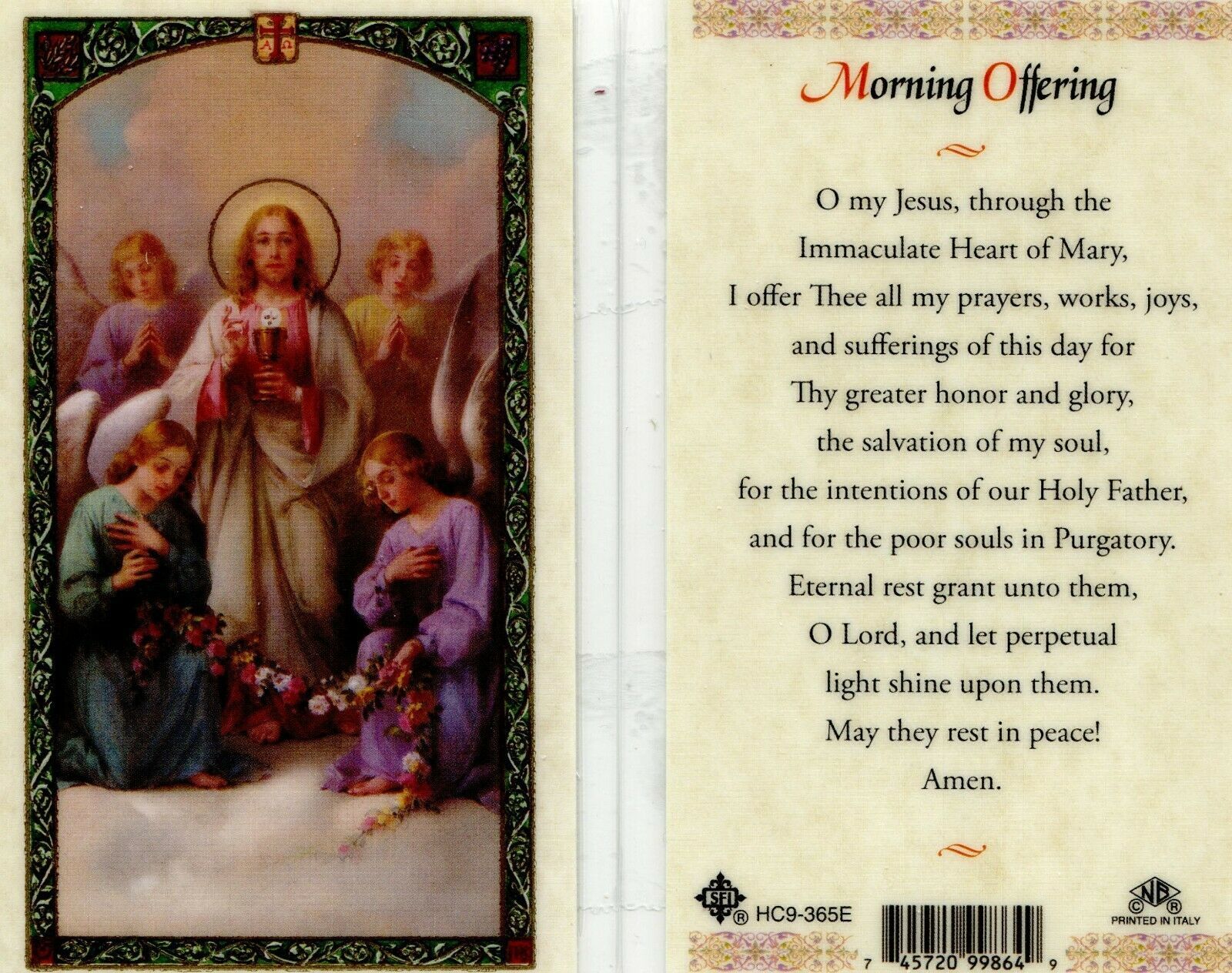
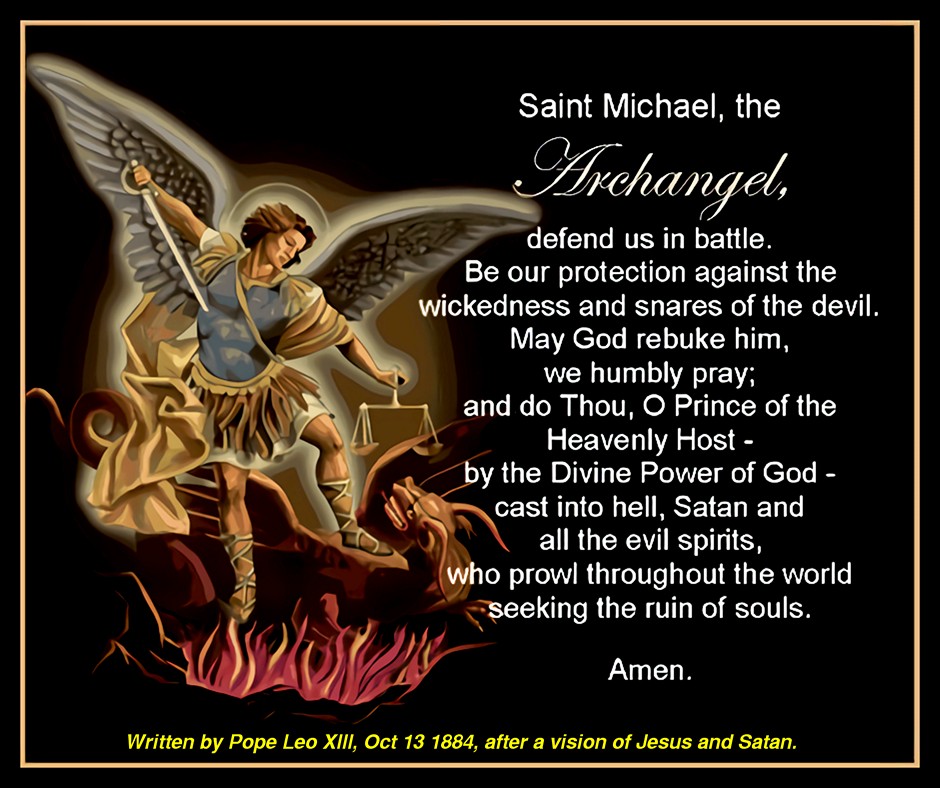
The Month of May is Dedicated to Devotion to Mary, the Mother of God.

“And when Elizabeth heard the greeting of Mary, the babe leaped in her womb; and Elizabeth was filled with the Holy Spirit and she exclaimed with a loud cry, “Blessed are you among women, and blessed is the fruit of your womb! And why is this granted me, that the Mother of my Lord should come to me?” (Luke 1:41-43)

Pope Leo XIV’s prayer intention for the month of May, 2026:
That everyone might have food
Let us pray that everyone, from large producers to small consumers, be committed to avoid wasting food, and to ensure that everyone has access to quality food.

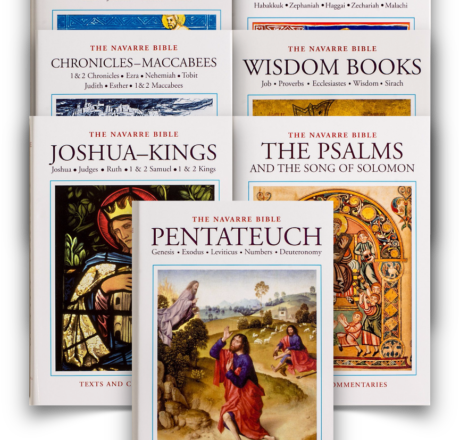
Today’s First Reading
From: Acts 18:9-18
Preaching to the Jews and Gentiles (Continuation)
-------------------------------------------------
[9] And the Lord said to Paul one night in a vision, "Do not be afraid, but speak and do not be silent; [10] for I am with you, and no man shall attack you to harm you; for I have many people in this city." [11] And he stayed a year and six months, teaching the word of God among them.
Paul before Gallio
------------------
[12] But when Gallio was proconsul of Achaia, the Jews made a united attack upon Paul and brought him before the tribunal, [13] saying, "This man is persuading men to worship God contrary to the law." [14] But when Paul was about to open his mouth, Gallio said to the Jews, "If it were a matter of wrongdoing or vicious crime, I should have reason to bear with you, O Jews; [15] but since it is a matter of questions about words and names and your own law, see to it yourselves; I refuse to be a judge of these things." [16] And he drove them from the tribunal. [17] And they all seized Sosthenes, the ruler of the synagogue, and beat him in front of the tribunal. But Gallio paid no attention to this.
Return to Antioch via Ephesus
-----------------------------
[18] After this Paul stayed many days longer and then took leave of the brethren and sailed for Syria, and with him Priscilla and Aquila. At Cencherae he cut his hair, for he had a vow.
***********************************************************************
Commentary:
9. In this vision, given him to strengthen his resolve, Paul sees the Lord, that is, Jesus. The brief message he receives is reminiscent of the language God uses when he addresses the prophets and just men of the Old Testament (cf. Ex 3:12; Josh 1:5; Is 41 :10). The words "Do not be afraid" occur often in divine visions and are designed to allay the impact of God's overpowering presence (cf. Lk 1 :30).
In this case, the words are meant to allay Paul 's premonitions about the severe treatment his opponents will hand out to him in Corinth. The vision once again indicates the graces which the Lord is bestowing on him to support his intense contemplative life, which is also a life of action in the service of Jesus and the Gospel.
"I tell you," St Teresa of Avila writes, "those of you whom God is not leading by this road [of contemplation], that, as I know from what I have seen and been told by those who are following this road, they are not bearing a lighter cross than you; you would be amazed at all the ways and manners in which God sends them crosses. I know about both types of life and I am well aware that the trials given by God to contemplatives are intolerable; and they of such a kind that, were he not to feed them with consolations, they could not be borne. It is clear that, since God leads those whom he most loves by the way of trials, the more he loves them, the greater will be their trials; and there is no reason to suppose that he hates contemplatives, since with his own mouth he praises them and calls them his friends.
"To suppose that he would admit to his close friendship people who are free from all trials is ridiculous. [...] I think, when those who lead an active life occasionally see contemplatives receiving consolations, they suppose that they never experience anything else. But I can assure you that you might not be able to endure their sufferings for as long as a day" ("Way of Perfection", chap. 18).
10. God has foreseen the people who are going to follow the call of grace. From this it follows that the Christian has a serious obligation to preach the Gospel to as many people as he can. This preaching has a guaranteed effectiveness, as can be seen from its capacity to convert men and women of every race, age, social condition etc. The Gospel is for all. God offers it, through Christians, to rich and poor, to the educated and the uneducated. Any person can accept this invitation to grace: "Not only philosophers and scholars believed in Christ...but also workmen and people wholly uneducated, who all scorned glory, and fear and death" (St. Justin, "Second Apology," 10, 8).
12. Gallio was a brother of the Stoic philosopher Seneca. He had been adopted in Rome by Lucius Iunius Gallio, whose name he took. From an inscription at Delphi (reported in 1905) we learn that Gallio began his proconsulship of Achaia, of which Corinth was the capital, in July 51. Paul must have appeared before Gallio around the end of 52. This is one of the best-established dates we have for the Apostle.
17. It is not quite clear what happened. Sosthenes may have been assaulted by the citizens of Corinth who were using the incident to vent their anti-Jewish feelings. But it is more likely that Sosthenes was in sympathy with the Christians and that the Jews were venting their frustration on him. In 1 Corinthians l:l a Christian called Sosthenes appears as co-author (amanuensis) of the letter; some commentators identify him with the ruler of the synagogue in this episode.
18. The vow taken by a "Nazarite" (one "consecrated to God") is described in the sixth chapter of the Book of Numbers. Among other things it involved not cutting one's hair (to symbolize that one was allowing God to act in one) and not drinking fermented drinks (meaning a resolution to practise self-denial). It is not clear whether it was Paul or Aquila who had taken the vow; apparently the vow ended at Cenchreae, for the votee's hair was cut there. For more information, see the note on Acts 21:23-24.
From: John 16:20-23
Fullness of Joy (Continuation)
------------------------------
(Jesus said to His disciples,) [20] "Truly, truly, I say to you, you will weep and lament, but the world will rejoice; you will be sorrowful, but your sorrow will turn into joy. [21] When a woman is in travail she has sorrow, because her hour has come; but when she is delivered of the child, she no longer remembers the anguish, for joy that a child is born into the world. [22] So you have sorrow now, but I will see you again and your hearts will rejoice, and no one will take your joy from you. [23] In that day you will ask nothing of Me. Truly, truly, I say to you, if you ask anything of the Father, He will give it to you in My name."
***********************************************************************
Commentary:
21-22. This image of the woman giving birth (frequently used in the Old Testament to express intense pain) is also often used, particularly by the prophets, to mean the birth of the new messianic people (cf. Isaiah 21:3; 26:17; 66:7; Jeremiah 30:6; Hosea 13:13; Micah 4:9-10). The words of Jesus reported here seem to be the fulfillment of those prophecies. The birth of the messianic people--the Church of Christ--involves intense pain, not only for Jesus but also, to some degree, for the Apostles. But this pain, like birthpains, will be made up for by the joy of the final coming of the Kingdom of Christ: "I am convinced," says St. Paul, "that the sufferings of this present time are not worth comparing with the glory that is to be revealed to us" (Romans 8:18).
23-24. See the note on John 14:12-14.
[ Note on John 14:12-14 states: 12-14. Jesus Christ is our intercessor in Heaven; therefore, He promises us that everything we ask for in His name, He will do. Asking in His name (cf. 15:7, 16; 16:23-24) means appealing to the power of the risen Christ, believing that He is all-powerful and merciful because He is true God; and it also means asking for what is conducive to our salvation, for Jesus is our Savior. Thus, by "whatever you ask" we must understand what is for the good of the asker. When our Lord does not give what we ask for, the reason is that it would not make for our salvation. In this way we can see that He is our Savior both when He refuses us what we ask and when He grants it. ]
Christ is King.
Disclaimer: Opinions posted on Free Republic are those of the individual posters and do not necessarily represent the opinion of Free Republic or its management. All materials posted herein are protected by copyright law and the exemption for fair use of copyrighted works.


