
Posted on 05/07/2026 10:20:37 PM PDT by fidelis
“No one has greater love than this, to lay down one’s life for one’s friends. You are my friends if you do what I command you. I no longer call you slaves, because a slave does not know what his master is doing. I have called you friends, because I have told you everything I have heard from my Father.” John 15:13–15
Is it possible to know everything that Jesus knows? Certainly not. Yet, Jesus says in today’s Gospel, “I have told you everything I have heard from my Father.” Jesus Himself is the full revelation of the Father. Therefore, in Him we have been given perfect access to the life of God... Nonetheless, our imperfect natures do not limit what Jesus has told us from the Father.
By analogy, consider water. When we are thirsty, we drink a glass of water. If we are very thirsty, we might drink several glasses. However, we are limited in how much water we can consume in one sitting. All that Jesus has revealed to us from the Father is like an infinite ocean of grace. He doesn’t offer us only one glass or even several. He offers us the ocean. Though He bestows it on us fully, we are limited in what we can receive by our finite nature and sin.
The goal of the Christian life is not to take one “sip” or “glass” of grace. Our goal is to continuously increase our capacity for receptivity. The greatest of saints spent their lives doing so. The more grace they received, the greater their capacity, and the greater their capacity, the more they received. Saint Teresa of Ávila described this process as progressing through the “mansions” of the interior castle, with each step drawing the soul closer to union with God. Saint John of the Cross taught that detachment from worldly attachments and the purification of the soul increase our receptivity to God’s grace. Saint Thomas Aquinas explained that the theological virtues, especially charity, expand the soul’s capacity for divine love.
The presence of grace in any soul ensures that the soul will attain Heaven upon death. However, the level of glory that each will experience for eternity is determined by how much the soul’s capacity for grace expands in this life... Jesus is not only the source of such love, He is also the Model. His choice to die on the Cross in His human nature exemplifies the kind of sacrificial love we are called to embody...
The freedom to love is found through obedience to God. Though we cannot arrive at such obedience instantaneously, we can grow into it through prayer, penance, and fidelity to His commands. What does He command us to do? “This is my commandment: love one another as I love you” (John 15:12). Jesus loved us by laying down His life for us. In turn, we are called to lay down our lives for others. This means thinking of others before ourselves, anticipating their true needs, and working for their highest good—the salvation of their souls.
Reflect today on how Christ’s infinite ocean of grace flows into your life. What areas of selfishness or fear prevent you from receiving more of His love? Commit to growing in charity by laying down your life in concrete ways for those whom God has placed in your path. Seek to imitate Jesus who calls you His friend and shares everything with you that He has heard from the Father. Remember His command: “Love one another as I love you.” The more you love, the more your soul will expand, and the more you will share in His eternal glory.
My infinite Lord, the depth of love within Your soul is incomprehensible, yet You have revealed that love to us and invited us to receive it. Please flood me with the gift of charity so that I will not only share more fully in Your eternal glory, but so that You will touch others through the charity You place within my heart. Grant me the grace to embrace sacrificial love, laying down my life for others as You laid down Your life for me. Jesus, I trust in You.
Please keep in mind that this is a Catholic Caucus/Devotional thread for the purpose of prayerful reflection on the Sacred Scriptures and is closed to debate of any kind. Per FR policy on Religion Caucus threads, off-topic, argumentative, and abusive comments are not allowed and will be submitted to the Mods for deletion. Thanks, and God bless you.
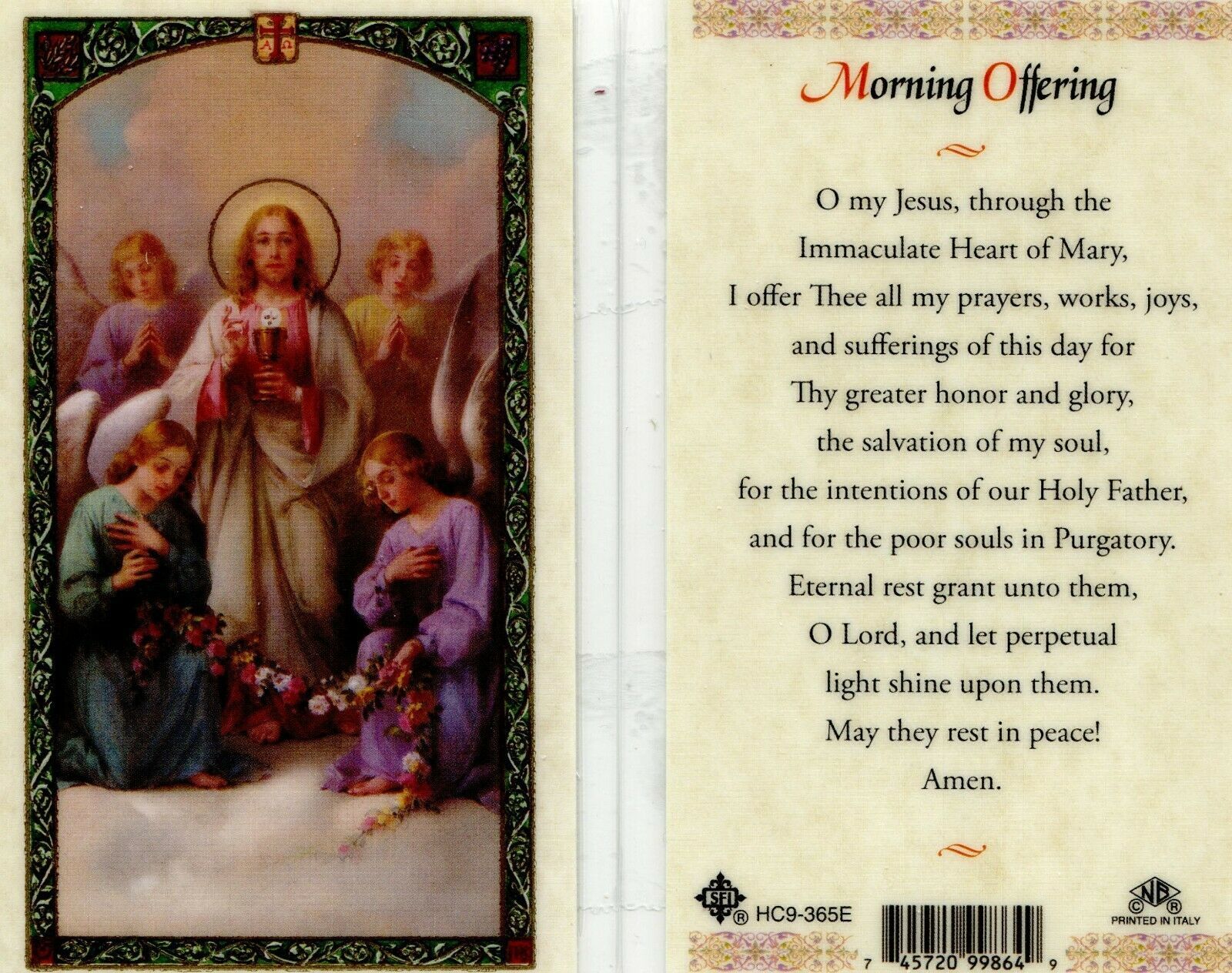
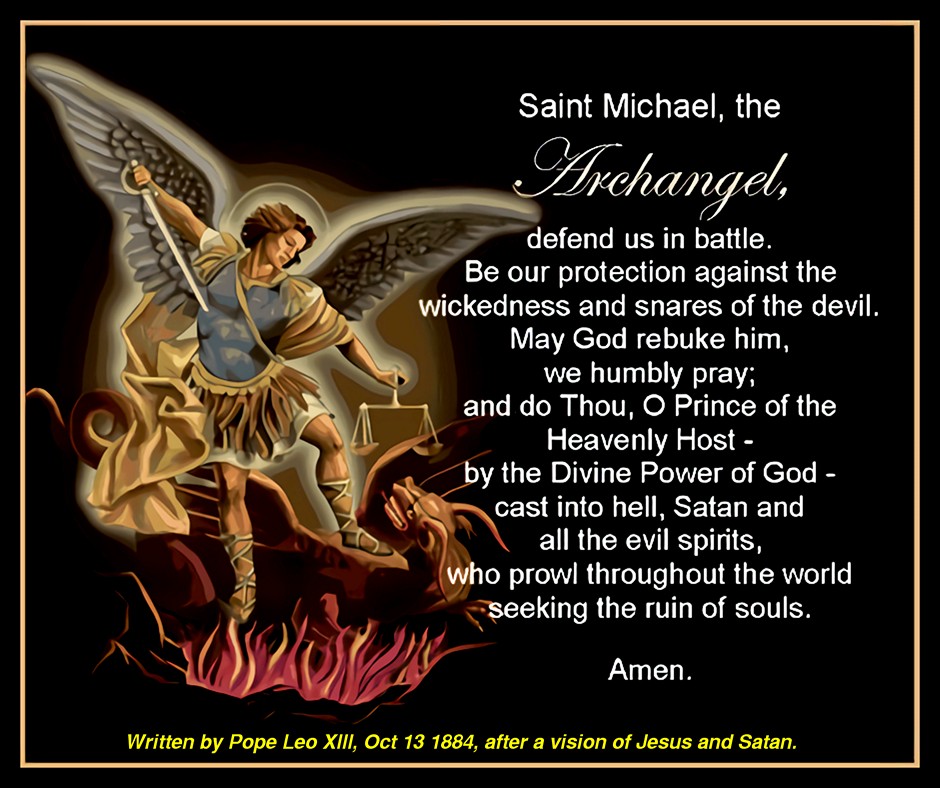
The Month of May is Dedicated to Devotion to Mary, the Mother of God.

“And when Elizabeth heard the greeting of Mary, the babe leaped in her womb; and Elizabeth was filled with the Holy Spirit and she exclaimed with a loud cry, “Blessed are you among women, and blessed is the fruit of your womb! And why is this granted me, that the Mother of my Lord should come to me?” (Luke 1:41-43)

Pope Leo XIV’s prayer intention for the month of May, 2026:
That everyone might have food
Let us pray that everyone, from large producers to small consumers, be committed to avoid wasting food, and to ensure that everyone has access to quality food.

Today’s First Reading
From: Acts 15:22-31
The Council's Decision
----------------------
[22] Then it seemed good to the Apostles and the elders, with the whole Church, to choose men from among them and send them to Antioch with Paul and Barnabas. They sent Judas called Barsabbas, and Silas, leading men among the brethren, [23] with the following letter: "The brethren, both the Apostles and the elders, to the brethren who are of the Gentiles in Antioch and Syria and Cilicia, greeting. [24] Since we have heard that some persons from us have troubled you with words, unsettling your minds, although we gave them no instructions, [25] it has seemed good to us in assembly to choose men and send them to you with our beloved Barnabas and Paul, [26] men who have risked their lives for the sake of our Lord Jesus Christ. [27] We have therefore sent Judas and Silas, who themselves will tell you the same things by word of mouth. [28] For it has seemed good to the Holy Spirit and to us to lay upon you no greater burden than these necessary things: [29] that you abstain from what has been sacrificed to idols and from blood and from what is strangled and from unchastity. If you keep yourselves from these, you will do well. Farewell."
The Reception of the Council's Decree
-------------------------------------
[30] So when they were sent off, they went down to Antioch; and having gathered the congregation together, they delivered the letter. [31] And when they read it, they rejoiced at the exhortation.
***********************************************************************
Commentary:
22-29. The decree containing the decisions of the Council of Jerusalem incorporating St. James' suggestions makes it clear that the participants at the Council are conscious of being guided in their conclusions by the Holy Spirit and that in the last analysis it is God who has decided the matter.
"We should take," Melchor Cano writes in the 16th century, "the same road as the Apostle Paul considered to be the one best suited to solving all matters to do with the doctrine of the faith. [...] The Gentiles might have sought satisfaction from the Council because it seemed to take from the freedom granted them by Jesus Christ, and because it imposed on the disciples certain ceremonies as necessary, when in fact they were not, since faith is the key to salvation. Nor did the Jews object by invoking Sacred Scripture against the Council's decision on the grounds that Scripture seems to support their view that circumcision is necessary for salvation. So, by respecting the Council they gave us the criterion which should be observed at all times; that is, to place full faith in the authority of the synods confirmed by Peter and his legitimate successors. They say 'it has seemed good to the Holy Spirit and to us'; thus, the Council's decision is the decision of the Holy Spirit Himself" ("De Locis", V, 4).
It is the Apostles and the elders, with the whole Church, who designate the people who are to publish the Council's decree, but it is the Hierarchy which formulates and promulgates it. The text contains two parts--one dogmatic and moral (verse 28) and the other disciplinary (verse 29). The dogmatic part speaks of imposing no burden other than what is essential and therefore declares that pagan converts are free from the obligation of circumcision and of the Mosaic Law but are subject to the Gospel's perennial moral teaching on matters to do with chastity. This part is permanent: because it has to do with a necessary part of God's salvific will it cannot change.
The disciplinary part of the decree lays down rules of prudence which can change, which are temporary. It asks Christians of Gentile background to abstain--out of charity towards Jewish Christians—from what has been sacrificed to idols, from blood and from meat of animals killed by strangulation.
The effect of the decree means that the disciplinary rules contained in it, although they derive from the Mosaic Law, no longer oblige by virtue of that Law but rather by virtue of the authority of the Church, which has decided to apply them for the time being. What matters is not what Moses says but what Christ says through the Church. The Council "seems to maintain the Law in force," writes St. John Chrysostom, "because it selects various prescriptions from it, but in fact suppresses it, because it does not accept ALL its prescriptions. It had often spoken about these points, it sought to respect the Law and yet establish these regulations as coming not from Moses but from the Apostles" ("Hom. on Acts," 33).
From: John 15:12-17
The Law of Love
------------------------
[12] "This is My commandment, that you love one another as I have loved you. [13] Greater love has no man than this, that a man lay down his life for his friends. [14] You are My friends if you do what I command you. [15] No longer do I call you servants, for the servant does not know what his master is doing; but I have called you friends, for all that I have heard from My Father I have made known to you. [16] You did not choose Me, but I chose you and appointed you that you should go and bear fruit and that your fruit should abide; so that whatever you ask the Father in My name, He may give it to you. [17] This I command you, to love one another."
**********************************************************
Commentary:
12-15. Jesus insists on the "new commandment", which He Himself keeps by giving His life for us. See note on John 13:34-35.
Christ's friendship with the Christian, which our Lord expresses in a very special way in this passage, is something very evident in St. Escriva's preaching: "The life of the Christian who decides to behave in accordance with the greatness of his vocation is so to speak a prolonged echo of those words of our Lord, 'No longer do I call you My servants; a servant is one who does not understand what his master is about, whereas I have made known to you all that My Father has told Me; and so I have called you My friends' (John 15:15). When we decide to be docile and follow the will of God, hitherto unimagined horizons open up before us.... 'There is nothing better than to recognize that Love has made us slaves of God. From the moment we recognize this we cease being slaves and become friends, sons' (St. J. Escriva, "Friends of God", 35).
"Sons of God, friends of God.... Jesus is truly God and truly Man, He is our Brother and our Friend. If we make the effort to get to know Him well 'we will share in the joy of being God's friends' ["ibid.", 300]. If we do all we can to keep Him company, from Bethlehem to Calvary, sharing His joys and sufferings, we will become worthy of entering into loving conversation with Him. As the Liturgy of the Hours sings, "calicem Domini biberunt, et amici Dei facti sunt" (they drank the chalice of the Lord and so became friends of God).
"Being His children and His friends are two inseparable realities for those who love God. We go to Him as children, carrying on a trusting dialogue that should fill the whole of our lives; and we go to Him as friends.... In the same way our divine sonship urges us to translate the overflow of our interior life into apostolic activity, just as our friendship with God leads us to place ourselves at 'the service of all men. We are called to use the gifts God has given us as instruments to help others discover Christ' ["ibid.", 258]" (Monsignor A. del Portillo in his preface to St. J. Escriva's, "Friends of God").
16. There are three ideas contained in these words of our Lord. One, that the calling which the Apostles received and which every Christian also receives does not originate in the individual's good desires but in Christ's free choice. It was not the Apostles who chose the Lord as Master, in the way someone would go about choosing a rabbi; it was Christ who chose them. The second idea is that the Apostles' mission and the mission of every Christian is to follow Christ, to seek holiness and to contribute to the spread of the Gospel. The third teaching refers to the effectiveness of prayer done in the name of Christ; which is why the Church usually ends the prayers of the liturgy with the invocation "Through Jesus Christ our Lord...".
The three ideas are all interconnected: prayer is necessary if the Christian life is to prove fruitful, for it is God who gives the growth (cf. 1 Corinthians 3:7); and the obligation to seek holiness and to be apostolic derives from the fact that it is Christ Himself who has given us this mission. "Bear in mind, son, that you are not just a soul who has joined other souls in order to do a good thing.
"That is a lot, but it's still little. You are the Apostle who is carrying out an imperative command from Christ" (St. J. Escriva, "The Way", 942).
Disclaimer: Opinions posted on Free Republic are those of the individual posters and do not necessarily represent the opinion of Free Republic or its management. All materials posted herein are protected by copyright law and the exemption for fair use of copyrighted works.

