
Posted on 05/03/2026 11:02:06 PM PDT by fidelis
Jesus said to his disciples: “Whoever has my commandments and observes them is the one who loves me. Whoever loves me will be loved by my Father, and I will love him and reveal myself to him.”
John 14:21
Most people would not think of “love” as obedience to commandments. Yet, that is precisely how Jesus defines it. To understand the truthfulness of His teaching, we must first consider the nature of love.
Saint Thomas Aquinas defines love as both an emotion and an action. As an emotion, it is part of our human nature and is the first response of the concupiscible appetite to a good perceived as desirable. This natural love is directed toward goods apprehended through the senses, such as food, people, or enjoyable activities. Since love as an emotion pertains to the sensory appetite and is tied to physical or sensible goods, it plays an essential role in the human experience. However, it’s important to note that just because a good is perceived as desirable does not mean it is truly good for us or in accord with God’s perfect will.
The love that Jesus speaks of in today’s Gospel, however, far transcends natural love. While it does involve desire and emotion when perfected, it is ultimately charity—a supernatural, spiritual love flowing from our union with Him. Charity, infused by grace, elevates love to a higher, rational act of the will, seeking the good of another for the other’s sake and fulfilling God’s commandments as an expression of that love.
This distinction invites us to examine the type of love we have toward God and others. If our love for God is purely emotional, it will be dictated by superficial and sometimes misguided desires. When we feel consolation on an emotional level.. Yet, while this form of love has its place and will play a role in our relationship with God when our soul is fully perfected, it is initially a poor guide to charity. The same principle applies to our relationships with others.
Sometimes the pure love of charity hurts on a natural level. The demands of charity often call us to act contrary to our immediate desires and to love even when we do not feel like loving. Earlier in Chapter 14 of John’s Gospel, Jesus expresses the ideal of charity even more clearly: “If you love me, you will keep my commandments” (John 14:15). At the very heart of charity toward God is obedience. This obedience involves a three-fold process.
When this process becomes habitual, and our minds and wills are regularly directed toward God’s will, even our emotions and appetites begin to conform. We come to delight in His commandments, finding refreshment and fulfillment in them. This spiritual delight far surpasses emotional satiation. This is because only God’s will—expressed through His commandments—can make us whole and enable us to become who we are created to be. Though the journey is often challenging, what joy we experience when we delight in God’s will through grace!
Reflect today on Jesus’ clear invitation to love Him through obedience to His will. Because His love for us is perfect, His commands are always for our good. Sometimes we are like children with erratic emotions and desires who need the gentle direction of a loving parent. Don’t see God’s commands as a burden; the opposite is true. God’s commands set us free to love through charity and to experience both spiritual and emotional joy in the process. When we love Jesus with this highest form of love, we will be gifted with a relationship with Him and His Father, Who will reveal themselves to us, satisfying our every desire.
My demanding Lord, Your commands are perfect and guide me into the highest good achievable. May I never perceive Your commands as a burden but have the wisdom I need to understand they are for my good, for Your glory, and for the good of all. I choose You and Your will today and always. Help me to embrace Your will with joy and confidence. Jesus, I trust in You.
Please keep in mind that this is a Catholic Caucus/Devotional thread for the purpose of prayerful reflection on the Sacred Scriptures and is closed to debate of any kind. Per FR policy on Religion Caucus threads, off-topic, argumentative, and abusive comments are not allowed and will be submitted to the Mods for deletion. Thanks, and God bless you.
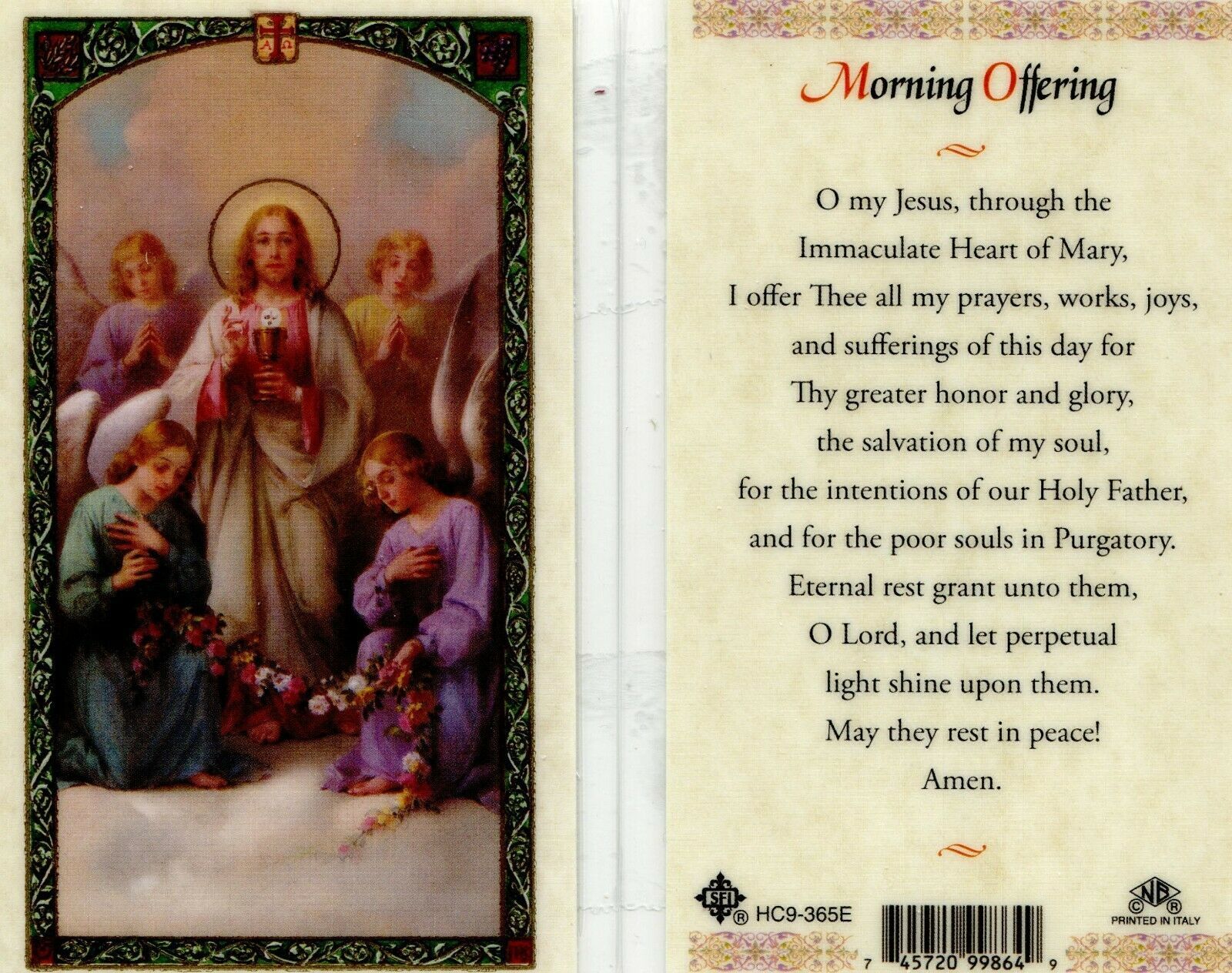
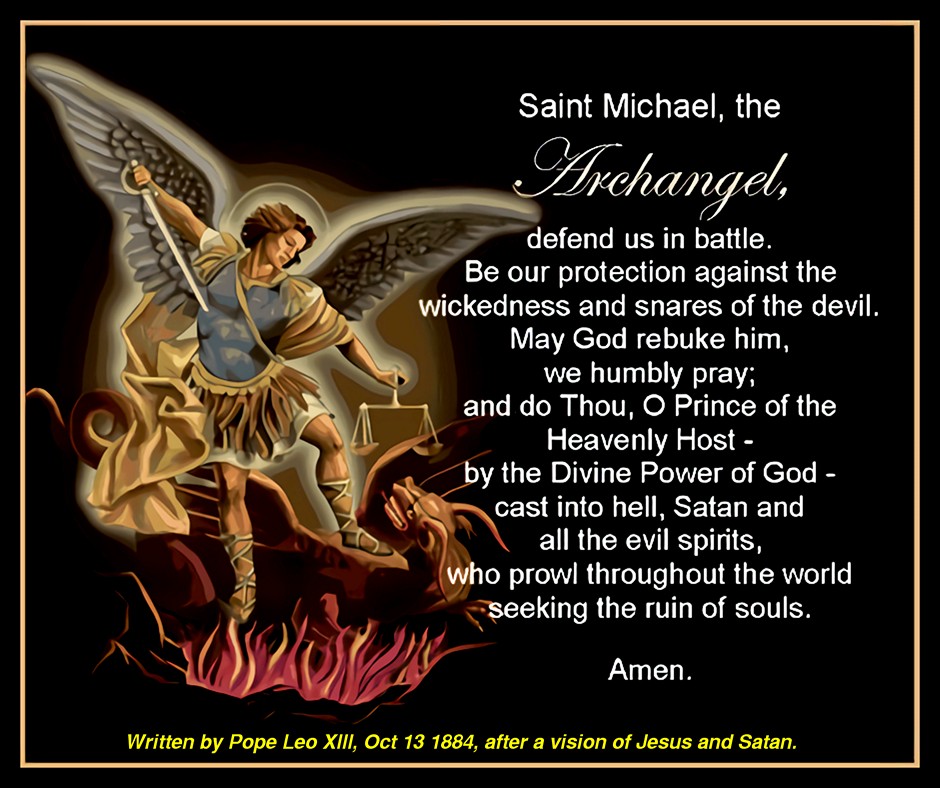
The Month of May is Dedicated to Devotion to Mary, the Mother of God.

“And when Elizabeth heard the greeting of Mary, the babe leaped in her womb; and Elizabeth was filled with the Holy Spirit and she exclaimed with a loud cry, “Blessed are you among women, and blessed is the fruit of your womb! And why is this granted me, that the Mother of my Lord should come to me?” (Luke 1:41-43)

Pope Leo XIV’s prayer intention for the month of May, 2026:
That everyone might have food
Let us pray that everyone, from large producers to small consumers, be committed to avoid wasting food, and to ensure that everyone has access to quality food.

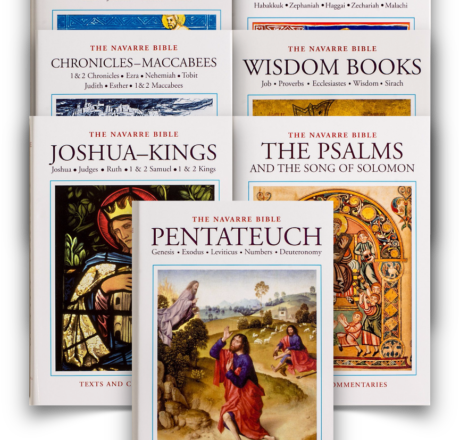
Today’s First Reading
From: Acts 14:5-18
Iconium Evangelized. Persecution
---------------------------------
[5] When an attempt was made by both Gentiles and Jews, with their rulers, to molest them (Paul and Barnabas) and to stone them, [6] they learned of it and fled to Lystra and Derbe, cities of Lycaonia, and to the surrounding country; [7] and there they preached the Gospel.
Cure of a Cripple at Lystra
---------------------------
[8] Now at Lystra there was a man sitting, who could not use his feet; he was a cripple from birth, who had never walked. [9] He listened to Paul speaking; and Paul, looking intently at him and seeing that he had faith to be made well, [10] said in a loud voice, "Stand upright on your feet." And he sprang up and walked. [11] And when the crowds saw what Paul had done, they lifted up their voices, saying in Lycaonian, "The gods have come down to us in the likeness of men!" [12] Barnabas they called Zeus, and Paul, because he was the chief speaker, they called Hermes. [13] And the priest of Zeus, whose temple was in front of the city, brought oxen and garlands to the gates and wanted to offer sacrifice with the people. [14] But when the Apostles Barnabas and Paul heard of it, they tore their garments and rushed out among the multitude, crying, [15] "Men, why are you doing this? We also are men, of like nature with you, and bring you good news, that you should turn from these vain things to a living God who made the heaven and the earth and the sea and all that is in them. [16] In past generations He allowed all nations to walk in their own ways; [17] yet He did not leave them without witness, for He did good and gave you from heaven rains and fruitful seasons, satisfying your hearts with food and gladness." [18] With these words they scarcely restrained people from offering sacrifice to them.
***********************************************************************
Commentary:
6. Lystra was a Roman colony; Timothy was born and grew up there (cf. 16:1-2).
8-10. "Just as the lame man whom Peter and John cured at the gate of the temple prefigured the salvation of the Jews, so too this cripple represents the Gentile peoples distanced from the religion of the Law and the temple, but now brought it through the preaching of the Apostle Paul" (St. Bede, "Super Act Expositio, ad loc.").
We are told that Paul realized the man "had faith to be made well". The man is sure that he is going to be cured of his infirmity and he seems to be hoping also that Paul will cure his soul. Paul responds to the man's faith and, as our Lord did in the case of the paralytic in Capernaum (cf. Mark 2:1ff), he enables him to walk and cleanses his soul of sin.
11-13. Astonished by the miracle, the pagans of Lystra are reminded of an ancient Phrygian legend according to which Zeus and Hermes (Mercury) once visited the area in the guise of travellers and worked wonders for those who gave them hospitality. They think this is a repeat and therefore prepare to give Paul and Barnabas honors, thinking they are gods in human form (cf. 10:26).
14. Jews rent their garments to symbolize their feelings of shock at something they heard and to reject it out of hand. However, sometimes they did it only as a matter of form and not for genuine religious reasons (cf. Matthew 26:65). By rending their garments Paul and Barnabas dramatically display their deepest convictions and religious feelings against the slightest sign of idolatry.
15-18. Paul and Barnabas not only prevent any idolatry being offered them: they try to explain why they act in this way; they tell the Lystrans about the living God, the Creator of all things, who in His providence watches over mankind.
"Throughout history even to the present day, there is found among peoples a certain awareness of a hidden power, which lies behind the course of nature and the events of human life. At times there is even a recognition of a supreme being, or even a Father. This awareness and recognition results in a way of life that is imbued with a deep religious sense" (Vatican II, "Nostra Aetate", 2).
In this short exhortation (which anticipates some of the themes of Paul's address in Athens: cf. 17:22-31), the Apostles use religious concepts accepted by pagans, trying to bring out their full meaning. They invite their listeners to give up idolatry and turn to the living God, of whom they have a vague knowledge. They speak to them, therefore, about a true God, who transcends man but is concerned about him. Everyday experience--the course of history, the changing seasons, and the fulfillment of noble human yearnings--demonstrates the providence of a God who invites people to find Him in His works.
This first "natural" encounter with God, presaging future and greater revelations, stirs their consciences to interior conversion, that is, to change their lives and turn away from any action which deprives them of spiritual peace and prevents them from knowing God.
Acknowledging that God exists involves all kinds of practical consequences and is the foundation of the new type of life which the Gospel proposes and makes possible. When a person truly and sincerely recognizes his Creator as speaking to him through external things and in the intimacy of his conscience, he has taken a huge step in his spiritual life: he has controlled his tendency to assert moral autonomy and false independence and has taken the path of obedience and humility. It becomes easier for him to recognize and accept supernatural Revelation under the inspiration of grace.
From: John 14:21-26
The Promise of the Holy Spirit
------------------------------
(Jesus said to His disciples,) [21] "He who has My commandments and keeps them, he it is who loves Me; and he who loves Me will be loved by My Father, and I will love him, and manifest Myself to him." [22] Judas (not Iscariot) said to Him, "Lord, how is it that You will manifest Yourself to us, and not to the world?" [23] Jesus answered him, "If a man loves Me, he will keep My word, and My Father will love him, and We will come to him and make Our home with him. [24] He who does not love Me does not keep My words; and the word which you hear is not Mine but the Father's who sent Me.
[25] "These things I have spoken to you, while I am still with you. [26] But the Counselor, the Holy Spirit, whom the Father will send in My name, He will teach you all things and bring to your remembrance all that I have said to you."
***********************************************************************
Commentary:
22-23. It was commonly held by the Jews that when the Messiah came He would be revealed to the whole world as King and Savior. The Apostles take Jesus' words as a revelation for themselves alone, and they are puzzled. Hence the question from Judas Thaddeus. It is interesting to note how easy the Apostles' relations with our Lord are: they simply ask Him about things they do not know and get Him to clear up any doubts they have. This is a good example of how we should approach Jesus, who is also our Teacher and Friend.
Jesus' reply may seem evasive but in fact, by referring to the form His manifestation takes, He explains why He does not reveal Himself to the world: He makes Himself known to him who loves Him and keeps His commandments. God repeatedly revealed Himself in the Old Testament and promised to dwell in the midst of the people (cf. Exodus 29:45; Ezekiel 37:26-27; etc.); but here Jesus speaks of a presence of God in each person. St. Paul refers to this presence when he asserts that each of us is a temple of the Holy Spirit (cf. 2 Corinthians 6:16-17). St. Augustine, in reflecting on God's ineffable nearness in the soul, exclaims, "Late have I loved You, O Beauty so ancient and so new, late have I loved You! You were within me, and I was in the world outside myself. I searched for You in the world outside myself.... You were with me, but I was not with You. The beautiful things of this world kept me far from You and yet, if they had not been in You, they would have no being at all. You called me; You cried aloud to me; You broke my barrier of deafness; You shone upon me; Your radiance enveloped me; You cured my blindness" ("Confessions", X, 27, 38).
Jesus is referring to the indwelling of the Holy Spirit in the soul renewed by grace: "Our heart now needs to distinguish and adore each one of the Divine Persons. The soul is, as it were, making a discovery in the supernatural life, like a little child opening his eyes to the world about him. The soul spends time lovingly with the Father and the Son and the Holy Spirit, and readily submits to the work of the lifegiving Paraclete, who gives Himself to us with no merit on our part, bestowing His gifts and the supernatural virtues!" (St J. Escriva, "Friends of God", 306).
25-26. Jesus has expounded His teaching very clearly, but the Apostles do not yet fully understand it; they will do so later on, when they receive the Holy Spirit who will guide them unto all truth (cf. John 16:13). "And so the Holy Spirit did teach them and remind them: He taught them what Christ had not said because they could not take it in, and He reminded them of what the Lord had taught and which, either because of the obscurity of the things or because of the dullness of their minds, they had not been able to retain" (Theophylact, "Enarratio in Evangelium Ioannis, ad loc").
The word translated here as "bring to your remembrance" also includes the idea of "suggesting": the Holy Spirit will recall to the Apostles' memory what they had already heard Jesus say--and He will give them light to enable them to discover the depth and richness of everything they have seen and heard. Thus, "the Apostles handed on to their hearers what He had said and done, but with that fuller understanding which they, instructed by the glorious events of Christ (cf. John 2:22) and enlightened by the Spirit of truth, now enjoyed: (Vatican II, "Dei Verbum", 19).
"Christ has not left His followers without guidance in the task of understanding and living the Gospel. Before returning to His Father, He promised to send His Holy Spirit to the Church: `But the Counselor, the Holy Spirit, whom the Father will send in My name, He will teach you all things, and bring to your remembrance all I have said to you'" (John 14:26).
"This same Spirit guides the successors of the Apostles, your bishops, united with the Bishop of Rome, to whom it was entrusted to preserve the faith and to `preach the Gospel to the whole creation' (Mark 16:15). Listen to their voices, for they bring you the word of the Lord" (St Pope John Paul II, "Homily at Knock Shrine", 30 September 1979).
In the Gospels is consigned to writing, under the charism of divine inspiration, the Apostles' version of everything they had witnessed--and the understanding of it, which they obtained after Pentecost. So it is that these sacred writers "faithfully hand on what Jesus, the Son of God, while He lived among men, really did and taught for their eternal salvation, until the day when He was taken up (cf. Acts 1:1-2)" (Vatican II, "Dei Verbum", 19). This is why the Church so earnestly recommends the reading of Sacred Scripture, particularly the Gospels. "How I wish your bearing and conversation were such that, on seeing or hearing you, people would say: This man reads the life of Jesus Christ" (St J. Escriva, "The Way", 2).
I’m not Catholic, but my youngest daughter and her husband are converting to Catholicism. My wife and I recently went to Mass with them and enjoyed it very much. The priest’s homily was full of truth. We left feeling uplifted!
I’m glad to hear that! God bless you and your family!
Disclaimer: Opinions posted on Free Republic are those of the individual posters and do not necessarily represent the opinion of Free Republic or its management. All materials posted herein are protected by copyright law and the exemption for fair use of copyrighted works.


