
Posted on 04/28/2026 10:07:19 PM PDT by fidelis
Readings for the Memorial of Saint Catherine of Siena, Virgin and Doctor of the Church
When Jesus had washed the disciples’ feet, he said to them: “Amen, amen, I say to you, no slave is greater than his master nor any messenger greater than the one who sent him. If you understand this, blessed are you if you do it.” John 13:16–17
Today’s Gospel comes from the Last Supper, just after Jesus washed His disciples’ feet. What an act of humility! By analogy, it would be as if a king knelt before his servants to polish their shoes, setting aside his glory to attend to their most basic needs. This act would teach them that true greatness lies not in power but in love and humble service. Such an act would make quite an impression on those servants, helping them understand their duty within the king’s royal court and their responsibility toward the people of the kingdom.
The Apostles might not have understood the full meaning of Jesus’ act of humility that Holy Thursday evening. As time went on, however, and the Apostles embraced their roles as spiritual leaders of the early Church, Jesus’ actions would have become the foundation of their understanding of servant leadership—one that they themselves were called to imitate as shepherds of Christ’s flock. Leadership in the Kingdom of God is not about seeking honors or recognition but about humbling oneself in selfless service to others. This includes not only leaders within the Church, but also leaders within the community and within families.
Jesus’ example becomes even more impactful when we consider the presence of Judas at this intimate moment. The Gospel goes on to reveal that Jesus acknowledged that one of those whose feet He washed would betray Him. He served Judas anyway. In this one act, Jesus not only demonstrated humility but also showed that His love knows no boundaries, extending even to those who would reject and betray Him.
In our lives, when we encounter those who betray us or sin against us in any way, we are immediately tempted to lash out. Imitating Jesus, however, requires us to humble ourselves even before the worst of sinners, rather than condemn them. Jesus did not approve of Judas’ betrayal. Instead, He identified it by quoting Psalm 41:10: “The one who ate my food has raised his heel against me.” Then, to reassure the remaining disciples of His divine mission, He said: “From now on I am telling you before it happens, so that when it happens you may believe that I AM” (John 13:19).
Jesus was essentially saying that once the other eleven Apostles learned of Judas’ betrayal, they would understand that only God—I AM—is capable of humbly loving and serving those who sin against Him... Jesus’ willingness to serve Judas, knowing full well the betrayal to come, reveals that God’s love is not dependent on human strength but flows unconditionally, offering even sinners the chance for redemption. Each of us is called to participate in that same depth of love.
Reflect today on Jesus’ unconditional humility and love and His call to imitate Him. Consider the relationships in your life: Are there people from whom you have withheld love or forgiveness? Is there anyone whom you refuse to serve with humility? Ask for the grace to love as Jesus loved, to serve even those who have hurt you, and to bear witness to the divine humility of Christ, who loved without limits. Pray for the grace to take a concrete step today to reconcile with someone you struggle to love or forgive, imitating Christ’s humility and boundless love. In doing so, you not only follow His example but also become a living witness to His ongoing presence in the world.
My humble Lord, You love everyone with perfection, even serving those who have betrayed You. In doing so, You have set an example for us to follow. Please give me the grace I need to imitate You by humbling myself before others, even those who have sinned against me. Strengthen me in moments of betrayal, so that I may respond with love and humility. Jesus, I trust in You.
Please keep in mind that this is a Catholic Caucus/Devotional thread for the purpose of prayerful reflection on the Sacred Scriptures and is closed to debate of any kind. Per FR policy on Religion Caucus threads, off-topic, argumentative, and abusive comments are not allowed and will be submitted to the Mods for deletion. Thanks, and God bless you.
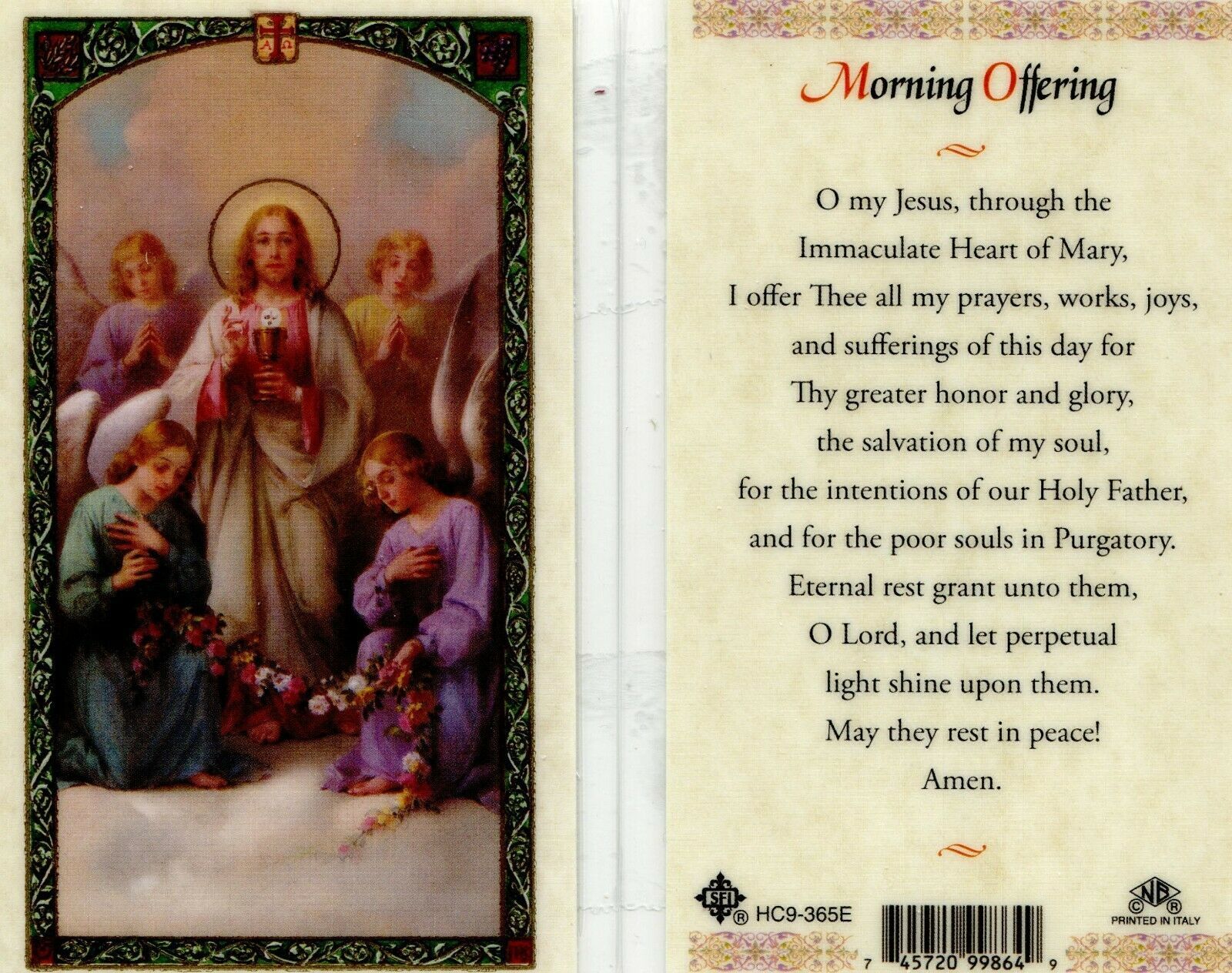
The Month of April is Dedicated to Devotion to the Most Holy Eucharist
“Now as they were eating, Jesus took bread, and blessed, and broke it, and gave it to the disciples and said, “Take, eat; this is my body.” And he took a cup, and when he had given thanks he gave it to them, saying, “Drink of it, all of you; for this is my blood of the covenant, which is poured out for many for the forgiveness of sins.” (Matthew 26:26-28)

Pope Leo XIV’s prayer intention for the month of April, 2026:
For priests in crisis
Let us pray for priests going through moments of crisis in their vocation, that they may find the accompaniment they need and that communities may support them with understanding and prayer.

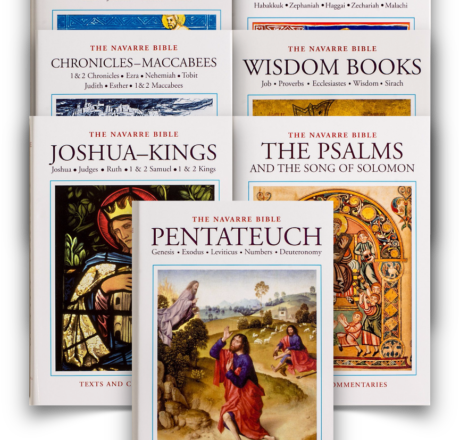
Today’s First Reading
From: Acts 12:24-13:5a
Barnabas and Saul Return to Antioch
-----------------------------------
[25] And Barnabas and Saul returned from Jerusalem when they had fulfilled their mission, bringing with them John whose other name was Mark.
The Mission of Barnabas and Paul
--------------------------------
[1] Now in the Church at Antioch there were prophets and teachers, Barnabas, Symeon who was called Niger, Lucius of Cyrene, Manaen, a member of the court of Herod the Tetrarch, and Saul. [2] While they were worshipping the Lord and fasting, the Holy Spirit said, "Set apart for Me Barnabas and Saul for the work to which I have called them." [3] Then after fasting and praying they laid their hands on them and sent them off.
They Arrive in Cyprus
---------------------
[4] So, being sent out by the Holy Spirit, they went down to Seleucia; and from there they sailed to Cyprus. [5a] When they arrived at Salamis, they proclaimed the Word of God in the synagogues of the Jews.
***********************************************************************
Commentary:
24. St Luke contrasts the failure and downfall of the Church's persecutors with the irresistible progress of the Word of God.
25. They "returned from Jerusalem": following the best Greek manuscripts, the reading accepted by the New Vulgate is "returned to Jerusalem" (cf. RSV note). However, it does not seem to fit in with the end of Chapter 11 and the beginning of Chapter 13. Therefore, from very early on many Greek manuscripts and translations (including the Sixto-Clementine edition of the Vulgate) read "returned from Jerusalem". It is not clear which is correct; the Navarre Spanish follows the New Vulgate.
1. From this point onwards Luke's account centers on the Church of Antioch. This was a flourishing community, with members drawn from all sectors of society. In some respects its organization structure was like that of the Jerusalem Church; in others, not. It clearly had ordained ministers who were responsible for its government, who preached and administered the Sacraments; along these we find prophets (cf. 11:28) and teachers, specially trained members of the community.
In the early Church "teachers" were disciples well versed in Sacred Scripture who were given charge of catechesis. They instructed the catechumens and other Christians in the basic teaching of the Gospel as passed on by the Apostles, and some of them had a capacity for acquiring and communicating to others an extensive and profound knowledge of the faith.
Teachers do not necessarily have to be priests or preachers. Preaching was usually reserved to ordained ministers; teachers had an important position in the Church: they were responsible for on-going doctrinal and moral education and were expected faithfully to hand on the same teaching as they themselves had received. A virtuous life and due learning would have protected them against any temptation to invent new teachings or go in for mere speculation not based on the Gospel (cf. 1 Timothy 4:7; 6:20; Titus 2:1).
The "Letter to Diognetus" describes the ideal Christian teacher: "I do not speak of passing things nor do I go in search of new things, but, like the disciple of the Apostles that I am, I become a teacher of peoples. I do nothing but hand on what was given me by those who made themselves worthy disciples of the truth" (XI, 1).
2-3. "Worship" of the Lord includes prayer, but it refers primarily to the celebration of the Blessed Eucharist, which is at the center of all Christian ritual. This text indirectly establishes a parallel between the Mass and the sacrificial rite of the Mosaic Law. The Eucharist provides a Christian with the nourishment he needs, and its celebration "causes the Church of God to be built up and grow in stature" (Vatican II, "Unitatis Redintegratio", 15). Significantly, the Eucharist is associated with the start of this new stage in the expansion of the Church.
Paul and Barnabas receive a missionary task directly from the Holy Spirit, and by an external sign--the laying on of hands--the Antiochene community prays to God to go with them and bless them. In His promotion of the spread of the Church the Holy Spirit does not act at a distance, so to speak. Every step in the progress of the Church in the world is rightly attributed to the initiative of the Paraclete. It is as if God were repeatedly ratifying His salvific plans to make it perfectly plain that He is ever-faithful to His promises. "The mission of the Church is carried out by means of that activity through which, in obedience to Christ's command and moved by the grace and love of the Holy Spirit, the Church makes itself fully present to all men and people" (Vatican II, "Ad Gentes", 5).
The dispatch of Paul and Barnabas is inspired by the Holy Spirit, but it is also an ecclesial act: the Church gives them this charge, specifying God's plans and activating the personal vocation of the two envoys.
The Lord, "who had set me apart before I was born and had called me by his grace [sent me] in order that I might preach Him among the Gentiles" (Galatians 1:15-16), now arranges, through the Church, for this mission to begin.
Fasting and prayer are the best preparation for the spiritual enterprise on which Paul and Barnabas are about to embark. "First, prayer; then, atonement; in the third place, very much 'in the third place', action" (St. J. Escriva, "The Way", 82). They know very well that their mission is not man-made and that it will produce results only with God's help. The prayer and penance which accompany apostolate are not just aimed at obtaining graces from God for others: the purpose of this prayer and fasting is to purify hearts and lips, so that the Lord will be at their side and ensure that none of their words "fall to the ground" (1 Samuel 3:19).
13:4-14:28. This first missionary journey took Paul, accompanied by Barnabas, to Cyprus and central Galatia, in Asia Minor. He left Antioch in the spring of 45 and returned almost four years later, after preaching Christ to both Jews and Gentiles wherever he went.
St. Luke's account, which covers Chapters 13 and 14, is sketchy but accurate. At Seleucia (the port of Antioch, about 35 kilometers or 22 miles from the city) they embarked for Cyprus, the largest island in the eastern Mediterranean, where Barnabas came from. They disembarked at Salamis, the island's main city and port. There they went to the Jewish synagogues on a series of sabbaths.
In verse 6 it says that they crossed to the island to Paphos, which is on the extreme west. This would have taken them several months because, although it is only 150 kilometers as the crow flies, there were many towns with Jewish communities, and since they had to stay in each for a number of sabbaths their progress would have been slow. We are told nothing about the result of this work of evangelizing en route from Salamis to Paphos, but the indications are that it was fruitful, because Barnabas will later go back to Cyprus, accompanied by Mark (cf. 15:39), to consolidate the work done on this first mission. New Paphos was where the proconsul resided.
From there they went on board ship again and travelled north, probably disembarking, after a short crossing, at Attalia. After a few miles they reached Perga in Pamphylia, a barren, inhospitable region at the base of the Taurus mountains, where Mark took leave of his companions.
Going from Perga to Pisidian Antioch (verse 14) meant a difficult journey of about 160 kilometers over mountain roads. This other Antioch was 1,200 meters above sea level and would have had a sizeable Jewish community, connected with the trade in hides. The busy commercial life of the region helped the spread of the Christian message (verse 49). Paul addressed his preaching to the Gentiles because of the hospitality of many Jews.
The Apostles were expelled and they headed for Iconium, about 130 kilometers south east, where they stayed some months and then left because of disturbances created by both Gentiles and Jews: they had to flee to the region of Lycaonia, to two minor cities, Lystra and Derbe. There were very few Jews in Lystra, and no synagogue, and therefore Paul preached to the local people, in the open air; but some Jews, who had arrived from Antioch and Iconium, stoned him and left him for dead. Possibly with the help of Timothy (cf. 16:1) they managed to reach Derbe, where they made many disciples, and then set out on the journey home, retracing their steps through Lystra, Iconium and Pisidian Antioch. Things had quieted down, the local magistrates were new, and with a little prudence everything worked out quite well. The new disciples were confirmed in the faith, and priest, elders, were appointed to each local church. Paul and Barnabas then went back to Pamphylia and Attalia, where they took ship for Antioch, arriving probably well into the year 49.
5. In each city he visits, Paul usually begins his preaching of the Gospel in the local synagogue. This is not simply a tactic: it is in line with what he knows is God's plan for salvation. Like Jesus, he feels obliged to proclaim the Kingdom first to "Israelites [for] to them belong the sonship, the glory, the covenants, the giving of the Law, the worship, and the promises; to them belong the patriarchs, and of their race, according to the flesh, is the Christ" (Romans 9:4-5). The Jews have a right to be the first to have the Gospel preached to them, for they were the first to receive the divine promises (cf. 13:46).
Although many Jews choose not to listen to or understand the Word of God, there are many who do accept the Gospel for what it is—the fullness of the Old Testament. All over the Diaspora thousands of men and women like Simeon and Anna, who were awaiting the Kingdom and serving the God of their forefathers with fasting and prayer (cf. Luke 2:25, 367), will receive the light of the Holy Spirit enabling them to recognize and accept Paul's preaching as coming from God.
It is true that the many Jewish communities established in the main cities of the Roman empire often hindered the spread of the Gospel; yet their very existence played a providential part in its progress.
From: John 12:44-50
The Unbelief of the Jews
------------------------
[44] And Jesus cried out and said, "He who believes in Me, believes not in Me, but in Him who sent Me. [45] And he who sees Me sees Him who sent Me. [46] I have come as light into the world, that whoever believes in Me may not remain in darkness. [47] If any one hears My sayings and does not keep them, I do not judge him; for I did not come to judge the world but to save the world. [48] He who rejects Me and does not receive My sayings has a judge; the word that I have spoken will be His judge on the last day. [49] For I have not spoken on My own authority; the Father who sent Me has Himself given Me commandment what to say and what to speak. [50] And I know that His commandment is eternal life. What I say, therefore, I say as the Father has bidden Me."
***********************************************************************
Commentary:
44-50. With these verses St. John brings to an end his account of our Lord's public ministry. He brings together certain fundamental themes developed in previous chapters--the need for faith in Christ (verse 44); the Father and the Son are one yet distinct (cf. 45); Jesus is Light and Life of the world (verses 46, 50); men will be judged in accordance with whether they accept or reject the Son of God (verses 47-49). The chapters which follow contain Jesus' teaching to His Apostles at the Last Supper, and the accounts of the Passion and Resurrection.
45. Christ, the Word Incarnate, is one with the Father (cf. John 10:30); "He reflects the glory of God" (Hebrews 1:3); "He is the image of the invisible God" (Colossians 1:15). In John 14:9 Jesus expresses Himself in almost the same words: "He who has seen Me has seen the Father". At the same time as He speaks of His oneness with the Father, we are clearly shown the distinction of persons--the Father who sends, and the Son who is sent.
In Christ's holy human nature His divinity is, as it were, hidden, that divinity which He possesses with the Father in the unity of the Holy Spirit (cf. John 14:7-11). In theology "circumincession" is the word usually used for the fact that, by virtue of the unity among the three Persons of the Blessed Trinity, "the Father is wholly in the Son and wholly in the Holy Spirit; the Son wholly in the Father and wholly in the Holy Spirit; the Holy Spirit wholly in the Father and wholly in the Son" (Council of Florence, "Decree Pro Jacobitis, Dz-Sch", 1331).
47. Christ has come to save the world by offering Himself in sacrifice for our sins and bringing us supernatural life (cf. John 3:17). But He has also been made Judge of the living and the dead (cf. Acts 10:42): He passes sentence at the Particular Judgment which happens immediately after death, and at the end of the world, at His Second Coming or Parousia, at the universal judgment (cf. John 5:22; 8:15-16).
Christ is King.
Disclaimer: Opinions posted on Free Republic are those of the individual posters and do not necessarily represent the opinion of Free Republic or its management. All materials posted herein are protected by copyright law and the exemption for fair use of copyrighted works.


