
Posted on 04/24/2026 10:00:00 PM PDT by fidelis
Feast of Saint Mark, evangelist
Jesus appeared to the Eleven and said to them: “Go into the whole world and proclaim the Gospel to every creature. Whoever believes and is baptized will be saved; whoever does not believe will be condemned. These signs will accompany those who believe…” Mark 16:15–17
Today we honor the Gospel writer, Saint Mark. Mark, also called John Mark, was likely from modern-day Libya in North Africa but grew up in Jerusalem with his mother, Mary. Her home was a significant meeting place for early Christians, possibly hosting the Last Supper and Peter’s visit after his release from prison (Acts 12:12). Many scholars believe Mark was the young man who fled naked during Jesus’ arrest (Mark 14:51–52).
Mark accompanied Barnabas (his cousin or uncle) and Paul on an early missionary journey but left them before its completion, which led to a sharp disagreement with Paul. Barnabas took Mark to Cyprus, while Paul continued elsewhere. Despite this conflict, Mark and Paul reconciled, and Paul later referred to Mark as a co-worker and a helpful companion during his imprisonment (Colossians 4:10–11; 2 Timothy 4:11).
Mark also developed a close relationship with Peter, who affectionately called him “Mark, my son” (1 Peter 5:13). Tradition holds that Mark wrote his Gospel in Rome at Peter’s request, preserving Peter’s preaching for the Church. Mark’s Gospel, likely written for Gentile converts in Rome, became—and remains—a vital record of Jesus’ life and ministry.
Later traditions hold that Mark became the first bishop of Alexandria in Egypt, where he preached the Gospel. He is believed to have suffered martyrdom there, dragged over stones and imprisoned for his faith.
Though Saint Mark is traditionally honored as a martyr, today’s feast celebrates him above all as an evangelist. In today’s Gospel, Saint Mark recounts Jesus’ final words to His Apostles: “Go into the whole world and proclaim the Gospel to every creature.” Through his life and writings, Saint Mark faithfully fulfilled this command, preserving the saving message of Christ for generations to come.
Jesus’ commission was accompanied by promises of signs that would follow those who believe: They would drive out demons, speak new languages, handle serpents, and heal the sick. While these signs were often manifested in miraculous ways in the early Church, they carry a deeper spiritual significance for us today.
Like Saint Mark, each of us is called to be an evangelist, bringing the Gospel to the ends of the earth. Though we might not be given the grace to perform miracles, Jesus’ promises remain true when we act in His name. Demons are cast out not only through exorcism, but also when we bring the Light of Christ to the darkness of sin and evil... The “serpents” we handle and the “deadly drink” we overcome symbolize the temptations and evils God’s grace protects us from when we remain faithful to Him.
As we honor Saint Mark the Evangelist, reflect today on how his Gospel calls you to heed Jesus’ commission. Symbolically speaking, have you learned to speak the new language of the Holy Spirit, combat the powers of evil, and radiate God’s love and mercy to others? This mission takes firm resolve and courage. Do not fear when “serpents” or “deadly drink” appear along the way. Trust that God’s grace will protect and guide you. When you are fully united to Christ, everything you do and say flows naturally in His name, making the Gospel known to the ends of the earth.
Saint Mark the Evangelist, though you were young when you met our Lord, you grew deeply in faith and faithfully heeded His commission to proclaim the Gospel to the ends of the earth. Through your fidelity to Christ, countless souls came to believe through your preaching and continue to encounter Him through your inspired writing. Please pray for me, that I may have the courage to speak and act in Jesus’ name, becoming an instrument of His saving Word. Jesus, I trust in You.
Please keep in mind that this is a Catholic Caucus/Devotional thread for the purpose of prayerful reflection on the Sacred Scriptures and is closed to debate of any kind. Per FR policy on Religion Caucus threads, off-topic, argumentative, and abusive comments are not allowed and will be submitted to the Mods for deletion. Thanks, and God bless you.
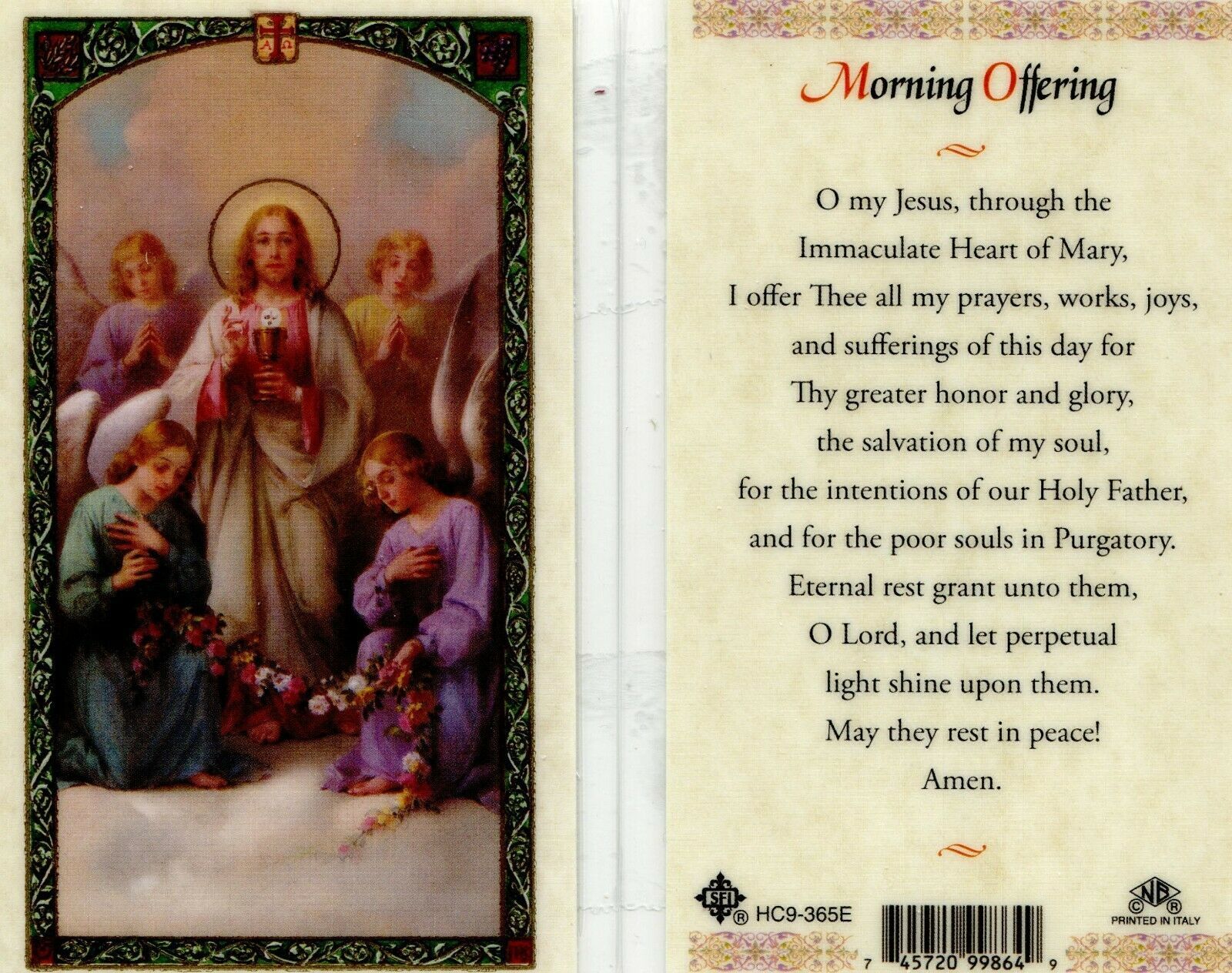
The Month of April is Dedicated to Devotion to the Most Holy Eucharist
“Now as they were eating, Jesus took bread, and blessed, and broke it, and gave it to the disciples and said, “Take, eat; this is my body.” And he took a cup, and when he had given thanks he gave it to them, saying, “Drink of it, all of you; for this is my blood of the covenant, which is poured out for many for the forgiveness of sins.” (Matthew 26:26-28)

Pope Leo XIV’s prayer intention for the month of April, 2026:
For priests in crisis
Let us pray for priests going through moments of crisis in their vocation, that they may find the accompaniment they need and that communities may support them with understanding and prayer.

Today’s First Reading
From: 1 Peter 5:5b-14
To the Faithful
---------------
[5b] Clothe yourselves, all of you, with humility toward one another, for "God opposes the proud, but gives grace to the humble."
[6] Humble yourselves therefore under the mighty hand of God, that in due time He may exalt you. [7] Cast all your anxieties on Him, for He cares about you. [8] Be sober, be watchful. Your adversary the devil prowls around like a roaring lion, seeking someone to devour. [9] Resist him, firm in your faith, knowing that the same experience of suffering is required of your brotherhood throughout the world. [10] And after you have suffered a little while, the God of all grace, who has called you to His eternal glory in Christ, will Himself restore, establish and strengthen you. [11] To Him be the dominion for ever and ever. Amen.
Epilogue
--------
[12] By Silvanus, a faithful brother as I regard him, I have written briefly to you, exhorting and declaring that this is the true grace of God; stand fast in it. [13] She who is at Babylon, who is likewise chosen, sends you greetings; and so does my son Mark. [14] Greet one another with the kiss of love.
Peace to all of you that are in Christ.
***********************************************************************
Commentary:
5-11. The Apostle concludes his exhortation with a call to humility, which should express itself in complete docility in the face of the trials God permits (verses 6-7). This last piece of advice is often found in Sacred Scripture: "Cast your burden on the Lord, and He will sustain you" (Psalm 55:22); Jesus also teaches that we should trust in God's fatherly providence (cf. Matthew 6:19-34). "You have such care for each one of us", St. Augustine exclaims, "as if you had no offers to care for" ("Confessions", 3, 11).
However, abandonment in God does not mean irresponsibility, so St. Peter reminds them there is always need to be watchful against the assaults of the devil, who will pounce on us if we lower our guard (verse 8).
The description of the devil (etymologically the word means liar, detractor: cf. Revelation 12:9-10) as a roaring lion seeking someone to devour has often been taken up by the Saints. "He moves round each one of us", St. Cyprian says, "like an enemy who has us surrounded and is checking the walls to see if there is some weak, unsecured part, where he can get in" ("De Zelo Et Livore").
Christians "firm in the faith" will resist the attacks of the devil. The trials they suffer (cf. 1:6-7; 4:13; 5:1-4) serve to purify them and are a pledge of the glory God will give them: "For this momentary affliction is preparing for us an eternal weight of glory beyond all comparisons" (2 Corinthians 4:17). "So great is the good that I hope for, that any pain is for me a pleasure" (St. Francis of Assisi, "Reflections on Christ's Wounds", 1).
5. "You who are younger": it is not clear whether he is addressing people who are young in age or Christians who are not "elders" (priests), that is, lay people.
"God opposes the proud, but gives grace to the humble": a quotation from Proverbs (cf. James 4:6 and note on same), containing an idea which runs right through the Old Testament (cf., e.g., Job 12:19; Psalm 18:88; 31:34) and the teachings of Christ (cf., e.g., Luke 14:11). The Blessed Virgin proclaims this truth in the "Magnificat": "He has put down the mighty from their thrones, and exalted those of low degree" (Luke 1:52).
"Humility is the source and foundation of every kind of virtue," the Cure of Ars teaches; "it is the door by which all God-given graces enter; it is what seasons all our actions, making them so valuable and so pleasing to God. Finally, it makes us masters of God's heart, to the point, so to speak, of making Him our servant; for God has never been able to resist a humble heart" ("Selected Sermons", Tenth Sunday after Pentecost).
8. For the third time, St. Peter exhorts the faithful to be sober; earlier he referred to the importance of sobriety so as to put one's hope in Heavenly things (1:13) and to help one to pray (4:7). Now he stresses that it puts us on guard against the devil.
Man should use the goods of this world in a balanced, temperate way, so as to avoid being ensnared by them, thereby forgetting his eternal destiny: "Detach yourself from the goods of the world. Love and practice poverty of spirit: be content with what enables you to live a simple and sober life. Otherwise, you will never be an apostle" (St J. Escriva, "The Way", 631).
12. Silvanus, called Silas in the Acts of the Apostles (Acts 15:22), accompanied St. Paul on his second apostolic journey through Asia Minor and Greece (cf. Acts 15:36-18:22); he was therefore well known to the Christians addressed in this letter.
From the reference St. Peter makes to him here, it is not possible to say for sure whether Silvanus was simply the bearer of the letter, or acted as an amanuensis who took down the Apostle's dictation, or was an editor or redactor of ideas the Apostle gave him (on this subject, see the Introduction to this Letter).
13. "Babylon": this is a symbolic way of referring to Rome, the prototype of the idolatrous and worldly city of the era. Some centuries earlier Babylon had been the subject of severe reproaches and threats by the prophets (cf., e.g., Isaiah 13:47; Jeremiah 50-51). In the Book of Revelation Rome is also referred to by this name (cf. e.g., Revelation 17-18).
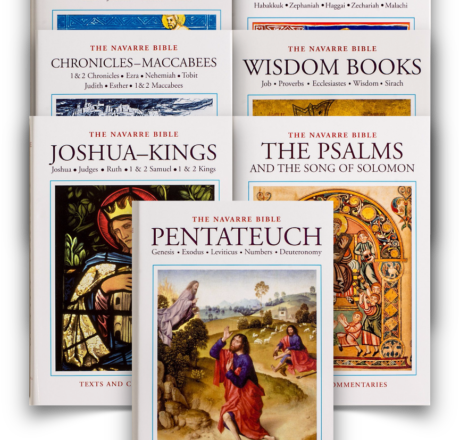
The Mark referred to is the author of the second Gospel. Tradition says that he acted as St. Peter's interpreter in Rome. The Apostle calls him "son", meaning that he was spiritually his son, and implying that they had been close to each other for a long time (cf. "The Navarre Bible: St. Mark", pp. 56-57).
14. "The kiss of love": St. Paul also, at the end of some of his letters, refers to the "holy kiss" (cf. Romans 16:16; 1 Corinthians 16:20; 2 Corinthians 13:12; 1 Thessalonians 5:26), a mark of supernatural charity and shared faith. With this meaning the gesture passed into primitive eucharistic liturgy (cf. note on 1 Corinthians 16:20).
The final words, "Peace to all of you that are in Christ", are similar to the way St. Paul ends many of his letters; since the first age of the Church it has been used in liturgical celebrations. St. Cyril of Jerusalem, for example, ends his baptismal catechism with these words: "May the God of peace hallow you entirely, and your body and your soul remain unsullied until the coming of the Lord Jesus Christ, to whom be glory for ever and ever. Amen" ("Mystagogical Catechesis", 5, 23).
From: Mark 16:15-20
The Apostle's Mission
---------------------
[15] And He (Jesus) said to them, "Go into all the world and preach the Gospel to the whole creation. [16] He who believes and is baptized will be saved; but he who does not believe will be condemned. [17] And these signs will accompany those who believe: in My name they will cast out demons; they will speak in new tongues; [18] they will pick up serpents, and if they drink any deadly thing, it will not hurt them; they will lay their hands on the sick, and they will recover."
The Ascension
-------------
[19] So then the Lord Jesus, after He had spoken to them, was taken up into Heaven, and sat down at the right hand of God.
The Apostles Go Forth and Preach
--------------------------------
[20] And they went forth and preached everywhere, while the Lord worked with them and confirmed the message by the signs that attended it. Amen.
***********************************************************************
Commentary:
15. This verse contains what is called the "universal apostolic mandate" (paralleled by Matthew 28:19-20 and Luke 24:46-48). This is an imperative command from Christ to His Apostles to preach the Gospel to the whole world. This same apostolic mission applies, especially, to the Apostles' successors, the bishops in communion with Peter's successor, the Pope.
But this mission extends further: the whole "Church was founded to spread the Kingdom of Christ over all the Earth for the glory of God the Father, to make all men partakers in redemption and salvation.... Every activity of the Mystical Body with this in view goes by the name of `apostolate'; the Church exercises it through all its members, though in various ways. In fact, the Christian vocation is, of its nature, a vocation to the apostolate as well. In the organism of a living body no member plays a purely passive part, sharing in the life of the body it shares at the same time in its activity. The same is true for the body of Christ, the Church: `the whole body achieves full growth in dependence on the full functioning of each part' (Ephesians 4:16). Between the members of this body there exists, further, such a unity and solidarity (cf. Ephesians 4:16) that a member who does not work at the growth of the body to the extent of his possibilities must be considered useless both to the Church and to himself.
"In the Church there is diversity of ministry but unity of mission. To the Apostles and their successors Christ has entrusted the office of teaching, sanctifying and governing in His name and by His power. But the laity are made to share in the priestly, prophetical and kingly office of Christ; they have therefore, in the Church and in the world, their own assignment in the mission of the whole people of God" (Vatican II, "Apostolicam Actuositatem", 2).
It is true that God acts directly on each person's soul through grace, but it must also be said that it is Christ's will (expressed here and elsewhere) that men should be an instrument or vehicle of salvation for others.
Vatican II also teaches this: "On all Christians, accordingly, rests the noble obligation of working to bring all men throughout the whole world to hear and accept the divine message of salvation" ("ibid"., 3).
16. This verse teaches that, as a consequence of the proclamation of the Good News, faith and Baptism are indispensable pre-requisites for attaining salvation. Conversion to the faith of Jesus Christ should lead directly to Baptism, which confers on us "the first sanctifying grace, by which original sin is forgiven, and which also forgives any actual sins there may be; it remits all punishment due for these sins; it impresses on the soul the mark of the Christian; it makes us children of God, members of the Church and heirs to Heaven, and enables us to receive the other sacraments" ("St. Pius X Catechism", 553).
Baptism is absolutely necessary for salvation, as we can see from these words of the Lord. But physical impossibility of receiving the rite of Baptism can be replaced by either martyrdom (called, therefore "baptism of blood") or by a perfect act of love of God and of contrition, together with an at least implicit desire to be baptized: this is called "baptism of desire" (cf. "ibid"., 567-568).
Regarding infant Baptism, St. Augustine taught that "the custom of our Mother the Church of infant Baptism is in no way to be rejected or considered unnecessary; on the contrary, it is to be believed on the ground that it is a tradition from the Apostles" ("De Gen. ad litt"., 10, 23, 39). The new "Code of Canon Law" also stresses the need to baptize infants: "Parents are obliged to see that their infants are baptized within the first few weeks. As soon as possible after the birth, indeed even before it, they are to approach the parish priest to ask for the sacrament for their child, and to be themselves duly prepare for it" (Canon 867).
Another consequence of the proclamation of the Gospel, closely linked with the previous one, is that "the Church is necessary", as Vatican II declares: "Christ is the one mediator and way of salvation; He is present to us in His body which is the Church. He Himself explicitly asserted the necessity of faith and baptism (cf. Mark 16:16; John 3:5), and thereby affirmed at the same time the necessity of the Church which men enter through baptism as through a door. Hence they could not be saved who, knowing that the Church was founded as necessary by God through Christ, would refuse to enter it, or to remain in it" ("Lumen Gentium", 14; cf. "Presbyterorum Ordinis", 4; "Ad Gentes", 1-3; "Dignitatis Humanae", 11).
17-18. In the early days of the Church, public miracles of this kind happened frequently. There are numerous historical records of these events in the New Testament (cf., e.g., Acts 3:1-11; 28:3-6) and in other ancient Christian writings. It was very fitting that this should be so, for it gave visible proof or the truth of Christianity. Miracles of this type still occur, but much more seldom; they are very exceptional. This, too, is fitting because, on the one hand, the truth of Christianity has been attested to enough; and, on the other, it leaves room for us to merit through faith. St. Jerome comments: "Miracles were necessary at the beginning to confirm people in the faith. But, once the faith of the Church is confirmed, miracles are not necessary" ("Comm. in Marcum, in loc."). However, God still works miracles through saints in every generation, including our own.
19. The Lord's ascension into Heaven and His sitting at the right hand of the Father is the sixth article of faith confessed in the Creed. Jesus Christ went up into Heaven body and soul, to take possession of the Kingdom He won through His death, to prepare for us a place in Heaven (cf. Revelation 3:21) and to send the Holy Spirit to His Church (cf. "St. Pius X Catechism", 123).
To say that He "sat at the right hand of God" means that Jesus Christ, including His humanity, has taken eternal possession of Heaven and that, being the equal of His Father in that He is God, He occupies the place of highest honor beside Him in His human capacity (cf. "St. Pius V Catechism", I, 7, 2-3). Already in the Old Testament the Messiah is spoken of as seated at the right hand of the Almighty, thereby showing the supreme dignity of Yahweh's Anointed (cf. Psalm 110:1). The New Testament records this truth here and also in many other passages (cf. Ephesians 1:20-22; Hebrews 1:13).
As the "St. Pius V Catechism" adds, Jesus went up to Heaven by His own power and not by any other. Nor was it only as God that He ascended, but also as man.
20. Inspired by the Holy Spirit, the evangelist attests that the words of Christ have already begun to be fulfilled by the time of writing. The Apostles, in other words, were faithfully carrying out the mission of our Lord entrusted to them. They begin to preach the Good News of salvation throughout the known world. Their preaching was accompanied by the signs and wonders the Lord had promised, which lent authority to their witness and their teaching. Yet, we know that their apostolic work was always hard, involving much effort, danger, misunderstanding, persecution and even martyrdom--like our Lord's own life.
Thanks to God and also to the Apostles, the strength and joy of our Lord Jesus Christ has reached as far as us. But every Christian generation, every man and woman, has to receive the preaching of the Gospel and, in turn, pass it on. The grace of God will always be available to us: "Non est abbreviata manus Domini" (Isaiah 59:1), the power of the Lord has not diminished.
Disclaimer: Opinions posted on Free Republic are those of the individual posters and do not necessarily represent the opinion of Free Republic or its management. All materials posted herein are protected by copyright law and the exemption for fair use of copyrighted works.

