
Posted on 04/22/2026 10:11:25 PM PDT by fidelis
Jesus said to the crowds: “No one can come to me unless the Father who sent me draw him, and I will raise him on the last day.” John 6:44
In today’s Gospel, Jesus continues His conversation with the crowd who sought Him out after performing the miracle of the multiplication of the loaves and fishes. As the conversation continues, Jesus deepens His clarity about His relationship with the Father, His divine identity, the Father’s action in our lives, and the gift of Himself as the Bread of Life.
The passage above reveals an essential spiritual principle we must understand as we work to strengthen our relationship with God: Faith is a response to the Father’s call, not something we initiate on our own. This principle is crucial because faith is not primarily a resolution we make to grow closer to God; rather, it begins as a resolution from the Father in Heaven Who draws us to Himself by drawing us to His Son, Jesus, especially in the Eucharist.
Practically speaking, this principle must guide our prayer lives...and attend Mass as often as possible, we must always see those efforts as a response to God’s invitation rather than our own good idea. It’s a subtle, though important, distinction.
To illustrate, consider the Gospel story of the contrasting prayer of the Pharisee and the tax collector in Luke 18:9–14. In that parable, the Pharisee offered many prayers each day and fasted regularly, but his prayers went unheard and his fasting was unfruitful. Why? Because his actions were not initiated by God but were works of his own doing. In contrast, the tax collector, aware of his sin and need for God’s mercy, humbled himself and prayed, “O God, be merciful to me a sinner.” That prayer was beautiful and fruitful because it was a response to God Who revealed his sin to him and called him to repent, which he did.
Today’s Gospel lesson comes to us within the context of Jesus’ teaching on the Eucharist. Therefore, we must especially apply His opening words to the way we participate in the Mass. Our choice to attend Mass is not something we do as a favor to God. Instead, our participation in the Mass must be a response to the Father Who offers us the Body and Blood, Soul and Divinity of Jesus, His Son, as the spiritual food we need in order to attain everlasting life. Participation in the Mass is God’s gift to us, and our response must be authentic prayer.
Our participation in the Mass becomes authentic when we recognize that the Father is inviting us to receive the Eucharist as “the living bread that came down from heaven” and Jesus’ “Flesh for the life of the world.” The Mass is about receiving God into our lives, not because we choose to put Him there, but because we say “Yes” to His invitation to be drawn to Him. The word “Eucharist” means “thanksgiving,” and this must be our prayerful response to such a great gift. We must foster an attitude of sincere gratitude for the Father’s invitation to share in the Sacrifice of His Son so as to be given the unmerited gift of eternal life.
Reflect today on your participation in the Mass. If you ever feel that your attendance is a favor to God, pause and listen to the Father’s voice calling you. Try to hear Him invite you to this most precious Feast. Become aware of the Father drawing you to the Mass, to His Son, the source of eternal life. Respond with humble gratitude, knowing that there is no greater gift you can receive.
Heavenly Father, You constantly speak to me, call to me, and draw me to Your Son. Please open my ears to hear Your gentle voice, offering me the Body and Blood, Soul and Divinity of Your Son in the Holy Eucharist. May my participation in that unfathomable Gift be one of sincere gratitude for the eternal gifts You invite me to receive. Jesus, I trust in You.
Please keep in mind that this is a Catholic Caucus/Devotional thread for the purpose of prayerful reflection on the Sacred Scriptures and is closed to debate of any kind. Per FR policy on Religion Caucus threads, off-topic, argumentative, and abusive comments are not allowed and will be submitted to the Mods for deletion. Thanks, and God bless you.
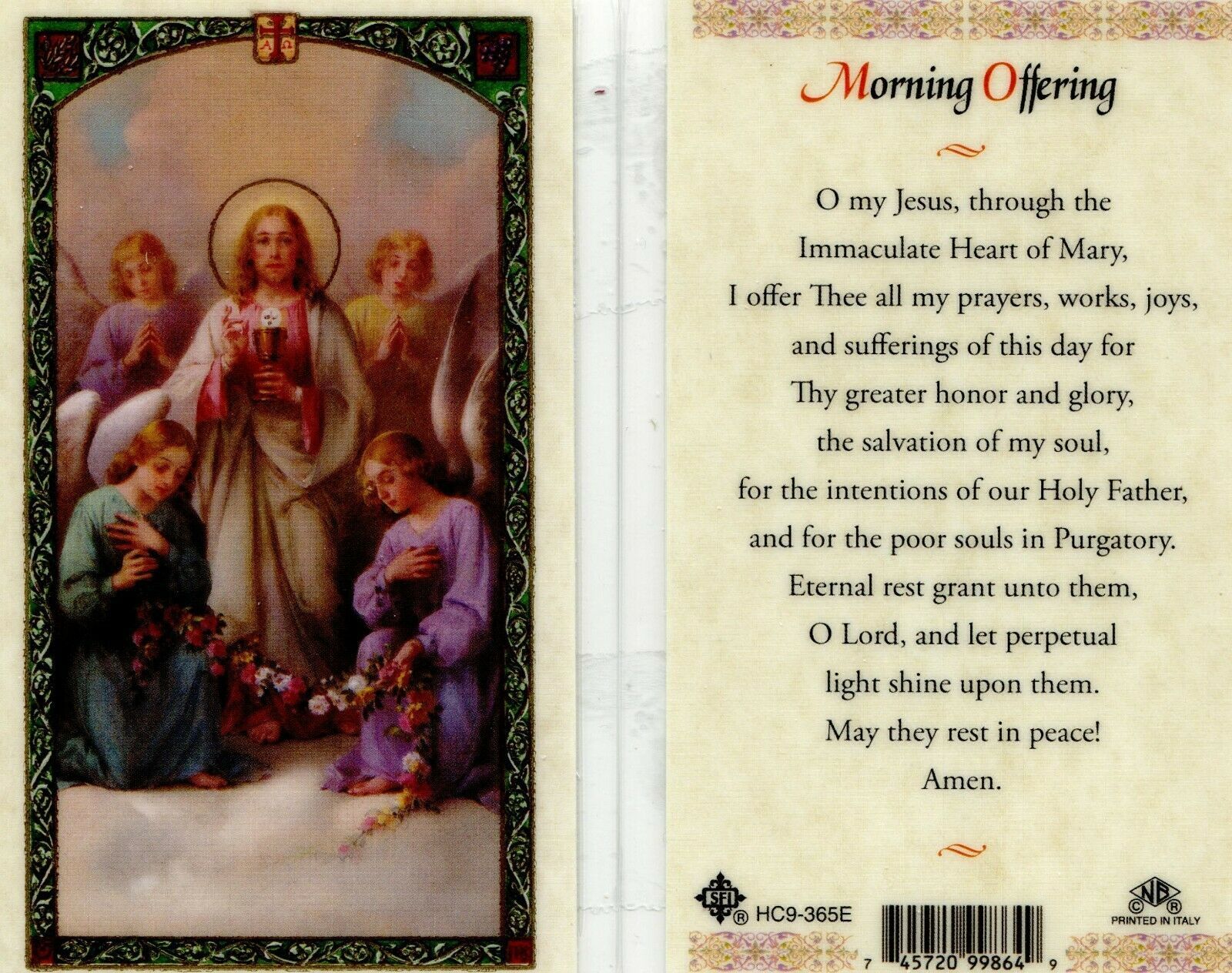
The Month of April is Dedicated to Devotion to the Most Holy Eucharist
“Now as they were eating, Jesus took bread, and blessed, and broke it, and gave it to the disciples and said, “Take, eat; this is my body.” And he took a cup, and when he had given thanks he gave it to them, saying, “Drink of it, all of you; for this is my blood of the covenant, which is poured out for many for the forgiveness of sins.” (Matthew 26:26-28)

Pope Leo XIV’s prayer intention for the month of April, 2026:
For priests in crisis
Let us pray for priests going through moments of crisis in their vocation, that they may find the accompaniment they need and that communities may support them with understanding and prayer.

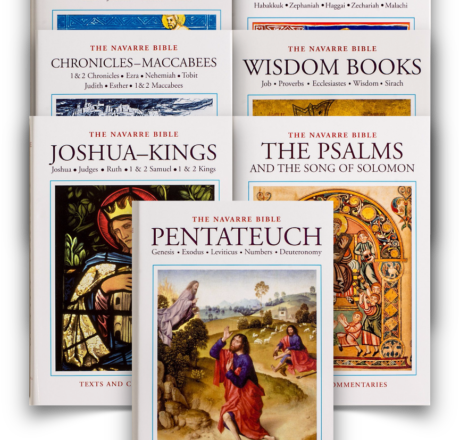
Today’s First Reading
From: Acts 8:26-40
Philip Baptizes a Eunuch
------------------------
[26] But an angel of the Lord said to Philip, "Rise and go toward the south to the road that goes down from Jerusalem to Gaza." This is a desert road. [27] And he rose and went. And behold, an Ethiopian, a eunuch, a minister of Candace the queen of the Ethiopians, in charge of all her treasure, had come to Jerusalem to worship [28] and was returning; seated in his chariot, he was reading the prophet Isaiah. [29] And the Spirit said to Philip, "Go up and join this chariot." [30] So Philip ran to him, and heard him reading Isaiah the prophet, and asked, "Do you understand what you are reading?" [31] And he said, "How can I, unless some one guides me?" And he invited Philip to come up and sit with him. [32] Now the passage of the scripture which he was reading was this: "As a sheep led to the slaughter or a lamb before its shearer is dumb, so he opens not his mouth. [33] In his humiliation justice was denied him. Who can describe his generation? For his life is taken up from the earth."
[34] And the eunuch said to Philip, "About whom, pray, does the prophet say this, about himself or about some one else?" [35] Then Philip opened his mouth, and beginning with this scripture he told him the good news of Jesus. [36] And as they went along the road they came to some water, and the eunuch said, "See, here is water! What is to prevent my being baptized?" [38] And he commanded the chariot to stop, and they both went down into the water, Philip, and the eunuch, and he baptized him. [39] And when they came up out of the water, the Spirit of the Lord caught up Philip; and the eunuch saw him no more, and went on his way rejoicing. [40] But Philip was found at Azotus, and passing on he preached the gospel to all the towns till he came to Caesarea.
***********************************************************************
Commentary:
26-40. The baptism of the Ethiopian official marks an important step in the spread of Christianity. St Luke's account underlines the importance of Sacred Scripture, and its correct interpretation, in the work of evangelization. This episode encapsulates the various stages in apostolate: Christ's disciple is moved by the Spirit (v. 29) and readily obeys his instruction; he bases his preaching on Sacred Scripture--as Jesus did in the case of the disciples of Emmaus—and then administers Baptism.
27. Ethiopia: the kingdom of Nubia, whose capital was Meroe, to the south of Egypt, below Aswan, the first cataract on the Nile (part of modern Sudan). Candace, or Kandake, is not the name of an individual; it was the dynastic name of the queens of that country, a country at that time ruled by women (cf. Eusebius, "Ecclesiastical History", II, 1, 13).
The term "eunuch", like its equivalent in Hebrew, was often used independently of its original physiological meaning and could refer to any court official (cf. for example, Gen 39:1; 2 Kings 25:19). This particular man was an important official, the equivalent of a minister of finance. We do not know if he was a member of the Jewish race, a proselyte (a Jew not by race but by religion) or--perhaps--a God-fearer (cf. note on Acts 2:5-11).
28. "Consider," St John Chrysostom says, "what a good thing it is not to neglect reading Scripture even when one is on a journey.... Let those reflect on this who do not even read the Scriptures at home, and, because they are with their wife, or are fighting in the army, or are very involved in family or other affairs, think that there is no particular need for them to make the effort to read the divine Scriptures...This Ethiopian has something to teach us all—those who have a family life, members of the army, officials, in a word, all men, and women too (particularly those women who are always at home), and all those who have chosen the monastic way of life. Let all learn that no situation is an obstacle to reading the word of God: this is something one can do not only when one is alone at home but also in the public square, on a journey, in the company of others, or when engaged in one's occupation. Let us not, I implore you, neglect to read the Scriptures" (St John Chrysostom, "Hom. on Acts", 35).
29-30. The fact that they are alone, that the road is empty, makes it easier for them to have a deep conversation and easier for Philip to explain Christian teaching. "I think so highly of your devotion to the early Christians that I will do all I can to encourage it, so that you--like them--will put more enthusiasm each day into that effective Apostolate of discretion and friendship" (J. Escriva, "The Way", 971). This was in fact one of the characteristic features of the kind of apostolate carried out by our first brothers and sisters in the faith as they spread gradually all over the Roman empire. They brought the Christian message to the people around them--the sailor to the rest of the crew, the slave to his fellow slaves, soldiers, traders, housewives.... This eager desire of theirs to spread the Gospel showed their genuine conviction and was an additional proof of the truth of the Christian message.
31. "How can I understand it, unless some one guides me?": to a Jew of this period the very idea of a Messiah who suffers and dies at the hands of his enemies was quite repugnant. This explains why the Ethiopian has difficulty in understanding this passage--and, indeed, the entire song of the Servant of Yahweh, from which it comes (cf. Is 53).
Sometimes it is difficult to understand a passage of Scripture; as St Jerome comments: "I am not," to speak in passing of himself, "more learned or more holy than that eunuch who traveled to the temple from Ethiopia, that is, from the end of the earth: he left the royal palace and such was his desire for divine knowledge that he was even reading the sacred words in his chariot. And yet...he did not realize whom he was venerating in that book without knowing it. Philip comes along, he reveals to him Jesus hidden and as it were imprisoned in the text...and in that very moment he believes, is baptized, is faithful and holy. [...] I tell you this to show you that, unless you have a guide who goes ahead of you to show you the way, you cannot enter the holy Scriptures" ("Letter 53", 5-6).
This guide is the Church; God, who inspired the sacred books, has entrusted their interpretation to the Church. Therefore, the Second Vatican Council teaches that "If we are to derive their true meaning from the sacred texts," attention must be devoted "not only to their content but to the unity of the whole of Scripture, the living tradition of the entire Church, and the analogy of faith....Everything to do with the interpretation of Scripture is ultimately subject to the judgment of the Church, which exercises the divinely conferred communion and ministry of watching over and interpreting the Word of God" (Vatican II, "Dei Verbum", 12).
35. "The eunuch deserves our admiration for his readiness to believe," St John Chrysostom comments. "He has not seen Jesus Christ nor has he witnessed any miracle; what then is the reason for his change? It is because, being observant in matters of religion, he applies himself to the study of the sacred books and makes them his book of meditation and reading" ("Hom. on Acts", 19).
36. "What is to prevent my being baptized?": the Ethiopian's question reminds us of the conditions necessary for receiving Baptism. Adults should be instructed in the faith before receiving this sacrament; however, a period of "Christian initiation" is not required if there is a good reason, such as danger of death.
The Church's Magisterium stresses the obligation to baptize children without delay. "The fact that children are incapable of making a personal profession of faith does not deter the Church from conferring this sacrament on them; what it does is baptize them in its own faith. This teaching was already clearly expressed by St Augustine: 'Children are presented for the reception of spiritual grace, not so much by those who carry them in their arms--although also by them, if they are good members of the Church as by the universal society of saints and faithful. [...] It is Mother Church herself who acts in her saints, because the whole Church begets each and all' ("Letter 98", 5; cf. "Sermon 176", 2). St Thomas Aquinas, and after him most theologians, take up the same teaching: the child who is baptized does not believe for itself, by a personal act of faith, but rather through others 'by the faith of the Church which is communicated to the child' ("Summa Theologiae", III, q.69, a.6, ad 3; cf. q. 68, a. 9, ad 3). This same teaching is expressed in the new rite of Baptism, when the celebrant asks the parents and godparents to profess the faith of the Church 'in which the children are being baptized'"("Instruction on Infant Baptism", 20 October 1980).
The Instruction goes on to say that "it is true that apostolic preaching is normally addressed to adults, and that the first to be baptized were adults who had been converted to the Christian faith. From what we read in the New Testament we might be led to think that it deals only with adults' faith. However, the practice of Baptism of infants is based on an ancient tradition of apostolic origin, whose value must not be underestimated; furthermore, Baptism has never been administered without faith: in the case of infants the faith that intervenes is the Church's own faith. Besides, according to the Council of Trent's teaching on the sacraments, Baptism is not only a sign of faith: it is also the cause of faith" ("ibid.").
Christian parents have a duty to see that their children are baptized quickly. The Code of Canon Law specifies that parents are obliged to see that their infants are baptized within the first few weeks. As soon as possible after the birth, indeed often before it, they are to approach the parish priest to ask for the sacrament for their child, and to be themselves duly prepared for it" (can. 867).
37. This verse, not to be found in some Greek codexes or in the better translations, was probably a gloss which later found its way into the text. In the Vulgate it is given in this way: "Dixit autem Philippus: Si credis ex toto corde, licet. Et respondens ait: Credo, Filium Dei esse Jesum Christum", which translated would be: "Philip said, If you believe with all your heart, you may. And he replied, I believe that Jesus Christ is the Son of God." This very ancient gloss, inspired by baptismal liturgy, helps to demonstrate that faith in Christ's divine worship was the nucleus of the creed a person had to subscribe to in order to be baptized. On this occasion Philip, guided by the Holy Spirit, lays down no further condition and he immediately proceeds to baptize the Ethiopian.
39. St John Chrysostom pauses to note that the Spirit takes Philip away without giving him time to rejoice with the man he has just baptized: "Why did the Spirit of the Lord bear him away? Because he had to go on to preach in other cities. We should not be surprised that this happened in a divine rather than a human way" ("Hom. on Acts", 19).
The official "went on his way rejoicing" that God had made him his son through Baptism. He had received the gift of faith, and with the help of divine grace he was ready to live up to all the demands of that faith, even in adverse circumstances: quite probably he would be the only Christian in all Ethiopia.
Faith is a gift of God and is received as such at Baptism; but man's response is necessary if this gift is not to prove fruitless.
Baptism is one of the sacraments which imprints an indelible mark on the soul and which can be received only once. However, a baptized person needs to be continually renewing his commitment; this is not something to be done only during the Easter liturgy: in his everyday activity he should be striving to act like a son of God.
It is natural and logical for the Ethiopian to be so happy, for Baptism brings with it many graces. These St John Chrysostom lists, using quotations from the Gospels and from the letters of St Paul: "The newly baptized are free, holy, righteous, sons of God, heirs of heaven, brothers and co-heirs of Christ, members of his body, temples of God, instruments of the Holy Spirit.... Those who yesterday were captives are today free men and citizens of the Church. Those who yesterday were in the shame of sin are now safe in righteousness; not alone are they free, they are holy" ("Baptismal Catechesis", III, 5).
From: John 6:46-51
The Discourse on the Bread of Life (Continuation)
-------------------------------------------------
[46] Not that any one has seen the Father except Him who is from God; He has seen the Father. [47] Truly, truly, I say to you, he who believes has eternal life. [48] I am the bread of life. [49] Your fathers ate the manna in the wilderness, and they died. [50] This is the bread which comes down from Heaven, that a man may eat of it and not die. [51] I am the living bread which came down from Heaven; if any one eats of this bread, he will live for ever; and the bread which I shall give for the life of the world is My flesh."
***********************************************************************
Commentary:
46. Men can know God the Father only through Jesus Christ, because only He has seen the Father, whom He has come to reveal to us. In his prologue St. John already said: "No one has ever seen God; the only Son, who is in the bosom of the Father, He has made Him known" (John 1:18). Later on Jesus will say to Philip at the Last Supper: "He who has seen Me has seen the Father" (John 14:9), for Christ is the Way, the Truth and the Life, and no one goes to the Father except through Him (cf. John 14:6).
In other words, in Christ God's revelation to men reaches its climax: "For He sent His Son, the eternal Word who enlightens all men, to dwell among men and to tell them about the inner life of God (cf. John 1:1-18). Hence, Jesus Christ, sent as `a man among men', `utters the words of God' (John 3:34), and accomplishes the saving work which the Father gave Him to do (cf. John 5:36; 17:4). To see Jesus is to see His Father (cf. John 14:9)" (Vatican II, "Dei Verbum", 4).
48. With this solemn declaration, which He repeats because of His audience's doubts, (cf. John 6:35, 41, 48), Jesus begins the second part of His discourse, in which He explicitly reveals the great mystery of the Blessed Eucharist. Christ's words have such a tremendous realism about them that they cannot be interpreted in a figurative way: if Christ were not really present under the species of bread and wine, this discourse would make absolutely no sense. But if His real presence in the Eucharist is accepted on faith, then His meaning is quite clear and we can see how infinite and tender His love for us is.
This is so great a mystery that it has always acted as a touchstone for Christian faith: it is proclaimed as "the mystery of our faith" immediately after the Consecration of the Mass. Some of our Lord's hearers were scandalized by what He said on this occasion (cf. verses 60-66). Down through history people have tried to dilute the obvious meaning of our Lord's words. In our own day the Magisterium of the Church has explained this teaching in these words" "When Transubstantiation has taken place, there is no doubt that the appearance of the bread and the appearance of the wine take on a new expressiveness and a new purpose since they are no longer common bread and common drink, but rather the sign of something sacred and the sign of spiritual food. But they take on a new expressiveness and a new purpose for the very reason that they contain a new `reality' which we are right to call "ontological". For beneath these appearances there is no longer what was there before but something quite different [...] since on the conversion of the bread and wine's substance, or nature, into the body and blood of Christ, nothing is left of the bread and the wine but the appearances alone. Beneath these appearances Christ is present whole and entire, bodily present too, in His physical `reality', although not in the manner in which bodies are present in place.
For this reason the Fathers have had to issue frequent warnings to the faithful, when they consider this august Sacrament, not to be satisfied with the senses which announce the properties of bread and wine. They should rather assent to the words of Christ: these are of such power that they change, transform, `transelement' the bread and the wine into His body and blood. The reason for this, as the same Fathers say more than once, is that the power which performs this action is the same power of Almighty God that created the whole universe out of nothing at the beginning of time" (Paul VI, "Mysterium Fidei").
49-51. The manna during the Exodus was a figure of this bread—Christ Himself--which nourishes Christians on their pilgrimage through this world. Communion is the wonderful banquet at which Christ gives Himself to us: "the bread which I shall give for the life of the world is My flesh". These words promise the manifestation of the Eucharist at the Last Supper: "This is My body which is for you" (1 Corinthian11:24). The words "for the life of the world" and "for you" refer to the redemptive value of the sacrifice of Christ on the cross. In some sacrifices of the Old Testament, which were a figure of the sacrifice of Christ, part of the animal offered up was later used for food, signifying participation in the sacred rite (cf. Exodus 11:3-4). So, by receiving Holy Communion, we are sharing in the sacrifice of Christ: which is why the Church sings in the Liturgy of the Hours on the Feast of Corpus Christi: "O sacred feast in which we partake of Christ: His sufferings are remembered, our minds are filled with His grace and we receive a pledge of the glory that is to be ours" ("Magnificat Antiphon", Evening Prayer II).
Disclaimer: Opinions posted on Free Republic are those of the individual posters and do not necessarily represent the opinion of Free Republic or its management. All materials posted herein are protected by copyright law and the exemption for fair use of copyrighted works.

