
Posted on 04/20/2026 10:47:18 PM PDT by fidelis
The crowd said to Jesus: “What sign can you do, that we may see and believe in you? What can you do? Our ancestors ate manna in the desert, as it is written: ‘He gave them bread from heaven to eat.’”<> John 6:30–31
Today’s Gospel begins the beautiful Bread of Life Discourse, which we read at Mass for the rest of the week. In this discourse, we read the conversation Jesus had with some of the crowd who, the previous day, were among the more than 5,000 who were miraculously fed by the multiplication of the loaves and fishes. The conversation begins with the crowd’s search for physical sustenance and gradually unfolds into a revelation of a deeper, spiritual nourishment as Jesus points them to the “food that endures for eternal life” (John 6:27).
After Moses led the Israelites out of Egypt and they wandered in the desert for forty years on their way to the Promised Land, God provided them with manna as “bread from heaven” (cf. Exodus 16:4–34). About 820 years after the Israelites entered the Promised Land and established their kingdom, Jerusalem fell to the Babylonians in 586 B.C. During this time, the prophet Jeremiah is said to have hidden the Ark of the Covenant, which contained a pot of manna...before the Jews were taken into exile (cf. 2 Maccabees 2:5–8). This hidden manna held symbolic significance, and tradition suggests there was a belief that it would miraculously reappear at Passover when the Messiah came, beginning the dawn of the last days and a new era of divine fulfillment.
Some traditions suggest that there was an expectation of the hidden manna’s return, leading the crowd to wonder if Jesus would reveal such treasures—true spiritual gifts that would confirm that He was the long-awaited Messiah...uncovering the old Ark but by revealing Himself as the new Manna: “...my Father gives you the true bread from heaven. For the bread of God is that which comes down from heaven and gives life to the world” (John 6:32–33).
When Jesus revealed this, the people asked Him, “Sir, give us this bread always” (John 6:34). Unfortunately, the people still did not understand... Therefore, Jesus clearly exclaims, “I am the bread of life; whoever comes to me will never hunger, and whoever believes in me will never thirst” (John 6:35). With that, Jesus begins to teach about the Eucharist, a teaching that would find its fulfillment at the Last Supper, where He offered Himself as true food and drink for the life of the world.
As we begin reading the Bread of Life Discourse, we are invited into the greatest mystery of our faith. As a divine mystery—a mysterium fidei—the Eucharist is not something we can figure out by study alone. The Eucharist is God’s Presence into which we are invited to enter, and Jesus must teach us the way. The Eucharist is only understood properly through prayer—a prayer in which God reveals His hidden presence to us.
Reflect today on your understanding of the Eucharist. Only the spiritual Gift of Understanding will enable us to more fully comprehend this most precious Gift. As we read through the Bread of Life Discourse this week, make an effort to pray over the words. Ask for enlightenment. Like the members of the crowd who conversed with Jesus in today’s Gospel, commit yourself to participate in their discussion. Seek to understand so that you will believe and share in the abundant blessings given to those who partake of the Bread of Life.
Bread of Life, You are the true food from Heaven, You are sustenance for my weary soul. As we reflect on Your beautiful and mysterious teaching of the Eucharist, please help me to understand this precious gift so that as I approach the altar, I will do so with renewed reverence, seeking not just physical participation but a spiritual awakening to the reality of Your presence. Jesus, I trust in You.
Please keep in mind that this is a Catholic Caucus/Devotional thread for the purpose of prayerful reflection on the Sacred Scriptures and is closed to debate of any kind. Per FR policy on Religion Caucus threads, off-topic, argumentative, and abusive comments are not allowed and will be submitted to the Mods for deletion. Thanks, and God bless you.
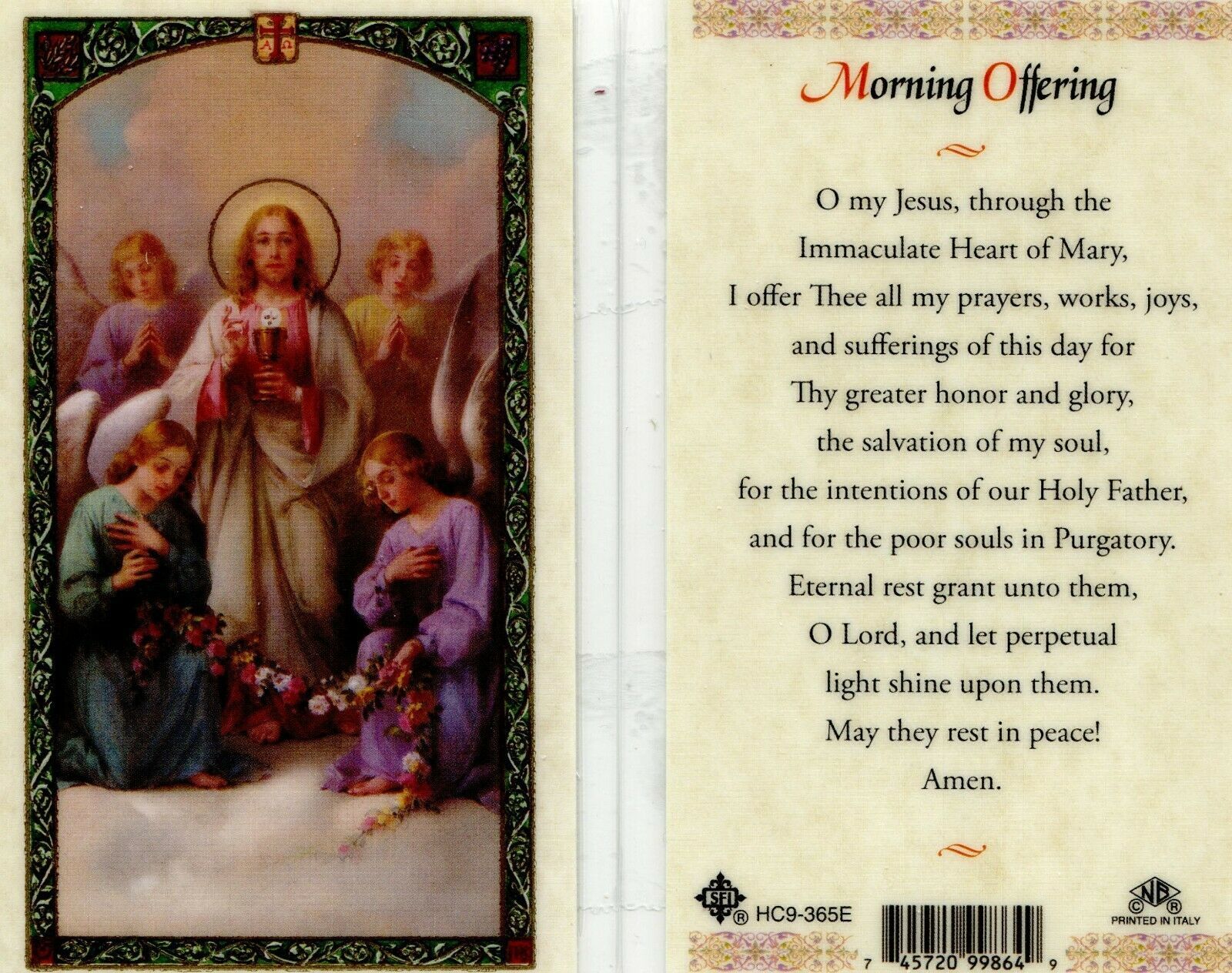
The Month of April is Dedicated to Devotion to the Most Holy Eucharist
“Now as they were eating, Jesus took bread, and blessed, and broke it, and gave it to the disciples and said, “Take, eat; this is my body.” And he took a cup, and when he had given thanks he gave it to them, saying, “Drink of it, all of you; for this is my blood of the covenant, which is poured out for many for the forgiveness of sins.” (Matthew 26:26-28)

Pope Leo XIV’s prayer intention for the month of April, 2026:
For priests in crisis
Let us pray for priests going through moments of crisis in their vocation, that they may find the accompaniment they need and that communities may support them with understanding and prayer.

Today’s First Reading
From: Acts 7:51-8:1a
Stephen's Address to the Sanhedrin
----------------------------------
(Stephen addressed the Sanhedrin,) [51] "You stiff-necked people, uncircumcised in heart and ears, you always resist the Holy Spirit. As your fathers did, so do you. [52] Which of the prophets did not your fathers persecute? And they killed those who announced beforehand the coming of the Righteous One, whom you have now betrayed and murdered, [53] you who received the law as delivered by angels and did not keep it."
The Martyrdom of Stephen
------------------------
[54] Now when they heard these things they were enraged, and they ground their teeth against him. [55] But he, full of the Holy Spirit, gazed into Heaven and saw the glory of God, and Jesus standing at the right hand of God; [56] and he said, "Behold, I see the heavens opened, and the Son of Man standing at the right hand of God." [57] But they cried out with a loud voice and stopped their ears and rushed together upon him. [58] Then they cast him out of the city and stoned him; and the witnesses laid down their garments at the feet of a young man named Saul. [59] And as they were stoning Stephen, he prayed, "Lord Jesus, receive my spirit." [60] And he knelt down and cried with a loud voice, "Lord, do not hold this sin against them." And when he had said this, he fell asleep.
Persecution of the Church
-------------------------
[1a] And Saul was consenting to his death.
***********************************************************************
Commentary:
55-56. "It is clear", St. Ephraem comments, "that those who suffer for Christ enjoy the glory of the whole Trinity. Stephen saw the Father and Jesus at His side, because Jesus appears only to his own, as was the case with the Apostles after the Resurrection. While the champion of the faith stood there helpless in the midst of those who had killed the Lord, just at the point when the first martyr was to be crowned, he saw the Lord, holding a crown in His right hand, as if to encourage him to conquer death and to show that he inwardly helps those who are about to die on his account. He therefore reveals what he sees, that is, the heavens opened, which were closed to Adam and only opened to Christ at the Jordan, but open now after the Cross to all who share Christ's sufferings, and in the first instance open to this man. See how Stephen reveals why his face was lit up: it was because he was on the point of contemplating this wondrous mission. That is why he took on the appearance of an angel--so that his testimony might be more reliable" ("Armenian Commentary, ad loc."). 57-59. The cursory trial of Stephen ends without any formal sentence of death: this Jewish tribunal was unable to pass such sentences because the Romans restricted its competence. In any event no sentence proves necessary: the crowd becomes a lynching party: it takes over and proceeds to stone Stephen, with the tacit approval of the Sanhedrin. Tradition regards Stephen as the first Christian martyr, an example of fortitude and suffering for love of Christ. "Could you keep all God's commandments," St. Cyprian asks, "were it not for the strength of patience? That was what enabled Stephen to hold out: in spite of being stoned he did not call down vengeance on his executioners, but rather forgiveness.... How fitting it was for him to be Christ's first martyr, so that by being, through his glorious death, the model of all the martyrs that would come after him, he should not only be a preacher of the Lord's Passion, but should also imitate it in his meekness and immense patience" ("De Bono Patientiae", 16). Martyrdom is a supreme act of bravery and of true prudence, but to the world it makes no sense. It is also an _expression of humility, because a martyr does not act out of bravado or overweening self-confidence; he is a weak man like anyone else, but God's grace gives him the strength he needs. Although martyrdom is something which happens rarely, it does show Christians what human nature can rise to if God gives it strength, and it establishes a standard, both real and symbolic, for the behavior of every disciple of Christ. "Since all the virtues and the perfection of all righteousness are born of love of God and one's neighbor," St. Leo says, "in no one is this love more worthily found than in the blessed martyrs, who are nearest to our Lord in terms of imitation of both His charity and His Passion. "The martyrs have been of great help to others, because the Lord has availed of the very strength as He granted them to ensure that the pain of death and the cruelty of the Cross do not frighten any of His own, but are seen as things in which man can imitate Him.... "No example is more useful for the instruction of the people of God than that of the martyrs. Eloquence is effective for entreating, argument for convincing; but examples are worth more than words, and it is better to teach by deeds than by speech" ("Hom. on the Feast of St. Laurence"). The Second Vatican Council has reminded us of the excellence of the martyrdom as a form of witness to the faith. Although there are heroic ways of imitating and following our Lord which do not involve the drama of bloodshed and death, all Christians should realize that confession of the faith in this way is not a thing of the past and is sometimes necessary. "Since Jesus, the Son of God, showed His love by laying down His life for us, no one has greater love than he who lays down his life for Him and for his brothers (cf. 1 John 3:16; John 15:13). Some Christians have been called from the beginning, and will always be called, to give this greatest testimony of love to all, especially to persecutors. Martyrdom makes the disciple like his Master. [...] Therefore, the Church considers it the highest gift and supreme test of love. And although it is given to few, all must be prepared to confess Christ before men and to follow him along the way of the Cross amidst the persecutions which the Church never lacks. "Likewise the Church's holiness is fostered [...] by the manifold counsels which the Lord proposes to His disciples in the Gospel" (Vatican II, "Lumen Gentium", 42). The Liturgy of the Church sums up the asceticism and theology of martyrdom in the preface for Christian martyrs: "Your holy martyr followed the example of Christ, and gave his life for the glory of Your name. His death reveals Your power shining through our human weakness. You choose the weak and make them strong in bearing witness to You." Like Jesus, Stephen dies commending his soul to God and praying for his persecutors. At this point St. Luke brings in Saul who cooperates in the proceedings by watching the executioners' clothes; Saul will soon experience the benefits of Stephen's intercession. "If Stephen had not prayed to God, the Church would not have had Paul" (St. Augustine, "Sermons", 315, 7). Stephen has died, but his example and teaching continue to speak across the world.
From: John 6:30-35
The Discourse on the Bread of Life (Continuation)
-------------------------------------------------
[30] So they said to Him (Jesus), "Then what sign do You do, that we may see, and believe You? What work do You perform? [31] Our fathers ate the manna in the wilderness; as it is written, `He gave them bread from Heaven to eat.'" [32] Jesus then said to them, "Truly, truly, I say to you, it was not Moses who gave you the bread from Heaven; My Father gives you the true bread from Heaven. [33] For the bread of God is that which comes down from Heaven, and gives life to the world." [34] They said to Him, "Lord, give us this bread always."
[35] Jesus said them, "I am the bread of life; he who comes to Me shall not hunger, and he who believes in Me shall never thirst."
***********************************************************************
Commentary:
28-34. This dialogue between Jesus and His hearers is reminiscent of the episode of the Samaritan woman (cf. John 4:11-15). On that occasion Jesus was speaking about water springing up to eternal life; here, He speaks of bread coming down from Heaven to give to the world. There, the woman was asking Jesus if He was greater than Jacob; here the people want to know if He can compare with Moses (cf. Exodus 16:13). "The Lord spoke of Himself in a way that made Him seem superior to Moses, for Moses never dared to say that he would give food which would never perish but would endure to eternal life. Jesus promises much more than Moses. Moses promised a kingdom, and a land flowing with milk and honey, good health and other temporal blessings [...], plenty for the belly, but food which perishes; whereas Christ promised food which never perishes but which endures forever" (St. Augustine, "In Ioann. Evang.", 25:12).
These people know that the manna--food which the Jews collected every day during the journey through the wilderness (cf. Exodus 16:13ff)—symbolized messianic blessings; which was why they asked our Lord for a dramatic sign like the manna. But there was no way they could suspect that the manna was a figure of a great supernatural messianic gift which Christ was bringing to mankind--the Blessed Eucharist. In this dialogue and in the first part of the discourse (verses 35-47), the main thing Jesus is trying to do is bring them to make an act of faith in Him, so that He can then openly reveal to them the mystery of the Blessed Eucharist--that He is the bread "which comes down from Heaven, and gives life to the world" (verse 33). Also, St. Paul explains that the manna and the other marvels which happened in the wilderness were a clear prefiguring of Jesus Christ (cf. 1 Corinthians 10:3-4).
The disbelieving attitude of these Jews prevented them from accepting what Jesus revealed. To accept the mystery of the Eucharist, faith is required, as Pope Paul VI stressed: "In the first place we want to remind you that the Eucharist is a very great mystery; strictly speaking, to use the words of sacred liturgy, it is `the mystery of faith'. This is something well known to you but it is essential to the purpose of rejecting any poisonous rationalism. Many martyrs have witnessed to it with their blood.
Distinguished Fathers and Doctors of the Church in unbroken succession have taught and professed it. [...] We must, therefore, approach this mystery, above all, with humble reverence, not following human arguments, which ought to be hushed, but in steadfast adherence to divine revelation" ("Mysterium Fidei").
35. Going to Jesus means believing in Him, for it is through faith that we approach our Lord. Jesus uses the metaphor of food and drink to show that He is the one who really meets all man's noblest aspirations: "How beautiful is our Catholic faith! It provides a solution for all our anxieties, calms our minds and fills our hearts with hope" (St J. Escriva, "The Way", 582).
Sorry for the bad editing on the first reading!
You don’t need to apologize for that!
You do this everyday for us, no matter what
and I for one, am grateful to you!
Thank you so much for all your hard work,
and I will be praying that
you are feeling better these days.
May God bless you, and thanks again!
Ms.B
Thank you, MS.B. I truly appreciate it and am blessed for being able to post here every day. I am feeling well these days. I’m still in the fight, but with the Lord by my side I am at peace. May God bless you.
Disclaimer: Opinions posted on Free Republic are those of the individual posters and do not necessarily represent the opinion of Free Republic or its management. All materials posted herein are protected by copyright law and the exemption for fair use of copyrighted works.

