
Posted on 04/18/2026 9:52:33 PM PDT by fidelis
That very day, the first day of the week, two of Jesus’ disciples were going to a village seven miles from Jerusalem called Emmaus, and they were conversing about all the things that had occurred. And it happened that while they were conversing and debating, Jesus himself drew near and walked with them, but their eyes were prevented from recognizing him. Luke 24:13–16
These two disciples were overwhelmed by grief and bewildered by the events that had taken place. As they walked the seven-mile journey from Jerusalem to Emmaus, they expressed their sadness and confusion. Jesus, Whom they had hoped “would be the one to redeem Israel,” was brutally tortured and crucified before their eyes. After His death, He was buried, and that very morning they heard reports from some of the women, as well as Peter and John, that His body was missing from the tomb. What’s more, the burial cloth was neatly rolled up in the tomb, and the women informed the disciples that they saw “a vision of angels who announced that he was alive.” The two did not know what to think.
As the story unfolds, Jesus appeared to them as they walked and conversed with them, “but their eyes were prevented from recognizing him.” Jesus’ hidden presence teaches us that He is often with us, in our midst, yet we do not recognize Him. Distractions, trials, or our own misconceptions can dull our spiritual senses. We often fail to perceive His presence in the Eucharist, the Scriptures, the Church, during our prayer, and in one another...
Jesus then “interpreted to them what referred to him in all the Scriptures.” This opening of their minds to the spiritual Gift of Understanding is key. By humbly acknowledging our spiritual blindness and the foolish way we often go about our daily lives, we dispose ourselves to this precious gift. The Gift of Understanding cannot be acquired by our own effort. Only after we honestly humble ourselves before God will He open our minds to all we need to know and understand.
Once they arrived in Emmaus and invited this divine Stranger to stay with them for the night, Jesus agreed. As they dined, “while he was with them at table, he took bread, said the blessing, broke it, and gave it to them.” The Lord Himself, the great High Priest, gave them the Eucharist, and suddenly “their eyes were opened and they recognized him, but he vanished from their sight.”
Though our Lord vanished from their sight, He remained with them, as He does with us today. His presence in the Eucharist is His True Presence, His Divine Essence. By revealing Himself in the Scriptures and the Breaking of the Bread, He teaches us that He is always with us in His Word and in the Sacraments. We consume His Word through daily meditation, study, and the teachings of the Church. His True Presence is with us when we attend Mass and participate in the Sacraments.
Reflect today on the initial confusion of these two disciples, filled with sorrow and bewilderment as they grappled with recent events. Contrast this with the growth in faith they likely experienced in the months and years ahead. Little by little, they grew in understanding and belief, allowing their misconceptions about who the Messiah would be—not a political leader, but the Savior of the World—to be dispelled. Whenever you face confusion, turn to the example of these disciples and learn from the lessons taught through them. Seek Christ in His Word and Sacraments, trusting that He will dispel doubts and guide you to greater faith.
Ever-present Lord, please humble me so that I turn more fully to You, hearing Your voice and recognizing Your presence. When I am confused or uncertain, please intervene and open my mind to You and to Your Truth so that I will believe with all my heart and follow wherever You lead. Jesus, I trust in You.
Please keep in mind that this is a Catholic Caucus/Devotional thread for the purpose of prayerful reflection on the Sacred Scriptures and is closed to debate of any kind. Per FR policy on Religion Caucus threads, off-topic, argumentative, and abusive comments are not allowed and will be submitted to the Mods for deletion. Thanks, and God bless you.
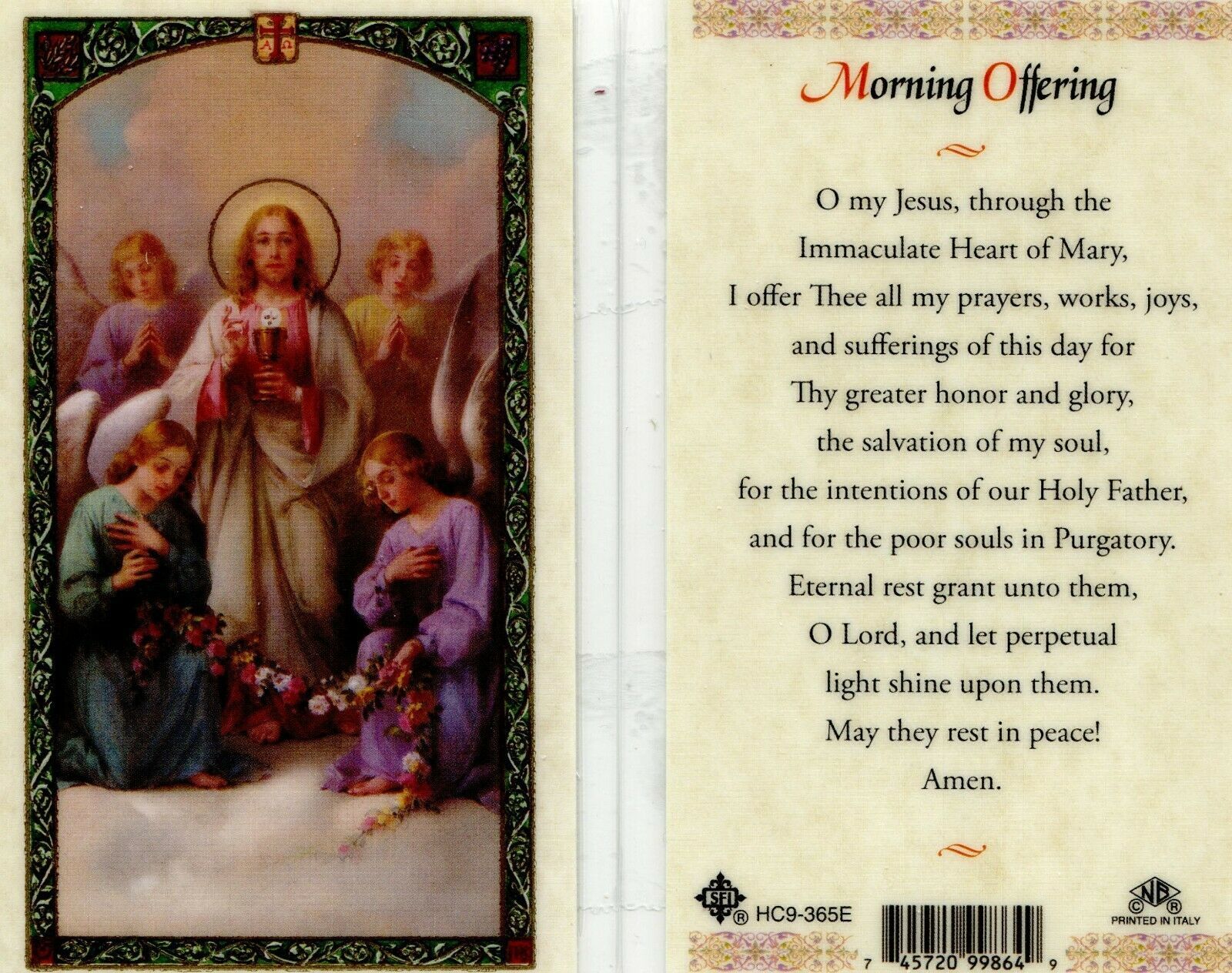
The Month of April is Dedicated to Devotion to the Most Holy Eucharist
“Now as they were eating, Jesus took bread, and blessed, and broke it, and gave it to the disciples and said, “Take, eat; this is my body.” And he took a cup, and when he had given thanks he gave it to them, saying, “Drink of it, all of you; for this is my blood of the covenant, which is poured out for many for the forgiveness of sins.” (Matthew 26:26-28)

Pope Leo XIV’s prayer intention for the month of April, 2026:
For priests in crisis
Let us pray for priests going through moments of crisis in their vocation, that they may find the accompaniment they need and that communities may support them with understanding and prayer.

Today’s First Reading
From: Acts 2:14a, 22-33
Peter's Address (Continuation)
------------------------------
[14a] But Peter, standing with the Eleven, lifted up his voice and addressed them, [22] "Men of Israel, hear these words: Jesus of Nazareth with mighty works and wonders and signs which God did through Him in your midst, as you yourselves know--[23] this Jesus, delivered up according to the definite plan and foreknowledge of God, you crucified and killed by the hands of lawless men. [24] But God raised Him up, having loosed the pangs of death, because it was not possible for Him to be held by it. [25] For David says concerning Him, 'I saw the Lord always before Me, for He is at My right hand that I may not be shaken; [26] therefore My heart was glad, and My tongue rejoiced; moreover My flesh will dwell in hope. [27] For Thou will not abandon My soul to Hades, nor let Thy Holy One see corruption. [28] Thou hast made known to Me the ways of life; Thou wilt make Me full of gladness with Thy presence.'
[29] "Brethren, I may say to you confidently of the patriarch David that he both died and was buried, and his tomb is with us to this day. [30] Being therefore a prophet, and knowing that God had sworn with an oath to him that He would set one of his descendants upon his throne, [31] he foresaw and spoke of the resurrection of the Christ, that He was not abandoned to Hades, nor did His flesh see corruption. [32] This Jesus God raised up, and of that we all are witnesses. [33] Being therefore exalted at the right hand of God, and having received from the Father the promise of the Holy Spirit, he has poured out this which you see and hear."
***********************************************************************
Commentary:
14-36. Even as the Church takes its first steps St. Peter can be seen to occupy the position of main spokesman. In his address we can distinguish an introduction and two parts: in the first part (verses 16-21) he is explaining that the messianic times foretold by Joel have now arrived; in the second (verses 22-36) he proclaims that Jesus of Nazareth, whom the Jews crucified, is the Messiah promised by God and eagerly awaited by the righteous of the Old Testament; it is He who has effected God's saving plan for mankind.
14. In his commentaries St. John Chrysostom draws attention to the change worked in Peter by the Holy Spirit: "Listen to him preach and argue so boldly, who shortly before had trembled at the word of a servant girl! This boldness is a significant proof of the resurrection of his Master: Peter preaches to men who mock and laugh at his enthusiasm…Calumny ('they are filled with new wine') does not deter the Apostles; sarcasm does not undermine their courage, for the coming of the Holy Spirit has made new men of them, men who can put up with every kind of human test. When the Holy Spirit enters into hearts He does so to elevate their affections and to change earthly souls, souls of clay, into chosen souls, people of great courage…Look at the harmony that exists among the Apostles. See how they allow Peter to speak on behalf of them all. Peter raises his voice and speaks to the people with full assurance. That is the kind of courage a man has when he is the instrument of the Holy Spirit…Just as a burning coal does not lose heat when it falls on a haystack but instead is enabled to release its heat, so Peter, now that he is in contact with the life-giving Spirit, spreads his inner fire to those around him" ("Hom. on Acts", 4).
22-36. To demonstrate that Jesus of Nazareth is the Messiah foretold by the prophets, St. Peter reminds his listeners of our Lord's miracles (verse 22), as well as of His death (verse 23), resurrection (verses 24-32) and glorious ascension (verses 33-35). His address ends with a brief summing-up (verse 36).
32. To proofs from prophecy, very important to the Jews, St. Peter adds his own testimony on the resurrection of Jesus, and that of his brothers in the Apostolate.
From: 1 Peter 1:17-21
The Blood of Christ Is Our Ransom
---------------------------------
[17] And if you invoke as Father Him who judges each one impartially according to his deeds, conduct yourselves with fear throughout the time of your exile. [18] You know that you were ransomed from the futile ways inherited from your fathers, not with perishable things such as silver or gold, [19] but with the precious blood of Christ, like that of a lamb without blemish or spot. [20] He was destined before the foundation of the world but was made manifest at the end of the times for your sake. [21] Through Him you have confidence in God, who raised Him from the dead and gave Him glory, so that your faith and hope are in God.
************************************************************************
Commentary:
17-21. The Christian has attained the honor of being a son or daughter of God. The sacred writer summarizes God's plan for man's salvation, which comes about in Christ: from all eternity, it was God's design to save men through Christ; this design was made manifest "at the end of the times", when our Lord offered Himself as an expiation for the sins of men, and then rose from the dead and was glorified. This is a further reason why Christians should grow in their desire for holiness.
"You were ransomed" (verse 18): the image of ransoming used here to explain Redemption is probably taken from sacred manumission (common at the time in Asia Minor and Greece) whereby slaves were set free through a sum of money being deposited in the temple. When exhorting Christians not to return to their former sins, St. Paul also stresses the great size of the ransom (cf. 1 Corinthians 6:20 and note). The amount of the ransom, St. Ambrose points out, "was not reckoned in terms of money but in terms of blood, for Christ died for us; He has set us free with His precious blood, as St. Peter also reminds us in his letter [...]; precious because it is the blood of a spotless Lamb, the blood of the Son of God, who has ransomed us not only from the curse of the Law, but also from that never-ending death which impiety implies" ("Expositio Evangelii Sec. Lucam", 7, 117).
"The blood of Christ, like that of a lamb without blemish or spot" (verse 19): in the sacrifice of Jesus was fulfilled the prophecy of Isaiah about the Messiah's expiatory suffering; and it also finally completed the liberation of the Israelite first-born in Egypt though the blood of the paschal lamb (Exodus 12; cf. Introduction to this letter). So, when in the New Testament the figure of the Lamb is applied to Christ, this is a way of referring to the atoning sacrifice of the Cross and, also, the spotless innocence of the Redeemer (cf. note on John 1:29).
17. "If you invoke as Father": this may be a reference to the saying of the Our Father, which Christians may have recited at the Baptism ceremony from the very beginning. We do know (cf. the "Didache", or "Teaching of the Twelve Apostles", an anonymous text of the apostolic era) that Christians used to pray the Our Father three times a day (cf. 8, 3). Frequent reflection on the fact that God is our Father fills us with peace and joy and stirs us to act as befits children of such a Father, knowing that God sees us and judges our actions. Therefore, divine filiation can never be taken as a kind of safe-conduct which allows us to be casual about our duties: "Worldly souls are very fond of thinking of God's mercy. And so they are encouraged to persist in their follies.
"It is true that God our Lord is infinitely merciful, but He is also infinitely just: and there is a judgment, and He is the Judge" (St J. Escriva, "The Way", 747).
21. The resurrection of Jesus is the basis of Christian faith and hope and is the main proof of Jesus' divinity and His divine mission (cf., e.g., 1 Corinthians 15 and notes on same). The Apostles were, first and foremost, witnesses of our Lord's resurrection (cf. Acts 1:22; 2:32; etc.), and the proclamation of the Resurrection was the core of apostolic catechesis (cf. the discourses of St. Peter and St. Paul in the Acts of the Apostles).
Jesus Christ rose from the dead by His own power, the power of His divine person (cf. "Creed of the People of God", 12); the "St. Pius V Catechism" points out that "we sometimes, it is true, read in Scripture that He was raised by the Father; but this refers to Him as man, just as those passages, on the other hand, which say that He rose by His own power relate to Him as God" (I, 6, 8).
From: Luke 24:13-35
The Road to Emmaus
------------------
[13] That very day two of them (disciples) were going to a village named Emmaus, about seven miles from Jerusalem, [14] and talking with each other about all these things that had happened. [15] While they were talking and discussing together, Jesus Himself drew near and went with them. [16] But their eyes were kept from recognizing Him. [17] And He said to them, "What is this conversation which you are holding with each other as you walk?" And they stood still, looking sad. [18] Then one of them, named Cleopas, answered Him, "Are You the only visitor to Jerusalem who does not know the things that have happened there in these days?" [19] And He said to them, "What things?" And they said to Him, "Concerning Jesus of Nazareth, who was a prophet mighty in deed and word before God and all the people, [20] and how our chief priests and rulers delivered Him up to be condemned to death, and crucified Him. [21] But we had hoped that He was the one to redeem Israel. Yes, and besides all this, it is now the third day since this happened. [22] Moreover, some women of our company amazed us. They were at the tomb early in the morning [23] and did not find His body; and they came back saying that they had even seen a vision of angels, who said that He was alive. [24] Some of those who were with us went to the tomb, and found it just as the women had said; but Him they did not see." [25] And He said to them, "O foolish men, and slow of heart to believe all that the prophets have spoken! [26] Was it not necessary that the Christ should suffer these things and enter into His glory?" [27] And beginning with Moses and all the prophets, He interpreted to them in all the Scriptures the things concerning Himself.
[28] So they drew near to the village to which they were going. He appeared to be going further, [29] but they constrained Him, saying, "Stay with us, for it is toward evening and the day is now far spent." So He went in to stay with them. [30] When He was at table with them, He took the bread and blessed, and broke it, and gave it to them. [31] And their eyes were opened and they recognized Him; and He vanished out of their sight. [32] They said to each other, "Did not our hearts burn within us while He talked to us on the road, while He opened to us the Scriptures?" [33] And they rose that same hour and returned to Jerusalem; and they found the Eleven gathered together and those who were with them, [34] who said, "The Lord is risen indeed, and has appeared to Simon!" [35] Then they told what had happened on the road, and how He was known to them in the breaking of the bread.
***********************************************************************
Commentary:
13-35. In the course of their conversation with Jesus, the disciples' mood changes from sadness to joy; they begin to hope again, and feel the need to share their joy with others, thus becoming heralds and witnesses of the risen Christ.
This is an episode exclusive to St. Luke, who describes it in a masterly way. It shows our Lord's zeal for souls. "As He is walking along, Christ meets two men who have nearly lost all hope. They are beginning to feel that life has no meaning for them. Christ understands their sorrow; He sees into their heart and communicates to them some of the life He carries within Himself."
"When they draw near the village, He makes as if to go on, but the two disciples stop Him and practically force Him to stay with them. They recognize Him later when He breaks the bread. The Lord, they exclaimed, has been with us! `And they said to each other: "Did not our hearts burn within us while He talked to us on the road, while He opened to us the Scriptures?"' (Luke 24:32). Every Christian should make Christ present among men. He ought to act in such a way that those who know Him sense `the aroma of Christ' (cf. 2 Corinthians 2:15). Men should be able to recognize the Master in His disciples" (St J. Escriva, "Christ Is Passing By", 105).
13-27. Jesus' conversation with the two disciples on the road to Emmaus gives us a very good idea of the disillusionment felt by His disciples after His apparent total failure. Cleopas' words summarize Christ's life and mission (verse 19), His passion and death (verse 20), the despair felt by His disciples (verse 21), and the events of that Sunday morning (verse 22).
Earlier, Jesus had said to the Jews: "You search the Scriptures, because you think that in them you have eternal life; and it is they that bear witness to Me" (John 5:39). In saying this He indicated the best way for us to get to know Him. Pope Paul VI points out that today also frequent reading of and devotion to Holy Scripture is a clear inspiration of the Holy Spirit: "The progress made in biblical studies, the increasing dissemination of the Sacred Scriptures, and above all the example of tradition and the interior action of the Holy Spirit are tending to cause the modern Christian to use the Bible ever increasingly as the basic prayerbook and to draw from it genuine inspiration and unsurpassable examples" (Pope Paul VI, "Marialis Cultus", 30).
Because the disciples are so downhearted, Jesus patiently opens for them the meaning of all the Scriptural passages concerning the Messiah. "Was it not necessary that the Christ should suffer these things and enter into His glory?": with these words He disabuses them of the notion of an earthly and political Messiah and shows them that Christ's mission is a supernatural one--to save all mankind.
Sacred Scripture contained the prophecy that God would bring about salvation through the redemptive passion and death of the Messiah. The Cross does not mean failure: it is the route chosen by God for Christ to achieve definitive victory over sin and death (cf. 1 Corinthians 1:23-24). Many of our Lord's contemporaries failed to understand His supernatural mission because they misinterpreted the Old Testament texts. No one knew the meaning of Sacred Scripture like Jesus. And, after Him, only the Church has the mission and responsibility of conserving Scripture and interpreting it correctly: "All that has been said about the manner of interpreting Scripture is ultimately subject to the judgment of the Church which exercises the divinely conferred commission and ministry of watching over and interpreting the Word of God" (Vatican II, "Dei Verbum", 12).
28-35. The Master's presence and words restore the disciples' spirits and give them new and lasting hope. "There were two disciples on their way to Emmaus. They were walking along at a normal pace, like so many other travelers on that road. And there, without any fuss, Jesus appears to them, and walks with them, His conversation helping to alleviate their tiredness. I can well imagine the scene, just as dusk is falling. A gentle breeze is blowing. All around are fields ripe with wheat, and venerable olive trees, their branches shimmering in the soft glowing light.
"Jesus joins them as they go along their way. Lord, how great you are, in everything! But You move me even more when You come down to our level, to follow us and to seek us in the hustle and bustle of each day. Lord, grant us a childlike spirit, pure eyes and a clear mind so that we may recognize You when You come without any outward sign of Your glory.
"The journey ends when they reach the village. The two disciples who, without realizing it, have been deeply stirred by the words and love shown by God made man, are sorry to see Him leaving. For Jesus `appeared to be going further' (Luke 24:28). This Lord of ours never forces Himself on us. He wants us to turn to Him freely, when we begin to grasp the purity of His Love which He has placed in our souls. We have to hold Him back (`they constrained Him') and beg Him: `Stay with us, for it is towards evening, and the day is now far spent' (Luke 24:29).
"That's just like us--always short on daring, perhaps because we are insincere, or because we feel embarrassed. Deep down, what we are really thinking is: `Stay with us, because our souls are shrouded in darkness and You alone are the light. You alone can satisfy this longing that consumes us.' For `we know full well which among all things fair and honorable is the best--to possess God for ever' (St. Gregory Nazianzen, "Epistulae", 212).
"And Jesus stays. Our eyes are opened, as were those of Cleopas and his companion, when Christ breaks the bread; and, though He vanishes once more from sight, we too will find strength to start out once more--though night is falling--to tell the others about Him, because so much joy cannot be kept in one heart alone.
"The road to Emmaus--our God has filled this name with sweetness. Now the entire world has become an Emmaus, for the Lord has opened up all the divine paths of the earth" (St J. Escriva, "Friends of God", 313f).
32. If you were an apostle, these words of the disciples of Emmaus should rise spontaneously to the lips of your professional companions when they meet you along the way of their lives" ("The Way", 917).
33-35. The disciples now feel the need to return to Jerusalem immediately; there they find the Apostles and some other disciples gathered together with Peter, to whom Jesus has appeared.
In sacred history, Jerusalem was the place where God chose to be praised in a very special way and where the prophets carried out their main ministry. God willed that Christ should suffer, die and rise again in Jerusalem, and from there the Kingdom of God begins to spread (cf. Luke 24:47; Acts 1:8). In the New Testament the Church of Christ is described as "the Jerusalem above" (Galatians 4:26), "the Heavenly Jerusalem" (Hebrews 12:22) and the "new Jerusalem" (Revelation 21:2).
The Church began in the Holy City. Later on, St. Peter, not without a special intervention of Providence, moved to Rome, thereby making that city the center of the Church. Just as Peter strengthened these first disciples in the faith, so too Christians of all generations have recourse to the See of Peter to strengthen their faith and thereby build up the unity of the Church: "Take away the Pope and the Catholic Church would no longer be catholic. Moreover, without the supreme, effective and authoritative pastoral office of Peter the unity of Christ's Church would collapse. It would be vain to look for other principles of unity in place of the true one established by Christ Himself [...]. We would add that this cardinal principle of holy Church is not a supremacy of spiritual pride and a desire to dominate mankind, but a primacy of service, ministration and love. It is no vapid rhetoric which confers on Christ's vicar the title: `Servant of the servants of God'" (Pope Paul VI, "Ecclesiam Suam", 83).
Disclaimer: Opinions posted on Free Republic are those of the individual posters and do not necessarily represent the opinion of Free Republic or its management. All materials posted herein are protected by copyright law and the exemption for fair use of copyrighted works.


