
Posted on 04/16/2026 10:30:02 PM PDT by fidelis
Jesus went up on the mountain, and there he sat down with his disciples. The Jewish feast of Passover was near. When Jesus raised his eyes and saw that a large crowd was coming to him, he said to Philip, “Where can we buy enough food for them to eat?” John 6:3–5
Have you ever faced a situation in which you felt desperate? Some people endure severe poverty, unsure of where their next meal will come from. Others struggle with family disunity, leading to deep fear and anxiety. Some battle addiction, uncertain how they will ever break free. Still others face obstacles that seem insurmountable. Today’s Gospel reminds us that nothing is impossible for God.
The story of the multiplication of the loaves and fishes begins with an intriguing exchange between Jesus and two of His disciples. Jesus asked Philip where they could buy food for the crowd, even though He knew they did not have enough money nor a place to buy food. This question was more of a statement, showing us that we must always rely on divine providence, especially when faced with the impossible.
From a human perspective, feeding such a vast crowd on a mountaintop was impossible. Similarly, we all encounter situations in life that, by human means, present insurmountable challenges. If the crowd had numbered only about twenty people, one of the disciples might have managed to meet the need with a practical solution, such as purchasing food from a nearby village. Thus, when a challenge in life has a reasonable solution within our capacity, we should pursue it. When human effort alone is not enough, we must turn to divine providence.
Philip’s response reveals his purely rational perspective: “Two hundred days’ wages worth of food would not be enough for each of them to have a little.” In contrast, Andrew shows a glimmer of faith and hope when he points out, “There is a boy here who has five barley loaves and two fish; but what good are these for so many?” The role of the boy is often overlooked. Although the Gospel says little about him, it is clear that he entrusted everything he had to Jesus. Perhaps it was this small act of trust that allowed Jesus to perform the miracle.
After Jesus had the vast crowd of 5,000 men—not counting women and children—recline in the grass, He did the unimaginable. He transformed the five barley loaves and two fish into more than the crowd could eat. The twelve baskets of food left over symbolize God’s superabundant providence, given to those who are members of His Kingdom—the new Twelve Tribes of Israel, His Church...
Spiritually speaking, God’s providence assures us that every desperate situation in which we find ourselves can be transformed by grace if we trust Him. Family disunity, addictions, poverty, and every other human struggle can and will be transformed by His grace if we fully surrender to Him. For example, even if a family relationship is beyond reconciliation, by fully surrendering that relationship to Him, His grace will either heal it or use the suffering as a source of grace in ways we could never imagine. Nothing is beyond the power of God.
Reflect today on this vast crowd coming to Jesus on the mountain. See yourself in that crowd. See yourself as hungry and even desperate, journeying toward Him Who is the answer to every problem. See yourself as that boy who gives all he has to Jesus. Don’t hold anything back. Trust in Him and know that His divine providence will transform anything you bring to Him in superabundance.
My providential Lord, I bring to You today all that I have and entrust it to You. I believe that You love me and care about every aspect of my life. Please take the little I offer You—everything I have—and transform it superabundantly by Your grace. Your providence never fails, dear Lord. Help me to believe that with all my heart. Jesus, I trust in You.
Please keep in mind that this is a Catholic Caucus/Devotional thread for the purpose of prayerful reflection on the Sacred Scriptures and is closed to debate of any kind. Per FR policy on Religion Caucus threads, off-topic, argumentative, and abusive comments are not allowed and will be submitted to the Mods for deletion. Thanks, and God bless you.
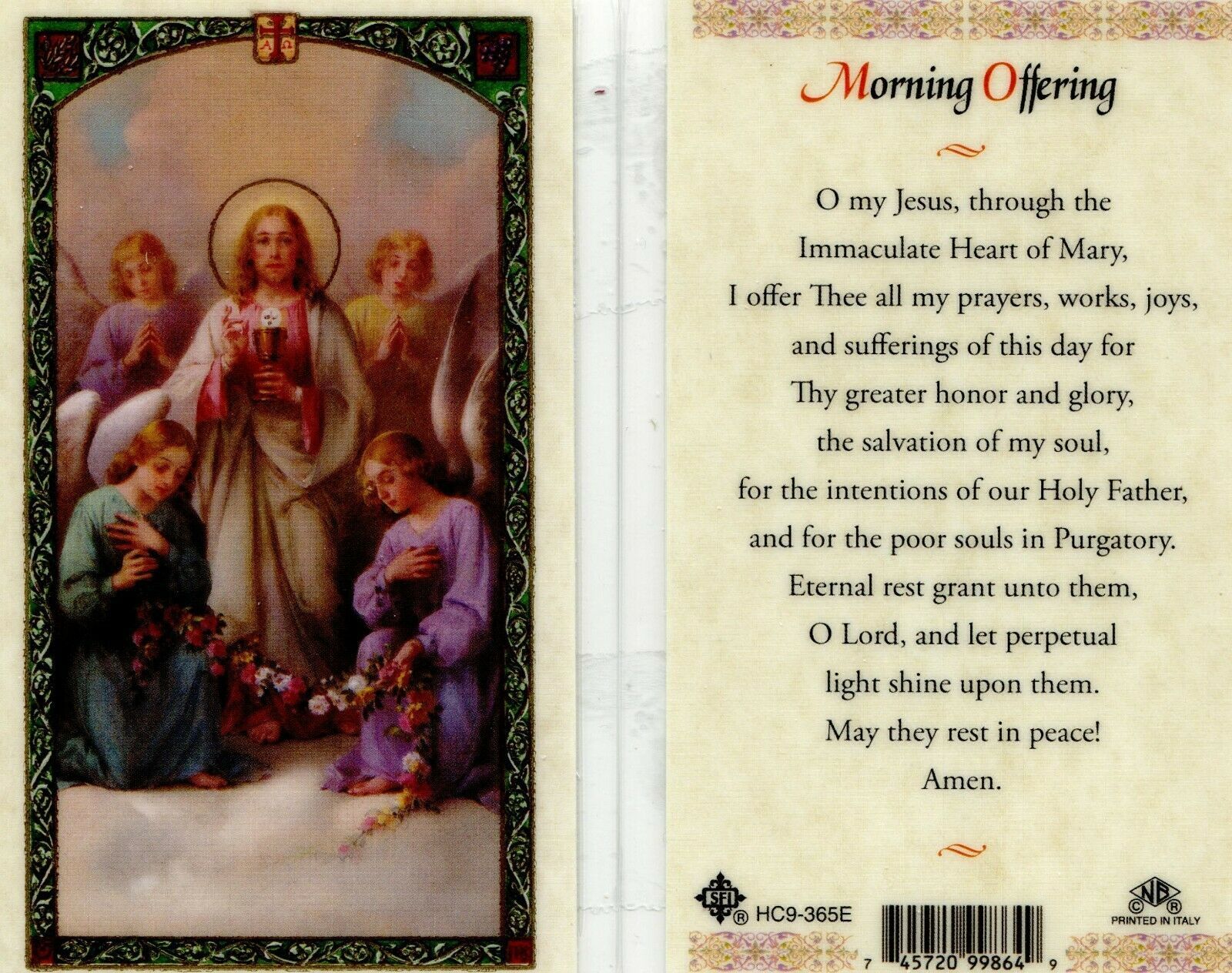
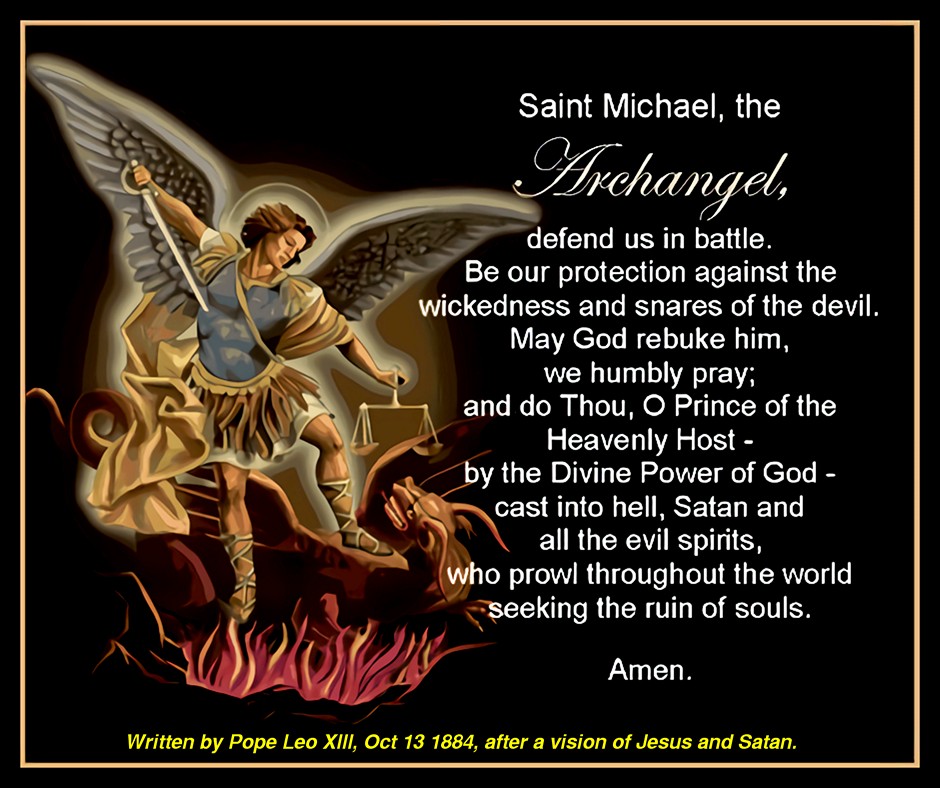
The Month of April is Dedicated to Devotion to the Most Holy Eucharist
“Now as they were eating, Jesus took bread, and blessed, and broke it, and gave it to the disciples and said, “Take, eat; this is my body.” And he took a cup, and when he had given thanks he gave it to them, saying, “Drink of it, all of you; for this is my blood of the covenant, which is poured out for many for the forgiveness of sins.” (Matthew 26:26-28)

Pope Leo XIV’s prayer intention for the month of April, 2026:
For priests in crisis
Let us pray for priests going through moments of crisis in their vocation, that they may find the accompaniment they need and that communities may support them with understanding and prayer.

Today’s First Reading
From: Acts 5:34-42
Gamaliel's Intervention
--------------------------------
[34] But a Pharisee in the council named Gamaliel, a teacher of the law, held in honor by all the people, stood up and ordered the men to be put outside for a while. [35] And he said to them, "Men of Israel, take care what you do with these men. [36] For before these days Theudas arose, giving himself out to be somebody, and a number of men, about four hundred, joined him; but he was slain and all who followed him were dispersed and came to nothing. [37] After him Judas the Galilean arose in the days of the census and drew away some of the people after him; he also perished, and all who followed him were scattered. [38] So in the present case I tell you, keep away from these men and let them alone; for this plan or this undertaking is of men, it will fail; [39] but if it is of God, you will not be able to overthrow them. You might even be found opposing God!"
The Apostles Are Flogged
-------------------------------------
[40] So they took his advice, and when they had called in the Apostles, they beat them and charged them not to speak in the name of Jesus, and let them go. [41] Then they left the presence of the council, rejoicing that they were counted worthy to suffer dishonor for the Name. [42] And every day in the temple and at home they did not cease teaching and preaching Jesus as the Christ.
***********************************************************************
Commentary:
34-39. Gamaliel had been St. Paul's teacher (cf. 22:3). He belonged to a moderate grouping among the Pharisees. He was a prudent man, impartial and religiously minded. The Fathers of the Church often propose him as an example of an upright man who is awaiting the Kingdom of God and dares to defend the Apostles.
"Gamaliel does not say that the undertaking is of man or of God; he recommends that they let time decide. [...] By speaking in the absence of the Apostles he was better able to win over the judges. The gentleness of his word and arguments, based on justice, convinced them. He was almost preaching the Gospel. Indeed, his language is so correct that he seemed to be saying: Be convinced of it: you cannot destroy this undertaking. how is it that you do not believe? The Christian message is so impressive that even its adversaries bear witness to it" (St. John Chrysostom, "Hom. on Acts", 14).
This commentary seems to be recalling our Lord's words, "He that is not against us is for us" (Mark 9:40). Certainly, Gamaliel's intervention shows that a person with good will can discern God's action in events or at least investigate objectively without prejudging the issue.
The revolts of Theudas and Judas are referred to by Flavius Josephus (cf. "Jewish Antiquities", XVIII, 4-10; XX, 169-172), but the dates he gives are vague; apparently these events occurred around the time of Jesus' birth. Both Theudas and Judas had considerable following; they revolted against the chosen people having to pay tribute to foreigners such as Herod and Imperial Rome.
40-41. Most members of the Sanhedrin are unimpressed by Gamaliel's arguments; they simply decide to go as far as they safely can: they do not dare to condemn the Apostles to death; but, in their stubborn opposition to the Gospel message, they decree that they be put under the lash in the hope that this will keep them quiet. However, it has just the opposite effect.
"It is true that Jeremiah was scourged for the word of God, and the Elijah and other prophets were also threatened, but in this case the Apostles, as they did earlier by their miracles, showed forth the power of God. He does not say that they did not suffer, but that they rejoiced over having to suffer. This we can see from the boldness afterwards: immediately after being beaten they went back to preaching" (Chrysostom, "Hom. on Acts", 14).
The Apostles must have remembered our Lord's words, "Blessed are you when men revile you and persecute you and utter all kinds of evil against you falsely on My account. Rejoice and be glad, for so men persecuted the prophets who were before you" (Matthew 5:11-12).
42. The Apostles and the first disciples of Jesus were forever preaching, with the result that very soon all Jerusalem was filled with their teaching (cf. verse 28). These early brethren are an example to Christians in every age: zeal to attract others to the faith is a characteristic of every true disciple of Jesus and a consequence of love of God and love of others: "You have but little love if you are not zealous for the salvation of all souls. You have but poor love if you are not eager to inspire other apostles with your craziness" (St J. Escriva, "The Way", 796).
From: John 6:1-15
The Miracle of the Loaves and Fish
----------------------------------
[1] After this Jesus went to the other side of the Sea of Galilee, which is the Sea of Tiberias. [2] And a multitude followed Him, because they saw the signs which He did on those who were diseased. [3] Jesus went up into the hills, and there sat down with His disciples. [4] Now the Passover, the feast of the Jews, was at hand. [5] Lifting up His eyes, then, seeing that a multitude was coming to Him, Jesus said to Philip, "How are we to buy bread, so that these people may eat?" [6] This He said to test them, for He Himself knew what He would do. [7] Philip answered Him, "Two hundred denarii would not buy enough bread for each of them to get a little." [8] One of His disciples, Andrew, Simon Peter's brother, said to Him, [9] "There is a lad here who has five barley loaves and two fish; but what are they among so many?" [10] Jesus said, "Make the people sit down." Now there was much grass in the place; so men sat down, in number about five thousand. [11] Jesus then took the loaves, and when He had given thanks, He distributed them to those who were seated; so also the fish, as much as they wanted. [12] And when they had eaten their fill, He told His disciples, "Gather up the fragments left over, that nothing may be lost." [13] So they gathered them up and filled twelve baskets with fragments from the five barley loaves, left by those who had eaten. [14] When the people saw the sign which He had done, they said, "This is indeed the prophet who is to come into the world!"
[15] Perceiving then that they were about to come and take Him by force to make Him king, Jesus withdrew again to the hills by Himself.
***********************************************************************
Commentary:
1. This is the second lake formed by the river Jordan. It is sometimes described in the Gospels as the "Lake of Gennesaret" (Luke 5:1), because that is the name of the area on the north-eastern bank of the lake, and sometimes as the "Sea of Galilee" (Matthew 4:18; 15:29; Mark 1:16; 7:31), after the region in which it is located. St. John also calls it the "Sea of Tiberias" (cf. 21:1), after the city of that name which Herod Antipas founded and named after the Emperor Tiberius. In Jesus' time there were a number of towns on the shore of this lake--Tiberias, Magdala, Capernaum, Bethsaida, etc.--and the shore was often the setting for His preaching.
2. Although St. John refers to only seven miracles and does not mention others which are reported in the Synoptics, in this verse and more expressly at the end of the Gospel (20:30; 21:25) he says that the Lord worked many miracles; the reason why the evangelist, under God's inspiration, chose these seven must surely be because they best suited His purpose--to highlight certain facets of the mystery of Christ. He now goes on to recount the miracle of the multiplication of the loaves and the fish, a miracle directly connected with the discourses at Capernaum in which Jesus presents Himself as "the bread of life" (6:35, 48).
4. St. John's Gospel often mentions Jewish feasts when referring to events in our Lord's public ministry--as in the case here (cf. "The Dates of the Life of our Lord Jesus Christ", in the "The Navarre Bible: St. Mark", pp. 49ff, and "Introduction to the Gospel according to St. John", pp. 13ff above).
Shortly before this Passover Jesus works the miracle of the multiplication of the loaves and the fish, which prefigures the Christian Easter and the mystery of the Blessed Eucharist, as He Himself explains in the discourse, beginning at verse 26 in which He promises Himself as nourishment for our souls.
5-9. Jesus is sensitive to people's material and spiritual needs. Here we see Him take the initiative to satisfy the hunger of the crowd of people who have been following Him.
Through these conversations and the miracle He is going to work, Jesus also teaches His disciples to trust in Him whenever they meet up with difficulties in their apostolic endeavors in the future: they should engage in them using whatever resources they have--even if they are plainly inadequate, as was the case with the five loaves and two fish. He will supply what is lacking. In the Christian life we must put what we have at the service of our Lord, even if we do not think it amounts to very much. He can make meager resources productive.
"We must, then, have faith and not be dispirited. We must not be stopped by any kind of human calculation. To overcome the obstacles we have to throw ourselves into the task so that the very effort we make will open up new paths" (St J. Escriva, "Christ is Passing By", 160).
10. The evangelist gives us an apparently unimportant piece of information: "there was much grass in the place." This indicates that the miracle took place in the height of the Palestinian spring, very near the Passover, as mentioned in verse 4. There are very few big meadows in Palestine; even today there is one on the eastern bank of the Lake of Gennesaret, called El-Batihah, where five thousand people could fit seated: it may have been the site of this miracle.
11. The account of the miracle begins with almost the very same words as those which the Synoptics and St. Paul use to describe the institution of the Eucharist (cf. Matthew 26:26; Mark 14:22; Luke 22:19; 1 Corinthians 11:25). This indicates that the miracle, in addition to being an expression of Jesus' mercy towards the needy, is a symbol of the Blessed Eucharist, about which our Lord will speak a little later on (cf. John 6:26-59).
12-13. The profusion of detail shows how accurate this narrative is--the names of the Apostles who address our Lord (verses 5,8), the fact that they were barley loaves (verse 9), the boy who provided the wherewithal (verse 9) and, finally, Jesus telling them to gather up the leftovers.
This miracle shows Jesus' divine power over matter, and His largesse recalls the abundance of messianic benefits which the prophets had foretold (cf. Jeremiah 31:14).
Christ's instruction to pick up the leftovers teaches us that material resources are gifts of God and should not be wasted: they should be used in a spirit of poverty (cf. note on Mark 6:42). In this connection Paul VI pointed out that "after liberally feeding the crowds, the Lord told His disciples to gather up what was left over, lest anything should be lost (cf. John 6:12). What an excellent lesson in thrift--in the finest and fullest meaning of the term--for our age, given as it is to wastefulness! It carries with it the condemnation of a whole concept of society wherein consumption tends to become an end in itself, with contempt for the needy, and to the detriment, ultimately, of those very people who believed themselves to be its beneficiaries, having become incapable of perceiving that man is called to a higher destiny" (Pope Paul VI, "Address to Participants at the World Food Conference", 9 November 1974).
14-15. The faith which the miracle causes in the hearts of these people is still very imperfect: they recognize Him as the Messiah promised in the Old Testament (cf. Deuteronomy 18:15), but they are thinking in terms of an earthly, political messianism; they want to make Him king because they think the Messiah's function is to free them from Roman domination.
Our Lord, who later on (verses 26-27) will explain the true meaning of the multiplication of the loaves and the fish, simply goes away, to avoid the people proclaiming Him for what He is not. In His dialogue with Pilate (cf. John 18:36) He will explain that His kingship "is not of this world": "The Gospels clearly show that for Jesus anything that would alter His mission as the Servant of Yahweh was a temptation (cf. Matthew 4:8: Luke 4:5). He does not accept the position of those who mixed the things of God with merely political attitudes (cf. Matthew 22:21; Mark 12:17; John 18:36). [...] The perspective of His mission is much deeper. It consists in complete salvation through transforming, peacemaking, pardoning, and reconciling love. There is no doubt, moreover, that all this makes many demands on the Christian who wishes truly to serve his least brethren, the poor, the needy, the outcast; in a word, all those who in their lives reflect the sorrowing face of the Lord (cf. "Lumen Gentium", 8)" (St Pope John Paul II, "Opening Address to the Third General Conference of Latin American Bishops", 28 January 1979).
Christianity, therefore, must not be confused with any social or political ideology, however excellent. "I do not approve of committed Christians in the world forming a political-religious movement. That would be madness, even if it were motivated by a desire to spread the spirit of Christ in all the activities of men. What we have to do is put God in the heart of every single person, no matter who he is. Let us try to speak then in such a way that every Christian is able to bear witness to the faith he professes by example and word in his own circumstances, which are determined alike by his place in the Church and in civil life, as well as by ongoing events.
"By the very fact of being a man, a Christian has a full right to live in the world. If he lets Christ live and reign in his heart, he will feel--quite noticeably--the saving effectiveness of our Lord in everything he does" (St J. Escriva, "Christ is Passing By", 183).
Disclaimer: Opinions posted on Free Republic are those of the individual posters and do not necessarily represent the opinion of Free Republic or its management. All materials posted herein are protected by copyright law and the exemption for fair use of copyrighted works.


