
Posted on 04/12/2026 10:52:00 PM PDT by fidelis
“Do not be amazed that I told you, ‘You must be born from above.’ The wind blows where it wills, and you can hear the sound it makes, but you do not know where it comes from or where it goes; so it is with everyone who is born of the Spirit.” John 3:6–8
Today’s Gospel offers us an opportunity to ponder the relationship between faith and reason. Is it good to live our lives according to human reason? Certainly! The natural virtue of prudence is the ability to use our human reason to discern the right course of action in any given situation, choosing what is most reasonable to achieve good and avoid harm. Unfortunately, we often make choices based not on prudence but on unruly passions and disordered desires. Prudence helps us cut through the confusion so we can choose the most reasonable course of action.
Natural prudence, however, is not enough if we want to choose God’s will in all circumstances. God’s will is not contrary to reason and natural prudence; it is above what our natural minds alone can discern. This was the struggle Nicodemus had in today’s Gospel.
Nicodemus, a well-respected Pharisee, “came to Jesus at night” to converse with Him. Jesus warmly welcomed him and their conversation ensued... knowing there was something special about Jesus, which is evidenced by his initial greeting: “Rabbi, we know that you are a teacher who has come from God, for no one can do these signs that you are doing unless God is with him” (John 3:2). Nicodemus, familiar with Jesus’ miracles, understood that only God could empower one to do such things. This opened the door to his curiosity, which led him to seek Jesus out for a conversation.
What a beautiful starting point for faith! Like Nicodemus, when we encounter God’s almighty power in some way—such as during prayer, the holy virtues of another, or through our reading of the Scriptures—we will experience a certain tug on our hearts. We might not fully understand such an experience, but we must act on it. If we do not, we silence the gentle promptings of the Holy Spirit.
Nicodemus sought understanding, and Jesus’ response to him was exactly what he needed. Jesus did not address Nicodemus’ compliment; instead, He addressed Nicodemus as a person and said what he needed to hear: “Amen, amen, I say to you, unless one is born from above, he cannot see the Kingdom of God” (John 3:3).
Nicodemus responded in a way we are all tempted to do when we face a divine mystery—he tried to figure it out through the use of his natural reason alone: “How can a person once grown old be born again? Surely he cannot reenter his mother’s womb and be born again, can he?” (John 3:4).
This is a common tendency. We want to figure things out so they make sense. However, the only way to make sense of life is to allow our human reason to be informed and elevated by the grace of the Holy Spirit. For that reason, Jesus continued to insist on speaking mysteriously, to draw Nicodemus beyond natural prudential judgments into supernatural understanding.
Reflect today on the mysterious ways the Holy Spirit communicates to you. Like the wind, the Holy Spirit moves through our lives, unseen yet transformative, refreshing our souls with His gentle guidance. We cannot direct His movements, but we can recognize His presence in the stirrings of grace and the fruits of goodness in our lives. When we allow ourselves to be carried by the Spirit, we find ourselves led in directions we might never have chosen on our own but that always lead us closer to God’s will and His Kingdom.
Lord of true Wisdom, Your thoughts are far above our thoughts and Your ways are far above our ways. Please bestow upon me, and upon all Your children, Your Holy Spirit so that we can always discern and choose Your holy will. I pray that Your grace will enlighten my natural reason so that I may know and love You with all my heart. Jesus, I trust in You.
Please keep in mind that this is a Catholic Caucus/Devotional thread for the purpose of prayerful reflection on the Sacred Scriptures and is closed to debate of any kind. Per FR policy on Religion Caucus threads, off-topic, argumentative, and abusive comments are not allowed and will be submitted to the Mods for deletion. Thanks, and God bless you.
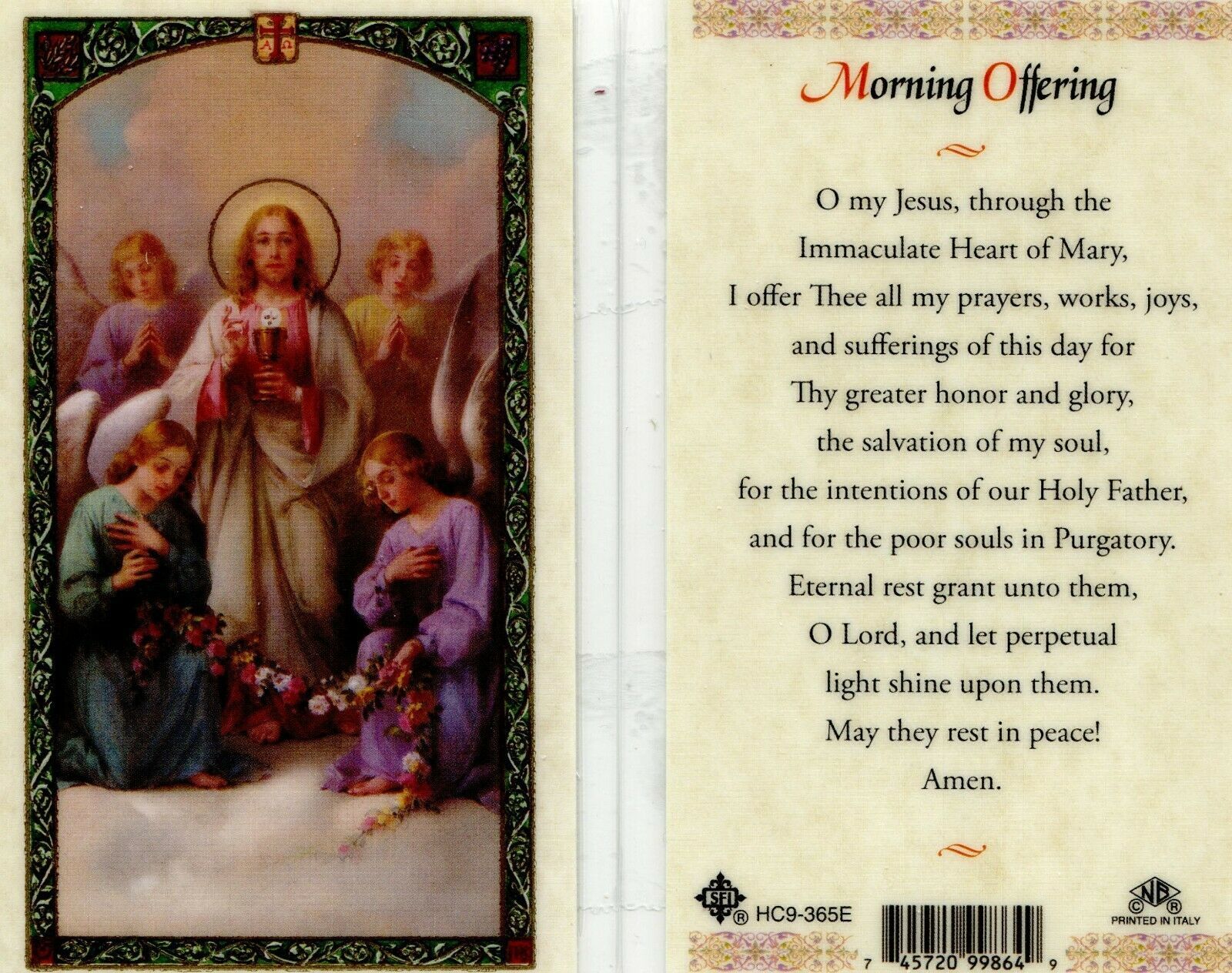
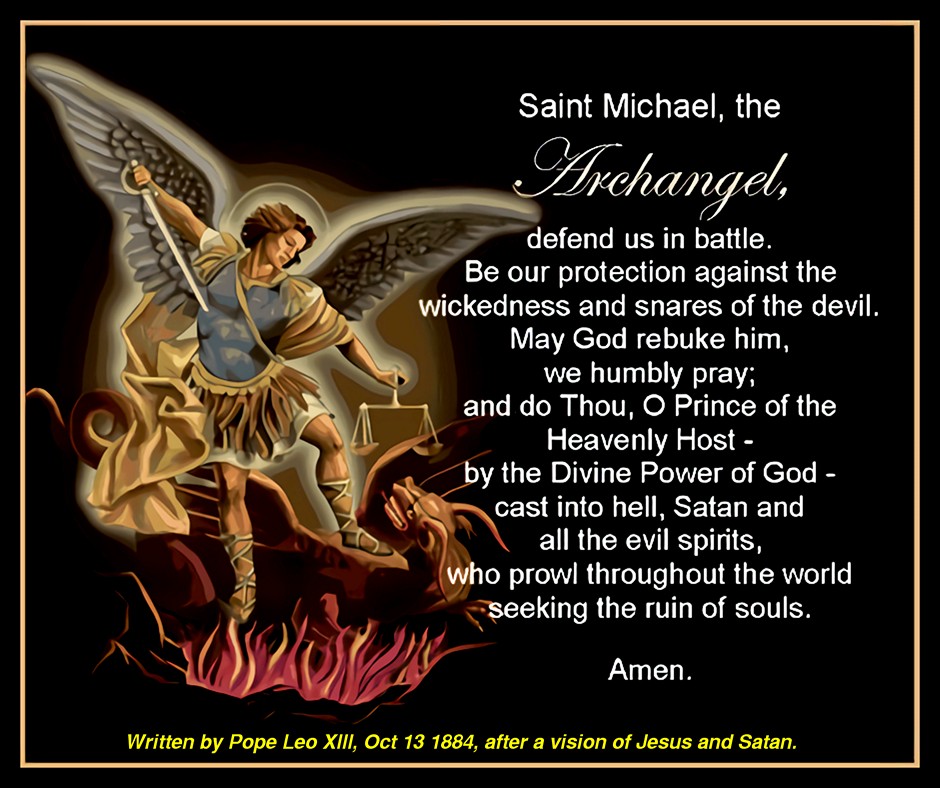
The Month of April is Dedicated to Devotion to the Most Holy Eucharist
“Now as they were eating, Jesus took bread, and blessed, and broke it, and gave it to the disciples and said, “Take, eat; this is my body.” And he took a cup, and when he had given thanks he gave it to them, saying, “Drink of it, all of you; for this is my blood of the covenant, which is poured out for many for the forgiveness of sins.” (Matthew 26:26-28)

Pope Leo XIV’s prayer intention for the month of April, 2026:
For priests in crisis
Let us pray for priests going through moments of crisis in their vocation, that they may find the accompaniment they need and that communities may support them with understanding and prayer.

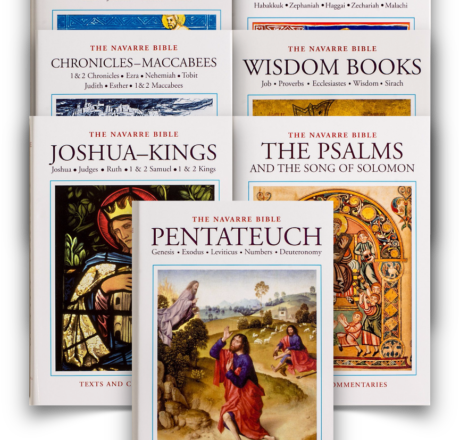
Today’s First Reading
From: Acts 4:23-31
The Church's Thanksgiving Prayer
------------------------------------------
[23] When they (Peter and John) were released they went to their friends and reported what the chief priests and the elders had said to them. [24] And when they heard it, they lifted their voices together to God and said, "Sovereign Lord, who didst make the Heaven and the earth and the sea and everything in them, [25] who by the mouth of our father David, Thy servant, didst say by the Holy Spirit, 'Why did the Gentiles rage, and the peoples imagine vain things? [26] The kings of the earth set themselves in array, and the rulers were gathered together, against the Lord and against His Anointed' [27] for truly in this city there were gathered together against Thy Holy Servant Jesus, whom Thou didst anoint, both Herod and Pontius Pilate, with the Gentiles, and the peoples of Israel, [28] to do whatever Thy hand and Thy plan had predestined to take place. [29] And now, Lord, look upon their threats, and grant to Thy servants to speak Thy word with all boldness, [30] while Thou stretchest out Thy hand to heal, and signs and wonders are performed through the name of Thy Holy Servant Jesus." [31] And when they had prayed, the place in which they were gathered together was shaken; and they were all filled with the Holy Spirit and spoke the word of God with boldness.
************************************************************************
Commentary:
24-30. This prayer of the Apostles and the community provides Christians with a model of reliance on God's help. They ask God to give them the strength they need to continue to proclaim the Word boldly and not be intimidated by persecution, and they also entreat Him to accredit their preaching by enabling them to work signs and wonders.
The prayer includes some prophetic verses of Psalm 2 which find their fulfillment in Jesus Christ. The psalm begins by referring to earthly rulers plotting against God and His Anointed. Jesus Himself experienced this opposition, as the Apostles do now and as the Church does throughout history. When we hear the clamor of the forces of evil, still striving to "burst their bonds asunder, and cast their cords from us" (verse 3), we should put our trust in the Lord, who "holds them in derision. [...] He will speak to them in His wrath, and terrify them in His fury" (verses 4-5); in this way we make it possible for God's message to be heard by everyone: "Now, therefore, O kings, be wise; be warned, O rulers of the earth. Serve the Lord with fear, with trembling kiss His feet. [...] Blessed are all who take refuge in Him" (verses 10-12).
Meditation on this psalm has comforted Christians in all ages, filling them with confidence in the Lord's help: "Ask of Me, and I will make the nations your heritage, and the ends of the earth your possession" (verse 8).
31. The Holy Spirit chose to demonstrate His presence visibly in order to encourage the nascent Church. The shaking that happens here was, St. John Chrysostom comments, "a sign of approval. It is an action of God to instill a holy ear in the souls of the Apostles, to strengthen them against the threats of senators and priests, and to inspire them with boldness to preach the Gospel. The Church was just beginning and it was necessary to support preaching with wonders, in order the better to win men over. It was needed at this time but not later on. [...] When the earth is shaken, this sometimes is a sign of Heaven's wrath, sometimes of favor and providence. At the death of our Savior the earth shook in protest against the death of its Author.... But the shaking where the Apostles were gathered together was a sign of God's goodness, for the result was that they were filled with the Holy Spirit" ("Hom. on Acts", 11).
From: John 3:1-8
The Visit of Nicodemus
----------------------------
[1] Now there was a man of the Pharisees, named Nicodemus, a ruler of the Jews. [2] This man came to Jesus by night and said to Him, "Rabbi, we know that You are a teacher come from God; for no one can do these things that You do, unless God is with Him." [3] Jesus answered him, "Truly, truly, I say to you, unless one is born anew, he cannot see the Kingdom of God." [4] Nicodemus said to Him, "How can a man be born when he is old? Can he enter a second time into his mother's womb and be born?" [5] Jesus answered, "Truly, truly, I say to you, unless one is born of water and the Spirit, he cannot enter the Kingdom of God. [6] That which is born of the flesh is flesh, and that which is born of the Spirit is spirit. [7] Do not marvel that I said to you, `You must be born anew.' [8] The wind blows where it wills, and you hear the sound of it, but you do not know whence it comes and whether it goes; so it is with every one who is born of the Spirit."
***********************************************************************
Commentary:
1-21. Nicodemus was a member of the Sanhedrin of Jerusalem (cf. John 7:50). He must also have been an educated man, probably a scribe or teacher of the Law: Jesus addresses him as a "teacher of Israel". He would have been what is called an intellectual--a person who reasons things out, for whom the search for truth is a basic part of life. He was, naturally, much influenced by the Jewish intellectual climate of his time. However, if divine things are to be understood, reason is not enough: a person must be humble. The first thing Christ is going to do in His conversation with Nicodemus is to highlight the need for this virtue; that is why He does not immediately answer his questions: instead, He shows him how far he is from true wisdom: "Are you a teacher of Israel, and yet you do not understand this?" Nicodemus needs to recognize that, despite all his studies, he is still ignorant of the things of God. As St. Thomas Aquinas comments: "The Lord does not reprove him to offend him but rather because Nicodemus still relies on his own learning; therefore He desired, by having him experience this humiliation, to make him a fit dwelling-place for the Holy Spirit" ("Commentary on St. John, in loc."). From the way the conversation develops Nicodemus obviously takes this step of humility and sits before Jesus as disciple before master. Then our Lord reveals to him the mysteries of faith. From this moment onwards Nicodemus will be much wiser than all those colleagues of his who have not taken this step.
Human knowledge, on whatever scale, is something minute compared with the truths--simple to state but extremely profound--of the articles of faith (cf. Ephesians 3:15-19; 1 Corinthians 2:9). Divine truths need to be received with the simplicity of a child (without which we cannot enter the Kingdom of Heaven); then, they can be meditated on right through one's life and studied with a sense of awe, aware that divine things are always far above our heads.
1-2. Throughout this intimate dialogue, Nicodemus behaves with great refinement: he addresses Jesus with respect and calls Him Rabbi, Master. He had probably been impressed by Christ's miracles and preaching and wanted to know more. The way he reacts to our Lord's teaching is not yet very supernatural, but he is noble and upright. His visiting Jesus by night, for fear of the Jews (cf. John 19:39) is very understandable, given his position as a member of the Sanhedrin: but he takes the risk and goes to see Jesus.
When the Pharisees tried to arrest Jesus (John 7:32), failing to do so because he had such support among the people, Nicodemus energetically opposed the injustice of condemning a man without giving him a hearing; he also showed no fear, at the most difficult time of all, by honoring the dead body of the Lord (John 19:39).
3-8. Nicodemus' first question shows that he still has doubts about Jesus (is He a prophet, is He the Messiah?); and our Lord replies to him in a completely unexpected way: Nicodemus presumed He would say something about His mission and, instead, He reveals to him an astonishing truth: one must be born again, in a spiritual birth, by water and the Spirit; a whole new world opens up before Nicodemus.
Our Lord's words also paint a limitless horizon for the spiritual advancement of any Christian who willingly lets himself or herself be led by divine grace and the gifts of the Holy Spirit, which are infused at Baptism and enhanced by the Sacraments. As well as opening his soul to God, the Christian also needs to keep at bay his selfish appetites and the inclinations of pride, if he is to understand what God is teaching him in his soul: "therefore must the soul be stripped of all things created, and of its own actions and abilities--namely, of its understanding, perception and feelings--so that, when all that is unlike God and unconformed to Him is cast out, the soul may receive the likeness of God; and nothing will then remain in it that is not the will of God and it will thus be transformed in God. Wherefore, although it is true that, as we have said, God is ever in the soul, giving it, and through His presence conserving within it, its natural being, yet He does not always communicate supernatural being to it. For this is communicated only by love and grace, which not all souls possess; and all those that possess it have it not in the same degree; for some have attained more degrees of love and others fewer. Wherefore God communicates Himself most to that soul that has progressed farthest in love; namely, that has its will in closest conformity with the will of God. And the soul that has attained complete conformity and likeness of will is totally united and transformed in God supernaturally" (St. John of the Cross, "Ascent of Mount Carmel", Book II, Chapter 5).
Jesus speaks very forcefully about man's new condition: it is no longer a question of being born of the flesh, of the line of Abraham (cf. John 1:13), but of being reborn through the action of the Holy Spirit, by means of water. This is our Lord's first reference to Christian Baptism, confirming John the Baptist's prophecy (cf. Matthew 3:11; John 1:33) that He had come to institute a baptism with the Holy Spirit.
"Nicodemus had not yet savored this Spirit and this life. [...] He knew but one birth, which is from Adam and Eve; that which is from God and the Church, he did not know; he knew only the paternity which engenders to death; he did not yet know the paternity which engenders to life. [...] Whereas there are two births, he knew only of one. One is of earth, the other is of Heaven; one is of the flesh, the other of the Spirit; one of mortality, the other of eternity; one of male and female, the other of God and the Church. But the two are each unique; neither one nor the other can be repeated" (St. Augustine, "In Ioann. Evang"., 11, 6).
Our Lord speaks of the wonderful effects the Holy Spirit produces in the soul of the baptized. Just as with the wind--when it blows we realize its presence, we hear it whistling, but we do not know where it came from, or where it will end up--so with the Holy Spirit, the Divine "Breath" ("pneuma") given us in Baptism: we do not know how He comes to penetrate our heart but He makes His presence felt by the change in the conduct of whoever receives Him.
St. Hermenegild, Martyr–R (III) April 13
Son of the King of the Visigoths in Spain, he was put to death by the Arians in 586 out of hatred for his faith in the consubstantiality of the Word of God with the Eternal Father.
*-*-*-*-*-*-*-*-*-*
Leovigild, King of the Visigoths, had two sons, HERMENEGILD and Recared, who reigned conjointly with him. All three were Arians, but Hermenegild married a zealous Catholic, the daughter of Sigebert, King of France, and by her holy example was converted to the faith. His father, on hearing the news, denounced him as a traitor, and marched to seize his person. Hermenegild tried to rally the Catholics of Spain in his defense, but they were too weak to make any stand, and, after a two-year fruitless struggle, he surrendered on the assurance of a free pardon. When safely in the royal camp, the king had him loaded with fetters and cast into a foul dungeon at Seville. Tortures and bribes were in turn employed to shake his faith, but Hermenegild wrote to his father that he held the crown as nothing, and preferred to lose scepter and life rather than betray the truth of God. At length, on Easter night, an Arian bishop entered his cell, and promised him his father’s pardon if he would but receive Communion at his hands. Hermenegild indignantly rejected the offer, and knelt with joy for his death-stroke. The same night a light streaming from his cell told the Christians who were watching near that the martyr had won his crown, and was keeping his Easter with the Saints in glory.
Leovigild on his death-bed, though still an Arian, bade Recared seek out St. Leander, whom he had himself cruelly persecuted, and, following Hermenegild’s example, be received by him into the Church. Recared did so, and on his father’s death labored so earnestly for the extirpation of Arianism that he brought over the whole nation of the Visigoths to the Church. “Nor is it to be wondered,” says St. Gregory, “that he came thus to be a preacher of the true faith, seeing that he was brother of a martyr, whose merits did help him to bring so many into the lap of God’s Church.”
Reflection—St. Hermenegild teaches us that constancy and sacrifice are the best arguments for the Faith, and the surest way to win souls to God.
Disclaimer: Opinions posted on Free Republic are those of the individual posters and do not necessarily represent the opinion of Free Republic or its management. All materials posted herein are protected by copyright law and the exemption for fair use of copyrighted works.


