
Posted on 04/09/2026 9:59:40 PM PDT by fidelis
Simon Peter said to them, “I am going fishing.” They said to him, “We also will come with you.” So they went out and got into the boat, but that night they caught nothing. When it was already dawn, Jesus was standing on the shore; but the disciples did not realize that it was Jesus. Jesus said to them, “Children, have you caught anything to eat?” They answered him, “No.” So he said to them, “Cast the net over the right side of the boat and you will find something.” So they cast it, and were not able to pull it in because of the number of fish. John 21:3–6
In three of His resurrection appearances, Jesus did not immediately reveal His true presence to His disciples. He wanted to teach them—and us—important lessons on how we are to encounter Him. In each of these appearances, the same thing happened: Those to whom Jesus appeared did not recognize Him at first. Only after some interaction with Him were their eyes opened to discern that it was the Lord.
The first of these encounters is recorded in John 20:11–18, when Mary Magdalene sat outside Jesus’ empty tomb, weeping at the thought that His body had been stolen. She remained there with profound devotion and love, revealing a model for our prayer... This personal call opens her eyes, reminding us of the importance of a personal relationship with Christ. In imitation of Mary’s deep love and steadfast devotion, we are invited to remain vigilant in prayer, ready to hear Him call us by name.
The second instance is in Luke 24:13-35, when two disciples journeying to Emmaus are joined by Jesus, though “their eyes were kept from recognizing Him.” As they walked, Jesus explained everything in the Scriptures that pointed to His messianic mission...but He vanished from their sight. Jesus’ disappearance at that moment reveals a profound truth: He remains truly present in the Eucharist, even though we do not physically see Him.
Finally, in today’s Gospel passage from John 21:1–14, the disciples recognize Jesus only after the miraculous catch of fish. Having fished all night without success, they obey when Jesus tells them from the shore to “Cast the net over the right side of the boat,” resulting in an overwhelming catch. This reminds us of the moment when Jesus first called Simon Peter and Andrew, saying, “Come after me, and I will make you fishers of men” (Matthew 4:19). Here, Jesus reveals to the Apostles—and to us—that we will encounter Him in our apostolic works when done at His command.
When we align our actions with His will, He blesses them, yielding an abundance of spiritual fruit. Thus, our apostolic efforts are another way in which the Risen Lord is present with us, working through us to draw souls to Himself.
Reflect today on the longing of Jesus’ disciples to encounter His resurrected presence. Ponder the lessons He imparted by initially concealing His presence, then revealing Himself. Resolve to seek the living and resurrected Lord in your life. Through love and devotion, meet Him in prayer, where He calls you by name. In the Word of God and the Eucharist, recognize Him in your midst. And in fidelity to His guiding hand in your apostolic work, see His superabundant fruitfulness as a sign of His presence, drawing many souls to Himself through you. Jesus is not dead; He is alive and desires to continue appearing to us in hidden and mysterious ways. Anticipate His ongoing resurrection appearances in your life, knowing that He is always with you when you remain faithful, in imitation of these holy disciples.
My ever-present Lord, You are always attentive to us, Your children, and never abandon us. You call each of us by name, come to us through Your Word and Sacraments, and direct our apostolic works. Help me to discern Your presence in my life, discovering You every day in the ways You desire to be present to me. Jesus, I trust in You.
Please keep in mind that this is a Catholic Caucus/Devotional thread for the purpose of prayerful reflection on the Sacred Scriptures and is closed to debate of any kind. Per FR policy on Religion Caucus threads, off-topic, argumentative, and abusive comments are not allowed and will be submitted to the Mods for deletion. Thanks, and God bless you.
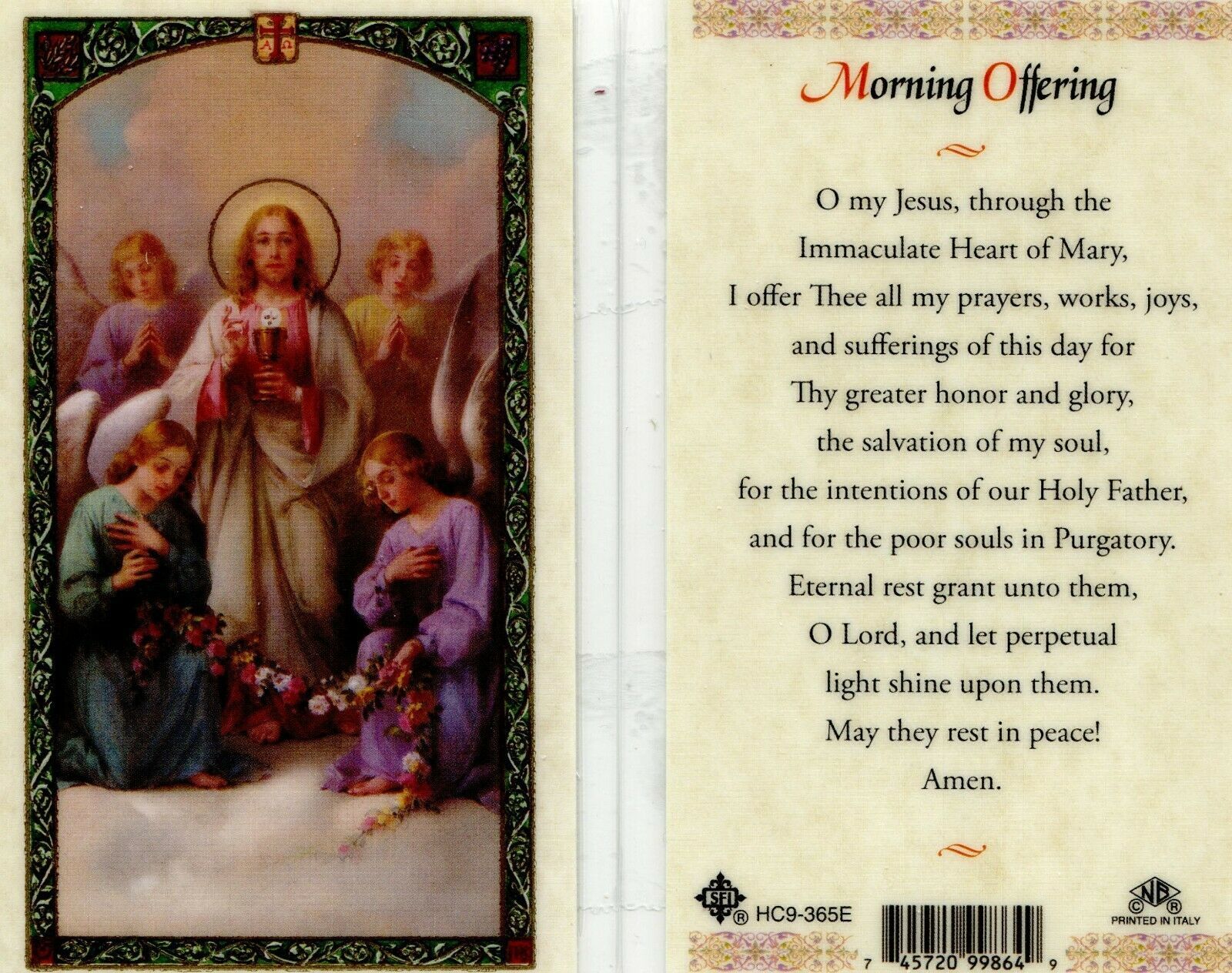
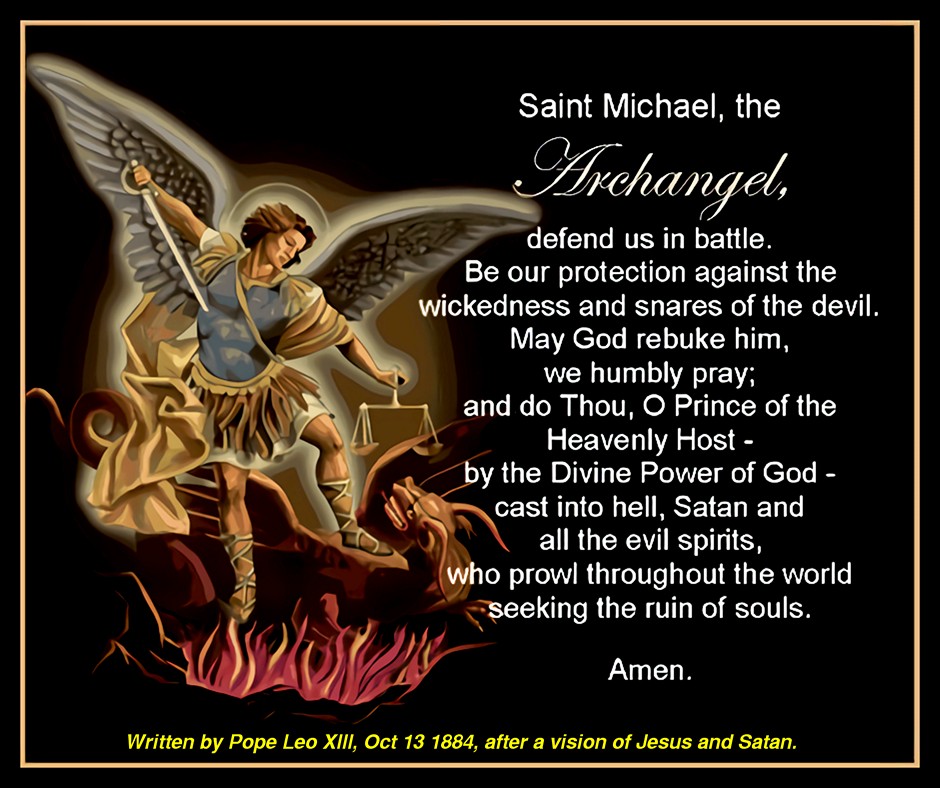
The Month of April is Dedicated to Devotion to the Most Holy Eucharist
“Now as they were eating, Jesus took bread, and blessed, and broke it, and gave it to the disciples and said, “Take, eat; this is my body.” And he took a cup, and when he had given thanks he gave it to them, saying, “Drink of it, all of you; for this is my blood of the covenant, which is poured out for many for the forgiveness of sins.” (Matthew 26:26-28)

Pope Leo XIV’s prayer intention for the month of April, 2026:
For priests in crisis
Let us pray for priests going through moments of crisis in their vocation, that they may find the accompaniment they need and that communities may support them with understanding and prayer.

Today’s First Reading
From: Acts 4:1-12
Peter and John Are Arrested
---------------------------
[1] And as they were speaking to the people, the priests and the captain of the temple and the Sadducees came upon them, [2] annoyed because they were teaching the people and proclaiming in Jesus the resurrection from the dead. [3] And they arrested them and put them in custody until the morrow, for it was already evening. [4] But as many of those who heard the word believed; and the number of men came to about five thousand.
Address to the Sanhedrin
------------------------
[5] On the morrow their rulers and elders and scribes were gathered together in Jerusalem, [6] with Annas the high priest and Caiaphas and John and Alexander, and all who were of the high-priestly family. [7] And when they had set them in the midst, they inquired, "But what power or by what name did you do this?" [8] Then Peter, filled with the Holy Spirit, said to them, "Rulers of the people and elders, [9] if we are being examined today concerning a good deed done to a cripple, by what means this man has been healed, [10] be it known to you all, and to all the people of Israel, that by the name of Jesus Christ of Nazareth, whom you crucified, whom God raised from the dead, by Him this man is standing before you well. [11] This is the stone which was rejected by you builders, but which has become the head of the corner. [12] And there is salvation in no one else, for there is no other name under Heaven given among men by which we must be saved."
***********************************************************************
Commentary:
1-4. On the Sadducee sect see the note on Matthew 3:7.
In this chapter St. Luke reports on the first conflict between the Apostles and the Jerusalem authorities. Despite the incident at the end of Peter's address, his words are still an instrument of grace, stirring his listeners to believe and moving them to love.
A large crowd gathered round Peter after the curing of the cripple, which brings on the scene the "captain of the temple", a priest second in line to the high priest whose function it was to maintain order. The priests St. Luke refers to here would have been those who were on for this particular week and were responsible for the day-to-day affairs of the temple.
5-7. These three groups--rulers, elders, scribes--made up the Sanhedrin, the same tribunal as had recently judged and condemned our Lord (cf. note on Matthew 2:4). Jesus' words are already being fulfilled: "A servant is not greater than his master. If they persecuted Me, they will persecute you" (John 15:20).
Annas was not in fact the high priest at this time, but the title was applied to him along with Caiaphas because of the authority he still wielded: he had been high priest and five of his sons succeeded him in the office, as well as Caiaphas, his son-in-law (cf. Josephus, "Jewish Antiquities", XX, 198f).
8-12. The Apostles' confidence and joy is quite remarkable, as is their outspokenness in asserting that "we cannot but speak of what we have seen and heard" (verse 20). "This is the glorious freedom of the children of God. Christians who let themselves be browbeaten or become inhibited or envious in the face of the licentious behavior of those who do not accept the Word of God, show that they have a very poor idea of the faith. If we truly fulfill the law of Christ--that is, if we make the effort to do so, for we will not always fully succeed--we will find ourselves endowed with a wonderful gallantry of spirit" (St. J. Escriva, "Friends of God", 38).
Christians have a duty to confess their faith where silence would mean its implicit denial, disrespect for religion, an offense against God or scandal to their neighbor. Thus Vatican II: "Christians should approach those who are outside wisely, 'in the Holy Spirit, genuine love, truthful speech' (2 Corinthians 6:6-7), and should strive, even to the shedding of their blood, to spread the light of life with all confidence (Acts 4:29) and apostolic courage. The disciple has a grave obligation to Christ, his Master, to grow daily in his knowledge of the truth he has received from Him, to be faithful in announcing it and vigorous in defending it" ("Dignitatis Humanae", 14).
Pope Paul VI asked Catholics to check on any weak points in their faith, including ignorance and human respect, "that is, shame or timidness in professing their faith. We are not speaking of that discretion or reserve which in a pluralist and profane society like ours avoids certain signs of religion when with others. We are referring to weakness, to failure to profess one's own religious ideas for fear of ridicule, criticism or others' reactions [...] and which is a cause--perhaps the main cause--of the abandonment of faith by people who simply conform to whatever new environment they find themselves in" (Pope Paul VI, "General Audience", 19 June 1968).
8. Even in the very early days of Christianity Jesus' prediction is borne out: "Beware of men; for they will deliver you up to councils.... When they deliver you up, do not be anxious how you are to speak or what you are to say; for what you are to say will be given you in that hour, for it is not you who speak, but the Spirit of your Father speaking through you" (Matthew 10:17-20).
10. "Whom God raised from the dead": St. Peter once again bears witness to the Resurrection of Jesus, the central truth of apostolic preaching; he uses here the same words as he did at Pentecost. These are compatible with our holding that Jesus "rose by His own power on the third day" (Pope Paul VI, "Creed of the People of God", 12). The power by which Christ rose was that of His divine person, to which both His soul and His body remained joined even after death separated them. "The divine power and operation of the Father and of the Son is one and the same; hence it follows that Christ rose by the power of the Father and by His own power" (St. Thomas Aquinas, "Summa Theologiae", III, q. 53, a. 4).
"By the word 'Resurrection'," the "St. Pius V Catechism" explains, "we are not merely to understand that Christ was raised from the dead, which happened to many others, but that He rose by His own power and virtue, a singular prerogative peculiar to Him alone. For it is incompatible with nature and was never given to man to raise himself by his own power, from death to life. This was reserved for the almighty power of God. [...] We sometimes, it is true, read in Scripture that He was raised by the Father; but this refers to Him as man, just as those passages on the other hand, which say that He rose by His own power, relate to Him as God" (I, 6, 8).
11. St. Peter applies the words of Psalm 118:22 to Jesus, conscious no doubt that our Lord had referred to Himself as the stone rejected by the builders which had become the cornerstone, the stone which keeps the whole structure together (cf. Matthew 21:42 and par.).
12. Invocation of the name of Jesus is all-powerful because this is our Savior's own name (cf. note on Matthew 1:21). Our Lord Himself told His Apostles this: "If you ask anything of the Father, He will give it to you in My name" (John 16:23), and they, trusting in this promise, work miracles and obtain conversions "in the name of Jesus". Today—as ever--the power of His name will work wonder in the souls of those who call upon Him. Monsignor Escriva gives this advice: "Don't be afraid to call our Lord by His name--Jesus--and to tell Him that you love Him" ("The Way", 303); and the Liturgy of the Hours invites us to pray: "God our Father, You are calling us to prayer, at the same hour as the Apostles went up to the temple. Grant that the prayer we offer with sincere hearts in the name of Jesus may bring salvation to all who call upon that holy name" (Week 1, Monday afternoon).
From: John 21:1-14
The Miraculous Draught of Fish
------------------------------
[1] After this Jesus revealed Himself again to the disciples by the Sea of Tiberias; and He revealed Himself in this way. [2] Simon Peter, Thomas called the Twin, Nathaniel of Cana in Galilee, the sons of Zebedee, and two others of His disciples were together. [3] Simon Peter said to them, "I am going fishing." They said to him, "We will go with you." They went out and got into the boat; but that night they caught nothing.
[4] Just as day was breaking, Jesus stood on the beach; yet the disciples did not know that it was Jesus. [5] Jesus said to them, "Children, have you any fish?" They answered Him, "No." [6] He said to them, "Cast the net on the right side of the boat, and you will find some." So they cast it, and now they were not able to haul it in, for the quantity of fish. [7] That disciple whom Jesus loved said to Peter, "It is the Lord!" When Simon Peter heard that it was the Lord, he put on his clothes, for he was stripped for work, and sprang into the sea. [8] But the other disciples came in the boat, dragging the net full of fish, for they were not far from the land, but about a hundred yards off.
[9] When they got out on land, they saw a charcoal fire there, with fish lying on it, and bread. [10] Jesus said to them, "Bring some fish that you have just caught." [11] So Simon Peter went aboard and hauled the net ashore, full of large fish, a hundred and fifty-three of them; and although there were so many, the net was not torn. [12] Jesus said to them, "Come and have breakfast." Now none of the disciples dared ask Him, "Who are you?" They knew it was the Lord. [13] Jesus came and took the bread and gave it to them, and so with the fish. [14] This was now the third time that Jesus was revealed to the disciples after He was raised from the dead.
***********************************************************************
Commentary:
1-3. There are some very significant things in this account: we find the disciples "by the Sea of Tiberias", which means they have done what the risen Christ had told them to do (cf. Matthew 28:7); they are together, which shows that there is a close fraternity among them; Peter takes the initiative, which in a way shows his authority; and they have gone back to their old jobs as fishermen, probably waiting for our Lord to give them new instructions.
This episode is reminiscent of the first miraculous draught of fish (cf. Luke 5:1-11), where our Lord promised Peter He would make him a fisher of men; now He is going to confirm his mission as visible head of the Church.
4-8. The risen Jesus goes in search of His disciples, to encourage them and tell them more about the great mission He has entrusted to them. This account describes a very moving scene, our Lord together with His own: "He passes by, close to His Apostles, close to those souls who have given themselves to Him, and they do not realize He is there. How often Christ is not only near us, but in us; yet we still live in such a human way!... They, the disciples, recall what they have heard so often from their Master's lips: fisher of men, apostles. And they realize that all things are possible, because it is He who is directing their fishing.
"Whereupon `the disciple whom Jesus loved said to Peter, It is the Lord!' Love, love is farsighted. Love is the first to appreciate kindness. The adolescent Apostle, who felt a deep and firm affection for Jesus, because he loved Christ with all the purity and tenderness of a heart that had never been corrupted, exclaimed: `It is the Lord!'"
"`When Simon Peter heard that it was the Lord, he put on his clothes and sprang into the sea.' Peter personifies faith. Full of marvelous daring, he leaps into the sea. With a love like John's and a faith like Peter's, what is there that can stop us?" (St J. Escriva, "Friends of God", 265-266).
9-14. We can sense here the deep impression this appearance of the risen Jesus must have made on the Apostles, and how sweet a memory St. John kept of it. After His resurrection Jesus showed the same tenderness as characterized His public ministry. He makes use of natural things--the fire, the fish, etc.--to show that He really is there, and He maintains the familiar tone typical of when He lived with the disciples.
The Fathers and Doctors of the Church have often dwelt on the mystical meaning of this episode: the boat is the Church, whose unity is symbolized by the net which is not torn; the sea is the world, Peter in the boat stands for supreme authority of the Church, and the number of fish signifies the number of the elect (cf. St. Thomas Aquinas, "Commentary on St. John, in loc.").
Disclaimer: Opinions posted on Free Republic are those of the individual posters and do not necessarily represent the opinion of Free Republic or its management. All materials posted herein are protected by copyright law and the exemption for fair use of copyrighted works.


