
Posted on 04/08/2026 11:12:32 PM PDT by fidelis
“These are my words that I spoke to you while I was still with you, that everything written about me in the law of Moses and in the prophets and psalms must be fulfilled.” Then he opened their minds to understand the Scriptures. Luke 24:44–45
Have you allowed God to open your mind? When you read through the Scriptures, are you able to comprehend the hidden yet glorious mysteries contained within them? The Scriptures are not only a historical book we interpret through the use of our intelligence alone. There is a layer of meaning within them that no human mind can penetrate without the assistance of grace.
Today’s resurrection appearance in Luke’s Gospel took place later in the day on Easter Sunday. That morning, our resurrected Lord appeared in physical form to some of the holy women...then to Simon Peter. In the afternoon, Jesus appeared to two of the disciples as they journeyed to the town of Emmaus, several miles from Jerusalem. Those disciples did not recognize Jesus until He opened their minds and revealed Himself in the “breaking of the bread,” foreshadowing the Eucharist. After that appearance, those two disciples returned to Jerusalem to tell the eleven and the other disciples about their encounter. It was during that conversation, behind closed doors, that Jesus appeared to all of them Easter evening, except for Thomas who was absent.
Jesus first said to them, “Peace be with you.” This was no ordinary greeting. In Hebrew, Jesus said, “Shalom.” The shalom Jesus spoke of was an imparting of His grace that brought about the tranquility that those who are united to God experience... Through these gifts, especially the Eucharist and Reconciliation, we receive the transforming power of the Paschal Mystery: His life, death, and Resurrection, bestowed through the Holy Spirit.
Once the grace of peace was bestowed, Jesus instructed them to receive it without fear. As this peace rested upon them, Jesus was able to give them another gift: “Then he opened their minds to understand the Scriptures.”
Throughout Jesus’ public ministry, He spoke about the necessity of His Passion, Death, and Resurrection. He pointed to the prophecies and promises about Him that were contained within the Law of Moses, the Prophets, and the Psalms... During this resurrection appearance, however, they understood, as Jesus granted them the supernatural gift of Understanding—a gift of the Holy Spirit, who illuminates divine truths and helps us to perceive God’s mysteries in a way we could never achieve on our own.
Our Lord wants to open your mind, just as He did for His disciples that Easter day. Too often, we go through life in a state of confusion. We easily misinterpret our joys and struggles, leaving us on our own to make sense of our lives. Jesus wants to remedy that... He invites us to receive His peace, His shalom, that brings order...tranquility to our lives and unites us in communion with God and others. From there, the Holy Spirit opens our minds to see everything through the lens of divine truth.
Reflect today on how God might be calling you to live in this peace and understanding, particularly by fostering a deeper relationship with Him in the sacraments, in prayer, and in daily reflection on the Scriptures. By receiving the grace of shalom and an understanding of divine truths, we are strengthened for our mission to witness to the Resurrection and to share Christ’s love with a world in need of His peace.
Lord of all Understanding, there are many things in life that leave me confused. I often judge my hopes, joys, sorrows, and challenges by a worldly perspective that is devoid of Your Truth. Please grant me Your perfect peace so that I can rest in You. As Your peace, Your shalom, brings tranquility to my life, open my mind to know You and to understand everything from Your perspective, so that through me, You can bring Your peace and truth to the world. Jesus, I trust in You.
Please keep in mind that this is a Catholic Caucus/Devotional thread for the purpose of prayerful reflection on the Sacred Scriptures and is closed to debate of any kind. Per FR policy on Religion Caucus threads, off-topic, argumentative, and abusive comments are not allowed and will be submitted to the Mods for deletion. Thanks, and God bless you.
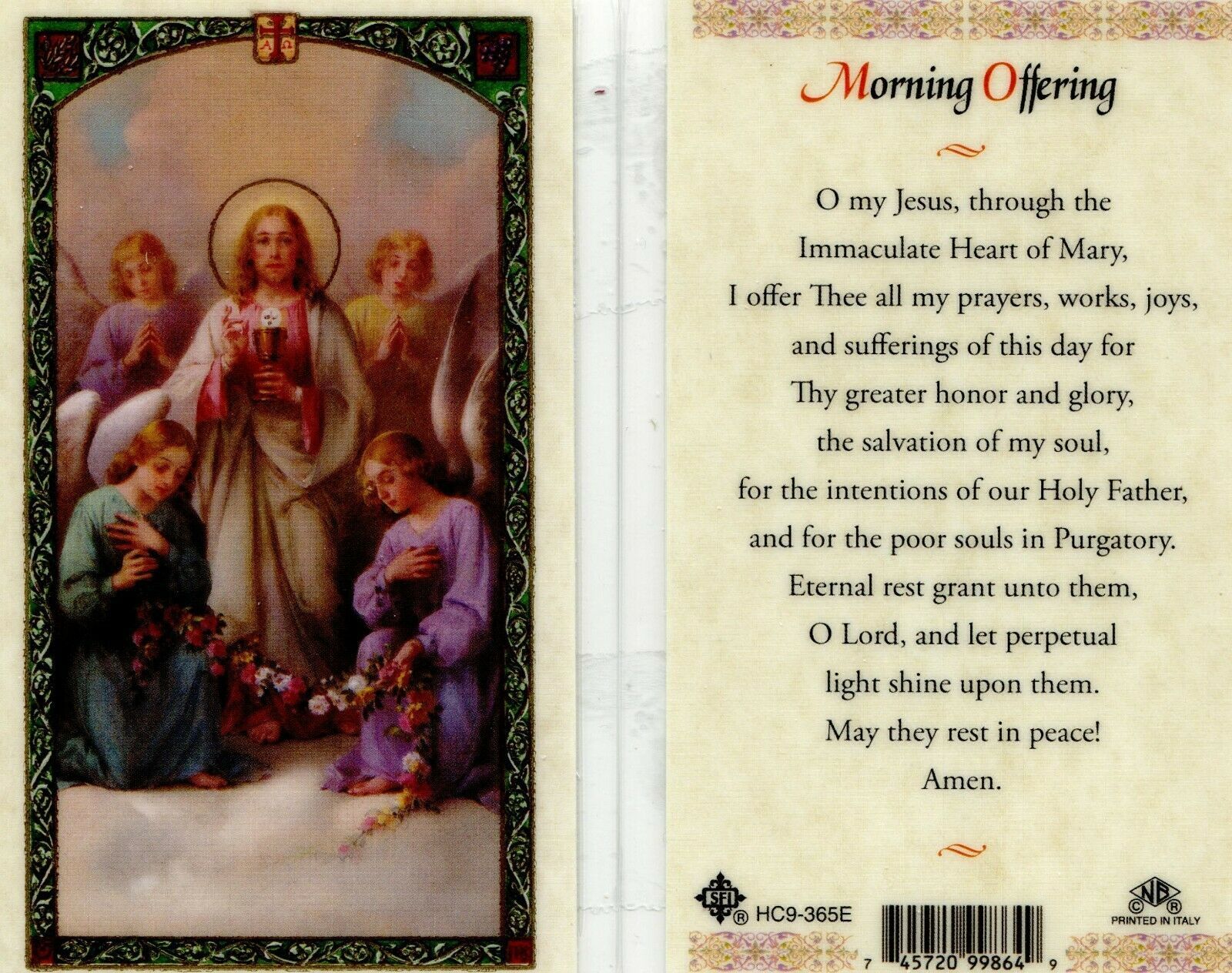
The Month of April is Dedicated to Devotion to the Most Holy Eucharist
“Now as they were eating, Jesus took bread, and blessed, and broke it, and gave it to the disciples and said, “Take, eat; this is my body.” And he took a cup, and when he had given thanks he gave it to them, saying, “Drink of it, all of you; for this is my blood of the covenant, which is poured out for many for the forgiveness of sins.” (Matthew 26:26-28)

Pope Leo XIV’s prayer intention for the month of April, 2026:
For priests in crisis
Let us pray for priests going through moments of crisis in their vocation, that they may find the accompaniment they need and that communities may support them with understanding and prayer.

Today’s First Reading
From: Acts 3:11-26
Peter's Address in the Temple
--------------------------------------------
[11] While he (the man lame from birth) clung to Peter and John, all the people ran together to them in the portico called Solomon's, astounded. [12] And when Peter saw it he addressed the people, "Men of Israel, why do you wonder at this, or why do you stare at us, as though by our own power or piety we had made him walk? [13] The God of Abraham and of Isaac and of Jacob, the God of our fathers, glorified His servant Jesus, whom you delivered up and denied in the presence of Pilate, when he had decided to release Him. [14] But you denied the Holy and Righteous One, and asked for a murderer to be granted to you, [15] and killed the Author of Life, whom God raised from the dead. To this we are witnesses. [16] And His name, by faith in His name, has made this man strong whom you see and know; and the faith which is through Jesus has given the man this perfect health in the presence of you all.
[17] "And now, brethren, I know that you acted in ignorance as did also your rulers. [18] But what God foretold by the mouth of all the prophets, that His Christ should suffer, He thus fulfilled. [19] Repent therefore, and turn again, that your sins may be blotted out, that times of refreshing may come from the presence of the Lord, [20] and that He may send the Christ appointed for you, Jesus, [21] whom Heaven must receive until the time for establishing all that God spoke by the mouth of His holy prophets from of old. [22] Moses said, 'The Lord God will raise up for you a prophet from your brethren as He raised me up. You shall listen to Him in whatever He tells you. [23] And it shall be that every soul that does not listen to that prophet shall be destroyed from the people.' [24] And all the prophets who have spoken, from Samuel and those who came afterwards, also proclaimed these days. [25] You are the sons of the prophets and of the covenant which God gave to your fathers, saying to Abraham, 'And in your posterity shall all the families of the earth be blessed.' [26] God having raised up His servant, sent Him to you first, to bless you in turning every one of you from
your wickedness."
*************************************************************************
Commentary:
11-26. This second address by St. Peter contains two parts: in the first (verses 12-16) the Apostle explains that the miracle has been worked in the name of Jesus and through faith in His name; in the second (verses 17-26) he moves his listeners to repentance--people who were responsible in some degree for Jesus' death.
This discourse has the same purpose as that of Pentecost--to show the power of God made manifest in Jesus Christ and to make the Jews see the seriousness of their crime and have them repent. In both discourses there is reference to the Second Coming of the Lord and we can clearly see the special importance of testifying to the Resurrection of Jesus; the Apostolic College is presented as a witness to that unique event.
13. "Servant": the original Greek word ("pais") is the equivalent of the Latin "puer" (slave, servant) and "filius" (son). By using this word St. Peter must have in mind Isaiah's prophecy about the Servant of Yahweh: "Behold, My servant shall prosper, He shall be exalted and lifted up, and shall be very high. As many were astonished at Him -- His appearance was so marred, beyond human semblance, and His form beyond that of the sons of men -- so shall He startle many nations" (52:13-15).
Peter identifies Jesus with the Servant of Yahweh, who, because He was a man of suffering and sorrow, the Jews did not identify with the future Messiah. That Messiah, Jesus Christ, combines in His person suffering and victory.
14. St. Peter, referring to Jesus, uses terms which Jews can readily understand in a messianic sense. The expression "the Holy One of God" was already used of Jesus as referring to the Messiah in Mark 1:24 and Luke 4:34. It is reminiscent of Old Testament language.
The "Righteous One" also refers to the Messiah, whom the prophets described as a model and achiever of righteousness (cf. Acts 7:52). "Holy", "righteous" and "just" all have similar meaning.
15. When St. Peter reminds his listeners about their choice of a murderer (Barabbas) in place of Jesus, the Author of Life, we might usefully consider that he was referring not only to physical life, but also to spiritual life, the life of grace. Every time a person sins -- sin means the death of the soul -- this same choice is being made again. "It was He who created man in the beginning, and He left him in the power of his own inclination. If you will, you can keep the commandments, and to act faithfully is a matter of your own choice. He has placed before you fire and water: stretch out your hand for whichever you wish. Before a man are life and death, and which he chooses will be given to him" (Sirach 15:14-18).
16. The original text, structured in a very Jewish way, is difficult to understand. One reason for this is the use of the word "name" instead of simply identifying who the person is. In this passage "name" means the same as "Jesus". Thus the verse can be interpreted in this way: through faith in Jesus, the man lame from birth, whom they know and have seen, has been cured; it is Jesus Himself who has worked this complete and instantaneous cure.
17-18. The Jewish people acted in ignorance, St. Peter says. Indeed, when He was on the cross Jesus had prayed, "Father, forgive them, for they know not what they do" (Luke 23:34). The people did not know that Jesus was the Christ, the Son of God. They let themselves be influenced by their priests. These, who were familiar with the Scriptures, should have recognized Him.
God's pardon is offered to one and all. St. Peter "tells them that Christ's death was a consequence of God's will and decree. [...] You can see how incomprehensible and profound God's design is. It was not just one but all the prophets who foretold this mystery. Yet although the Jews had been, without knowing it, he cause of Jesus' death, that death had been determined by the wisdom and will of God, who used the malice of the Jews to fulfill His designs. The Apostle does not say, "Although the prophets foretold this death and you acted out of ignorance, do not think you are entirely free from blame"; Peter speaks to them gently: 'Repent and turn again.' To what end? 'That your sins may be blotted out'. Not only your murder but all the stains on your souls" (Chrysostom, "Hom. On Acts", 9).
The Second Vatican Council tells us how Christians should treat Jewish people and those who follow other non-Christian religions--with respect and also a prudent zeal to attract them to the faith. "Even though the Jewish authorities and those who followed their lead pressed for the death of Christ (cf. John 19:6), neither all the Jews indiscriminately at that time, nor Jews today, can be charged with the crimes committed during His Passion. It is true that the Church is the new people of God, yet the Jews should not be spoken of as rejected or accursed. [...] Jews for the most part did not accept the Gospel; on the contrary, many opposed the spreading of it (cf. Romans 11:28-29). Even so, the Apostle Paul maintains that the Jews remain very dear to God, for the sake of the Patriarchs, since God does not take back the gifts He bestowed or the choice He made" (Vatican II, "Nostra Aetate", 4). We must not forget this special position of the Jewish people (cf. Romans 9:4-5) and the fact that from them came Jesus as far as His human lineage was concerned, and His Mother, the Blessed Virgin Mary, and the Apostles -- the foundation, the pillars of the Church--and many of the first disciples who proclaimed Christ's Gospel to the world.
Moved by charity, the Church prays to our Lord for the spiritual conversion of the Jewish people; "Christ, God and man, who is the Lord of David and his children, we beseech You that in keeping with the prophecies and promises, Israel should recognize You as Messiah" ("Liturgy of the Hours", Morning Prayer, 31 December).
19. One result of sorrow for sin is a desire to make up for the damage done. On the day of Pentecost many Jews were moved by grace to ask the Apostles what they should do to make atonement. Here also St. Peter encourages them to change their lives and turn to God. This repentance or conversion which Peter preaches is the same message as marked the initial proclamation of the Kingdom (cf. Mark 1:15; 13:1-4). "This means a change of outlook, and it applies to the state of sinful man, who needs to change his ways and turn to God, desirous of breaking away from his sins and repenting and calling on God's mercy" Paul VI, "Homily", 24 February 1971).
On another occasion Pope Paul VI explained that the word "conversion" can be translated normally as "change of heart". "We are called to this change and it will make us see many things. The first has to do with interior analysis of our soul [...]: we should examine ourselves as to what is the main direction our life is taking, what attitude is usually to the fore in the way we think and act, what is our reason of being. [...] Is our rudder fixed so as to bring us exactly to our goal or does its direction need perhaps to be changed? [...] By examining ourselves in this way [...] we will discover sins, or at least weaknesses, which call for penance and profound reform" (Pope Paul VI, "General Audience", 21 March 1973).
20. A reference to the Parousia or Second Coming of Christ as Judge of the living and the dead (cf. note on 1:11).
22-24. St. Peter wants to show that the Old Testament prophecies are fulfilled in Jesus: He is descended from David (2:30), a prophet (cf. Deuteronomy 18:15), who suffered (2:23), who is the cornerstone (4:11) and who rose from the dead and sits in glory at the right hand of the Father (2:25-34).
From: Luke 24:35-48
The Road to Emmaus (Conclusion)
------------------
[35] Then they (the disciples) told what had happened on the road, and how He (Jesus) was known to them in the breaking of the bread.
Jesus Appears to the Eleven and Their Companions
------------------------------------------------
[36] As they were saying this, Jesus Himself stood among them, and said to them, "Peace to you!" [37] But they were startled and frightened, and supposed that they saw a spirit. [38] And He said to them, "Why are you troubled, and why do questionings rise in your hearts? [39] See My hands and My feet, that it is I Myself; handle Me, and see; for a spirit has not flesh and bones as you see that I have." [40] And when He had said this, He showed them His hands and His feet. [41] And while they still disbelieved for joy, and wondered, He said to them, "Have you anything here to eat?" [42] They gave Him a piece of broiled fish, [43] and He took it and ate before them.
Jesus' Last Instructions and Leave-Taking
-----------------------------------------
[44] Then He said to them, "These are My words which I spoke to you, while I was still with you, that everything written about Me in the law of Moses and the prophets and the psalms must be fulfilled." [45] Then He opened their minds to understand the Scriptures, [46] and He said to them, "Thus it is written, that the Christ should suffer and on the third day rise from the dead, [47] and that repentance and forgiveness of sins should be preached in His name to all nations, beginning from Jerusalem. [48] You are witnesses of these things."
***********************************************************************
Commentary:
36-43. This appearance of the risen Jesus is reported by St. Luke and St. John (cf. John 20:19-23). St. John reports the institution of the sacrament of Penance, whereas St. Luke puts the stress on the disciples' difficulty in accepting the miracle of the Resurrection, despite the angels' testimony to the women (cf. Matthew 28:5-7; Mark 16:5-7; Luke 24:4-11) and despite the witness of those who had already seen the risen Lord (cf. Matthew 28:9-10; Mark 16:9-13; Luke 24:13ff; John 20:11-18).
Jesus appears all of a sudden, when the doors are closed (cf. John 20:19), which explains their surprised reaction. St. Ambrose comments that "He penetrated their closed retreat not because His nature was incorporeal, but because He had the quality of a resurrected body" ("Expositio Evangelii Sec. Lucam, in loc".). "Subtility", which is one of the qualities of a glorified body, means that "the body is totally subject to the soul and ever ready to obey its wishes" ("St. Pius V Catechism", I, 12, 13), with the result that it can pass through material obstacles without any difficulty.
This scene showing Christ's condescension to confirm for them the truth of His resurrection has a charm all of its own.
41-43. Although His risen body is incapable of suffering, and therefore has no need of food to nourish it, our Lord confirms His disciples' faith in His resurrection by giving them these two proofs—inviting them to touch Him and eating in their presence. "For myself, I know and believe that our Lord was in the flesh even after the Resurrection. And when He came to Peter and his companions, He said to them, `Here, feel Me and see that I am not a bodiless ghost.' They touched Him and believed, and were convinced that He was flesh and spirit [...]. Moreover, after the Resurrection, He ate and drank with them like a man of flesh and blood, though spiritually one with the Father" (St. Ignatius of Antioch, "Letter to the Christians at Smyrna", III, 1-3).
44-49. St. Matthew stresses that the Old Testament prophecies are fulfilled in Christ, because His immediate audience were Jews, who would accept this as proof that Jesus was indeed the promised Messiah. St. Luke does not usually argue along these lines because He is writing for Gentiles; however, in this epilogue he does report, in a summarized way, Christ's statement to the effect that everything foretold about Him had come true. By doing so He shows the unity of Old and New Testaments and that Jesus is truly the Messiah.
46. From St. Luke's account we have seen how slow the Apostles were to grasp Jesus' prophecy of His death and resurrection (cf. 9:45; 18:34). Now that the prophecy is fulfilled Jesus reminds them that it was necessary for the Christ to suffer and to rise from the dead (cf. Acts 2:1-4).
The Cross is a mystery, in our own life as well as in Christ's: "Jesus suffers to carry out the will of the Father. And you, who also want to carry out the most holy Will of God, following the steps of the Master, can you complain if you meet suffering on your way?" (St J. Escriva, "The Way", 213).
Disclaimer: Opinions posted on Free Republic are those of the individual posters and do not necessarily represent the opinion of Free Republic or its management. All materials posted herein are protected by copyright law and the exemption for fair use of copyrighted works.

