
Posted on 04/07/2026 11:20:36 PM PDT by fidelis
That very day, the first day of the week, two of Jesus’ disciples were going to a village seven miles from Jerusalem called Emmaus, and they were conversing about all the things that had occurred. And it happened that while they were conversing and debating, Jesus himself drew near and walked with them, but their eyes were prevented from recognizing him. Luke 24:13–16
Why were these two disciples prevented from recognizing Jesus when He appeared to them on Easter Sunday? Earlier that morning, as Luke recounts (Luke 24:1–12), Mary Magdalene, Joanna, Mary—the mother of James—and other unnamed disciples found the tomb empty. While they were there, “two men in dazzling garments appeared to them” proclaiming that Jesus had risen. When the women told the rest of the disciples, their story “seemed like nonsense, and they did not believe them.” Surprisingly, for some of the disciples, Jesus’ Resurrection was not immediately a cause for rejoicing—it was a cause for uncertainty and, sadly, disbelief.
Today’s Gospel recounts what happened later that day when two disciples who had heard the women’s testimony took a seven-mile walk from Jerusalem to Emmaus. In John’s Gospel, when Jesus appeared to Mary Magdalene, she didn’t recognize Him until He said her name, “Mary!” (John 20:16). By speaking her name, Jesus not only showed He knew her but also revealed His resurrected presence to her.
When Jesus appeared to the two disciples walking to Emmaus, He revealed Himself in a different way. He walked with them, allowed them to express their confusion and even doubt, and then interpreted the Scriptures to them, beginning with Moses, so they understood how the Scriptures pointed to Him as the Messiah.
So back to our original question: Why were the eyes of these two disciples prevented from recognizing Jesus when He appeared to them? Because faith in the Resurrection doesn’t come from physical sight alone; it comes by hearing and understanding...opens our hearts to believe. Jesus preached the Gospel to these two disciples, and through that preaching, they came to believe.
The story of Emmaus not only recounts an encounter with the risen Christ but also offers a model for our own encounter with Him in the Mass. First, the Word of God is read and preached... With that, their eyes were opened and they recognized him, but he vanished from their sight” (Luke 24:30–31). In this breaking of the bread, they recognized Him. Jesus had given them faith through the Word of God and nourished that faith with the Eucharist.
Why did Jesus vanish at that moment? Because He now dwelled within their souls—a presence sustained each time we receive Him in the Eucharist, His True Presence entering our own hearts and lives. His bodily presence was no longer necessary for them; they now carried Him within. The Word of God instills faith, preparing our hearts, and the Eucharist brings us into intimate union with our Lord, who dwells within us.
Reflect today on how you encounter Jesus in the Mass. At Mass, Jesus appears to us in the exact way we need Him, through Word and Sacrament. When we listen to the Word of God, internalize it, and let it spark deeper faith in our hearts, we have truly met our Lord. When we kneel before the Eucharist and consume Him in Holy Communion, Jesus is even more intimately present to us than if He were physically before us. Each Communion infinitely blesses our souls, for through this gift, Jesus enters and makes our souls His sanctuary.
My Eucharistic Lord, You truly come to us every time we participate in the Mass. Please help me to make my participation in the Mass a reflection of the encounter of these two disciples on the way to Emmaus. Open my mind to the gift of faith as I hear Your Word proclaimed and preached. With faith, may I then receive You openly in Holy Communion, so that my soul will become a sanctuary in which Your resurrected presence may dwell. Jesus, I trust in You and welcome You with all my heart.
Please keep in mind that this is a Catholic Caucus/Devotional thread for the purpose of prayerful reflection on the Sacred Scriptures and is closed to debate of any kind. Per FR policy on Religion Caucus threads, off-topic, argumentative, and abusive comments are not allowed and will be submitted to the Mods for deletion. Thanks, and God bless you.
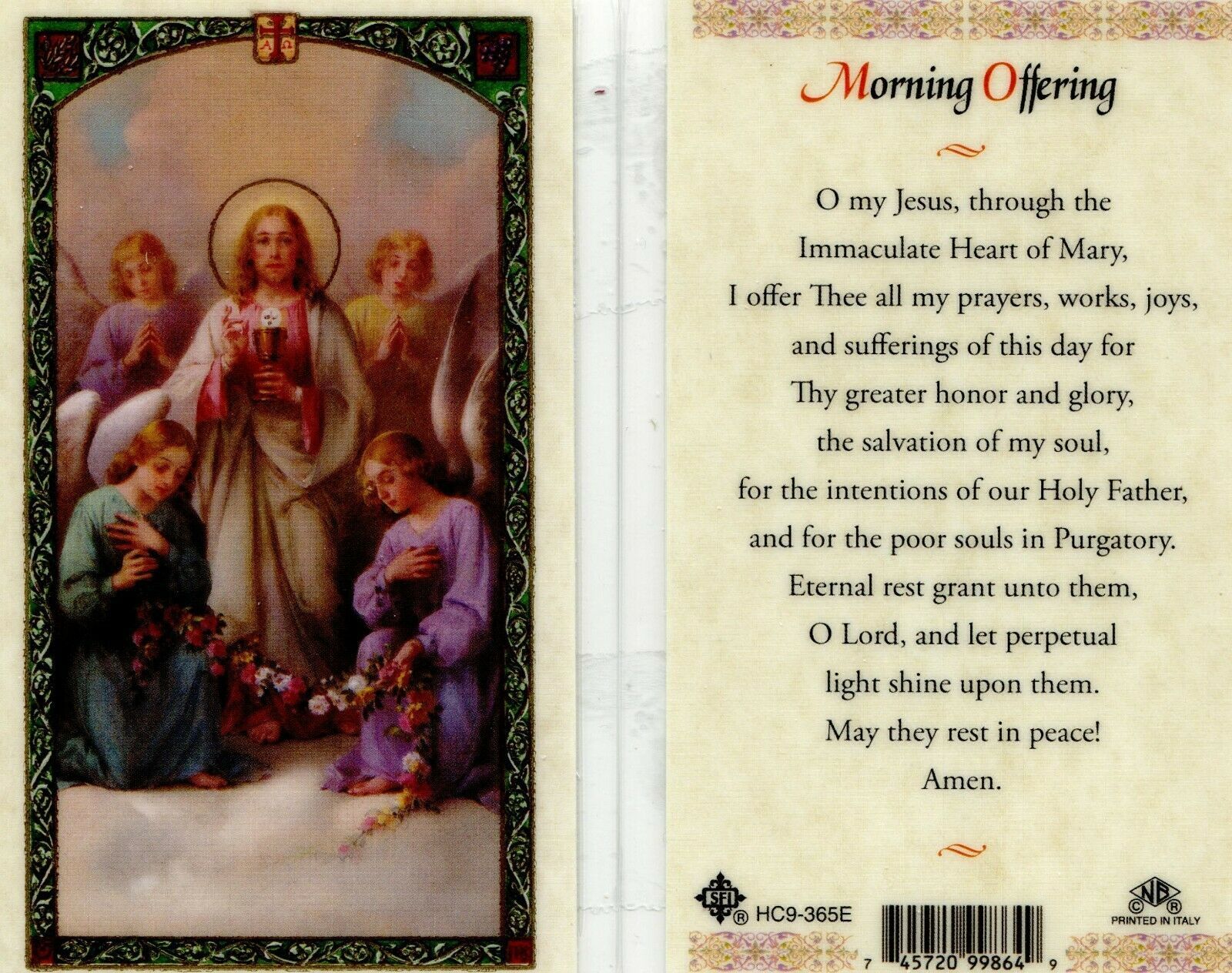
The Month of April is Dedicated to Devotion to the Most Holy Eucharist
“Now as they were eating, Jesus took bread, and blessed, and broke it, and gave it to the disciples and said, “Take, eat; this is my body.” And he took a cup, and when he had given thanks he gave it to them, saying, “Drink of it, all of you; for this is my blood of the covenant, which is poured out for many for the forgiveness of sins.” (Matthew 26:26-28)

Pope Leo XIV’s prayer intention for the month of April, 2026:
For priests in crisis
Let us pray for priests going through moments of crisis in their vocation, that they may find the accompaniment they need and that communities may support them with understanding and prayer.

Today’s First Reading
From: Acts 3:1-10
Cure of a Man Lame from Birth
--------------------------------------------
[1] Now Peter and John were going up to the temple at the hour of prayer, the ninth hour. [2] And a man lame from birth was being carried, whom they laid daily at the gate of the temple which is called Beautiful to ask alms of those who entered the temple. [3] Seeing Peter and John about to go into the temple, he asked for alms. [4] And Peter directed his gaze at him, with John, and said, "Look at us." [5] And he fixed his attention upon them, expecting to receive something from them. [6] But Peter said, "I have no silver and gold, but I give you what I have; in the name of Jesus Christ of Nazareth, walk." [7] And he took him by the right hand and raised him up; and immediately his feet and ankles were made strong. [8] And leaping up he stood and walked and entered the temple with them, walking and leaping and praising God. [9] And all the people saw him walking and praising God. [10] and recognized him as the one who sat for alms at the Beautiful Gate of the temple; and they were filled with wonder at what had happened to him.
*********************************************************************************
Commentary:
1. This was the hour of the evening sacrifice, which began around three o'clock and was attended by a large number of devout Jews. The ritual, which went on until dusk, was the second sacrifice of the day. The earlier one, on similar lines, began at dawn and lasted until nine in the morning.
2. None of the documents that have come down to us which describe the Temple mentions a gate of this name. It was probably the Gate of Nicanor (or Corinthian Gate), which linked the court of the Gentiles with the court of the women which led on to the court of the Israelites. It was architecturally a very fine structure and because of its location it was a very busy place, which would have made it a very good place for begging.
3-8. The cure of this cripple was the first miracle worked by the Apostles. "This cure", says St. John Chrysostom, "testifies to the resurrection of Christ, of which it is an image. [...] Observe that they do not go up to the temple with the intention of performing the miracle, so clear were they of ambition, so closely did they imitate their Master" ("Hom. on Acts", 8).
However, the Apostles decide that the time has come to use the supernatural power given them by God. What Christ did in the Gospel using His own divine power, the Apostles now do in His name, using His power. "The blind receive their sight, the lame walk, lepers are cleansed, and the deaf hear, the dead are raised up" (Luke 7:22). Our Lord now keeps His promise to empower His disciples to work miracles--visible signs of the coming of the Kingdom of God. These miracles are not extraordinary actions done casually or suddenly, without His disciples' involvement: they occur because our Lord is moved to perform them by the Apostles' faith (faith is an essential pre-condition). The disciples are conscious of having received a gift and they act on foot of it.
These miracles in the New Testament obviously occur in situations where grace is intensely concentrated. However, that is not to say that miracles do not continue to occur in the Christian economy of salvation--miracles of different kinds, performed because God is attracted to men and women of faith. "The same is true of us. If we struggle daily to become saints, each of us in his own situation in the world and through his own job or profession, in our ordinary lives, then I assure you that God will make us into instruments that can work miracles and, if necessary, miracles of the most extraordinary kind. We will give sight to the blind. Who could not relate thousands of cases of people, blind almost from the day they were born, recovering their sight and receiving all the splendor of Christ's light? And others who were deaf, or dumb, who could not hear or pronounce words fitting to God's children.... Their senses have been purified and now they hear and speak as men, not animals. "In nomine Iesu!" In the name of Jesus His Apostles enable the cripple to move and walk, when previously he had been incapable of doing anything useful; and that other lazy character, who knew his duties but didn't fulfill them. [...] In the Lord's name, "surge et ambula!", rise up and walk.
"Another man was dead, rotting, smelling like a corpse: he hears God's voice, as in the miracle of the son of the widow at Naim: 'Young man, I say to you, rise up'. We will work miracles like Christ did, like the first Apostles did" (St. J. Escriva, "Friends of God", 262).
Miracles call for cooperation--faith--on the part of those who wish to be cured. The lame man does his bit, even if it is only the simple gesture of obeying Peter and looking at the Apostles.
From: Luke 24:13-35
The Road To Emmaus
------------------
[13] That very day two of them (disciples) were going to a village named Emmaus, about seven miles from Jerusalem, [14] and talking with each other about all these things that had happened. [15] While they were talking and discussing together, Jesus Himself drew near and went with them. [16] But their eyes were kept from recognizing Him. [17] And He said to them, "What is this conversation which you are holding with each other as you walk?" And they stood still, looking sad. [18] Then one of them, named Cleopas, answered Him, "Are You the only visitor to Jerusalem who does not know the things that have happened there in these days?" [19] And He said to them, "What things?" And they said to Him, "Concerning Jesus of Nazareth, who was a prophet mighty in deed and word before God and all the people, [20] and how our chief priests and rulers delivered Him up to be condemned to death, and crucified Him. [21] But we had hoped that He was the one to redeem Israel. Yes, and besides all this, it is now the third day since this happened. [22] Moreover, some women of our company amazed us. They were at the tomb early in the morning [23] and did not find His body; and they came back saying that they had even seen a vision of angels, who said that He was alive. [24] Some of those who were with us went to the tomb, and found it just as the women had said; but Him they did not see." [25] And He said to them, "O foolish men, and slow of heart to believe all that the prophets have spoken! [26] Was it not necessary that the Christ should suffer these things and enter into His glory?" [27] And beginning with Moses and all the prophets, He interpreted to them in all the Scriptures the things concerning Himself.
[28] So they drew near to the village to which they were going. He appeared to be going further, [29] but they constrained Him, saying, "Stay with us, for it is toward evening and the day is now far spent." So He went in to stay with them. [30] When He was at table with them, He took the bread and blessed, and broke it, and gave it to them. [31] And their eyes were opened and they recognized Him; and He vanished out of their sight. [32] They said to each other, "Did not our hearts burn within us while He talked to us on the road, while He opened to us the Scriptures?" [33] And they rose that same hour and returned to Jerusalem; and they found the Eleven gathered together and those who were with them, [34] who said, "The Lord is risen indeed, and has appeared to Simon!" [35] Then they told what had happened on the road, and how He was known to them in the breaking of the bread.
***********************************************************************
Commentary:
13-35. In the course of their conversation with Jesus, the disciples' mood changes from sadness to joy; they begin to hope again, and feel the need to share their joy with others, thus becoming heralds and witnesses of the risen Christ.
This is an episode exclusive to St. Luke, who describes it in a masterly way. It shows our Lord's zeal for souls. "As He is walking along, Christ meets two men who have nearly lost all hope. They are beginning to feel that life has no meaning for them. Christ understands their sorrow; He sees into their heart and communicates to them some of the life He carries within Himself."
"When they draw near the village, He makes as if to go on, but the two disciples stop Him and practically force Him to stay with them. They recognize Him later when He breaks the bread. The Lord, they exclaimed, has been with us! `And they said to each other: "Did not our hearts burn within us while He talked to us on the road, while He opened to us the Scriptures?"' (Luke 24:32). Every Christian should make Christ present among men. He ought to act in such a way that those who know Him sense `the aroma of Christ' (cf. 2 Corinthians 2:15). Men should be able to recognize the Master in His disciples" (St. J. Escriva, "Christ Is Passing By", 105).
13-27. Jesus' conversation with the two disciples on the road to Emmaus gives us a very good idea of the disillusionment felt by His disciples after His apparent total failure. Cleopas' words summarize Christ's life and mission (verse 19), His passion and death (verse 20), the despair felt by His disciples (verse 21), and the events of that Sunday morning (verse 22).
Earlier, Jesus had said to the Jews: "You search the Scriptures, because you think that in them you have eternal life; and it is they that bear witness to Me" (John 5:39). In saying this He indicated the best way for us to get to know Him. Pope Paul VI points out that today also frequent reading of and devotion to Holy Scripture is a clear inspiration of the Holy Spirit: "The progress made in biblical studies, the increasing dissemination of the Sacred Scriptures, and above all the example of tradition and the interior action of the Holy Spirit are tending to cause the modern Christian to use the Bible ever increasingly as the basic prayerbook and to draw from it genuine inspiration and unsurpassable examples" (Pope Paul VI, "Marialis Cultus", 30).
Because the disciples are so downhearted, Jesus patiently opens for them the meaning of all the Scriptural passages concerning the Messiah. "Was it not necessary that the Christ should suffer these things and enter into His glory?": with these words He disabuses them of the notion of an earthly and political Messiah and shows them that Christ's mission is a supernatural one--to save all mankind.
Sacred Scripture contained the prophecy that God would bring about salvation through the redemptive passion and death of the Messiah. The Cross does not mean failure: it is the route chosen by God for Christ to achieve definitive victory over sin and death (cf. 1 Corinthians 1:23-24). Many of our Lord's contemporaries failed to understand His supernatural mission because they misinterpreted the Old Testament texts. No one knew the meaning of Sacred Scripture like Jesus. And, after Him, only the Church has the mission and responsibility of conserving Scripture and interpreting it correctly: "All that has been said about the manner of interpreting Scripture is ultimately subject to the judgment of the Church which exercises the divinely conferred commission and ministry of watching over and interpreting the Word of God" (Vatican II, "Dei Verbum", 12).
28-35. The Master's presence and words restore the disciples' spirits and give them new and lasting hope. "There were two disciples on their way to Emmaus. They were walking along at a normal pace, like so many other travelers on that road. And there, without any fuss, Jesus appears to them, and walks with them, His conversation helping to alleviate their tiredness. I can well imagine the scene, just as dusk is falling. A gentle breeze is blowing. All around are fields ripe with wheat, and venerable olive trees, their branches shimmering in the soft glowing light.
"Jesus joins them as they go along their way. Lord, how great you are, in everything! But You move me even more when You come down to our level, to follow us and to seek us in the hustle and bustle of each day. Lord, grant us a childlike spirit, pure eyes and a clear mind so that we may recognize You when You come without any outward sign of Your glory.
"The journey ends when they reach the village. The two disciples who, without realizing it, have been deeply stirred by the words and love shown by God made man, are sorry to see Him leaving. For Jesus `appeared to be going further' (Luke 24:28). This Lord of ours never forces Himself on us. He wants us to turn to Him freely, when we begin to grasp the purity of His Love which He has placed in our souls. We have to hold Him back (`they constrained Him') and beg Him: `Stay with us, for it is towards evening, and the day is now far spent' (Luke 24:29).
"That's just like us--always short on daring, perhaps because we are insincere, or because we feel embarrassed. Deep down, what we are really thinking is: `Stay with us, because our souls are shrouded in darkness and You alone are the light. You alone can satisfy this longing that consumes us.' For `we know full well which among all things fair and honorable is the best--to possess God for ever' (St. Gregory Nazianzen, "Epistulae", 212).
"And Jesus stays. Our eyes are opened, as were those of Cleopas and his companion, when Christ breaks the bread; and, though He vanishes once more from sight, we too will find strength to start out once more--though night is falling--to tell the others about Him, because so much joy cannot be kept in one heart alone.
"The road to Emmaus--our God has filled this name with sweetness. Now the entire world has become an Emmaus, for the Lord has opened up all the divine paths of the earth" (St. J. Escriva, "Friends of God", 313f).
32. If you were an apostle, these words of the disciples of Emmaus should rise spontaneously to the lips of your professional companions when they meet you along the way of their lives" ("The Way", 917).
33-35. The disciples now feel the need to return to Jerusalem immediately; there they find the Apostles and some other disciples gathered together with Peter, to whom Jesus has appeared.
In sacred history, Jerusalem was the place where God chose to be praised in a very special way and where the prophets carried out their main ministry. God willed that Christ should suffer, die and rise again in Jerusalem, and from there the Kingdom of God begins to spread (cf. Luke 24:47; Acts 1:8). In the New Testament the Church of Christ is described as "the Jerusalem above" (Galatians 4:26), "the Heavenly Jerusalem" (Hebrews 12:22) and the "new Jerusalem" (Revelation 21:2).
The Church began in the Holy City. Later on, St. Peter, not without a special intervention of Providence, moved to Rome, thereby making that city the center of the Church. Just as Peter strengthened these first disciples in the faith, so too Christians of all generations have recourse to the See of Peter to strengthen their faith and thereby build up the unity of the Church: "Take away the Pope and the Catholic Church would no longer be catholic. Moreover, without the supreme, effective and authoritative pastoral office of Peter the unity of Christ's Church would collapse. It would be vain to look for other principles of unity in place of the true one established by Christ Himself [...]. We would add that this cardinal principle of holy Church is not a supremacy of spiritual pride and a desire to dominate mankind, but a primacy of service, ministration and love. It is no vapid rhetoric which confers on Christ's vicar the title: `Servant of the servants of God'" (Pope Paul VI, "Ecclesiam Suam", 83).
LORD Jesus had his beard ripped out. It would have been difficult to recognize Him. Plus, he was basically beaten to death.
Someone said that the only man made things in Heaven are Jesus’ scars.
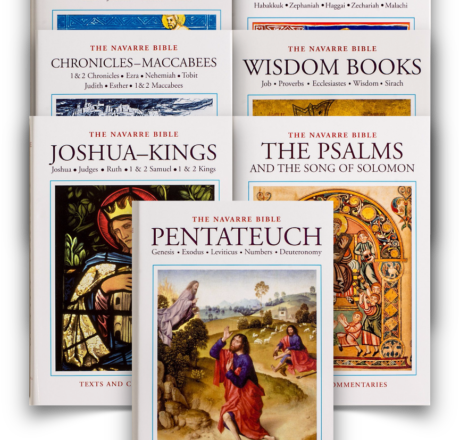
Long time Catholic apologist Gary Michuta has just written a new book which goes into these OT prophecies. It's now available and I just ordered my copy:
Disclaimer: Opinions posted on Free Republic are those of the individual posters and do not necessarily represent the opinion of Free Republic or its management. All materials posted herein are protected by copyright law and the exemption for fair use of copyrighted works.


