
Posted on 04/06/2026 9:59:25 PM PDT by fidelis
Mary Magdalene stayed outside the tomb weeping. And as she wept, she bent over into the tomb and saw two angels in white sitting there, one at the head and one at the feet where the Body of Jesus had been. And they said to her, “Woman, why are you weeping?” John 20:11–12
Mary Magdalene was one of the women who accompanied Jesus and the Twelve Apostles as they traveled from town to town during His public ministry. Luke 8:2 introduces her as “Mary, called Magdalene, from whom seven demons had gone out.” Being possessed by seven demons signifies complete possession, illustrating the depth of her suffering. Though demons cannot touch a person’s soul, they can afflict the body, which was the case with Mary. While Scripture does not tell us how she became afflicted, we can imagine the profound gratitude she must have felt after her deliverance. This gratitude, joined with her newfound faith, made Mary one of Jesus’ most faithful and devoted followers.
Today’s Gospel offers a glimpse into Mary’s unshakable love for Jesus. The Synoptic Gospels mention that she was not alone when she went to the tomb to honor His body. However, John’s Gospel focuses solely on Mary, likely to highlight her unique experience and encourage us to learn from the depth of her devotion.
Mary’s early morning visit to the tomb reveals her passionate love—she could not wait to honor Him, even if only by tending to His lifeless body. Finding the tomb empty, she immediately ran to inform the disciples. Peter and John hurried to see for themselves, with Mary following behind. After the two disciples saw the empty tomb and left, Mary remained, setting the stage for today’s passage.
Saint John seems to invite us to contemplate Mary’s actions. Imagine Peter and John leaving, while Mary remains, seated at the entrance of the tomb, weeping. Though she did not yet understand that Jesus had risen, her love for Him held her there, anchored in the place where He had been laid. In times of distress, confusion, or uncertainty, we are called to imitate Mary’s steadfast devotion. Our love for Jesus should draw us spiritually to His empty tomb, keeping us close even when understanding eludes us.
As Mary wept outside the tomb, she did not know what would come next. She only knew she needed to be there. Her mind was clouded with grief, but her heart led her to stay. She remained not out of reason, but because her heart, filled with love, kept her there.
In following her heart—consumed with love for Jesus—Mary was led to a life-changing encounter. When Jesus appeared, she initially mistook Him for the gardener and, in her passionate longing, begged Him, “Sir, if you have carried him away, tell me where you laid him, and I will take him.” Again, she spoke from her heart rather than from understanding. But then Jesus called her by name: “Mary!” In that moment, her heart and mind were united, and she recognized Him. With this recognition, she saw and believed.
Reflect today on Mary Magdalene weeping outside Jesus’ empty tomb and then hearing Him say, “Mary!” That she is the first person in Scripture to see the risen Lord is deeply significant. Clearly, God desires that we learn from her and imitate her love. Though we might not have been delivered from seven demons, we have been delivered from sin. This should stir in us a gratitude so deep that we willingly abandon all to follow Him. And when life is confusing or uncertain, we, like Mary, must follow the holy desires God places in our hearts, so that our love for Christ will lead us through uncertainty into clarity, when, like Mary, we hear our Lord call us by name.
My risen Lord, Your empty tomb is a symbol of the longing I must have for You when I encounter life’s uncertainties. When I am confused and do not understand where to turn, please flood my heart with an unshakable desire for You so that my love will lead me to where You are and where You want me to be. Jesus, I trust in You.
Please keep in mind that this is a Catholic Caucus/Devotional thread for the purpose of prayerful reflection on the Sacred Scriptures and is closed to debate of any kind. Per FR policy on Religion Caucus threads, off-topic, argumentative, and abusive comments are not allowed and will be submitted to the Mods for deletion. Thanks, and God bless you.
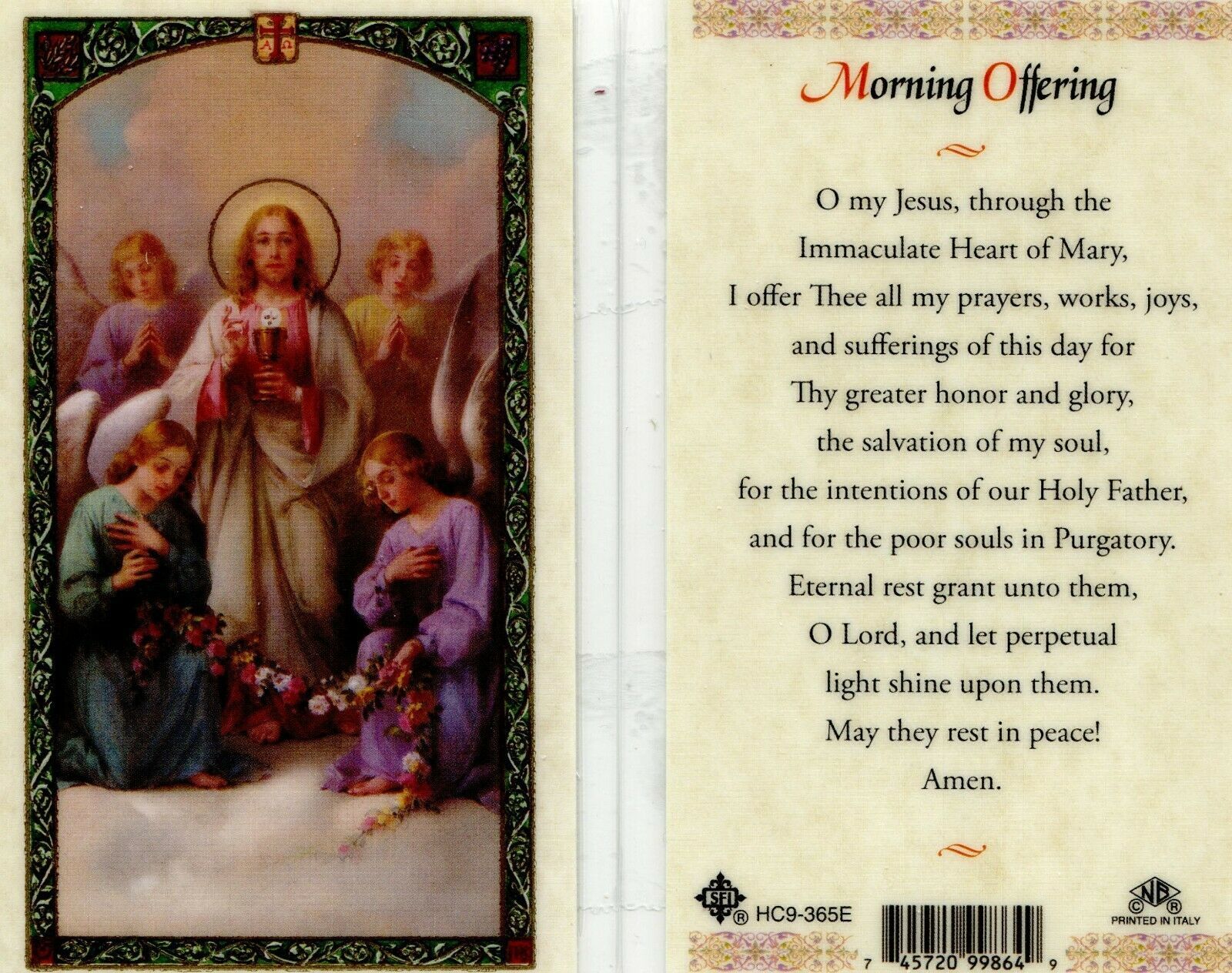
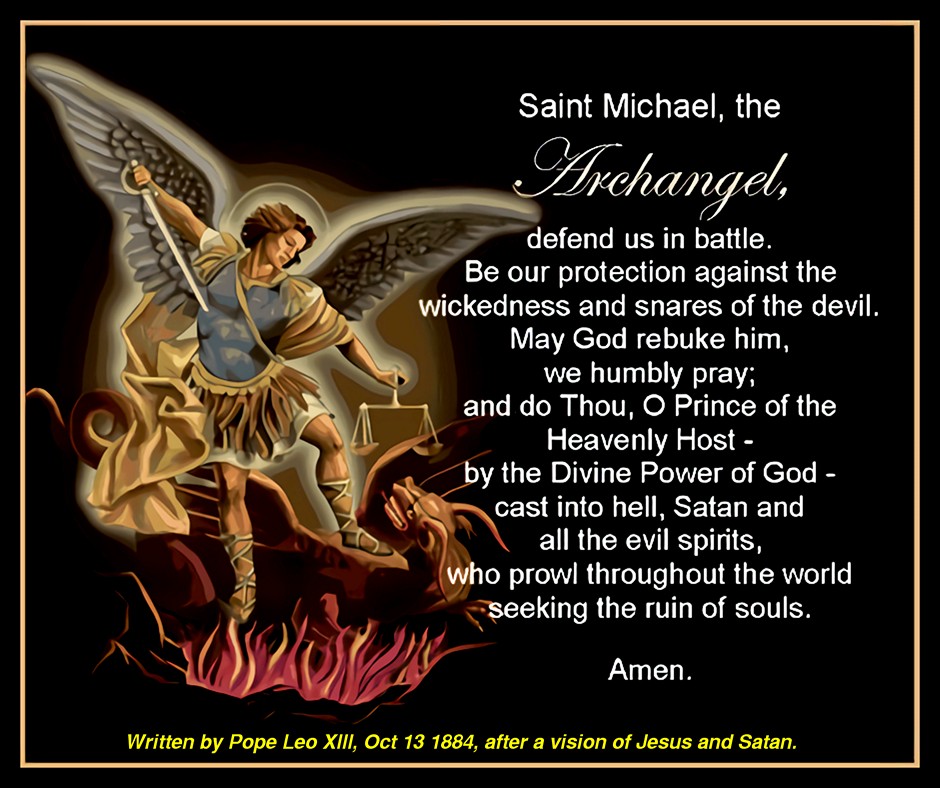
The Month of April is Dedicated to Devotion to the Most Holy Eucharist
“Now as they were eating, Jesus took bread, and blessed, and broke it, and gave it to the disciples and said, “Take, eat; this is my body.” And he took a cup, and when he had given thanks he gave it to them, saying, “Drink of it, all of you; for this is my blood of the covenant, which is poured out for many for the forgiveness of sins.” (Matthew 26:26-28)

Pope Leo XIV’s prayer intention for the month of April, 2026:
For priests in crisis
Let us pray for priests going through moments of crisis in their vocation, that they may find the accompaniment they need and that communities may support them with understanding and prayer.

Today’s First Reading
From: Acts 2:14a, 22-33, 36-41
The Baptism
---------------
[36] "Let all the house of Israel therefore know assuredly that God has made Him both Lord and Christ, this Jesus whom you crucified." [37] Now when they heard this they were cut to the heart, and said to Peter and the rest of the Apostles, "Brethren, what shall we do?" [38] And Peter said to them, "Repent, and be baptized every one of you in the name of Jesus Christ for the forgiveness of your sins; and you shall receive the gift of the Holy Spirit. [39] For the promise is to you and to your children and to all that are far off, every one whom the Lord our God calls to Him." [40] And he testified with many other words and exhorted them, saying, "Save yourselves from this crooked generation." [41] So those who received his word were baptized, and there were added that day about three thousand souls.
***********************************************************************
Commentary:
36. During His life on earth Jesus had often presented Himself as the Messiah and Son of God. His resurrection and ascension into Heaven reveal Him as such to the people at large.
In Peter's address we can see an outline of the content of the apostolic proclamation ("kerygma"), the content of Christian preaching, the object of faith. This proclamation bears witness to Christ's death and resurrection and subsequent exaltation; it recalls the main points of Jesus' mission, announced by John the Baptist, confirmed by miracles and brought to fulfillment by the appearances of the risen Lord and the outpouring of the Holy Spirit; it declares that the messianic time predicted by the prophets have arrived, and calls all men to conversion, in preparation for the Parousia or second coming of Christ in glory.
37. St. Peter's words were the instrument used by God's grace to move the hearts of his listeners: they are so impressed that they ask in all simplicity what they should do. Peter exhorts them to be converted, to repent (cf. note on 3:19). The "St. Pius V Catechism" explains that in order to receive Baptism adults "need to repent the sins they have committed and their evil past life and to be resolved not to commit sin henceforth [...], for nothing is more opposed to grace and power of Baptism than the outlook and disposition of those who never decide to abjure sin" (II, 2, 4).
38. "Be baptized in the name of Jesus Christ": this does not necessarily mean that this was the form of words the Apostles normally used in the liturgy, rather than Trinitarian formula prescribed by Jesus. In the "Didache" (written around the year 100) it is stated that Baptism should be given in the name of the Father and of the Son and of the Holy Spirit, but this does not prevent it, in other passages, from referring to "those baptized in the name of the Lord." The expression "baptized in the name of Christ" means, therefore, becoming a member of Christ, becoming a Christian (cf. "Didache", VII, 1; IX, 5).
"Like the men and women who came up to Peter on Pentecost, we too have been baptized. In baptism, our Father God has taken possession of our lives, has made us share in the life of Christ, and has given us the Holy Spirit" (St. J. Escriva, "Christ Is Passing By", 128). From this point onwards, the Trinity begins to act in the soul of the baptized person. "In the same way as transparent bodies, enlightened by the Holy Spirit become spiritual too and lead others to the light of grace. From the Holy Spirit comes knowledge of future events, understanding of mysteries and of hidden truths, an outpouring of gifts, Heavenly citizenship, conversation with angels. From Him comes never-ending joy, perseverance in good, likeness to God and--the most sublime thing imaginable--becoming God" (St. Basil, "On the Holy Spirit", IX, 23).
This divinization which occurs in the baptized person shows how important it is for Christians to cultivate the Holy Spirit who has been infused into their souls, where He dwells as long as He is not driven out by sin. "Love the Third Person of the Blessed Trinity. Listen in the intimacy of your being to the divine motions of encouragement or reproach you receive from Him. Walk through the earth in the light that is poured out in your soul. [...] We can apply to ourselves the question asked by the Apostle: 'Do you not know that you are God's temple and that God's Spirit dwells in you?' (1 Corinthians 3:16). And we can understand it as an invitation to deal with God in a more personal and direct manner. For some, unfortunately, the Paraclete is the Great Stranger. He is merely a name that is mentioned, but not Someone--not one of the three Persons in the one God--with whom we can talk and with whose life we can live. No: we have to deal with Him simply and trustingly, as we are taught by the Church in its liturgy. Then we will come to know our Lord better, and at the same time, we will realize more fully the great favor that was granted us when we became Christians. We will see the greatness and truth of this divinization, which is a sharing in God's own life" (St J. Escriva, "Christ Is Passing By", 133-134).
39. The "promise" of the Holy Spirit applies to both Jews and Gentiles, but in the first instance it concerns the Jews: it is they to whom God entrusted His oracles; theirs was the privilege to receive the Old Testament and to be preached to directly by Jesus Himself. St. Peter makes it clear that this promise is also made "to all that are far off"--a reference to the Gentiles, as St. Paul explains (cf. Ephesians 2:13-17) and in line with Isaiah's announcement, "Peace, peace to the far and to the near" (Isaiah 57:19). Cf. Acts 22:21.
40. "This crooked generation" is not only that part of the Jewish people who rejected Christ and His teaching, but everyone who is estranged from God (cf. Deuteronomy 32:5; Philippians 2:5).
41. St. Luke here concludes his account of the events of the day of Pentecost and prepares to move on to a new topic. Before he does so he adds a note, as it were, to say that "about three thousand souls" became Christians as a result of Peter's address.
St. Luke often makes reference to the numerical growth of the Church (2:47; 4:4; 5:14; 6:1, 7; 9:31; 11:21, 24; 16:5). Interesting in itself, this growth clearly shows the effectiveness of the Gospel message boldly proclaimed by the Apostles. It proves that if the Gospel is preached with constancy and clarity it can take root in any setting and will always find men and women ready to receive it and put it into practice.
"It is not true that everyone today--in general--is closed or indifferent to what our Christian faith teaches about man's being and destiny. It is not true that men in our time are turned only toward the things of this earth and have forgotten to look up to Heaven. There is no lack of narrow ideologies, it is true, or of persons who maintain them. But in our time we find both great desires and base attitudes, heroism and cowardice, zeal and disenchantment--people who dream of a new world, more just and more human, and others who, discouraged perhaps by the failure of their youthful idealism, take refuge in the selfishness of seeking only their own security or remaining immersed in their errors.
"To all those men and women, wherever they may be, in their more exalted moments of in their crises and defeats, we have to bring the solemn and unequivocal message of St. Peter in the days that followed Pentecost: Jesus is the cornerstone, the Redeemer, the hope of our lives. 'For there is no other name under Heaven given among men by which we must be saved' (Acts 4:12)" (St J. Escriva, "Christ Is Passing By", 132).
From: John 20:11-18
The Appearance to Mary Magdalene
-----------------------------------------------------
[11] But Mary stood weeping outside the tomb, and as she wept she stooped to look into the tomb; [12] and she saw two angels in white, sitting where the body of Jesus had lain, one at the head and one at the feet. [13] They said to her, "Woman, why are you weeping?" She said to them, "Because they have taken away my Lord, and I do not know where they have laid Him." [14] Saying this, she turned around and saw Jesus standing, but she did not know that it was Jesus. [15] Jesus said to her, "Woman, why are you weeping? Whom do you seek?" Supposing Him to be gardener, she said to Him, "Sir, if you have carried Him away, tell me where you have laid Him, and I will take Him away." [16] Jesus said to her, "Mary." She turned and said to Him in Hebrew, "Rabboni!" (which means Teacher). [17] Jesus said to her, "Do not hold Me, for I have not yet ascended to the Father; but go to My brethren and say to them, I am ascending to My Father and your Father, to My God and your God." [18] Mary Magdalene went and said to the disciples, "I have seen the Lord"; and she told them that He had said these things to her.
**********************************
Commentary:
11-18. Mary's affection and sensitivity lead her to be concerned about what has become of the dead body of Jesus. This woman out of whom seven demons were cast (cf. Luke 8:2) stayed faithful during His passion and even now her love is still ardent: our Lord had freed her from the Evil One and she responded to that grace humbly and generously.
After consoling Mary Magdalene, Jesus gives her a message for the Apostles, whom He tenderly calls His "brethren". This message implies that He and they have the same Father, though each in an essentially different way: "I am ascending to My Father"--My own Father by nature--"and to your Father"--for He is your Father through the adoption I have won for you and by My death. Jesus, the Good Shepherd, shows His great mercy and understanding by gathering together all His disciples who had abandoned Him during His passion and were now in hiding for fear of the Jews (John 20:19).
Mary Magdalene's perseverance teaches us that anyone who sincerely keeps searching for Jesus Christ will eventually find Him. Jesus' gesture in calling His disciples His "brethren" despite their having run away should fill us with love in the midst of our own infidelities.
15. From Jesus' dialogue with Mary Magdalene, we can see the frame of mind all His disciples must have been in: they were not expecting the resurrection.
17. "Do not hold Me": the use of the negative imperative in the Greek, reflected in the New Vulgate ("noli me tenere") indicates that our Lord is telling Mary to release her hold of Him, to let Him go, since she will have another chance to see Him before His ascension into Heaven.
Disclaimer: Opinions posted on Free Republic are those of the individual posters and do not necessarily represent the opinion of Free Republic or its management. All materials posted herein are protected by copyright law and the exemption for fair use of copyrighted works.

