
Posted on 04/02/2026 12:38:00 AM PDT by fidelis
Holy Thursday-Evening Mass of the Lord’s Supper
So when he had washed their feet and put his garments back on and reclined at table again, he said to them, “Do you realize what I have done for you? You call me ‘teacher’ and ‘master,’ and rightly so, for indeed I am. If I, therefore, the master and teacher, have washed your feet, you ought to wash one another’s feet. I have given you a model to follow, so that as I have done for you, you should also do.” John 13:12–15
The celebration of the evening Mass of the Lord’s Supper on Holy Thursday is one of the most spiritually enriching liturgical celebrations of the year. The Mass begins with an empty tabernacle. After the readings and homily, the ritual of the washing of the disciples’ feet takes place. The Mass culminates with the celebration of the Eucharist, which is then carried in procession to another altar for adoration by the faithful until midnight, during which time we are invited to spend an hour with our Lord, in communion with Him during His Agony in the Garden.
The Gospel for the Mass, from Saint John, presents the beginning of Jesus’ Last Supper with His disciples. Jesus performs the act of a servant by washing the disciples’ feet. Though this surprises them, especially Peter, Jesus insists, saying, “Unless I wash you, you will have no inheritance with me” (John 13:8). Our Lord says the same to us.
Often people understand the washing of the feet only superficially. Perhaps that is why Jesus said to the disciples, “Do you realize what I have done for you?...” This begs the question: Do you understand the deep and transforming meaning of this most sacred act? This was not Jesus’ way of simply telling us that we should be nice to one another and look for opportunities to do each other kind favors. The meaning is much richer. First, we need to be washed by Jesus. Second, we must participate in Jesus’ washing of others.
How are you washed by Jesus? By His Cross and Resurrection that destroyed sin and restored eternal life. We need to be washed by His blood, which was shed for us and first administered to His disciples at the Last Supper... Today, this cleansing takes place first in Baptism and then in Reconciliation... When we receive those sacraments, we should hear our Lord say to us, “Do you realize what I have done for you?”
After that question, Jesus says, “I have given you a model to follow, so that as I have done for you, you should also do.” Of course, we are not Jesus. We cannot forgive sins and give to others His Sacred Body and Blood, right? Remember that Jesus was talking to His Apostles, the first bishops, so, “Yes,” Jesus was commanding them, and all bishops and priests that followed, to perpetuate His ongoing gift through the faithful administration of the Sacraments He instituted.
Though that is the central command, our Lord also calls all of us to participate in His self-gift. Though only He could offer us the cleansing and transformation we need... In doing so, Jesus teaches us that charity extends even to those who wrong us, calling us to love as He loves—without conditions or limits.
Reflect today upon Jesus’ question to the Twelve: “Do you realize what I have done for you?” Ponder that question today, especially this evening. Do you understand the depth of His Sacrifice? Do you understand the Sacraments that perpetuate that Sacrifice throughout time? Do you understand the demands that your reception of His gift places on you? Be open to all that Jesus offers you and, in turn, give what you have been given to others.
My sacrificial Teacher and Lord, You have poured out upon me Your Precious Blood to cleanse me from sin and restore me to life. Though I will never fully fathom this Gift, I pray for Understanding, so that I can comprehend more fully this great mystery. As You transform me, please use me as a gift, poured out for others, in charity and selfless service of divine love. Jesus, I trust in You.
Please keep in mind that this is a Catholic Caucus/Devotional thread for the purpose of prayerful reflection on the Sacred Scriptures and is closed to debate of any kind. Per FR policy on Religion Caucus threads, off-topic, argumentative, and abusive comments are not allowed and will be submitted to the Mods for deletion. Thanks, and God bless you.
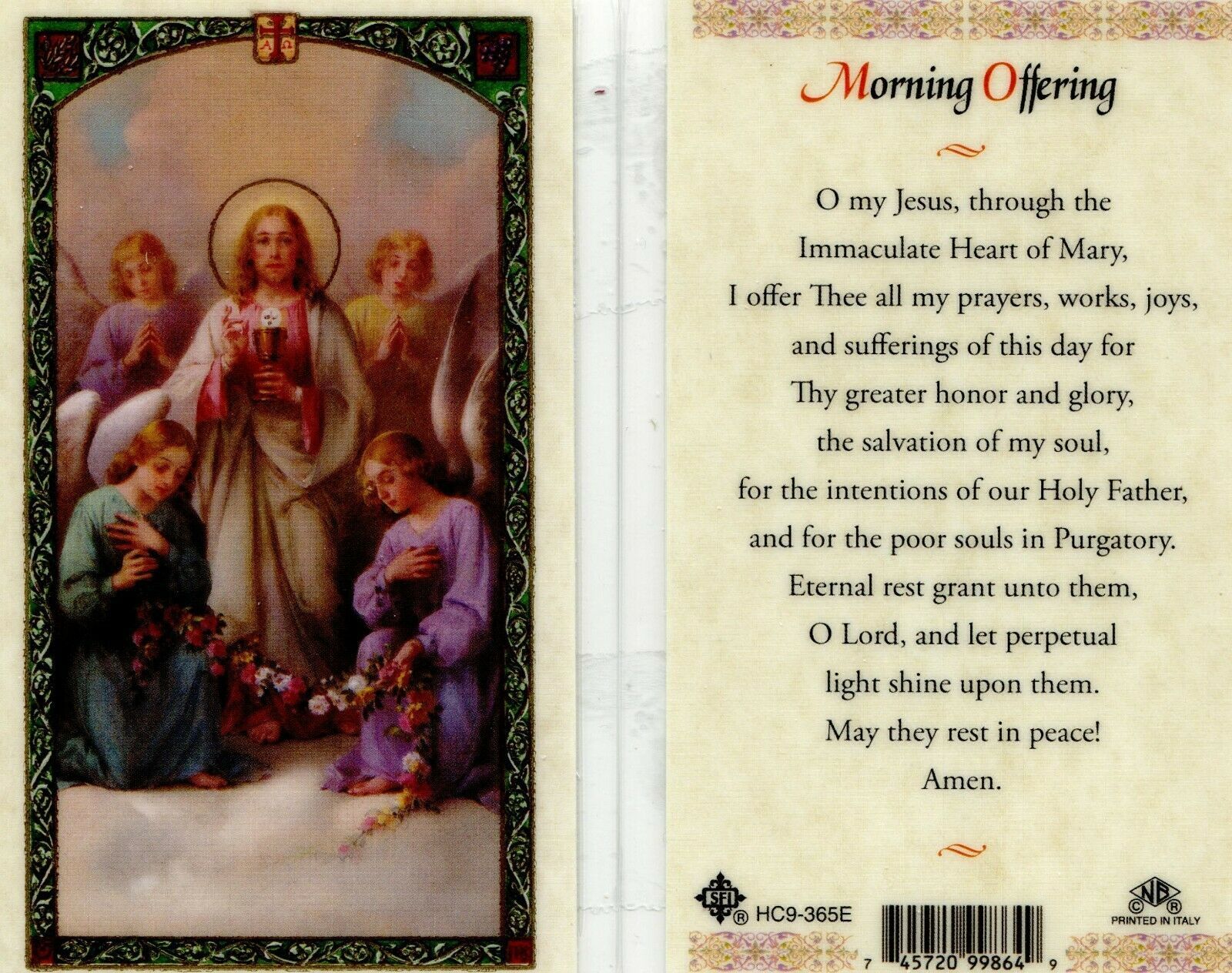
The Month of April is Dedicated to Devotion to the Most Holy Eucharist
“Now as they were eating, Jesus took bread, and blessed, and broke it, and gave it to the disciples and said, “Take, eat; this is my body.” And he took a cup, and when he had given thanks he gave it to them, saying, “Drink of it, all of you; for this is my blood of the covenant, which is poured out for many for the forgiveness of sins.” (Matthew 26:26-28)

Pope Leo XIV’s prayer intention for the month of April, 2026:
For priests in crisis
Let us pray for priests going through moments of crisis in their vocation, that they may find the accompaniment they need and that communities may support them with understanding and prayer.

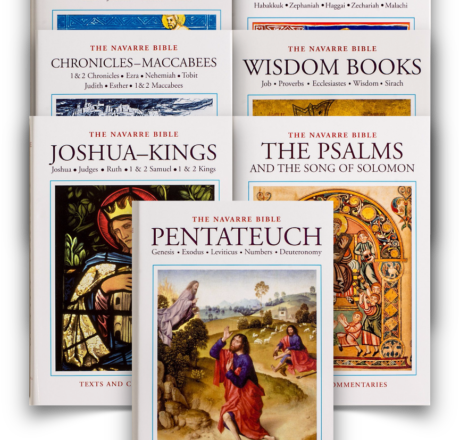
Today’s First Reading
From: Exodus 12:1-8, 11-14
The Institution of the Passover
-------------------------------------------
[1] The Lord said to Moses and Aaron in the land of Egypt, [2] "This month shall be for you the beginning of months; it shall be the first month of the year for you. [3] Tell all the congregation of Israel that on the tenth day of this month they shall take every man a lamb according to their fathers' houses, a lamb for a household; [4] and if the household is too small for alamb, then a man and his neighbor next to his house shall take according to the number of persons; according to what each can eat you shall make your count for the lamb. [5] Your lamb shall be without blemish, a male a year old; you shall take it from the sheep or from the goats; [6] and you shall keep it until, the fourteenth day of this month, when the whole assembly of the congregation of Israel shall kill their lambs in the evening. [7] Then they shall take some of the blood, and put it on the two doorposts and the lintel of the houses in which they eat them. [8] They shall eat the flesh that night, roasted; with unleavened bread and bitter herbs they shall eat it. [11] In this manner you shall eat it: your loins girded, your sandals on your feet, and your staff in your hand; and you shall eat it in haste. It is the Lord's passover. [12] For I will pass through the land of Egypt that night, and I will smite all the firstborn in the land of Egypt, both man and beast; and on all the gods of Egypt I will execute judgments: I am the Lord. [13] The blood shall be a sign for you, upon the houses where you are; and when I see the blood, I will pass over you, and no plague shall fall upon you to destroy you, when I smite the land of Egypt.
[14] "This day shalt be for you a memorial day, and you shalt keep it as a feast to the Lord; throughout your generations you shall observe it as an ordinance for ever."
****************************************************************************
Commentary:
12:1-14 This discourse of the Lord contains a number of rules for celebrating the Passover and the events commemorated in it; it is a kind of catechetical-liturgical text which admirably summarizes the profound meaning of that feast.
The Passover probably originated as a shepherds' feast held in springtime, when lambs are born and the migration to summer pastures was beginning; a new-born lamb was sacrificed and its blood used to perform a special rite in petition for the protection and fertility of the flocks. But once this feast became connected with the history of the Exodus it acquired a much deeper meaning, as did the rites attaching to it.
Thus, the "congregation" (v. 3) comprises all the Israelites organized as a religious community to commemorate the most important event in their history, deliverance from bondage.
The victim will be a lamb, without blemish (v. 5) because it is to be offered to God. Smearing the doorposts and lintel with the blood of the victim (vv 7, 13), an essential part of the rite, signifies protection from dangers. The Passover is essentially sacrificial from the very start. The meal (v. 11) is also a necessary part, and the manner in which it is held is a very appropriate way of showing the urgency imposed by circumstances: there is no time to season it (v. 9); no other food is eaten with it, except for the bread and desert herbs (a sign of indigence); the dress and posture of those taking part (standing, wearing sandals and holding a staff) show that they are on a journey. In the later liturgical commemoration of the Passover, these things indicate that the Lord is passing among his people.
The rules laid down for the Passover are evocative of very ancient nomadic desert rites, where there was no priest or temple or altar. When the Israelites had settled in Palestine, the Passover continued to be celebrated at home, always retaining the features of a sacrifice, a family meal and, very especially, a memorial of the deliverance the Lord brought about on that night.
Our Lord chose the context of the Passover Supper to institute the Eucharist: "By celebrating the Last Supper with his apostles in the course of the Passover meal, Jesus gave the Jewish Passover its definitive meaning. Jesus' passing over to his Father by his death and Resurrection, the new Passover, is anticipated in the Supper and celebrated in the Eucharist, which fulfills the Jewish Passover and anticipates the final Passover of the Church in the glory of the kingdom" ("Catechism of the Catholic Church", 1340).
12:2. This event is so important that it is going to mark the starting point in the reckoning of time. In the history of Israel there are two types of calendar, both based on the moon--one which begins the year in the autumn, after the feast of Weeks (cf. 23:16; 34:22), and the other beginning it in spring, between March and April. This second calendar probably held sway for quite a long time, for we know that the first month, known, as Abib (spring)--cf. 13:4: 23:18; 34:18 -- was called, in the post-exilic period (from the 6th century BC onwards) by the Babylonian name of Nisan (Neh 2:1; Esther 3:7). Be that as it may, the fact that this month is called the first month is a way of highlighting the importance of the event which is going to be commemorated (the Passover).
12:11. Even now it is difficult to work out the etymology of the word "Passover".
In other Semitic languages it means "joy" or "festive joy" or also "ritual and festive leap". In the Bible the same root means "dancing or limping" in an idolatrous rite (cf. 1 Kings 18:21, 26) and "protecting" (cf. Is 31:5), so it could mean "punishment, lash" and also "salvation, protection". In the present text the writer is providing a popular, non-scholarly etymology, and it is taken as meaning that "the Lord passes through", slaying Egyptians and sparing the Israelites.
In the New Testament it will be applied to Christ's passage to the Father by death and resurrection, and the Church's "passage" to the eternal Kingdom: "The Church will enter the glory of the kingdom only through this final Passover, when she will follow her Lord in his death and Resurrection" ("Catechism of the Catholic Church", 677).
12:14. The formal tone of these words gives an idea of the importance the Passover always had. If the historical books (Joshua, Judges, Samuel and Kings) hardly mention it, the reason is that they allude only to sacrifices in the temple, and the Passover was always celebrated in people's homes. When the temple ceased to be (6th century BC), the feast acquired more prominence, as can be seen from the post-exilic biblical texts (cf. Ezra 6:19-22; 2 Chron 30:1-27; 35:1-19) and extrabiblical texts such as the famous "Passover papyrus of Elephantine" (Egypt) of the 5th century BC. In Jesus' time a solemn passover sacrifice was celebrated in the temple and the passover meal was held at home.
From: 1 Corinthians 11:23-26
The Institution of the Eucharist
--------------------------------
[23] For I received from the Lord what I also delivered to you, that the Lord Jesus on the night when He was betrayed took bread, [24] and when He had given thanks, He broke it, and said, "This is My body which is for you. Do this in remembrance of Me." [25] In the same way also the cup, after supper, saying, "This cup is the new covenant in My blood. Do this, as often as you drink it, in remembrance of Me." [26] For as often as you eat this bread and drink the cup, you proclaim the Lord's death until He comes.
***********************************************************************
Commentary:
23-26. These verses clearly bear witness to the early Christians' faith in the eucharistic mystery. St. Paul is writing around the year 57--only twenty-seven years since the institution of the Eucharist--reminding the Corinthians of what they had been taught some years earlier (c. the year 51). The words "received" and "delivered" are technical terms used to indicate that a teaching is part of apostolic Tradition; cf. also 1 Corinthians 15:3. These two passages highlight the importance of that apostolic Tradition. The words "I received from the Lord" are a technical expression which means "I received through that Tradition which goes back to the Lord Himself."
There are three other New Testament accounts of the institution of the Eucharist (Matthew 26:26-29; Mark 14:22-25; Luke 22:16-20). This account, which is most like St. Luke's, is the earliest of the four.
The text contains the fundamental elements of Christian faith in the mystery of the Eucharist: 1) the institution of this Sacrament by Jesus Christ and His real presence in it; 2) the institution of the Christian priesthood; 3) the Eucharist is the sacrifice of the New Testament (cf. notes on Matthew 26:26-29; Mark 14:22-25; Luke 22:16-20; 1 Corinthians 10:14-22).
"Do this in remembrance of Me": in instituting the Eucharist, our Lord charged that it be re-enacted until the end of time (cf. Luke 22:19), thereby instituting the priesthood. The Council of Trent teaches that Jesus Christ our Lord, at the Last Supper, "offered His body and blood under the species of bread and wine to God the Father and He gave His body and blood under the same species to the Apostles to receive, making them priests of the New Testament at that time. [...] He ordered the Apostles and their successors in the priesthood to offer this Sacrament when He said, "Do this in remembrance of Me", as the Catholic Church has always understood and taught" ("De SS. Missae Sacrificio", Chapter 1; cf. Canon 2). And so, Pope John Paul II teaches, the Eucharist is "the principal and central reason-of-being of the Sacrament of the priesthood, which effectively came into being at the moment of the institution of the Eucharist, and together with it" ("Letter To All Bishops", 24 February 1980).
The word "remembrance" is charged with the meaning of a Hebrew word which was used to convey the essence of the feast of the Passover--commemoration of the exodus from Egypt. For the Israelites the Passover rite not only reminded them of a bygone event: they were conscious of making that event present, reviving it, in order to participate in it, in some way, generation after generation (cf. Exodus 12:26-27; Deuteronomy 6:20-25). So, when our Lord commands His Apostles to "do this in remembrance of Me", it is not a matter of merely recalling His supper but of renewing His own Passover sacrifice of Calvary, which already, at the Last Supper, was present in an anticipated way.
From: John 13:1-15
Jesus Washes His Disciples' Feet
--------------------------------
[1] Now before the feast of the Passover, when Jesus knew that His hour had come to depart out of this world to the Father, having loved His own who were in the world, He loved them to the end. [2] And during supper, when the devil had already put it into the heart of Judas Iscariot, Simon's son, to betray Him, [3] Jesus, knowing that the Father had given all things into His hands, and that He had come from God and was going to God, [4] rose from supper, laid aside His garments, and girded Himself with a towel. [5] Then He poured water into a basin, and began to wash the disciples' feet, and to wipe them with the towel with which He was girded. [6] He came to Simon Peter; and Peter said to Him, "Lord, do You wash my feet?" [7] Jesus answered him, "What I am doing you do not know now, but afterward you will understand." [8] Peter said to Him, "You shall never wash my feet." Jesus answered him, "If I do not wash you, you have no part in Me." [9] Simon Peter said to Him, "Lord, not my feet only but also my hands and my head!" [10] Jesus said to him, "He who has bathed does not need to wash, except for his feet, but he is clean all over; and you are clean, but not all of you." [11] For He knew who was to betray Him; that was why He said, "You are not all clean."
[12] When He had washed their feet, and taken His garments, and resumed His place, He said to them, "Do you know what I have done for you? [13] You call Me Teacher and Lord; and you are right, for so I am. [14] If then your Lord and Teacher have washed your feet, you also ought to wash one another's feet. [15] For I have given you an example, that you also should do as I have done for you."
***********************************************************************
Commentary:
1. Jewish families sacrificed a lamb on the eve of the Passover, in keeping with God's command at the time of the exodus from Egypt when God liberated them from the slavery of Pharaoh (Exodus 12:3-14; Deuteronomy 16:1-8). This liberation prefigured that which Jesus Christ would bring about--the redemption of men from the slavery of sin by means of His sacrifice on the cross (cf. 1:29). This is why the celebration of the Jewish Passover was the ideal framework for the institution of the new Christian Passover.
Jesus knew everything that was going to happen; He knew His death and resurrection were imminent (cf. 18:4); this is why His words acquire a special tone of intimacy and love towards those whom He is leaving behind in the world. Surrounded by those whom He has chosen and who have believed in Him, He gives them His final teachings and institutes the Eucharist, the source and center of the life of the Church. "He Himself wished to give that encounter such a fullness of meaning, such a richness of memories, such a moving image of words and thoughts, such a newness of acts and precepts, that we can never exhaust our reflection and exploration of it. It was a testamentary supper, infinitely affectionate and immensely sad, and at the same time a mysterious revelation of divine promises, of supreme visions. Death was imminent, with silent omens of betrayal, of abandonment, of immolation; the conversation dies down but Jesus continues to speak in words that are new and beautifully reflective, in almost supreme intimacy, almost hovering between life and death" ([Pope] Paul VI, "Homily on Holy Thursday", 27 March 1975).
What Christ did for His own may be summed up in this sentence: "He loved them to the end." It shows the intensity of His love—which brings Him even to give up His life (cf. John 15:13); but this love does not stop with His death, for Christ lives on and after His resurrection He continues loving us infinitely: "It was not only thus far that He loved us, who always and forever loves us. Far be it from us to imagine that He made death the end of His loving, who did not make death the end of His living" (St. Augustine, "In Ioann. Evang.", 55, 2).
2. The Gospel shows us the presence and activity of the devil running right through Jesus' life (cf. Matthew 4:1-11; Luke 22:3; John 8:44; 12:31; etc.). Satan is the enemy (Matthew 13:39), the evil one (1 John 2:13). St. Thomas Aquinas (cf. "Commentary on St. John, in loc.") points out that, in this passage, on the one hand, we clearly see the malice of Judas, who fails to respond to this demonstration of love, and on the other hand great emphasis is laid on the goodness of Christ, which reaches out beyond Judas' malice by washing his feet also and by treating him as a friend right up to the moment when he betrays Him (Luke 22:48).
3-6. Aware that He is the Son of God, Jesus voluntarily humbles Himself to the point of performing a service appropriate to household servants. This passage recalls the Christological hymn in St. Paul's Letter to the Philippians: "Christ Jesus, who, though He was in the form of God, did not count equality with God a thing to be grasped, but emptied Himself, taking the form of a servant..." (Philippians 2:6-7).
Christ had said that He came to the world not to be served but to serve (Mark 10:45). In this scene He teaches us the same thing, through specific example, thereby exhorting us to serve each other in all humility and simplicity (cf. Galatians 6:2; Philippians 2:3). "Once again He preaches by example, by His deeds. In the presence of His disciples, who are arguing out of pride and vanity, Jesus bows down and gladly carries out the task of a servant. [...] This tactfulness of our Lord moves me deeply. He does not say: `If I do this, how much more ought you to do?' He puts Himself at their level, and He lovingly chides those men for their lack of generosity.
"As He did with the first twelve, so also, with us, our Lord can and does whisper in our ear, time and again: `exemplum dedi vobis' (John 13:15), I have given you an example of humility. I have become a slave, so that you too may learn to serve all men with a meek and humble heart" (St J. Escriva, "Friends of God", 103).
Peter understands particularly well how thoroughly our Lord has humbled Himself, and he protests, in the same kind of way as he did on other occasions, that he will not hear of Christ suffering (cf. Matthew 8:32 and par.). St. Augustine comments: "Who would not shrink back in dismay from having his feet washed by the Son of God....You? Me? Words to be pondered on rather than spoken about, lest words fail to express their true meaning" (St. Augustine, "In Ioann. Evang.", 56, 1).
7-14. Our Lord's gesture had a deeper significance than St. Peter was able to grasp at this point; nor could he have suspected that God planned to save men through the sacrificing of Christ (cf. Matthew 16:22 ff). After the Resurrection the Apostles understood the mystery of this service rendered by the Redeemer: by washing their feet, Jesus was stating in a simple and symbolic way that He had not come "to be served but to serve". His service, as He already told them, consists in giving "His life as a ransom for many" (Matthew 20:28; Mark 10:45).
Our Lord tells the Apostles that they are now clean, for they have accepted His words and have followed Him (cf. 15:3)—all but Judas, who plans to betray Him. St. John Chrysostom comments as follows: "You are already clean because of the word that I have spoken to you. That is: You are clean only to that extent. You have already received the Light; you have already got rid of the Jewish error. The Prophet asserted: `Wash yourselves; make yourselves clean; remove the evil from your souls' (Isaiah 1:16).... Therefore, since they had rooted evil from their souls and were following Him with complete sincerity, He declared, in accordance with the Prophet's words: `He who has bathed is clean all over'" (St. John Chrysostom, "Hom. on St. John", 70, 3).
15-17. Jesus' whole life was an example of service towards men, fulfilling His Father's will to the point of dying on the Cross. Here our Lord promises us that if we imitate Him, our Teacher, in disinterested service (which always implies sacrifice), we will find true happiness which no one can wrest from us (cf. 16:22; 17:13). "`I have given you an example', He tells His disciples after washing their feet, on the night of the Last Supper. Let us reject from our hearts any pride, any ambition, any desire to dominate; and peace and joy will reign around us and within us, as a consequence of our personal sacrifice" (St J. Escriva, "Christ Is Passing By", 94).
Disclaimer: Opinions posted on Free Republic are those of the individual posters and do not necessarily represent the opinion of Free Republic or its management. All materials posted herein are protected by copyright law and the exemption for fair use of copyrighted works.

