
Posted on 03/31/2026 9:59:40 PM PDT by fidelis
“Amen, I say to you, one of you will betray me.” Deeply distressed at this, they began to say to him one after another, “Surely it is not I, Lord?” He said in reply, “He who has dipped his hand into the dish with me is the one who will betray me.” Matthew 26:21–23
The Last Supper was both a glorious moment of grace and a painful moment of betrayal. During that meal, Jesus instituted the Eucharist, the gift of His Body and Blood, Soul and Divinity that perpetuates His saving sacrifice until the end of time. It was also at that holy meal that one of Jesus’ closest companions lied to His face and resolved to betray Him for thirty pieces of silver.
According to the Torah, if an ox killed a slave, the owner was required to pay the slave’s master thirty pieces of silver. The holy irony is that Judas betrayed Jesus for the price of a slave, even though Jesus came to set all people free from the slavery of sin.
When Jesus informs the Twelve that one of them would betray Him, He does so without anger or self-pity. His words reflect holy sorrow, accompanied by resignation, clarity, and gentleness. This sorrow is not merely sadness over His impending suffering but a loving sorrow for the lost soul of His betrayer. Deeply distressed, the disciples respond one after another, “Surely it is not I, Lord?”
The Greek word Kyrios, used here for “Lord,” denotes authority, mastery, and divine lordship. It appears frequently in the New Testament, primarily in reference to Jesus. In the Greek Old Testament (the Septuagint), Kyrios replaces YHWH, the sacred and unspoken name of God, about 7,000 times.
By addressing Jesus as Kyrios, the eleven recognize Him not only as their teacher but as the Messiah and Son of God. This title expresses a relationship of trust and reverence, acknowledging Jesus’ divine authority.
When Judas speaks, he replaces Kyrios with Rabbí—“Surely it is not I, Rabbi?”—a transliteration of the Hebrew and Aramaic term meaning “teacher.” While respectful, this address falls short of acknowledging Jesus as Kyrios, focusing on Him as a human teacher rather than as Lord, Messiah, and God. This distinction is subtle but significant, inviting us to reflect on how we approach Jesus during the Holy Mass, since this conversation took place at the Last Supper—the first Mass. Do we approach Him with the heart of Judas, recognizing Him only in an earthly sense, or with the faith of the other disciples, seeing Him as Lord?
Judas did not hate Jesus. Unlike the Pharisees who sought His death, Judas regretted his betrayal, tried to return the thirty pieces of silver, and tragically “went off and hanged himself” (Matthew 27:3–5). His greatest failure was that he could not look beyond Jesus’ humanity to perceive His divinity... In a similar way, when we approach the Eucharist without faith, surrender, and adoration, we risk falling into Judas’ error: focusing more on ourselves than on Christ.
At Mass, we say, “Lord, have mercy,” not “Rabbi, have mercy.” This prayer must come from the depths of our hearts, recognizing our need for mercy with God as its source. When we kneel at the consecration, our hearts should cry out, “My Lord and my God!” Yet, how often are we distracted, thinking about our plans after Mass? When we neglect to approach Jesus in faith and reverence, we miss the opportunity to encounter Him as He truly is—our Lord and our God.
Reflect today on how you participate in the Holy Mass. See yourself at the Last Supper, uniting that moment with every Mass you attend. Pray that you may receive Jesus with love, devotion, and reverence, looking beyond the appearance of bread and wine to encounter your Lord.
My Lord and my God, I believe in You, I adore You, I hope in Your mercy, and I love You with all my heart. Please fill me with a deep faith in Your presence, especially every time I attend Mass. May I recognize my need for You and surrender completely to Your mercy and love. Jesus, I trust in You.
Please keep in mind that this is a Catholic Caucus/Devotional thread for the purpose of prayerful reflection on the Sacred Scriptures and is closed to debate of any kind. Per FR policy on Religion Caucus threads, off-topic, argumentative, and abusive comments are not allowed and will be submitted to the Mods for deletion. Thanks, and God bless you.
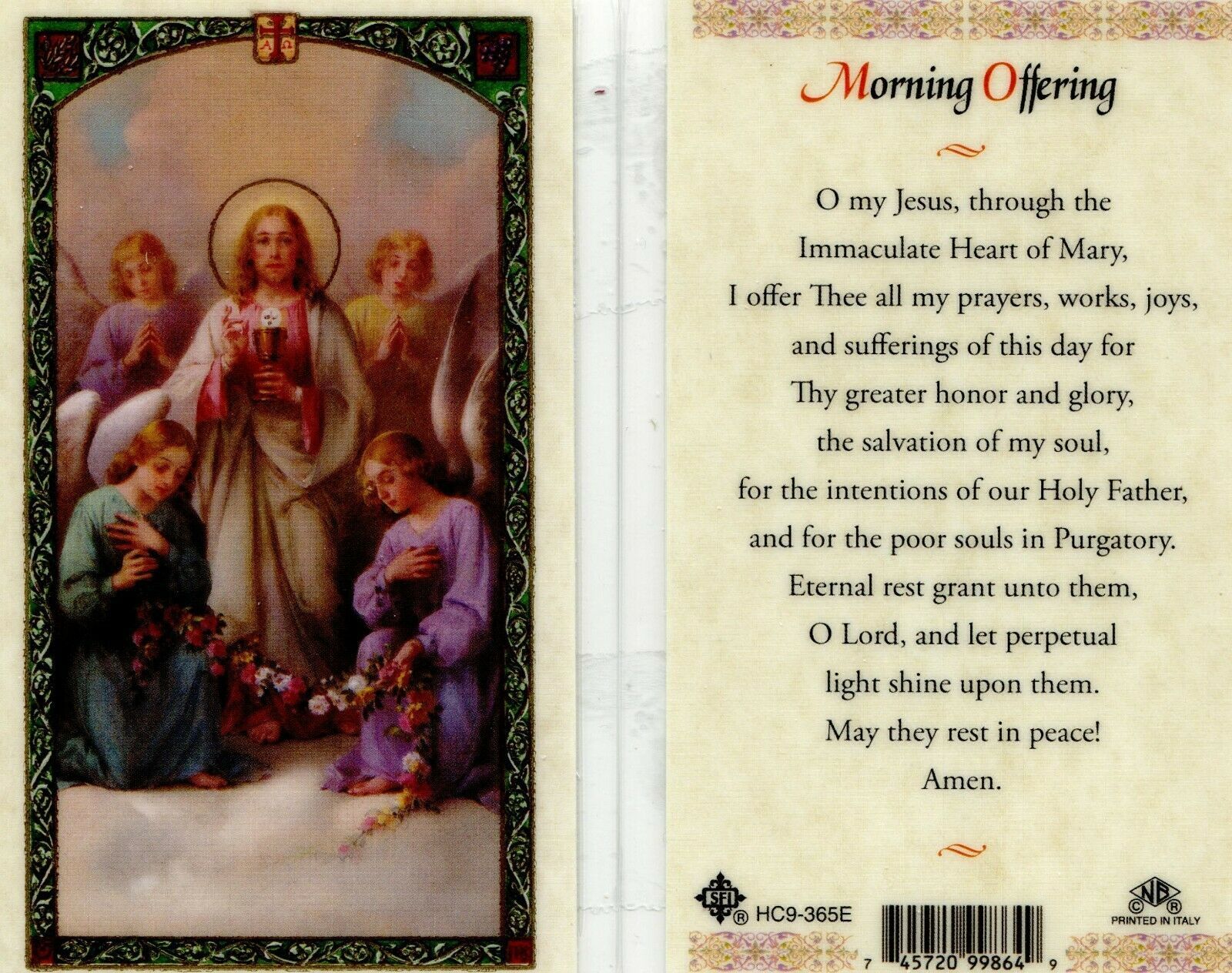
The Month of April is Dedicated to Devotion to the Most Holy Eucharist
“Now as they were eating, Jesus took bread, and blessed, and broke it, and gave it to the disciples and said, “Take, eat; this is my body.” And he took a cup, and when he had given thanks he gave it to them, saying, “Drink of it, all of you; for this is my blood of the covenant, which is poured out for many for the forgiveness of sins.” (Matthew 26:26-28)

Pope Leo XIV’s prayer intention for the month of April, 2026:
For priests in crisis
Let us pray for priests going through moments of crisis in their vocation, that they may find the accompaniment they need and that communities may support them with understanding and prayer.

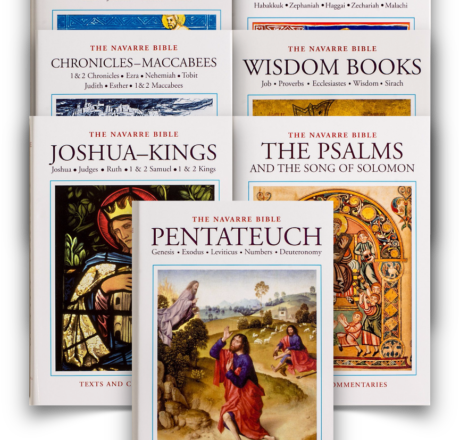
Today’s First Reading
From: Isaiah 50:4-9a
Third Song of the Servant of the Lord
-------------------------------------
[4] The Lord GOD has given me the tongue of those who are taught; that I may know how to sustain with a word him that is weary. Morning by morning he wakens, he wakens my ear to hear as those who are taught. [5] The Lord GOD has opened my ear, and I was not rebellious, I turned not backward. [6] I gave my back to the smiters, and my cheeks to those who pulled out the beard; I hid not my face from shame and spitting.
[7] For the LORD GOD helps me; therefore, I have not been confounded; therefore, I have set my face like a flint, and I know that I shall not be put to shame; [8] he who vindicates me is near. Who will contend with me? Let us stand up together. Who is my adversary? Let him come near me. [9a] Behold, the Lord GOD helps me; who will declare me guilty?
***********************************************************************
Commentary:
50:4-9. The second song dealt with the servant’s mission (cf. 49:6); the third song focuses on the servant himself. The term “servant” as such does not appear here, and therefore some commentators read the passage as being a description of a prophet and not part of the songs. Still, the context (cf. 50:10) does suggest that the protagonist is the servant. The poem is neatly constructed in three stanzas, each beginning with the words, “The Lord God” (vv. 4, 5, 7), and it has a conclusion containing that same wording (v. 9). The first stanza emphasizes the servant’s docility to the word of God; that is, he is not depicted as a self-taught teacher with original ideas, but as an obedient disciple. The second (vv. 5-6) speaks of the suffering that that docility has brought him, without his uttering a word of complaint. The third (vv. 7-8) shows how determined the servant is: if he suffers in silence, it is not out of cowardice but because God helps him and makes him stronger than his persecutors. The conclusion (v. 9) is like the verdict of a trial: when all is said and done, the servant will stand tall, and all his enemies will be struck down.
The evangelists saw the words of this song as finding fulfillment in Jesus--especially what the song has to say about the suffering and silent fortitude of the servant. The Gospel of John, for example, quotes Nicodemus’ acknowledgment of Christ’s wisdom: “Rabbi, we know that you are a teacher come from God; for no one can do these signs that you do, unless God is with him” (Jn 3:21). But the description of the servant’s sufferings was the part that most impressed the early Christians; that part of the song was recalled when they meditated on the passion of Jesus and how “they spat in his face; and struck him; and some slapped him” (Mt 26:67) and later how the Roman soldiers “spat upon him, and took the reed and struck him on the head” (Mt 27:30; cf. also Mk 15:19; Jn 19:3). St Paul refers to v. 9 when applying to Christ Jesus the role of intercessor on behalf of the elect in the suit pressed constantly against them by the enemies of the soul: “Who shall bring any charge against God’s elect?” (Rom 8:33).
St Jerome sees the servant’s docility as a reference to Christ: “His self-discipline and wisdom enabled him to communicate to us the knowledge of the Father. And he was obedient onto death, death on the cross; he offered his body to the blows they struck, his shoulders to the lash; and though he was wounded on the chest and on his face, he did not try to turn away and escape their violence” ("Commentarii In Isaiam", 50, 4). This passage is used in the liturgy of Palm Sunday (along with Psalm 22 and St Paul’s hymn in the Letter to the Philippians 2:6-11), before the reading of our Lord’s passion.
From: Matthew 26:14-25
Judas Betrays Jesus
-------------------
[14] Then one of the twelve, who was called Judas Iscariot, went to the chief priests [15] and said, "What will you give me if I deliver Him (Jesus) to you?" And they paid him thirty pieces of silver. [16] And from that moment he sought an opportunity to betray Him.
Preparations for the Last Supper
--------------------------------
[17] Now on the first day of Unleavened Bread the disciples came to Jesus, saying, "Where will You have us prepare for You to eat the Passover?" [18] He said, "Go into the city to such a one, and say to him, `The Teacher says, My time is at hand; I will keep the Passover at your house with My disciples.'" [19] And the disciples did as Jesus had directed them, and they prepared for the Passover.
[20] When it was evening, He sat at table with the twelve disciples; [21] and as they were eating, He said, "Truly, I say to you, one of you will betray Me." [22] And they were very sorrowful, and began to say to Him one after another, "Is it I, Lord?" [23] He answered, "He who has dipped his hand in the dish with Me, will betray Me. [24] The Son of Man goes as it is written of Him, but woe to that man by whom the Son of Man is betrayed! It would have been better for that man if he had not been born." [25] Judas, who betrayed Him, said, "Is it I, Master?" He said to him, "You have said so."
***********************************************************************
Commentary:
15. It is disconcerting and sobering to realize that Judas Iscariot actually went as far as to sell the man whom he had believed to be the Messiah and who had called him to be one of the Apostles. Thirty shekels or pieces of silver were the price of a slave (cf. Exodus 21:32), the same value as Judas put on his Master.
17. This unleavened bread, azymes, took the form of loaves which had to be eaten over a seven-day period, in commemoration of the unleavened bread which the Israelites had to take with them in their hurry to leave Egypt (cf. Exodus 12:34). In Jesus' time the Passover supper was celebrated on the first day of the week of the Unleavened Bread.
18. Although the reference is to an unnamed person, probably our Lord gave the person's actual name. In any event, from what other evangelists tell us (Mark 14:13; Luke 22:10), Jesus gave the disciples enough information to enable them to find the house.
22. Although the glorious events of Easter have yet to occur (which will teach the Apostles much more about Jesus), their faith has been steadily fortified and deepened in the course of Jesus' public ministry (cf. John 2:11; 6:68-69) through their contact with Him and the divine grace they have been given (cf. Matthew 16:17). At this point they are quite convinced that our Lord knows their internal attitudes and how they are going to act: each asks in a concerned way whether he will prove to be loyal in the time ahead.
24. Jesus is referring to the fact that He will give Himself up freely to suffering and death. In so doing He would fulfill the Will of God, as proclaimed centuries before (cf. Psalm 41:10; Isaiah 53:7). Although our Lord goes to His death voluntarily, this does not reduce the seriousness of Judas' treachery.
25. This advance indication that Judas is the traitor is not noticed by the other Apostles (cf. John 13:26-29).
Disclaimer: Opinions posted on Free Republic are those of the individual posters and do not necessarily represent the opinion of Free Republic or its management. All materials posted herein are protected by copyright law and the exemption for fair use of copyrighted works.


