Free Republic
Browse · Search
Religion
Topics · Post Article

Skip to comments.

Catholic Caucus: Daily Mass Readings xx-March-2026
Universalis/Jerusalem Bible ^

Posted on 03/30/2026 5:05:28 AM PDT by annalex

30 March 2026

Monday of Holy Week


Chapel of Saint John Climacus, Mount Sinai

Readings at Mass

Liturgical Colour: Violet. Year: A(II).


First readingIsaiah 42:1-7

Here is my chosen one in whom my soul delights

Here is my servant whom I uphold,
my chosen one in whom my soul delights.
I have endowed him with my spirit
that he may bring true justice to the nations.
He does not cry out or shout aloud,
or make his voice heard in the streets.
He does not break the crushed reed,
nor quench the wavering flame.
Faithfully he brings true justice;
he will neither waver, nor be crushed
until true justice is established on earth,
for the islands are awaiting his law.
Thus says God, the Lord,
he who created the heavens and spread them out,
who gave shape to the earth and what comes from it,
who gave breath to its people
and life to the creatures that move in it:
‘I, the Lord, have called you to serve the cause of right;
I have taken you by the hand and formed you;
I have appointed you as covenant of the people and light of the nations,
‘to open the eyes of the blind,
to free captives from prison,
and those who live in darkness from the dungeon.’


Responsorial Psalm
Psalm 26(27):1-3,13-14
The Lord is my light and my help.
The Lord is my light and my help;
  whom shall I fear?
The Lord is the stronghold of my life;
  before whom shall I shrink?
The Lord is my light and my help.
When evil-doers draw near
  to devour my flesh,
it is they, my enemies and foes,
  who stumble and fall.
The Lord is my light and my help.
Though an army encamp against me
  my heart would not fear.
Though war break out against me
  even then would I trust.
The Lord is my light and my help.
I am sure I shall see the Lord’s goodness
  in the land of the living.
Hope in him, hold firm and take heart.
  Hope in the Lord!
The Lord is my light and my help.

Gospel Acclamation
Praise and honour to you, Lord Jesus!
Hail to you, our King!
You alone have had compassion on our sins.
Praise and honour to you, Lord Jesus!

GospelJohn 12:1-11

'She had to keep this scent for the day of my burial'

Six days before the Passover, Jesus went to Bethany, where Lazarus was, whom he had raised from the dead. They gave a dinner for him there; Martha waited on them and Lazarus was among those at table. Mary brought in a pound of very costly ointment, pure nard, and with it anointed the feet of Jesus, wiping them with her hair; the house was full of the scent of the ointment. Then Judas Iscariot – one of his disciples, the man who was to betray him – said, ‘Why wasn’t this ointment sold for three hundred denarii, and the money given to the poor?’ He said this, not because he cared about the poor, but because he was a thief; he was in charge of the common fund and used to help himself to the contributions. So Jesus said, ‘Leave her alone; she had to keep this scent for the day of my burial. You have the poor with you always, you will not always have me.’
  Meanwhile a large number of Jews heard that he was there and came not only on account of Jesus but also to see Lazarus whom he had raised from the dead. Then the chief priests decided to kill Lazarus as well, since it was on his account that many of the Jews were leaving them and believing in Jesus.

Christian Art

Illustration

Each day, The Christian Art website gives a picture and reflection on the Gospel of the day.

The readings on this page are from the Jerusalem Bible, which is used at Mass in most of the English-speaking world. The New American Bible readings, which are used at Mass in the United States, are available in the Universalis apps, programs and downloads.

You can also view this page with the Gospel in Greek and English.


TOPICS: Catholic; General Discusssion; Prayer; Worship
KEYWORDS: catholic; jn12; lent; prayer

Click here: to donate by Credit Card

Or here: to donate by PayPal

Or by mail to: Free Republic, LLC - PO Box 9771 - Fresno, CA 93794

Thank you very much and God bless you.

For your reading, reflection, faith-sharing, comments, questions, discussion.

1 posted on 03/30/2026 5:05:28 AM PDT by annalex
[ Post Reply | Private Reply | View Replies]

To: All

KEYWORDS: catholic; jn12; lent; prayer


2 posted on 03/30/2026 5:06:40 AM PDT by annalex (fear them not)
[ Post Reply | Private Reply | To 1 | View Replies]

To: nickcarraway; NYer; ELS; Pyro7480; livius; ArrogantBustard; Catholicguy; RobbyS; marshmallow; ...


Alleluia Ping

Please FReepmail me to get on/off the Alleluia Ping List.


3 posted on 03/30/2026 5:07:41 AM PDT by annalex (fear them not)
[ Post Reply | Private Reply | To 2 | View Replies]

To: annalex
Chris Robinson: My Dad [our Jim Robinson] Passed Away Peacefully Monday Night (October 27th) In Our Home.
Jim still needs our prayers. Thread 2
Prayer thread for Salvation's recovery
Pray for Ukraine
Prayer thread for Fidelis' recovery
Update on Jim Robinson's health issues
4 posted on 03/30/2026 5:08:22 AM PDT by annalex (fear them not)
[ Post Reply | Private Reply | To 3 | View Replies]

To: annalex
John
 English: Douay-RheimsLatin: Vulgata ClementinaGreek NT: Byzantine/Majority Text (2000)
 John 12
1JESUS therefore, six days before the pasch, came to Bethania, where Lazarus had been dead, whom Jesus raised to life. Jesus ergo ante sex dies Paschæ venit Bethaniam, ubi Lazarus fuerat mortuus, quem suscitavit Jesus.ο ουν ιησους προ εξ ημερων του πασχα ηλθεν εις βηθανιαν οπου ην λαζαρος ο τεθνηκως ον ηγειρεν εκ νεκρων
2And they made him a supper there: and Martha served: but Lazarus was one of them that were at table with him. Fecerunt autem ei cœnam ibi, et Martha ministrabat, Lazarus vero unus erat ex discumbentibus cum eo.εποιησαν ουν αυτω δειπνον εκει και η μαρθα διηκονει ο δε λαζαρος εις ην των ανακειμενων συν αυτω
3Mary therefore took a pound of ointment of right spikenard, of great price, and anointed the feet of Jesus, and wiped his feet with her hair; and the house was filled with the odour of the ointment. Maria ergo accepit libram unguenti nardi pistici pretiosi, et unxit pedes Jesu, et extersit pedes ejus capillis suis : et domus impleta est ex odore unguenti.η ουν μαρια λαβουσα λιτραν μυρου ναρδου πιστικης πολυτιμου ηλειψεν τους ποδας του ιησου και εξεμαξεν ταις θριξιν αυτης τους ποδας αυτου η δε οικια επληρωθη εκ της οσμης του μυρου
4Then one of his disciples, Judas Iscariot, he that was about to betray him, said: Dixit ergo unus ex discipulis ejus, Judas Iscariotes, qui erat eum traditurus :λεγει ουν εις εκ των μαθητων αυτου ιουδας σιμωνος ισκαριωτης ο μελλων αυτον παραδιδοναι
5Why was not this ointment sold for three hundred pence, and given to the poor? Quare hoc unguentum non veniit trecentis denariis, et datum est egenis ?δια τι τουτο το μυρον ουκ επραθη τριακοσιων δηναριων και εδοθη πτωχοις
6Now he said this, not because he cared for the poor; but because he was a thief, and having the purse, carried the things that were put therein. Dixit autem hoc, non quia de egenis pertinebat ad eum, sed quia fur erat, et loculos habens, ea quæ mittebantur, portabat.ειπεν δε τουτο ουχ οτι περι των πτωχων εμελεν αυτω αλλ οτι κλεπτης ην και το γλωσσοκομον ειχεν και τα βαλλομενα εβασταζεν
7Jesus therefore said: Let her alone, that she may keep it against the day of my burial. Dixit ergo Jesus : Sinite illam ut in diem sepulturæ meæ servet illud.ειπεν ουν ο ιησους αφες αυτην εις την ημεραν του ενταφιασμου μου τετηρηκεν αυτο
8For the poor you have always with you; but me you have not always. Pauperes enim semper habetis vobiscum : me autem non semper habetis.τους πτωχους γαρ παντοτε εχετε μεθ εαυτων εμε δε ου παντοτε εχετε
9A great multitude therefore of the Jews knew that he was there; and they came, not for Jesus' sake only, but that they might see Lazarus, whom he had raised from the dead. Cognovit ergo turba multa ex Judæis quia illic est, et venerunt, non propter Jesum tantum, sed ut Lazarum viderent, quem suscitavit a mortuis.εγνω ουν οχλος πολυς εκ των ιουδαιων οτι εκει εστιν και ηλθον ου δια τον ιησουν μονον αλλ ινα και τον λαζαρον ιδωσιν ον ηγειρεν εκ νεκρων
10But the chief priests thought to kill Lazarus also: Cogitaverunt autem principes sacerdotum ut et Lazarum interficerent :εβουλευσαντο δε οι αρχιερεις ινα και τον λαζαρον αποκτεινωσιν
11Because many of the Jews, by reason of him, went away, and believed in Jesus. quia multi propter illum abibant ex Judæis, et credebant in Jesum.οτι πολλοι δι αυτον υπηγον των ιουδαιων και επιστευον εις τον ιησουν

5 posted on 03/30/2026 5:12:46 AM PDT by annalex (fear them not)
[ Post Reply | Private Reply | To 4 | View Replies]

To: annalex

Catena Aurea by St. Thomas Aguinas

12:1–11

1. Then Jesus six days before the passover came to Bethany, where Lazarus was which had been dead, whom he raised from the dead.

2. There they made him a supper: and Martha served: but Lazarus was one of them that sat at the table with him.

3. Then took Mary a pound of ointment of spikenard, very costly, and anointed the feet of Jesus, and wiped his feet with her hair: and the house was filled with the odour of the ointment.

4. Then saith one of his disciples, Judas Iscariot, Simon’s son, which should betray him,

5. Why was not this ointment sold for three hundred pence, and given to the poor?

6. This he said, not that he cared for the poor; but because he was a thief, and had the bag, and bare what was put therein.

7. Then said Jesus, Let her alone: against the day of my burying hath she kept this.

8. For the poor always ye have with you; but me ye have not always.

9. Much people of the Jews therefore knew that he was there: and they came not for Jesus’ sake only, but that they might see Lazarus also, whom he had raised from the dead.

10. But the chief priests consulted that they might put Lazarus also to death:

11. Because that by reason of him many of the Jews went away, and believed on Jesus.

ALCUIN. As the time approached in which our Lord had resolved to suffer, He approached the place which He had chosen for the scene of His suffering: Then Jesus six days before the passover came to Bethany. First, He went to Bethany, then to Jerusalem; to Jerusalem to suffer, to Bethany to keep alive the recollection of the recent resurrection of Lazarus; Where Lazarus was, which had been dead, whom He raised from the dead.

THEOPHYLACT. On the tenth day of the month they took the lamb which was to be sacrificed on the passover, and from that time began the preparation for the feast. Or rather the ninth day of the month, i. e. six days before the passover, was the commencement of the feast. They feasted abundantly on that day. Thus we find Jesus partook of a banquet at Bethany: There they made Him a supper, and Martha served. That Martha served, shews that the entertainment was in her house. See the fidelity of the woman: she does not leave the task of serving to the domestics, but takes it upon herself. The Evangelist adds, in order, it would seem, to settle Lazarus’ resurrection beyond dispute, But Lazarus was one of them that sat at the table with Him.

AUGUSTINE. (Tr. l. 5) He lived, talked, feasted; the truth was established, the unbelief of the Jews confounded.

CHRYSOSTOM. (Hom. lxv) Mary did not take part in serving the guests generally, but gave all her attention to our Lord, treating Him not as mere man, but as God: Then took Mary a pound of spikenard, very costly, and anointed the feet of Jesus, and wiped His feet with her hair.

AUGUSTINE. (Tr. l. 6) The word pistici seems to be the name of some place, from which this precious ointment came.

ALCUIN. Or pistici means genuine, non-adulterated. She is the woman that was a sinner, who came to our Lord in Simon’s house with the box of ointment.

AUGUSTINE. (de Con. Evang. ii. lxxix) That she did this on another occasion in Bethany is not mentioned in Luke’s Gospel, but is in the other three. Matthew and Mark say that the ointment was poured on the head, John says, on the feet. Why not suppose that it was poured both on the head, and on the feet? (c. lxxviii.). Matthew and Mark introduce the supper and the ointment out of place in the order of time. (Mat 26:6. Mark 14:3.) When they are some way farther on in their narrationa, they go back to the sixth day before the passover.

And the house was filled with the odour of the ointment.

AUGUSTINE. (Tr. l) Remember the Apostle’s words: To the one we are the savour of death unto death; and to the other the savour of life unto life. (2 cor. 11:16)

AUGUSTINE. (de Con. Evang. ii. lxxix. [156.]) Then saith one of His disciples, Judas Iscariot, Simon’s son, which should betray Him, Why was not this ointment sold for three hundred pence, and given to the poor? In the other Gospels it is the disciples who murmured at the waste of the ointment. I think myself that Judas is put for the whole body of disciples; the singular for the plural. But at any rate we may supply for ourselves, that the other disciples said it, or thought it, or were persuaded by this very speech of Judas. The only difference is, that Matthew and Mark expressly mention the concurrence of the others, whereas John only mentions Judas, whose habit of thieving He takes occasion to notice: This he said, not that he cared for the poor, but because he was a thief, and had the bag, and bare what was put therein.

ALCUIN. He carried it as a servant, he took it out as a thief.

AUGUSTINE. (Tr. l. 10) Judas did not perish at the time when he received money from the Jews to betray our Lord. He was already a thief, already lost, and followed our Lord in body, not in heart; wherein we are taught the duty of tolerating wicked men, lest we divide the body of Christ. He who robs the Church of any thing may be compared to the lost Judas. Tolerate the wicked, thou that art good, that thou mayest receive the reward of the good, and not fall into the punishment of the wicked. Follow the example of our Lord’s conversation upon earth. Wherefore had He bags, to Whom the Angels ministered, except because His Church should afterwards have bags? Why did He admit thieves, but to shew that His Church should tolerate thieves, while it suffered from them. It is not surprising that Judas, who was accustomed to steal money from the bags, should betray our Lord for money.

CHRYSOSTOM. (Hom. lxv. 2) But why was a thief entrusted with the bags of the poor? Perhaps it was to give him no excuse of wanting money, for of this he had enough in the bag for all his desires.

THEOPHYLACT. Some suppose that Judas had the keeping of the money, as being the lowest kind of service. For that the ministry of money matters ranks below the ministry of doctrine, we know from what the Apostle says in the Acts, It is not reason that we should leave the word of God, and serve tables. (Acts 6:2)

CHRYSOSTOM. (Hom. lxv. 2) Christ, with great forbearance, does not rebuke Judas for his thieving, in order to deprive him of all excuse for betraying Him.

ALCUIN. Then said Jesus, Let her alone: against the day of My burying hath she kept this: meaning that He was about to die, and that this ointment was suitable for His burial. So to Mary who was not able to be present, though much wishing, at the anointing of the dead body, was it given to do Him this office in His lifetime.

CHRYSOSTOM. (Hom. lxv. 2) Again, as if to remind His betrayer, He alludes to His burial; For the poor ye have always with you, but Me ye have not always: as if He said, I am a burden, a trouble to thee; but wait a little, and I shall be gone.

AUGUSTINE. (Tr. l. 13) He was speaking of His bodily presence; for in respect of His majesty, providence, ineffable and invisible grace, those words are fulfilled, Lo, I am with you alway, even unto the end of the world. (Mat. 28:20) (c. 12.). Or thus: In the person of Judas are represented the wicked in the Church; for if thou art a good man, thou hast Christ now by faith, and the Sacrament, and thou shalt have Him always, for when thou hast departed hence, thou shalt go to Him who said to the thief, To-day shalt thou be with Me in paradise. (Luke 23:43) But if thou art wicked, thou seemest to have Christ, because thou art baptized with the baptism of Christ, because thou approachest to the altar of Christ: but by reason of thy wicked life, thou shalt not have Him alway. It is not thou hast, but ye have, the whole body of wicked men being addressed in Judas. (c. 14). Much people of the Jews therefore knew that He was there, and they came not for Jesus’ sake only, but that they might see Lazarus also, whom He had raised from the dead. Curiosity brought them, not love.

THEOPHYLACT. They wished to see with their own eyes him who had been raised from the dead, and thought that Lazarus might bring back a report of the regions below.

AUGUSTINE. (Tr. l. 14) When the news of this great miracle had spread every where, and was supported by such clear evidence, that they could neither suppress or deny the fact, then, The chief priests consulted that they might put Lazarus to death. O blind rage! as if the Lord could raise the dead, and not raise the slain. Lo, the Lord hath done both. He raised Lazarus, and He raised Himself.

CHRYSOSTOM. (Hom. lxvi. 1) No other miracle of Christ excited such rage as this. It was so public, and so wonderful, to see a man walking and talking after he had been dead four days. And the fact was so undeniable. In the case of some other miracles they had charged Him with breaking the sabbath, and so diverted people’s minds: but here there was nothing to find fault with, and therefore they vent their anger upon Lazarus. They would have done the same to the blind man, had they not had the charge to make of breaking the sabbath. Then again the latter was a poor man, and they cast him out of the temple; but Lazarus was a man of rank, as is plain from the number who came to comfort his sisters. It vexed them to see all leaving the feast, which was now coming on, and going to Bethany.

ALCUIN. Mystically, that He came to Bethany six days before the passover, means, that He who made all things in six days, who created man on the sixth, in the sixth age of the world, the sixth day, the sixth hour, came to redeem mankind. The Lord’s Supper is the faith of the Church, working by love. Martha serveth, whenever a believing soul devotes itself to the worship of the Lord. Lazarus is one of them that sit at table, when those who have been raised from the death of sin, rejoice together with the righteous, who have been ever such, in the presence of truth, and are fed with the gifts of heavenly grace. The banquet is given in Bethany, which means, house of obedience, i. e. in the Church: for the Church is the house of obedience.

AUGUSTINE. (Tr. li. 6) The ointment with which Mary anointed the feet of Jesus was justice. It was therefore a pound. It was ointment of spikenard (pistici) too, very precious. Πίστις is Greek for faith. Dost thou seek to do justice? The just liveth by faith. (Heb. 10:38) Anoint the feet of Jesus by good living, follow the Lord’s footsteps: if thou hast a superfluity, give to the poor, and thou hast wiped the Lord’s feet; for the hair is a superfluous part of the body.

ALCUIN. And observe, on the first occasion of her anointing, she anointed His feet only, but now she anoints both His feet and head. The former denotes the beginnings of penitence, the latter the righteousness of souls perfected. By the head of our Lord the loftiness of His Divine nature, by His feet the lowliness of His incarnation are signified; or by the head, Christ Himself, by the feet, the poor who are His members.

AUGUSTINE. (Tr. li. 7) The house was filled with the odour; the world was filled with the good fame.

Catena Aurea John 12


6 posted on 03/30/2026 5:14:07 AM PDT by annalex (fear them not)
[ Post Reply | Private Reply | To 5 | View Replies]

To: annalex


The Magdalene washing the feet of Jesus
surrounded by grisailles of other scenes from the life of the "composite Magdalen"

Frans Francken II

1637

7 posted on 03/30/2026 5:18:54 AM PDT by annalex (fear them not)
[ Post Reply | Private Reply | To 6 | View Replies]

To: annalex

St. John Climacus

St John, generally distinguished by the appellation of Climacus, from his excellent book entitled Climax, or the Ladder to Perfection, was born about the year 525, probably in Palestine. By his extraordinary progress in the arts and sciences he obtained very young the surname of the Scholastic. But at sixteen years of age he renounced all the advantages which the world promised him to dedicate himself to God in a religious state, in 547. He retired to Mount Sinai, which, from the time of the disciples of St. Anthony and St. Hilarion, had been always peopled by holy men, who, in imitation of Moses, when he received the law on that mountain, lived in the perpetual contemplation of heavenly things. Our novice, fearing the danger of dissipation and relaxation to which numerous communities are generally more exposed than others, chose not to live in the great monastery on the summit, but in an hermitage on the descent of the mountain, under the discipline of Martyrius, an holy ancient anchoret. By silence he curbed the insolent itch of talking about everything, an ordinary vice in learned men, but usually a mark of pride and self-sufficiency. By perfect humility and obedience he banished the dangerous desire of self-complacency in his actions. He never contradicted, never disputed with anyone. So perfect was his submission that he seemed to have no self-will. He undertook to sail through the deep sea of this mortal life securely, under the direction of a prudent guide, and shunned those rocks which he could not have escaped, had he presumed to steer alone, as he tells us. From the visible mountain he raised his heart, without interruption, in all his actions, to God, who is invisible; and, attentive to all the motions of his grace, studied only to do his will. Four years he spent in the trial of his own strength, and in learning the obligations of his state, before he made his religious profession, which was in the twentieth year of his age. In his writings he severely condemns engagements made by persons too young, or before a sufficient probation. By fervent prayer and fasting he prepared himself for the solemn consecration of himself to God, that the most intense fervour might make his holocaust the more perfect; and from that moment he seemed to be renewed in spirit; and his master admired the strides with which, like a mighty giant, the young disciple advanced daily more and more towards God, by self-denial, obedience, humility, and the uninterrupted exercises of divine love and prayer.

In the year 560, and the thirty-fifth of his age, he lost Martyrius by death; having then spent nineteen years in that place in penance and holy contemplation. By the advice of a prudent director, he then embraced an eremitical life in a plain called Thole, near the foot of Mount Sinai. His cell was five miles from the church, probably the same which had been built a little before, by order of the Emperor Justinian, for the use of the monks at the bottom of this mountain, in honour of the Blessed Virgin, as Procopius mentions. Thither he went every Saturday and Sunday to assist, with all the other anchorets and monks of that desert, at the holy office and at the celebration of the divine mysteries, when they all communicated. His diet was very sparing, though, to shun ostentation and the danger of vainglory, he ate of everything that was allowed among the monks of Egypt, who universally abstained from flesh, fish, &c. Prayer was his principal employment; and he practiced what he earnestly recommends to all Christians, that in all their actions, thoughts, and words they should keep themselves with great fervour in the presence of God, and direct all they do to his holy will. By habitual contemplation he acquired an extraordinary purity of heart, and such a facility of lovingly beholding God in all his works that this practice seemed in him a second nature. Thus he accompanied his studies with perpetual prayer. He assiduously read the holy scriptures and fathers, and was one of the most learned doctors of the church. But, to preserve the treasure of humility, he concealed, as much as possible, both his natural and acquired talents, and the extraordinary graces with which the Holy Ghost enriched his soul. By this secrecy he fled from the danger of vainglory, which, like a leech, sticks to our best actions and, sucking from them its nourishment, robs us of their fruit. As if this cell had not been sufficiently remote from the eyes of men, St. John frequently retired into a neighbouring cavern which he had made in the rock, where no one could come to disturb his devotions or interrupt his tears. So ardent were his charity and compunction, that his eyes seemed two fountains, which scarce ever ceased to flow; and his continual sighs and groans to heaven, under the weight of the miseries inseparable from his moral pilgrimage, were not to be equaled by the vehemency of the cries of those who suffer from knives and fire. Overcome by importunities, he admitted a holy anchoret named Moyses to live with him as his disciple.

God bestowed on St. John an extraordinary grace of healing the spiritual disorders of souls. Among others, a monk called Isaac was brought almost to the brink of despair by most violent temptations of the flesh. He addressed himself to St. John, who perceived by his tears how much he underwent from that conflict and struggle which he felt within himself. The servant of God commended his faith, and said, "My son, let us have recourse to God by prayer." They accordingly prostrated themselves together on the ground in fervent supplication for a deliverance, and from that time the infernal serpent left Isaac in peace. Many others resorted to St. John for spiritual advice; but the devil excited some to jealousy, who censured him as one who, out of vanity, lost much time in unprofitable discourse. The saint took this accusation, which was a mere calumny, in good part, and as a charitable admonition; he therefore imposed on himself a rigorous silence for near a twelvemonth. This, his humility and modesty, so much astonished his calumniators that they joined the rest of the monks in beseeching him to reassume his former function of giving charitable advice to all that resorted to him for it, and not to bury that talent of science which he had received for the benefit of many. He who knew not what it was to contradict others, with the same humility and deference again opened his mouth to instruct his neighbour in the rules of perfect virtue, in which office, such was the reputation of his wisdom and experience, that he was regarded as another Moses in that holy place.

St. John was now seventy-five years old, and had spent forty of them in his hermitage, when, in the year 600, he was unanimously chosen Abbot of Mount Sinai, and superior-general of all the monks and hermits in that country. Soon after he was raised to this dignity, the people of Palestine and Arabia, in the time of a great drought and famine, made their application to him as to another Elias, begging him to intercede with God in their behalf. The saint failed not, with great earnestness, to recommend their distress to the Father of mercies, and his prayer was immediately recompensed with abundant rains. St. Gregory the Great, who then sat in St. Peter's chair, wrote to our holy abbot, recommending himself to his prayers, and sent him beds, with other furniture and money, for his hospital, for the use of pilgrims near Mount Sinai. John, who had used his utmost endeavours to decline the pastoral charge when he saw it laid upon him, neglected no means which might promote the sanctification of all those who were entrusted to his care. That posterity might receive some share in the benefit of his holy instructions, John, the learned and virtuous Abbot of Raithu, a monastery situate towards the Red Sea, entreated him by that obedience he had ever practiced, even with regard to his inferiors, that he would draw up the most necessary rules by which fervent souls might arrive at Christian perfection. The saint answered him that nothing but extreme humility could have moved him to write to so miserable a sinner, destitute of every sort of virtue; but that he received his commands with respect, though far above his strength, never considering his own insufficiency. Wherefore, apprehensive of falling into death by disobedience, he took up his pen in haste, with great eagerness mixed with fear, and set himself to draw some imperfect outlines, as an unskillful painter, leaving them to receive from him, as a great master, the finishing strokes. This produced the excellent work which he called "Climax; or, the Ladder of religious Perfection." This book, being written in sentences, almost in the manner of aphorisms, abounds more in sense than words. A certain majestic simplicity- an inexpressible unction and spirit of humility, joined with conciseness and perspicuity-very much enhance the value of this performance; but its chief merit consists in the sublime sentiments and perfect description of all Christian virtues which it contains. The author confirms his precepts by several edifying examples, as of obedience and penance. In describing a monastery of three hundred and thirty monks which he had visited near Alexandria, in Egypt, he mentions one of the principal citizens of that city, named Isidore, who, petitioning to be admitted into the house, said to the abbot, "As iron is in the hands of the smith, so am I in your hands." The abbot ordered him to remain without the gate, and to prostrate himself at the feet of everyone that passed by, begging their prayers for his soul struck with a leprosy. Thus he passed seven years in profound humility and patience. He told St. John that, during the first year, he always considered himself as a slave condemned for his sins, and sustained violent conflicts; the second year he passed in tranquillity and confidence; and the third with relish and pleasure in his humiliations. So great was his virtue that the abbot determined to present him to the bishop in order to be promoted to the priesthood, but the humility of the holy penitent prevented the execution of that design; for, having begged at least a respite, he died within ten days. St. John could not help admiring the cook of this numerous community, who seemed always recollected, and generally bathed in tears amidst his continual occupation, and asked him by what means he nourished so perfect a spirit of compunction, in the midst of such a dissipating laborious employment. He said that serving the monks, he represented to himself that he was serving not men, but God in his servants; and that the fire he always had before his eyes reminded him of that fire which will burn souls for all eternity. The moving description which our author gives of the monastery of penitents called the Prison, above a mile from the former, hath been already abridged in our language. John the Sabaite told our saint, as of a third person, that seeing himself respected in his monastery, he considered that this was not the way to satisfy for his sins; wherefore, with the leave of his abbot, he repaired to a severe monastery in Pontus, and after three years saw in a dream a schedule of his debts, to the amount in appearance of one hundred pounds of gold, of which only ten were cancelled. He therefore repeated often to himself, "Poor Antiochus, thou hast still a great debt to satisfy." After passing other thirteen years in contempt and the most fervent practices of penance, he deserved to see in a vision his whole debt blotted out. Another monk, in a grievous fit of illness, fell into a trance, in which he lay as if he had been dead for the space of an hour; but, recovering, he shut himself up in a cell, and lived a recluse twelve years, almost continually weeping, in the perpetual meditation of death. When he was near death, his brethren could only extort from him these words of edification, "He who hath death always before his eyes will never sin." John, Abbot of Raithu, explained this book of our saint by judicious comments, which are also extant. We have likewise a letter of St. John Climacus to the same person concerning the duties of a pastor, in which he exhorts him in correcting others to temper severity with mildness, and encourages him zealously to fulfil the obligations of his charge; for nothing is greater or more acceptable to God than to offer him the sacrifice of rational souls sanctified by penance and charity.

St. John sighed continually under the weight of his dignity during the four years that he governed the monks of Mount Sinai; and as he had taken upon him that burden with fear and reluctance, he with joy found means to resign the same a little before his death. Heavenly contemplation, and the continual exercise of divine love and praise, were his delight and comfort in his earthly pilgrimage: and in this imitation of the functions of the blessed spirits in heaven he placeth the essence of the monastic state. In his excellent maxims concerning the gift of holy tears, the fruit of charity, we seem to behold a lively portraiture of his most pure soul. He died in his hermitage on the 30th day of March, in 605, being fourscore years old. His spiritual son, George, who had succeeded him in the abbacy, earnestly begged of God that he might not be separated from his dear master and guide; and followed him by a happy death within a few days. On several Greek commentaries on St. John Climacus's ladder, see Montfaucon, Biblioth. Coisliana, pp. 305, 306.

St. John Climacus, speaking of the excellence and the effects of charity, does it with a feeling and energy worthy of such a subject: "A mother," says he, "feels less pleasure when she folds within her arms the dear infant whom she nourishes with her own milk than the true child of charity does when united as he incessantly is, to his God, and folded as it were in the arms of his heavenly Father.—Charity operates in some persons so as to carry them almost entirely out of themselves. It illuminates others, and fills them with such sentiments of joy, that they cannot help crying out: The Lord is my helper and my protector: in him hath my heart confided, and I have been helped And my flesh hath flourished again, and with my will I will give praise to him. This joy which they feel in their hearts, is reflected on their countenances; and when once God has united, or, as we may say, incorporated them with his charity, he displays in their exterior, as in the reflection of a mirror, the brightness and serenity of their souls: even as Moses, being honored with a sight of God, was encompassed round by his glory." St. John Climacus composed the following prayer to obtain the gift of charity: "My God, I pretend to nothing upon this earth, except to be so firmly united to you by prayer that to be separated from you may be impossible; let others desire riches and glory; for my part, I desire but one thing, and that is, to be inseparably united to you, and to place in you alone all my hopes of happiness and repose."


ewtn.com

8 posted on 03/30/2026 5:24:28 AM PDT by annalex (fear them not)
[ Post Reply | Private Reply | To 7 | View Replies]

To: annalex

9 posted on 03/30/2026 5:26:36 AM PDT by annalex (fear them not)
[ Post Reply | Private Reply | To 8 | View Replies]

To: annalex

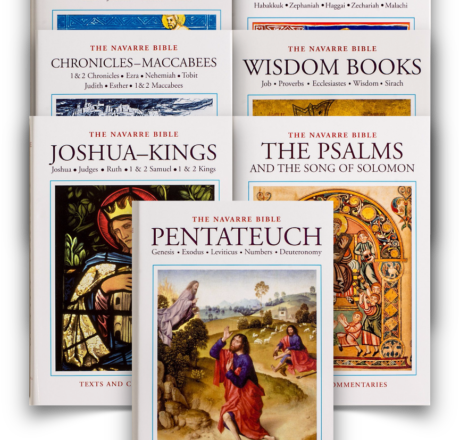
NAVARRE BIBLE COMMENTARY(RSV)

Ad Majorem Dei Gloriam (To the Greater Glory of God)

Click here for the Navarre Bible Commentary on today’s Mass readings.

10 posted on 03/30/2026 7:57:22 PM PDT by fidelis (Ecce Crucem Domini! Fugite partes adversae! Vicit Leo de tribu Juda, Radix David! Alleluia!)
[ Post Reply | Private Reply | To 9 | View Replies]

Disclaimer: Opinions posted on Free Republic are those of the individual posters and do not necessarily represent the opinion of Free Republic or its management. All materials posted herein are protected by copyright law and the exemption for fair use of copyrighted works.

Free Republic
Browse · Search
Religion
Topics · Post Article

FreeRepublic, LLC, PO BOX 9771, FRESNO, CA 93794
FreeRepublic.com is powered by software copyright 2000-2008 John Robinson