
Posted on 03/27/2026 10:31:15 PM PDT by fidelis
Many of the Jews who had come to Mary and seen what Jesus had done began to believe in him. But some of them went to the Pharisees and told them what Jesus had done. So the chief priests and the Pharisees convened the Sanhedrin and said, “What are we going to do? This man is performing many signs. If we leave him alone, all will believe in him, and the Romans will come and take away both our land and our nation.” John 11:45–48
Tomorrow we begin Holy Week with Palm Sunday, commemorating Jesus’ triumphant entry into Jerusalem. Today’s Gospel recounts events shortly after Jesus raised Lazarus from the dead, which took place in Bethany, near Jerusalem—just days before He would ride into the city on a donkey, greeted with shouts of “Hosanna! Blessed is he who comes in the name of the Lord!” (John 12:13).
During the final months of His life, Jesus often stayed out of the public eye to avoid those plotting His death. However, He briefly emerged to perform His final recorded miracle: raising Lazarus from the dead... Some witnesses reported it to the authorities, and the Sanhedrin feared Jesus’ growing popularity would provoke a Roman persecution upon the Jews.
At the high priest Caiaphas’ suggestion, they decided it was better for Jesus to die than for the nation to suffer. As high priest, Caiaphas spoke prophetically—even unknowingly—about Jesus’ death, saying, “It is better for you that one man should die instead of the people, so that the whole nation may not perish” (John 11:49–50). Commenting on this, Saint Augustine teaches: “This passage shows that the Spirit of prophecy can even work through wicked people to reveal future events” (Tractate 49 on the Gospel of John).
Knowing that God’s omnipotent power can use even evil actions to accomplish His divine plan should console us when we encounter injustice or malice in our own lives. Jesus was never a victim of circumstance; He remained in full control of His mission. At His arrest, He reminded His disciples: “Do you think that I cannot call upon my Father, and He will not provide me at this moment with more than twelve legions of angels?” (Matthew 26:53).
This insight is essential as we enter the “Holy Weeks” of our lives—those times of trial, suffering, or injustice that we do not always fully understand. When we encounter crosses, it is easy to see them as obstacles to joy and peace. But Romans 8:28 reminds us: “All things work for good for those who love God, who are called according to His purpose.” Every cross, injustice, or hardship is within God’s providential care, just as Holy Week was. When we trust Him, even the evil we experience can be transformed into a path toward God’s glory and for our good.
Reflect today on the perfect wisdom of God’s plan, which used even the sins of wicked people to bring about salvation. Consider any crosses, sufferings, or injustices you currently face. Instead of giving in to anger or despair, have faith that God can use them for good. If you remain in God’s grace, trust that whatever He permits in your life is an expression of His almighty power and love, working all things for His glory and your good. Just as Jesus set His face toward Jerusalem, knowing that great suffering awaited Him, so too must we turn our eyes to our own “Jerusalem”—to the challenges and difficulties we encounter—and trust that God will work all things for good.
All-powerful Lord, nothing deterred You from fulfilling Your Father’s will. Your mission was to save many souls and to do so through the instrumentality of both the good and the wicked. Evil was conquered because You, in Your goodness, drew even greater good from it. Please help me to imitate You and to participate in Your glorious victory over sin and death by uniting every injustice and suffering I endure with Your Passion so as to achieve Your glory and victory in my life. Jesus, I trust in You.
Please keep in mind that this is a Catholic Caucus/Devotional thread for the purpose of prayerful reflection on the Sacred Scriptures and is closed to debate of any kind. Per FR policy on Religion Caucus threads, off-topic, argumentative, and abusive comments are not allowed and will be submitted to the Mods for deletion. Thanks, and God bless you.
The Month of March is Dedicated to St. Joseph
“And he went down with them and came to Nazareth, and was obedient to them; and his mother kept all these things in her heart. And Jesus increased in wisdom and in stature, and in favor with God and man.” (Luke 2:51-52)

Pope Leo XIV’s prayer intention for the month of March, 2026:
For disarmament and peace
Let us pray that nations move toward effective disarmament, particularly nuclear disarmament, and that world leaders choose the path of dialogue and diplomacy instead of violence.

Today’s First Reading
From: Ezekiel 37:21-28
The Reunification of the Two Kingdoms (Continuation)
----------------------------------------------------
[21] Then say to them, Thus says the Lord GOD: Behold, I will take the people of Israel from the nations among which they have gone, and will gather them from all sides, and bring them to their own land; [22] and I will make them one nation in the land, upon the mountains of Israel; and one king shall be king over them all; and they shall be no longer two nations, and no longer divided into two kingdoms. [23] They shall not defile themselves any more with their idols and their detestable things, or with any of their transgressions; but I will save them from all the backslidings in which they have sinned, and will cleanse them; and they shall be my people, and I will be their God.
[24] “My servant David shall be king over them; and they shall all have one shepherd. They shall follow my ordinances and be careful to observe my statutes. They shall dwell in the land where your fathers dwelt that I gave to my servant Jacob; they and their children and their children’s children shall dwell there for ever; and David my servant shall be their prince for ever. [26] I will make a covenant of peace with them; it shall be an everlasting covenant with them, and I will bless them and multiply them, and will set my sanctuary in the midst of them for evermore. [27] My dwelling place shall be with them; and I will be their God, and they shall be my people. [28] Then the nations will know that I the LORD will sanctify Israel, when my sanctuary is in the midst of them for ever more."
***********************************************************************
Commentary:
37:15-27. Unity will be the most obvious effect of the people’s purification. By the symbolic action of the two sticks, Ezekiel shows that it is God himself who will bring about the unification of the tribes that made up the Southern kingdom (Judah) with those of the North (Joseph-Ephraim); it will be a union so strong that it will never again be broken (as it was broken after the death of Solomon: cf. 1 Kings 12:20-33). This unity is also a symbol of the oneness that Jesus wants the new people of God to have (cf. Jn 17:21) and which is essential for the success of his plans for mankind’s salvation, “All men are called to be part of this catholic unity of the people of God which in promoting universal peace presages it. And there belong to or are related to it in various ways, the Catholic faithful, all who believe in Christ, and indeed the whole of mankind, for all men are called by the grace of God to salvation” (Vatican II, "Lumen Gentium", 13).
37:26. A “covenant of peace”. The concluding words of the oracle (vv. 24-28) are messianic ones, as can be seen from the reference to David, king and shepherd (v. 24), and from the emphasis put on the fact that the nation will abide in the land “for ever” (v. 25) with the sanctuary in its midst (vv. 27, 28). Peace (cf. 34:25) is the greatest of the messianic gifts (cf. Is 9:5); it implies safety from external enemies but, above all, peace with God and neighbor. Jesus called peacemakers blessed, happy (cf. Mt 5:9). “[T]he peace of Christ radiates from God the Father. For by the cross the incarnate Son, the prince of peace reconciled all men with God. By thus restoring all men to the unity of one people and one body, he slew hatred in his own flesh; and, after being lifted on high by his resurrection, he poured forth the spirit of love into the hearts of men” ("Gaudium Et Spes", 78).
From: John 11:45-56
The Sanhedrin Decides on the Death of Jesus
-------------------------------------------
[45] Many of the Jews therefore, who had come with Mary (Magdalene) and had seen what He (Jesus) did, believed in Him; [46] but some of them went to the Pharisees and told them what Jesus had done. [47] So the chief priests and the Pharisees gathered the council, and said, "What are we to do? For this Man performs many signs. [48] If we let Him go on thus, every one will believe in Him, and the Romans will come and destroy both our holy place and our nation." [49] But one of them, Caiaphas, who was high priest that year, said to them, "You know nothing at all; [50] you do not understand that it is expedient for you that one man should die for the people, and that the whole nation should not perish." [51] He did not say this of his own accord, but being high priest that year he prophesied that Jesus should die for the nation, [52] and not for the nation only, but to gather into one the children of God who are scattered abroad. [53] So from that day on they took counsel on how to put Him to death.
[54] Jesus therefore no longer went about openly among the Jews, but went from there to the country near the wilderness, to a town called Ephraim; and there He stayed with the disciples.
[55] Now the Passover of the Jews was at hand, and many went up from the country to Jerusalem before the Passover, to purify themselves. [56] They were looking for Jesus and saying to one another as they stood in the temple, "What do you think? That He will not come to the feast?"
***********************************************************************
Commentary:
45-48. Once again, as Simeon had predicted, Jesus is a sign of contradiction (cf. Luke 2:34; John 7:12, 31, 40; 9:16; etc.): presented with the miracle of the raising of Lazarus some people believe in Jesus (verse 45), and some denounce Him to His enemies (cf. verses 46-47)--confirming what is said in the parable of the rich man: "neither will they be convinced if someone should rise from the dead" (Luke 16:31).
"Our (holy) place": this expression or similar expressions such as "the place", "this place", was used to designate the temple, the holy place "par excellence" and, by extension, all the Holy City of Jerusalem (cf. Maccabees 5:19; Acts 6:14).
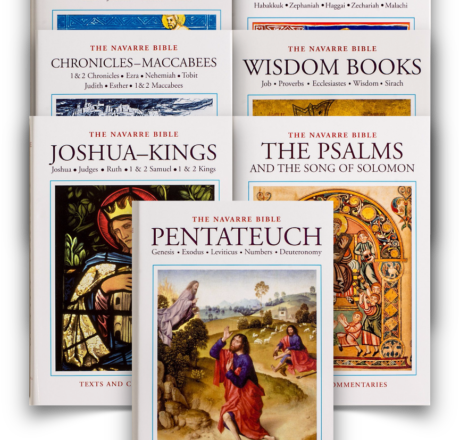
49-53. Caiaphas held the high priesthood from the year 18 to the year 36 A.D. (cf. "The Dates of the Life of our Lord Jesus Christ" in "The Navarre Bible: St. Mark", p. 49). Caiaphas was the instrument God used to prophesy the redemptive death of the Savior, for it was one of the functions of the high priest to consult God on how to lead the people (cf. Exodus 28:30; Numbers 27:21; 1 Samuel 23:9; 30:7-8). Here Caiaphas' words have a dual meaning: one, Caiaphas' meaning, is that he wants to put Christ to death, on the pretext that that will ensure the political peace and survival of Israel; the other, the meaning intended by the Holy Spirit, is the announcement of the foundation of the new Israel, the Church, through the death of Christ on the Cross (Caiaphas is unaware of this meaning). And so it happens that the last high priest of the Old Alliance prophesies the investiture of the High Priest of the New Alliance, which will be sealed in His own blood.
When the Evangelist states that Christ was going to die "to gather into one the children of God who are scattered abroad" (verse 52), he is referring to what our Lord had said regarding the salvific effects of His death (cf. John 10:14-15). The prophets had already announced the future assembly of Israelites faithful to God to form the new people of Israel (cf. Isaiah 43:5; Jeremiah 23:3-5; Ezekiel 34:23; 37:21-24). These prophecies are fulfilled by the death of Christ, who, on being raised up on the cross, draws and gathers together the true people of God, composed of all believers, whether Israelites or not. The Second Vatican Council uses this passage as a source when speaking of the universality of the Church: "All men are called to belong to the new people of God. This people therefore, whilst remaining one and only one, is to be spread throughout the whole world and to all ages in order that the design of God's will may be fulfilled: He made human nature one in the beginning and decreed that all His children who were scattered should be finally gathered together as one (cf. John 11:52). It was for this purpose that God sent His Son, whom He appointed heir of all things (cf. Hebrews 1:2), that He might be teacher, king and priest of all, the head of the new and universal people of God's sons" ("Lumen Gentium", 13).
In the fourth century, St. John Chrysostom explained the catholicity of the Church using these words: "What is the meaning of `to gather into one those who are scattered abroad'? He made them one body. He who dwells in Rome knows that the Christians of India are his members" ("Hom. on St. John", 65, 1).
54. The time for Him to die has not yet arrived; therefore Jesus acts prudently, taking the steps anyone would take not to precipitate events.
55. Since the Passover was the most solemn Jewish feast, the people used to arrive in Jerusalem some days in advance to prepare for it by washings, fasts and offerings--practices established not by the Mosaic law but by popular piety; the rites of the Passover itself, with the sacrificing of the lamb, were a rite of purification and expiation for sins. The Passover of the Jews was a figure of the Christian Pasch or Easter, for, as St. Paul the Apostle teaches us, our paschal lamb is Christ (cf. 1 Corinthians 5:7), who offered Himself once and for all to the eternal Father on the cross to atone for our sins. (Pope) Paul VI recalled this happy truth of faith: "Gave Himself for me? But does there still exist a religion which is expressed in sacrifices? No, the sacrifices of the ancient law and pagan religions have no longer any reason to exist; but the world always needs a sacrifice, a valid, unique and perennial one, for the redemption of human sin [...]; it is the sacrifice of Christ on the cross, which wipes out sin from the world; a sacrifice which the Eucharist actualizes in time and makes it possible for the men of this earth to take part in it" (Paul VI, "Homily on Corpus Christ", 17 June 1976).
If the Jews prepared to celebrate the Passover with all these rites and ablutions, it is obvious what steps we should take to celebrate or participate in the Mass and to receive Christ--our Pasch--in the Eucharist. "On this earth, when we receive an important person, we bring out the best--lights, music, formal dress. How should we prepare to receive Christ into our soul? Have we ever thought about how we should behave if we could only receive Him once in a lifetime?" (St J. Escriva, "Christ Is Passing By", 91).
Disclaimer: Opinions posted on Free Republic are those of the individual posters and do not necessarily represent the opinion of Free Republic or its management. All materials posted herein are protected by copyright law and the exemption for fair use of copyrighted works.

