
Posted on 03/23/2026 10:44:47 PM PDT by fidelis
“You belong to what is below, I belong to what is above. You belong to this world, but I do not belong to this world. That is why I told you that you will die in your sins. For if you do not believe that I AM, you will die in your sins.” John 8:23–24
Tensions were growing as Jesus gradually unveiled the deeper reality of Who He is, while the Pharisees remained blind to the truth, obstinate in their opposition. When Jesus said, “you will die in your sins,” He was not speaking of a sin committed out of weakness or confusion. He was speaking about the Pharisees’ fundamental and grave sin of refusing to accept Him as “I AM,” the Messiah and Son of God.
Chapter 8 in John’s Gospel reveals this growing tension. In today’s Gospel, Jesus becomes exceptionally clear about His messianic identity, taking upon Himself the awesome name of Yahweh: I AM. Chapter 8 concludes with Jesus stating, “You belong to your father the devil and you willingly carry out your father’s desires” (John 8:44). This so angered the Jews that they tried to stone Him.
Why did Jesus agitate the Pharisees and others who refused to believe in Him? It certainly wasn’t to be argumentative. The agitation came from the truth He proclaimed about Himself and the Pharisees’ need to believe in Him. He was unveiling His identity and inviting people to believe in Him so they could receive the gift of eternal life... Jesus’ divine identity did not fit into their expectations of Who the Messiah would be. Furthermore, when Jesus revealed the truth of Who He was with such clarity, the Pharisees realized that much of what they believed about the Messiah was wrong; that was hard for them to accept because they didn’t want to change.
We have much to learn from the Pharisees. There are many things God asks of us that are difficult to accept. First, within the larger context of secular society, God’s pure and holy truth is often met with resistance, ignored, or even dismissed outright... bureaucratic workplaces driven by profit and power rather than ethics, and even within our own families, where faith can become a point of contention and division.
The broader societal context is not the only place God’s truth is met with resistance. In each of our souls, God’s holy truth demands total surrender to His will and obedience to His commands. God—the all-powerful, all-knowing, and all-loving Creator of all things—alone knows what is best for us. Holiness requires ongoing conversion, change, and humble repentance.
Rejection of God’s truth leaves us angry and defensive, just like the Pharisees. Openness to God’s truth demands change. As the old saying goes, “Change is the only thing that remains the same.” Change is difficult, especially when God’s pure light and truth reveal that we have walked down the wrong path, believed lies, failed to love, and misunderstood the Gospel and the demands that the great I AM expects of us.
Reflect today on the Pharisees and their fierce opposition to Jesus. As you do, humbly consider any ways that you are obstinate and unwilling to change. The only people in this world who do not need to change are those who have already arrived at the perfection of Divine Union, freed of every earthly sin and attachment to sin. The rest of us still have a long road of conversion, purification, and humbling repentance. Do not take the path of the Pharisees. Eagerly run to the difficult and demanding truth God speaks to you so that you will come to know God’s power and true identity in your life, accepting Him as your Lord and Messiah.
My demanding Lord, You call me to perfection because You love me. Because of my sin, I often resist the many ways that You speak to me, trying to draw me into the full truth. Please open my heart and remove all obstinacy so that I will willingly change so as to ascend the glorious staircase toward Divine Union. Jesus, I trust in You.
Please keep in mind that this is a Catholic Caucus/Devotional thread for the purpose of prayerful reflection on the Sacred Scriptures and is closed to debate of any kind. Per FR policy on Religion Caucus threads, off-topic, argumentative, and abusive comments are not allowed and will be submitted to the Mods for deletion. Thanks, and God bless you.
The Month of March is Dedicated to St. Joseph
“And he went down with them and came to Nazareth, and was obedient to them; and his mother kept all these things in her heart. And Jesus increased in wisdom and in stature, and in favor with God and man.” (Luke 2:51-52)

Pope Leo XIV’s prayer intention for the month of March, 2026:
For disarmament and peace
Let us pray that nations move toward effective disarmament, particularly nuclear disarmament, and that world leaders choose the path of dialogue and diplomacy instead of violence.

Today’s First Reading
From: Numbers 21:4-9
The Bronze Serpent
------------------
[4] From Mount Hor they set out by the way to the Red Sea, to go around the land of Edom; and the people became impatient on the way. [5] And the people spoke against God and against Moses, "Why have you brought us up out of Egypt to die in the wilderness? For there is no food and no water, and we loathe this worthless food." [6] Then the Lord sent fiery serpents among the people and they bit the people, so that many people of Israel died. [7] And the people came to Moses, and said, "We have sinned, for we have spoken against the Lord and against you; pray to the Lord, that he take away the serpents from us." So Moses prayed for the people. [8] And the Lord said to Moses, "Make a fiery serpent, and set it on a pole; and every one who is bitten, when he sees it, shall live." [9] So Moses made a bronze serpent, and set it on a pole; and if a serpent bit any man, he would look at the ronze serpent and live.
***********************************************************************
Commentary:
21:4-9. The people continue to complain against Moses, this time because they have to go right around Edom. But their protest is also directed against God. When they are punished, Moses once again intercedes on their behalf. The events covered in this account may have taken place in the region of Araba, where copper mines existed from the 13th century BC onwards. In the town now called Timna, an Egyptian shrine has been unearthed which contained a copper serpent, indicating that some sort of magical power was attributed to these serpents.
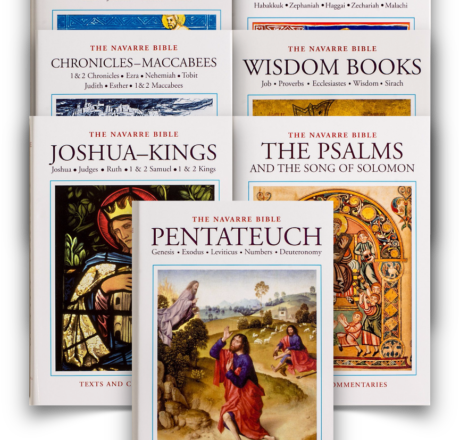
This passage in Numbers is interpreted in Wisdom 16:5-12, where the point is emphasized that it was not the bronze serpent that cured them but the mercy of God; the serpent was a sign of the salvation which God offers all men. The bronze serpent is mentioned later, in the Gospel, as typifying Christ raised up on the cross, the cause of salvation for those who look at him with faith: "As Moses lifted up the serpent in the wilderness, so must the Son of man be lifted up; that whosoever believes in him may have eternal life" (Jn 3:14-15) When Christ is raised above all human things, he draws them towards himself; so his glorification is the means whereby all mankind obtain healing for ever more.
From: John 8:21-30
Jesus Warns the Unbelieving Jews
--------------------------------
[21] Again He (Jesus) said to them, "I go away, and you will seek Me and die in your sin; where I am going, you cannot come." [22] Then said the Jews, "Will He kill Himself, since He says, `Where I am going, you cannot come?'" [23] He said to them, "You are from below, I am from above; you are of this world, I am not of this world. [24] I told you that you would die in your sins, for you will die in your sins unless you believe that I am He." [25] They said to Him, "Who are You?" Jesus said to them, "Even what I have told you from the beginning. [26] I have much to say about you and much to judge; but He who sent Me is true, and I declare to the world what I have heard from Him." [27] They did not understand that He spoke to them of the Father. [28] So Jesus said, "When you have lifted up the Son of Man, then you will know that I am He, and that I do nothing on My own authority but speak thus as the Father taught Me. [29] And He who sent Me is with Me; He has not left Me alone, for I always do what is pleasing to Him." [30] As He spoke thus, many believed in Him.
***********************************************************************
Commentary:
21-24. At the outset of His public ministry, Jesus could be seen to have all the features of the promised Messiah; some people recognized Him as such and became His followers (cf. John 1:12-13; 4:42; 6:69; 7:41); but the Jewish authorities, although they were expecting the Messiah (cf. John 1:19ff), persisted in their rejection of Jesus. Hence the warning to them: He is going where they cannot follow, that is, He is going to Heaven, which is where He has come from (cf. John 6:41ff), and they will keep looking out for the Messiah foretold by the prophets; but they will not find Him because they look for Him outside of Jesus, nor can they follow Him, for they do not believe in Him. You are of the world, our Lord is saying to them, not because you are on earth but because you are living under the influence of the prince of this world (cf. John 12:31; 14:30; 16:11); you are his vassals and you do his deeds (cf. 8:44); therefore, you will die in your sin. "We are all born with sin", St. Augustine comments, "all by our living have added to what we were by nature, and have become more of this world than we then were, when we were born of our parents. Where would we be if He had not come, who had no sin at all, to loose all sin? The Jews, because they did not believe in Him, deserved to have it said to them, 'You will die in your sin'" ("In Ioann. Evang.", 38, 6).
The salvation which Christ brings will be applied to those who believe in His divinity. Jesus declares His divinity when He says "I am He", for this _expression, which He repeats on other occasions (cf. John. 8:28; 13:19), is reserved to Yahweh in the Old Testament (cf. Deuteronomy 32:39; Isaiah 43:10-11), where God, in revealing His name and therefore His essence, says to Moses "I AM WHO I AM" (Exodus 3:14). In this profound way God says that He is the Supreme Being in a full, absolute sense, that He is dependent on no other being, that all other things depend on Him for their being and existence. Thus, when Jesus says of Himself, "I am He", He is revealing that He is God.
25. A little before this Jesus had spoken about His Heavenly origin and His divine nature (cf. verses 23-24); but the Jews do not want to accept this revelation; which is why they ask Him for an even more explicit statement: "Who are You?" Our Lord's reply can be understood in different ways, because the Greek text has two meanings: 1) our Lord is confirming what He has just asserted (cf. verses 23-24) and what He has been teaching throughout this visit to Jerusalem--in which case it may be translated "precisely what I am telling you" or else "in the first place what I am telling you". This is the interpretation given in the New Vulgate. 2) Jesus is indicating that He is the "Beginning", which is the word St. John also uses in the Apocalypse to designate the Word, the cause of all creation (Revelation 3:14; cf. Revelation 1:8). In this way Jesus states His divine origin. This is the interpretation given in the Vulgate. Either way, Christ is once more revealing His divinity; He is reaffirming what He said earlier, but without saying it all over again.
"Many people in our own days ask the same question: 'Who are You?' [...] Who, then, was Jesus? Our faith exults and cries out: it is He, it is He, the Son of God made man. He is the Messiah we were expecting: He is the Savior of the world, the Master of our lives: He is the Shepherd that guides men to their pastures in time, to their destinies beyond time. He is the joy of the world; He is the image of the invisible God: He is the way, the truth and the life; He is the interior friend; He is the One who knows us even from afar; He knows our thoughts; He is the One who can forgive us, console, cure, even raise from the dead; and He is the One who will return, the judge of one and all, in the fullness of His glory and our eternal happiness" (Paul VI, "General Audience", 11 December 1974).
26-27. "He who sent Me": an _expression very often found in St. John's Gospel, referring to God the Father (cf. 5:37; 6:44; 7:28; 8:16).
The Jews who were listening to Jesus did not understand whom He was referring to; but St. John, in recounting this episode, explains that He meant His Father, from Whom He came.
"He spoke to them of the Father": this is the reading in most of the Greek codexes, including the more important ones. Other Greek codexes and some translations, including the Vulgate, read, "He was calling God His Father."
"What I have heard from Him": Jesus had connatural knowledge of His Father, and it is from this knowledge that He speaks to men; He knows God not through revelation or inspiration as the prophets and sacred writers did, but in an infinitely higher way: which is why He can say that no one knows the Father but the Son and He to whom the Son chooses to reveal Him (cf. Mt 11:27).
On the type of knowledge Jesus had during His life on earth, see the note on Luke 2:52.
28. Our Lord is referring to His passion and death: "`And I, when I am lifted up from the earth, will draw all men to Myself'. He said this to show by what death He was to die" (John 12:32-33). Rounding out the Synoptics and the Letters of St. Paul, the Fourth Gospel presents the Cross, above all, as a royal throne on which Christ is "lifted up" and from which He offers all men the fruits of salvation (cf. John 3:14-15; cf. also Numbers 21:9ff; Wisdom 16:6).
Jesus says that when that time comes, the Jews will know who He is and His intimate union with the Father, because many of them will discover, thanks to His death and resurrection, that He is the Messiah, the Son of God (cf. Matthew 15:39; Lk 33:48). After the coming of the Holy Spirit many thousands will believe in Him (cf. Acts 2:41; 4:4).
Disclaimer: Opinions posted on Free Republic are those of the individual posters and do not necessarily represent the opinion of Free Republic or its management. All materials posted herein are protected by copyright law and the exemption for fair use of copyrighted works.

