
Posted on 03/14/2026 10:20:47 PM PDT by fidelis
As Jesus passed by he saw a man blind from birth. His disciples asked him, “Rabbi, who sinned, this man or his parents, that he was born blind?” Jesus answered, “Neither he nor his parents sinned; it is so that the works of God might be made visible through him.” John 9:1–3
Imagine being blind throughout your life and then suddenly being healed. All of the sounds you had heard from childhood, all that you had touched, tasted, or smelled suddenly took on new form within your imagination as these images registered with sight for the first time. Colors suddenly made sense. Large items, such as trees that you had only heard in the wind and touched with your hands, could be seen from a distance, glimmering in the sunlight. Your mind suddenly perceived in a new way the utensils, clothing, and other items you used daily. Just as the blind man was filled with awe at receiving his sight, so too is the soul overwhelmed when freed from the blindness of sin and brought into the light of God’s grace.
The healed blind man was given a gift that those who can see from birth are not. Perceiving and understanding the physical world only through four of his senses, and then adding the powerful fifth sense of sight later in life, provided immediate wonder and awe, filling him with profound gratitude for something most of us take for granted.
Think of a person who lives a sinful life for many years and understands life only through the distortions of sin and selfishness. Once set free from sin, the person’s spiritual eyes are opened. Those who experience such a conversion are given a blessing that those who have been faithful throughout their lives do not receive in the same way. They understand the contrast between spiritual blindness and sight, and the newfound freedom they receive after conversion provides a greater understanding of the gift of God’s grace and its transforming effects. They will never forget the weight of bondage once caused by their sin.
One reason God permitted this man to be born blind and live that way into adulthood was to illustrate the contrast between spiritual darkness and light... The miracle not only illustrated Jesus’ divine power but also symbolized the much deeper spiritual healing He offers to all. Just as the blind man received physical sight, we are offered the gift of spiritual sight through grace.
We are born with poor spiritual sight. Our fallen human nature, which suffers from concupiscence, tends toward selfishness and sin. Although capable of love and affection, a child is prone to selfishness, anger, emotional outbursts, and other “childish” behavior... Those who are not well-formed as adolescents or who choose to rebel selfishly in their later years never gain a clearer spiritual sight. The world around them remains blurry, and divine wisdom never penetrates their eyes of faith.
The story of the man born blind is an opportunity for each of us to examine how clearly we perceive our lives and the world around us. Just as the man was healed, we need healing from the blindness caused by our fallen nature. God’s grace restores our spiritual sight, allowing His light to illuminate all we encounter in life.
Reflect today on your own need to see more clearly. We need our spiritual sight restored and sharpened if we are to perceive ourselves and our world with divine Wisdom. It takes humility to admit we have poor spiritual sight, and profound humility to admit if we are spiritually blinded by sin. Learn from the wonder and awe that this healed blind man experienced, and know that our Lord wants us to have clearer spiritual vision.
My healing Lord, because of my fallen human nature and my sin, I often fail to see the light of truth with clarity. Please heal me, as You healed this blind man, so that I will understand my life and Your will more clearly and be filled with wonder and awe at the reception of that gift. Jesus, I trust in You.
Please keep in mind that this is a Catholic Caucus/Devotional thread for the purpose of prayerful reflection on the Sacred Scriptures and is closed to debate of any kind. Per FR policy on Religion Caucus threads, off-topic, argumentative, and abusive comments are not allowed and will be submitted to the Mods for deletion. Thanks, and God bless you.
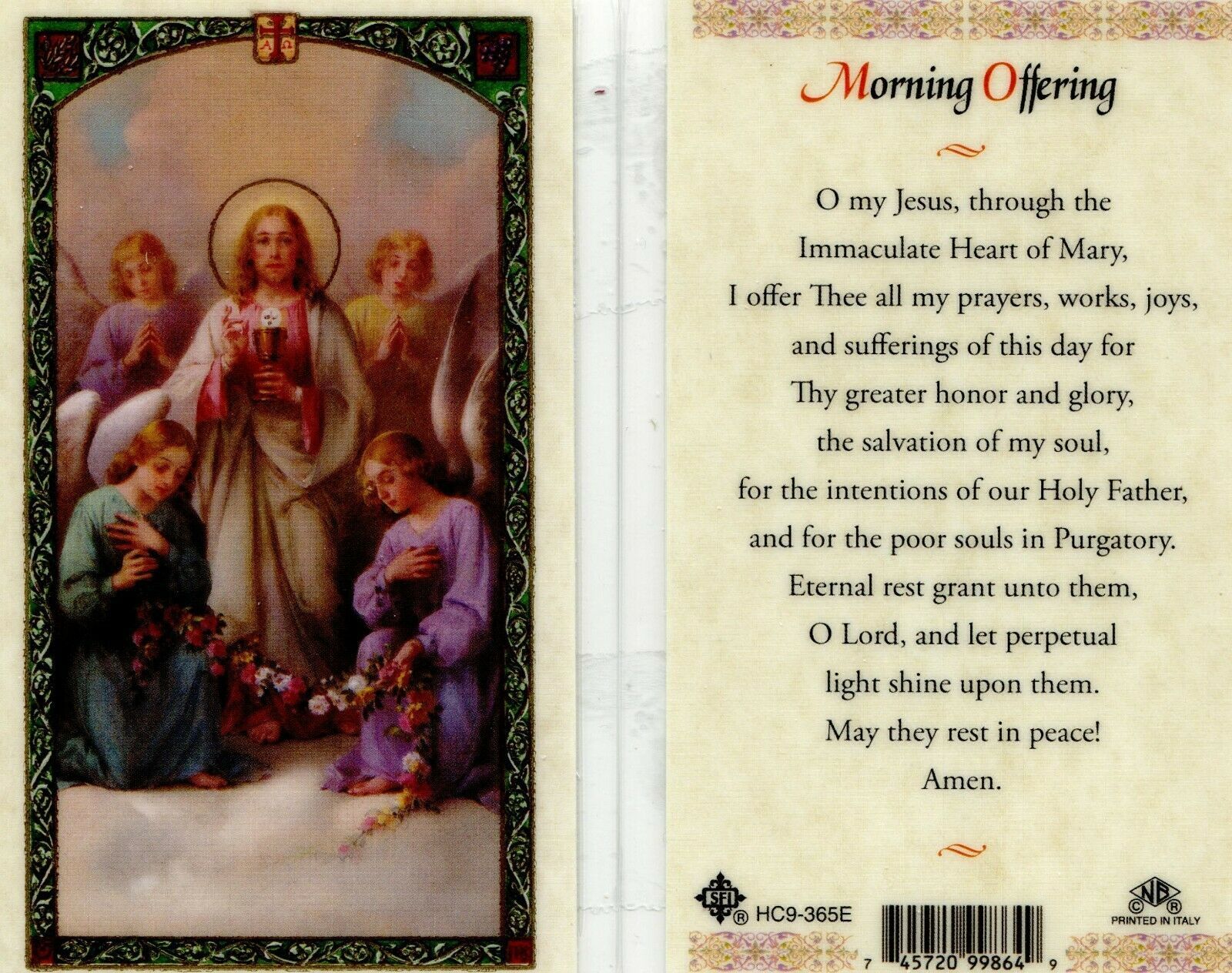
The Month of March is Dedicated to St. Joseph
“And he went down with them and came to Nazareth, and was obedient to them; and his mother kept all these things in her heart. And Jesus increased in wisdom and in stature, and in favor with God and man.” (Luke 2:51-52)

Pope Leo XIV’s prayer intention for the month of March, 2026:
For disarmament and peace
Let us pray that nations move toward effective disarmament, particularly nuclear disarmament, and that world leaders choose the path of dialogue and diplomacy instead of violence.

Today’s First Reading
From: 1 Samuel 16:1-13
David is Anointed
-----------------
[1b] The Lord said to Samuel, “How long will you grieve over Saul, seeing I have rejected him from being king over Israel? Fill your horn with oil, and go; I will send you to Jesse the Bethlehemite, for I have provided for myself a king among his sons." [2] And Samuel said, “How can I go? If Saul hears it, he will kill me.” And the LORD said, “Take a heifer with you, and say, ‘I have come to sacrifice to the LORD.’ [3] And invite Jesse to the sacrifice and I will show you what you shall do and you shall anoint for me him whom I name to you” [4] Samuel did what the LORD commanded and came to Bethlehem. The elders of the city came to meet him trembling, and said, ‘Do you come peaceably?” [5] And he said, ‘Peaceably, I have come to sacrifice to the LORD, consecrate yourselves, and come with me to the sacrifice.” And he consecrated Jesse and his sons, and invited them to the sacrifice.
[6] When they came, he looked on Eliab and thought, "Surely the Lord's anointed is before him." [7] But the Lord said to Samuel, "Do not look on his appearance or on the height of his stature because I have rejected him; for the Lord sees not as man sees; man looks on the outward appearance, but the Lord looks on the heart." [8] Then Jesse called Abinadab, and made him pass before Samuel. And he said, "Neither has the LORD chosen this one." [9] Then Jesse made Shammah pass by. And he said, “Neither has the LORD chosen this one.” [10] And Jesse made seven of his sons pass before Samuel. And Samuel said to Jesse, "The Lord has not chosen these." [11] And Samuel said to Jesse, "Are all your sons here?" And he said, "There remains yet the youngest, but behold, he is keeping the sheep." And Samuel said to Jesse, "Send and fetch him; for we will not sit down till he comes here." [12] And he sent, and brought him in. Now he was ruddy, and had beautiful eyes, and was handsome. And the Lord said, "Arise, anoint him; for this is he." [13] Then Samuel took the horn of oil, and anointed him in the midst of his brothers; and the Spirit of the Lord came mightily upon David from that day forward. And Samuel rose up and went to Ramah.
***********************************************************************
Commentary:
16:1-31:13. This, the last section of 1 Samuel, begins with an account of the gradual decline of Saul until his eventual death in the battle of Gilboa against the Philistines (chap. 31); it also deals with the tortuous and sometimes slow rise to power of the new king, David. Strictly speaking, this section should also take in the final chapter of 2 Samuel. From a literary point of view we can see that the text is very much in the style of a court chronicle focusing only on episodes in which the kings play the leading role. Many of the events covered here are repeated twice--for example, David's entry into Saul's service (16:14-23; 18:1-2), Saul's attempt on David's life (18:10-11; 19:9-10), Saul's promise to give David his daughter's hand in marriage (18:17-19; 18:20-27), Jonathan's pleading on David's behalf (19:1-7; 20:25-34), David's flight (19:10-18; 20:1-21) and the opportunity he gets to take Saul's life (24:7-8; 26:11-12). All this goes to show that the editor has used material from a variety of sources and not made any great effort to merge them properly.
In the episodes recounted here there are few religious references, whereas the tensions between Saul and David are exposed in all their starkness; in fact, even though these chapters deal with the most famous of kings, David, and stress God's special love for him, no effort is made to gloss over his failings and transgressions (contrary to what happens in 1 and 2 Chronicles). David comes across as a shrewd politician, capable of allying himself with the eternal enemies of his people, the Philistines, in order to save himself (chap. 27); as a usurper of Saul's throne (chaps. 19 and 21); as a man of strong passions capable of slaughter on a grand scale (21:12; 22:17) and other human weaknesses (18:17-27; 25:32-44), yet capable, too, of great loyalty to the Lord's anointed king (chaps. 24-26) and to his own friends (chap. 20). So, these accounts expose the most human side of the personalities involved, but they also allow us to see that the Lord God of Israel is the main protagonist even though he is in the background--mainly because it is he who chooses David and stays with him, from the first moment that he enters the picture (16:1) and through all the crises of his career: witness the constant refrain "the Lord is with him" (16:18; 18:14, 28). Saul, David and the rest of the players in this history are not guided by a blind destiny: they are all playing their part in God's plan of salvation. The great lesson contained in these accounts is that the Lord does not normally intervene by way of miracles or amazing actions; he guides the course of history through lights and shadows until he attains his key objective--to make himself known to all mankind and lead it to salvation. The other great lesson is that this salvific history steadily advances, amidst ups and downs--acts of heroism, human weaknesses--until it reaches its fully developed stage in Jesus Christ.
16:1-13. Samuel's anointing of David, in a private, familial setting, is reminiscent of Saul's anointing, which was also done in secret (cf. 10:1-16). The narrative emphasizes that David does not in any way merit his election: he is a nobody, from a family of no importance: no genealogy is provided, apart from the name of Jesse, his father (v. 5); he is the youngest of his brothers (vv. 11-12) and, like the rest of his family, he works as a shepherd: he doesn't come from a noble or military or priestly family. He could have no claim to be anointed king.
God's gratuitous choice of this shepherd boy gives deep, religious meaning to his reception by Saul (16:14-23) and by the people, when he later kills Goliath (17:55-18:5). David's qualities and feats would not have been enough to advance him, had not God first singled him out. David is a type of those who in the Christian dispensation are called to offices in the Church: what matters is not background, personal qualities or material resources but the realization that one is called by God. Also, one needs to bear in mind that "man looks on the outward appearance, but the Lord looks on the heart" (v. 7); from this derives the requirement to live and act in keeping with the call one is given. "For by his power to know himself in the depths of his being he rises above the whole universe of mere objects. When he is drawn to think about his real self, he turns to those deep recesses of his being where God who probes the heart awaits him, and where he himself decides his own destiny in the sight of God" (Vatican II, "Gaudium Et Spes", 14).
From: Ephesians 5:8-14
Walking in the Light
--------------------
[8] For once you were darkness, but now you are light in the Lord; walk as children of light [9] (for the fruit of light is found in all that is good and right and true), [10] and try to learn what is pleasing to the Lord. [11] Take no part in the unfruitful works of darkness, but instead expose them. [12] For it is a shame even to speak of the things that they do in secret; [13] but when anything is exposed by the light it becomes visible, for anything that becomes visible is light.
[14] Therefore it is said, "Awake, O sleeper, and arise from the dead, and Christ shall give you light."
***********************************************************************
Commentary:
8-9. In contrast to the Christian's previous situation, which St. Paul describes as "darkness", he now goes on to speak about the proper course for a believer, for someone enlightened by faith. The Christian is in a different position from that of a pagan; he knows our Lord Jesus Christ and he has a new way of thinking: he is a "child of light", because Christ has given him insight into the criteria which should govern his behavior. In his new life, he should be light; he has been reborn to be the "light of the world" (cf. Matthew 5:14-16; John 1:5; 8:12), a pursuer of all that is good and right and true; this means that he has a new way of being and thinking and acting, and is an example and a help to those around him. There is no room for excuses when what is at stake is the salvation of souls to whom we could be giving a helping hand: "Do not say, I cannot help others," St. John Chrysostom preached, "if you are truly a Christian, it is impossible for you not to be able to do so [...]. If we act properly, everything else will follow as a natural consequence. Christians' light cannot be hidden, a lamp so brilliant cannot fail to be seen" ("Hom. on Acts", 20).
10. Created in the image and likeness of God, man is guided by reason, which can lead him to recognize his Creator and shape his life in line with the moral law God has impressed upon creation itself. He should always be trying to grow in wisdom and knowledge: that is an essential feature of the human spirit. The Second Vatican Council explained this in these terms: "The intellectual nature of man finds at last its perfection, as it should, in wisdom, which gently draws the human mind to look for and to love what is true and good. Filled with wisdom man is led through visible realities to those which cannot be seen" ("Gaudium Et Spes", 15). If a person uses his natural intellect properly, it will bring him closer to God; moreover, the light of faith gives one a supernatural capacity to obtain better insight into the nature of God and His plans, and greater discernment as to what to do to please God.
A person who is in love tries to discover what the loved one likes, in order to do what pleases the loved one. The love of God should also lead one to prove that love with deeds, and not leave it at the level of words. If one is to offer God actions which are pleasing to Him, one needs to have a good grasp of His commandments, of Christian doctrine and moral teaching. A first sign of the sincerity of a person's love of God is the effort he makes to obtain good spiritual and doctrinal training; that shows that he is at least making an effort in the right direction.
11-13. By his word and example, a Christian sheds light on all human realities, and thereby helps others to distinguish right from wrong. Anything that becomes visible is "light": that is, when things are properly identified--when good is shown to be good, and evil exposed for what it is (charitably but unambiguously)--the result is to dispel the confusion and moral relativism which does such harm to society. Hence the Second Vatican Council's exhortation to all Christians, especially lay people: "At a time when new questions are being put and when grave errors aiming at undermining religion, moral order and human society itself are rampant, the Council earnestly exhorts the laity to take a more active part, each according to his or her talents and knowledge and in fidelity to the mind of the Church, in the explanation and defense of Christian principles and in the correct application of them to the problems of our times" ("Apostolicam Actuositatem", 6).
14. St. Paul seems to be quoting from an early liturgical hymn, which depicts Baptism as true enlightenment (cf. Hebrews 6:4; 10:32). By their good works--the light of the world--Christians can help "the dead", that is, those separated from God by sin, to move out of darkness into the light, where they will attain through Baptism that new life which membership of Christ begins. The Apostle is comparing this situation to the luminous clarity a person obtains when he awakens from a deep sleep, in contrast to the profound darkness experienced by one who remains asleep. A sinner's conversion is the equivalent of rising up out of the sleep of death into a new existence, life in a new world illuminated by Christ, who possesses and radiates the glorious light of God (cf. Hebrews 1:3).
From: John 9:1-41
The Cure of the Man Born Blind
------------------------------
[1] As He (Jesus) passed by, He saw a man blind from his birth. [2] And His disciples asked Him, "Rabbi, who sinned, this man or his parents, that he was born blind?" [3] Jesus answered, "It was not that this man sinned, or his parents, but that the works of God might be made manifest in him. [4] We must work the works of Him who sent Me, while it is day; night comes, when no one can work. [5] As long as I am in the world, I am the light of the world." [6] As He said this, He spat on the ground and made clay of the spittle and anointed the man's eyes with the clay, [7] saying to him, "Go, wash in the pool of Siloam" (which means Sent). So he went and washed and came back seeing. [8] The neighbors and those who had seen him before as a beggar, said, "Is not this the man who used to sit and beg?" [9] Some said, "It is he"; others said, "No, but he is like him." He said, "I am the man." [10] They said to him, "Then how were your eyes opened?" [11] The man called Jesus made clay and anointed my eyes and said to me, 'Go to Siloam and wash'; so I went and washed and received my sight." [12] They said to him, "Where is He?" He said, "I do not know."
[13] They brought to the Pharisees the man who had formerly been blind. [14] Now it was a Sabbath day when Jesus made the clay and opened his eyes. [15] The Pharisees again asked him how he had received his sight. And he said to them, "He put clay on my eyes, and I washed, and I see." [16] Some of the Pharisees said, "This Man is not from God, for He does not keep the Sabbath." But others said, "How can a man who is a sinner do such things?" There was a division among them. [17] So they again said to the blind man, "What do you say about Him, since He has opened your eyes?" He said, "He is a prophet."
[18] The Jews did not believe that he had been blind and had received his sight, until they called the parents of the man who had received his sight, [19] and asked them, "Is this your son, who you say was born blind? How then does he now see?" [20] His parents answered, "We know that this is our son, and that he was born blind; [21] but how he now sees we do not know, nor do we know who opened his eyes. Ask him; he is of age, he will speak for himself." [22] His parents said this because they feared the Jews, for the Jews had already agreed that if any one should confess Him to be Christ, he was to be put out of the synagogue. [23] Therefore his parents said, "He is of age, ask him."
The Blindness of the Jews
-------------------------
[24] So for the second time they called the man who had been blind, and said to him, "Give God the praise; we know that this Man is a sinner." [25] He answered, "Whether He is a sinner, I do not know; one thing I know, that though I was blind, now I see." [26] They said to him, "What did He do to you? How did He open your eyes?" [27] He answered them, "I have told you already, and you would not listen. Why do you want to hear it again? Do you too want to become His disciples?" [28] And they reviled him, saying, "You are His disciple, but we are disciples of Moses. [29] We know that God has spoken to Moses, but as for this Man, we do not know where He comes from." [30] The man answered, "Why, this is a marvel! You do not know where He comes from, and yet He opened my eyes. [31] We know that God does not listen to sinners, but if any one is a worshipper of God and does His will, God listens to him. [32] Never since the world began has it been heard that any one opened the eyes of a man born blind. [33] If this Man were not from God, He could do nothing." [34] They answered him, "You were born in utter sin, and would you teach us?" And they cast him out.
[35] Jesus heard that they had cast him out and having found him, He said, "Do you believe in the Son of Man?" [36] He answered, "And who is He, Sir, that I may believe in Him?" [37] Jesus said to him, "You have seen Him, and it is He who speaks to you." [38] He said, "Lord, I believe"; and he worshipped Him. [39] Jesus said, "For judgment I came into this world, that those who do not see may see, and that those who see may become blind." [40] Some of the Pharisees near Him heard this, and they said to Him, "Are we also blind?" [41] Jesus said to them, "If you were blind, you would have no guilt; but now that you say, 'We see', your guilt remains."
*************************************************************************
Commentary:
2-3. The disciples' question echoes general Jewish views on the causes of illness and of misfortunes in general: they regarded them as punishment for personal sins (cf. Job 4:7-8; 2 Maccabees 7:18), or as the sins of parents being visited on their children (cf. Tobit 3:3).
We know through Revelation (cf. Genesis 3:16-19; Romans 5:12; etc.) that the origin of all the misfortunes which afflict mankind is sin--Original Sin and later personal sin. However, this does not mean that each misfortune or illness has its immediate cause in a personal sin, as if God inflicted or allowed evils to happen in direct proportion to every sin committed. Suffering, which is so often a factor in the life of the just man, can be a resource God sends him to cleanse him of his imperfections, to exercise him in virtue and to unite him to the sufferings of Christ the Redeemer, who although He was innocent, bore in Himself the punishments our sins merited (cf. Isaiah 53:4; 1 Peter 2:24; 1 John 3:5). For example, our Lady and St. Joseph and all the Saints have experienced intense suffering, thereby sharing in the redemptive suffering of Christ.
4-5. The "day" refers to Jesus' life on earth. Hence the urgency with which He approaches the task of doing the will of the Father until He reaches His death, which He compares with "night". This "night" can also be understood as referring to the end of the world; in this passage it means that the Redemption of men brought about by Christ needs to be continued by the Church throughout the centuries, and also that Christians should strive to spread the Kingdom of God.
"Time is precious, time passes, time is a phase of experiment with regard to our decisive and definitive fate. Our future and eternal destiny depends on the proof we give of faithfulness to our duties. Time is a gift from God; it is a question posed by God's love to our free and, it can be said, fateful answer. We must be sparing of time, to use it well, in the intense activity of our life of work, love and suffering. Idleness or boredom have no place in the life of a Christian! Rest, yes, when necessary (cf. Mark 6:31), but always with a view to vigilance, never set" (Pope Paul VI, "Homily", 1 January 1976).
Jesus proclaims that He is the Light of the world because His life among men has given us the ultimate meaning of the world, of the life of every man and every woman, and of mankind as a whole. Without Jesus all creation is in darkness, it does not understand itself, it does not know where it is going. "Only in the mystery of the Incarnate Word does the mystery of man take on light...Through Christ and in Christ, the riddles of sorrow and death grow meaningful; apart from His Gospel they overwhelm us" (Vatican II, "Gaudium Et Spes", 22). Jesus warns us--as He will do more clearly in John 12:35-36--of the need to let ourselves be enlightened by the Light, which is He Himself (cf. John 1:9-12).
6-7. This cure is done in two stages--Jesus' action on the eyes of the blind man, and the man being told to go and wash in the pool of Siloam. Our Lord also used saliva to cure a man who was deaf and dumb (cf. Mark 7:33) and another blind man (cf. Mark 8:23). The pool of Siloam was a reservoir built by King Hezekiah in the seventh century B.C., to supply Jerusalem with water (cf. Kings 20:20; 2 Chronicles 32:30); the prophets regarded these waters as a sign of divine favor (cf. Isaiah 8:6; 22:11). St. John, using the broader etymology of the word Siloam, applies it to Jesus who is the "One sent" by the Father. Our Lord works through the medium of matter to produce effects which exceed anything matter can do. Something similar will occur with the Sacraments: through His word He will confer on material media the power of spiritually regenerating man.
Our Lord's instruction to the blind man is reminiscent of the miracle of Naaman, the Syrian general who was cured of leprosy when, on the instruction of the prophet Elisha, he washed seven times in the waters of the Jordan (cf. 2 Kings 5:1ff). Naaman had hesitated before obeying; whereas the blind man obeys promptly without asking questions or raising objections.
"What an example of firm faith the blind man gives us! A living, operative faith. Do you behave like this when God commands, when so often you cannot see, when your soul is worried and the light is gone? What power could the water possibly contain that when the blind man's eyes were moistened with it they were cured? Surely some mysterious eye salve, or a precious medicine made up in the laboratory of some wise alchemist, would have done better? But the man believed; he acted upon the command of God, and he returned with eyes full of light" (St J. Escriva, "Friends of God", 193).
8-34. After recounting the miracle, the Evangelist reports the doubts of the man's friends and neighbors (verses 8-12) and inquiry made by the Pharisees: they question the man (verses 13-17), his parents (verses 18-23), and then the man again, whom they end up condemning and expelling from their presence (verses 24-34). This passage is so full of detail that it looks like an eyewitness account.
The Fathers and Doctors of the Church have seen this miracle as symbolizing the Sacrament of Baptism in which, through the medium of water, the soul is cleansed and receives the light of faith: "He sent the man to the pool called the pool of Siloam, to be cleansed and to be enlightened, that is, to be baptized and receive in Baptism full enlightenment" (St. Thomas Aquinas, "Commentary on St. John, in loc.").
This episode also reflects the different attitudes of people to our Lord and His miracles. The blind man, a straightforward person, believes in Jesus as envoy, prophet (verses 17, 33) and Son of God (verses 17, 33, 38); whereas the Pharisees persist in not wanting to see or believe, despite the clear evidence before them (verses 24-34).
In this miracle Jesus once again reveals Himself as the light of the world. This bears out the statement in the prologue: "The true light that enlightens every man was coming into the world" (1-9). Not only does He give light to the eyes of the blind man: He enlightens his soul, leading him to make an act of faith in His divinity (verse 38). At the same time we can see the obvious drama of those whose blindness darkens their minds, as our Lord said in His dialogue with Nicodemus: "The light has come into the world, and men loved darkness rather than light, because their deeds were evil" (John 3:19).
14-16. The Pharisees bring up the same accusation as they did when the paralyzed man was cured beside the pool (John 5:10) and as on other occasions Jesus has broken the Law because He cures the sick on the Sabbath (cf. Luke 13:16; 14:5, etc.). Christ had often taught that observance of the law of Sabbath rest (cf. Exodus 20:8, 11; 21:13; Deuteronomy 5:14) was compatible with the duty to do good (cf. Matthew 12:3-8; Mark 2:28; Luke 6:5). Charity, the good of others, takes precedence over all the other commandments (cf. note on Matthew 12:3-8). If rules are given precedence in a blind sort of way over the inescapable obligations of justice and charity, the result is fanaticism, which always goes against the Gospel and even against right reason--as happens in this instance with the Pharisees. Their minds are so closed that they do not want to see God's hand in something which simply could not be done without divine power. The dilemma they pose themselves--is He a man of God, as His miracles imply; or a sinner, because He does not keep the Sabbath (cf. Mark 3:23-30)?--can only arise in people whose outlook is that of religious fanatics. Their mistaken interpretation of how certain precepts should be kept leads them to forget the essence of the Law--love of God and love of neighbor.
To avoid accepting Jesus' divinity, the Pharisees reject the only possible correct interpretation of the miracle; whereas the blind man--like all unprejudiced people open to the truth--finds solid grounds in the miracle for confessing that Christ works through the power of God (John 9:33): "He supported and confirmed His preaching by miracles to arouse faith of His hearers and give them assurance, but not to coerce them" (Vatican II, "Dignitatis Humanae", 11).
24. "Give God the praise": a solemn declaration, like an oath, exhorting a person to tell the truth. But the Pharisees are not looking for the truth: they want to intimidate the man to get him to withdraw his statement. They try to pressurize him by warning him: "We know this Man is a sinner". St. Augustine comments: "What do they mean, Give God the praise? They mean, deny what you have received. Clearly, this is not to give God the praise, but rather to blaspheme against God" ("In Ioann. Evang.", 44, 11).
25-34. This interrogation shows that the miracle was so patent that not even His enemies could deny it. Our Lord worked many miracles during His public ministry, showing that He had complete power over everything, in other words that He was divine.
Rationalism, basing itself on an erroneous philosophical principle, refuses to accept that God can intervene in a supernatural way in this world; it therefore denies the possibility of miracles: but the Church has always taught that miracles do happen and that they serve a purpose: "If any one shall say that miracles are impossible, and therefore all the accounts regarding them, even those contained in Holy Scripture, are to be dismissed as fabulous or mythical; or that miracles can never be known with certainty, and that the divine origin of Christianity cannot be proved by them--let him be "anathema" (Vatican I, "Dei Filius", Chapter 3, and Canon 4).
29. Everyone saw the miracle, but the Pharisees are so stubborn that they will not accept the significance of the event, not even after questioning the man himself and his parents. "The sin of the Pharisees did not consist in not seeing God in Christ, but in voluntarily shutting themselves up within themselves, in not letting Jesus, who is the light, open their eyes" (St J. Escriva, "Christ Is Passing By", 71).
As this episode proceeds, the faith of the man himself deepens. He begins by recognizing Jesus as a prophet (verse 17) and he ends up acknowledging His divinity (verse 35); whereas over the same course of events the authorities become more and more obstinate--moving from doubt (verse 16), through the blasphemous assertion that Jesus is a sinner, to eventually expelling the beggar (verse 34)—a useful warning about the danger of pride which can blind one to the obvious.
34. After the Babylonian exile (sixth century B.C.), a Jewish custom developed of expelling from the synagogue those who had committed certain crimes. This took two forms--temporary expulsion for thirty days as a disciplinary measure, and permanent expulsion, which later was often imposed on Jews who became Christians. What is being referred to here is probably permanent expulsion, which was what was planned (verse 22) and which is noted elsewhere in the Gospels (cf. 12:42; 16:2; Luke 6:22).
35-38. This does not seem to have been an accidental meeting. The Pharisees have cast the man out of the synagogue; our Lord not only receives him but helps him make an act of faith in His divinity: "Now with the face of his heart washed and with his conscience cleansed, he acknowledges Him to be not only the Son of Man but Son of God" (St. Augustine, "In Ioann. Evang.", 44, 15). This dialogue reminds us of Jesus' conversation with the Samaritan woman (cf. John 4:26).
39. This judgment which our Lord pronounces follows on the act of faith of the man who has been cured, and the persistent obstinacy of the Pharisees. He has not come to condemn the world but to save it (cf. John 3:17), but His presence among us already involves a judgment, because each of us has to take a stand on whether to reject or accept Jesus. Christ's coming implies the fall of some and the salvation of others (cf. Luke 2:34). In this sense, we will fall into one of two categories (cf. John 3:18-21; 12:47-48): on the one hand, the humble of heart (cf. Matthew 11:25), who recognize their failings and who go to Jesus in search of forgiveness (these will receive the light He is speaking of); on the other hand, those who are satisfied with themselves and think that they do not need Christ or His word (they say they see but they are blind). Thus we ourselves decide our ultimate fate, depending on whether we accept or reject Jesus.
40-41. Jesus' words sting the Pharisees, who are always looking to catch Him out in something He says. They realize that He is referring to them and they ask Him, "Are we also blind?" Jesus' answer is quite clear: they can see but they do not want to: therefore they are unworthy. "If you realized you were blind, if you admitted you were blind and ran to the physician, you would have no sin, for I have come to take away sin; but because you say that you can see, you remain in your blindness" (St. Augustine, "In Ioann. Evang.", 45, 17).

Disclaimer: Opinions posted on Free Republic are those of the individual posters and do not necessarily represent the opinion of Free Republic or its management. All materials posted herein are protected by copyright law and the exemption for fair use of copyrighted works.


