
Posted on 03/13/2026 10:11:37 PM PDT by fidelis
Jesus addressed this parable to those who were convinced of their own righteousness and despised everyone else. “Two people went up to the temple area to pray; one was a Pharisee and the other was a tax collector…” Luke 18:9–10
Humility is a beautiful virtue. Even the most public sinner, like a tax collector, shines brightly with God’s grace when his heart is purified by humility. On the other hand, pride is an ugly vice. When pride is present in someone’s life, the soul is incapable of reflecting God’s pure and beautiful light.
Today’s parable of the Pharisee and the tax collector, who both go to the temple to pray, teaches us that true holiness comes from within. The interior virtues of the soul allow God’s radiance to shine outwardly. When humility and repentance fill a person’s heart, the soul reflects God’s grace.
We may all encounter people who seem to radiate God’s grace, peace, and joy. Conversely, we may meet others who radiate judgment, self-righteousness, and condemnation. While we must avoid judging others, we cannot help but be inspired by the genuine humility of those whose lives are marked by grace. For example, even if we forget the exact words of Saint Mother Teresa’s many speeches, her radiant charity, fueled by humility, is unforgettable.
The Pharisees were known for their meticulous observance of the external requirements of the Law of Moses. However, their scrupulous adherence to these laws often blinded them to the deeper virtues that God desires. They became focused on appearances, missing the heart of the matter: humility and love of God.
Praying in the temple is a good and pious act. Both the Pharisee and the tax collector did this. However, prayer that is distorted by self-righteousness, pride, and arrogance cannot rise to God as true prayer. Only when prayer is guided by humility and an awareness of our need for God’s mercy does it become a channel of grace.
The tax collector was humble because he recognized his sinfulness and his need for God’s mercy. He prayed, “O God, be merciful to me, a sinner.” The Pharisee, blinded by pride, could not see his own need for God’s forgiveness and instead praised himself for his external observances. The tax collector’s humility opened him to divine wisdom, while the Pharisee’s pride left him in spiritual blindness. Humility is wise; pride is foolish.
Reflect today on how you approach prayer. Are you wise in your prayer? Do you, like the tax collector, acknowledge your need for God’s mercy? Pray the tax collector’s prayer with sincerity and depth: “O God, be merciful to me, a sinner.” If you find yourself thinking, “I’m not that bad of a sinner,” then your prayer is more like that of the Pharisee. Don’t shy away from the truth. Humbly confess your weaknesses and sins before God. He is merciful. Acknowledge your complete dependence on His grace. Only then, like the tax collector, will you go home justified before God.
Most merciful God, have mercy on me, a sinner. I need You. I need Your forgiveness. By Your grace, help me to see my sins clearly, confess them, and experience the joy of redemption. Fill me with humility, dear Lord, so that I may know the truth of myself and, through Your wisdom, be set free. Jesus, I trust in You.
Please keep in mind that this is a Catholic Caucus/Devotional thread for the purpose of prayerful reflection on the Sacred Scriptures and is closed to debate of any kind. Per FR policy on Religion Caucus threads, off-topic, argumentative, and abusive comments are not allowed and will be submitted to the Mods for deletion. Thanks, and God bless you.
The Month of March is Dedicated to St. Joseph
“And he went down with them and came to Nazareth, and was obedient to them; and his mother kept all these things in her heart. And Jesus increased in wisdom and in stature, and in favor with God and man.” (Luke 2:51-52)

Pope Leo XIV’s prayer intention for the month of March, 2026:
For disarmament and peace
Let us pray that nations move toward effective disarmament, particularly nuclear disarmament, and that world leaders choose the path of dialogue and diplomacy instead of violence.

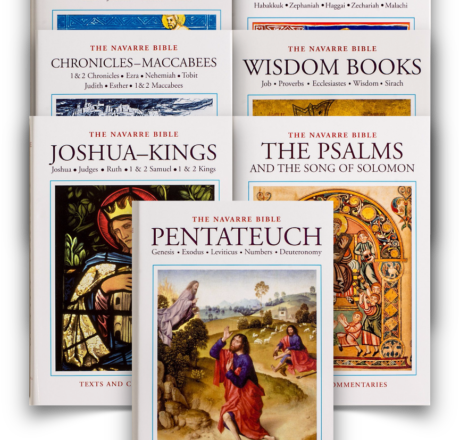
Today’s First Reading
From: Hosea 6:1-6
True and false conversion – a call for love, not sacrifice
---------------------------------------------
[1] “Come let us return to the Lord;
For he has torn, that he may heal us;
He has stricken, and he will bind us up.
[2] After two days he will revive us;
On the third day he will raise us up,
That he may live before him.
[3] Let us know, let us press on to know the Lord;
His going forth is sure as the dawn;
He will come to us as the showers,
As the spring rains that water the earth.”
[4] What shall I do with you, O Ephraim?
What shall I do with you, O Judah?
Your love is like a morning cloud,
Like the dew that goes early away.
[5] Therefore I have hewn them by the prophets,
I have slain them by the words of my mouth.
And my judgment goes forth as the light.”
[6] For I desire steadfast love and not sacrifice,
The knowledge of God, rather than burnt offerings.
**************************************************************************
Commentary:
6:1-7. The call to seek the Lord at the end of the previous oracle (5:15) is responded to in 6:1-3. We hear the people speaking, led by their representatives (the prophet, or the priests). Having suffered (vv.1-2), they are ready to repent and return to the Lord (v. 3). However, through the prophet the Lord tells them that their love should be steadfast (vv. 4 and 6 speak of hesed) but it is like dew or a morning cloud: it does not survive the heat of the day. The rather puzzling reference to “Adam” in v. 7 may mean the first man, but it could also be a city that stood at the entrance to the promised land where the waters of the Jordan were stopped to let the people cross (Josh. 13:16); the meaning of the passage does not change much, whichever “Adam” is meant; the point is that transgression of the Covenant has a long history that extends back almost to the beginning; their faithfulness is as short-lived as the morning dew.
As against that, the Lord tells them where true worship lies – in steadfast love and “knowledge of God” (v. 6). The first words of this verse have had a considerable impact on Christian tradition, because they get to the heart of what religion is all about, and because our Lord quotes them more than once (cf. Mt 9:13; 12:7) to underscore his teaching that God judges not to condemn but to save: “For their own good, God demanded of the Israelites not sacrifices and holocausts, but faith, obedience and righteousness. He revealed his will through the words of the prophet Hosea: I desire steadfast love and not sacrifice, the knowledge of God rather than burnt offerings (Hos 6:6). The Lord gives further advice, saying: and if you had known what this means, ‘I desire mercy, and not sacrifice,’ you would not have condemned the guiltless (Mt 12:7); and thus bear witness on behalf of the prophets, who preached the truth, against all those who threw their ignorance in the faces of God’s servants” (St. Irenaeus, Adversus haerseses, 4, 17, 4).
In v. 2, the words “after two days he will revive us; on the third day he will raise us up” is a way of saying that the event described will happen in a short period of time. Some Christian writers beginning with Tertullian read the verse as referring to Christ’s burial and resurrection; but the New Testament never quotes the verse as prophecy. However, one cannot completely rule out Hosea 6:2 having a connexion with the New Testament wording “on the third day he arose according to the scriptures” (cf. 1 Cor 15:4) and with what Jesus said when he appeared in the cenacle (Lk 24:46); cf. Catechism of the Catholic Church, 627.
From: Luke 18:9-14
Parable of the Pharisee and the Tax Collector
---------------------------------------------
[9] He (Jesus) also told this parable to some who trusted in themselves that they were righteous and despised others: [10] "Two men went up into the temple to pray, one a Pharisee and the other a tax collector. [11] The Pharisee stood and prayed thus with himself, `God, I thank Thee that I am not like other men, extortioners, unjust, adulterers, or even like this tax collector. [12] I fast twice a week, I give tithes of all that I get.' [13] But the tax collector, standing far off, would not even lift up his eyes to Heaven, but beat his breast, saying, `God, be merciful to me a sinner!' [14] I tell you, this man went down to his house justified rather than the other; for every one who exalts himself will be humbled, but he who humbles himself will be exalted."
***********************************************************************
Commentary:
9-14. Our Lord here rounds off His teaching on prayer. In addition to being persevering and full of faith, prayer must flow from a humble heart, a heart that repents of its sins: "Cor contritum et humiliatum, Deus, non despicies" (Psalm 51:19); the Lord, who never despises a contrite and humble heart, resists the proud and gives His grace to the humble (cf. Peter 5:5; James 4:6).
The parable presents two opposite types--the Pharisee, who is so meticulous about external fulfillment of the Law; and the tax collector, who in fact is looked on as a public sinner (cf. Luke 19:7). The Pharisee's prayer is not pleasing to God, because his pride causes him to be self-centered and to despise others. He begins by giving thanks to God, but obviously it is not true gratitude, because he boasts about all the good he has done and he fails to recognize his sins; since he regards himself as righteous, he has no need of pardon, he thinks; and he remains in his sinful state; to him also apply these words spoken by our Lord to a group of Pharisees on another occasion: "If you were blind, you would have no guilt; but now that you say, `We see,' your guilt remains" (John 9:41). The Pharisee went down from the temple, therefore, unjustified.
But the tax collector recognizes his personal unworthiness and is sincerely sorry for his sins: he has the necessary dispositions for God to pardon him. His ejaculatory prayer wins God's forgiveness: "It is not without reason that some have said that prayer justifies; for repentant prayer or supplicant repentance, raising up the soul to God and re-uniting it to His goodness, without doubt obtains pardon in virtue of the holy love which gives it this sacred movement. And therefore we ought all to have very many such ejaculatory prayers, said as an act of loving repentance and with a desire of obtaining reconciliation with God, so that by thus laying our tribulation before our Savior, we may pour out our souls before and within His pitiful heart, which will receive them with mercy" (St. Francis de Sales, "Treatise on the Love of God", Book 2, Chapter 20).
Disclaimer: Opinions posted on Free Republic are those of the individual posters and do not necessarily represent the opinion of Free Republic or its management. All materials posted herein are protected by copyright law and the exemption for fair use of copyrighted works.

