
Posted on 03/12/2026 10:33:31 PM PDT by fidelis
And when Jesus saw that he answered with understanding, he said to him, “You are not far from the Kingdom of God.” And no one dared to ask him any more questions. Mark 12:34
Among the scribes and Pharisees, the scribe in today’s Gospel stands out. He got it right, and Jesus praised him for his openness and understanding. The scribe began by asking Jesus a question: “Which is the first of all the commandments?” At that time, the scribes and Pharisees often debated the question of which commandments were most important. From the Torah, the first five books of the Old Testament, they derived 613 commandments. Among them were the Ten Commandments and numerous ceremonial and civil laws by which they were to abide. Some religious leaders taught that all 613 of the commandments were equally important. In addition to these commandments, rabbinic traditions also offered detailed commentary on how they were to be fulfilled.
Jesus enters this debate and answers by quoting the Shema from Deuteronomy 6:4–5 and Leviticus 19:18: “Hear, O Israel! The Lord our God is Lord alone! You shall love the Lord your God with all your heart, with all your soul, with all your mind, and with all your strength” and “You shall love your neighbor as yourself.” These two commandments were clear articulations of the most central duties to which we are called—love of God and love of neighbor. Furthermore, they were a twofold summary of the Ten Commandments, the most important of the Old Testament Laws.
While many scribes and Pharisees were scrupulous about keeping the external law in a detailed and ritualistic manner, they often failed to perceive and live its central meaning. Jesus clarifies this meaning in His concise answer. He does not dismiss the importance of God’s many commandments but highlights their central purpose. The ritualistic laws and moral commandments, while essential, are ultimately means to an end; they direct us to love. Jesus shows that love of God and neighbor is the true fulfillment of the Law, uniting both aspects into one comprehensive commandment that sums up everything God asks of us.
Jesus was not rejecting the necessity of the commandments themselves but was emphasizing that their observance must flow from the heart. God’s Law is not just about external compliance but about cultivating a heart transformed by love. The laws and rituals of faith, such as fasting in Lent, attending Sunday Mass, and going to Confession, have their rightful place in our spiritual lives. They shape us and help keep us close to God. However, we must always remember their deeper purpose: They are meant to foster a greater charity for God and others. Without that charity, even the most rigorous external observances can become empty.
Reflect today on how obedient you are to God’s Law. Most importantly, ponder the depth of charity you have. True charity toward God and neighbor will enable us to fulfill all external observance of God’s Law, but it will not stop there. There is no limit to love. We can always increase it. We must increase it. Charity, while requiring our active cooperation, ultimately flows from God’s grace working within us. Without His grace, our efforts to love are incomplete. If we understand this and seek to love with all our heart, soul, mind, and strength, then, like this scribe, Jesus will say to us, “You are not far from the Kingdom of Heaven.”
My loving Lord, You call us to love You with all our heart, mind, soul, and strength and to love our neighbor as ourselves. You fulfilled this commandment perfectly, and You promise us the grace to do the same. Help me to obey every detail of Your divine will and grant me the Gift of Understanding so that I will understand and live Your Law in the way You intend. Jesus, I trust in You.
Please keep in mind that this is a Catholic Caucus/Devotional thread for the purpose of prayerful reflection on the Sacred Scriptures and is closed to debate of any kind. Per FR policy on Religion Caucus threads, off-topic, argumentative, and abusive comments are not allowed and will be submitted to the Mods for deletion. Thanks, and God bless you.
The Month of March is Dedicated to St. Joseph
“And he went down with them and came to Nazareth, and was obedient to them; and his mother kept all these things in her heart. And Jesus increased in wisdom and in stature, and in favor with God and man.” (Luke 2:51-52)

Pope Leo XIV’s prayer intention for the month of March, 2026:
For disarmament and peace
Let us pray that nations move toward effective disarmament, particularly nuclear disarmament, and that world leaders choose the path of dialogue and diplomacy instead of violence.

Today’s First Reading
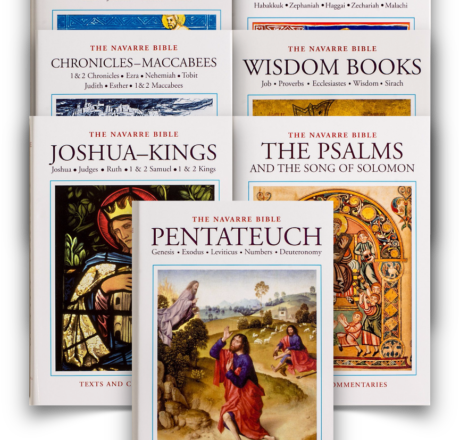
From: Hosea 14:2-10 (New American Bible)
Hosea 14:1-9 (Revised Standard Version & New Vulgate)
Call to Conversion
-----------------------
[1] Return, O Israel, to the LORD your God for you have stumbled because of your iniquity. [2] Take with you words and return to the LORD; say to him, “Take away all iniquity; accept that which is good and we will render the fruit of our lips. [3] Assyria shall not save us, we will not ride upon horses; and we will say no more, ‘Our God,’ to the work of our hands. In thee the orphan finds mercy.”
[4] I will heal their faithlessness, I will love them freely, for my anger has turned from them. [5] I will be as the dew to Israel; he shall blossom as the lily, he shall strike root as the poplar; [6] his shoots shall spread out; his beauty shall be like the olive and his fragrance like Lebanon. [7] They shall return and dwell beneath my shadow, they shall flourish as a garden; they shall blossom as the vine, their fragrance shall be like the wine of Lebanon. [8] O Ephraim, what have I to do with idols? It is I who answer and look after you. I am like an evergreen cypress from me comes your fruit.
A Word to the Wise
------------------
[9] Whoever is wise, let him understand these things; whoever is discerning, let him know them; for the ways of the LORD are right, and the upright walk in them, but transgressors stumble in them.
***********************************************************************
Commentary:
14:1-8. The last oracle follows the pattern of the whole book: the denunciation of Israel’s infidelity is followed by a blessing from the Lord. This. happened in the episode, from Hosea’s personal life at the start of the book (1:2-2:1), in the central poems (2:2-23), and in the first part of the oracles (4:1-11:11). The novelty of this oracle lies in the fact that previously salvation and forgiveness were offered by the Lord spontaneously and generously without Israel’s being asked for anything; whereas here (vv. 1-3) the prophet entreats Israel to be converted so that God may heal her unfaithfulness (v. 4).
In the oracle, both the prophet (vv. 1-3) and the Lord (vv. 4-8) speak. The words of the prophet are a call to conversion. (v. 1) and a prayer proper to a penitential liturgy (vv. 2-3) in which the sins of Israel are expressly mentioned--reliance on foreign pacts rather than on the Lord, and revering man-made idols as if they were God.
The Lord’s, words (vv. 4-8) benevolently offer the people reconciliation and a cure for their unfaithfulness. They speak of a golden age of love between the Lord and his people; all sorts of attractive imagery are used: the dew, the fragrance of Lebanon, the grain (note w) and the vine stand for the good things that the Lord, and not the Baals, bestows on the people; the Lord is depicted as a cypress, evergreen; that is, he is stable and enduring. So, the book’s conclusion is clear: since the Lord loves them so deeply there is nothing that the people can do but respond: "The love of the Beloved or, to put it better, the Beloved who is love, loves only love and faithfulness. Do not resist his love. Can we stop loving the one who is Love in person? Can, the one who is Love by his very nature be unloved?” (St Bernard, "In Cantica Canticorum", 83, 5).
14:9. The last verses of the book are a piece of wisdom writing. They are somewhat reminiscent of Deuteronomy 32:4, Psalm 107:43 and Proverbs 4:7. They invite us to read the book by applying its message to our own circumstances.
From: Mark 12:28-34
The Greatest Commandment of All
----------------------------------------------
[28] One of the scribes came up and heard them disputing with one another, and seeing that He (Jesus) answered them well, asked Him, "Which commandment is the first of all?" [29] Jesus answered, "The first is, `Hear, O Israel: The Lord our God, the Lord is one; [30] and you shall love the Lord your God with all your heart, and with all your soul, and with all your mind, and with all your strength.' [31] The second is this, `You shall love your neighbor as yourself.' There is no other commandment greater than these." [32] And the scribe said to Him, "You are right, Teacher; You have truly said that He is one, and there is no other than He; [33] and to love with all the heart, and with all the understanding, and with all the strength, and to love one's neighbor as oneself, is much more than all whole burnt offerings and sacrifices." [34] And when Jesus saw that he answered wisely, He said to him, "You are not far from the Kingdom of God." And after that no one dared to ask Him any question.
***********************************************************************
Commentary:
28-34. The doctor of the law who asks Jesus this question is obviously an upright man who is sincerely seeking the truth. He was impressed by Jesus' earlier reply (verses 18-27) and he wants to learn more from Him. His question is to the point and Jesus devotes time to instructing him, though he will soon castigate the scribes, of whom this man is one (cf. Mark 12:38ff).
Jesus sees in this man not just a scribe but a person who is looking for the truth. And His teaching finds its way into the man's heart. The scribe repeats what Jesus says, savoring it, and our Lord offers him an affectionate word which encourages his definitive conversion: "You are not far from the Kingdom of God." This encounter reminds us of His meeting with Nicodemus (cf. John 3:1ff). On the doctrinal content of these two commandments cf. note on Matthew 22:34-40.
[ Note on Matthew 22:34-40 states: In reply to the question, our Lord points out that the whole law can be condensed into two commandments: the first and more important consists in unconditional love of God; the second is a consequence and result of the first, because when man is loved, St. Thomas says, God is loved, for man is the image of God (cf. "Commentary on St. Matthew", 22:4).
A person who genuinely loves God also loves his fellows because he realizes that they are his brothers and sisters, children of the same Father, redeemed by the same blood of our Lord Jesus Christ: "This commandment we have from Him, that he who loves God should love his brother also" (1 John 4:21). However, if we love man for man's sake without reference to God, this love will become an obstacle in the way of keeping the first commandment, and then it is no longer genuine love of our neighbor. But love of our neighbor for God's sake is clear proof that we love God: "If anyone says, `I love God', and hates his brother, he is a liar" (1 John 4:20). "You shall love your neighbor as yourself": here our Lord establishes as the guideline for our love of neighbor the love each of us has for himself; both love of others and love of self are based on love of God. Hence, in some cases it can happen that God requires us to put our neighbor's need before our own; in others, not: it depends on what value, in light of God's love, needs to be put on the spiritual and material factors involved.
Obviously spiritual goods take absolute precedence over material ones, even over life itself. Therefore, spiritual goods, be they our own or our neighbor's, must be the first to be safeguarded. If the spiritual good in question is the supreme one for the salvation of the soul, no one is justified in putting his own soul into certain danger of being condemned in order to save another, because given human freedom we can never be absolutely sure what personal choice another person may make: this is the situation in the parable (cf. Matthew 25:1-13), where the wise virgins refuse to give oil to the foolish ones; similarly St. Paul says that he would wish himself to be rejected if that could save his brothers (cf. Romans 9:3)--an unreal theoretical situation. However, what is quite clear is that we have to do all we can to save our brothers, conscious that, if someone helps to bring a sinner back to the way, he will save himself from eternal death and cover a multitude of his own sins (James 5:20). From all this we can deduce that self-love of the right kind, based on God's love for man, necessarily involves forgetting oneself in order to love God and our neighbor for God. ]
30. This commandment of the Old Law, ratified by Jesus, shows, above all, God's great desire to engage in intimate conversation with man: "would it not have sufficed to publish a permission giving us leave to love Him? [...]. He makes a stronger declaration of His passionate love for us, and commands us to love Him with all our power, lest the consideration of His majesty and our misery, which make so great a distance and inequality between us, or some other pretext, divert us from His love. In this He well shows that He did not leave in us for nothing the natural inclination to love Him, for to the end that it may not be idle, He urges us by His general commandment to employ it, and that this commandment may be effected, there is no living man He has not furnished him abundantly with all means requisite thereto" (St. Francis de Sales, "Treatise on the Love of God", Book 2, Chapter 8).
Disclaimer: Opinions posted on Free Republic are those of the individual posters and do not necessarily represent the opinion of Free Republic or its management. All materials posted herein are protected by copyright law and the exemption for fair use of copyrighted works.


