
Posted on 03/05/2026 10:00:01 PM PST by fidelis
Jesus said to the chief priests and the elders of the people: “Hear another parable. There was a landowner who planted a vineyard, put a hedge around it, dug a wine press in it, and built a tower. Then he leased it to tenants and went on a journey. When vintage time drew near, he sent his servants to the tenants to obtain his produce. But the tenants seized the servants and one they beat, another they killed, and a third they stoned…” Matthew 21:33–34
Jesus addressed this parable to the chief priests and elders of the people because He loved them. It concludes with Jesus prophesying the fate of these religious leaders: “He will put those wretched men to a wretched death and lease his vineyard to other tenants who will give him the produce at the proper times.” The religious leaders were deeply rooted in their sins, and this parable was meant to uproot those sins, disturbing the soil of their hearts. Out of hope for their conversion, Jesus, in His mercy, took decisive action in a direct, clear, and bold way.
This vineyard image comes from Isaiah 5:1–7, which identifies Israel as the “vineyard of the LORD of hosts.” The landowner is God, and the people of Judah were His “cherished plant.” God had planted, nurtured, and protected His people. The hedge, the wine press, and the tower all point to the care and providence God had for them, showing that they had been given everything they needed to flourish spiritually.
The problem was the “tenants”—the chief priests and elders of the people who had been entrusted with the care of God’s people. They neglected their duty to bear fruit for God’s glory, perverting His Law and usurping His Kingdom for their own prestige, authority, and comfort... Their attachment to power and outward religiosity blinded them to the deeper demands of justice, mercy, and faithfulness to God’s covenant. This pride led to their rejection of the prophets, John the Baptist, and the Messiah.
Though it might be initially unpleasant to do so, take some time to consider how you struggle with similar sins. Do you forcefully and jealously try to control the people in your life? Are you overly concerned about how people perceive you, elevating your public image dishonestly? Are you greedy, desirous of power for selfish gain, and attached to your own comforts? Or is charity at the forefront of your daily mission with people, especially those most difficult to love, avoiding rejection, rash judgment, and condemnation?
Jesus rebuked the religious leaders of His time so strongly because many of them suffered deeply from these sins. He knew that His rebukes would lead some to anger, but He hoped others would repent—and some did. Every rebuke Jesus made was an act of love, and the more deeply entrenched we are in our sins, the more we need this form of direct, confrontational love from our Lord.
Even if the extreme pride of these chief priests and elders is not a major issue for you, pride is likely present in some form. Pride is often the last sin to be purged from our souls, as it is considered the “mother of all sin.” At its core, pride is selfishness, rather than selfless, sacrificial love.
Reflect today on Jesus’ firm rebuke of the religious leaders and His desire to rebuke you. Don’t take offense at this form of love. Be open to it, be humbled by it, experience freedom from it, and rejoice as you see those sins—be they big or small—that keep you from fully surrendering your life to Christ.
Most merciful Lord, though at times You are gentle with Your people, especially when they are broken, fearful, and confused, there are other times when Your love comes in the form of a holy rebuke. Please humble me, Lord, so that I can accept those rebukes and allow Your grace to root out every form of pride with which I struggle. Jesus, I trust in You.
Please keep in mind that this is a Catholic Caucus/Devotional thread for the purpose of prayerful reflection on the Sacred Scriptures and is closed to debate of any kind. Per FR policy on Religion Caucus threads, off-topic, argumentative, and abusive comments are not allowed and will be submitted to the Mods for deletion. Thanks, and God bless you.
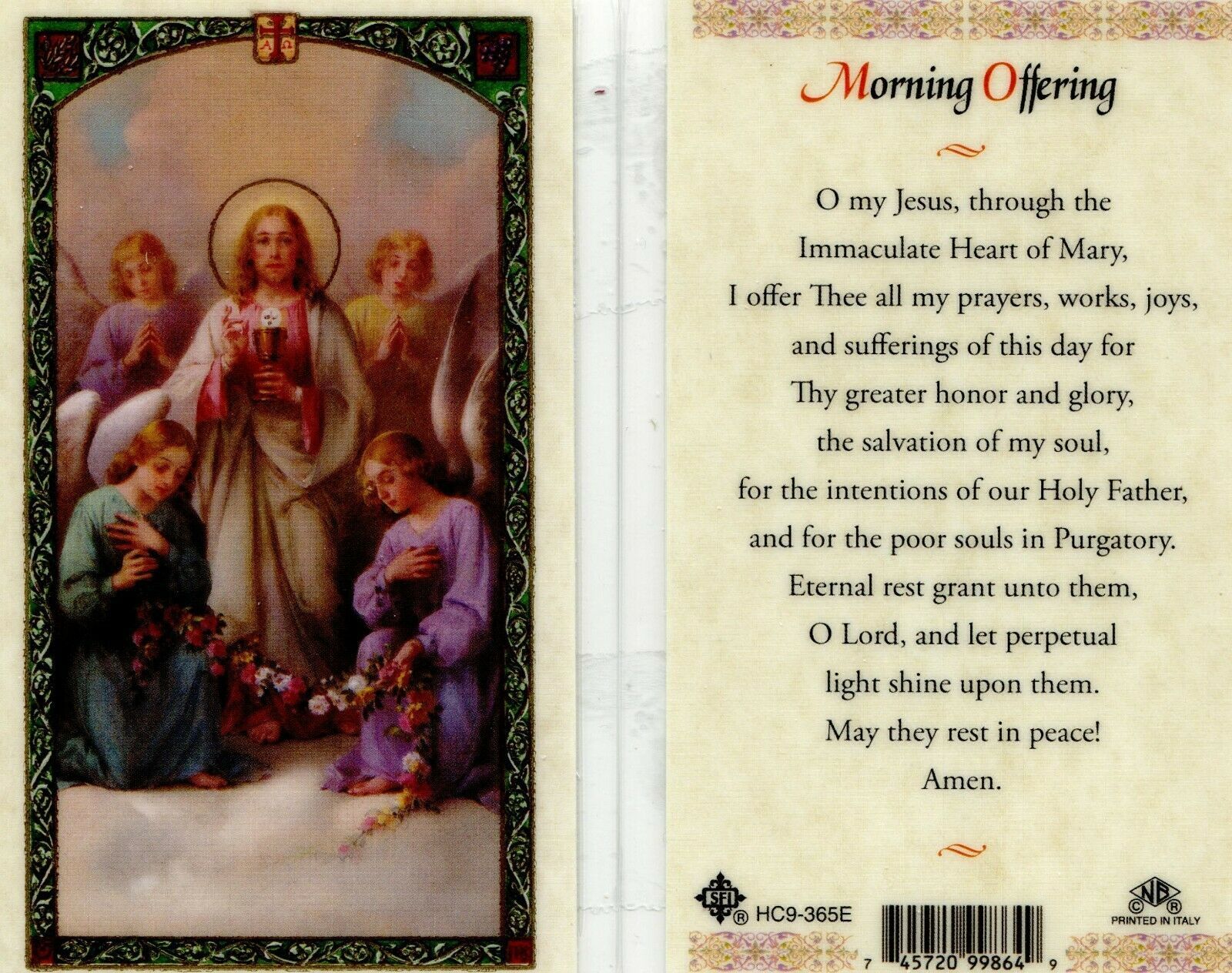
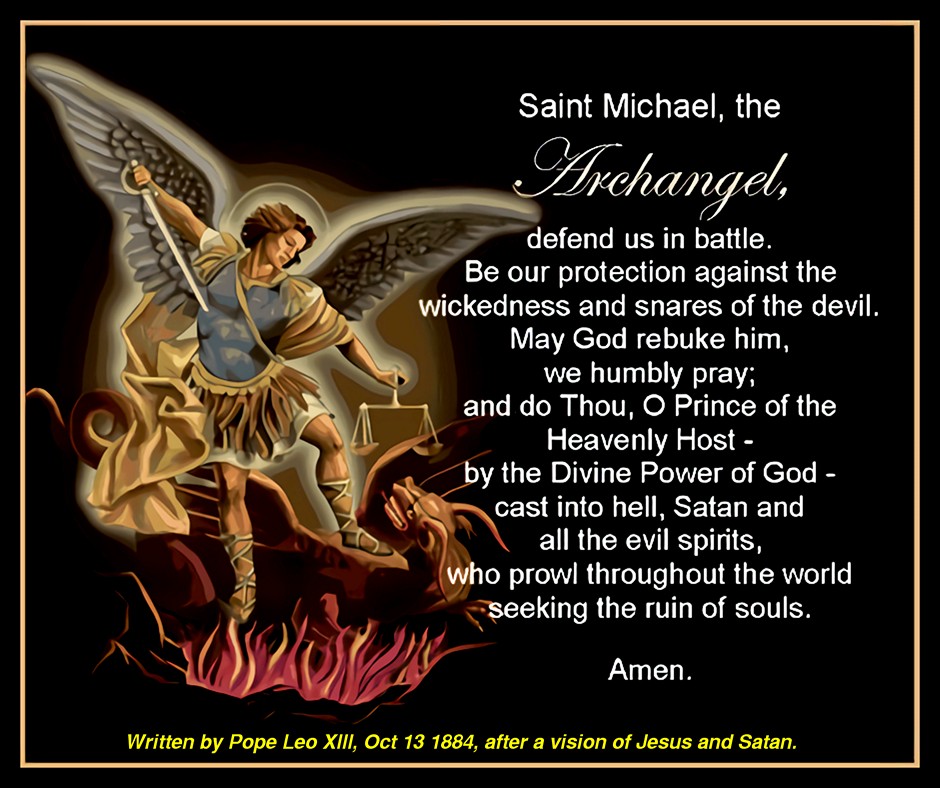
The Month of March is Dedicated to St. Joseph
“And he went down with them and came to Nazareth, and was obedient to them; and his mother kept all these things in her heart. And Jesus increased in wisdom and in stature, and in favor with God and man.” (Luke 2:51-52)

Pope Leo XIV’s prayer intention for the month of March, 2026:
For disarmament and peace
Let us pray that nations move toward effective disarmament, particularly nuclear disarmament, and that world leaders choose the path of dialogue and diplomacy instead of violence.

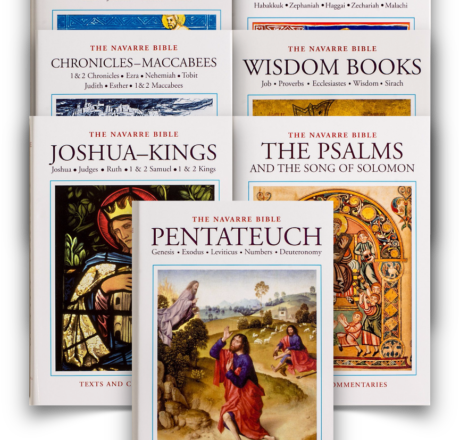
Today’s First Reading
From: Genesis 37:3-4, 12-13a, 17b-28a
Joseph and His Brothers
-----------------------
[3] Now Israel loved Joseph more than any other of his children, because he was the son of his old age; and he made him a long robe with sleeves. [4] But when his brothers saw that their father loved him more than all his brothers, they hated him, and could not speak peaceably to him.
Joseph is Sold to Egyptians as a Slave
--------------------------------------
[12] Now his brothers went to pasture their father's flock near Shechem. [13a] And Israel said to Joseph, "Are not your brothers pasturing the flock at Shechem? Come, I will send you to them."
[17b] So Joseph went after his brothers, and found them at Dothan. [18] They saw him afar off, and before he came near to them they conspired against him to kill him. [19] They said to one another, "Here comes this dreamer. [20] Come now, let us kill him and throw him into one of the pits; then we shall say that a wild beast has devoured him, and we shall see what will become of his dreams." [21] But when Reuben heard it, he delivered him out of their hands, saying, "Let us not take his life." [22] And Reuben said to them, "Shed no blood; cast him into this pit here in the wilderness, but lay no hand upon him"--that he might rescue him out of their hand, to restore him to his father. [23] So when Joseph came to his brothers, they stripped him of his robe, the long robe with sleeves that he wore; [24] and they took him and cast him into a pit. The pit was empty, there was no water in it.
[25] Then they sat down to eat; and looking up they saw a caravan: of Ishmaelites coming from Gilead, with their camels bearing gum, balm, and myrrh, on their way to carry it down to Egypt. [26] Then Judah said to his brothers, "What profit is it if we slay our brother and conceal his blood? [27] Come, let us sell him to the Ishmaelites, and let not our hand be upon him, for he is our brother, our own flesh." And his brothers heeded him. [28a] Then Midianite traders passed by; and they drew Joseph up and lifted him out of the pit, and sold him to the Ishmaelites for twenty shekels of silver.
***********************************************************************
Commentary:
37:2-50:26 From here to the end of the book of Genesis, with the exception of chapters 38 and 49, we have the story of Joseph. This concludes the "history of the patriarchs", leaving them not exactly in the promised land, Canaan, but in Egypt. This sets the scene for the narrative of the great Exodus. The story of Joseph is, thus, the link between patriarchal history and the departure from Egypt, and it therefore constitutes an important stage in the development of salvation history as recorded in the Old Testament.
In the story of Joseph we can see, on the one hand, the testimony borne by ancient accounts about the Israelites going down into Egypt and, on the other, the skill of the narrator who describes the acts of a drama full of emotion, which comes to a happy ending and from which the reader can draw one fundamental lesson: God is guiding everything that happens (even events which seem negative) towards good, towards salvation. "Omnia in bonum" might well be the title of the story of Joseph (cf. 50:20).
The original source of this section may have been quite different from the patriarchal traditions we have seen so far: there is no reference to places of worship, no explanations as to the meaning of names of places and people, no direct divine interventions (except in the case of Jacob in 46:2-4); it assumes that Joseph's mother is still living (cf. 37:10) and shows Jacob to have a number of daughters (cf. 37:35).
From the information provided in the story of Joseph and from other biblical traditions (cf. for example,Gen 15:16; Ex 12:40-41), it is not possible to say exactly when the Israelites went down into Egypt. The most likely period is when Egypt was under the control of the Hyksos (l'720-l580 BC), invaders who were partly Semitic. The Hyksos had their capital in Avaris, in the Nile delta, and this is where the capital is in the biblical account. The account reminds us of past events and their significance. The whole story of Joseph. as told in the Bible, is very instructive about how God guided the steps of Israel's ancestors, to work wonders among them, redeeming them from slavery and making them into a people, the chosen people of God. The literary skill with which this last part of the story is told, not only does not take from the historical value of the account: it helps us to grasp the true meaning of all that happened to the "fathers" of Israel, and shows us how the Word of God is able to express itself in language which it knows will hold the reader's attention.
37:2. "This is the history of ...": ten times over the course of Genesis the final redactor of the book uses this formal phrase to impose order on its content, dividing it into a number of genealogical sections (cf. "Introduction", p. 29 above). Here he uses it for the last time, to notify the reader that he has reached the last section, the story of how Jacob-Israel went down into Egypt: one of his sons, Joseph, was sold by his brothers and taken to Egypt (chap. 37); Joseph prospered in that country and became very important (cf. chaps. 39-41); Jacob and his other sons went to Egypt where they met Joseph and, through his good offices, received special treatment from the pharaoh; finally, the patriarch Jacob died in Egypt but was brought back to the land of Canaan to be buried (cf. chaps. 49-50).
37:3-4. The tunic with long sleeves made Joseph took like a prince, in some way foretelling his glorious future. Although Jacob's preferential love for Joseph is due to human causes, behind it we can see something which occurs throughout the Bible--how some people, gratuitously, enjoy special favor, including special divine favor and love, without this meaning that the love shown to others is diminished. Joseph, the object of Jacob's special love, thereby becomes a figure of Jesus Christ, the Beloved of the Father (cf. Mt 1:11). The sin of Jacob's sons, like Cain's in some way (cf Gen 4:5), begins with their reacting against God's preferential love; it then turns into hatred and envy (cf. vv. 8-Il) and ends up with their getting rid of their brother (cf. v. 20).
37:12-36. This episode deals with the horrible crime of disposing of their brother and the providential events which take Joseph to Egypt. We can see that the narrative is drawing on two sources: one emphasizes the intervention of Judah (v. 26), the other that of Reuben. The true key to what is happening will emerge at the end of the story: "You meant evil against me," Joseph tells his brothers, "but God meant it for good" (50:20). In the light of the whole narrative we can see the way God's plan is being put into operation: "Joseph," comments St Gregory the Great, "was sold by his brothers because they did not want to do him honor; but that is exactly what they do, by the very fact of selling him. [...] So too, when one wants to avoid the divine will, then is when it is fulfilled" ("Moralia", 6, 18, 20).
From: Matthew 21:33-43, 45-46
The Parable of the Wicked Tenants
---------------------------------
(Jesus told the chief priests and the elders,) [33] "Hear another parable. There was a householder who planted a vineyard, and set a hedge around it, dug a wine press in it, and built a tower, and let it out to tenants, and went into another country. [34] When the season of fruit drew near, he sent his servants to the tenants, to get his fruit; [35] and the tenants took his servants and beat one, killed another, and stoned another. [36] Again he sent other servants, more than the first; and they did the same to them. [37] Afterward he sent his son to them, saying, `They will respect my son.' [38] But when the tenants saw the son, they said to themselves, `This is the heir; come, let us kill him and have his inheritance.' [39] And they took him and cast him out of the vineyard, and killed him. [40] When therefore the owner of the vineyard comes, what will he do to those tenants?" [41] They said to Him, "He will put those wretches to a miserable death, and let out the vineyard to other tenants who will give him the fruits in their seasons."
[42] Jesus said to them, "Have you never read in the scriptures: `The very stone which the builders rejected has become the head of the corner; this was the Lord's doing, and it is marvellous in our eyes'! [43] Therefore I tell you, the Kingdom of God will be taken away from you and given to a nation producing the fruits of it."
[45] When the chief priests and the Pharisees heard His parables, they perceived that He was speaking about them. [46] But when they tried to arrest Him, they feared the multitudes, because they held Him to be a prophet.
***********************************************************************
Commentary:
33-46. This very important parable completes the previous one. The parable of the two sons simply identifies the indocility of Israel; that of the wicked tenants focuses on the punishment to come.
Our Lord compares Israel to a choice vineyard, specially fenced, with a watchtower, where a keeper is on the look-out to protect it from thieves and foxes. God has spared no effort to cultivate and embellish His vineyard. The vineyard is in the charge of tenant farmers; the householder is God, and the vineyard, Israel (Isaiah 5:3-5: Jeremiah 2:21; Joel 1:7).
The tenants to whom God has given the care of His people are the priests, scribes and elders. The owner's absence makes it clear that God really did entrust Israel to its leaders; hence their responsibility and the account He demands of them.
The owner used to send his servants from time to time to collect the fruit; this was the mission of the prophets. The second despatch of servants to claim what is owing to the owner--who meet the same fate as the first--refers to the way God's prophets were ill-treated by the kings and priests of Israel (Matthew 23:37; Acts 7:42; Hebrews 11:36-38). Finally he sent his son to them, thinking that they would have more respect for him; here we can see the difference between Jesus and the prophets, who were servants, not "the Son": the parable indicates singular, transcendental sonship, expressing the divinity of Jesus Christ.
The malicious purpose of the tenants in murdering the son and heir to keep the inheritance for themselves is the madness of the leaders in expecting to become undisputed masters of Israel by putting Christ to death (Matthew 12:14; 26:4). Their ambition blinds them to the punishment that awaits them. Then "they cast him out of the vineyard, and killed him": a reference to Christ's crucifixion, which took place outside the walls of Jerusalem. Jesus prophesies the punishment God will inflict on the evildoers: He will put them to death and rent the vineyard to others. This is a very significant prophecy. St. Peter later repeats to the Sanhedrin: "This is the stone which was rejected by you builders, but which has become the head of the corner" (Acts 4:11; 1 Peter 2:4). The stone is Jesus of Nazareth, but the architects of Israel, who build up and rule the people, have chosen not use it in the building. Because of their unfaithfulness the Kingdom of God will be turned over to another people, the Gentiles, who WILL give God the fruit He expects His vineyard to yield (cf. Matthew 3:8-10; Galatians 6:16).
For the building to be well-built, it needs to rest on this stone. Woe to him who trips over it! (cf. Matthew 12:30; Luke 2:34), as first Jews and later the enemies of Christ and His Church will discover through bitter experience (cf. Isaiah 8:14-15).
Christians in all ages should see this parable as exhorting them to build faithfully upon Christ and make sure they do not fall into the sin of this Jewish generation. We should also be filled with hope and a sense of security; for, although the building—the Church—at some times seem to be breaking up, its sound construction, with Christ as its cornerstone, is assured.
Disclaimer: Opinions posted on Free Republic are those of the individual posters and do not necessarily represent the opinion of Free Republic or its management. All materials posted herein are protected by copyright law and the exemption for fair use of copyrighted works.


