
Posted on 02/14/2026 8:33:46 AM PST by fidelis
Memorial of Saints Cyril, Monk, and Methodius, Bishop
In those days when there again was a great crowd without anything to eat, Jesus summoned the disciples and said, “My heart is moved with pity for the crowd, because they have been with me now for three days and have nothing to eat. If I send them away hungry to their homes, they will collapse on the way, and some of them have come a great distance.” Mark 8:1–3
Early in Jesus’ public ministry, He made a brief trip across the Sea of Galilee to the territory of the Gerasenes—a largely Gentile and pagan town on the outskirts of the Decapolis. This journey was significant, as it demonstrated Jesus’ intention to extend His mission beyond the boundaries of Jewish territory, foreshadowing the universal scope of salvation that would later be fully realized through the Church’s apostolic mission.
When Jesus arrived on shore in the territory of the Gerasenes, He freed a man possessed by “Legion,” meaning many demons, and sent the demons into a herd of two thousand swine, who drowned themselves in the sea... Stunned by what had happened, they asked Jesus to leave, and He did. However, “the man went off and began to proclaim in the Decapolis what Jesus had done for him; and all were amazed” (Mark 5:20).
That brief trip into the Gentile and pagan territory of the Decapolis planted a seed. The loss of two thousand swine undoubtedly affected the people... also planted the seed more deeply. Which was more important: one man possessed by a legion of demons or two thousand swine? Jesus’ actions reveal the answer. As word spread of His miraculous deliverance and authority over demons, many Gentiles became curious.
That brief miracle set the stage for today’s Gospel when Jesus returned to the Decapolis to nurture the seed He had planted. Upon His return, He cured a deaf and mute man, symbolizing the importance of hearing and proclaiming the Gospel... Jesus drew a great crowd, who remained with Him for three days despite having no food.
After three days, Jesus revealed His compassionate heart to the Twelve: “My heart is moved with pity for the crowd, because they have been with me now for three days and have nothing to eat.” Jesus then tested the Twelve... “If I send them away hungry to their homes, they will collapse on the way, and some of them have come a great distance.” This situation should have been familiar to the Twelve... But now they were in Gentile territory, and instead of understanding that Jesus’ same providence extended to these pagans, the disciples said to Him, “Where can anyone get enough bread to satisfy them here in this deserted place?” Once again, Jesus performed a miracle and fed four thousand.
Reflect today on the universality of Jesus’ mission. His compassionate care transcended cultural and religious boundaries, offering physical and spiritual nourishment to all who sought Him. Jesus’ same mission continues today through us, the members of His Body, the Church. We must never become self-enclosed in our own communities of faith and family.
Instead, we are called to go out into the world, to the “pagan” regions where people hunger for God’s Word. Sometimes our mission is to plant a seed; at other times, it is to nurture the seed by helping it grow through the grace of God, so that everyone may come to know and love Him. Ultimately, the feeding of the five thousand Jews and four thousand Gentiles points to the universal call for all to share in the Eucharistic banquet. Learn the lesson Jesus taught the Twelve, and imitate our Lord’s merciful heart, filled with compassion for those who need Him the most.
My generous Lord, You desire all people to come to know You and to be saved. Free me from any hesitancy or fear in sharing Your saving Truth with those who need it most. Grant me the wisdom to discern when to plant the seed, when to nurture it, and when to harvest. Use me as Your instrument to draw others into the fullness of life, where they may share in Your Eucharistic banquet of grace. Jesus, I trust in You.
Please keep in mind that this is a Catholic Caucus/Devotional thread for the purpose of prayerful reflection on the Sacred Scriptures and is closed to debate of any kind. Per FR policy on Religion Caucus threads, off-topic, argumentative, and abusive comments are not allowed and will be submitted to the Mods for deletion. Thanks, and God bless you.
The Month of February is Dedicated to the Holy Family of Jesus, Mary, and Joseph
“And he went down with them and came to Nazareth, and was obedient to them; and his mother kept all these things in her heart. And Jesus increased in wisdom and in stature, and in favor with God and man.” (Luke 2:51-52)

Pope Leo XIV’s prayer intention for the month of February, 2026:
For children with incurable diseases
Let us pray that children suffering from incurable diseases and their families receive the necessary medical care and support, never losing strength and hope.

Today’s First Reading
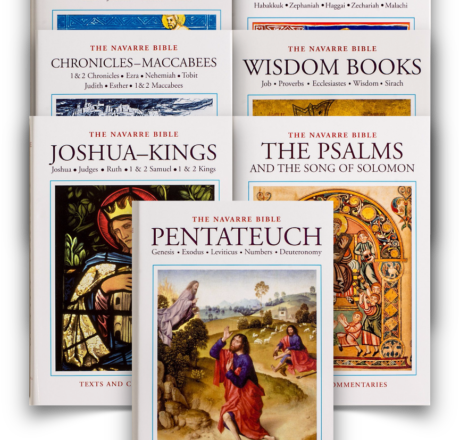
From: 1 Kings 12:26-32; 13:33-34
Jeroboam’s Sin (Continuation)
-----------------------------
[26] And Jeroboam said in his heart, “Now the kingdom will turn back to the house of David; [27] if this people go up to offer sacrifices in the house of the LORD at Jerusalem, then the heart of this people will turn again to their lord, to Rehoboam king of Judah, and they will kill me and return to Rehoboam king of Judah.” [28] So the king took counsel, and made two calves of gold. And he said to the people, “You have gone up to Jerusalem long enough. Behold your gods, O Israel, who brought you up out of the land of Egypt.” [29] And he set one in Bethel, and the other he put in Dan. [30] And this thing became a sin, for the people went to the one at Bethel and to the other as far as Dan. [31] He also made houses on high places, and appointed priests from among all the people, who were not of the Levites. [32] And Jeroboam appointed a feast on the fifteenth day of the eighth month like the feast that was in Judah, and he offered sacrifices upon the altar; so he did in Bethel, sacrificing to the calves that he had made. And he placed in Bethel the priests of the high places that he had made.
Unlawful Priests
----------------
[33] After this thing Jeroboam did not turn from his evil way, but made priests for the high places again from among all the people;any who would, he consecrated to be priests of the high places. [34] And this thing became sin to the house of Jeroboam, so as to cut it off and to destroy it from the face of the earth.
***********************************************************************
Commentary:
12:20-33. The tribes of the North, severing their links with the house of David, proclaim Jeroboam king in a manner similar to the way Saul was elected (cf. 1 Sam 11:15). Rehoboam, Solomon’s son and successor, eventually bows to the inevitable because he sees it must be the Lord’s will (v. 24).
But more serious than the political split is the religious split, as described here. It looks like a return to the idolatry of the golden calf (Ex 32:1-5).
By pointing out that the priests at these shrines or sanctuaries were not Levites, the sacred writer is at pains to stress that the worship carried out there was unlawful. And he is making the same point when he says that Jeroboam established a feast (v. 32) of his own making instead of keeping the feast of Tabernacles that was celebrated in Jerusalem.
In the story of Jeroboam the great Christian writer Origen sees an example of those who, by imprudently delving into human philosophies, risk abandoning Christian truth. The Israelites (of old), Origen explains, went down into Egypt and, taking the things sacred to the Egyptians and inspired by divine wisdom, they used them to honor God. But Holy Scripture “wanted to show symbolically how living together with the Egyptians became an occasion of sin for some; that is, to show how the knowledge of this world became a temptation to evil for some of those who had been formed in the law of God and the worship that the Israelites were to give him. For as long as Jeroboam lived in the land of Israel and found the bread of the Egyptians distasteful, he did not build idols. But when he went down to Egypt, in flight from wise Solomon--as if in flight from the wisdom of God himself--and became a kinsman of the pharaoh [...], although he later returned to the land of Israel, he came only to bring disunity to the people of God and to force them to say, ' Here are your gods...'" (Origen, "Ad Gregorium", 2).
13:33-34. Despite seeing the fulfillment of the oracle of the man of Judah (cf. 13:5-7), and even though a prophet of Bethel ratified what that man said (cf. 13:32), King Jeroboam persisted in his line of conduct. The terrible outcome (v. 34) makes one ponder the grave consequences of persisting in sin, because, as Scripture often reminds us and St John Chrysostom explains, “what angers and offends God, more than sin itself, is that sinners show no sorrow for their sins” ("Homiliae in Matthaeum", 14, 4).
From: Mark 8:1-10
Second Miracle of the Loaves
----------------------------
[1] In those days, when again a great crowd had gathered, and they had nothing to eat, He (Jesus) called His disciples to Him, and said to them, [2] "I have compassion on the crowd, because they have been with Me now three days, and have nothing to eat; [3] and if I send them away hungry to their homes, they will faint on the way; and some of them have come a long way." [4] And His disciples answered Him, "How can one feed these men with bread here in the desert?" [5] And He asked them, "How many loaves have you?" They said, "Seven." [6] And He commanded the crowd to sit down on the ground; and He took the seven loaves, and having given thanks, He broke them and gave them to His disciples to set before the people; and they set them before the crowd. [7] And they had a few small fish; and having blessed them, He commanded that these also should be set before them. [8] And they ate, and were satisfied; and took up the broken pieces left over, seven baskets full. [9] And there were about four thousand people. [10] And He sent them away; and immediately He got into the boat with His disciples, and went to the district of Dalmanutha.
***********************************************************************
Commentary:
1-9. Jesus repeats the miracle of the multiplication of the loaves and the fish: the first time (Mark 6:33-44) He acted because He saw a huge crowd like "sheep without a shepherd"; now He takes pity on them because they have been with Him for three days and have nothing to eat.
This miracle shows how Christ rewards people who persevere in following Him: the crowd had been hanging on His words, forgetful of everything else. We should be like them, attentive and ready to do what He commands, without any vain concern about the future, for that would amount to distrusting Divine Providence.
10. "Dalmanutha": this must have been somewhere near the Lake of Gennesaret, but it is difficult to localize it more exactly. This is the only time it is mentioned in Sacred Scripture. In the parallel passage in St. Matthew (15:39) Magadan (sometime Magdala) is mentioned.
Disclaimer: Opinions posted on Free Republic are those of the individual posters and do not necessarily represent the opinion of Free Republic or its management. All materials posted herein are protected by copyright law and the exemption for fair use of copyrighted works.

