Posted on 02/10/2026 5:01:45 AM PST by annalex
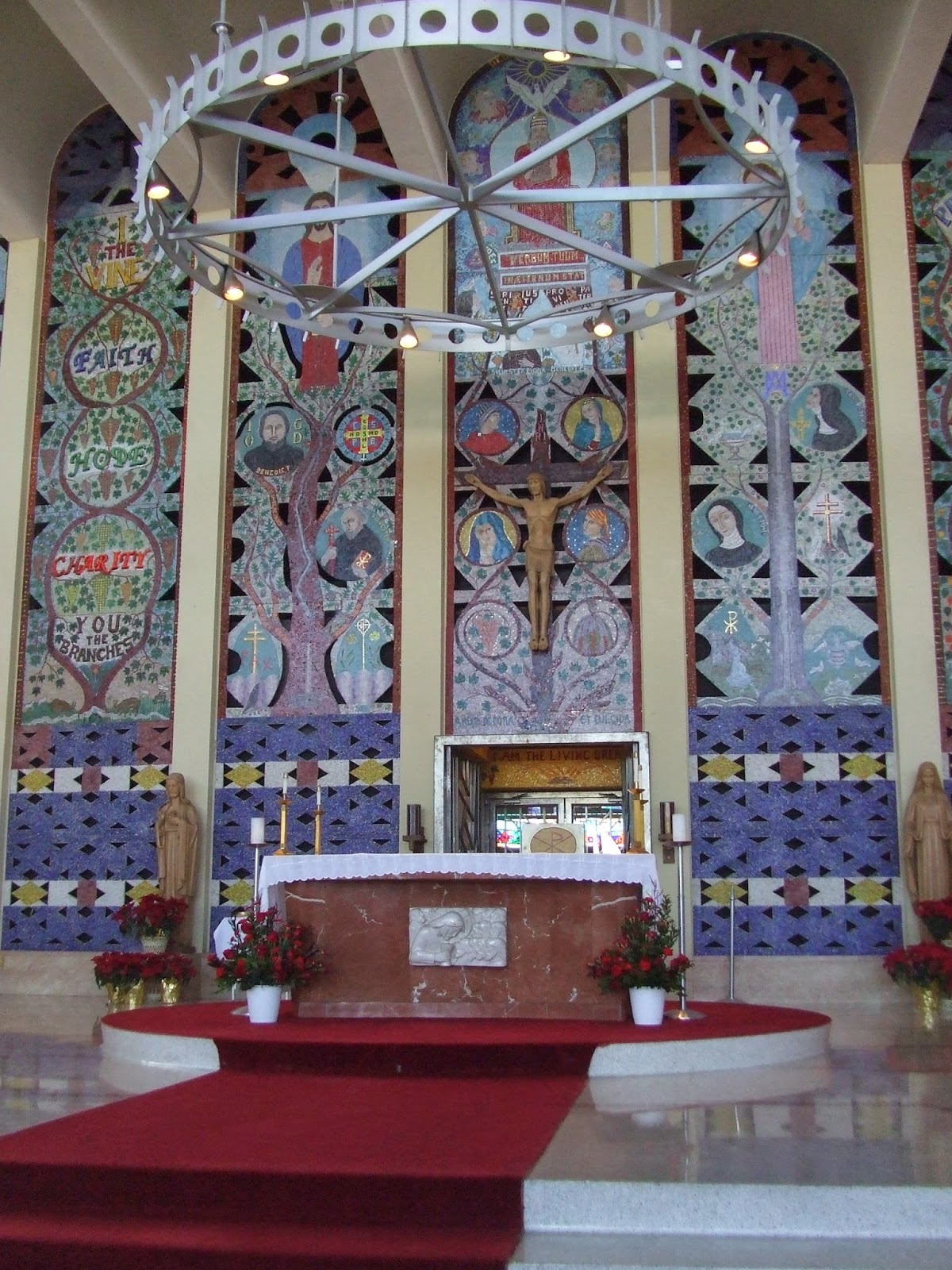
Saint Scholastica, Virgin on Tuesday of week 5 in Ordinary Time St. Scholastica Church, Detroit Readings at MassLiturgical Colour: White. Year: A(II). These are the readings for the feria
'Listen to the prayer your servant makes in this place'In the presence of the whole assembly of Israel, Solomon stood before the altar of the Lord and, stretching out his hands towards heaven, said, ‘O Lord, God of Israel, not in heaven above nor on earth beneath is there such a God as you, true to your covenant and your kindness towards your servants when they walk wholeheartedly in your way. Yet will God really live with men on the earth? Why, the heavens and their own heavens cannot contain you. How much less this house that I have built! Listen to the prayer and entreaty of your servant, O Lord my God; listen to the cry and to the prayer your servant makes to you today. Day and night let your eyes watch over this house, over this place of which you have said, “My name shall be there.” Listen to the prayer that your servant will offer in this place. ‘Hear the entreaty of your servant and of Israel your people as they pray in this place. From heaven where your dwelling is, hear; and, as you hear, forgive.’
How lovely is your dwelling-place, Lord, God of hosts. My soul is longing and yearning, is yearning for the courts of the Lord. My heart and my soul ring out their joy to God, the living God. How lovely is your dwelling-place, Lord, God of hosts. The sparrow herself finds a home and the swallow a nest for her brood; she lays her young by your altars, Lord of hosts, my king and my God. How lovely is your dwelling-place, Lord, God of hosts. They are happy, who dwell in your house, for ever singing your praise. Turn your eyes, O God, our shield, look on the face of your anointed. How lovely is your dwelling-place, Lord, God of hosts. One day within your courts is better than a thousand elsewhere. The threshold of the house of God I prefer to the dwellings of the wicked. How lovely is your dwelling-place, Lord, God of hosts.
Alleluia, alleluia! Train me, Lord, to observe your law, to keep it with my heart. Alleluia!
Alleluia, alleluia! Bend my heart to your will, O Lord, and teach me your law. Alleluia!
You get round the commandment of God to preserve your own traditionThe Pharisees and some of the scribes who had come from Jerusalem gathered round Jesus, and they noticed that some of his disciples were eating with unclean hands, that is, without washing them. For the Pharisees, and the Jews in general, follow the tradition of the elders and never eat without washing their arms as far as the elbow; and on returning from the market place they never eat without first sprinkling themselves. There are also many other observances which have been handed down to them concerning the washing of cups and pots and bronze dishes. So these Pharisees and scribes asked him, ‘Why do your disciples not respect the tradition of the elders but eat their food with unclean hands?’ He answered, ‘It was of you hypocrites that Isaiah so rightly prophesied in this passage of scripture: This people honours me only with lip-service, while their hearts are far from me. The worship they offer me is worthless, the doctrines they teach are only human regulations. You put aside the commandment of God to cling to human traditions.’ And he said to them, ‘How ingeniously you get round the commandment of God in order to preserve your own tradition! For Moses said: Do your duty to your father and your mother, and, Anyone who curses father or mother must be put to death. But you say, “If a man says to his father or mother: Anything I have that I might have used to help you is Corban (that is, dedicated to God), then he is forbidden from that moment to do anything for his father or mother.” In this way you make God’s word null and void for the sake of your tradition which you have handed down. And you do many other things like this.’ These are the readings for the memorial
The flash of love is a flame of the Lord himselfSet me like a seal on your heart, like a seal on your arm. For love is strong as Death, jealousy as relentless as Sheol. The flash of it is a flash of fire, a flame of the Lord himself. Love no floods can quench, no torrents drown. Were a man to offer all the wealth of his house to buy love, contempt is all he would purchase.
Your glory fills all heaven and earth. or Alleluia! Praise the Lord from the heavens, praise him in the heights. Praise him, all his angels, praise him, all his host. Your glory fills all heaven and earth. or Alleluia! All earth’s kings and peoples, earth’s princes and rulers, young men and maidens, old men together with children. Your glory fills all heaven and earth. or Alleluia! Let them praise the name of the Lord for he alone is exalted. The splendour of his name reaches beyond heaven and earth. Your glory fills all heaven and earth. or Alleluia! He exalts the strength of his people. He is the praise of all his saints, of the sons of Israel, of the people to whom he comes close. Your glory fills all heaven and earth. or Alleluia!
Alleluia, alleluia! If anyone loves me he will keep my word, and my Father will love him, and we shall come to him. Alleluia!
Martha works; Mary listensJesus came to a village, and a woman named Martha welcomed him into her house. She had a sister called Mary, who sat down at the Lord’s feet and listened to him speaking. Now Martha who was distracted with all the serving said, ‘Lord, do you not care that my sister is leaving me to do the serving all by myself? Please tell her to help me.’ But the Lord answered: ‘Martha, Martha,’ he said ‘you worry and fret about so many things, and yet few are needed, indeed only one. It is Mary who has chosen the better part; it is not to be taken from her.’ The readings on this page are from the Jerusalem Bible, which is used at Mass in most of the English-speaking world. The New American Bible readings, which are used at Mass in the United States, are available in the Universalis apps, programs and downloads. |
Dear FRiends,
We need your continuing support to keep FR funded. Your donations are our sole source of funding. No sugar daddies, no advertisers, no paid memberships, no commercial sales, no gimmicks, no tax subsidies. No spam, no pop-ups, no ad trackers.
If you enjoy using FR and agree it's a worthwhile endeavor, please consider making a contribution today:
Click here: to donate by Credit Card
Or here: to donate by PayPal
Or by mail to: Free Republic, LLC - PO Box 9771 - Fresno, CA 93794
Thank you very much and God bless you,
Jim
KEYWORDS: catholic; lk10; mk7; ordinarytime; prayer;

Please FReepmail me to get on/off the Alleluia Ping List.
| Mark | |||
| English: Douay-Rheims | Latin: Vulgata Clementina | Greek NT: Byzantine/Majority Text (2000) | |
| Mark 7 | |||
| 1. | AND there assembled together unto him the Pharisees and some of the scribes, coming from Jerusalem. | Et conveniunt ad eum pharisæi, et quidam de scribis, venientes ab Jerosolymis. | και συναγονται προς αυτον οι φαρισαιοι και τινες των γραμματεων ελθοντες απο ιεροσολυμων |
| 2. | And when they had seen some of his disciples eat bread with common, that is, with unwashed hands, they found fault. | Et cum vidissent quosdam ex discipulis ejus communibus manibus, id est non lotis, manducare panes, vituperaverunt. | και ιδοντες τινας των μαθητων αυτου κοιναις χερσιν τουτ εστιν ανιπτοις εσθιοντας αρτους εμεμψαντο |
| 3. | For the Pharisees, and all the Jews eat not without often washing their hands, holding the tradition of the ancients: | Pharisæi enim, et omnes Judæi, nisi crebro laverint manus, non manducant, tenentes traditionem seniorum : | οι γαρ φαρισαιοι και παντες οι ιουδαιοι εαν μη πυγμη νιψωνται τας χειρας ουκ εσθιουσιν κρατουντες την παραδοσιν των πρεσβυτερων |
| 4. | And when they come from the market, unless they be washed, they eat not: and many other things there are that have been delivered to them to observe, the washings of cups and of pots, and of brazen vessels, and of beds. | et a foro nisi baptizentur, non comedunt : et alia multa sunt, quæ tradita sunt illis servare, baptismata calicum, et urceorum, et æramentorum, et lectorum : | και απο αγορας εαν μη βαπτισωνται ουκ εσθιουσιν και αλλα πολλα εστιν α παρελαβον κρατειν βαπτισμους ποτηριων και ξεστων και χαλκιων και κλινων |
| 5. | And the Pharisees and scribes asked him: Why do not thy disciples walk according to the tradition of the ancients, but they eat bread with common hands? | et interrogabant eum pharisæi et scribæ : Quare discipuli tui non ambulant juxta traditionem seniorum, sed communibus manibus manducant panem ? | επειτα επερωτωσιν αυτον οι φαρισαιοι και οι γραμματεις δια τι οι μαθηται σου ου περιπατουσιν κατα την παραδοσιν των πρεσβυτερων αλλα ανιπτοις χερσιν εσθιουσιν τον αρτον |
| 6. | But he answering, said to them: Well did Isaias prophesy of you hypocrites, as it is written: This people honoureth me with their lips, but their heart is far from me. | At ille respondens, dixit eis : Bene prophetavit Isaias de vobis hypocritis, sicut scriptum est : Populus hic labiis me honorat, cor autem eorum longe est a me : | ο δε αποκριθεις ειπεν αυτοις οτι καλως προεφητευσεν ησαιας περι υμων των υποκριτων ως γεγραπται ουτος ο λαος τοις χειλεσιν με τιμα η δε καρδια αυτων πορρω απεχει απ εμου |
| 7. | And in vain to they worship me, teaching doctrines and precepts of men. | in vanum autem me colunt, docentes doctrinas, et præcepta hominum. | ματην δε σεβονται με διδασκοντες διδασκαλιας ενταλματα ανθρωπων |
| 8. | For leaving the commandment of God, you hold the tradition of men, the washing of pots and of cups: and many other things you do like to these. | Relinquentes enim mandatum Dei, tenetis traditionem hominum, baptismata urceorum et calicum : et alia similia his facitis multa. | αφεντες γαρ την εντολην του θεου κρατειτε την παραδοσιν των ανθρωπων βαπτισμους ξεστων και ποτηριων και αλλα παρομοια τοιαυτα πολλα ποιειτε |
| 9. | And he said to them: Well do you make void the commandment of God, that you may keep your own tradition. | Et dicebat illis : Bene irritum facitis præceptum Dei, ut traditionem vestram servetis. | και ελεγεν αυτοις καλως αθετειτε την εντολην του θεου ινα την παραδοσιν υμων τηρησητε |
| 10. | For Moses said: Honor thy father and thy mother; and He that shall curse father or mother, dying let him die. | Moyses enim dixit : Honora patrem tuum, et matrem tuam. Et : Qui maledixerit patri, vel matri, morte moriatur. | μωσης γαρ ειπεν τιμα τον πατερα σου και την μητερα σου και ο κακολογων πατερα η μητερα θανατω τελευτατω |
| 11. | But you say: If a man shall say to his father or mother, Corban, (which is a gift,) whatsoever is from me, shall profit thee. | Vos autem dicitis : Si dixerit homo patri, aut matri, Corban (quod est donum) quodcumque ex me, tibi profuerit : | υμεις δε λεγετε εαν ειπη ανθρωπος τω πατρι η τη μητρι κορβαν ο εστιν δωρον ο εαν εξ εμου ωφεληθης |
| 12. | And further you suffer him not to do any thing for his father or mother, | et ultra non dimittitis eum quidquam facere patri suo, aut matri, | και ουκετι αφιετε αυτον ουδεν ποιησαι τω πατρι αυτου η τη μητρι αυτου |
| 13. | Making void the word of God by your own tradition, which you have given forth. And many other such like things you do. | rescindentes verbum Dei per traditionem vestram, quam tradidistis : et similia hujusmodi multa facitis. | ακυρουντες τον λογον του θεου τη παραδοσει υμων η παρεδωκατε και παρομοια τοιαυτα πολλα ποιειτε |

1. Then came together unto him the Pharisees, and certain of the Scribes, which came from Jerusalem.
2. And when they saw some of his disciples eat bread with defiled, that is to say, with unwashen, hands, they found fault.
3. For the Pharisees, and all the Jews, except they wash their hands oft, eat not, holding the tradition of the elders.
4. And when they come from the market, except they wash, they eat not. And many other things there be, which they have received to hold, as the washing of cups, and pots, brasen vessels, and of tables.
5. Then the Pharisees and Scribes asked him, Why walk not thy disciples according to the tradition of the elders, but eat bread with unwashen hands?
6. He answered and said unto them, Well hath Esaias prophesied of you hypocrites, as it is written, This people honoureth me with their lips, but their heart is far from me.
7. Howbeit in vain do they worship me, teaching for doctrines the commandments of men.
8. For laying aside the commandment of God, ye hold the tradition of men, as the washing of pots and cups: and many other such like things ye do.
9. And he said unto them, Full well ye reject the commandment of God, that ye may keep your own tradition.
10. For Moses said, Honour thy father and thy mother; and, Whoso curseth father or mother, let him die the death:
11. But ye say, If a man shall say to his father or mother, It is Corban, that is to say, a gift, by whatsoever thou mightest be profited by me; he shall be free.
12. And ye suffer him no more to do ought for his father or his mother;
13. Making the word of God of none effect through your tradition, which ye have delivered: and many such like things do ye.
BEDE. (in Marc. 2, 29) The people of the land of Gennesareth, who seemed to be unlearned men, not only come themselves, but also bring their sick to the Lord, that they may but succeed in touching the hem of His garment. But the Pharisees and Scribes, who ought to have been the teachers of the people, run together to the Lord, not to seek for healing, but to move captious questions; wherefore it is said, Then there came together unto him the Pharisees and cerlain of the Scribes, coming from Jerusalem; and when they saw some of his disciples eat bread with common, that is, with unwashen hands, they found fault.
THEOPHYLACT. For the disciples of the Lord, who were taught only the practice of virtue, used to eat in a simple way, without washing their hands; but the Pharisees, wishing to find an occasion of blame against them, took it up; they did not indeed blame them as transgressors of the law, but for transgressing the traditions of the elders. Wherefore it goes on: For the Pharisees and all the Jews, except they wash their hands oft, eat not, holding the tradition of the elders.
BEDE. (ubi sup.) For taking the spiritual words of the Prophets in a carnal sense, they observed, by washing the body alone, commandments which concerned the chastening of the heart and deeds, saying Wash you, make you clean; (Isa. 1:16) and again, Be ye clean that bear the vessels of the Lord. (Isa. 52:11) It is therefore a superstitious human tradition, that men who are clean already, should wash oftener because they eat bread, and that they should not eat on leaving the market, without washing. But it is necessary for those who desire to partake of the bread which comes down from heaven, often to cleanse their evil deeds by alms, by tears, and the other fruits of righteousness. It is also necessary for a man to wash thoroughly away the pollutions which he has contracted from the cares of temporal business, by being afterwards intent on good thoughts and works. In vain, however, do the Jews wash their hands, and cleanse themselves after the market, so long as they refuse to be washed in the font of the Saviour; in vain do they observe the washing of their vessels, who neglect to wash away the filthy sins of their bodies and of their hearts. It goes on: Then the Scribes and Pharisees asked him, Why walk not thy disciples after the tradition of the elders, but eat bread with common hands?
JEROME. (in Matt. 15) Wonderful is the folly of the Pharisees and Scribes; they accuse the Son of God, because He keeps not the traditions and precepts of men. But common is here put for unclean; for the people of the Jews, boasting that they were the portion of God, called those meats common, which all made use of.
PSEUDO-JEROME. He beats back the vain words of the Pharisees with His arguments, as men drive back dogs with weapons, by interpreting Moses and Isaiah, that we too by the word of Scripture may conquer the heretics, who oppose us; wherefore it goes on: (Isa. 29:13) Well hath Esaias prophesied of you hypocrites; as it is written, This people honoureth me with their lips, but their heart is far from me.
PSEUDO-CHRYSOSTOM. (Vict. Ant. e Cat. in Marc.) For since they unjustly accused the disciples not of transgressing the law, but the commands of the elders, He sharply confounds them, calling them hypocrites, as looking with reverence upon what was not worthy of it. He adds, however, the words of Isaiah the prophet, as spoken of them; as though He would say, As those men, of whom it is said, that they honour God with their lips, whilst their heart is far from him, in vain pretend to observe the dictates of piety, whilst they honour the doctrines of men, so ye also neglect your soul, of which ye should take care, and blame those who live justly.
PSEUDO-JEROME. But Pharisaical tradition, as to tables and vessels, is to be cut off, and cast away. For they often make the commands of God yield to the traditions of men; wherefore it continues, For laying aside the commandments of God, ye hold to the traditions of men, as the washing of pots and cups.
PSEUDO-CHRYSOSTOM. (Vict. Ant. e Cat. in Marc.) Moreover, to convict them of neglecting the reverence due to God, for the sake of the tradition of the elders, which was opposed to the Holy Scriptures, He subjoins, For Moses said, Honour thy father and thy mother; and, Whoso curseth father or mother, let him die the death. (Exod. 21:17.)
BEDE. (ubi sup.) The sense of the word honour in Scripture is not so much the saluting and paying court to men, as alms-giving, and bestowing gifts; honour, says the Apostle, widows who are widows indeed. (1 Tim. 5:3.)
PSEUDO-CHRYSOSTOM. (Vict. Ant. e Cat. in Marc.) Notwithstanding the existence of such a divine law, and the1 threats against such as break it, ye lightly transgress the commandment of God, observing the traditions of the Elders. Wherefore there follows, But ye say, If a man shall say to his father or mother, It is Corban, that is to say, a gift, by whatsoever thou mightest be profited by me; understand, he will be freed from the observation of the foregoing command. Wherefore it continues, And ye suffer him no more to do ought for his father or his mother.
THEOPHYLACT. For the Pharisees, wishing to devour the offerings, instructed sons, when their parents asked for some of their property, to answer them, what thou hast asked of me is corban, that is, a gift, I have already offered it up to the Lord; thus the parents would not require it, as being offered up to the Lord,z (and in that way profitable for their own salvation). Thus they deceived the sons into neglecting their parents, whilst they themselves devoured the offerings; with this therefore the Lord reproaches them, as transgressing the law of God for the sake of gain. Wherefore it goes on, Making the word of God of none effect through your traditions, which ye have delivered: and many such like things do ye; transgressing, that is, the commands of God, that ye may observe the traditions of men.
PSEUDO-CHRYSOSTOM. (Vict. Ant. e Cat. in Marc.) Or else it may be said, that the Pharisees taught young persons, that if a man offered a gift in expiation of the injury done to his father or mother, he was free from sin, as having given to God the gifts which are owed to a parent; and in saying this, they did not allow parents to be honoured.
BEDE. (ubi sup. v. Hier. in Matt. 15. et Orig. in Matt. Tom. xi. 9) The passage may in a few words have this sense, Every gift which I have to make, will go to do you good; for ye compel children, it is meant, to say to their parents, that gift which I was going to offer to God, I expend on feeding you, and does you good, oh father and mother, speaking this ironically. Thus they would be afraid to accept what had been given into the hands of God, and might prefer a life of poverty to living on consecrated property.
PSEUDO-JEROME. Mystically, again, the disciples eating with unwashed hands signifies the future fellowship of the Gentiles with the Apostles. The cleansing and washing of the Pharisees is barren; but the fellowship of the Apostles, though without washing, has stretched out its branches as far as the sea.
Catena Aurea Mark 7

| Luke | |||
| English: Douay-Rheims | Latin: Vulgata Clementina | Greek NT: Byzantine/Majority Text (2000) | |
| Luke 10 | |||
| 38. | Now it came to pass as they went, that he entered into a certain town: and a certain woman named Martha, received him into her house. | Factum est autem, dum irent, et ipse intravit in quoddam castellum : et mulier quædam, Martha nomine, excepit illum in domum suam, | εγενετο δε εν τω πορευεσθαι αυτους και αυτος εισηλθεν εις κωμην τινα γυνη δε τις ονοματι μαρθα υπεδεξατο αυτον εις τον οικον αυτης |
| 39. | And she had a sister called Mary, who sitting also at the Lord's feet, heard his word. | et huic erat soror nomine Maria, quæ etiam sedens secus pedes Domini, audiebat verbum illius. | και τηδε ην αδελφη καλουμενη μαρια η και παρακαθισασα παρα τους ποδας του ιησου ηκουεν τον λογον αυτου |
| 40. | But Martha was busy about much serving. Who stood and said: Lord, hast thou no care that my sister hath left me alone to serve? speak to her therefore, that she help me. | Martha autem satagebat circa frequens ministerium : quæ stetit, et ait : Domine, non est tibi curæ quod soror mea reliquit me solam ministrare ? dic ergo illi ut me adjuvet. | η δε μαρθα περιεσπατο περι πολλην διακονιαν επιστασα δε ειπεν κυριε ου μελει σοι οτι η αδελφη μου μονην με κατελειπεν διακονειν ειπε ουν αυτη ινα μοι συναντιλαβηται |
| 41. | And the Lord answering, said to her: Martha, Martha, thou art careful, and art troubled about many things: | Et respondens dixit illis Dominus : Martha, Martha, sollicita es, et turbaris erga plurima, | αποκριθεις δε ειπεν αυτη ο ιησους μαρθα μαρθα μεριμνας και τυρβαζη περι πολλα |
| 42. | But one thing is necessary. Mary hath chosen the best part, which shall not be taken away from her. | porro unum est necessarium. Maria optimam partem elegit, quæ non auferetur ab ea. | ενος δε εστιν χρεια μαρια δε την αγαθην μεριδα εξελεξατο ητις ουκ αφαιρεθησεται απ αυτης |

10:38–42
38. Now it came to pass, as they went, that he entered into a certain village: and a certain woman named Martha received him into her house.
39. And she had a sister called Mary, which also sat at Jesus’ feet, and heard his word.
40. But Martha was cumbered about much serving, and came to him, and said, Lord, dost thou not care that my sister hath left me to serve alone? bid her therefore that she help me.
41. And Jesus answered and said unto her, Martha, Martha, thou art careful and troubled about many things:
42. But one thing is needful: and Mary hath chosen that good part, which shall not be taken away from her.
BEDE. The love of God and our neighbour, which was contained above in words and parables, is here set forth in very deed and reality; for it is said, Now it came to pass, as they went, that he entered into a certain village.
ORIGEN. The name of which village Luke indeed here omits, but John mentions, calling it Bethany. (John 11.)
AUGUSTINE. (Ser. 103.) But the Lord, who came to his own, and his own received him not, (John 1:12.) was received as a guest, for it follows, And a certain woman named Martha received him into her house, &c. as strangers are accustomed to be received. But still a servant received her Lord, the sick her Saviour, the creature her Creator. But if any should say, “O blessed are they who have been thought worthy to receive Christ into their houses,” grieve not thou, for He says, For inasmuch as ye have done it to the least of my brethren, ye have done it unto me. (Matt. 25:40.) But taking the form of a servant, He wished therein to be fed by servants, by reason of His condescension, not His condition. He had a body in which He was hungry and thirsty, but when He was hungry in the desert, Angels ministered to Him. (Matt. 4:11.) In wishing therefore to be fed, He came Himself to the feeder. Martha then, setting about and preparing to feed our Lord, was occupied in serving; but Mary her sister chose rather to be fed by the Lord, for it follows, And she had a sister called Mary, which also sat at Jesus’ feet, and heard his word.
CHRYSOSTOM. It is not said of Mary simply that she sat near Jesus, but at His feet, to shew her diligence, stedfastness, and zeal, in hearing, and the great reverence which she had for our Lord.
AUGUSTINE. (ubi sup.) Now as was her humility in sitting at His feet, so much the more did she receive from Him. For the waters pour down to the lowest part of the valley, but flow away from the rising of the hill.
BASIL. (Const. Mon. c. 1.) Now every work and word of our Saviour is a rule of piety and virtue. For to this end did He put on our body, that as much as we can we might imitate His conversation.
CYRIL OF ALEXANDRIA. By His own example then He teaches His disciples how they ought to behave in the houses of those who receive them, namely, when they come to a house, they should not remain idle, but rather fill the minds of those who receive them with sacred and divine teaching. But let those who make ready the house, go to meet their guests gladly and earnestly, for two reasons. First, indeed, they will be edified by the teaching of those whom they receive; next also they will receive the reward of charity. And hence it follows here, But Martha was cumbered about much serving, &c.
AUGUSTINE. (ubi sup.) Martha was well engaged in ministering to the bodily wants or wishes of our Lord, as of one who was mortal, but He who was clothed in mortal flesh; in the beginning was the Word. Behold then what Mary heard, The Word was made flesh. Behold then Him to whom Martha ministered. The one was labouring, the other at rest. But yet Martha, when much troubled in her occupation and business of serving, interrupted our Lord, and complained of her sister. For it follows, And said, Lord, dost thou not care that my sister hath left me to serve alone? For Mary was absorbed in the sweetness of our Lord’s words; Martha was preparing a feast for our Lord, in whose feast Mary was now rejoicing. While then she was listening with delight to those sweet words, and was feeding on them with the deepest affection, our Lord was interrupted by her sister. What must we suppose was her alarm, lest the Lord should say to her, “Rise, and help thy sister?” Our Lord therefore, who was not at a loss, for He had shewn He was the Lord, answered as follows, And Jesus answered and said unto her, Martha, Martha. The repetition of the name is a mark of love, or perhaps of drawing the attention, that she should listen more earnestly. When twice called, she hears, Thou art troubled about many things, that is, thou art busied about many things. For man wishes to meet with something when he is serving, and can not; and thus between seeking what is wanting and preparing what is at hand, the mind is distracted. For if Martha had been sufficient of herself, she would not have required the aid of her sister. There are many, there are diverse things, which are carnal, temporal, but one is preferred to many. For one is not from many, but many from one. Hence it follows, But one thing is needful. Mary wished to be occupied about one, according to that, It is good for me to cling close unto the Lord. (Ps. 73:28.) The Father, the Son, the Holy Spirit, are one. To this one he does not bring us, unless we being many have one heart. (Acts 4:32.)
CYRIL OF ALEXANDRIA. Or else, when certain brethren have received God, they will not be anxious about much service, nor ask for those things which are not in their hands, and are beyond their needs. For every where and in every thing that which is superfluous is burdensome. For it begets weariness in those who are wishing to bestow it, while the guests feel that they are the cause of trouble.
BASIL. (in reg. fus. int. 19.) It is foolish also to take food for the support of the body, and thereby in return to hurt the body, and to hinder it in the performance of the divine command. If then a poor man come, let him receive a model and example of moderation in food, and let us not prepare our own tables for their sakes, who wish to live luxuriously. For the life of the Christian is uniform, ever tending to one object, namely, the glory of God. But the life of those who are without is manifold and vacillating, changed about at will. And how in truth canst thou, when thou settest thy table before thy brother with profusion of meats, and for the pleasure of feasting sake, accuse him of luxury, and revile him as a glutton, censuring his indulgence in that which thou thyself affordest him? Our Lord did not commend Martha when busied about much serving.
AUGUSTINE. (Serm. 104.) What then? Must we think that blame was cast upon the service of Martha, who was engaged in the cares of hospitality, and rejoiced in having so great a guest? If this be true, let men give up ministering to the needy; in a word, let them be at leisure, intent only upon getting wholesome knowledge, taking no care what stranger is in the village in want of bread; let works of mercy be unheeded, knowledge only be cultivated.
THEOPHYLACT. Our Lord does not then forbid hospitality, but the troubling about many things, that is to say, hurry and anxiety. And mark the wisdom of our Lord, in that at first He said nothing to Martha, but when she sought to tear away her sister from hearing, then the Lord took occasion to reprove her. For hospitality is ever honoured as long as it keeps us to necessary things. But when it begins to hinder us from attending to what is of more importance, then it is plain that the hearing of the divine word is the more honourable.
AUGUSTINE. (Serm. 104.) Our Lord then does not blame the actions, but distinguishes between the duties. For it follows, Mary hath chosen that good part, &c. Not thine a bad one, but hers a better. Why a better? because it shall not be taken away from her. From thee the necessary burden of business shall one time be taken away. For when thou comest into that country, thou wilt find no stranger to receive with hospitality. But for thy good it shall be taken away, that what is better may be given thee. Trouble shall be taken away, that rest may be given. Thou art yet at sea; she is in port. For the sweetness of truth is eternal, yet in this life it is increased, and in the next it will be made perfect, never to be taken away.
AMBROSE. May you then like Mary be influenced by the desire of wisdom. For this is the greater, this the more perfect work. Nor let the care of ministering to others turn thy mind from the knowledge of the heavenly word, nor reprove or think indolent those whom thou seest seeking after wisdom.
AUGUSTINE. (de Qu. Evang. l. ii. q. 30.) Now mystically, by Martha’s receiving our Lord into her house is represented the Church which now receives the Lord into her heart. Mary her sister, who sat at Jesus’ feet and heard His word, signifies the same Church, but in a future life, where ceasing from labour, and the ministering to her wants, she shall delight in Wisdom alone. But by her complaining that her sister did not help her, occasion is given for that sentence of our Lord, in which he shews that Church to be anxious and troubled about much service, when there is but one thing needful, which is yet attained through the merits of her service; but He says that Mary hath chosen the good part, for through the one the other is reached, which shall not be taken away.
GREGORY. (6. Mor. c. 18.) Or by Mary who sat and heard our Lord’s words, is signified the contemplative life; by Martha engaged in more outward services, the active life. Now Martha’s care is not blamed, but Mary is praised, for great are the rewards of an active life, but those of a contemplative are far better. Hence Mary’s part it is said will never be taken away from her, for the works of an active life pass away with the body, but the joys of the contemplative life the rather begin to increase from the end.
Catena Aurea Luke 10

Twins often share the same interests and ideas with an equal intensity. Therefore, it is no surprise that Scholastica and her twin brother, Benedict, established religious communities within a few miles from each other.
Born in 480 of wealthy parents, Saint Scholastica and Benedict were brought up together until he left central Italy for Rome to continue his studies.
Little is known of Scholastica’s early life. She founded a religious community for women near Monte Cassino at Plombariola, five miles from where her brother governed a monastery. The twins visited each other once a year in a farmhouse because Scholastica was not permitted inside the monastery. They spent these times discussing spiritual matters.
According to the Dialogues of St. Gregory the Great, the brother and sister spent their last day together in prayer and conversation. Scholastica sensed her death was close at hand and she begged Benedict to stay with her until the next day.
He refused her request because he did not want to spend a night outside the monastery, thus breaking his own Rule. Scholastica asked God to let her brother remain and a severe thunderstorm broke out, preventing Benedict and his monks from returning to the abbey.
Benedict cried out, “God forgive you, Sister. What have you done?” Saint Scholastica replied, “I asked a favor of you and you refused. I asked it of God and he granted it.”
Brother and sister parted the next morning after their long discussion. Three days later, Benedict was praying in his monastery and saw the soul of his sister rising heavenward in the form of a white dove. Benedict then announced the death of his sister to the monks and later buried her in the tomb he had prepared for himself.
Saint Scholastica and Benedict gave themselves totally to God and gave top priority to deepening their friendship with him through prayer. They sacrificed some of the opportunities they would have had to be together as brother and sister in order better to fulfill their vocation to the religious life. In coming closer to Christ, however, they found they were also closer to each other. In joining a religious community, they did not forget or forsake their family but rather found more brothers and sisters.
Cloistered Nuns
Who is the patron saint of equestrians?


Today’s First Reading
From: 1 Kings 8:22-23, 27-30
Solomon's Dedication Prayer (Continuation)
------------------------------------------
[22] Then Solomon stood before the altar of the LORD in the presence of all the assembly of Israel, and spread forth his hands toward heaven; [23] and said, “O LORD, God of Israel, there is no God like thee, in heaven above or on earth beneath, keeping covenant and showing steadfast love to thy servants who walk before thee with all their heart.
[27] ”But will God indeed dwell on the earth? Behold, heaven and the highest heaven cannot contain thee; how much less this house which I have built! [28] Yet have regard to the prayer of thy servant and to his supplication, O LORD my God, hearkening to the cry and to the prayer which thy servant prays before thee this day; [29] that thy eyes may be open night and day toward this house, the place of which thou hast said, ‘My name shall be there,’ that thou mayest hearken to the prayer which thy servant offers toward this place. [30] And hearken thou to the supplication of thy servant and of thy people Israel, when they pray toward this place; yea, hear thou in heaven thy dwelling place; and when thou hearest, forgive."
***********************************************************************
Commentary:
8:14-61. This long prayer of Solomon, the centerpiece of the Dedication of the temple, has three parts to it: the first is a blessing (an act of thanksgiving to God) for having fulfilled his promise (vv. 15-21); the second is a supplication for the successors of David, for all the people, and even for foreigners resident in the country (vv. 22-53); and the third, a blessing of Israel (v. 55), with a further supplication on its behalf (vv. 56-61): “The Temple of Jerusalem, the house of prayer that David wanted to build, will be the work of his son, Solomon. The prayer at the dedication of the Temple relies on God’s promise and covenant, on the active presence of his name among his People, recalling his mighty deeds at the Exodus. The king lifts his hands toward heaven and begs the Lord, on his own behalf, on behalf of the entire people and of the generations yet to come, for the forgiveness of their sins and for their daily needs, so that the nations may know that He is the only God and that the heart of his people may belong wholly and entirely to him” ("Catechism of the Catholic Church", 2580).
8:22-53 The prayer properly speaking begins by proclaiming the greatness of the God of Israel and his fidelity in keeping his promises. But the speaker, Solomon, immediately finds himself confronted by the mysteriousness of God: God transcends all things (he is the creator of heaven and earth) yet he condescends to dwelt in this temple. How is that possible? God is really in heaven (Solomon goes on to assert) but he is also at the same time, in some way, in the temple, where he has wanted “his name” to be (v. 29), that is, he himself in person. Therefore (the prayer goes on to say), God hearkens from heaven when man prays to him in that temple.
The temple is depicted as a place more of prayer than of offerings, and the attitude of a person when he goes to the temple and when he prays should be one of true and profound conversion--acknowledgment that his sin is the cause of his misfortune. Thus, Solomon’s prayer is in line with the teaching andspirit of the book of Deuteronomy. Its teaching includes the conviction that, through prayer, man is delivered from evil, because God always forgives him. This aspect of prayer is worth emphasizing because, as John Paul II has written, “'Conversion' and 'contrition' are often considered under the aspect of the undeniable demands which they involve and under the aspect of the mortification which they impose for the purpose of bringing about a radical change of life. But we do well to recall and emphasize the fact that 'contrition' and 'conversion' are even more a drawing near to the holiness of God, a rediscovery of one’s true identity which has been upset and disturbed by sin,a liberation in the very depth of the self and thus a regaining of lost joy, the joy of being saved (cf. Ps 51:12), which the majority of people in our time are no longer capable of experiencing” ("Reconciiliatio El Paenitentia", 31, 3).
From: Mark 7:1-13
The Tradition of the Elders
---------------------------
[1] Now when the Pharisees gathered together to Him (Jesus), with some of the scribes, who had come from Jerusalem, [2] they saw that some of His disciples ate with hands defiled, that is, unwashed. [3] (For the Pharisees, and all the Jews, do not eat unless they wash their hands, observing the tradition of the elders; [4] and when they come from the market place, they do not eat unless they purify themselves; and there are many other traditions which they observe, the washing of cups and pots and vessels of bronze.) [5] And the Pharisees and the scribes asked Him, "Why do Your disciples not live according to the tradition of the elders, but eat with hands defiled?" [6] And He said to them, "Well did Isaiah prophesy of you hypocrites, as it is written, `This people honors Me with their lips, but their heart is far from Me; [7] in vain do they worship Me, teaching as doctrines the precepts of men.' [8] You leave the commandment of God, and hold fast the tradition of men.
[9] And He said to them, "You have a fine way of rejecting the commandment of God, in order to keep your tradition! [10] For Moses said, "Honor your father and your mother'; and `He who speaks evil of father or mother, let him surely die'; [11] but you say, `If a man tells his father or his mother, What you would have gained from me is Corban' (that is, given to God)--[12] then you no longer permit him to do anything for his father or mother, [13] thus making void the word of God through your tradition which you hand on. And many such things you do."
***********************************************************************
Commentary:
1-2. Hands were washed not for reasons of hygiene or good manners but because the custom had religious significance: it was a rite of purification. In Exodus 30:17ff the Law of God laid down how priests should wash before offering sacrifice. Jewish tradition had extended this to all Jews before every meal, in an effort to give meals a religious significance, which was reflected in the blessings which marked the start of meals. Ritual purification was a symbol of the moral purity a person should have when approaching God (Psalm 24:3ff; 51:4 and 9); but the Pharisees had focused on the mere external rite. Therefore Jesus restores the genuine meaning of these precepts of the Law, whose purpose is to teach the right way to render homage to God (cf. John 4:24).
3-5. We can see clearly from this text that very many of those to whom St. Mark's Gospel was first addressed were Christians who had been pagans and were unfamiliar with Jewish customs. The Evangelist explains these customs in some detail, to help them realize the significance of the events and teachings reported in the Gospel story.
Similarly, Sacred Scripture needs to be preached and taught in a way which puts it within reach of its hearers. This is why Vatican II teaches that "it is for the bishops suitable to instruct the faithful [...] by giving them translations of the sacred texts which are equipped with necessary and really adequate explanations. Thus the children of the Church can familiarize themselves safely and profitably with the Sacred Scriptures, and become steeped in their spirit" ("Dei Verbum", 25).
11-13. For an explanation of this text cf. note on Mt. 15:5-6. Jesus Christ, who is the authentic interpreter of the Law, because as God He is its author, explains the scope of the fourth commandment and points out the mistakes made by the Jewish casuistry. There were many other occasions when He corrected mistaken interpretations offered by the Jewish teachers: for example, when He recalls that phrase of the Old Testament, "Go and learn what this means, I desire mercy, and not sacrifice" (Hosea 6:6, 1 Samuel 15:22; Sirach 35:4) in Matthew 9:13.
[The note on Matthew 15:5-6 states: 5-6. Over the years teachers of the Law (scribes) and priests of the temple had distorted the true meaning of the fourth commandment. In Jesus' time, they were saying that people who contributed to the temple in cash or in kind were absolved from supporting their parents: it would be sacrilegious for parents to lay claim to this "corban" (offerings for the altar). People educated in this kind of thinking felt that they were keeping the fourth commandment--in fact, fulfilling it in the best way possible--and they were praised for their piety by the religious leaders of the nation. But what in fact it meant was that, under the cloak of piety, they were leaving elderly parents to fend for themselves. Jesus, who is Messiah and God, is the one who can correctly interpret the Law. Here He explains the proper scope of the fourth commandment, exposing the error of Jewish practice at the time. For Christians, therefore, the fourth commandment includes affectionate help of parents if they are old or needy, even if one has other family, social or religious obligations to attend to. Children should check regularly on whether they are looking after their parents properly.]
Disclaimer: Opinions posted on Free Republic are those of the individual posters and do not necessarily represent the opinion of Free Republic or its management. All materials posted herein are protected by copyright law and the exemption for fair use of copyrighted works.