
Posted on 02/06/2026 7:16:43 AM PST by fidelis
Memorial of Saint Paul Miki and Companions, Martyrs
King Herod heard about Jesus, for his fame had become widespread, and people were saying, “John the Baptist has been raised from the dead; That is why mighty powers are at work in him.” Others were saying, “He is Elijah”; still others, “He is a prophet like any of the prophets.” But when Herod learned of it, he said, “It is John whom I beheaded. He has been raised up.” Mark 6:14–16
When a person sins seriously and refuses to repent, the damaging effects of that sin deepen over time, creating spiritual blindness and unrest. In contrast, repentance not only brings forgiveness, it allows God to transform the wounds of sin into instruments of grace, using even our failures for His glory.
Herod is a prime example of how obstinacy magnifies the damage caused by sin. The first paragraph of today’s Gospel takes place some time after Herod executed John... While much could be said about John’s execution and the good fruit borne by his ultimate testimony to the Truth, it is also helpful to reflect on Herod’s pitiful state to learn from his failure in order to avoid a similar response to sin.
As soon as Jesus was baptized by John in the Jordan River, John’s ministry began to decrease, as he himself acknowledged: “He must increase; I must decrease” (John 3:30). John’s mission was one of preparation for the Messiah, calling people to repentance and pointing to the One who would bring salvation. Once Jesus began His public ministry, John’s work was complete, and God permitted his arrest by Herod so that his martyrdom could become his greatest witness to Christ.
Jesus’ ministry was markedly different from John’s. While John preached repentance and fearlessly rebuked Herod for his sinful relationship, Jesus’ public ministry was marked not only by authoritative teaching but also by miraculous signs, including healings and even raising the dead. His fame spread quickly, reaching even Herod.
When Herod heard about Jesus, he irrationally concluded that Jesus was John the Baptist raised from the dead... Herod had killed a holy man. His unresolved guilt blinded him to this truth and distorted his perception of Jesus, preventing him from recognizing the Messiah.
Herod’s tragic story reveals the universal danger of unrepentant sin, offering us a lesson about the destructive power of guilt and the healing grace of repentance... His guilt interfered with his ability to think clearly and rationally—not only about Jesus but likely about many other aspects of his life.
Similarly, when we fall into serious sin, we are faced with two paths: repentance or obstinacy. Repentance opens the door to God’s mercy, healing, and transformation. Through His grace, this path not only sets us free but also forms virtue within us and opens us to the spiritual gift of wisdom. Obstinacy, on the other hand, leaves us in spiritual unrest, deepening the wounds of sin. That path leads to self-destructive irrationality, confusion, and blindness.
Reflect today on the importance of sincere and total repentance for past sins. Though difficult, an honest assessment of our sins and sincere repentance is the path to immediate freedom and eternal glory. We must understand and believe in the power of repentance. When we fall into sin, we must have the courage to face it, own it, and seek God’s mercy. Learn from Herod by rejecting his example, and allow God’s mercy to flood your life, eliminating the effects of a guilty conscience and leading you to peace and freedom.
Most merciful Lord, I come before You as a sinner in need of Your infinite mercy. Free me from the spiritual blindness and obstinacy that prevent me from fully opening my heart to You. Grant me the courage to confess my guilt without fear, so that I may receive the forgiveness only You can give. By Your grace, transform my past sins into opportunities for Your glory, and turn my guilt into virtue through the gifts of Your Holy Spirit. Jesus, I trust in You.
Please keep in mind that this is a Catholic Caucus/Devotional thread for the purpose of prayerful reflection on the Sacred Scriptures and is closed to debate of any kind. Per FR policy on Religion Caucus threads, off-topic, argumentative, and abusive comments are not allowed and will be submitted to the Mods for deletion. Thanks, and God bless you.
The Month of February is Dedicated to the Holy Family of Jesus, Mary, and Joseph
“And he went down with them and came to Nazareth, and was obedient to them; and his mother kept all these things in her heart. And Jesus increased in wisdom and in stature, and in favor with God and man.” (Luke 2:51-52)

Pope Leo XIV’s prayer intention for the month of February, 2026:
For children with incurable diseases
Let us pray that children suffering from incurable diseases and their families receive the necessary medical care and support, never losing strength and hope.

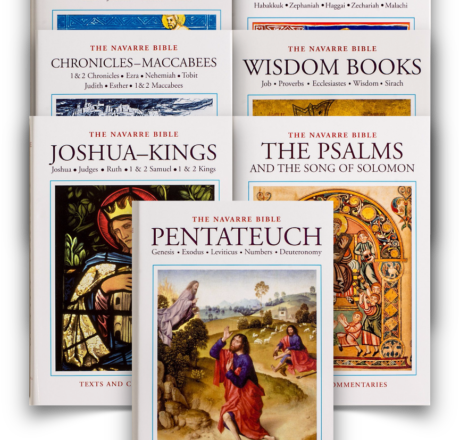
Today’s First Reading
From: Sirach 47:2-11
Nathan and David (Continuation)
-------------------------------
[2] As the fat is selected from the peace offering, so David was selected from the sons of Israel. [3] He played with lions as with young goats, and with bears as with lambs of the flock.[4] In his youth did he not kill a giant, and take away reproach from the people, when he lifted his hand with a stone in the sling and struck down the boasting of Goliath? [5] For he appealed to the Lord, the Most High, and he gave him strength in his right hand to slay a man mighty in war, to exalt the power of his people. [6] So they glorified him for his ten thousands, and praised him for the blessings of the Lord, when the glorious diadem was bestowed upon him. [7] For he wiped out his enemies on every side, and annihilated his adversaries the Philistines; he crushed their power even to this day. [8] In all that he did he gave thanks to the Holy One, the Most High, with ascriptions of glory; he sang praise with all his heart, and he loved his Maker. [9] He placed singers before the altar, to make sweet melody with their voices. [10] He gave beauty to the feasts, and arranged their times throughout the year while they praised God’s holy name, and the sanctuary resounded from early morning. [11] The Lord took away his sins, and exalted his power for ever; he gave him the covenant of kings and a throne of glory in Israel.
***********************************************************************
Commentary:
47:1-11. The eulogy of David recalls, above all, his love for God, which led him to give thanks for his victories, acknowledging that it was the Lord who made it possible for him to achieve them (cf. vv. 6-8). One expression of that love was the ends he went to to ensure the splendor of the liturgy (cf. vv. 9-10); in this he (as Aaron before) anticipated the example that would later be set by the high priest Simon. As a reward for the care he took over the liturgy, the Lord showed him great kindness and took away his sins (v. 11).
From: Mark 6:14-29
Opinions About Jesus
--------------------
[14] King Herod heard of it; for Jesus' name had become known. Some said, "John the Baptizer has been raised from the dead; that is why these powers are at work with Him." [15] But others said, "It is Elijah." And others said, "It is a prophet, like one of the prophets of old." [16] But when Herod heard of it, he said, "John, whom I beheaded, has been raised."
John the Baptist Beheaded
-------------------------
[17] For Herod had sent and seized John, and bound him in prison for the sake of Herodias, his brother Philip's wife; because he had married her. [18] For John said to Herod, "It is not lawful for you to have your brother's wife." [19] And Herodias had a grudge against him, and wanted to kill him. But she could not, [20] for Herod feared John, knowing that he was a righteous and holy man, and kept him safe. When he heard him, he was much perplexed; and yet he heard him gladly. [21] But an opportunity came when Herod on his birthday gave a banquet for his courtiers and officers and the leading men of Galilee. [22] For when Herodias' daughter came in and danced, she pleased Herod and his guests; and the king said to the girl, "Ask me for whatever you wish, and I will grant it." [23] And he said to her, "Whatever you ask me, I will give you, even half of my kingdom." [24] And she went out, and said to her mother, "What shall I ask?" And she said, "The head of John the Baptizer." [25] And she came in immediately with haste to the king, and asked, saying, "I want you to give me at once the head of John the Baptizer on a platter." [26] And the king was exceedingly sorry; but because of his oath and his guests he did not want to break his word to her. [27] And immediately the king sent a soldier of the guard and gave him orders to bring his head. He went and beheaded him in prison, [28] and brought his head on a platter, and gave it to the girl; and the girl gave it to her mother. [29] When his disciples heard of it, they came and took his body, and laid it in a tomb.
***********************************************************************
Commentary:
14. Following the popular custom, St. Mark called Herod "king", but in strict legal terminology he was only tetrarch, which is the way St. Matthew (14:1) and St. Luke (9:7) describe him, that is, a governor of certain consequence. The Herod referred to here was Herod Antipas, the son of Herod the Great who was king of the Jews at the time of Jesus' birth.
16-29. It is interesting that the extensive account of the death of John the Baptist is inserted here in the Gospel narrative. The reason is St. John the Baptist's special relevance in the history of salvation: he is the Precursor, entrusted with the task of preparing the way for the Messiah. Besides, John the Baptist had a great reputation among the people: they believed him to be a prophet (Mark 11:32); some even thought he was the Messiah (Luke 3:15; John 1:20); and they flocked to him from many places (Mark 1:5). Jesus Himself said: "Among those born of women there has risen no one greater than John the Baptist" (Matthew 11:11). Later, the Apostle St. John will speak of him in the Gospel: "There was a man sent from God, whose name was John" (John 1:6); but the sacred text points out that, despite this, he was not the light, but rather the witness to the light (John 5:35). We are told here that he was a righteous man and preached to everyone what had to be preached: he had a word for people at large, for publicans, for soldiers (Luke 3:10-14); for Pharisees and Sadducees (Matthew 3:7-12); for King Herod himself (Mark 6: 18-20). This humble, upright and austere man paid with his life for the witness he bore to Jesus the Messiah (John 1:29 and 36-37).
26. Oaths and promises immoral in content should never be made, and, if made, should never be kept. This is the teaching of the Church, which is summed up in the "St. Pius X Catechism", 383, in the following way: "Are we obliged to keep oaths we have sworn to do unjust and unlawful things? Not only are we not obliged: we sin by making such oaths, for they are prohibited by the Law of God or of the Church.
Disclaimer: Opinions posted on Free Republic are those of the individual posters and do not necessarily represent the opinion of Free Republic or its management. All materials posted herein are protected by copyright law and the exemption for fair use of copyrighted works.


