
Posted on 01/26/2026 7:50:21 AM PST by fidelis
Memorial of Saints Timothy and Titus, Bishops
“Amen, I say to you, all sins and all blasphemies that people utter will be forgiven them. But whoever blasphemes against the Holy Spirit will never have forgiveness, but is guilty of an everlasting sin.” For they had said, “He has an unclean spirit.” Mark 3:28–30
Consider the sobering reality of suffering the guilt of everlasting sin. Though alarming and unpleasant, understanding this possibility is foundational to a healthy spiritual life. This is best illustrated in the Spiritual Exercises of Saint Ignatius of Loyola, one of the co-founders of the Jesuits. The Spiritual Exercises are considered one of the most transforming retreat formats ever written. They guide spiritual directors who lead retreatants through a thirty-day retreat, helping them experience profound conversion and make major life decisions...
Today’s Gospel is not only ideal for those beginning a thirty-day retreat, but also for everyone serious about spiritual growth. On our spiritual journey, we often must do that which is initially difficult and unpleasant so as to reap the fruit of that exercise. One such exercise is to meditate on our Lord’s words: “But whoever blasphemes against the Holy Spirit will never have forgiveness, but is guilty of an everlasting sin.”
In commenting on this, the Catechism of the Catholic Church states, “There are no limits to the mercy of God, but anyone who deliberately refuses to accept his mercy by repenting, rejects the forgiveness of his sins and the salvation offered by the Holy Spirit. Such hardness of heart can lead to final impenitence and eternal loss” (# 1864).
Traditionally, the sin this Gospel refers to has been called the “Sin Against the Holy Spirit.” Saint Thomas Aquinas, in the Summa Theologica (II-II, Question 14, Articles 1–3), articulates six ways that one can be guilty of this sin:
1️⃣Despair: rejecting God’s mercy and refusing to believe one’s sins can be forgiven.
2️⃣Presumption: believing one can attain salvation without grace or repentance.
3️⃣Impenitence: a refusal to repent for past sins.
4️⃣Obstinacy: a hardened resolve to remain in sin.
5️⃣Resisting the Known Truth: deliberately rejecting the truths of the faith to justify sin.
6️⃣Envy of Another’s Grace: resenting the Holy Spirit’s work in others.
God alone knows the depths of our human heart and comprehends our guilt or mitigating circumstances. God alone is the perfect Judge. He judges with divine equity, His perfect justice and mercy united as one. Though God’s mercy is limitless, this does not mean that everyone goes to Heaven. Recall Jesus’ teaching: “Enter through the narrow gate...” (Matthew 7:13–14).
The common thread in the ways Saint Thomas articulates this “everlasting sin” is an obstinate refusal to see our sins in the light of eternal Truth and then to repent and change. When properly understood, attaining Heaven is easy! All we need to do is be honest, turn from sin, and abandon ourselves to our loving God—especially in the Sacrament of Reconciliation...
Reflect today on the serious and consequential demands God places on us. His generosity knows no bounds, but we must receive that generosity on His terms. Ideally, today’s Gospel will inspire us with the spiritual gift of Fear of the Lord. The perfection of this gift is not a fear of punishment, but a deep reverence and love for God that moves us to avoid anything that might offend Him. It deepens our relationship with Him and strengthens our resolve to walk the narrow path. If you find yourself obstinate at times, beware of the danger of that interior disposition.
Most merciful Lord, please free me from all obstinacy and help me to see my sin as You see it. I repent of my sin and profess my need for Your Divine Mercy. Please open the gate to that Mercy so that I can be with You forever in Heaven. Jesus, I trust in You.
Please keep in mind that this is a Catholic Caucus/Devotional thread for the purpose of prayerful reflection on the Sacred Scriptures and is closed to debate of any kind. Per FR policy on Religion Caucus threads, off-topic, argumentative, and abusive comments are not allowed and will be submitted to the Mods for deletion. Thanks, and God bless you.
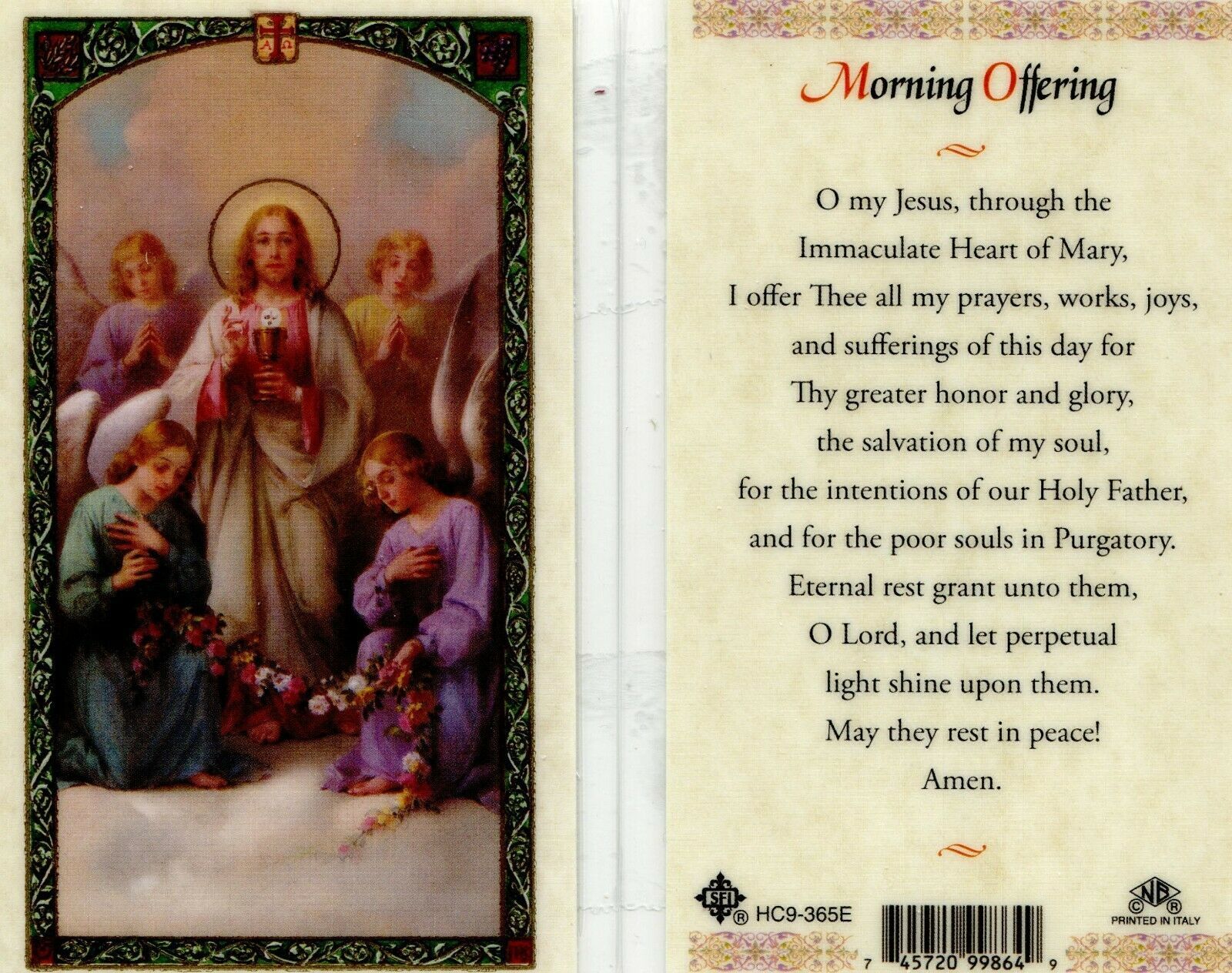
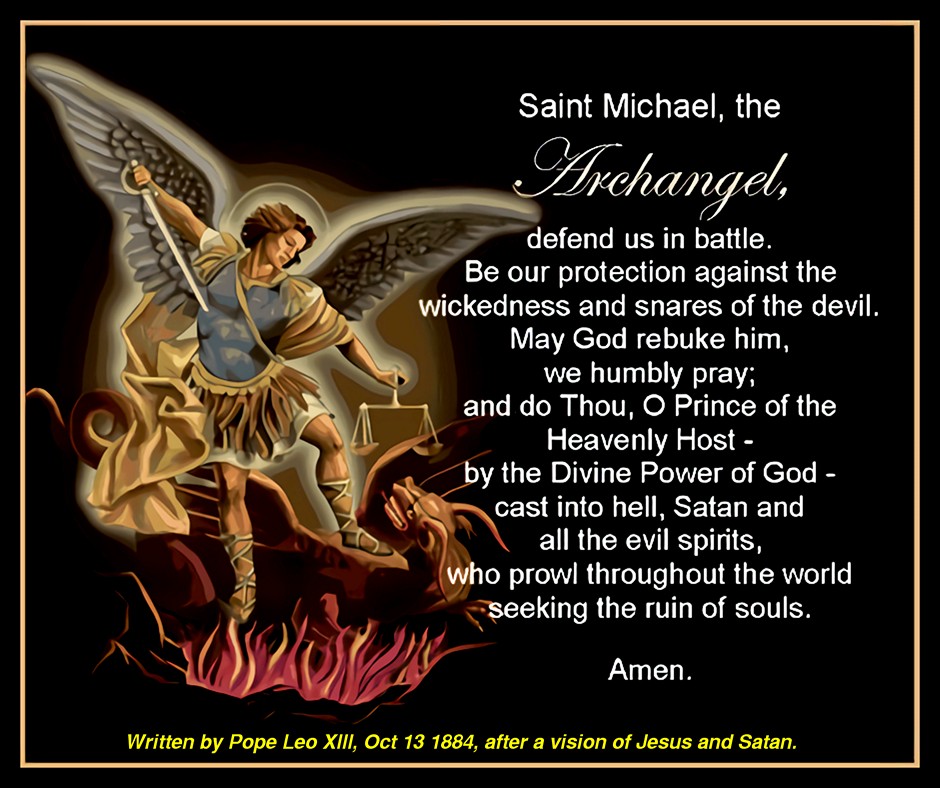
The Month of January is Dedicated to the Holy Name of Jesus

“At the name of Jesus every knee should bow, of those in heaven, and of those on earth, and of those under the earth, and that every tongue should confess that Jesus Christ is Lord, to the glory of God the Father.” (Philippians 2:10-11)

Pope Leo XIV’s monthly prayer intention for the month of January, 2026:
For prayer with the Word of God
Let us pray that praying with the Word of God be nourishment for our lives and a source of hope in our communities, helping us to build a more fraternal and missionary Church.

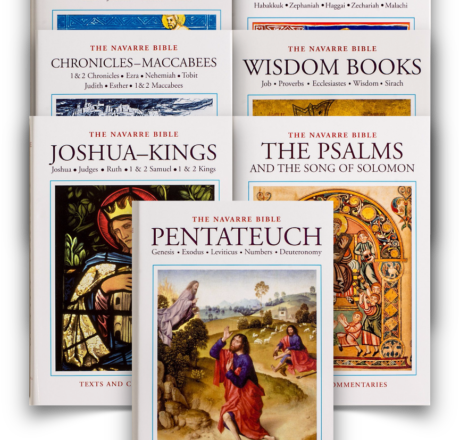
Today’s First Reading
From: 2 Timothy 1:1-8
Greeting
--------
[1] Paul, an apostle of Christ Jesus by the will of God according to the promise of the life which is in Christ Jesus, [2] To Timothy, my beloved child: Grace, mercy, and peace from God the Father and Christ Jesus our Lord. [3] I thank God whom I serve with a clear conscience, as did my fathers, when I remember you constantly in my prayers. [4] As I remember your tears, I long night and day to see you, that I may be filled with joy. [5] I am reminded of your sincere faith, a faith that dwelt first in your grandmother Lois and your mother Eunice and now, I am sure, dwells in you.
Response to Grace
-----------------
[6] Hence I remind you to rekindle the gift of God that is within you through the laying on of my hands; [7] God did not give us a spirit of timidity but a spirit of power and love and self-control.
St Paul, Herald of the Gospel
-----------------------------
[8] Do not be ashamed then of testifying to our Lord, nor of me his prisoner, but take your share of suffering for the gospel in the power of God.
***********************************************************************
Commentary:
1-2. The greeting is like that of 1 Timothy, although now St Paul adds a specific reference to the purpose of his God-given call to the apostolate--"according to the promise of the life which is in Christ Jesus". Christ fulfills all the promises of happiness given to Abraham and the other Old Testament patriarchs. The purpose of the Gospel message is to let men know that they have been called to enjoy a new life in Christ, that is, the divine life whose germ we receive at Baptism. That sacrament initiates the life of grace in the soul, and ultimately that life will blossom into eternal life (cf. 1 Tim 1:16; 6:12; Tit 1:2; 3:9).
On the exact meaning of the expression "in Christ Jesus", see the note on1 Tim 1:14.
3. "I thank God": this is not a spontaneous expression of gratitude but rather a permanent disposition of Paul's soul.
St Paul makes the point that his attitude of service and worship is the same as that of his ancestors, the righteous of the Old Testament, for although the Gospel is something new it does not involve a break with the earlier revelation; rather it brings that revelation to fulfillment. The Apostle pays tribute to the chosen people, not hiding his satisfaction at being a Jew himself (cf. Rom 9:3; 11:1; Gal 2:15). "The Church of Christ acknowledges", Vatican II states, "that in God's plan of salvation the beginning of her faith and election is to be found in the patriarchs, Moses and the prophets [...]. The Church cannot forget that she received the revelation of the Old Testament by way of that people with whom God in his inexpressible mercy established the ancient covenant [...]. She is mindful, moreover, that the Apostles, the pillars on which the Church stands, were of Jewish descent, as were many of those early disciples who proclaimed the Gospel of Christ to the world" ("Nostra Aetate", 4).
6. "The gift of God" is the priestly character which Timothy received on the day of his ordination. St Paul is using very graphic and precise language: by the sacrament of Order a divine gift is conferred on the priest; it is like an ember which needs to be revived from time to time in order to make it glow and give forth the warmth it contains. St Thomas Aquinas comments that "the grace of God is like a fire. which does not flow when it is covered by ashes; the same thing happens when grace is covered over in a person by sluggishness or natural fear" ("Commentary on 2 Tim, ad loc.").
The gifts which God confers on the priest "are not transitory or temporary in him, but stable and permanent, attached as they are to an indelible character, impressed on his soul, by which he is made a priest forever (cf. Ps 109:4), in the likeness of Him in whose priesthood he has been made to share" (Pius XI, "Ad Catholici Sacerdotii", 17).
"The laying on of my hands": see the note on 1 Tim 4:14.
7. The gift of God, received in the sacrament of Order by the laying on of hands, includes sanctifying grace and sacramental grace, and the actual graces needed for performing ministerial functions in a worthy manner. The Council of Trent uses this text (vv. 6-7) when it solemnly defines that Priestly Order is a sacrament instituted by Jesus Christ (cf. "De Sacram. Ordinis", chap. 3).
The minister, then, must be courageous in performing his office: he should preach the truth unambiguously even if it clashes with the surroundings; he should do so with love, and be open to everyone despite their faults; with sobriety and moderation, always seeing the good of souls, not his own advantage. Since the days of the Fathers the Church has urged priests to develop these virtues: "Priests should be compassionate", St Polycarp warns; "they should show mercy to all; they should try to reclaim those who go astray, visit the sick, and care for the poor, the orphan and the widow. They should be concerned always to do what is honorable in the sight of God and men. They should avoid any show of anger, any partiality or trace of greed. They should not be over-ready to believe ill of anyone, not too severe in their censure, being well aware that we all owe the debt of sin" ("Letter to the Philippians", chap. 6).
Or:
From: Titus 1:1-9
Greeting
-----------
[1] Paul, a servant of God and an apostle of Jesus Christ, to further the faith of God's elect and their knowledge of the truth which accords with godliness, [2] in hope of eternal life which God, who never lies, promised ages ago [3] and at the proper time manifested in his word through the preaching with which I have been entrusted by command of God our Savior; [4] To Titus, my true child in a common faith: Grace and peace from God the Father and Christ Jesus our Savior.
Qualifications for Elders
--------------------------------
[5] This is why I left you in Crete, that you might amend what was defective, and appoint elders in every town as I directed you, [6] if any man is blameless, the husband of one wife, and his children are believers and not open to the charge of being profligate or insubordinate. [7] For a bishop, as God's steward, must be blameless; he must not be arrogant or quick-tempered or a drunkard or violent or greedy for gain, [8] but hospitable, a lover of goodness, master of himself, upright, holy, and self-controlled; [9] he must hold firm to the sure word as taught, so that he may be able to give instruction in sound doctrine and also to confute those who contradict it.
***********************************************************************
Commentary:
1-4. The heading is particularly long and formal. It contains, as usual (cf. Rom 1:1-2; 1 Cor 1:13; etc.), the sender's name--Paul; the addressee's--Titus; and the greeting--"Grace and peace". In this case, however, Paul's title (Apostle), and the prerogatives of his authority and his God-given mandate to preach are given special emphasis (v. 3). This has led some scholars to argue that the epistle was in fact written by a disciple of St Paul--who would have put in all this about the Apostle's authority in order to give the letter more weight. However, it is more reasonable to suppose that when St Paul was writing the letter he had Titus very much in mind and also the community in Crete, whom false teachers were beginning to unsettle; the solemn, official tone would be due to the serious nature of their doctrinal aberrations and to the need to ensure that the church in Crete was property organized.
These introductory verses provide a very succinct definition of the mission of an Apostle: it derives from God himself, the Savior of all (vv. 1, 3); the Apostle has a mandate from God, he is God's representative (v. 3); the purpose of his mission is to communicate the word of God, which is true, which "accord with godliness" and leads to eternal life (v. 2). His letter is addressed to the believers, who had been endowed with faith (v. 1) and whom he has to lead to heaven (v. 2).
1. "Servant of God": in the language of the Bible, serving God means rendering him the worship that is his due. While keeping this basic meaning, "servant of God" means one who fulfills the task his Lord gives him. Like the Old Testament prophets (who were conscious of having a sacred mission, which they could not avoid: cf. Amos 3:7; Jer 7:25), St Paul knows that he has a God-given mission which he has a duty to perform.
"To further the faith of God's elect": God sends his apostles to instruct people in the faith so that they know the truth that saves and view their lives and the world from a supernatural vantage-point. As the Church's Magisterium has reminded us, evangelization begins by teaching the essential revealed truths: "It is not superfluous to recall the following points: to evangelize is first of all to bear witness, in a simple and direct way, to God revealed by Jesus Christ, in the Holy Spirit; to bear witness that in his Son God has loved the world--that in his Incarnate Word he has given being to all things and has called men to eternal life" (Paul VI, "Evangelii Nuntiandi", 26).
"The truth that accords with godliness": The virtue of godliness or "piety" includes, particularly, openness to God, docility to his commandments and recognition of his divinity--in a word, religion. Godliness and truth are very closely connected: to acquire a solid, well-grounded piety one needs to have a good grasp of the truth. St Teresa of Avila explains this in her inimitable way: "I should prefer spirituality to be unaccompanied by prayer than not to be founded upon the truth. Learning is a great thing, for it instructs those of us who have little knowledge, and enlightens us, so that when we are faced with the truth of Holy Scripture, we act as we should. From foolish devotions may God deliver us!" ("Life", 13, 16).
2. In doing the work given him, the Apostle always keeps before his eyes the "hope of eternal life"; this determines the content and purpose of his preaching--eternal beatitude for himself and for all who accept the word of God, the attainment of the indescribable joy which is God's reward to those who love him: "What words can describe what is to come--the pleasure, the good fortune, the joy of being with Christ? It is impossible to explain the blessedness and the advantage the soul has when it is returned to its noble self and can from then on contemplate its Lord. And it is not only that he enjoys good things to hand: his joy is permanent because these good things will never cease to be his" (St John Chrysostom, "Ad Theod. Lapsum", 1, 13).
"In hope of eternal life": hope of eternal life should imbue our devout life, and it should also inspire the truth we teach, the faith we profess and the apostolic ministry itself.
Promised "ages ago": this ambiguous Semitic expression (it can also be translated as "from all eternity") refers to God's promise of salvation made in ancient times to the patriarchs and prophets of the Old Testament; but it refers mainly to God's eternal plan: from all eternity God decided to save men. This decision of his is the basis of the theological virtue of hope; we place our hope in God "who never lies", who cannot deceive or be deceived.
3-4. "At the proper time": salvation (God's plan for all eternity, communicated in a veiled way to the prophets) has been manifested in the fullness of time by the advent of the Son of God (cf. Heb 1:1); preaching concerns itself exclusively with this message of salvation. The Apostle preaches "by command of God our Savior", not on his personal initiative. It is worth pointing out that this whole passage is very dense and very typical of Paul's style: lots of ideas are crammed into very few words. The key factor is the divine plan of salvation; but the way that plan is communicated is also important, as is the way it is carried out; the word of God, in addition to making the plan of salvation known, is itself salvific, it is an effective instrument of salvation. The Apostle is very conscious that his mission is divine, for God keeps urging him on; he chose him for this very purpose and granted him the title of "servant of God" (cf. v. 1).
On the meaning of the greeting "Grace and peace", see the note on 1 Tim 1:2 and Rom 1:7.
5-9. The qualities of Church pastors described here agree with those recommended in the First Letter to Timothy (cf. 1 Tim 3:2-7 and note). In neither instance is St Paul trying to give a complete list; he is simply urging that ministers be a model for their flock. Emphasis is laid on four aspects which seem to be particularly important: a minister should be of irreproachable conduct (vv. 6-7); his family should be exemplary Christians (v. 6); he should be an upright and welcoming person (vv. 7-8); and finally, he should have a grasp of Christian doctrine (v. 9). The Church has always tried to have people of this caliber as ministers; the last ecumenical council, for example, reminded pastors that, in the pursuit of holiness, they have a special obligation to give good example to others: "they should abound in every spiritual good and bear a living witness of God to all" ("Lumen Gentium", 41).
5. St Paul seems to have given Titus two jobs to do. One, which is implied here, was to complete the catechetical instruction of the young community in Crete; there is a lot of emphasis throughout the letter on firmness in the truth, on counteracting false teachers, and on the need for all believers, particularly pastors, to have a well-grounded faith.
The second job is to complete the hierarchical structuring of the Church. The elders mentioned here perform the same role as that of the bishops in the First Letter to Timothy, and they are all required to have the same qualities (on the as yet unfixed bishop/priest terminology, see the note on 1 Tim 3:1). St Paul's insistence on appointing successors is a pointer to the Apostolicity of the Church: not only do bishops have the same mission as the Apostles; that mission comes to them from the Apostles: "In fact, not only had (the Apostles) various helpers in their ministry, but, in order that the mission entrusted to them might be continued after their death, they consigned, by will and testament, as it were, to their immediate collaborators the duty of completing and consolidating the work they had begun, urging them to tend to the whole flock, in which the Holy Spirit had appointed them to shepherd the Church of God (cf. Acts 20: 28)" ("Lumen Gentium", 20).
Very little information is available as to when St Paul visited Crete and evangelized it. When he was being brought as a prisoner to Rome in the autumn of the year 60, he probably evangelized some Cretans (cf. Acts 27:7-12); there may also have been some Christians there ever since St Peter preached for the first time in Jerusalem (cf. Acts 2:11). It could be that the Apostle spent a while on the island at some stage and established a Christian community there. Crete was fairly important, being a necessary port of call on the Greece-Asia Minor sea route.
From: Mark 3:22-30
Allegations of the Scribes
--------------------------
[22] And the scribes who came down from Jerusalem said, "He (Jesus) is possessed by Beelzebul, and by the prince of demons He casts out the demons." [23] And He called them to Him, and said to them in parables, "How can Satan cast out Satan? [24] If a kingdom is divided against itself, that kingdom cannot stand. [25] And if a house is divided against itself, that house will not be able to stand. [26] And if Satan has risen up against himself and is divided, he cannot stand, but is coming to an end. [27] But no one can enter a strong man's house and plunder his goods, unless he first binds the strong man; then indeed he may plunder his house."
Sins Against the Holy Spirit
----------------------------
[28] "Truly, I say to you, all sins will be forgiven the sons of men, and whatever blasphemies they utter; [29] but whoever blasphemes against the Holy Spirit never has forgiveness, but is guilty of an eternal sin"--[30] for they had said, "He has an unclean spirit."
***********************************************************************
Commentary:
22-23. Even Jesus' miracles were misunderstood by these scribes, who accuse Him of being a tool of the prince of devils, Beelzebul. This name may be connected with Beelzebub (which spelling is given in some codexes), the name of a god of the Philistine city of Eqron (Accaron), which means "god of the flies." But it is more likely that the prince of devils is called Beelzebul, which means "god of excrement": "excrement" is the word Jews used to describe pagan sacrifices. Whether Beelzebub or Beelzebul, in the last analysis it refers to him to whom these sacrifices were offered, the devil (1 Corinthians 10:20). He is the same mysterious but real person whom Jesus calls Satan, which means "the enemy", whose dominion over the world Christ has come to wrest from him (1 Corinthians 15:24-28; Colossians 1:13f) in an unceasing struggle (Matthew 4:1-10; John 16:11). These names show us that the devil really exists: he is a real person who has at his beck and call others of his kind (Mark 5:9).
24-27. Our Lord invites the Pharisees, who are blind and obstinate, to think along these lines: if someone expels the devil this means he is stronger than the devil: once more we are exhorted to recognize in Jesus the God of strength, the God who uses His power to free man from enslavement to the devil. Satan's dominion has come to an end: the prince of this world is about to be cast out. Jesus' victory over the power of darkness, which is completed by His death and resurrection, shows that the light has already entered the world, as our Lord Himself told us: "Now is the judgment of this world, now shall the ruler of this world be cast out; and I, when I am lifted up from the earth, will draw all men to Myself" (John 12:31-32).
28-30. Jesus has just worked a miracle but the scribes refuse to recognize it "for they had said `He has an unclean spirit'" (verse 30). They do not want to admit that God is the author of the miracle. In this attitude lies the special gravity of blasphemy against the Holy Spirit--attributing to the prince of evil, to Satan, the good works performed by God Himself. Anyone acting in this way will become like the sick person who has so lost confidence in the doctor that he rejects him as if an enemy and regards as poison the medicine that can save his life. That is why our Lord says that he who blasphemes against the Holy Spirit will not forgiven: not because God cannot forgive all sins, but because that person, in his blindness towards God, rejects Jesus Christ, His teaching and His miracles, and despises the graces of the Holy Spirit as if they were designed to trap him (cf. "St. Pius V Catechism", II, 5, 19; St. Thomas Aquinas, "Summa theologiae", II-II, q. 14, a. 3).
All went well? Good to see you.
All went well, thanks be to God. No complications and I am now at home recuperating. Thanks for the prayers; I know they helped.
Disclaimer: Opinions posted on Free Republic are those of the individual posters and do not necessarily represent the opinion of Free Republic or its management. All materials posted herein are protected by copyright law and the exemption for fair use of copyrighted works.


