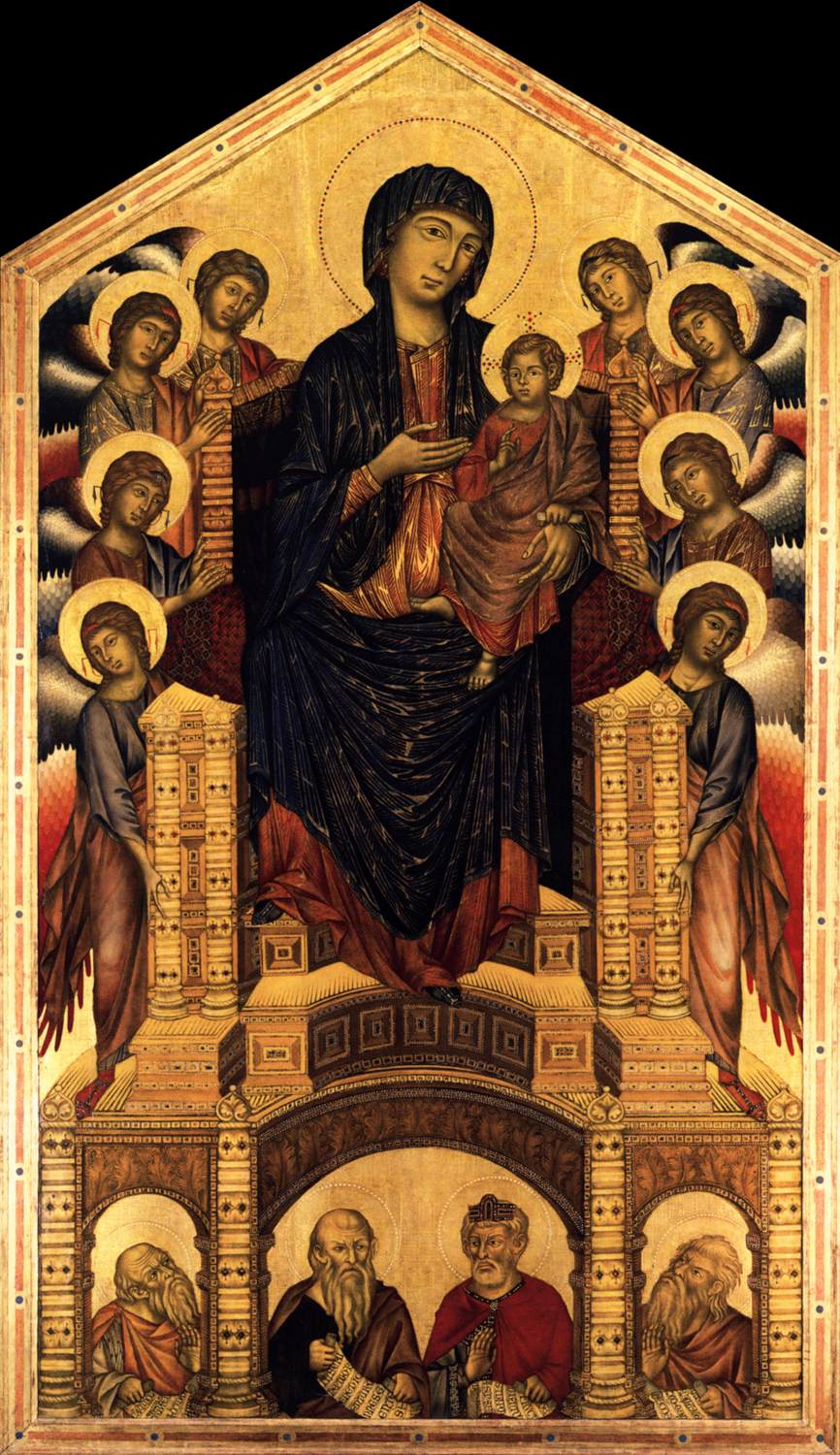
Catena Aurea by St. Thomas Aguinas
3:19–22
19. —And they went into an house.
20. And the multitude cometh together again, so that they could not so much as eat bread.
21. And when his friends heard of it, they went out to lay hold on him: for they said, He is beside himself.
22. And the Scribes which came down from Jerusalem said, He hath Beelzebub, and by the prince of the devils casteth he out devils.
BEDE. (ubi sup.) The Lord leads the Apostles, when they were elected, into a house, as if admonishing them, that after having received the Apostleship, they should retire to look on their own consciences. Wherefore it is said, And they came into a house, and the multitude came together again, so that they could not eat bread.
PSEUDO-CHRYSOSTOM. (Vict. Ant. e Cat. in Marc.) Ungrateful indeed were the multitudes of princes, whom their pride hinders from knowledge, but the grateful multitude of the people came to Jesus.
BEDE. (ubi sup.) And blessed indeed the concourse of the crowd, flocking together, whose anxiety to obtain salvation was so great, that they left not the Author of salvation even an hour free to take food. But Him, whom a crowd of strangers loves to follow, his relations hold in little esteem: for it goes on: And when his friends heard of it, they went out to lay hold upon him. For since they could not take in the depth of wisdom, which they heard, they thought that He was speaking in a senseless way, wherefore it continues, for they said, He is beside himself.
THEOPHYLACT. That is, He has a devil and is mad, and therefore they wished to lay hold upon Him, that they might shut Him up as one who had a devil. And even His friends wished to do this, that is, His relations, perchance His countrymen, or His brethren. 1But it was a silly insanity in them, to conceive that the Worker of such great miracles of Divine Wisdom had become mad.
BEDE. (ubi sup.) Now there is a great difference between those who do not understand the word of God from slowness of intellect, such as those, who are here spoken of, and those who purposely blaspheme, of whom it is added, And the Scribes which came down from Jerusalem, &c. For what they could not deny, they endeavour to pervert by a malicious interpretation, as if they were not the works of God, but of a most unclean spirit, that is, of Beelzebub, who was the God of Ekron. For ‘Beel’ means Baal himself, and ‘zebub’ a fly; the meaning of Beelzebub therefore is the man of flies, on account of the filth of the blood which was offered, from which most unclean rite, they call him prince of the devils, adding, and by the prince of the devils casteth he out devils.
PSEUDO-JEROME. But mystically, the house to which they came, is the early Church. The crowds which prevent their eating bread are sins and vices; for he who eateth unworthily, eateth and drinketh damnation to himself. (1 Cor. 11:29)
BEDE. (ubi sup.) The Scribes also coming down from Jerusalem blaspheme. But the multitude from Jerusalem, and from other regions of Judæa, or of the Gentiles, followed the Lord, because so it was to be at the time of His Passion, that a crowd of the people of the Jews should lead Him to Jerusalem with palms and praises, and the Gentiles should desire to see Him; but the Scribes and Pharisees should plot together for His death.
Catena Aurea Mark 3
Catena Aurea by St. Thomas Aguinas
9. As the Father hath loved me, so have I loved you: continue ye in my love.
10. If ye keep my commandments, ye shall abide in my love: even as I have kept my Father’s commandments, and abide in his love.
11. These things have I spoken unto you, that my joy might remain in you, and that your joy might be full.
CHRYSOSTOM. (Hom. lxxvi. 2) Our Lord shewed above, that those who plotted against them should be burned, inasmuch as they abode not in Christ: now He shews that they themselves would be invincible, bringing forth much fruit; Herein is My Father glorified, that ye bear much fruit: as if He said, If it appertains to My Father’s glory that ye bring forth fruit, He will not despise His own glory. And he that bringeth forth fruit is Christ’s disciple: So shall ye be My disciples.
THEOPHYLACT. The fruit of the Apostles are the Gentiles, who through their teaching were converted to the faith, and brought into subjection to the glory of God.
AUGUSTINE. (Tract. lxxxii. 1) Made bright or glorified; the Greek word may be translated in either way. Δόξα signifies glory; not our own glory, we must remember, as if we had it of ourselves: it is of His grace that we have it; and therefore it is not our own but His glory. For from whom shall we derive our fruitfulness, but from His mercy preventing us. Wherefore He adds, As My Father hath loved Me, even so love I you. This then is the source of our good works. Our good works proceed from faith which worketh by love: but we could not love unless we were loved first: As My Father hath loved Me, even so love I you. This does not prove that our nature is equal to His, as His is to the Father’s, but the grace, whereby He is the Mediator between God and man, the man Christ Jesus. The Father loves us, but in Him.
CHRYSOSTOM. (Hom. lxxvi. 2) If then I love you, be of good cheer; if it is the Father’s glory that ye bring forth good fruit, bear no evil. Then to rouse them to exertion, He adds, Continue ye in My love; and then shews how this is to be done: If ye keep My commandments, ye shall abide in My love.
AUGUSTINE. (Tract. lxxxii. 3. et seq.) Who doubts that love precedes the observance of the commandments? For who loves not, has not that whereby to keep the commandments. These words then do not declare whence love arises, but how it is shewn, that no one might deceive himself into thinking that he loved our Lord, when he did not keep His commandments. Though the words, Continue ye in My love, do not of themselves make it evident which love He means, ours to Him, or His to us, yet the preceding words do: I love you, He says: and then immediately after, Continue ye in My love. Continue ye in My love, then, is, continue in My grace: and, If ye keep My commandments, ye shall abide in My love, is, Your keeping of My commandments, will be evidence to you that ye abide in My love. It is not that we keep His commandments first, and that then He loves; but that He loves us, and then we keep His commandments. This is that grace, which is revealed to the humble, but hidden from the proud. But what means the next words, Even as I have kept My Father’s commandments, and abide in His love: i. e. the Father’s love, wherewith He loveth the Son. Must this grace, wherewith the Father loves the Son, be understood to be like the grace wherewith the Son loveth us? No; for whereas we are sons not by nature, but by grace, the Only Begotten is Son not by grace, but by nature. We must understand this then to refer to the manhood in the Son, even as the words themselves imply: As My Father hath loved Me, even so love I you. The grace of a Mediator is expressed here; and Christ is Mediator between God and man, not as God, but as man. This then we may say, that since human nature does not pertain to the nature of God, but does by grace pertain to the Person of the Son, grace also pertains to that Person; such grace as has nothing superior, nothing equal to it. For no merits on man’s part preceded the assumption of that nature.
ALCUIN. Even as I have kept My Father’s commandments. The Apostle explains what these commandments were: Christ became obedient unto death, even the death of the cross. (Phil. 2:8)
CHRYSOSTOM. (Hom. lxxvii. 1) Then because the Passion was now approaching to interrupt their joy, He adds, These things have I spoken unto you, that my joy may remain in you: as if He said, And if sorrow fall upon you, I will take it away; so that ye shall rejoice in the end.
AUGUSTINE. (Tract. lxxxiii. 1) And what is Christ’s joy in us, but that He deigns to rejoice on our account? And what is our joy, which He says shall be full, but to have fellowship with Him? He had perfect joy on our account, when He rejoiced in foreknowing, and predestinating us; but that joy was not in us, because then we did not exist: it began to be in us, when He called us And this joy we rightly call our own, this joy wherewith we shall be blessed; which is begun in the faith of them who are born again, and shall be fulfilled in the reward of them who rise again.
15:12–16
12. This is my commandment, That ye love one another, as I have loved you.
13. Greater love hath no man than this, that a man lay down his life for his friends.
14. Ye are my friends, if ye do whatsoever I command you.
15. Henceforth I call you not servants; for the servant knoweth not what his Lord doeth: but I have called you friends; for all things that I have heard of my Father I have made known unto you.
16. Ye have not chosen me, but I have chosen you, and ordained you, that ye should go and bring forth fruit, and that your fruit should remain: that whatsoever ye shall ask of the Father in my name, he may give it you.
THEOPHYLACT. Having said, If ye keep My commandments, ye shall abide in My love, He shews what commandments they are to keep: This is My commandment, That ye love one another.
GREGORY. (Hom. xxvii. in Evang.) But when all our Lord’s sacred discourses are full of His commandments, why does He give this special commandment respecting love, if it is not that every commandment teaches love, and all precepts are one? Love and love only is the fulfilment of every thing that is enjoined. As all the boughs of a tree proceed from one root, so all the virtues are produced from one love: nor hath the branch, i. e. the good work, any life, except it abide in the root of love.
AUGUSTINE. (Tract. lxxxiii. 3) Where then love is, what can be wanting? where it is not, what can profit? But this love is distinguished from men’s love to each other as men, by adding, As I have loved you. To what end did Christ love us, but that we should reign with Him? Let us therefore so love one another, as that our love be different from that of other men; who do not love one another, to the end that God may be loved, because they do not really love at all. They who love one another for the sake of having God within them, they truly love one another.
GREGORY. (Hom. xxvii.) The highest, the only proof of love, is to love our adversary; as did the Truth Himself, who while He suffered on the cross, shewed His love for His persecutors: Father, forgive them, for they know not what they do. (Luke 23:34) Of which love the consummation is given in the next words: Greater love hath no man than this, that a man lay down his life for his friends. Our Lord came to die for His enemies, but He says that He is going to lay down His life for His friends, to shew us that by loving, we are able to 1 gain over our enemies, so that they who persecute us are by anticipation our friends.
AUGUSTINE. (Tract. lxxxvi. 1) Having said, This is My commandment, that ye love one another, even as I have loved you, it follows, as John saith in his Epistle, that as Christ laid down His life for us, so we should lay down our lives for the brethren. (1 John 3) This the martyrs have done with ardent love. And therefore in commemorating them at Christ’s table, we do not pray for them, as we do for others, but we rather pray that we may follow their steps. For they have shewn the same love for their brother, that has been shewn them at the Lord’s table.
GREGORY. (Hom. xxvii.) But whoso in time of tranquillity will not give up his time to God, how in persecution will he give up his soul? Let the virtue of love then, that it may be victorious in tribulation, be nourished in tranquillity by deeds of mercy.
AUGUSTINE. (viii. de Trin. c. viii) From one and the same love, we love God and our neighbour; but God for His own sake, our neighbour for God’s. So that, there being two precepts of love, on which hang all the Law and the Prophets, to love God, and to love our neighbour, Scripture often unites them into one precept. For if a man love God, it follows that he does what God commands, and if so, that he loves his neighbour, God having commanded this. Wherefore He proceeds: Ye are My friends, if ye do whatsoever I command you.
GREGORY. (xxvii. Moral.) A friend is as it were a keeper of the soul. He who keeps God’s commandments, is rightly called His friend.
AUGUSTINE. (Tract. lxxxv. 2) Great condescension! Though to keep his Lord’s commandments, is only what a good servant is obliged to do, yet, if they do so, He calls them His friends. The good servant is both the servant, and the friend. But how is this? He tells us: Henceforth I call you not servants, for the servant knoweth not what his Lord doeth. Shall we therefore cease to be servants, as soon as ever we are good servants? And is not a good and tried servant sometimes entrusted with his master’s secrets, still remaining a servant? (c. 3.). We must understand then that there are two kinds of servitude, as there are two kinds of fear. There is a fear which perfect love casteth out; which also hath in it a servitude, which will be cast out together with the fear. And there is another, a pure (castus) fear, which remaineth for ever. It is the former state of servitude, which our Lord refers to, when He says, Henceforth I call you not servants, for the servant knoweth not what his Lord doeth; not the state of that servant to whom it is said, Well done, thou good servant, enter thou into the joy of thy Lord: (Matt. 25:21) but of him of whom it was said below, The servant abideth not in the house for ever, but the Son abideth ever. Forasmuch then as God hath given us power to become the sons of God, so that in a wonderful way, we are servants, and yet not servants, we know that it is the Lord who doth this. This that servant is ignorant of, who knoweth not what his Lord doeth, and when he doeth any good thing, is exalted in his own conceit, as if he himself did it, and not his Lord; and boasts of himself, not of his Lord.
But I have called you friends, for all things that I have heard of My Father, I have made known unto you.
THEOPHYLACT. As if He said, The servant knoweth not the counsels of his lord; but since I esteem you friends, I have communicated my secrets to you.
AUGUSTINE. (Tract. lxxxvi. 1) But how did He make known to His disciples all things that He had heard from the Father, when He forebore saying many things, because He knew they as yet could not bear them? He made all things known to His disciples, i. e. He knew that He should make them known to them in that fulness of which the Apostle saith, Then we shall know, even as we are known. (1 Cor. 13:12) For as we look for the death of the flesh, and the salvation of the soul; so should we look for that knowledge of all things, which the Only-Begotten heard from the Father.
GREGORY. (Hom. xxvii.) Or all things which He heard from the Father, which He wished to be made known to His servants; the joys of spiritual love, the pleasures of our heavenly country, which He impresses daily on our minds by the inspiration of His love. For while we love the heavenly things we hear, we know them by loving, because love is itself knowledge. He had made all things known to them then, because being withdrawn from earthly desires, they burned with the fire of divine love.
CHRYSOSTOM. (Hom. lxxvii. 1) All things, i. e. all things that they ought to hear. I have heard, shews that what He had taught was no strange doctrine, but received from the Father.
GREGORY. (Hom. in Evang. xxvii.) But let no one who has attained to this dignity of being called the friend of God, attribute this superhuman gift1 to his own merits: Ye have not chosen Me, but I have chosen you.
AUGUSTINE. (Tract. lxxxvi. 3) Ineffable grace! For what were we before Christ had chosen us, but wicked, and lost? We did not believe in Him, so as to be chosen by Him: for had He chosen us believing, He would have chosen us choosing. This passage refutes the vain opinion of those who say that we were chosen before the foundation of the world, because God foreknew that we should be good, not that He Himself would make us good. For had He chosen us, because He foreknew that we should be good, He would have foreknown also that we should first choose Him, for without choosing Him we cannot be good; unless indeed he can be called good, who hath not chosen good. What then hath He chosen in them who are not good? Thou canst not say, I am chosen because I believed; for hadst thou believed in Him, thou hadst chosen Him. Nor canst thou say, Before I believed I did good works, and therefore was chosen. For what good work is there before faith? What is there for us to say then, but that we were wicked, and were chosen, that by the grace of the chosen we might become good?
AUGUSTINE. (de Prad. Sanct. c. xvii.) They are chosen then before the foundation of the world, according to that predestination by which God foreknew His future acts. They are chosen out of the world by that call whereby God fulfills what He has predestined: whom He did predestinate, them He also called. (Rom. 8:30)
AUGUSTINE. (Tract. lxxxvi. 3) Observe, He does not choose the good; but those, whom He hath chosen, He makes good: And I have ordained you that ye should go, and bring forth fruit. This is the fruit which He meant, when He said, Without Me ye can do nothing. He Himself is the way in which He hath set (ἔθηκα, posui) us to go.
GREGORY. (Hom. xxvii.) I have set you,i. e. have planted you by grace, that ye should go by will (volendo not in Vulg.); to will being to go in mind, and bring forth fruit, by works. What kind of fruit they should bring forth He then shews: And that your fruit may remain: for worldly labour hardly produces fruit to last our life: and if it does, death comes at last, and deprives us of it all. But the fruit of our spiritual labours endures even after death; and begins to be seen at the very time that the results of our carnal labour begin to disappear. Let us then produce such fruits as may remain, and of which death, which destroys every thing, will be the commencement.
AUGUSTINE. (Tract. lxxxvi. 3) Love then is one fruit, now existing in desire only, not yet in fulness. Yet even with this desire whatever we ask in the name of the Only-Begotten Son, the Father giveth us: That whatsoever ye shall ask the Father in My name, He may give it you. We ask in the Saviour’s name, whatever we ask, that will be profitable to our salvation.
15:17–21
17. These things I command you, that ye love one another.
AUGUSTINE. (Tract. lxxxvii. 1) Our Lord had said, I have ordained that ye should walk, and bring forth fruit. Love is this fruit. Wherefore He proceeds: These things I command you, that ye love one another. (Gal. 5:22) Hence the Apostle saith: The fruit of the Spirit is love; and enumerates all other graces as springing from this source. Well then doth our Lord commend love, as if it were the only thing commanded: seeing that without it nothing can profit, with it nothing be wanting, whereby a man is made good.
CHRYSOSTOM. (Hom. lxxvii. 2) Or thus: I have said that I lay down My life for you, and that I first chose you. I have said this not by way of reproach, but to induce you to love one another. Then as they were about to suffer persecution and reproach, He bids them not to grieve, but rejoice on that account: If the world hate you, ye know that it hated Me before it hated you: as if to say, I know it is a hard trial, but ye will endure it for My sake.
Catena Aurea John 15