
Posted on 01/20/2026 7:20:38 AM PST by fidelis
Note: This may be my last posting of the daily meditations for a few days. I am having surgery tomorrow morning to remove my main tumor in my colon and will be in the hospital for a few days. Please keep me in your prayers.
God willing, I'll be back soon. Thank you, and may God bless you all.
“The sabbath was made for man, not man for the sabbath. That is why the Son of Man is lord even of the sabbath” Mark 2:27–28
Today’s Gospel should console those who struggle with a legalistic and scrupulous mindset. This is an easy trap to fall into for those who desire to keep God’s commandments and remain faithful to His holy will. Despite the best intentions... for those who are deeply sincere in their fidelity to God to misunderstand how best to please and glorify Him. One common trap is to think that meticulous observance of the external Law is sufficient. While obedience to God’s Law is essential, it is equally important to understand the authentic requirements of His Law—what it truly demands and what it does not.
Today’s Gospel takes place toward the beginning of Jesus’ public ministry, after He had named His Twelve Apostles and begun preaching and healing... When the Pharisees saw them doing this, they seized the opportunity to condemn them, saying, “Look, why are they doing what is unlawful on the sabbath?” (Mark 2:24)
Without getting too philosophical, it’s important to understand what we call God’s Eternal Law. The Eternal Law encompasses reality—physical, moral and spiritual truths. All that God has established as true must be our guide through life. The goal of the evil one is to deceive us by leading us into a false understanding of that reality.
Traditionally, the Eternal Law has been divided into two distinct aspects: the Natural and Divine Laws. The Divine Law is all that is known only through divine revelation—all that the Scriptures reveal, especially through Christ’s humanity and mission... For example, we instinctively know it is wrong to lie, steal, and murder. Though God’s Divine Law confirms this through the Ten Commandments, these basic moral truths are already evident to us when we reflect clearly.
In today’s Gospel, the Apostles’ actions were perfectly aligned with right reason—the Natural Law—showing how their choices reflected God’s design for human flourishing. They were eating grain as they journeyed with Jesus so He could continue His mission. Their need for sustenance, especially while in service to Christ, took precedence over rigid legalistic interpretations of the Sabbath. The Pharisees, however, mistook the Sabbath for an end in itself. They focused solely on external observance and failed to understand that the Sabbath was instituted as a gift for humanity—a day for rest, worship, and renewal in communion with God.
What’s freeing and beautiful to note is that the Natural Law, written on our human reason, and the Divine Law, revealed through the Scriptures, are in perfect harmony. Both flow from God. Through His mission, Jesus shows us how the Divine Law elevates and perfects the Natural Law, orienting both toward love and mercy. The Pharisees’ legalism obscured this harmony, reducing the Law to a burdensome set of rules rather than as a pathway to life and freedom.
Reflect today on your own approach to God’s Law. If you find it burdensome, reevaluate your thinking. Properly understood and embraced, God’s Law is not a weight; it’s the source of freedom. The Sabbath, in particular, invites us to rest and trust in God’s providence. When we live according to the Eternal Law—both Natural and Divine—we discover harmony within our souls that refreshes and elevates us. Resolve to follow God’s Law with love, avoiding both scrupulosity and laxity, and you will find the freedom and joy for which you were created.
Divine Law-Giver, all that You have spoken and established is Truth. You are the Source of Truth and Truth Itself. Please free me from both laxity and scrupulosity as I strive to live in accord with Your will. May I find in Your Law the pathway to freedom and joy. Jesus, I trust in You.
Please keep in mind that this is a Catholic Caucus/Devotional thread for the purpose of prayerful reflection on the Sacred Scriptures and is closed to debate of any kind. Per FR policy on Religion Caucus threads, off-topic, argumentative, and abusive comments are not allowed and will be submitted to the Mods for deletion. Thanks, and God bless you.
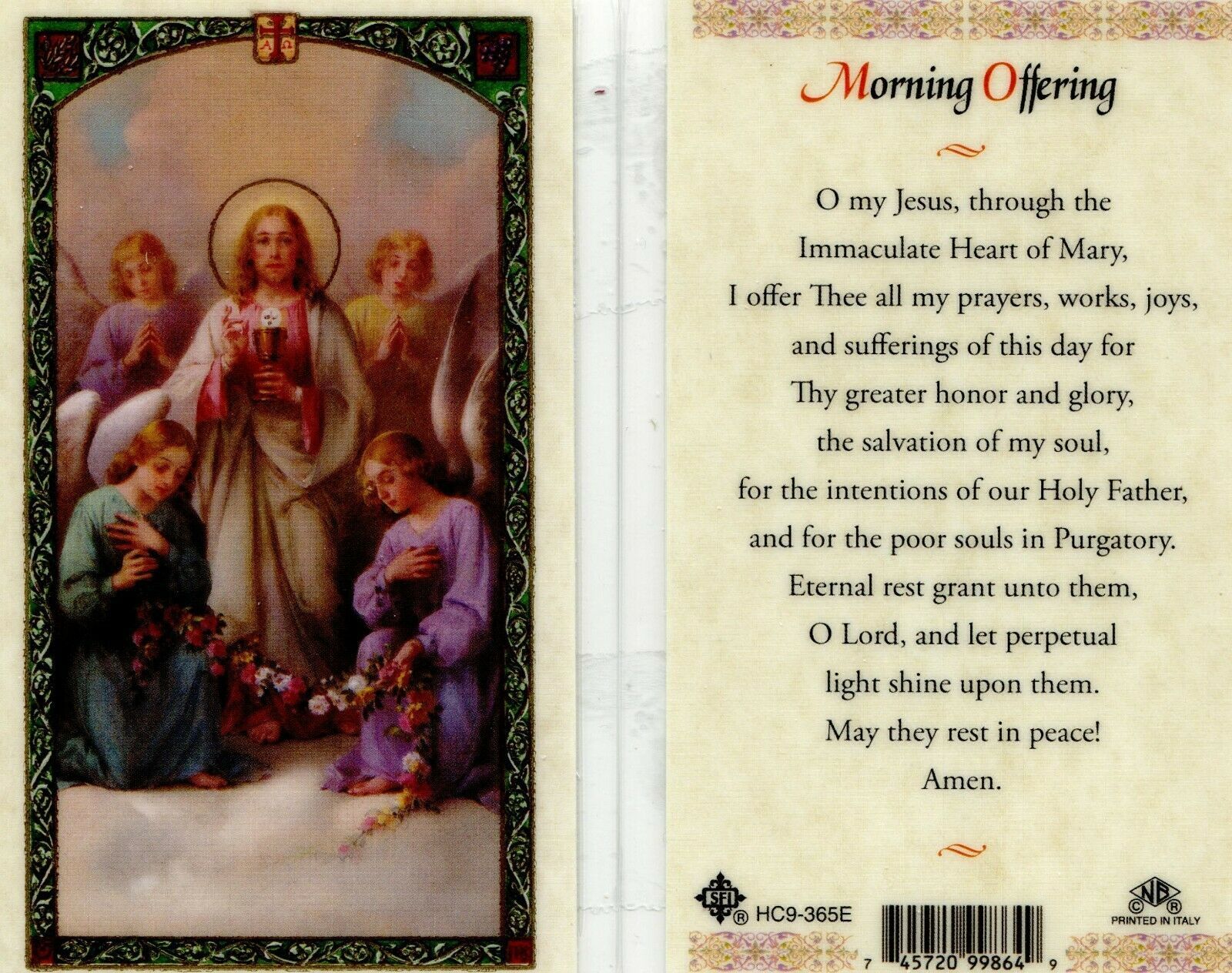
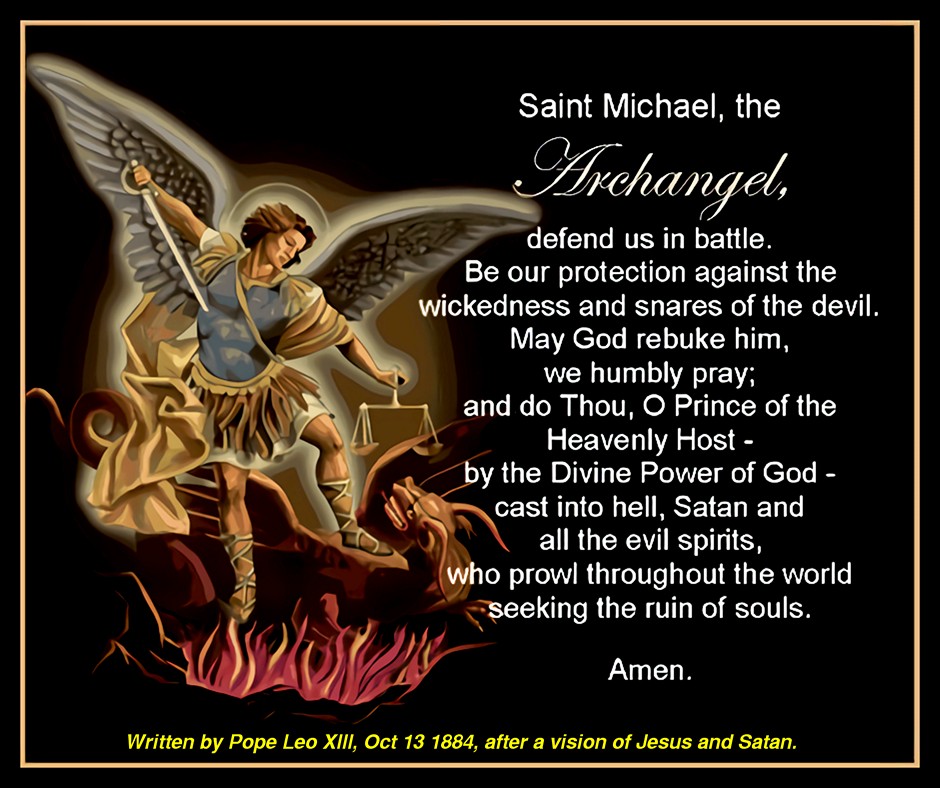
The Month of January is Dedicated to the Holy Name of Jesus

“At the name of Jesus every knee should bow, of those in heaven, and of those on earth, and of those under the earth, and that every tongue should confess that Jesus Christ is Lord, to the glory of God the Father.” (Philippians 2:10-11)

Pope Leo XIV’s monthly prayer intention for the month of January, 2026:
For prayer with the Word of God
Let us pray that praying with the Word of God be nourishment for our lives and a source of hope in our communities, helping us to build a more fraternal and missionary Church.

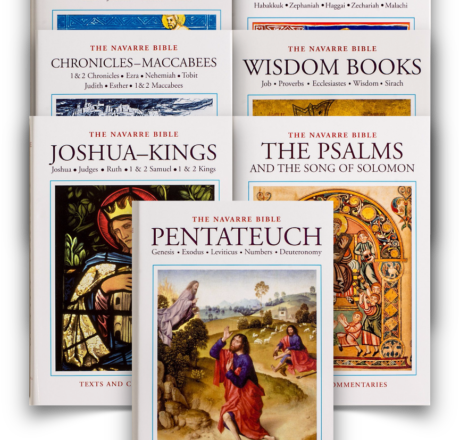
Today’s First Reading
From: 1 Samuel 16:1-13
David is Anointed
-----------------
[1b] The Lord said to Samuel, “How long will you grieve over Saul, seeing I have rejected him from being king over Israel? Fill your horn with oil, and go; I will send you to Jesse the Bethlehemite, for I have provided for myself a king among his sons." [2] And Samuel said, “How can I go? If Saul hears it, he will kill me.” And the LORD said, “Take a heifer with you, and say, ‘I have come to sacrifice to the LORD.’ [3] And invite Jesse to the sacrifice and I will show you what you shall do and you shall anoint for me him whom I name to you” [4] Samuel did what the LORD commanded and came to Bethlehem. The elders of the city came to meet him trembling, and said, ‘Do you come peaceably?” [5] And he said, ‘Peaceably, I have come to sacrifice to the LORD, consecrate yourselves, and come with me to the sacrifice.” And he consecrated Jesse and his sons, and invited them to the sacrifice.
[6] When they came, he looked on Eliab and thought, "Surely the Lord's anointed is before him." [7] But the Lord said to Samuel, "Do not look on his appearance or on the height of his stature because I have rejected him; for the Lord sees not as man sees; man looks on the outward appearance, but the Lord looks on the heart." [8] Then Jesse called Abinadab, and made him pass before Samuel. And he said, "Neither has the LORD chosen this one." [9] Then Jesse made Shammah pass by. And he said, “Neither has the LORD chosen this one.” [10] And Jesse made seven of his sons pass before Samuel. And Samuel said to Jesse, "The Lord has not chosen these." [11] And Samuel said to Jesse, "Are all your sons here?" And he said, "There remains yet the youngest, but behold, he is keeping the sheep." And Samuel said to Jesse, "Send and fetch him; for we will not sit down till he comes here." [12] And he sent, and brought him in. Now he was ruddy, and had beautiful eyes, and was handsome. And the Lord said, "Arise, anoint him; for this is he." [13] Then Samuel took the horn of oil, and anointed him in the midst of his brothers; and the Spirit of the Lord came mightily upon David from that day forward. And Samuel rose up and went to Ramah.
***********************************************************************
Commentary:
16:1-31:13. This, the last section of 1 Samuel, begins with an account of the gradual decline of Saul until his eventual death in the battle of Gilboa against the Philistines (chap. 31); it also deals with the tortuous and sometimes slow rise to power of the new king, David. Strictly speaking, this section should also take in the final chapter of 2 Samuel. From a literary point of view we can see that the text is very much in the style of a court chronicle focusing only on episodes in which the kings play the leading role. Many of the events covered here are repeated twice--for example, David's entry into Saul's service (16:14-23; 18:1-2), Saul's attempt on David's life (18:10-11; 19:9-10), Saul's promise to give David his daughter's hand in marriage (18:17-19; 18:20-27), Jonathan's pleading on David's behalf (19:1-7; 20:25-34), David's flight (19:10-18; 20:1-21) and the opportunity he gets to take Saul's life (24:7-8; 26:11-12). All this goes to show that the editor has used material from a variety of sources and not made any great effort to merge them properly.
In the episodes recounted here there are few religious references, whereas the tensions between Saul and David are exposed in all their starkness; in fact, even though these chapters deal with the most famous of kings, David, and stress God's special love for him, no effort is made to gloss over his failings and transgressions (contrary to what happens in 1 and 2 Chronicles). David comes across as a shrewd politician, capable of allying himself with the eternal enemies of his people, the Philistines, in order to save himself (chap. 27); as a usurper of Saul's throne (chaps. 19 and 21); as a man of strong passions capable of slaughter on a grand scale (21:12; 22:17) and other human weaknesses (18:17-27; 25:32-44), yet capable, too, of great loyalty to the Lord's anointed king (chaps. 24-26) and to his own friends (chap. 20). So, these accounts expose the most human side of the personalities involved, but they also allow us to see that the Lord God of Israel is the main protagonist even though he is in the background--mainly because it is he who chooses David and stays with him, from the first moment that he enters the picture (16:1) and through all the crises of his career: witness the constant refrain "the Lord is with him" (16:18; 18:14, 28). Saul, David and the rest of the players in this history are not guided by a blind destiny: they are all playing their part in God's plan of salvation The great lesson contained in these accounts is that the Lord does not normally intervene by way of miracles or amazing actions; he guides the course of history through lights and shadows until he attains his key objective--to make himself known to all mankind and lead it to salvation. The other great lesson is that this salvific history steadily advances, amidst ups and downs--acts of heroism, human weaknesses--until it reaches its fully developed stage in Jesus Christ.
16:1-13. Samuel's anointing of David, in a private, familial setting, is reminiscent of Saul's anointing, which was also done in secret (cf. 10:1-16). The narrative emphasizes that David does not in any way merit his election: he is a nobody, from a family of no importance: no genealogy is provided, apart from the name of Jesse, his father (v. 5); he is the youngest of his brothers (vv. 11-12) and, like the rest of his family, he works as a shepherd: he doesn't come from a noble or military or priestly family. He could have no claim to be anointed king.
God's gratuitous choice of this shepherd boy gives deep, religious meaning to his reception by Saul (16:14-23) and by the people, when he later kills Goliath (17:55-18:5). David's qualities and feats would not have been enough to advance him, had not God first singled him out. David is a type of those who in the Christian dispensation are called to offices in the Church: what matters is not background, personal qualities or material resources but the realization that one is called by God. Also, one needs to bear in mind that "man looks on the outward appearance, but the Lord looks on the heart" (v. 7); from this derives the requirement to live and act in keeping with the call one is given. "For by his power to know himself in the depths of his being he rises above the whole universe of mere objects. When he is drawn to think about his real self, he turns to those deep recesses of his being where God who probes the heart awaits him, and where he himself decides his own destiny in the sight of God" (Vatican II, "Gaudium Et Spes", 14).
From: Mark 2:23-28
The Law of the Sabbath
----------------------
[23] One Sabbath He (Jesus) was going through the grainfields; and as they made their way His disciples began to pluck ears of grain. [24] And the Pharisees said to Him, "Look, why are they doing what is not lawful on the Sabbath?" [25] And He said to them, "Have you never read what David did, when he was in need and hungry, he and those who were with him: [26] how he entered the house of God, when Abiathar was high priest, and ate the bread of the Presence, which it is not lawful for any but the priests to eat, and also gave it to those who were with him?" [27] And He said to them, "The Sabbath was made for man, not man for the Sabbath; [28] so the Son of Man is Lord even of the Sabbath."
***********************************************************************
Commentary:
24. Cf. note on Matthew 12:2.
[Note on Matthew 12:2 states: "The Sabbath": this was the day the Jews set aside for worshipping God. God Himself, the originator of the Sabbath (Genesis 2:3), ordered the Jewish people to avoid certain kinds of work on this day (Exodus 20:8-11; 21:13; Deuteronomy 5:14) to leave them free to give more time to God. As time went by, the rabbis complicated this Divine precept: by Jesus' time they had extended to 39 the list of kinds of forbidden work.
The Pharisees accuse Jesus' disciples of breaking the Sabbath. In the casuistry of the scribes and the Pharisees, plucking ears of corn was the same as harvesting, and crushing them was the same as milling--types of agricultural work forbidden on the Sabbath.]
26-27. The bread of the Presence consisted of twelve loaves or cakes placed each morning on the table in the sanctuary, as homage to the Lord from the twelve tribes of Israel (cf. Leviticus 24:5-9). The loaves withdrawn to make room for the fresh ones were reserved to the priests.
Abiathar's action anticipates what Christ teaches here. Already in the Old Testament God had established a hierarchy in the precepts of the Law so that the lesser ones yielded to the main ones.
This explains why a ceremonial precept (such as the one we are discussing) should yield before a precept of the natural law. Similarly, the commandment to keep the Sabbath does not come before the duty to seek basic subsistence. Vatican II uses this passage of the Gospel to underline the value of the human person over and above economic and social development: "The social order and its development must constantly yield to the good of the person, since the order of things must be subordinate to the order of persons and not the other way around, as the Lord suggested when He said that the Sabbath was made for man and not man for the Sabbath. The social order requires constant improvement: it must be founded on truth, built on justice, and enlivened by love" ("Gaudium Et Spes", 26).
Finally in this passage Christ teaches God's purpose in instituting the Sabbath: God established it for man's good, to help him rest and devote himself to Divine worship in joy and peace. The Pharisees, through their interpretation of the Law, had turned this day into a source of anguish and scruple due to all the various prescriptions and prohibitions they introduced.
By proclaiming Himself `Lord of the Sabbath', Jesus affirms His divinity and His universal authority. Because He is Lord He has the power to establish other laws, as Yahweh had in the Old Testament.
28. The Sabbath had been established not only for man's rest but also to give glory to God: that is the correct meaning of the expression "the Sabbath was made for man." Jesus has every right to say He is Lord of the Sabbath, because He is God. Christ restores to the weekly day of rest its full, religious meaning: it is not just a matter of fulfilling a number of legal precepts or of concern for physical well-being: the Sabbath belongs to God; it is one way, suited to human nature, of rendering glory and honor to the Almighty. The Church, from the time of the Apostles onwards, transferred the observance of this precept to the following day, Sunday--the Lord's Day--in celebration of the resurrection of Christ.
"Son of Man": the origin of the messianic meaning of this expression is to be found particularly in the prophecy of Daniel 7:13ff, where Daniel, in a prophetic vision, contemplates `one like the Son of Man' coming down on the clouds of Heaven, who even goes right up to God's throne and is given dominion and glory and royal power over all peoples and nations. This _expression appears 69 times in the Synoptic Gospels; Jesus prefers it to other ways of describing the Messiah--such as Son of David, Messiah, etc.--thereby avoiding the nationalistic overtones those expressions had in Jewish minds at the time (cf. "Introduction to the Gospel according to St. Mark", p. 62 above).
Prayers lifted for you as you face your surgery tomorrow.
Also for relief from any pain!
Lord Jesus hears our prayers!
He saved my life this past July, and he will hear our prayers for you, too!
Take good care and rest knowing you are being prayed for!
All the best to yuu, fidelis!
Ms.B
Thank you so much, Ms.B. May God bless you!
Praying for you.
Thanks, annalex.
Disclaimer: Opinions posted on Free Republic are those of the individual posters and do not necessarily represent the opinion of Free Republic or its management. All materials posted herein are protected by copyright law and the exemption for fair use of copyrighted works.

