
Posted on 01/17/2026 4:56:36 AM PST by fidelis
Memorial of Saint Anthony, Abbot
Some scribes who were Pharisees saw that Jesus was eating with sinners and tax collectors and said to his disciples, “Why does he eat with tax collectors and sinners?” Jesus heard this and said to them, “Those who are well do not need a physician, but the sick do. I did not come to call the righteous but sinners.” Mark 2:16–17
Today’s Gospel presents very good news: Jesus “did not come to call the righteous but sinners.” None of us is righteous; we are all sinners. From the divine perspective, each of us is in need of God’s mercy. Admitting this truth and embracing God’s mercy is often difficult for two reasons.
First, we might struggle to view our lives honestly through God’s eyes. This often stems from pride—the sin that gives us a false, elevated image of ourselves. Pride distorts reality, making it difficult to see our weaknesses. Secondly, we often fail to admit our sinfulness because we fail to recognize God’s mercy. If we did recognize and understand God’s infinite mercy, we would not fear to acknowledge our sins.
Imagine this: In an ancient kingdom, a person breaks the law, is arrested, and is brought before the king. Out of fear of punishment, the person might try to hide the truth or downplay the crime. But what if the king were perfectly merciful, only desiring the conversion of his subjects and not their punishment? The guilty person would have no reason to hide. Instead, he could admit his guilt, express sorrow, and resolve to change. In response, the king would not only forgive him but also offer everything necessary to help him begin anew.
This is our God. We do not need to fear being honest with ourselves or with Him. He is the Divine Physician, and we are the sick who need His healing touch. We need to see our sins clearly, confess them humbly, and rely on God’s mercy to change.
In today’s Gospel, Jesus calls the tax collector Levi—also known as Matthew—to follow Him. Levi was a Jew who cooperated with the Roman occupiers, burdening his fellow Jews with unjust taxes. He likely used fear and intimidation to extract more than was owed, enriching himself at their expense...
Although we do not know the exact workings of Levi’s soul when Jesus called him, we do know his response: He left his customs post, changed his life, and followed Jesus. Levi then welcomed Jesus and His disciples into his home for a meal, where other tax collectors and sinners were present.
The fact that these sinners gathered at Levi’s table and shared a meal with Jesus reveals something extraordinary: They sensed His merciful heart. In Jesus’ presence, they did not feel condemned but loved. His gaze was one of healing, not judgment, inviting them to a new life. That meal was, in essence, a sinners’ gathering—souls who found in Jesus the freedom and hope to change.
The scribes and Pharisees, in contrast, represent more than judgmental attitudes. They symbolize the thoughts of guilt, shame, and unworthiness that often plague those who struggle with habitual sin. These inner voices can lead us to fear repentance, falsely believing that our sins are too great for God’s mercy. We must reject those voices and remember Jesus’ words: “Those who are well do not need a physician, but the sick do.”
Reflect today on the freedom that awaits those who discover Jesus as the Divine Physician who heals our wounds. If you allow guilt, shame, or fear to keep you from God’s mercy, then place yourself at that sinners’ meal with Jesus. Sin is a heavy burden to carry, but like Levi, we are invited to turn away from it with humble repentance. Let God forgive your past, heal your wounds, and lead you forward as His disciple.
Lord Jesus, Divine Physician, You are perfectly merciful, desiring to heal sinners, not condemn them. Please help me to see my sins honestly and to trust in Your boundless mercy without fear. May I respond to Your call with humble repentance and follow You with a faithful heart. Jesus, I trust in You.
Please keep in mind that this is a Catholic Caucus/Devotional thread for the purpose of prayerful reflection on the Sacred Scriptures and is closed to debate of any kind. Per FR policy on Religion Caucus threads, off-topic, argumentative, and abusive comments are not allowed and will be submitted to the Mods for deletion. Thanks, and God bless you.
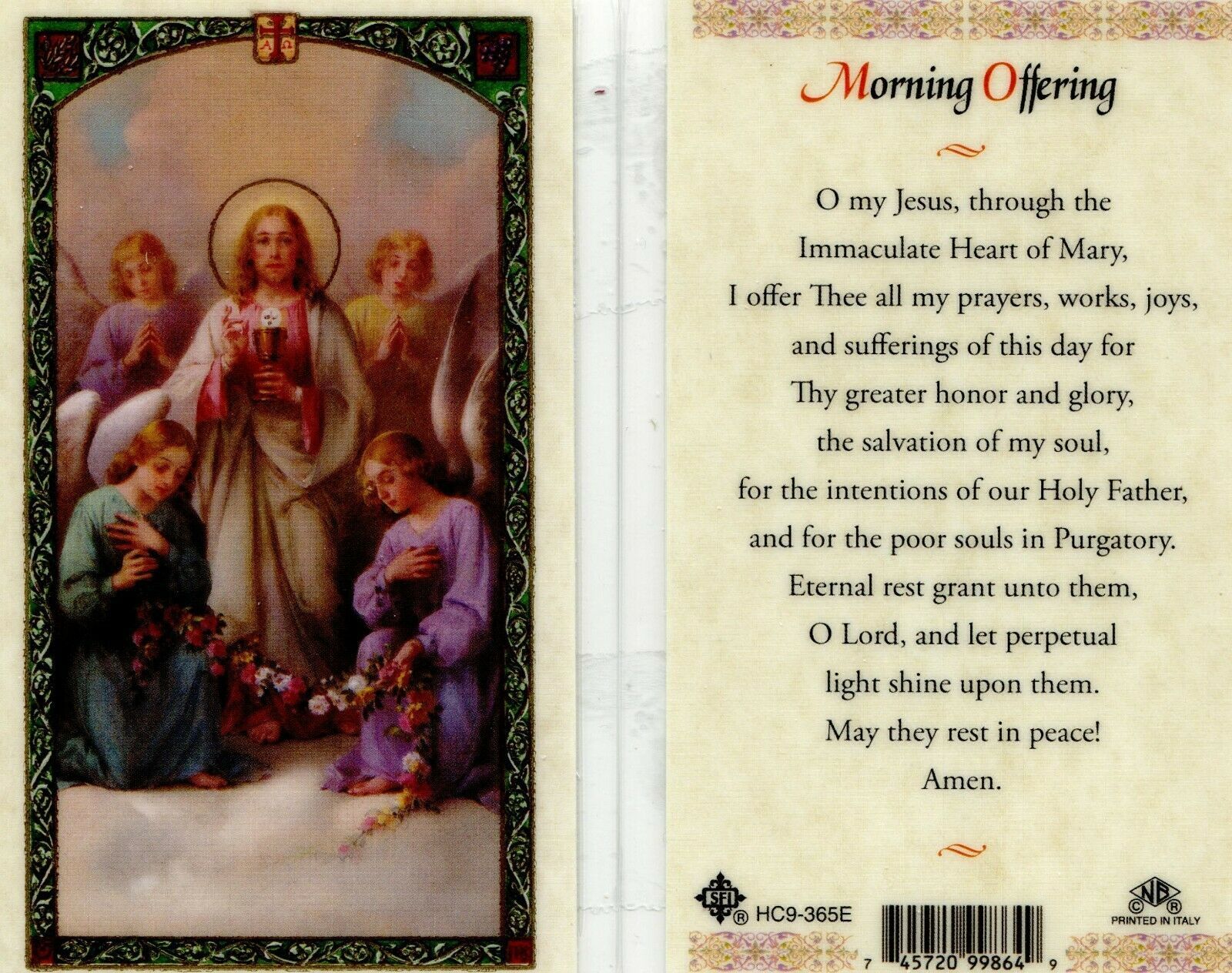

The Month of January is Dedicated to the Holy Name of Jesus

“At the name of Jesus every knee should bow, of those in heaven, and of those on earth, and of those under the earth, and that every tongue should confess that Jesus Christ is Lord, to the glory of God the Father.” (Philippians 2:10-11)

Pope Leo XIV’s monthly prayer intention for the month of January, 2026:
For prayer with the Word of God
Let us pray that praying with the Word of God be nourishment for our lives and a source of hope in our communities, helping us to build a more fraternal and missionary Church.

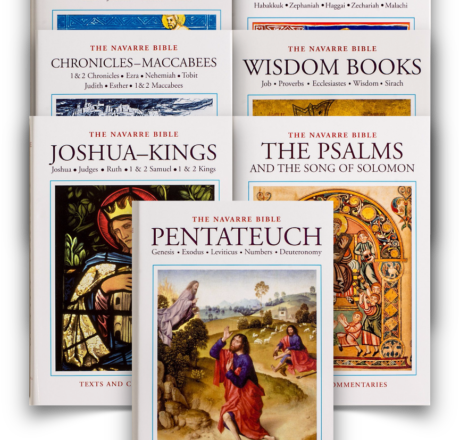
Today’s First Reading
From: 1 Samuel 9:1-4, 17-19; 10:1
Saul Meets Samuel
-----------------
[1] There was a man of Benjamin whose name was Kish, the son of Abiel, son of Zeror, son of Becorath, son of Aphiah, a Benjaminite, a man of wealth; [2] and he had a son whose name was Saul, a handsome young man. There was not a man among the people of Israel more handsome than he; from his shoulders upward he was taller than any of the people.
[3] Now the asses of Kish, Saul's father, were lost. So Kish said to Saul, his son, "Take one of the servants with you and arise, go and look for the asses. [4] And they passed through the hill country of Ephraim and passed through the land of Shalishah, but they did not find them. And they passed through the land of Shaalim, but they were not there. Then they passed through the land of Benjamin, but did not find them.
[17] When Samuel saw Saul, the LORD told him, “Here is the man of whom I spoke to you! He it is who shall rule over my people.” [18] Then Saul approached Samuel in the gate, and said, “Tell me where is the house of the seer?” [19] Samuel answered Saul, "I am the seer; go up before me to the high place for today you shall eat with me, and in the morning I will let you go and will tell you all that is on your mind."
Saul is Anointed
----------------
[1] Then Samuel took a vial of oil and poured it on his head, and kissed him and said, “Has not the LORD anointed you to be prince over his people Israel? And you shall reign over the people of the LORD and you will save them from the hand of their enemies round about. And this shall be the sign to you that the LORD has anointed you to be prince over his heritage."
***********************************************************************
Commentary:
9:1-10:16 This section focuses on Saul, who will be the first king of Israel. The writer makes it clear that God is the one who plans things, who selects Saul and who sets him up over the people.
This account (which may have been made up by combining earlier, separate traditions) forms a simple literary piece in which each episode stands on its own and is neatly linked to the one that follows. The figure of Saul is the connecting thread, but the Lord is the true protagonist. We can say that there are seven scenes here, in seven settings: 1) Saul’s family is introduced; it belongs to the tribe of Benjamin, based in the south of the country (9:1-2). 2) Saul and his servant, in search of lost asses, go north, where the “man of God” lives (9:3-10). It is all so unplanned that the hand of God seems to be at work. 3) Saul and the young maidens who have come out of the city to draw water (9:11-13): the scene is evocative of episodes where Jacob (Gen 24:11ff) and Moses (Ex 2:16ff) have casual meetings which change the course of their lives. 4) Saul and Samuel meet for the first time in the city of Ramah (9:14-27). The sacrifice (v. 13), the sacrificial meal and the conversation between Saul and Samuel show the religious nature of the event and the Lord’s initiative in raising Saul to the dignity of prince ("naguid") over the people (v. 16), but not yet that of king ("melek"). 5) Saul is anointed at the outskirts of the city (9:27-10:9): this is the central scene in the account. In a private but solemn rite Samuel anoints Saul king and kisses him as a mark of reverence. 6) The meeting between Saul and the prophets on the way to Gibe-ah (10:10-12): this scene acts as a contrast with the previous one, for it cuts down to size the figure of Saul (cf. 19:24) who so ridiculously sought to identify with these “prophets” who used to work themselves into trances by means of music and gestures (cf. 10:5). 7) The conversation between Saul and his uncle at Gibe-ah (10:14-16): Saul's calling to be king is reasserted by the writer, but it must be kept secret.
From: Mark 2:13-17
The Calling of Matthew
----------------------
[13] He (Jesus) went out again beside the sea; and all the crowd gathered about Him, and He taught them. [14] And as He passed on, He saw Levi the son of Alphaeus sitting at the tax office, and He said to him, "Follow Me." And he rose and followed Him.
[15] And as he sat at table in his house, many tax collectors and sinners were sitting with Jesus and His disciples; for there were many who followed Him. [16] And the scribes of the Pharisees, when they saw that He was eating with sinners and tax collectors, said to His disciples, "Why does He eat with tax collectors and sinners?" [17] And when Jesus heard it, He said to them, "Those who are well have no need of a physician, but those who are sick; I came not to call the righteous, but sinners."
***********************************************************************
Commentary:
14. St. Mark and St. Luke (5:27-32) both call him "Levi"; the First Gospel, on the other hand, calls him "Matthew" (Matthew 9:9-13); but they are all referring to the same person. All three accounts describe the same event. Later on, St. Mark and St. Luke, when giving the list of Apostles (Mark 3:13-19; Luke 6:12-16), include Matthew, not Levi. The Fathers identify Matthew with Levi. Besides it was quite common for Jews to have two names: Jacob-Israel, Simon-Peter, Saul-Paul, Joseph-Caiaphas, John-Mark... Frequently, the name and surname were connected with some significant change in the life and mission of the person concerned. Did Jesus' saving intervention in this Apostle's life lead to a change of name? The Gospel does not tell us.
Levi-Matthew, as a publican or tax collector (Matthew 9:9-13), was sitting at the `tax office', a special place where one went to pay tribute. Publicans were tax-collectors appointed by the Romans. It was, therefore, an occupation hated and despised by the people; but it was also a much-coveted position because it was an easy way to become prosperous. Matthew leaves everything behind when Jesus calls him. He immediately responds to his vocation, because Jesus gives him the grace to accept his calling.
Jesus is the basis of our confidence in being able to change, provided we cooperate with His grace, no matter how unworthy our previous conduct may have been. And He is also the source of the confidence we need in order to be apostolic--helping others to be converted and seek holiness of life. Because He is the Son of God He is able to raise up children of God even from stones (cf. Matthew 3:9). Cf. note on Matthew 9:9.
17. The scribes and Pharisees reproach the disciples, and Jesus replies with a popular proverb: `Those who are well have no need of a physician, but those who are sick.' He is the doctor of souls, come to cure sinners of their spiritual ailments.
Our Lord calls everyone, His redemptive mission extends to everyone; He affirms this on other occasions, using parables such as that of the marriage feast (Matthew 22:1-14; Luke 14:16-24). How, then, can we explain the restriction He seems to place here by saying that He has not come to call the righteous? It is not really a restriction. Jesus uses the opportunity to reproach the scribes and Pharisees for their pride: they consider themselves just, and their reliance on their apparent virtue prevents them from hearing the call to conversion; they think they can be saved by their own efforts (cf. John 9:41). This explains the proverb Jesus quotes; certainly His preaching makes it quite clear that `no one is good but God alone' (Mark 10:18) and that everyone must have recourse to the mercy and forgiveness of God in order to be saved. In other words, mankind is not divided into two--the just and the unjust. We are all sinners, as St. Paul confirms: `all have sinned and fall short of the glory of God' (Romans 3:23). Precisely because of this, Christ came to call all of us; He justifies those who respond to His call.
Our Lord's words should also move us to pray humbly and confidently for people who seem to want to continue living in sin. As St. Teresa beseeched God: "Ah, how hard a thing am I asking of Thee, my true God! I ask Thee to love one who loves Thee not, to open to one who has not called upon Thee, to give health to one who prefers to be sick and who even goes about in search of sickness. Thou sayest, my Lord, that Thou comest to seek sinners; these, Lord, are the true sinners. Look not upon our blindness, my God, but upon all the blood that was shed for us by Thy Son. Let Thy mercy shine out amid such tremendous wickedness. Behold, Lord, we are the works of Thy hands" ("Exclamations of the Soul to God", n. 8).
The Fathers of the Church see this calling by Jesus as an invitation to repentance and penance. St. John Chrysostom ("Hom. on St. Matthew", 30:3), for example, explains the phrase by putting these words in Jesus' mouth: "I am not come that they should continue sinners but that they should change and become better."
Disclaimer: Opinions posted on Free Republic are those of the individual posters and do not necessarily represent the opinion of Free Republic or its management. All materials posted herein are protected by copyright law and the exemption for fair use of copyrighted works.

