
Posted on 01/16/2026 6:49:28 AM PST by fidelis
“Which is easier, to say to the paralytic, ‘Your sins are forgiven,’ or to say, ‘Rise, pick up your mat and walk’? But that you may know that the Son of Man has authority to forgive sins on earth”—he said to the paralytic, “I say to you, rise, pick up your mat, and go home.” Mark 2:9–11
In Mark’s Gospel, Jesus began His ministry in Capernaum. Shortly after calling His first Apostles, Jesus preached in the synagogue, leaving many amazed. After healing a demoniac and Peter’s mother-in-law, the whole town gathered at the house where Jesus was staying, and “He cured many who were sick with various diseases, and he drove out many demons, not permitting them to speak because they knew him” (Mark 1:34).
After this, Jesus withdrew to a deserted place to pray, despite the people’s growing fascination with His miracles. When the Apostles found Him, He revealed the essence of His mission: “Let us go on to the nearby villages that I may preach there also. For this purpose have I come” (Mark 1:38). From there, He and His Apostles traveled to other towns, fulfilling His primary mission: to preach the Good News of repentance...
In one of these towns, out of deep compassion, Jesus healed a leper. However, this miracle only intensified the people’s focus on His power to heal, overshadowing His preaching. When crowds pursued Him seeking miracles, He returned to Capernaum, which brings us to today’s Gospel.
In Capernaum, Jesus resumed His primary mission: “He preached the word to them” (Mark 2:2). Yet the people, who were focused more on His miraculous works, crowded around Him. As Jesus preached—likely in Peter’s house—some men arrived carrying a paralytic. They were unable to enter because of the crowd, so they climbed to the roof, opened it, and lowered the man down.
What happens next is profound: Jesus looks at the man and says, “Child, your sins are forgiven” (Mark 2:5). Jesus does not first address the man’s physical paralysis. Instead, He speaks to the man’s deeper need—his spiritual healing. Jesus recognized the faith of the paralytic and that of those who brought him and forgave the man’s sins. Why does Jesus do this? Because spiritual healing takes precedence over physical healing...
When the scribes question Jesus’ authority to forgive sins, they fail to recognize that Jesus is not just a miracle worker—He is the Son of God. To teach them about His authority to forgive sins, Jesus says: “‘But that you may know that the Son of Man has authority to forgive sins on earth’—he said to the paralytic, ‘I say to you, rise, pick up your mat, and go home.’” ...
In each of our lives, Jesus wants to fulfill His primary mission. He wants to forgive our sins and reconcile us with the Father and with Himself. First and foremost, this takes place through the powerful and transforming Sacrament of Reconciliation. It’s amazing that even though that Sacrament fulfills the essence of Jesus’ mission, many fail to take advantage of that grace, preferring instead to seek other favors from God of their own choosing.
Reflect today on your approach to the Sacrament of Reconciliation. Do you regularly bring your sins to Jesus in faith, allowing Him to heal and reconcile you to the Father? As you ponder today’s Gospel, place yourself in the shoes of the paralytic. See yourself as Jesus sees you—someone in need of His mercy and grace. Though He may grant us many blessings, the greatest gift He desires to bestow is the forgiveness of our sins. Yearn to hear His words echo in your heart in the Sacrament of Reconciliation: “Child, your sins are forgiven.”
Most merciful Lord, You came to preach the Good News of forgiveness and to reconcile us with the Father. This was Your mission long ago, and it remains so today. Grant me the grace to long for this gift always and to make it the focus of my life, so that Your mission may be fulfilled in me. Jesus, I trust in You.
Please keep in mind that this is a Catholic Caucus/Devotional thread for the purpose of prayerful reflection on the Sacred Scriptures and is closed to debate of any kind. Per FR policy on Religion Caucus threads, off-topic, argumentative, and abusive comments are not allowed and will be submitted to the Mods for deletion. Thanks, and God bless you.
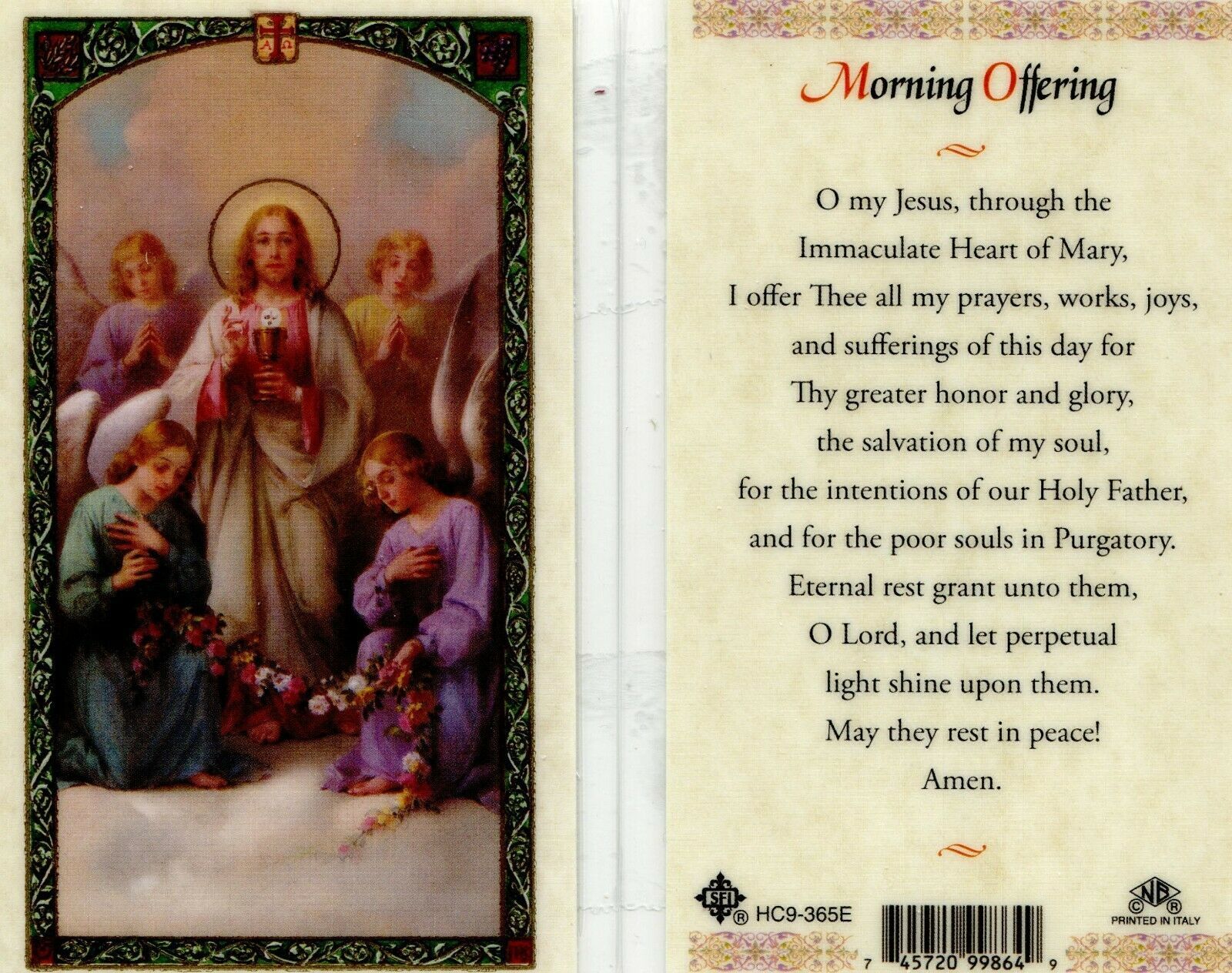
The Month of January is Dedicated to the Holy Name of Jesus

“At the name of Jesus every knee should bow, of those in heaven, and of those on earth, and of those under the earth, and that every tongue should confess that Jesus Christ is Lord, to the glory of God the Father.” (Philippians 2:10-11)

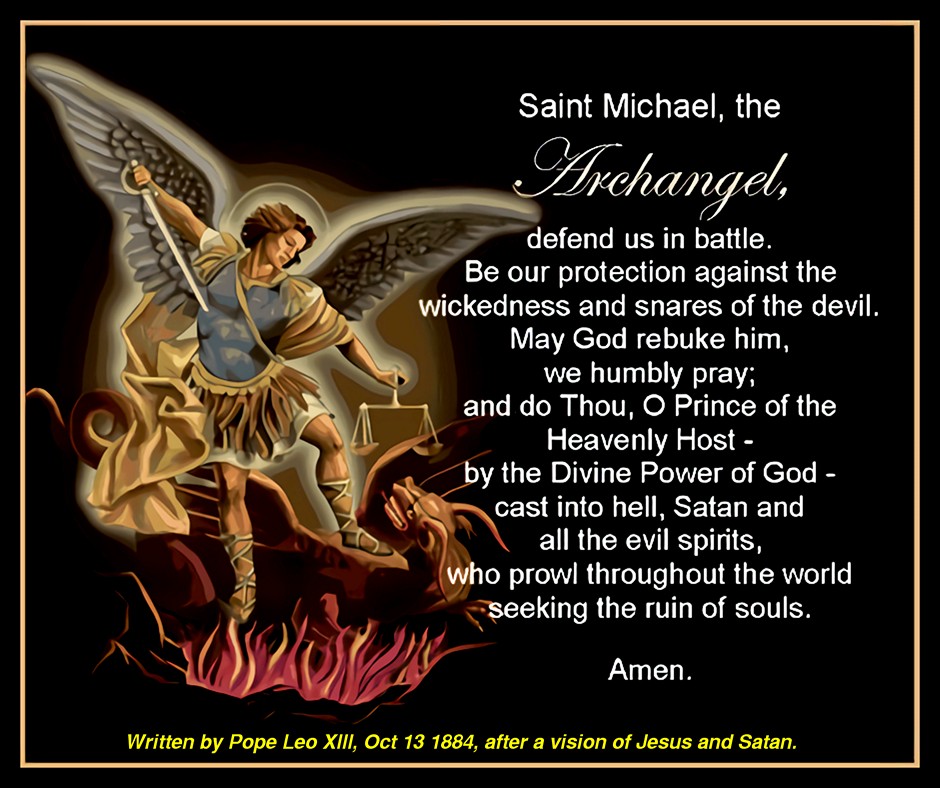
Pope Leo XIV’s monthly prayer intention for the month of January, 2026:
For prayer with the Word of God
Let us pray that praying with the Word of God be nourishment for our lives and a source of hope in our communities, helping us to build a more fraternal and missionary Church.

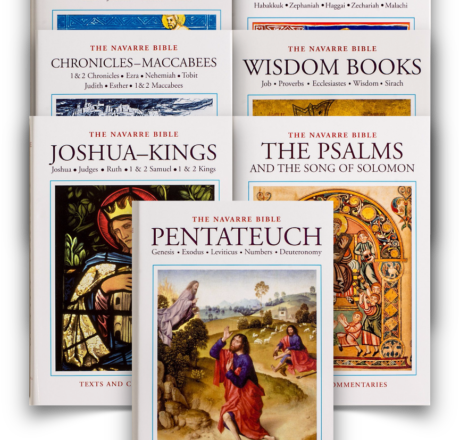
Today’s First Reading
From: 1 Samuel 8:4-7, 10-22a
The People Ask For a King (Continuation)
----------------------------------------
[4] Then all the elders of Israel gathered together and came to Samuel at Ramah [5] and said to him, "Behold, you are old and your sons do not walk in your ways; now appoint for us a king to govern us like all the nations.” [6] But the thing displeased Samuel when they said, “Give us a king to govern us.” And Samuel prayed to the LORD. [7] And the LORD said to Samuel, “Hearken to the voice of the people in all that they say to you, for they have not rejected you, but they have rejected me from being king over them.
[10] So Samuel told all the words of the LORD to the people who were asking a king from him. [11] He said, “These will be the ways of the king who will reign over you: he will take your sons and appoint them to his chariots and to be his horsemen, and to run before his chariots; [12] and he will appoint for himself commanders of thousands and commanders of fifties, and some to plough his ground and to reap his harvest, and to make his implements of war and the equipment of his chariots. [13] He will take your daughters to be perfumers and cooks and bakers. [14] He will take the best of your fields and vineyards and olive orchards and give them to his servants. [15] He will take the tenth of your grain and of your vineyards and give it to his officers and to his servants. [16] He will take your menservants and maidservants, and the best of your cattle and your asses, and put them to his work. [17] He will take the tenth of your flocks, and you shall be his slaves. And in that day you will cry out because of your king, whom you have chosen for yourselves; but the LORD will not answer you in that day.”
[19] But the people refused to listen to the voice of Samuel; and they said, “No! but we will have a king over us, [20] that we also may be like all the nations, and that our king may govern us and go out before us and fight our battles.” [21] And when Samuel had heard all the words of the people, he repeated them in the ears of the LORD. [22a] And the LORD said to Samuel, “Hearken to their voice, and make them a king.”
***********************************************************************
Commentary:
8:1-12:25. These chapters deal with the first steps towards the establishment of the monarchy which will last right up to the Babylonian captivity. These will be very important years for the political life and religious practice of the chosen people; under the guidance of the prophets they will gradually learn about the full implications of the events that unfold.
Before dealing with the reign of the first king, Saul, the book has five chapters about the difficulties surrounding the choice of king. They raise the whole question of the need for and validity of the institution of kingship. Some of the narratives are pro-monarchy, (cf. 9:1-10:16; 11:1-15), while others are strongly against (cf. 8:1-22; 10:17-21; 12:1-15). It may be that in the last years of Samuel’s life there were already these two opposed tendencies; but it is more likely that the anti-royalist thinking in the book came from a Deuteronomic author of a later period (sixth century BC) who was well aware of the disasters the kings caused. Anyway, we need to remember that the last editor of this book is interpreting history in a theological way, showing how the Lord intervenes in the affairs of men, sometimes permitting rulers to transgress gravely, sometimes punishing them to make them mend their ways. The main message is that the Lord never remains aloof or indifferent.
8:1-23. The misfortunes into which the kings will plunge Israel are summarized in this chapter. The worst sort had to do with religion--apostasy and idolatry (vv. 7-8). The sacred writer stresses how sinful that was by reminding his readers about the Israelites’ disloyalty after their escape from Egypt and by showing that the warning comes from the Lord himself.
The monarchy was also responsible for social disasters. The so-called “statute of the king” placed here on Samuel’s lips (vv. 10-17), is probably a summary of an ancient document which regulated the monarchies of most of the “city-states” of the Middle East; we find recorded here the worst abuses, so severely condemned in Deuteronomy (Deut 17:14-20).
However, the real danger is that the people, by choosing a king and swearing allegiance to him, will be excluding God from the picture (cf. v. 18). From now on the prophets will spend most of their energy convincing people that trusting in God does not mean one has to reject human resources (such as the monarchy), nor does the use of human resources involve turning one’s back on God. In any event, the main danger posed by having a monarchy will be a tendency to solve military, political and social problems without reference to God or even in contravention of his Law.
From: Mark 2:1-12
The Curing of a Paralytic
-------------------------
[1] And when He (Jesus) returned to Capernaum after some days, it was reported that He was at home. [2] And many were gathered together, so that there was no longer room for them, not even about the door; and He was preaching the word to them. [3] And they came, bringing to Him a paralytic carried by four men. [4] And when they could not get near Him because of the crowd, they removed the roof above Him; and when they had made an opening, they let down the pallet on which the paralytic lay. [5] And when Jesus saw their faith, He said to the paralytic, "My son, your sins are forgiven." [6] Now some of the scribes were sitting there, questioning in their hearts, [7] "Why does this man speak thus? It is blasphemy! Who can forgive sins but God alone?" [8] And immediately Jesus, perceiving in His spirit that they thus questioned within themselves, said to them, "Why do you question thus in your hearts? [9] Which is easier to say to the paralytic, `Your sins are forgiven,' or to say, `Rise, take up your pallet and walk?' [10] But that you may know that the Son of Man has authority on earth to forgive sins"-- He said to the paralytic-- [11] "I say to you, rise, take up your pallet and go home." [12] And he rose, and immediately took up the pallet and went out before them all; so that they were all amazed and glorified God, saying, "We never saw anything like this!"
***********************************************************************
Commentary:
4. Many Jewish houses had a terraced roof accessible by steps at the back. The same structure can be found even today.
5. Here Jesus emphasizes the connection between faith and the forgiveness of sins. The boldness of the people who brought in the paralytic shows their faith in Christ, and this faith moves Jesus to forgive the man's sins. We should question how God views our faith: the faith of these people leads to the instantaneous physical and spiritual curing of this man. We should notice also that one person's need can be helped by the merits of another.
In this man's physical paralysis, St. Jerome sees a type or figure of spiritual paralysis: the cripple was unable to return to God by his own efforts. Jesus, God and man, cured him of both kinds of paralysis (cf. "Comm. in Marcum, in loc."). Cf. notes on Matthew 9:2-7.
Jesus' words to the paralytic--"Your sins are forgiven"--reflect the fact that his pardon involves a personal encounter with Christ; the same happens in the Sacrament of Penance: "In faithfully observing the centuries-old practice of the Sacrament of Penance--the practice of individual confession with a personal act of sorrow and an intention to amend and make satisfaction--the Church is defending the human soul's individual right, man's right to a more personal encounter with the crucified forgiving Christ, with Christ saying, through the minister of the Sacrament of Reconciliation: `Your sins are forgiven'; `Go, and do not sin again' (John 8:11). As is evident, this is also a right on Christ's part with regard to every human being in the soul's life constituted by the moment of conversion and forgiveness" (John Paul II, "Redemptor Hominis", 20).
7-12. Here we find a number of indicators of Jesus' divinity: He forgives sins, He can read the human heart and has the power to instantly cure physical illnesses. The scribes know that only God can forgive sins. This is why they take issue with Our Lord's statement and call it blasphemous. They require a sign to prove the truth of what He says. And Jesus offers them a sign. Thus just as no one can deny that the paralytic has been cured, so no one can reasonably deny that he has been forgiven his sins. Christ, God and man, exercised power to forgive sins and, in His infinite mercy, He chose to extend this power to His Church. Cf. note on Matthew 9:3-7.
[Note on Matthew 9:3-7: 3-7. Here "to say" obviously means "to say and mean it", "to say producing the result which your words imply". Our Lord is arguing as follows" which is easier--to cure the paralytic's body or to forgive the sins of his soul? Undoubtedly, to cure his body; for the soul is superior to the body and therefore diseases of the soul are the more difficult to cure. However, a physical cure can be seen, whereas a cure of the soul cannot. Jesus proves the hidden cure by performing a visible one.
The Jews thought that any illness was due to personal sin (cf. John 9:1-3); so when they heard Jesus saying, "Your sins are forgiven", they reasoned in their minds as follows: only God can forgive sins (cf. Luke 5:21); this man says that He has power to forgive sins; therefore, He is claiming a power which belongs to God alone--which is blasphemy. Our Lord, however, forestalls them, using their own arguments: by curing the paralytic by saying the word, He shows them that since He has the power to cure the effects of sin (which is what they believe disease to be), then He also has power to cure the cause of illness (sin); therefore, He has divine power.
Jesus Christ passed on to the Apostles and their successors in the priestly ministry the power to forgive sins: "Receive the Holy Spirit. If you forgive sins of any, they are forgiven; if you retain the sins of any, they are retained" (John 20:22-23). "Truly, I say to you, whatever you bind on earth shall be bound in Heaven, and whatever you loose on earth shall be loosed in Heaven" (Matthew 18:18). Priests exercise this power in the Sacrament of Penance: in doing so they act not in their own name but in Christ's--"in persona Christi", as instruments of the Lord.
Hence the respect, the veneration and gratitude with which we should approach Confession: in the priest we should see Christ Himself, God Himself, and we should receive the words of absolution firmly believing that it is Christ who is uttering them through the priest. This is why the minister does not say: "Christ absolves you...", but rather "I absolve you from your sins..." He speaks in the first person. So fully is he identified with Jesus Christ Himself (cf. "St. Pius V Catechism", II, 5, 10).]
Disclaimer: Opinions posted on Free Republic are those of the individual posters and do not necessarily represent the opinion of Free Republic or its management. All materials posted herein are protected by copyright law and the exemption for fair use of copyrighted works.


