
Posted on 12/24/2025 8:16:17 AM PST by fidelis
“Blessed be the Lord, the God of Israel; for he has come to his people and set them free. He has raised up for us a mighty Savior, born of the house of his servant David…” Luke 1:68–69
These words are the beginning of Zechariah’s song of praise, traditionally called the Benedictus, which he prayed as soon as his mouth was opened at the circumcision of his newborn son, John the Baptist. Priests and religious pray this beautiful song in the Liturgy of the Hours every morning.
It recounts the whole plan of salvation that God began with Abraham, outlines the role of the prophets, and points to Zechariah’s son, John, as the “prophet of the Most High” who will “go before the Lord to prepare his way, to give his people knowledge of salvation by the forgiveness of their sins” (Luke 1:76–77).
As we prepare for the great Solemnity of Christmas Day, Zechariah’s song gives us much to ponder. He begins by blessing God Who “has come to his people and set them free.” Christmas is not only about the Most High God Who took on the form of an infant long ago. It’s also an ongoing coming to us by grace and the Sacraments. That same Most High God continuously descends into our souls as He is made visible to us in the Sacraments, especially the Eucharist. Therefore, each of us must sing Zechariah’s song with the same vigor and conviction every time we attend Mass or encounter God’s presence in our lives.
Why did God come to us? He came to set us free. Christmas must be a time when we acknowledge the ways that our sin oppresses us. We need a Savior. We need freedom. We need forgiveness. The only way to be receptive to our Savior is to humbly acknowledge how much we need Him.
We see this in Zechariah’s song when he speaks of the role his son John would play in the whole plan of salvation. John was to give God’s people “knowledge of salvation by the forgiveness of their sins.” Seeing our sins is essential. Our culture tempts us to downplay sin, to see it as normal or even acceptable. Some hold up their sin with great pride. We must avoid being influenced by this tendency and recognize our sin with clarity and honesty.
Understanding the kind of God we have greatly helps us to see our sin and our need for a Savior. Zechariah goes on to say, “In the tender compassion of our God the dawn from on high shall break upon us, to shine on those who dwell in darkness and the shadow of death, and to guide our feet into the way of peace.” Our God is not only compassionate, He offers us a “tender compassion.” He did not come to condemn, but to free us from “darkness and the shadow of death” so that we could be led into the “way of peace.” Deep down, we all want this. The only way to receive it is by listening to John the Baptist’s preaching that we must acknowledge our sins and repent.
Reflect today on the true meaning of Christmas. God became Man to save us from darkness, sin, and death. He came to set us free from all that binds us, oppresses us, and misguides us. He came to free us from the evil one’s lies and the many ways that those lies have permeated our lives and culture. Join with Zechariah today in his song of praise for the gift of salvation, and strive to pray his prayer with the same faith he had.
Blessed are You, Lord my God, for You have come to Your people to set them free. Mighty Savior, as I prepare to celebrate the great Solemnity of Christmas, please help me to see how much I need You in my life. Without You, I am lost and live in darkness and death. Free me, and help me to repent and to receive Your gift of salvation. Jesus, I trust in You.
Please keep in mind that this is a Catholic Caucus/Devotional thread for the purpose of prayerful reflection on the Sacred Scriptures and is closed to debate of any kind. Per FR policy on Religion Caucus threads, off-topic, argumentative, and abusive comments are not allowed and will be submitted to the Mods for deletion. Thanks, and God bless you.
The Month of December is Dedicated to the Immaculate Conception

“ In the sixth month the angel Gabriel was sent from God to a city of Galilee named Nazareth, to a virgin betrothed to a man whose name was Joseph, of the house of David; and the virgin’s name was Mary. And he came to her and said, “Hail, full of grace, the Lord is with you!”” (Luke 1:26-28)

Pope Leo XIV’s prayer intentions for the month of December, 2025:
For Christians in areas of conflict
Let us pray that Christians living in areas of war or conflict, especially in the Middle East, might be seeds of peace, reconciliation, and hope.

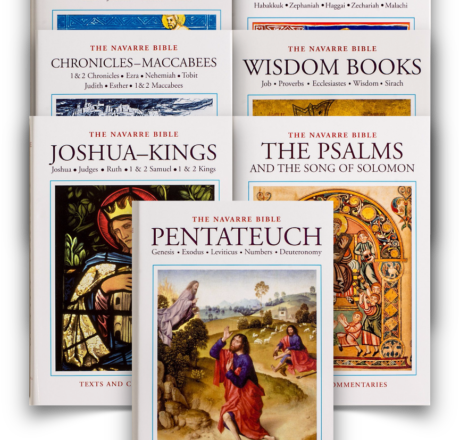
First Reading
From: 2 Samuel 7:1-5, 8b-12, 14a, 16
Nathan's Prophecy About the Dynasty
-----------------------------------------------
[1] Now when the king dwelt in his house, and the LORD had given him rest from all his enemies round about, [2] the king said to Nathan the prophet, See now, I dwell in a house of cedar, but the ark of God dwells in a tent." [3] And Nathan said to the king, "Go, do all that is in your heart; for the LORD is with you."
[4] But that same night the word of the LORD came to Nathan, [5] "Go and tell my servant David, 'Thus says the LORD: Would you build me a house to dwell in?
[8b] "'I took you from the pasture, from following the sheep, that you should be prince over my people Israel; [9] and I have been with you wherever you went, and have cut off all your enemies from before you; and I will make for you a great name, like the name of the great ones of the earth. [10] And I will appoint a place for my people Israel, and will plant them, that they may dwell in their own place, and be disturbed no more: and violent men shall afflict them no more, as formerly, [11] from the time that I appointed judges over my people Israel; and I will give you rest from all your enemies. Moreover the LORD declares to you that the LORD will make you a house. [12] When your days are fulfilled and you lie down with your fathers, I will raise up your offspring after you, who shall come forth from your body, and I will establish his kingdom. [13] He shall build a house for my name, and I will establish the throne of his kingdom for ever.[14a] I will be his father, and he shall be my son. [16] And your house and your kingdom shall be made sure for ever before me; your throne shall be established for ever.'"
***********************************************************************
Commentary:
7:1-17. Nathan is a court prophet will also appear in later accounts connected with Solomon and Bathsheba, his mother (cf. 2 Sam 12:1-25 and 1 Kings 1:11-40). As prophet he is God's spokesman (he twice uses the classic formulation, "Thus says the Lord": vv. 5 and 8); here he has to oppose the king's plans (vv. 5-7); he proclaims a message which cannot but have its effect on the listener because the word of God is true and it always comes to pass.
Nathan's prophecy is particularly important: it decides who will succeed David, and it has to do with the Messiah, who will be a descendant of David. What he says has all the formality of an oracular statement; it confirms the dynastic succession and specifies the role of the temple among God's chosen people.
For pagan peoples (Egyptian, Assyrian, Babylonian etc.) the temple was the center of their world and the focus of their religious spirit; it was there that they kept their gods. In Israel, on the other hand, the temple will have quite a different role. It is based on the fact that the true God is not content with a temple; he has no need of a house in which to dwell (cf. 1 Kings 8:27). If he allows there to be sanctuaries or shrines (cf. Gen 28:20-22), the desert tabernacle or tent (cf. Ex 33:7-11) and later the temple of Jerusalem (cf. 1 Kings 8:1-66), these are only signs of his presence among the people, not a habitation that he in any sense needs. Nathan's prophecy shows that it is not so much the temple as the Davidic dynasty that is the sign of divine presence and protection that God has set up from the start. Hence the play on words between "house of God" (temple) and "house of David" (dynasty).
The hereditary monarchy, then, is the center of Nathan's prophecy. If Michal's sterility cut off the line of succession from Saul, the prophecy assured that David's line would endure. From the central part of the prophecy (vv. 13-16) we can see that every descendant of David, the figure of the future Messiah, will have the following qualities:
a) He will be a son to God (v. 14a). This is not natural, human, sonship; it refers to the closeness of the relationship between God and the king (cf. Ps 2:7; 89:26-27), so that the person and rule of the king will symbolize the presence of God and the active role he plays in the life of the people. The king's sonship to God, then, is an expression of the covenant established between God and David's line. God commits himself to act towards the king as a good father to his son. Jesus will bring these words and this covenant to full fruition, for he is the "eternal Son of God" made man (cf. Gal 4:4). Whereas he is the Son of God by natural generation, all the baptized are "sons in the Son": "For this is the very reason why the Word became flesh, why the Son of God became the Son of man: so that man, by entering into communion with the Word and thereby partaking of divine filiation, might be converted into a son of God" (St Irenaeus, "Adversus Haereses", 3, 19, 1; cf. "Catechism of the Catholic Church", 460).
b) He will be punished when necessary, but the punishment will be only temporary (14b-15), that is, David's line will not be cut off as happened to Saul, nor will any dethronement last, because the love of God will always win out. In the light of this oracular statement, any misfortunes of the people, even the exile in Babylon, despite being punishment for their sins, will be above all a proof of God's mercy. The death of Jesus on the cross, though caused by the sins of men, is above all a proof of the love of God who gave up his Son (cf. Rom 8:32), and of the love of Jesus who gave himself up on men's behalf (cf. Rom 4:25; Eph 5:25).
c) The Davidic dynasty will endure forever (vv. 12-13, 15-16). The title "son of David" will refer not only to genealogical descent but also to the fact that the holder is the beneficiary of this promise and of the Davidic covenant (cf. 1 Kings 8:25; Ps 132:10-18; Jer 17:24-27; Ezek 34:23-24; etc.). After the exile this is the title which is most often applied to the Messiah, and the writers of the New Testament, of course, are at pains to point out that Jesus is the "son of David" (cf. Mt 1:1; 9:27; Rom 1:3). The liturgy of the Solemnity of St Joseph, Husband of the Blessed Virgin, includes this text, because it is he who is the guarantor of the Davidic descent of Jesus (Mt 1:20) through being "of the house of David" (Lk 1:27).
----------------------------
Gospel Reading
From: Luke 1:67-79
The Birth and Circumcision of John the Baptist (Continued)
-------------------------------------------------------------------------
[67] And his father Zechariah was filled with the Holy Spirit, and prophesied, saying, [68] "Blessed be the Lord God of Israel, for he has visited and redeemed his people, [69] and has raised up a horn of salvation for us in the house of his servant David, [70] as he spoke by the mouth of his holy prophets from of old, [71] that we should be saved from our enemies, and from the hand of all who hate us; [72] to perform the mercy promised to our fathers, and to remember his holy covenant, [73] the oath which he swore to our father Abraham, [74] to grant us that we, being delivered from the hand of our enemies, might serve him without fear, [75] in holiness and righteousness before him all the days of our life. [76] And you, child, will be called the prophet of the Most High; for you will go before the Lord to prepare his ways, [77] to give knowledge of salvation to his people in the forgiveness of their sins, [78] through the tender mercy of our God, when the day shall dawn upon us from on high [79] to give light to those who sit in darkness and in the shadow of death, to guide our feet into the way of peace."
[80] And the child grew and became strong in spirit, and he was in the wilderness till the day of his manifestation to Israel.
***********************************************************************
Commentary:
67. Zechariah, who was a righteous man (cf. v. 6), received the special grace of prophecy when his son was born--a gift which led him to pronounce his canticle, called the "Benedictus", a prayer so full of faith, reverence and piety that the Church has laid it down to be said daily in the Liturgy of the Hours. Prophecy has not only to do with foretelling future events; it also means being moved by the Holy Spirit to praise God. Both aspects of prophecy are to be found in the "Benedictus".
68- 79. Two parts can be discerned in the "Benedictus": in the first (vv. 68-75) Zechariah thanks God for sending the Messiah, the Savior, as he promised the patriarchs and prophets of Israel.
In the second (vv. 76-79) he prophesies that his son will have the mission of being herald of the Most High and precursor of the Messiah, proclaiming God's mercy which reveals itself in the coming of Christ.
72-75. Again and again God promised the patriarchs of the Old Testament that he would take special care of Israel, giving them a land which they would enjoy undisturbed and many descendants in whom all the peoples of the earth would be blessed. This promise he ratified by means of a covenant or alliance, of the kind commonly made between kings and their vassals in the Near East. God, as Lord, would protect the patriarchs and their descendants, and these would prove their attachment to him by offering him certain sacrifices and by doing him service. See, for example, Genesis 12:13; 17:1-8; 22:16-18 (God's promise, covenant and pledge to Abraham); and Genesis 5:11-12 (where he repeats these promises to Jacob). Zechariah realizes that the events resulting from the birth of John his son, the Precursor of the Messiah; constitute complete fulfillment of these divine purposes.
78-79. The "dawning", the "dayspring", is the Messiah, Jesus Christ, coming down from heaven to shed his light upon us: "the son of righteousness shall rise, with healing on its wings" (Mal 4:2). Already in the Old Testament we were told about the glory of the Lord, the reflection of his presence--something intimately connected with light. For example, when Moses returned to the encampment after talking with God, his face so shone that the Israelites "were afraid to come near him" (Ex 34:30). St John is making the same reference when he says that "God is light and in him there is no darkness" (1 Jn 1:5) and that there will be no light in heaven "for the glory of God is its light" (cf. Rev 21:23; 22:5).
The angels (cf. Rev 1:11) and the saints (cf. Wis 3:7; Dan 2:3) partake of this divine splendor; our Lady does so in a special way. As a symbol of the Church she is revealed to us in the Apocalypse as "clothed with the sun, with the moon under her feel, and on her head a crown of twelve stars" (12:1).
Even when we live in this world, this divine light reaches us through Jesus Christ who, because he is God, is "the true light that enlightens every man" (Jn 1:9), as Christ himself tells us: "I am the light of the world; he who follows me will not walk in darkness" (Jn 8:12).
Such is Christians' share in this light of God that Jesus tells us: "You are the light of the world" (Mt 5:14). Therefore, we must live as children of the light (cf. Lk 16:8), whose fruit takes the form of "all that is good and right and true" (Eph 5:9); our lives should shine out, thereby helping people to know God and give him glory (cf. Mt 5:16).
Disclaimer: Opinions posted on Free Republic are those of the individual posters and do not necessarily represent the opinion of Free Republic or its management. All materials posted herein are protected by copyright law and the exemption for fair use of copyrighted works.


