Skip to comments.
Chanukah, Parshat Miketz, and the 2025 Words (12/20/2025)
Miscellaneous
| December 20, 2025
Posted on 12/20/2025 1:14:25 PM PST by Ezekiel
Today is the Sabbath for Parshat Miketz (Genesis 41:1 - 44:17), which begins at the end of two full years when Pharaoh had a [doubled] dream.
The parashah has the most letters (although not the most words or verses) of any of the weekly Torah portions in the Book of Genesis. It is made up of 7,914 Hebrew letters, 2,022 Hebrew words, 146 verses, and 255 lines in a Torah Scroll (סֵפֶר תּוֹרָה, Sefer Torah)
https://en.wikipedia.org/wiki/Miketz
In the printed books of the Torah, at the end of each parsha (comments re Pekudei) are mnemonic words or phrases (simanim) representing (via gematria) the number of verses in that section.
Miketz is unique in that the number of words is also included: 2025
Traditional views connect the 2025 to Chanukah, such as in this explanation:
At the end of Parshat Mikeitz, besides the number of pesukim, we are also told that the parshah contains 2,025 words.
Why is it necessary to know the amount of words?
Parshat Mikeitz is usually read during the week of Chanukah. The 2,025 words in the parshah can serve as a hint for the Yom Tov of Chanukah. During Chanukah we light candles for eight nights. The mitzvah can be fulfilled with only one candle each night for the entire household.
In Hebrew a word for candle is "neir" (נר) which has the numerical value of 250. Eight times 250 equals 2,000. The event of lighting candles starts on the 25th day in the month of Kislev. Thus, 2,025 alludes to the 25th of Kislev and eight candles.
https://www.chabad.org/library/article_cdo/aid/2820506/jewish/Dvar-Torah-Questions-and-Answers-on-Chanukah-Mikeitz.htm
However, there are 2022 words in Miketz, so the mystery is why the discrepancy?
The general sense is that the words had been counted differently. Of particular focus are avrech and Poti-Phera, as explored here.
That said, this is the one year (2025) when the word count aligns with the year for reading Miketz.
In this year (not the many generations ago when the note was added), there are 2022 words in Miketz.
"Are we missing words?"
In real time, in 2025, it could be said that three words are missing.
***
This is where I tend to lose people, because for several years now, this issue has reminded me of a scene from the movie Oscar.
But if it explains the problem...
Here's the movie. The conversation is about Dr. Poole, a linguistics expert. His big dream was to open his own school of linguistics.
Starting at 58:32,
What makes you think he wants to marry me?
Because he loves you passionately. He just told me.
But he's never said anything.
Ironic isn't it. A man whose life is devoted to words and he can't put together the three most important ones.
***
Tomorrow, the readings continue with Parshat Vayigash. The first three words (Gen 44:18) are
וַיִּגַּ֨שׁ אֵלָ֜יו יְהוּדָ֗ה
"And Judah approached him" (i.e. Joseph)
Or as translated here,
18 Then Judah came near unto him, and said: 'Oh my lord, let thy servant, I pray thee, speak a word in my lord's ears, and let not thine anger burn against thy servant; for thou art even as Pharaoh.
Ironic isn't it. A man whose life is devoted to words and he can't put together the three most important ones.
TOPICS: General Discusssion; History; Judaism
KEYWORDS: chanukah; joseph; judah; miketz; parshat; torah
1
posted on
12/20/2025 1:14:25 PM PST
by
Ezekiel
To: Ezekiel
To: Phinneous
David (dave) never left home without his beloved harp.
Come with me:
vade mecum:
From the Latin vāde (“come”) mēcum (“with me”).
1. A referential book such as a handbook or manual, especially one that is pocketable.
2. A useful object, constantly carried on one's person.
All together now:

Large Type Tehillim / Psalms- hebrew- English- Softcover- Pocket Size (Small)
Daily Thought
Cold Light
Why is Chanukah in the winter, at the darkest time of year?
Because when the world gets cold and dark, it's time to make more light.
https://www.chabad.org/calendar/view/day.asp?tdate=12/21/2025
Although this may seem completely unrelated at first, it's worth noting here that in the Tapestry song video, at the 40-41 second mark David left his harp (kinnor) behind with the sheep.
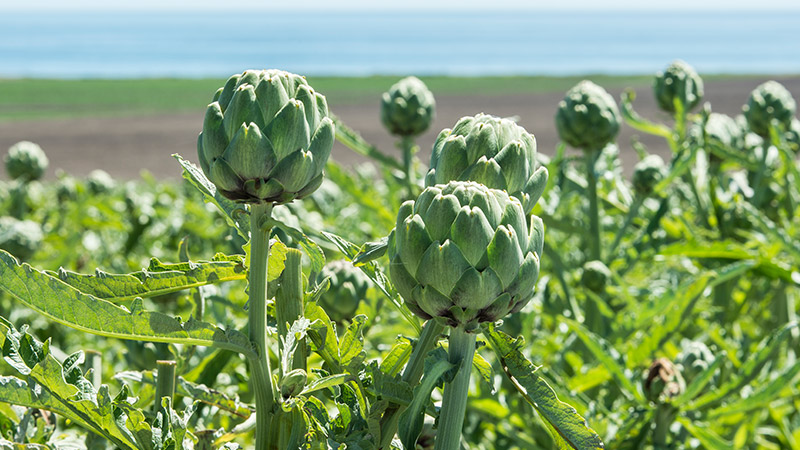
Collectively, even in the timing of Chanukah, this all reminds me of the old study trail on the name for an artichoke:
Cynara cardunculus
The original Hebrew name (see Hebrew: he:ארטישוק) is קינרס kinars, which is found in the Mishna.[5]
https://en.wikipedia.org/wiki/Artichoke
This page says the island was named for the plant, but other sources say the plant was named for the island where it was found [growing all over the place].
Kinnor itself crosses over to ki + nur. And then there's the question of the origin of Kinneret, the name for a sea that looks like a harp, or is it a heart?
The Kwaanza kinara was literally ripped off from a menorah, and "the word kinara is a Swahili word that means candle holder."
Now, back to the artichokes, why might they be called Cynara/kinars? From my view, it is simply a matter of perspective,
Because when the world gets cold and dark, it's time to make more light.

Cross section of an artichoke heart
❤️🔥
🕯️

"Any masterpiece is gonna take some time." ~ Nitzevet
3
posted on
12/20/2025 4:27:41 PM PST
by
Ezekiel
(🆘️ "Come fly with US". 🔴 Ingenuity -- because the Son of David begins with MARS ♂️, aka every man)
To: Ezekiel
My favorite Portion. So many shadows of the future.
4
posted on
12/20/2025 4:38:00 PM PST
by
zeke37
To: JOHN ADAMS; Larry Lucido; Phinneous; Worldtraveler once upon a time; SunkenCiv
Thanks. Lack of interest in here tonight, but you'd think if nothing else, people would have been happy to find out what became of Mortimer Duke.
I don't know off-hand what became of Randolph, but we know that in 1983, Mortimer had no love for his brother. He just wanted those machines turned back on.
Yet we can plainly see that by 1991, Mortimer had repented, becoming a priest no less. He's right there in the opening scene, just after minute 1:25.
"It's all in God's hands now." ~ Father Clemente
What's even more to know is that the scene from 1991 actually happened in the 30s, before Mortimer would have had a seat on the exchange.
It's all good!
5
posted on
12/20/2025 4:44:45 PM PST
by
Ezekiel
(🆘️ "Come fly with US". 🔴 Ingenuity -- because the Son of David begins with MARS ♂️, aka every man)
To: zeke37
My favorite Portion. So many shadows of the future. You look like you just came out of the grave, zeke37!
Have you been there, the place of first light on America from March 25 to September 18?
It's literally the place of the Big Rock -- address 37 Graves. Where people ascend and descend with two sticks. Two for the hands, two for the feet.
As you can see from the terrain view, it really sticks out like a sore thumb, rather like the standard diagram of the mighty mitochondrion, the powerhouse of the cell. There's waaaay more to that.
(It's a weird little world out there.)

6
posted on
12/20/2025 4:59:54 PM PST
by
Ezekiel
(🆘️ "Come fly with US". 🔴 Ingenuity -- because the Son of David begins with MARS ♂️, aka every man)
To: Ezekiel
“Today is the Sabbath for Parshat Miketz (Genesis 41:1 - 44:17), which begins at the end of two full years when Pharaoh had a [doubled] dream.”
That’s right. Joseph said it was “one” dream, but it was repeated in a different form. Both forms meant the same thing. Being doubled meant it would happen very soon. See Genesis 41:25-32.
Joseph had two dreams. They were different in number. Joseph’s brothers bowed to him, as his dream showed. Even Joseph’s father bowed before him. But Joseph’s mother did not. That’s because his dream with the sun and moon bowing were not about him but the Messiah, who would some day be worshipped by all of Israel. But not soon.
Genesis 37:5-11 NKJV
Now Joseph had a dream, and he told it to his brothers; and they hated him even more. So he said to them, “Please hear this dream which I have dreamed: There we were, binding sheaves in the field. Then behold, my sheaf arose and also stood upright; and indeed your sheaves stood all around and bowed down to my sheaf.”
And his brothers said to him, “Shall you indeed reign over us? Or shall you indeed have dominion over us?” So they hated him even more for his dreams and for his words.
Then he dreamed still another dream and told it to his brothers, and said, “Look, I have dreamed another dream. And this time, the sun, the moon, and the eleven stars bowed down to me.”
So he told it to his father and his brothers; and his father rebuked him and said to him, “What is this dream that you have dreamed? Shall your mother and I and your brothers indeed come to bow down to the earth before you?” And his brothers envied him, but his father kept the matter in mind.
7
posted on
12/20/2025 7:33:07 PM PST
by
unlearner
(See my about page for "God's Promises During Tribulation".)
Disclaimer:
Opinions posted on Free Republic are those of the individual
posters and do not necessarily represent the opinion of Free Republic or its
management. All materials posted herein are protected by copyright law and the
exemption for fair use of copyrighted works.
FreeRepublic.com is powered by software copyright 2000-2008 John Robinson