Posted on 12/15/2025 4:52:28 AM PST by annalex
Monday of the 3rd week of Advent Santo Niño Basilica, Cebu City, the Philippines Readings at MassLiturgical Colour: Violet. Year: A(II).
The oracles of BalaamRaising his eyes Balaam saw Israel, encamped by tribes; the spirit of God came on him and he declaimed his poem. He said: ‘The oracle of Balaam son of Beor, the oracle of the man with far-seeing eyes, the oracle of one who hears the word of God. He sees what Shaddai makes him see, receives the divine answer, and his eyes are opened. How fair are your tents, O Jacob! How fair your dwellings, Israel! Like valleys that stretch afar, like gardens by the banks of a river, like aloes planted by the Lord, like cedars beside the waters! A hero arises from their stock, he reigns over countless peoples. His king is greater than Agag, his majesty is exalted.’ Then Balaam declaimed his poem again. He said: ‘The oracle of Balaam son of Beor, the oracle of the man with far-seeing eyes, the oracle of one who hears the word of God, of one who knows the knowledge of the Most High. He sees what Shaddai makes him see, receives the divine answer, and his eyes are opened. I see him – but not in the present, I behold him – but not close at hand: a star from Jacob takes the leadership, a sceptre arises from Israel.’
Lord, make me know your ways. Lord, make me know your ways. Lord, teach me your paths. Make me walk in your truth, and teach me: for you are God my saviour. Lord, make me know your ways. In you I hope all day long because of your goodness, O Lord. Remember your mercy, Lord, and the love you have shown from of old. Do not remember the sins of my youth. In your love remember me. Lord, make me know your ways. The Lord is good and upright. He shows the path to those who stray, He guides the humble in the right path, He teaches his way to the poor. Lord, make me know your ways.
Alleluia, alleluia! The Lord will come, go out to meet him. Great is his beginning and his reign will have no end. Alleluia!
Alleluia, alleluia! Let us see, O Lord, your mercy and give us your saving help. Alleluia!
'I will not tell you my authority for acting like this'Jesus had gone into the Temple and was teaching, when the chief priests and the elders of the people came to him and said, ‘What authority have you for acting like this? And who gave you this authority?’ ‘And I’ replied Jesus ‘will ask you a question, only one; if you tell me the answer to it, I will then tell you my authority for acting like this. John’s baptism: where did it come from: heaven or man?’ And they argued it out this way among themselves, ‘If we say from heaven, he will retort, “Then why did you refuse to believe him?”; but if we say from man, we have the people to fear, for they all hold that John was a prophet.’ So their reply to Jesus was, ‘We do not know.’ And he retorted, ‘Nor will I tell you my authority for acting like this.’ You can also view this page with the New Testament in Greek and English. Christian Art![]() Each day, The Christian Art website gives a picture and reflection on the Gospel of the day. The readings on this page are from the Jerusalem Bible, which is used at Mass in most of the English-speaking world. The New American Bible readings, which are used at Mass in the United States, are available in the Universalis apps, programs and downloads. |
KEYWORDS: catholic; mt21; ordinarytime; prayer;

Please FReepmail me to get on/off the Alleluia Ping List.
| Matthew | |||
| English: Douay-Rheims | Latin: Vulgata Clementina | Greek NT: Byzantine/Majority Text (2000) | |
| Matthew 21 | |||
| 23. | And when he was come into the temple, there came to him, as he was teaching, the chief priests and ancients of the people, saying: By what authority dost thou these things? and who hath given thee this authority? | Et cum venisset in templum, accesserunt ad eum docentem principes sacerdotum, et seniores populi, dicentes : In qua potestate hæc facis ? et quis tibi dedit hanc potestatem ? | και ελθοντι αυτω εις το ιερον προσηλθον αυτω διδασκοντι οι αρχιερεις και οι πρεσβυτεροι του λαου λεγοντες εν ποια εξουσια ταυτα ποιεις και τις σοι εδωκεν την εξουσιαν ταυτην |
| 24. | Jesus answering, said to them: I also will ask you one word, which if you shall tell me, I will also tell you by what authority I do these things. | Respondens Jesus dixit eis : Interrogabo vos et ego unum sermonem : quem si dixeritis mihi, et ego vobis dicam in qua potestate hæc facio. | αποκριθεις δε ο ιησους ειπεν αυτοις ερωτησω υμας καγω λογον ενα ον εαν ειπητε μοι καγω υμιν ερω εν ποια εξουσια ταυτα ποιω |
| 25. | The baptism of John, whence was it? from heaven or from men? But they thought within themselves, saying: | Baptismus Joannis unde erat ? e cælo, an ex hominibus ? At illi cogitabant inter se, dicentes : | το βαπτισμα ιωαννου ποθεν ην εξ ουρανου η εξ ανθρωπων οι δε διελογιζοντο παρ εαυτοις λεγοντες εαν ειπωμεν εξ ουρανου ερει ημιν δια τι ουν ουκ επιστευσατε αυτω |
| 26. | If we shall say, from heaven, he will say to us: Why then did you not believe him? But if we shall say, from men, we are afraid of the multitude: for all held John as a prophet. | Si dixerimus, e cælo, dicet nobis : Quare ergo non credidistis illi ? Si autem dixerimus, ex hominibus, timemus turbam : omnes enim habebant Joannem sicut prophetam. | εαν δε ειπωμεν εξ ανθρωπων φοβουμεθα τον οχλον παντες γαρ εχουσιν τον ιωαννην ως προφητην |
| 27. | And answering Jesus, they said: We know not. He also said to them: Neither do I tell you by what authority I do these things. | Et respondentes Jesu, dixerunt : Nescimus. Ait illis et ipse : Nec ego dico vobis in qua potestate hæc facio. | και αποκριθεντες τω ιησου ειπον ουκ οιδαμεν εφη αυτοις και αυτος ουδε εγω λεγω υμιν εν ποια εξουσια ταυτα ποιω |
"εαν ειπωμεν εξ ουρανου ερει ημιν δια τι ουν ουκ επιστευσατε αυτω" begins verse 26 in the translations.

23. And when he was come into the temple, the Chief Priests and the elders of the people came unto him as he was teaching, and said, By what authority doest thou these things? and who gave thee this authority?
24. And Jesus answered and said unto them, I also will ask you one thing, which if ye tell me, I in like wise will tell you by what authority I do these things.
25. The baptism of John, whence was it? from heaven, or of men? And they reasoned with themselves, saying, If we shall say, From heaven; he will say unto us, Why did ye not then believe him?
26. But if we shall say, Of men; we fear the people; for all hold John as a prophet.
27. And they answered Jesus, and said, We cannot tell. And he said unto them, Neither tell I you by what authority I do these things.
PSEUDO-CHRYSOSTOM. The Priests were tormented with jealousy, because they had seen Christ entering the Temple in great glory. And not being able to master the fire of jealousy which burnt in their breasts, they break forth in speech.
CHRYSOSTOM. Forasmuch as they could not detract from His miracles, they bring matter of blame from His forbidding to sell in the Temple. As though they had said, Hast Thou assumed the seat of authority? Hast Thou been anointed Priest, that Thou exertest this power?
PSEUDO-CHRYSOSTOM. By that they add, Or who gave thee this authority? they shew that there be many persons who give power to men, whether corporal or spiritual! as though they had said, Thou art not come of a priestly family; the Senate has not conferred on Thee this power, neither has Cæsar granted it. But had they believed that all power is from God, they would never have asked, Who gave thee this authority? For every man judges of others by himself. The fornicator thinks that none are chaste; the chaste does not readily suspect any of fornication; he who is not a Priest of God, thinks no man’s Priesthood to be of God.
JEROME. Or in these words they urge the same cavil as above, when they said, He casteth out demons through Beelzebub the Prince of the demons. (Mat. 12:24.) For when they say, By what authority doest thou these things? they doubt concerning the power of God, and would have it understood that the things He does are of the Devil. But when they add, Who gave thee this authority? they most clearly deny the Son of God, whom they suppose to work miracles, not by His own, but by others’ strength. The Lord could have confuted the calumny of His tempters by a simple answer, but He put a question to them of such skilful contrivance, that they must be condemned either by their silence or their knowledge; Jesus answered and said unto them, I also will ask you one question.
PSEUDO-CHRYSOSTOM. Not that they should answer it, and thereupon hear of Christ the answer to their question, but that being puzzled they should ask Him no farther; according to that precept He had given above, Give not that which is holy to the dogs. (Mat. 7:6.) For even if He had told them, it would have profited nothing, because the darkened will cannot perceive the things that are of the light. For him that enquires we ought to instruct, but him that tempts, to overthrow by a stroke of reasoning, but not to publish to him the power of the mystery. The Lord thus sets before them in His question a dilemma; and that they might not escape Him, says, Which if ye tell me, I in like wise will tell you by what authority I do these things. His question is this; The baptism of John whence was it? from heaven, or of men?
AUGUSTINE. (in Joan. Tr. v. 4.) John received his authority to baptize from Him, whom he afterwards baptized; and that baptism which was committed to him is here called the baptism of John. He alone received such a gift; no righteous man before or after him was entrusted with a baptism to be called from himself. For John came to baptize in the water of repentance, to prepare the way for the Lord, not to give inward cleansing, which mere man cannot do.
JEROME. What the Priests revolved in their malice is shewn when he adds, But they reasoned with themselves. For had they replied that it was from heaven, the question was inevitable, Why then were ye not baptized by John? But should they reply that it was an invention of human device, and had in it nothing divine, they feared a tumult among the people. For all the assembled multitudes had received John’s baptism, and held him accordingly for a Prophet. This godless party therefore make answer, and by a seeming humility of speech confessing that they know not, turned to hide their insidious designs. And they answered Jesus, and said, We know not. In saying that they knew not, they lied; and it might have followed upon their answering thus, that the Lord also should say, I know not; but truth cannot lie, and therefore it follows, And he said unto them, Neither tell I you by what authority I do these things. This shews that they knew, but would not answer, and that He also knew, but would not answer, because they would not speak what they knew.
ORIGEN. But some one will say in opposition to this, that it was absurd to ask by what authority Jesus did these things. For that it could not be that He would answer, that He did these by the Devil’s authority; and He would not tell them as it truly was, that He did them by His own power. If it should be said, that the rulers put this question to Him in order to deter Him from His proceedings; as when we say to one who is dealing with what is ours in a way which we do not like, we say to him, Who bade thee do this? meaning to deter him from what he is so doing;—if it is to be taken so, what means Christ’s answer, Do you tell Me this, and I will tell you by what authority I do these things. Perhaps therefore, the place should be understood as follows. There are in the general two opposite powers, one on the side of God, the other on the side of the Devil; but of particular powers there are many; for it was not one and the same power that wrought in all the Prophets to enable them to do miracles, but one in these, another in those; and, it may be, for lesser things a lesser power, for greater things a greater power. The Chief Priests had seen Jesus working many miracles, whereupon they desired to know the special degree and properties of that power which wrought in Him. For others who have wrought miracles wrought them at first in one power, and afterwards when more advanced in another and greater power; but the Saviour wrought all in one power, that which He received of the Father. But because they were not worthy to hear such mysteries, therefore He gives them no answer, but on the contrary put a question to them.
RABANUS. There are two reasons why the knowledge of truth should be kept back from those who ask; either when he who asks is unfit to receive, or from his hatred or contempt of the truth is unworthy to have that which he asks opened to him.
Catena Aurea Matthew 21
The virgin Nino of Cappadocia was a relative of Great-martyr George and the only daughter of a widely respected and honorable couple. Her father was a Roman army chief by the name of Zabulon, and her mother, Sosana, was the sister of Patriarch Juvenal of Jerusalem. When Nino reached the age of twelve, her parents sold all their possessions and moved to Jerusalem. Soon after, Nino’s father was tonsured a monk. He bid farewell to his family and went to labor in the wilderness of the Jordan.
After Sosana had been separated from her husband, Patriarch Juvenal ordained her a deaconess. She left her daughter Nino in the care of an old woman, Sara Niaphor, who raised her in the Christian Faith and related to her the stories of Christ’s life and His suffering on earth. It was from Sara that Nino learned how Christ’s Robe had arrived in Georgia, a country of pagans.
Soon Nino began to pray fervently to the Theotokos, asking for her blessing to travel to Georgia and be made worthy to venerate the Sacred Robe that she had woven for her beloved Son. The Most Holy Virgin heard her prayers and appeared to Nino in a dream, saying, “Go to the country that was assigned to me by lot and preach the Gospel of our Lord Jesus Christ. He will send down His grace upon you and I will be your protector.”
But the blessed Nino was overwhelmed at the thought of such a great responsibility and answered, “How can I, a fragile woman, perform such a momentous task, and how can I believe that this vision is real?” In response, the Most Holy Theotokos presented her with a cross of grapevines and proclaimed, “Receive this cross as a shield against visible and invisible enemies!”
When she awoke, Nino was holding the cross in her hands. She dampened it with tears of rejoicing and tied it securely with strands of her own hair. (According to another source, the Theotokos bound the grapevine cross with strands of her own hair.)
Nino related the vision to her uncle, Patriarch Juvenal, and revealed to him her desire to preach the Gospel in Georgia. Juvenal led her in front of the Royal Doors, laid his hands on her, and prayed, “O Lord, God of Eternity, I beseech Thee on behalf of my orphaned niece: Grant that, according to Thy will, she may go to preach and proclaim Thy Holy Resurrection. O Christ God, be Thou to her a guide, a refuge, and a spiritual father. And as Thou didst enlighten the Apostles and all those who feared Thy name, do Thou also enlighten her with the wisdom to proclaim Thy glad tidings.”
When Nino arrived in Rome, she met and baptized the princess Rhipsimia and her nurse, Gaiana. At that time the Roman emperor was Diocletian, a ruler infamous for persecuting Christians. Diocletian (284-305) fell in love with Rhipsimia and resolved to marry her, but Saint Nino, Rhipsimia, Gaiana, and fifty other virgins escaped to Armenia. The furious Diocletian ordered his soldiers to follow them and sent a messenger to Tiridates, the Armenian king (286-344), to put him on guard.
King Tiridates located the women and, following Diocletian’s example, was charmed by Rhipsimia’s beauty and resolved to marry her. But Saint Rhipsimia would not consent to wed him, and in his rage the king had her tortured to death with Gaiana and the fifty other virgins. Saint Nino, however, was being prepared for a different, greater task, and she succeeded in escaping King Tiridates’ persecutions by hiding among some rose bushes.
When she finally arrived in Georgia, Saint Nino was greeted by a group of Mtskhetan shepherds near Lake Paravani, and she received a blessing from God to preach to the pagans of this region.
With the help of her acquaintances Saint Nino soon reached the city of Urbnisi. She remained there a month, then traveled to Mtskheta with a group of Georgians who were making a pilgrimage to venerate the pagan idol Armazi. There she watched with great sadness as the Georgian people trembled before the idols. She was exceedingly sorrowful and prayed to the Lord, “O Lord, send down Thy mercy upon this nation...that all nations may glorify Thee alone, the One True God, through Thy Son, Jesus Christ.”
Suddenly a violent wind began to blow and hail fell from the sky, shattering the pagan statues. The terrified worshipers fled, scattering across the city.
Saint Nino made her home beneath a bramble bush in the garden of the king, with the family of the royal gardener. The gardener and his wife were childless, but through Saint Nino’s prayers God granted them a child. The couple rejoiced exceedingly, declared Christ to be the True God, and became disciples of Saint Nino. Wherever Saint Nino went, those who heard her preach converted to the Christian Faith in great numbers. Saint Nino even healed the terminally ill Queen Nana after she declared Christ to be the True God.
King Mirian, a pagan, was not at all pleased with the great impression Saint Nino’s preaching had made on the Georgian nation. One day while he was out hunting, he resolved to kill all those who followed Christ.
According to his wicked scheme, even his wife, Queen Nana, would face death for failing to renounce the Christian Faith. But in the midst of the hunt, it suddenly became very dark. All alone, King Mirian became greatly afraid and prayed in vain for the help of the pagan gods. When his prayers went unanswered, he finally lost hope and, miraculously, he turned to Christ: “God of Nino, illumine this night for me and guide my footsteps, and I will declare Thy Holy Name. I will erect a cross and venerate it and I will construct for Thee a temple. I vow to be obedient to Nino and to the Faith of the Roman people!”
Suddenly the night was transfigured, the sun shone radiantly, and King Mirian gave great thanks to the Creator. When he returned to the city, he immediately informed Saint Nino of his decision. As a result of the unceasing labors of Equal-to-the-Apostles Nino, Georgia was established as a nation solidly rooted in the Christian Faith.
Saint Nino reposed in the village of Bodbe in eastern Georgia and, according to her will, she was buried in the place where she took her last breath. King Mirian later erected a church in honor of Saint George over her grave.

First Reading
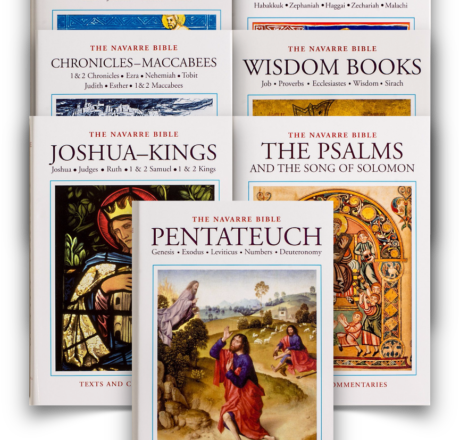
From: Numbers 24:2-7, 15-17a
Balaam's Third Oracle (Continuation)
------------------------------------
[2] And Balaam lifted up his eyes, and saw Israel encamping tribe by tribe. And the Spirit of God came upon him, [3] and he took up his discourse, and said, "The oracle of Balaam the son of Beor, the oracle of the man whose eye is opened, [4] the oracle of him who bears the words of God, who sees the vision of the Almighty, falling down, but having his eyes uncovered: [5] how fair are your tents, O Jacob, your encampments, O Israel! [6] Like valleys that stretch afar, like gardens beside a river, like those that the Lord has planted, like cedar trees beside the waters. [7] Water shall flow from his buckets, and his seed shall be in many waters, his king shall be higher than Agag, and his kingdom shall be exalted."
[15] And he took up his discourse, and said, "The oracle of Balaam the son of Beor, the oracle of the man whose eye is opened, [16] the oracle of him who hears the words of God, and knows the knowledge of the Most High, who sees the vision of the Almighty, falling down, but having his eyes uncovered: [17] I see him, but not now; I behold him, but not nigh: a star shall come forth out of Jacob, and a scepter shall rise out of Israel."
***********************************************************************
Commentary:
24:3-9. This third oracle consists not so much in words placed by God on Balaam's lips, as in the vision given to him, which shows the splendor of Israel (expressed in images of luxuriant scenery); it also alludes to a victorious king and recalls, once more, deliverance from Egypt.
24:15-24. The three blessings are followed by four oracles about nations--Israel, Amalek, the Kainites and Asshur. The first tells about the coming of a king symbolized by a star and a scepter (v. 17). In the ancient East stars were considered to be gods and goddesses. This passage of Numbers may contain a reference to David and his star: in fact, from very early on this text was given a messianic interpretation; Jewish traditions link the coming of the Messiah with the appearing of a star--cf. some Aramaic translations ("targumin") of this text. In St Matthew's Gospel there is mention of a star in the episode of the Magi who came to adore Jesus (cf. Mt 2:1-12). And in the second Jewish revolt against Rome (132-135 AD), a famous Jewish teacher, Rabbi Akiha, changed the name of the Jewish leader of the rebellion from Ben Kosheba, to Bar Kokheba, that is, "son of the star"--another indication of the connection between the star and the expected Messiah.
The Fathers interpreted the star that Balaam speaks about, as being the one the Magi saw. From this they went on deduce that the Wise Men came from Mesopotamia, which was where Balaam came from.
From: Matthew 21:23-27
The Authority of Jesus is Questioned
----------------------------------------------
[23] And when he entered the temple, the chief priests and the elders of the people came up to him as he was teaching, and said, "By what authority are you doing these things, and who gave you this authority?" [24] Jesus answered them, "I also will ask you a question; and if you tell me the answer, then I also will tell you by what authority I do these things. [25] The baptism of John, whence was it? From heaven or from men?" And they argued with one another, "If we say, 'From heaven,' he will say to us, 'Why then did you not believe him?' [26] But if we say, 'From men,' we are afraid of the multitude; for all hold that John was a prophet." [27] So they answered Jesus, "We do not know." And he said to them, "Neither will I tell you by what authority I do these things."
***********************************************************************
Commentary:
23-27. When the chief priests and elders ask "By what authority are you doing these things?" they are referring both to his teaching and to his self-assured public actions--throwing the traders out of the Temple, entering Jerusalem in triumph, allowing the children to acclaim him, curing the sick, etc. What they want him to do is to prove that he has authority to act in this way or to admit openly that he is the Messiah. However, Jesus knows that they are not well-intentioned and he declines to give them a direct answer; he prefers to put a question to them that forces them to make their own attitude clear. He seeks to provoke them into examining their consciences and changing their whole approach.
Disclaimer: Opinions posted on Free Republic are those of the individual posters and do not necessarily represent the opinion of Free Republic or its management. All materials posted herein are protected by copyright law and the exemption for fair use of copyrighted works.