
Posted on 12/12/2025 7:49:37 AM PST by fidelis
Feast of Our Lady of Guadalupe
Then the angel said to her, “Do not be afraid, Mary, for you have found favor with God. Behold, you will conceive in your womb and bear a son, and you shall name him Jesus.” Luke 1:30–31
Of all the saints throughout the ages, none has proved to be as powerful an evangelist as the Mother of God. While on Earth, she lived a mostly hidden life, demonstrating the perfection of virtue to those closest to her. As a young mother, she cared daily for the needs of her divine Son, constantly pondering the mystery of His Incarnation as it unfolded before her eyes. Her love for her Son, lived out during Jesus’ earthly life, overflowed from her Immaculate Heart and continues to do so today.
After being assumed body and soul into Heaven, her work did not cease. As Queen of Heaven and Earth, she continues to intercede for her spiritual children, mediating the grace we need to grow in holiness... While numerous reports have not been formally approved, some have, including the apparition of Our Lady of Guadalupe in 1531 to Saint Juan Diego.
Following the Spanish conquest of the Aztec Empire in 1521 by Hernán Cortés, the capital was rebuilt into what became Mexico City. Despite the cruelty some Spanish settlers inflicted on the Indigenous people, the Catholic Church, through missionaries and leaders, including Bishop Juan de Zumárraga, sought to protect their rights and dignity while evangelizing them. Many of the Indigenous were understandably suspicious of the missionaries, yet some converted, including a man named Cuauhtlatoatzin, who took the Christian name Juan Diego after his baptism, and his wife, who took the name María Lucía.
On December 9, 1531, while walking to Mass and catechism class, Juan Diego passed Tepeyac Hill, where the Blessed Virgin Mary appeared to him. She spoke to him in his native language, revealed herself as the Mother of God, and asked for a chapel to be built in her honor on that very spot. When Juan took the message to Bishop Zumárraga, the bishop asked for a sign.
On December 12, Juan’s uncle fell seriously ill. While hurrying to find a priest for the Last Rites, Juan took a different route to avoid delaying his journey, but the Mother of God appeared again. She assured him that his uncle was already healed and provided the promised sign for the bishop.
She instructed Juan to pick roses blooming unseasonably on the hill; when he brought them to the bishop in his tilma, an image of the Virgin, just as Juan had seen her, appeared on his cloak. Juan Diego’s tilma now hangs in the Basilica of Our Lady of Guadalupe, in Mexico City, fulfilling the Blessed Mother’s request.
While the miraculous image was awe-inspiring, what followed was even more astounding. Over the next decade, millions of Indigenous people embraced the Christian faith, marking one of the most remarkable mass conversions in Church history—all due to the Blessed Mother’s evangelization and intervention. Her love for the Indigenous people and her desire for their salvation brought her to them personally, confirming the truth of the Gospel preached by the Church.
As we honor Our Lady of Guadalupe, reflect today on the tender love of the Mother of God. She deeply desired the salvation of the Indigenous people, just as she desires the salvation of all. Pray for her intercession so that millions more around the world may hear and accept God’s saving message.
Most loving Virgin of Guadalupe, as you looked down from Heaven upon the struggles and suffering of the conquered people of the Aztec Empire, your Immaculate Heart overflowed with compassion for them. As a result, you went to them personally to share the saving message of Your Son. Please pray for me, for the Americas, and for all your children, that we all will be guided to Your Son and come to know His gift of salvation. Our Lady of Guadalupe, pray for us. Jesus, I trust in You.
Please keep in mind that this is a Catholic Caucus/Devotional thread for the purpose of prayerful reflection on the Sacred Scriptures and is closed to debate of any kind. Per FR policy on Religion Caucus threads, off-topic, argumentative, and abusive comments are not allowed and will be submitted to the Mods for deletion. Thanks, and God bless you.
The Month of December is Dedicated to the Immaculate Conception

“ In the sixth month the angel Gabriel was sent from God to a city of Galilee named Nazareth, to a virgin betrothed to a man whose name was Joseph, of the house of David; and the virgin’s name was Mary. And he came to her and said, “Hail, full of grace, the Lord is with you!”” (Luke 1:26-28)

Pope Leo XIV’s prayer intentions for the month of December, 2025:
For Christians in areas of conflict
Let us pray that Christians living in areas of war or conflict, especially in the Middle East, might be seeds of peace, reconciliation, and hope.

First Reading
Zechariah 2:14-17
Third vision: The Measurer
---------------------------------------
[10] Sing and rejoice, O daughter of Zion; for lo, I come and I will dwell in the midst of you, says the Lord. [11] And many nations shall join themselves to the Lord in that day, and shall be my people; and I will dwell in the midst of you, and you shall know that the Lord of hosts has sent me to you. [12] And the Lord will inherit Judah as his portion in the holy land, and will again choose Jerusalem."
[13] Be silent, all flesh, before the Lord; for he has roused himself from his holy dwelling.
**************************************************************************
Commentary:
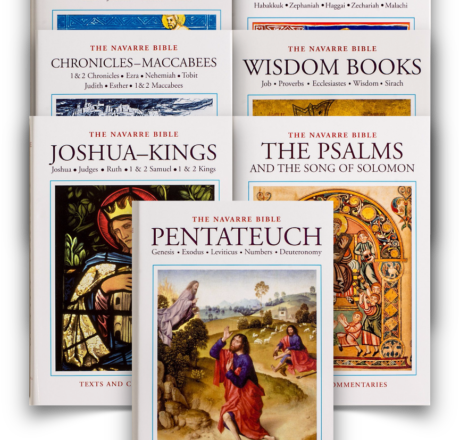
2:1-13. What the prophet now sees and hears concerns the city of Jerusalem. It is going to be remodeled as an open city, without walls; its defence will be provided by God himself and therefore more people will be able to live there. The man with the measuring line is an angel, as are the other two figures mentioned. The idea of measuring the city in order to rebuild it is also found in Ezekiel 40-42 and Jeremiah 21:38-40 and, later, Revelation 11:1.
The vision is followed by an oracle (vv. 6-10) in which the Lord speaks through the angel. He invites the Jews to leave Babylon and return to the holy land. This is a call that is also found in Isaiah and Jeremiah (cf. Is 48:20; Jer 50:8; 51:6). It could be that some were reluctant to move. God promises that in Judah they will be safe from other nations because they are his beloved people, the "apple of his eye" (v. 8), and his angel will defend them. Moreover, he will settle there, and many nations will become his people (vv. 10-11).
Presence of the Lord, security against enemies and a way for the nations to become people of God – these are the features that Judah and Jerusalem will have following the return from exile. In this sense, they prefigure the Church. Commenting on v. 4, St Jerome points out: "Reading in a spiritual sense, all of these things are to be found in the Church, which is 'without walls', or, as the Septuagint puts it, 'katakarpos'; that is, filled with an abundance of fruit and a great multitude of men and asses […]. The men and the asses [cattle, animals] stand for the two people, the Jews and the Gentiles; those who came to faith in Christ through the fulfillment of the Law are called men; we, however, who were idolatrous and lived as though in a wilderness, being far from the Law, and alone, because of our distance from the prophets who suffered, are the asses […]. But these animals hear the voice of the good shepherd, and know him, and they follow him" ("Commentarii in Zachariam", 2, 4).
2:10. This call for rejoicing, similar to that made by the prophet Zephaniah (cf. Zeph 3:14) and one made later (9:9), is repeated in the angel Gabriel's greeting to the Blessed Virgin when he tells her that she is to conceive the Messiah (cf. Lk 1:28). That event will truly bring about what is said here, for Mary is "the mother of him in whom 'the whole fullness of deity dwells bodily' (Col 2:9)" ("Catechism of the Catholic Church", 722). Bl. John Paul II sees Mary, the Mother of the Redeemer, prefigured in the title "daughter of Zion" found here: "Her presence in the midst of Israel -- a presence so discreet as to pass almost unnoticed by the eyes of her contemporaries -- shone very clearly before the Eternal One, who had associated this hidden 'daughter of Sion' (cf. Zeph. 3:14; Zeph. 2:10) with the plan of salvation embracing the whole history of humanity" ("Redemptoris Mater", 3).
2:13. The "Catechism of the Catholic Church", 2143, interprets the silence as one "of loving adoration". This is the attitude that all will have when they see what God will do for Judah and Jerusalem; for Christians, it is the attitude they will have towards the incarnation, passion, death and resurrection of our Lord and towards what God does for his Church.
Or:
From: Revelation 11:19a; 12:1-6a, 10ab
The Sounding of the Seventh Trumpet
-----------------------------------
[19] Then God's temple in heaven was opened, and the ark of his covenant was seen within his temple.
The Woman Fleeing from the Dragon
---------------------------------
[1] And a great portent appeared in heaven, a woman clothed with the sun, with the moon under her feet, and on her head a crown of twelve stars; [2] she was with child and she cried out in her pangs of birth, in anguish for delivery [3] And another portent appeared in heaven; behold, a great red dragon, with seven heads and ten horns, and seven diadems upon his heads. [4] His tail swept down a third of the stars of heaven, and cast them to the earth. And the dragon stood before the woman who was about to bear a child, that he might devour her child when she brought it forth; [5] she brought forth a male child, one who is to rule all the nations with a rod of iron, but her child was caught up to God and to his throne, [6] and the woman fled into the wilderness, where she has a place prepared by God.
[10] And I heard a loud voice in heaven, saying, "Now the salvation and the power and the kingdom of our God and the authority of his Christ have come.
***********************************************************************
Commentary:
19. The seer introduces the heavenly temple (the location par excellence of God's presence), paralleling the earlier mention of the temple of Jerusalem (cf. 11:1-2). The opening of the temple and the sight of the Ark of the Covenant show that the messianic era has come to an end and God's work of salvation has been completed. The ark was the symbol of Israel's election and salvation and of God's presence in the midst of his people. According to a Jewish tradition, reported in 2 Maccabees 2:4-8, Jeremiah placed the ark in a secret hiding place prior to the destruction of Jerusalem, and it would be seen again when the Messiah carne. The author of the Apocalypse uses this to assure us that God has not forgotten his covenant: he has sealed it definitively in heaven, where the ark is located.
Many early commentators interpreted the ark as a reference to Christ's sacred humanity, and St Bede explains that just as the manna was kept in the original ark, so Christ's divinity lies hidden in his sacred body (cf. "Explanatio Apocalypsis", 11, 19).
The heavenly covenant is the new and eternal one made by Jesus Christ (cf. Mt 26:26-29 and par.) which will be revealed to all at his second coming when the Church will triumph, as the Apocalypse goes on to describe. The presence of the ark in the heavenly temple symbolizes the sublimity of the messianic kingdom, which exceeds anything man could create. "The vigilant and active expectation of the coming of the Kingdom is also the expectation of a finally perfect justice for the living and the dead, for people of all times and places, a justice which Jesus Christ, installed as supreme Judge, will establish (cf. Mt 24:29-44, 46; Acts 10:42; 2 Cor 5: 10). This promise, which surpasses all human possibilities, directly concerns our life in this world. For true justice must include everyone; it must explain the immense load of suffering borne by all generations. In fact, without the resurrection of the dead and the Lord's judgment, there is no justice in the full sense of the term. The promise of the resurrection is freely made to meet the desire for true justice dwelling in the human heart" (SCDF, "Libertatis Conscientia", 60).
The thunder and lightning which accompany the appearance of the ark are reminiscent of the way God made his presence felt on Sinai; they reveal God's mighty intervention (cf. Rev 4:5; 8:5) which is now accompanied by the chastisement of the wicked, symbolized by the earthquake and hailstones (cf. Ex 9: 13-35).
1-17. We are now introduced to the contenders in the eschatological battles which mark the final confrontation between God and his adversary, the devil. The author uses three portents to describe the leading figures involved, and the war itself. The first is the woman and her offspring, including the Messiah (12:1-2); the second is the dragon, who will later transfer his power to the beasts (12:3); the third, the seven angels with the seven bowls (15:1).
Three successive confrontations with the dragon are described--1) that of the Messiah to whom the woman gives birth (12:1-6); 2) that of St Michael and his angels (12:7-12); and 3) that of the woman and the rest of her offspring (12:13-17) These confrontations should not be seen as being in chronological order. They are more like three distinct pictures placed side by side because they are closely connected: in each the same enemy, the devil, does battle with God's plans and with those whom God uses to carry them out.
1-2. The mysterious figure of the woman has been interpreted ever since the time of the Fathers of the Church as referring to the ancient people of Israel, or the Church of Jesus Christ, or the Blessed Virgin. The text supports all of these interpretations but in none do all the details fit. The woman can stand for the people of Israel, for it is from that people that the Messiah comes, and Isaiah compares Israel to "a woman with child, who writhes and cries out in her pangs when she is near her time" (Is 26:17).
She can also stand for the Church, whose children strive to overcome evil and to bear witness to Jesus Christ (cf. v. 17). Following this interpretation St Gregory wrote: "The sun stands for the light of truth, and the moon for the transitoriness of temporal things; the holy Church is clothed like the sun because she is protected by the splendor of supernatural truth, and she has the moon under her feet because she is above all earthly things" ("Moralia", 34, 12).
The passage can also refer to the Virgin Mary because it was she who truly and historically gave birth to the Messiah, Jesus Christ our Lord (cf. v. 5). St Bernard comments: "The sun contains permanent color and splendor; whereas the moon's brightness is unpredictable and changeable, for it never stays the same. It is quite right, then, for Mary to be depicted as clothed with the sun, for she entered the profundity of divine wisdom much further than one can possibly conceive" ("De B. Virgine", 2).
In his account of the Annunciation, St Luke sees Mary as representing the faithful remnant of Israel; the angel greets her with the greeting given in Zephaniah 3:15 to the daughter of Zion (cf. notes on Lk 1:26- 31). St Paul in Galatians 4:4 sees a woman as the symbol of the Church, our mother; and non-canonical Jewish literature contemporary with the Book of Revelation quite often personifies the community as a woman. So, the inspired text of the Apocalypse is open to interpreting this woman as a direct reference to the Blessed Virgin who, as mother, shares in the pain of Calvary (cf. Lk 2:35) and who was earlier prophesied in Isaiah 7:14 as a "sign" (cf. Mt 1:22-23). At the same time the woman can be interpreted as standing for the people of God, the Church, whom the figure of Mary represents.
The Second Vatican Council has solemnly taught that Mary is a "type" or symbol of the Church, for "in the mystery of the Church, which is itself rightly called mother and virgin, the Blessed Virgin stands out in eminent and singular fashion as exemplar both of virgin and mother. Through her faith and obedience she gave birth on earth to the very Son of the Father, not through the knowledge of man but by the overshadowing of the Holy Spirit, in the manner of a new Eve who placed her faith, not in the serpent of old but in God's messenger, without wavering in doubt. The Son whom she brought forth is he whom God placed as the first-born among many brethren (cf. Rom 8:29), that is, the faithful, in whose generation and formation she cooperates with a mother's love" (Vatican II, "Lumen Gentium", 63).
The description of the woman indicates her heavenly glory, and the twelve stars of her victorious crown symbolize the people of God—the twelve patriarchs (cf. Gen 37:9) and the twelve apostles. And so, independently of the chronological aspects of the text, the Church sees in this heavenly woman the Blessed Virgin, "taken up body and soul into heavenly glory, when her earthly life was over, and exalted by the Lord as Queen over all things, that she might be the more fully conformed to her Son, the Lord of lords (cf. Rev 19:16) and conqueror of sin and death" ("Lumen Gentium", 59). The Blessed Virgin is indeed the great sign, for, as St Bonaventure says, "God could have made none greater. He could have made a greater world and a greater heaven; but not a woman greater than his own mother" ("Speculum", 8).
3-4. In his description of the devil (cf. v. 9), St John uses symbols taken from the Old Testament. The dragon or serpent comes from Genesis 3:1-24, a passage which underlies all the latter half of this book. Its red color and seven heads with seven diadems show that it is bringing its full force to bear to wage this war. The ten horns in Daniel 7:7 stand for the kings who are Israel's enemies; in Daniel a horn is also mentioned to refer to Antiochus IV Epiphanes, of whom Daniel also says (to emphasize the greatness of Antiochus' victories) that it cast stars down from heaven onto the earth (cf. Dan 8:10). Satan drags other angels along with him, as the text later recounts (Rev 12:9). All these symbols, then, are designed to convey the enormous power of Satan. "The devil is described as a serpent", St Cyprian writes, "because he moves silently and seems peaceable and comes by easy ways and is so astute and so deceptive [...] that he tries to have night taken for day, poison taken for medicine. So, by deceptions of this kind, he tries to destroy truth by cunning. That is why he passes himself off as an angel of light" ("De Unitate Ecclesiae", I-III).
After the fall of our first parents war broke out between the serpent and his seed and the woman and hers: "I will put enmity between you and the woman, between your seed and her seed; he shall bruise your head, and you shall bruise his heel" (Gen 3:15). Jesus Christ is the woman's descendant who will obtain victory over the devil (cf. Mk 1:23-26; Lk 4:31-37; etc.). That is why the power of evil concentrates all his energy on destroying Christ (cf. Mt 2:13-18) or to deflecting him from his mission (cf. Mt 4:1-11 and par.). By relating this enmity to the beginnings of the human race St. John paints a very vivid picture.
5. The birth of Jesus Christ brings into operation the divine plan announced by the prophets (cf. Is 66:7) and by the Psalms (cf. Ps 2:9), and marks the first step in ultimate victory over the devil. Jesus' life on earth, culminating in his passion, resurrection and ascension into heaven, was the key factor in achieving this victory. St John emphasizes the triumph of Christ as victor, who, as the Church confesses, "sits at the right hand of the Father" ("Nicene-Constantinopolitan Creed").
6. The figure of the woman reminds us of the Church, the people of God. Israel took refuge in the wilderness to escape from Pharaoh, and the Church does the same after the victory of Christ. The wilderness stands for solitude and intimate union with God. In the wilderness God took personal care of his people, setting them free from their enemies (cf. Ex 17:8-16) and nourishing them with quail and manna (cf. Ex 16:1-36). The Church is given similar protection against the powers of hell (cf. Mt 16:18) and Christ nourishes it with his body and his word all the while it makes its pilgrimage through the ages; it has a hard time (like Israel in the wilderness) but there will be an end to it: it will take one thousand two hundred and sixty days (cf. notes on 11:3).
Although the woman, in this verse, seems to refer directly to the Church, she also in some way stands for the particular woman who gave birth to the Messiah, the Blessed Virgin. As no other creature has done, Mary has enjoyed a very unique type of union with God and very special protection from the powers of evil, death included. Thus, as the Second Vatican Council teaches, "in the meantime [while the Church makes its pilgrim way on earth], the Mother of Jesus in the glory which she possesses in body and soul in heaven is the image and beginning of the Church as it is to be perfected in the world to come. Likewise she shines forth on earth, until the day of the Lord shall come (cf. 2 Pet 3:10), a sign of certain hope and comfort to the pilgrim people of God" ("Lumen Gentium", 68).
10-12. With the ascension of Christ into heaven the Kingdom of God is established and so all those who dwell in heaven break out into a song of joy. The devil has been deprived of his power over man in the sense that the redemptive action of Christ and man's faith enable man to escape from the world of sin. The text expresses this joyful truth by saying that there is now no place for the accuser, Satan whose name means and whom the Old Testament teaches to be the accuser of men before God: cf. Job 1:6-12; 2:1-10). Given what God meant creation to be, Satan could claim as his victory anyone who, through sinning, disfigured the image and likeness of God that was in him. However, once the Redemption has taken place, Satan no longer has power to do this, for, as St John writes, "if any one does sin, we have an advocate with the Father, Jesus Christ the righteous; and he is the expiation for our sins, and not for ours only but also for the sins of the whole world" (Jn 2:1-2). Also, on ascending into heaven, Christ sent us the Holy Spirit as "Intercessor and Advocate, especially when man, that is, mankind, find themselves before the judgment of condemnation by that 'accuser' about whom the Book of Revelation says that 'he accuses them day and night before our God"' (John Paul II, "Dominum Et Vivificantem", 67).
Although Satan has lost this power to act in the world, he still has time left, between the resurrection of our Lord and the end of history, to put obstacles in man's way and frustrate Christ's action. And so he works ever more frenetically, as he sees time run out, in his effort to distance everyone and society itself from the plans and commandments of God.
The author of the Book of Revelation uses this celestial chant to warn the Church of the onset of danger as the End approaches.
---------------------
Gospel Reading
From: Luke 1:26-38
The Annunciation and Incarnation of the Son of God
--------------------------------------------------
[26] In the sixth month the angel Gabriel was sent from God to a city of Galilee named Nazareth, [27] to a virgin betrothed to a man whose name was Joseph, of the house of David; and the virgin's name was Mary. [28] And he came to her and said, "Hail, full of grace, the Lord is with you!" [29] But she was greatly troubled at the saying, and considered in her mind what sort of greeting this might be. [30] And the angel said to her, "Do not be afraid, Mary, for you have found favor with God. [31] And behold, you will conceive in your womb and bear a son, and you shall call His name Jesus. [32] He will be great, and will be called the Son of the Most High; and the Lord God will give to Him the throne of His father David, [33] and He will reign over the house of Jacob for ever; and of His Kingdom there will be no end." [34] And Mary said to the angel, "How can this be, since I have no husband?" [35] And the angel said to her, "The Holy Spirit will come upon you, and the power of the Most High will overshadow you; therefore the child to be born will be called holy, the Son of God. [36] And behold, your kinswoman Elizabeth in her old age has also conceived a son; and this is the sixth month with her who was called barren. [37] For with God nothing will be impossible." [38] And Mary said, "Behold, I am the handmaid of the Lord; let it be done to me according to your word." And the angel departed from her.
***********************************************************************
Commentary:
26-38. Here we contemplate our Lady who was "enriched from the first instant of her conception with the splendor of an entirely unique holiness; [...] the virgin of Nazareth is hailed by the heralding angel, by divine command, as `full of grace' (cf. Luke 1:28), and to the heavenly messenger she replies, `Behold the handmaid of the Lord, be it done unto me according to thy word' (Luke 1:38). Thus the daughter of Adam, Mary, consenting to the word of God, became the Mother of Jesus. Committing herself wholeheartedly to God's saving will and impeded by no sin, she devoted herself totally, as a handmaid of the Lord, to the person and work of her Son, under and with Him, serving the mystery of Redemption, by the grace of Almighty God. Rightly, therefore, the Fathers (of the Church) see Mary not merely as passively engaged by God, but as freely cooperating in the work of man's salvation through faith and obedience" (Vatican II, "Lumen Gentium", 56).
The annunciation to Mary and incarnation of the Word constitute the deepest mystery of the relationship between God and men and the most important event in the history of mankind: God becomes man, and will remain so forever, such is the extent of His goodness and mercy and love for all of us. And yet on the day when the Second Person of the Blessed Trinity assumed frail human nature in the pure womb of the Blessed Virgin, it all happened quietly, without fanfare of any kind.
St. Luke tells the story in a very simple way. We should treasure these words of the Gospel and use them often, for example, practicing the Christian custom of saying the Angelus every day and reflecting on the five Joyful Mysteries of the Rosary.
27. God chose to be born of a virgin; centuries earlier He disclosed this through the prophet Isaiah (cf. Isaiah 7:14; Matthew 1:22-23). God, "before all ages made choice of, and set in her proper place, a mother for His only-begotten Son from whom He, after being made flesh, should be born in the blessed fullness of time: and He continued His persevering regard for her in preference to all other creatures, to such a degree that for her alone He had singular regard" (Pius IX, "Ineffabilis Deus," 2). This privilege granted to our Lady of being a virgin and a mother at the same time is a unique gift of God. This was the work of the Holy Spirit "who at the conception and the birth of the Son so favored the Virgin Mother as to impart fruitfulness to her while preserving inviolate her perpetual virginity" ("St. Pius V Catechism," I, 4, 8). Paul VI reminds us of this truth of faith: "We believe that the Blessed Mary, whoever enjoys the dignity of virginity, was the Mother of the incarnate Word, of our God and Savior Jesus Christ" ("Creed of the People of God", 14).
Although many suggestions have been made as to what the name Mary means, most of the best scholars seem to agree that Mary means "lady". However, no single meaning fully conveys the richness of the name.
28. "Hail, full of grace": literally the Greek text reads "Rejoice!", obviously referring to the unique joy over the news which the angel is about to communicate.
"Full of grace": by this unusual form of greeting the archangel reveals Mary's special dignity and honor. The Fathers and Doctors of the Church "taught that this singular, solemn and unheard-of-greeting showed that all the divine graces reposed in the Mother of God and that she was adorned with all the gifts of the Holy Spirit", which meant that she "was never subject to the curse", that is, was preserved from all sin. These words of the archangel in this text constitute one of the sources which reveal the dogma of Mary's Immaculate Conception (cf. Pius IX, "Ineffabilis Deus"; Paul VI, "Creed of the People of God").
"The Lord is with you!": these words are not simply a greeting ("the Lord be with you") but an affirmation ("the Lord is with you"), and they are closely connected with the Incarnation. St. Augustine comments by putting these words on the archangel's lips: "He is more with you than He is with me: He is in your heart, He takes shape within you, He fills your soul, He is in your womb" ("Sermo De Nativitate Domini", 4).
Some important Greek manuscripts and early translations add at the end of the verse: "Blessed are you among women!", meaning that God will exalt Mary over all women. She is more excellent than Sarah, Hannah, Deborah, Rachel, Judith, etc., for only she has the supreme honor of being chosen to be the Mother of God.
29-30. Our Lady is troubled by the presence of the archangel and by the confusion truly humble people experience when they receive praise.
30. The Annunciation is the moment when our Lady is given to know the vocation which God planned for her from eternity. When the archangel sets her mind at ease by saying, "Do not be afraid, Mary," he is helping her to overcome that initial fear which a person normally experiences when God gives him or her a special calling. The fact that Mary felt this fear does not imply the least trace of imperfection in her: hers is a perfectly natural reaction in the face of the supernatural. Imperfection would arise if one did not overcome this fear or rejected the advice of those in a position to help--as St. Gabriel helped Mary.
31-33. The archangel Gabriel tells the Blessed Virgin Mary that she is to be the Mother of God by reminding her of the words of Isaiah which announced that the Messiah would be born of a virgin, a prophecy which will find its fulfillment in Mary (cf. Matthew 1:22-23; Isaiah 7:14).
He reveals that the Child will be "great": His greatness comes from His being God, a greatness He does not lose when He takes on the lowliness of human nature. He also reveals that Jesus will be the king of the Davidic dynasty sent by God in keeping with His promise of salvation; that His Kingdom will last forever, for His humanity will remain forever joined to His divinity; that "He will be called Son of the Most High", that is that He really will be the Son of the Most High and will be publicly recognized as such, that is, the Child will be the Son of God.
The archangel's announcement evokes the ancient prophecies which foretold these prerogatives. Mary, who was well-versed in Sacred Scripture, clearly realized that she was to be the Mother of God.
34-38. Commenting on this passage John Paul II said: "`Virgo fidelis', the faithful Virgin. What does this faithfulness of Mary mean? What are the dimensions of this faithfulness? The first dimension is called search. Mary was faithful first of all when she began, lovingly, to seek the deep sense of God's plan in her and for the world. `Quomodo fiet?' How shall this be?, she asked the Angel of the Annunciation [...]."
"The second dimension of faithfulness is called reception, acceptance. The `quomodo fiet?' is changed, on Mary's lips, to a `fiat': Let it be done, I am ready, I accept. This is the crucial moment of faithfulness, the moment in which man perceives that he will never completely understand the `how': that there are in God's plan more areas of mystery than of clarity; that is, however he may try, he will never succeed in understanding it completely[...]."
"The third dimension of faithfulness is consistency to live in accordance with what one believes; to adapt one's own life to the object of one's adherence. To accept misunderstanding, persecutions, rather than a break between what one practises and what one believes: this is consistency[...]."
"But all faithfulness must pass the most exacting test, that of duration. Therefore, the fourth dimension of faithfulness is constancy. It is easy to be consistent for a day or two. It is difficult and important to be consistent for one's whole life. It is easy to be consistent in the hour of enthusiasm, it is difficult to be so in the hour of tribulation. And only a consistency that lasts throughout the whole life can be called faithfulness. Mary's `fiat' in the Annunciation finds its fullness in the silent `fiat' that she repeats at the foot of the Cross" ("Homily in Mexico City Cathedral", 26 January 1979).
34. Mary believed in the archangel's words absolutely; she did not doubt as Zechariah had done (cf. 1:18). Her question, "How can this be?", expresses her readiness to obey the will of God even though at first sight it implied a contradiction: on the one hand, she was convinced that God wished her to remain a virgin; on the other, here was God also announcing that she would become a mother. The archangel announces God's mysterious design, and what had seemed impossible, according to the laws of nature, is explained by a unique intervention on the part of God.
Mary's resolution to remain a virgin was certainly something very unusual, not in line with the practice of righteous people under the Old Covenant, for, as St. Augustine explains, "particularly attentive to the propagation and growth of the people of God, through whom the Prince and Savior of the world might be prophesied and be born, the saints were obliged to make use of the good of matrimony" ("De Bono Matrimonii", 9, 9). However, in the Old Testament, there were some who, in keeping with God's plan, did remain celibate--for example, Jeremiah, Elijah, Eliseus and John the Baptist. The Blessed Virgin, who received a very special inspiration of the Holy Spirit to practise virginity, is a first-fruit of the New Testament, which will establish the excellence of virginity over marriage while not taking from the holiness of the married state, which it raises to the level of a sacrament (cf. "Gaudium Et Spes", 48).
35. The "shadow" is a symbol of the presence of God. When Israel was journeying through the wilderness, the glory of God filled the Tabernacle and a cloud covered the Ark of the Covenant (Exodus 40:34-36). And when God gave Moses the tablets of the Law, a cloud covered Mount Sinai (Exodus 24:15-16); and also, at the Transfiguration of Jesus the voice of God the Father was heard coming out of a cloud (Luke 9:35).
At the moment of the Incarnation the power of God envelops our Lady—an expression of God's omnipotence. The Spirit of God--which, according to the account in Genesis (1:2), moved over the face of the waters, bringing things to life--now comes down on Mary. And the fruit of her womb will be the work of the Holy Spirit. The Virgin Mary, who herself was conceived without any stain of sin (cf. Pius IX, "Ineffabilis Deus") becomes, after the Incarnation, a new tabernacle of God. This is the mystery we recall every day when saying the Angelus.
38. Once she learns of God's plan, our Lady yields to God's will with prompt obedience, unreservedly. She realizes the disproportion between what she is going to become--the Mother of God--and what she is—a woman. However, this is what God wants to happen and for Him nothing is impossible; therefore no one should stand in His way. So Mary, combining humility and obedience, responds perfectly to God's call: "Behold, I am the handmaid of the Lord; let it be done according to your word."
"At the enchantment of this virginal phrase, the Word became flesh" (St J. Escriva, "Holy Rosary", first joyful mystery). From the pure body of Mary, God shaped a new body, He created a soul out of nothing, and the Son of God united Himself with this body and soul: prior to this He was only God; now He is still God but also man. Mary is now the Mother of God. This truth is a dogma of faith, first defined by the Council of Ephesus (431). At this point she also begins to be the spiritual Mother of all mankind. What Christ says when He is dying--`Behold, your son..., behold, your mother" (John 19:26-27)—simply promulgates what came about silently at Nazareth. "With her generous `fiat' (Mary) became, through the working of the Spirit, the Mother of God, but also the Mother of the living, and, by receiving into her womb the one Mediator, she became the true Ark of the Covenant and true Temple of God" (Paul VI, "Marialis Cultus", 6).
The Annunciation shows us the Blessed Virgin as perfect model of "purity" (the RSV "I have no husband" is a euphemism); of "humility" ("Behold, I am the handmaid of the Lord"); of "candor" and "simplicity" ("How can this be?"); of "obedience" and "lively faith" ("Let it be done to me according to your word"). "Following her example of obedience to God, we can learn to serve delicately without being slavish. In Mary, we don't find the slightest trace of the attitude of the foolish virgins, who obey, but thoughtlessly. Our Lady listens attentively to what God wants, ponders what she doesn't fully understand and asks about what she doesn't know. Then she gives herself completely to doing the divine will: `Behold I am the handmaid of the Lord; let it be done to me according to your word'. Isn't that marvellous? The Blessed Virgin, our teacher in all we do, shows us here that obedience to God is not servile, does not bypass our conscience. We should be inwardly moved to discover the `freedom of the children of God' (cf. Romans 8:21)" (St J. Escriva, "Christ Is Passing By", 173).

Disclaimer: Opinions posted on Free Republic are those of the individual posters and do not necessarily represent the opinion of Free Republic or its management. All materials posted herein are protected by copyright law and the exemption for fair use of copyrighted works.
