Posted on 12/11/2025 4:44:37 AM PST by annalex
Thursday of the 2nd week of Advent Basilica di San Lorenzo Fuori le Mura, rebuilt by Pope Damasus I Readings at MassLiturgical Colour: Violet. Year: A(II).
I, the Holy One of Israel, am your redeemerI, the Lord, your God, I am holding you by the right hand; I tell you, ‘Do not be afraid, I will help you.’ Do not be afraid, Jacob, poor worm, Israel, puny mite. I will help you – it is the Lord who speaks – the Holy One of Israel is your redeemer. See, I turn you into a threshing-sled, new, with doubled teeth; you shall thresh and crush the mountains, and turn the hills to chaff. You shall winnow them and the wind will blow them away, the gale will scatter them. But you yourself will rejoice in the Lord, and glory in the Holy One of Israel. The poor and needy ask for water, and there is none, their tongue is parched with thirst. I, the Lord, will answer them, I, the God of Israel, will not abandon them. I will make rivers well up on barren heights, and fountains in the midst of valleys; turn the wilderness into a lake, and dry ground into waterspring. In the wilderness I will put cedar trees, acacias, myrtles, olives. In the desert I will plant juniper, plane tree and cypress side by side; so that men may see and know, may all observe and understand that the hand of the Lord has done this, that the Holy One of Israel has created it.
The Lord is kind and full of compassion, slow to anger, abounding in love. I will give you glory, O God my king, I will bless your name for ever. How good is the Lord to all, compassionate to all his creatures. The Lord is kind and full of compassion, slow to anger, abounding in love. All your creatures shall thank you, O Lord, and your friends shall repeat their blessing. They shall speak of the glory of your reign and declare your might, O God, to make known to men your mighty deeds and the glorious splendour of your reign. The Lord is kind and full of compassion, slow to anger, abounding in love. Yours is an everlasting kingdom; your rule lasts from age to age. The Lord is kind and full of compassion, slow to anger, abounding in love.
Alleluia, alleluia! Come, Lord, with your peace that we may rejoice in your presence with sincerity of heart. Alleluia!
Alleluia, alleluia! Send victory like a dew, you heavens, and let the clouds rain it down. Let the earth open and bring forth the saviour. Alleluia!
A greater than John the Baptist has never been seenJesus spoke to the crowds: ‘I tell you solemnly, of all the children born of women, a greater than John the Baptist has never been seen; yet the least in the kingdom of heaven is greater than he is. Since John the Baptist came, up to this present time, the kingdom of heaven has been subjected to violence and the violent are taking it by storm. Because it was towards John that all the prophecies of the prophets and of the Law were leading; and he, if you will believe me, is the Elijah who was to return. If anyone has ears to hear, let him listen!’ You can also view this page with the New Testament in Greek and English. Christian Art![]() Each day, The Christian Art website gives a picture and reflection on the Gospel of the day. The readings on this page are from the Jerusalem Bible, which is used at Mass in most of the English-speaking world. The New American Bible readings, which are used at Mass in the United States, are available in the Universalis apps, programs and downloads. |
KEYWORDS: catholic; mt11; ordinarytime; prayer

Please FReepmail me to get on/off the Alleluia Ping List.
| Matthew | |||
| English: Douay-Rheims | Latin: Vulgata Clementina | Greek NT: Byzantine/Majority Text (2000) | |
| Matthew 11 | |||
| 11. | Amen I say to you, there hath not risen among them that are born of women a greater than John the Baptist: yet he that is the lesser in the kingdom of heaven is greater than he. | Amen dico vobis, non surrexit inter natos mulierum major Joanne Baptista : qui autem minor est in regno cælorum, major est illo. | αμην λεγω υμιν ουκ εγηγερται εν γεννητοις γυναικων μειζων ιωαννου του βαπτιστου ο δε μικροτερος εν τη βασιλεια των ουρανων μειζων αυτου εστιν |
| 12. | And from the days of John the Baptist until now, the kingdom of heaven suffereth violence, and the violent bear it away. | A diebus autem Joannis Baptistæ usque nunc, regnum cælorum vim patitur, et violenti rapiunt illud. | απο δε των ημερων ιωαννου του βαπτιστου εως αρτι η βασιλεια των ουρανων βιαζεται και βιασται αρπαζουσιν αυτην |
| 13. | For all the prophets and the law prophesied until John: | Omnes enim prophetæ et lex usque ad Joannem prophetaverunt : | παντες γαρ οι προφηται και ο νομος εως ιωαννου προεφητευσαν |
| 14. | And if you will receive it, he is Elias that is to come. | et si vultis recipere, ipse est Elias, qui venturus est. | και ει θελετε δεξασθαι αυτος εστιν ηλιας ο μελλων ερχεσθαι |
| 15. | He that hath ears to hear, let him hear. | Qui habet aures audiendi, audiat. | ο εχων ωτα ακουειν ακουετω |

11:11–15
11. Verily I say unto you, Among them that are born of women there hath not risen a greater than John the Baptist: notwithstanding he that is least in the kingdom of heaven is greater than he.
CHRYSOSTOM. Having first delivered the Prophet’s testimony in praise of John, He rested not there, but added His own decision respecting him, saying, Among them that are born of women there has not arisen a greater than John the Baptist.
RABANUS. As much as to say; What need to recount one by one the praises of John the Baptist; I say verily unto you, Among them that are born of women, &c. He says women, not virgins. If the same word mulier, which denotes a married person, is any where in the Gospels applied to Mary, it should be known that the translator has there used ‘mulier’ for ‘femina;’ as in that, Woman, behold thy son! (John 19:26)
JEROME. He is then set before all those that are born in wedlock, and not before Him who was born of the Virgin and the Holy Spirit; yet these words, there has not arisen a greater than John the Baptist, do not imply that John is to be set above the Prophets and Patriarchs and all others, but only makes him equal to the rest; for it does not follow that because others are not greater than him, that therefore he is greater than others.
PSEUDO-CHRYSOSTOM. But seeing that righteousness has so great deepness that none can be perfect therein but God only, I suppose that all the saints tried by the keenness of the divine judgment, rank in a fixed order, some lower, some before other. Whence we understand that He that hath none greater than Himself, is greater than all.
CHRYSOSTOM. That the abundance of this praise might not beget a wrong inclination in the Jews to set John above Christ, he corrects this, saying, He that is least in the kingdom of heaven is greater than he.
AUGUSTINE. (Cont. Adv. Leg. et Proph. ii. 5.) The heretic1 argues from this verse to prove, that since John did not belong to the kingdom of heaven, therefore much less did the other Prophets of that people, than whom John is greater. But these words of the Lord may be understood in two ways. Either the kingdom of heaven is something which we have not yet received, that, namely, of, which He speaks, Come, ye blessed of my Father, receive the kingdom, (Mat. 25:34) because they in it are Angels, therefore the least among them is greater than a righteous man who has a corruptible body. Or if we must understand the kingdom of heaven of the Church, whose children are all the righteous men from the beginning of the world until now, then the Lord speaks this of Himself, who was after John in the time of His birth, but greater in respect of His divine nature and supreme power. According then to the first interpretation it will be pointed, He who is least in the kingdom of heaven, is greater than he; according to the second, He who is less than he, is in the kingdom of heaven greater than he.
CHRYSOSTOM. The kingdom of heaven, that is, in the spiritual world, and all relating thereto. But some say that Christ spoke this of the Apostles.
JEROME. We understand it simply, that every saint who is already with the Lord is greater than he who yet stands in the battle; for it is one thing to have gained the crown of victory, another to be yet fighting in the field.
12. And from the days of John the Baptist until now the kingdom of heaven suffereth violence, and the violent take it by force.
13. For all the prophets and the law prophesied until John.
14. And if ye will receive it, this is Elias, which was for to come.
15. He that hath ears to ear, let him hear.
GLOSS. (non occ.) That what He had last said should not lead any to suppose that John was an alien from the kingdom of heaven, He corrects this by adding, From the days of John the Baptist until now, the kingdom of heaven suffereth violence, and the violent take it by force.
GREGORY. (Hom. in Ev. xx. 14.) By the kingdom of heaven is meant the heavenly throne, whither when sinners defiled with any evil deed return in penitence, and amend themselves, they enter as sinners into the place of another, and take by violence the kingdom of heaven.
JEROME. Because John the Baptist was the first who preached repentance to the people, saying, Repent ye, for the kingdom of heaven is at hand: rightly therefore from that day forth it may be said, that the kingdom of heaven suffereth violence, and the violent take it by force. For great indeed is the violence, when we who are born of earth, seek an abode in heaven, and obtain by excellence what we have not by nature.
HILARY. Otherwise; The Lord bade His Apostles go to the lost sheep of Israel, but all their preaching conveyed profit to the publicans and sinners. Therefore the kingdom suffers violence, and the violent take it by force, for the glory of Israel, due to the Fathers, foretold by the Prophets, offered by Christ, is entered and held by force by the might of the Gentiles.
CHRYSOSTOM. Or; All who come thereto with haste take by force the kingdom of God through the faith of Christ; whence He says, from, the days of John until now, and thus He brings them in haste to His faith, and at the same time adds support to those things which had been spoken by John. For if all things were fulfilled until John, then is Jesus He that should come; wherefore He adds, All the Prophets and the Law prophesied until John.
JEROME. Not that He cuts off all Prophets after John; for we read in the Acts of the Apostles that Agabus prophesied, and also four virgins daughters of Philip; but He means that the Law and the Prophets whom we have written, whatever they have prophesied, they have prophesied of the Lord. That He says, Prophesied until John, shews that this was now the time of Christ’s coming; and that whom they had foretold should come, Him John shewed to be already come.
CHRYSOSTOM. Then He adds another token of him, saying, And if ye will receive it, this is Elias who was to come. (Mal. 4:5) The Lord speaks in Malachias, I will send you Elias the Tishbite; and of the same again, Behold, I send my messenger before thy face.
JEROME. John then is said to be Elias, not according to the foolish philosophers, and certain heretics who bring forward their metempsychosis, or passing of the soul from one body to another; but because (as it is in another passage of the Gospel) he came in the spirit and power of Elias, and had the same grace and measure of the Holy Spirit. But in austerity of life, and fortitude of spirit, Elias and John were alike; they both dwelt in the desert, both were girded with a girdle of skins; because he reproved Ahab and Jezebel for their wickedness, Elias was compelled to fly; because he condemned the unlawful union of Herod and Herodias, John is beheaded.
CHRYSOSTOM. If ye will receive it, shewing their freedom, and requiring of them a willing mind. John the Baptist is Elias, and Elias is John, because both were forerunners of Christ.
JEROME. That He says, This is Elias, is figurative, and needs to be explained, as what follows, shews; He that hath ears to hear, let him hear.
REMIGIUS. As much as to say, Whoso has ears of the heart to hear, that is, to understand, let him understand; for He did not say that John was Elias in person, but in the Spirit.
Catena Aurea Matthew 11
Church. The first thing that needed organizing was the Bible itself. There were all sorts of stories and writings about Jesus, but not all of them were inspired by the Holy Spirit. He had a commission sort through the writings, and after much prayer and discernment, they selected the 27 books of the New Testament. He would also commission that these books along with the 46 books of the Old Testament be translated into Latin, which was the vernacular of the Roman Empire.
What Damasus loved the most were the stories about the Saints, especially the Martyrs. If there were stories, he would find them. He would also write them down if they were not recorded somehow. It was the hallmark of a man who loved Christ and His Church.
Such gems here! Never heard of Saint Damasus. Thanks for posting. Happy Advent! 🕯️

First Reading
From: Isaiah 41:13-20
God's special love for his people (Continued)
----------------------------------------
[13] For I, the Lord your God, hold your right hand; it is I who say to you, "Fear not, I will help you."
[14] Fear not, you worm Jacob, you men of Israel! I will help you, says the Lord; your Redeemer is the Holy One of Israel. [15] Behold, I will make of you a threshing sledge, new, sharp, and having teeth; you shall thresh the mountains and crush them, and you shall make the hills like chaff; [16] You shall winnow them and the wind shall carry them away, and the tempest shall scatter them. And you shall rejoice in the Lord; in the Holy One of Israel you shall glory.
[17] When the poor and needy seek water, and there is none, and their tongue is parched with thirst, I the Lord will answer them, I the God of Israel will not forsake them. [18] I will open rivers on the bare heights, and fountains in the midst of the valleys; I will make the wilderness a pool of water, and the dry land springs of water. [19] I will put in the wilderness the cedar, the acacia, the myrtle, and the olive; I will set in the desert the cypress, the plane and the pine together; [20] that men may see and know, may consider and understand together, that the hand of the Lord has done this, the Holy One of Israel has created it.
*********************************************************************
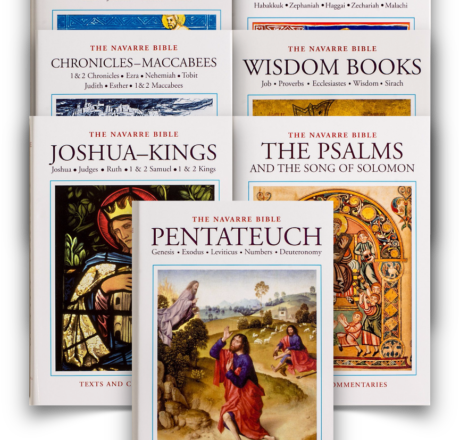
Commentary:
41:8-20. The reason why God raises up this new deliverer, Cyrus, is his tender love for his people, who are still suffering the humiliation of exile. This first oracle of the "Book of Consolation" uses expressions that reveal unsuspected tenderness on the Lord's part: "my servant" is a technical expression describing someone chosen for an important mission, as we shall see later in the songs of the Servant. Here is applies to the entire people, Israel, and not to an individual. The words "fear not" (vv. 10, 13, 14) call them to trust in the Lord even though the situation seems hopeless; the same words occur elsewhere in the Bible, addressed to people picked for a dangerous mission – for example, Jacob (Gen 46:3) or Joshua (Josh 1:9; 8:1; etc.) in the Old Testament, and the Blessed Virgin Mary, the Mother of Jesus (Lk 1:30) in the New. Other significant titles used here are "offspring of Abraham, my friend" (v. 8), reminding them of their noble origin, and "you worm Jacob", a reference to the sorry state in which the exiles find themselves.
Even more significant than the names used to describe Israel are the actions that God takes and the titles given him. These actions are always positive: "to take from the ends of the earth", "to call" (v. 9), "to strengthen", "to help", "to uphold" (v. 10). The titles are titles of affection: "your God" (vv. 10, 13), "your Lord" and, above all, "your Redeemer" (v. 14), an expression that appears no less than fourteen times in this part of the book. A redeemer (“goel,” in Hebrew) was a person's next-of-kin, whose duty it was to ensure that family rights were not abused – whether in respect of property, good name or even life itself (cf. the note on Job 19:25).
God's special love for Israel, his people, so beautifully expressed by the prophet, should also be the basis of the hope felt by members of the new people of God: "Our Lord keeps close watch over the footsteps and progress of his children; that is, those who have love in their souls walk in his sight, and he stretches out his hand to steady them in times of difficulty. For that is what Isaiah says: I am your God, who takes you by the hand and tells you: Do not be afraid, I will help you. As well as taking heart from this conviction, we should also have a deep trust in God and in his help: if we do not spurn the grace he gives us, he will complete the good work of salvation that he has begun (St Francis de Sales, Treatise on the Love of God, 3, 4).
The last section gives a graphic description of the restoration of Israel, using the simile of a wilderness that is turned into fertile, leafy terrain (cf. 44:3; 51:3).
From: Matthew 11:11-15
The Mission of John the Baptist. Jesus' Reply
----------------------------------------------
(Jesus spoke to the crowds,) [11] "Truly, I say to you, among those born of women there has risen no one greater than John the Baptist; yet he who is least in the Kingdom of Heaven is greater than he. [12] From the days of John the Baptist until now the Kingdom of Heaven has suffered violence, and men of violence take it by force. [13] For all the prophets and the law prophesied until John; [14] and if you are willing to accept it, he is Elijah who is to come. [15] He who has ears to hear, let him hear."
***********************************************************************
Commentary:
11. With John the Old Testament is brought to a close and we are on the threshold of the New. The Precursor had the honor of ushering Christ in, making Him known to men. God had assigned him the exalted mission of preparing His contemporaries to hear the Gospel. The Baptist's faithfulness is recognized and proclaimed by Jesus. The praise he received is a reward for his humility: John, realizing what his role was, had said, "He must increase, but I must decrease" (John 3:30).
St. John the Baptist was the greatest in the sense that he had received a mission unique and incomparable in the context of the Old Testament. However, in the Kingdom of Heaven (the New Testament) inaugurated by Christ, the divine gift of grace makes the least of those who faithfully receive it greater than the greatest in the earlier dispensation. Once the work of our redemption is accomplished, God's grace will also be extended to the just of the Old Alliance. Thus, the greatness of John the Baptist, the Precursor and the last of the prophets, will be enhanced by the dignity of being made a son of God.
12. "The Kingdom of Heaven has suffered violence": once John the Baptist announces that the Christ is already come, the powers of Hell redouble their desperate assault, which continues right through the lifetime of the Church (cf. Ephesians 6:12). The situation described here seems to be this: the leaders of the Jewish people, and their blind followers, were waiting for the Kingdom of God the way people wait for a rightful legacy to come their way; but while they rest on the laurels of the rights and rewards they think their race entitles them to, others, the men of violence (literally, attackers) are taking it, as it were, by force, by fighting the enemies of the soul—the world, the flesh and the devil.
"This violence is not directed against others. It is a violence used to fight your own weaknesses and miseries, a fortitude, which prevents you from camouflaging your own infidelities, a boldness to own up to the faith even when the environment is hostile" (St J. Escriva, "Christ Is Passing By", 82).
This is the attitude of those who fight their passions and do themselves violence, thereby attaining the Kingdom of Heaven and becoming one with Christ. As Clement of Alexandria puts it: "The Kingdom of Heaven does not belong to those who sleep and who indulge all their desires, but to those who fight against themselves" ("Quis Dives Salvetur", 21).
14. John the Baptist is Elijah, not in person, but by virtue of his mission (cf. Matthew 17:10-13; Mark 9:10-12).
Happy Advent!
Disclaimer: Opinions posted on Free Republic are those of the individual posters and do not necessarily represent the opinion of Free Republic or its management. All materials posted herein are protected by copyright law and the exemption for fair use of copyrighted works.