Free Republic
Browse · Search
Religion
Topics · Post Article

Skip to comments.

Catholic Caucus: Daily Mass Readings 10-December-2025
Universalis/Jerusalem Bible ^

Posted on 12/10/2025 5:42:23 AM PST by annalex

10 December 2025

Wednesday of the 2nd week of Advent


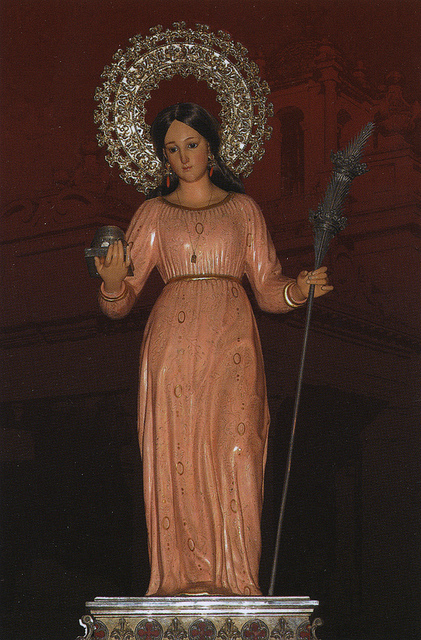
High altar of the martyrdom basilica of Santa Eulalia in Mérida (Badajoz, Spain)

Readings at Mass

Liturgical Colour: Violet. Year: A(II).


First readingIsaiah 40:25-31

The Lord strengthens the powerless

‘To whom could you liken me
and who could be my equal?’ says the Holy One.
Lift your eyes and look.
Who made these stars
if not he who drills them like an army,
calling each one by name?
So mighty is his power, so great his strength,
that not one fails to answer.
How can you say, Jacob,
how can you insist, Israel,
‘My destiny is hidden from the Lord,
my rights are ignored by my God’?
Did you not know?
Had you not heard?
The Lord is an everlasting God,
he created the boundaries of the earth.
He does not grow tired or weary,
his understanding is beyond fathoming.
He gives strength to the wearied,
he strengthens the powerless.
Young men may grow tired and weary,
youths may stumble,
but those who hope in the Lord renew their strength,
they put out wings like eagles.
They run and do not grow weary,
walk and never tire.


Responsorial Psalm
Psalm 102(103):1-4,8,10
My soul, give thanks to the Lord.
My soul, give thanks to the Lord
  all my being, bless his holy name.
My soul, give thanks to the Lord
  and never forget all his blessings.
My soul, give thanks to the Lord.
It is he who forgives all your guilt,
  who heals every one of your ills,
who redeems your life from the grave,
  who crowns you with love and compassion.
My soul, give thanks to the Lord.
The Lord is compassion and love,
  slow to anger and rich in mercy.
He does not treat us according to our sins
  nor repay us according to our faults.
My soul, give thanks to the Lord.

Gospel Acclamation
Alleluia, alleluia!
Behold, our Lord will come with power
and will enlighten the eyes of his servants.
Alleluia!
Or:
Alleluia, alleluia!
Look, the Lord will come to save his people.
Blessed those who are ready to meet him.
Alleluia!

Gospel
Matthew 11:28-30

My yoke is easy and my burden light

Jesus said, ‘Come to me, all you who labour and are overburdened, and I will give you rest. Shoulder my yoke and learn from me, for I am gentle and humble in heart, and you will find rest for your souls. Yes, my yoke is easy and my burden light.’

You can also view this page with the New Testament in Greek and English.

Christian Art

Illustration

Each day, The Christian Art website gives a picture and reflection on the Gospel of the day.

The readings on this page are from the Jerusalem Bible, which is used at Mass in most of the English-speaking world. The New American Bible readings, which are used at Mass in the United States, are available in the Universalis apps, programs and downloads.

You can also view this page with the Gospel in Greek and English.


TOPICS: Catholic; General Discusssion; Prayer; Worship
KEYWORDS: catholic; mt11; ordinarytime; prayer
For your reading, reflection, faith-sharing, comments, questions, discussion.

1 posted on 12/10/2025 5:42:23 AM PST by annalex
[ Post Reply | Private Reply | View Replies]

To: All

KEYWORDS: catholic; mt11; ordinarytime; prayer


2 posted on 12/10/2025 5:42:49 AM PST by annalex (fear them not)
[ Post Reply | Private Reply | To 1 | View Replies]

To: nickcarraway; NYer; ELS; Pyro7480; livius; ArrogantBustard; Catholicguy; RobbyS; marshmallow; ...


Alleluia Ping

Please FReepmail me to get on/off the Alleluia Ping List.


3 posted on 12/10/2025 5:43:38 AM PST by annalex (fear them not)
[ Post Reply | Private Reply | To 2 | View Replies]

To: annalex
Chris Robinson: My Dad [our Jim Robinson] Passed Away Peacefully Monday Night (October 27th) In Our Home.
Jim still needs our prayers. Thread 2
Prayer thread for Salvation's recovery
Pray for Ukraine
Prayer thread for Fidelis' recovery
Update on Jim Robinson's health issues
4 posted on 12/10/2025 5:44:10 AM PST by annalex (fear them not)
[ Post Reply | Private Reply | To 3 | View Replies]

To: annalex
Matthew
 English: Douay-RheimsLatin: Vulgata ClementinaGreek NT: Byzantine/Majority Text (2000)
 Matthew 11
28Come to me, all you that labour, and are burdened, and I will refresh you. Venite ad me omnes qui laboratis, et onerati estis, et ego reficiam vos.δευτε προς με παντες οι κοπιωντες και πεφορτισμενοι καγω αναπαυσω υμας
29Take up my yoke upon you, and learn of me, because I am meek, and humble of heart: and you shall find rest to your souls. Tollite jugum meum super vos, et discite a me, quia mitis sum, et humilis corde : et invenietis requiem animabus vestris.αρατε τον ζυγον μου εφ υμας και μαθετε απ εμου οτι πραος ειμι και ταπεινος τη καρδια και ευρησετε αναπαυσιν ταις ψυχαις υμων
30For my yoke is sweet and my burden light. Jugum enim meum suave est, et onus meum leve.ο γαρ ζυγος μου χρηστος και το φορτιον μου ελαφρον εστιν

5 posted on 12/10/2025 5:47:29 AM PST by annalex (fear them not)
[ Post Reply | Private Reply | To 4 | View Replies]

To: annalex

Catena Aurea by St. Thomas Aguinas

11:28–30

28. Come unto me, all ye that labour and are heavy laden, and I will give you rest.

29. Take my yoke upon you, and learn of me; for I am meek and lowly in heart: and ye shall find rest unto your souls.

30. For my yoke is easy, and my burden is light.

CHRYSOSTOM. By what He had said, He brought His disciples to have a desire towards Him, shewing them His unspeakable excellence; and now He invites them to Him, saying, Come unto me, all ye that labour and are heavy laden.

AUGUSTINE. (Serm. 69. 1.) Whence do we all thus labour, but that we are mortal men, bearing vessels of clay which cause us much difficulty. But if the vessels of flesh are straitened, the regions of love will be enlarged. To what end then does He say, Come unto me, all ye that labour, but that ye should not labour?

HILARY. He calls to Him those that were labouring under the hardships of the Law, and those who are burdened with the sins of this world.

JEROME. That the burden of sin is heavy the Prophet Zachariah bears witness, saying, that wickedness sitteth upon a talent of lead. (Zech. 5:7.) And the Psalmist fills it up, Thy iniquities are grown heavy upon me. (Ps. 38:4)

GREGORY. (Mor. xxx. 15.) For a cruel yoke and hard weight of servitude it is to be subject to the things of time, to be ambitious of the things of earth, to cling to falling things, to seek to stand in things that stand not, to desire things that pass away, but to be unwilling to pass away with them. For while all things fly away against our wish, those things which had first harassed the mind in desire of gaining them, now oppress it with fear of losing them.

CHRYSOSTOM. He said not, Come ye, this man and that man, but All whosoever are in trouble, in sorrow, or in sin, not that I may exact punishment of you, but that I may remit your sins. Come ye, not that I have need of your glory, but that I seek your salvation. And I will refresh you; not, I will save you, only; but that is much greater, I will refresh you, that is, I will set you in all quietness.

RABANUS. (non occ.) I will not only take from you your burden, but will satisfy you with inward refreshment.

REMIGIUS. Come, He says, not with the feet, but with the life, not in the body, but in faith. For that is a spiritual approach by which any man approaches God; and therefore it follows, Take my yoke upon you.

RABANUS. The yoke of Christ is Christ’s Gospel, which joins and yokes together Jews and Gentiles in the unity of the faith. This we are commanded to take upon us, that is, to have in honour; lest perchance setting it beneath us, that is wrongly despising it, we should trample upon it with the miry feet of unholiness; wherefore He adds, Learn of me.

AUGUSTINE. (Serm. 69. 1.) Not to create a world, or to do miracles in that world; but that I am meek and lowly in heart. Wouldest thou be great? Begin with the least. Wouldest thou build up a mighty fabric of greatness? First think of the foundation of humility; for the mightier building any seeks to raise, the deeper let him dig for his foundation. Whither is the summit of our building to rise? To the sight of God.

RABANUS. We must learn then from our Saviour to be meek in temper, and lowly in mind; let us hurt none, let us despise none, and the virtues which we have shewn in deed let us retain in our heart.

CHRYSOSTOM. And therefore in beginning the Divine Law He begins with humility, and sets before us a great reward, saying, And ye shall find rest for your souls. This is the highest reward, you shall not only be made useful to others, but shall make yourself to have peace; and He gives you the promise of it before it comes, but when it is come, you shall rejoice in perpetual rest. And that they might not be afraid because He had spoken of a burden, therefore He adds, For my yoke is pleasant, and my burden light.

HILARY. He holds forth the inducements of a pleasant yoke, and a light burden, that to them that believe He may afford the knowledge of that good which He alone knoweth in the Father.

GREGORY. (Mor. iv. 33.) What burden is it to put upon the neck of our mind that He bids us shun all desire that disturbs, and turn from the toilsome paths of this world?

HILARY. And what is more pleasant than that yoke, what lighter than that burden? To be made better, to abstain from wickedness, to choose the good, and refuse the evil, to love all men, to hate none, to gain eternal things, not to be taken with things present, to be unwilling to do that to another which yourself would be pained to suffer.

RABANUS. But how is Christ’s yoke pleasant, seeing it was said above, Narrow is the way which leadeth unto life? (Mat. 7:14.) That which is entered upon by a narrow entrance is in process of time made broad by the unspeakable sweetness of love.

AUGUSTINE. (Serm. 70. 1.) So then they who with unfearing neck have submitted to the yoke of the Lord endure such hardships and dangers, that they seem to be called not from labour to rest, but from rest to labour. But the Holy Spirit was there who, as the outward man decayed, renewed the inward man day by day, and giving a foretaste of spiritual rest in the rich pleasures of God in the hope of blessedness to come, smoothed all that seemed rough, lightened all that was heavy. Men suffer amputations and burnings, that at the price of sharper pain they may be delivered from torments less but more lasting, as boils or swellings. What storms and dangers will not merchants undergo that they may acquire perishing riches? Even those who love not riches endure the same hardships; but those that love them endure the same, but to them they are not hardships. For love makes right easy, and almost nought all things however dreadful and monstrous. How much more easily then does love do that for true happiness, which avarice does for misery as far as it can?

JEROME. And how is the Gospel lighter than the Law, seeing in the Law murder and adultery, but under the Gospel anger and concupiscence also, are punished? Because by the Law many things are commanded which the Apostle fully teaches us cannot be fulfilled; by the Law works are required, by the Gospel the will is sought for, which even if it goes not into act, yet does not lose its reward. The Gospel commands what we can do, as that we lust not; this is in our own power; the Law punishes not the will but the act, as adultery. Suppose a virgin to have been violated in time of persecution; as here was not the will she is held as a virgin under the Gospel; under the Law she is cast out as defiled.


Catena Aurea Matthew 11
6 posted on 12/10/2025 5:48:42 AM PST by annalex (fear them not)
[ Post Reply | Private Reply | To 5 | View Replies]

To: annalex


Christ Carrying the Cross

Vincenzo Catena

1520s
Oil on panel, 47 x 38 cm
Liechtenstein Museum, Vienna

7 posted on 12/10/2025 5:49:00 AM PST by annalex (fear them not)
[ Post Reply | Private Reply | To 6 | View Replies]

To: annalex

Saint Eulalia of Merida: The Girl Martyr Who Became a Symbol of Faith

The Santa Eulalia Basilica in Merida, Spain stands as a monument not just to the glory of God, but to the unflinching faith and courage of a young girl who chose to die rather than renounce her beliefs. Saint Eulalia, martyred at the tender age of 12 during the persecutions of Roman Emperor Diocletian in 304 AD, became one of the most popular and venerated saints in the history of the Iberian Peninsula. Her dramatic story of defiance and sacrifice has resonated through the centuries, and continues to inspire the faithful today.

A Childhood of Devotion

Eulalia was born around 292 AD into a wealthy Christian family in Merida, then the capital of the Roman province of Lusitania. Located in present-day Extremadura in western Spain, Merida was an important and prosperous city, founded in 25 BC by the Emperor Augustus as a colony for veteran soldiers. It boasted all the hallmarks of Roman urbanization, such as a theater, amphitheater, circus, forums, temples, baths and an extensive network of roads and aqueducts.

Despite being born into privilege, Eulalia was drawn to a life of faith and asceticism from a very young age. The passio or account of her martyrdom, written in the 4th or 5th century, describes her as "meek and humble" and "wise beyond her years." She often fasted, spent hours in prayer, and tried to emulate the example of the Christian martyrs she had learned about.

When Emperor Diocletian unleashed the last and most brutal of the Roman persecutions against Christians in 303 AD, the 11-year-old Eulalia secretly left her parents‘ home and presented herself before the local Roman court. "She went to the forum, to the tribunal, without being cited, to reproach the persecutors and to proclaim in a loud voice that she was a confessor of the Lord," wrote the 4th-century poet Prudentius in a famous hymn extolling Eulalia.

"I Am a Christian"

In front of the governor Dacian and a crowd of onlookers, Eulalia fearlessly declared her faith, saying "I am a Christian and I believe in the one true God." She denounced the worship of false idols and even insulted Diocletian himself. Stunned and enraged, Dacian ordered the girl to make a sacrifice to the pagan gods and to beg the emperor for forgiveness.

When Eulalia adamantly refused, she was stripped and brutally tortured. According to the passio, she was "whipped, torn with iron hooks, and burned with flaming torches." Prudentius wrote that "she counted her wounds and sang, which angered [Dacian] even more; in his fury he ordered flaming, smoking torches be held to her breasts and sides." Yet through all of this agony, Eulalia never screamed or wept, but "sang psalms all the while, not heeding the tortures."

Finally, Dacian condemned Eulalia to be burned at the stake. As the flames engulfed her body, she allegedly inhaled deeply to hasten her death and release her soul. The passio relates that when she died, the people saw a white dove fly from her mouth, which they believed was Eulalia‘s pure spirit ascending to heaven.

A Saint is Born

Eulalia quickly became celebrated as one of the earliest and most revered Christian martyrs. The spot where she died attracted throngs of pilgrims and a shrine was erected over her remains by the 4th century. Prudentius composed his Hymn to Eulalia within decades of her death, ensuring that her story spread far and wide across the Christian world:

Eulalia the blessed maiden,
Noble and wise beyond her years,
Gave up her life unto her Lord;
The two-edged sword could bring no fears,
Nor pains of death dismay.

The hymn was widely copied and circulated, and "for the Christians of late antiquity, it made Eulalia the best-known martyr from Spain," according to classicist Michael Roberts. Crucially, it established her as an exemplar for young girls to emulate, much as the Virgin Mary embodied the ideal of female purity and virtue.

By the 5th century, a grand Christian basilica was built on the site of Eulalia‘s martyrdom and burial in Merida. Archaeological excavations underneath Santa Eulalia Basilica have uncovered remains of affluent Roman houses, streets and even a market from the 1st-4th centuries AD, suggesting this was a wealthy residential quarter of the ancient city. The discovery of a 4th-century cemetery with Christian symbols confirms the long tradition of venerating Eulalia in this same spot.

The Basilica Through the Ages

The basilica that pilgrims visit today mostly dates to the 13th century, when it was rebuilt after Merida was reconquered from the Moors by King Alfonso IX of León in 1230. However, some Visigothic elements survive from when Merida served as the capital of the Visigothic Kingdom of Hispania in the 6th century AD.

The church seamlessly blends Romanesque, Gothic and Baroque architectural styles, creating a sense of artistic continuity that reflects the site‘s long sacred history. The arched doorway is framed by intricate carvings of plants and birds, while inside, a statue of Saint Eulalia by the renowned 17th-century sculptor Luisa Roldán occupies a position of prominence.

Stepping into the crypt is like entering a time capsule of Merida‘s past. Here you can see remains of Roman houses, Visigothic tombs, and even a rare 4th-century Christian mosaic. This subterranean archaeological site was excavated in the 1990s and opened to the public as a museum, providing an evocative glimpse into the ancient origins of the Eulalia cult.

Santa Eulalia Basilica is part of the UNESCO World Heritage Site that encompasses the incredible ensemble of Roman monuments in Merida, such as the theater, amphitheater, Temple of Diana, Trojan Arch and the longest surviving Roman bridge in the world. Mérida was declared a World Heritage Site in 1993 in recognition of its outstanding Roman archaeological heritage.

Patron Saint of Merida and Beyond

For over 1700 years, Saint Eulalia has watched over the city of Merida and been an integral part of local culture and identity. Every year on December 10th, her feast day, Merida honors its patron saint with processions, masses, floral offerings and more. Residents even bake special sweets called "tortas de Santa Eulalia."

In 780 AD, the Saint‘s relics were transferred to Oviedo Cathedral in northern Spain to safeguard them during the Muslim invasion. She thus became the patron saint of that city as well. In fact, Eulalia is the most popular patron saint for many towns and cities throughout Spain and Portugal. She also lends her name to numerous churches, schools, hospitals and foundations around the world.

Today, the legacy of Saint Eulalia endures not just in the basilica that bears her name, but in the hearts of the faithful who continue to honor her sacrifice and draw inspiration from her courage. She is often depicted in art holding the martyr‘s palm branch and cross, with a white dove to symbolize the purity of her soul. For many, she remains a shining example of unshakable faith and conviction in the face of adversity and persecution. As Prudentius wrote so long ago:

Child though she was, she neither blanched
At threats, nor wheedling tongue beguiled:
Tho‘ young in years, her sense was ripe
And firm, her heart with courage filled;
Her sex alone was weak.

So when you gaze upon the timeworn stones of Santa Eulalia Basilica or descend into the cool depths of its crypt to walk amidst the remnants of the ancient world, remember the girl martyr who refused to be silenced or submit, and who in death achieved a form of immortality that continues to resonate through the ages.


historytools.org
8 posted on 12/10/2025 5:53:51 AM PST by annalex (fear them not)
[ Post Reply | Private Reply | To 7 | View Replies]

To: annalex

9 posted on 12/10/2025 5:56:02 AM PST by annalex (fear them not)
[ Post Reply | Private Reply | To 8 | View Replies]

To: annalex

NAVARRE BIBLE COMMENTARY(RSV)

Ad Majorem Dei Gloriam (To the Greater Glory of God)

First Reading

From: Isaiah 40:25-31

God, Creator and Ruler of All (Continuation)
-------------------------------------------
[25] “Whom then will you compare me, that I should be like him?” says the Holy One. [26] Lift up your eyes on high and see: who created these? He who brings out their host by number, calling them all by name; by the greatness of his might, and because he is strong in power not one is missing.

[27] Why do you say, 0 Jacob, and speak, O Israel, “My way is hid from the Lord, and my right is disregarded by my God”? [28] Have you not known? Have you not heard? The Lord is the everlasting God, the Creator of the ends of the earth; He does not faint or grow weary, his understanding is unsearchable. [29] He gives power to the faint, and to him who has no might he increases strength. [30] Even youths shall faint and be weary, and young men shall fall exhausted, [31] but they who wait for the Lord shall renew their strength, they shall mount up with wings like eagles, they shall run and not be weary, they shall walk and not faint.

***********************************************************************
Commentary:

40:12-41:29. The message of hope at the start of the second part of Isaiah is not the product of naïve credulity nor is it a dream that can never come true. These verses outline the logical basis of that hope: first, the immense power of God, to be seen in creation (40:12-31);and second, the sovereignty of God, who rules over the destiny of human beings and desires to save his people, and who raises up Cyrus to do that very thing (41:1-29).

40:12-31. These verses deal with the first of the arguments to justify hope. A series of ironical questions, vividly worded, conveys the omnipresence and transcendence of God (similar to what happens in Job 38:2-21): the Lord made all things and there is nothing, no one, to compare with him (vv. 12-26). In v. 26, the “host” is a reference to the heavenly bodies. In Babylonian religion and cosmology, these were considered to be gods. The sacred writer demythologizes them, making them mere creatures of God.

But the Lord does not confine himself to heaven, away from the cares of men, heedless of what is happening to his people. He, who is author of everything that exists, of life, of the rulers of the earth, is infinitely good, and in his providence he supports and strengthens those who trust in him (vv. 27-31). The image of the eagle (v. 31) is reminiscent of Psalm 103:5: “Your youth is renewed like the eagle’s.” St Augustine, commenting on these words, points out that in ancient times it was thought that when an eagle grew old it was unable to eat food because its beak got too big and, “finding itself in such difficulty, it is said that the eagle, driven by natural instinct and the need to recover its youth, strikes the upper part of it beak against a rock, because the beak has grown too large and prevents it from eating. The beak is worn down by the rock and the eagle eats easily again, and its whole body is restored. Having been old, the eagle is made young and strong again: the sheen returns to its feathers, and power to its wings. It soars to the heights once more, and experiences in that way a type of resurrection” ("Enarrationes In Psalmos", 102, 9). And so, Christian preaching has used this simile in a spiritual sense as a call to renew one’s efforts, trusting in God; If we hope in him, we can cope with difficulties without getting tired, for, as St Bernard points out, “ubi autem amor est, labor non est, sed sapor”: “where there is love, there is no suffering, but rather savoring” ("In Cantica Canticorum", 85, 8).

10 posted on 12/10/2025 8:44:23 AM PST by fidelis (Ecce Crucem Domini! Fugite partes adversae! Vicit Leo de tribu Juda, Radix David! Alleluia!)
[ Post Reply | Private Reply | To 9 | View Replies]

Gospel Reading

From: Matthew 11:25-30

Jesus Thanks His Father
-----------------------
[28] [At that time Jesus declared] Come to Me, all who labor and are heavy laden, and I will give you rest. [29] Take My yoke upon you, and learn from Me; for I am gentle and lowly in heart, and you will find rest for your souls. [30] For My yoke is easy, and My burden is light."

***********************************************************************
Commentary:

28-30. Our Lord calls everyone to come to Him. We all find things difficult in one way or another. The history of souls bears out the truth of these words of Jesus. Only the Gospel can fully satisfy the thirst for truth and justice which sincere people feel. Only our Lord, our Master--and those to whom He passes on His power--can soothe the sinner by telling him, "Your sins are forgiven" (Matthew 9:2). In this connection Pope Paul VI teaches: "Jesus says now and always, `Come to Me, all who labor and are heavy laden, and I will give you rest.' His attitude towards us is one of invitation, knowledge and compassion; indeed, it is one of offering, promise, friendship, goodness, remedy of our ailments; He is our comforter; indeed, our nourishment, our bread, giving us energy and life" ("Homily on Corpus Christi", 13 June 1974).

"Come to Me": the Master is addressing the crowds who are following Him, "harassed and helpless, like sheep without a shepherd" (Matthew 9:36). The Pharisees weighed them down with an endless series of petty regulations (cf. Acts 15:10), yet they brought no peace to their souls. Jesus tells these people, and us, about the kind of burden He imposes: "Any other burden oppresses and crushes you, but Christ's actually takes weight off you. Any other burden weighs down, but Christ's gives you wings. If you take a bird's wings away, you might seem to be taking weight off it, but the more weight you take off, the more you tie it down to the earth. There it is on the ground, and you wanted to relieve it of a weight; give it back the weight of its wings and you will see how it flies" (St. Augustine, "Sermon" 126).

"All you who go about tormented, afflicted and burdened with the burden of your cares and desires, go forth from them, come to Me and I will refresh you and you shall find for your souls the rest which your desires take from you" (St. John of the Cross, "Ascent of Mount Carmel", Book 1, Chapter 7, 4).

11 posted on 12/10/2025 8:44:38 AM PST by fidelis (Ecce Crucem Domini! Fugite partes adversae! Vicit Leo de tribu Juda, Radix David! Alleluia!)
[ Post Reply | Private Reply | To 10 | View Replies]

Click here to go to the My Catholic Life! Devotional thread for a meditation on today’s Gospel Reading.

12 posted on 12/10/2025 8:45:10 AM PST by fidelis (Ecce Crucem Domini! Fugite partes adversae! Vicit Leo de tribu Juda, Radix David! Alleluia!)
[ Post Reply | Private Reply | To 11 | View Replies]

Disclaimer: Opinions posted on Free Republic are those of the individual posters and do not necessarily represent the opinion of Free Republic or its management. All materials posted herein are protected by copyright law and the exemption for fair use of copyrighted works.

Free Republic
Browse · Search
Religion
Topics · Post Article

FreeRepublic, LLC, PO BOX 9771, FRESNO, CA 93794
FreeRepublic.com is powered by software copyright 2000-2008 John Robinson